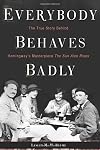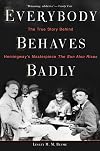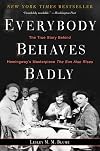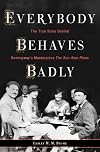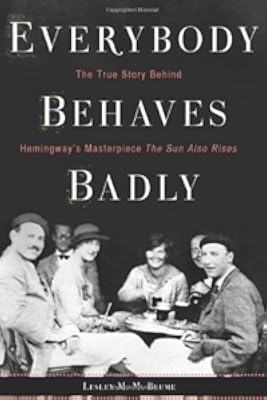
Everybody Behaves Badly: The True Story Behind Hemingway's Masterpiece The Sun Also Rises
by Lesley M. M. Blume
On This Page
Description
"The making of Ernest Hemingway's The Sun Also Rises, the outsize personalities who inspired it, and the vast changes it wrought on the literary world. In the summer of 1925, Earnest Hemingway and a clique of raucous companions traveled to Pamplona, Spain, for the town's infamous running of the bulls. Then, over the next six weeks, he channeled that trip's maelstrom of drunken brawls, sexual rivalry, midnight betrayals, and midday hangovers into his groundbreaking novel The Sun Also Rises. show more This revolutionary work redefined modern literature as much as it did his peers, who would forever after be called the Lost Generation. But the full story of Hemingway's legendary rise has remained untold until now. Lesley Blume resurrects the explosive, restless landscape of 1920s Paris and Spain and reveals how Hemingway helped create his own legend. He made himself into a death-courting, bull-fighting aficionado; a hard-drinking, short-fused literary genius; and an expatriate bon vivant. Blume's vivid account reveals the inner circle of the Lost Generation as we have never seen it before, and shows how it still influences what we read and how we think about youth, sex, love, and excess."-- show lessTags
Recommendations
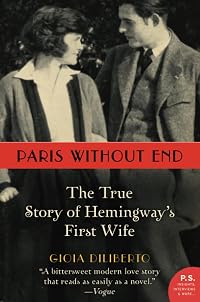
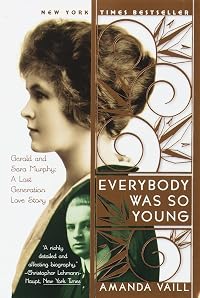
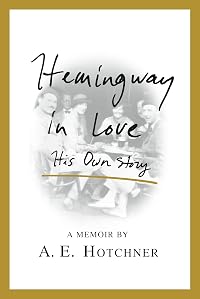
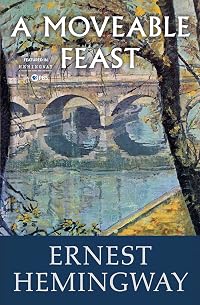

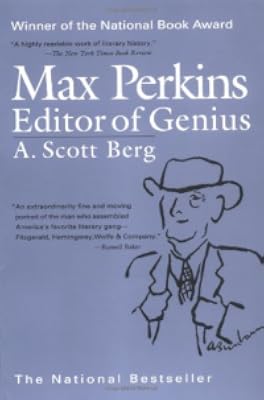
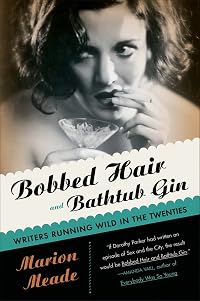
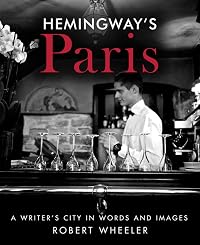
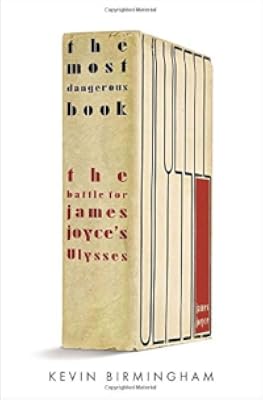




Member Reviews
Everybody Behaves Badly: The True Story of Hemingway’s Masterpiece The Sun Also Rises is a fascinating biography by Lesley M. M. Blume, though it is more the biography of Ernest Hemingway’s book than merely a biography of Hemingway. In telling the story of the creation and publication of The Sun Also Rises, Blume also tells the story of post World War I Paris, the ex-pat culture that developed there and of course, the vibrant, virile and explosive Hemingway.
Some might think it easier to admire Hemingway if you know nothing of him, but if you read his books, there is the bra honest, this relentless violent vigor that informs any astute reader that the author is no choir boy. He writes like a hard man and that is what he was. I have show more read other books about that time including most recently Villa America by Liza Klaussmann and Carl Rollyson’s biography of Hemingway’s third wife, Martha Gellhorn. Still, I found Blume’s exploration of Hemingway’s seeking out mentors, sponsors, and advocates, all of whom he betrayed viciously was disturbing. He was so manipulative and cruel.
Of course, I knew this. I knew The Sun Also Rises was not just the first of a new kind of writing, but also a betrayal of friends and colleagues. I did not know how thoroughly and completely he betrayed them though. His charisma must have been something almost otherworldly, the way that people forgave him and made peace with him again and again when he did unforgivable things.
I also appreciated how this book restores a lot of dignity and grace to Hadley, his first wife, who is often portrayed as unworthy by literary biographers. Not by Hemingway. Even if he done her wrong, he still admired her all his life and A Movable Feast reveals that deep, abiding love. Blume never treats her with the subtle disparagement that is common with those more taken by this more fashionable, more independent wives. Instead, she recognizes that without Hadley, there might never have been a Hemingway the author. She supported him with uncomplaining loyalty through all the years when he was struggling and poor and was cast off the instant he achieved his dreams. Blume never lets that be okay.
Most of the time, I ignore the end notes unless I am looking for something specific, but that would be a mistake with Everybody Behaves Badly. The endnotes are full of little stories and additional information and skipping them would be a crime. They read like the tittle-tattle and gossip of the cognoscenti. I loved them so much that I read them after each section while the text was still fresh.
I enjoyed Everybody Behaves Badly very much. I have long loved Hemingway’s work. I carried some of his books with me when I went to Spain. I made a pilgrimage to Restaurante Botín, his favorite restaurant in Madrid, and ordering his favorite meal, cochinillo asado with rioja alta and getting very, very drunk. I learned new things about Hemingway, many of them unpleasant which is par for the course with him. But, I also learned a lot about how he came to be the writer he was, how hard he worked at his craft and how very deliberately he developed and evolved his writing style. It was fascinating and inspiring which is exactly what a biography should be.
This is a review of an Advance Reader Copy won in a Goodreads Giveaway. The book will be published June 7th.
Everybody Behaves Badly from Houghton Mifflin Harcourt show less
Some might think it easier to admire Hemingway if you know nothing of him, but if you read his books, there is the bra honest, this relentless violent vigor that informs any astute reader that the author is no choir boy. He writes like a hard man and that is what he was. I have show more read other books about that time including most recently Villa America by Liza Klaussmann and Carl Rollyson’s biography of Hemingway’s third wife, Martha Gellhorn. Still, I found Blume’s exploration of Hemingway’s seeking out mentors, sponsors, and advocates, all of whom he betrayed viciously was disturbing. He was so manipulative and cruel.
Of course, I knew this. I knew The Sun Also Rises was not just the first of a new kind of writing, but also a betrayal of friends and colleagues. I did not know how thoroughly and completely he betrayed them though. His charisma must have been something almost otherworldly, the way that people forgave him and made peace with him again and again when he did unforgivable things.
I also appreciated how this book restores a lot of dignity and grace to Hadley, his first wife, who is often portrayed as unworthy by literary biographers. Not by Hemingway. Even if he done her wrong, he still admired her all his life and A Movable Feast reveals that deep, abiding love. Blume never treats her with the subtle disparagement that is common with those more taken by this more fashionable, more independent wives. Instead, she recognizes that without Hadley, there might never have been a Hemingway the author. She supported him with uncomplaining loyalty through all the years when he was struggling and poor and was cast off the instant he achieved his dreams. Blume never lets that be okay.
Most of the time, I ignore the end notes unless I am looking for something specific, but that would be a mistake with Everybody Behaves Badly. The endnotes are full of little stories and additional information and skipping them would be a crime. They read like the tittle-tattle and gossip of the cognoscenti. I loved them so much that I read them after each section while the text was still fresh.
I enjoyed Everybody Behaves Badly very much. I have long loved Hemingway’s work. I carried some of his books with me when I went to Spain. I made a pilgrimage to Restaurante Botín, his favorite restaurant in Madrid, and ordering his favorite meal, cochinillo asado with rioja alta and getting very, very drunk. I learned new things about Hemingway, many of them unpleasant which is par for the course with him. But, I also learned a lot about how he came to be the writer he was, how hard he worked at his craft and how very deliberately he developed and evolved his writing style. It was fascinating and inspiring which is exactly what a biography should be.
This is a review of an Advance Reader Copy won in a Goodreads Giveaway. The book will be published June 7th.
Everybody Behaves Badly from Houghton Mifflin Harcourt show less
In EVERYBODY BEHAVES BADLY, Lesley Blume gives the reader insights into the people who emerged as characters in Hemingway’s first novel, THE SUN ALSO RISES. She also expands her horizon to other influential people in the making of Ernest Hemingway. Thus, she documents much behind-the-scenes information that should satisfy the most gossip-hungry reader. As the title suggests, just about everyone behaves badly in this book, with the possible exception of Hadley Hemmingway. But Ernest, himself, is her focus and clearly he wins the bad behavior prize.
Hemingway’s character is Shakespearean in its complexity. He seems to have had a toxic blend of unusually high levels of talent and charisma, tempered by equal measures of narcissism, show more ambition and ruthlessness. He capitalized on his experience as a reporter and lessons learned from other writers like Gertrude Stein and Ezra Pound to develop a voice that was uniquely modern in the years following WWI. Yet Blume’s exhaustive research reveals a man who would not hesitate to belittle and brutally betray the many influential people who mentored and advocated for him. The list contains most notable literary figures of the time. This list includes Pound and Stein, but also names like Ford Madox Ford, Robert McAlmon, Sherwood Anderson, Harold Loeb, F. Scott Fitzgerald, Dorothy Parker, Max Perkins and even his loyal first wife, Hadley.
Blume’s research offers insight into the origins of Hemingway’s disturbing personality. Certainly alcohol dependency and womanizing played roles, but these alone cannot account for the extremes of his character. His public persona as a macho man (e.g., boxing, bullfighting, big game hunting and fishing) carried a need for toughness, bordering on maliciousness. Also, his work took precedence over everything else it seems, even loyalty. His son Patrick tells Blume that “family life for his father was the enemy of accomplishment.” For him, this focus clearly extended beyond family. Moreover, Hemingway’s journalistic writing style made him unusually sensitive to truth-telling at all costs.
Much like her subject, Blume’s writing is reportorial. Although this book is non-fiction, it reads like a thriller. In spite of knowing how the story ends, the telling is most engaging. One marvels at how a man like this could have generated so much loyalty and admiration among his peers and loved ones. show less
Hemingway’s character is Shakespearean in its complexity. He seems to have had a toxic blend of unusually high levels of talent and charisma, tempered by equal measures of narcissism, show more ambition and ruthlessness. He capitalized on his experience as a reporter and lessons learned from other writers like Gertrude Stein and Ezra Pound to develop a voice that was uniquely modern in the years following WWI. Yet Blume’s exhaustive research reveals a man who would not hesitate to belittle and brutally betray the many influential people who mentored and advocated for him. The list contains most notable literary figures of the time. This list includes Pound and Stein, but also names like Ford Madox Ford, Robert McAlmon, Sherwood Anderson, Harold Loeb, F. Scott Fitzgerald, Dorothy Parker, Max Perkins and even his loyal first wife, Hadley.
Blume’s research offers insight into the origins of Hemingway’s disturbing personality. Certainly alcohol dependency and womanizing played roles, but these alone cannot account for the extremes of his character. His public persona as a macho man (e.g., boxing, bullfighting, big game hunting and fishing) carried a need for toughness, bordering on maliciousness. Also, his work took precedence over everything else it seems, even loyalty. His son Patrick tells Blume that “family life for his father was the enemy of accomplishment.” For him, this focus clearly extended beyond family. Moreover, Hemingway’s journalistic writing style made him unusually sensitive to truth-telling at all costs.
Much like her subject, Blume’s writing is reportorial. Although this book is non-fiction, it reads like a thriller. In spite of knowing how the story ends, the telling is most engaging. One marvels at how a man like this could have generated so much loyalty and admiration among his peers and loved ones. show less
Everybody Behaves Badly is about Ernest Hemingway and the lead up to the publication of The Sun Also Rises, his first novel and the one that made him famous. I was concerned it would be stuffed with tangential detail as filler, but the story rarely lags (and Blume is a great storyteller). I think the true story about the novel as told here is more interesting than the story in the novel itself (which is based on the true story). Certainly the novel makes a great deal more sense now, and it's hard to see how it would be possible to fully appreciate the novel, or even Hemingway, without the background contained in this book. How and why it was written, it's context in the literature of the time, the publication dramas. Great stuff highly show more recommended you'll never see Hemingway the same again. show less
My favorite novels are Huckleberry Finn (which Hemingway called "the great American novel"), On the Road, Generation X and The Sun Also Rises. They are all road trip stories about people who are out of step with the larger population. Hemingway's other two great novels, A Farewell to Arms and For Whom the Bell Tolls, are much longer and for me a comedown from The Sun Also Rises, not nearly as good.
It was great to learn about the backgrounds of the real people whose characters filled the pages of this great novel. This is all quite apart though from the fact that Hemingway was a reprehensible person who got worse as he got older.
It was great to learn about the backgrounds of the real people whose characters filled the pages of this great novel. This is all quite apart though from the fact that Hemingway was a reprehensible person who got worse as he got older.
Hemingway can describe the most ordinary events in careful, interesting sentences, like walking down a path, driving along a road, eating a meal.
Few of the characters in The Sun Also Rises, are admirable.
Still, it is a well-told story.
Lesley M. M. Blumes's Everybody Behaves Badly, tells me a lot about why all these things are true.
Few of the characters in The Sun Also Rises, are admirable.
Still, it is a well-told story.
Lesley M. M. Blumes's Everybody Behaves Badly, tells me a lot about why all these things are true.
An interesting if light biography of a particular time in Hemingway's life. If you are looking for a more comprehensive review of Hemingway's life and work, this isn't it. However, if what you are looking for is a fun, gossipy portrait of a very particular time and place, this book will hit the spot.
I have been reading nonstop Hemingway this month. This being the third book of nonfiction. Another facet of his overpowering personality and persona. As with the description of the paper doll cut outs in Vanity Fair Hem was a different person to whoever was characterizing him. This book portrayed him as preditory. Bitter before warrented, mean and unloyal. Self-centered and slightly narcissistic. A user and notoriously ingrateful.
I like my Hem slightly less sinister. The truth of the matter is that he craved to be recognized as an important writer who tore the written word down to bare bones. He had a great gift of recall and used the events of July 1925 and the people involved as the basis for The Sun Also Rises. He was a genius who show more used people up then discarded them.
And in the words of Harold Loeb, aka Robert Cohn, that's the way it was.
Lesley M.M. Blume was hard on the Bever. show less
I like my Hem slightly less sinister. The truth of the matter is that he craved to be recognized as an important writer who tore the written word down to bare bones. He had a great gift of recall and used the events of July 1925 and the people involved as the basis for The Sun Also Rises. He was a genius who show more used people up then discarded them.
And in the words of Harold Loeb, aka Robert Cohn, that's the way it was.
Lesley M.M. Blume was hard on the Bever. show less
Members
- Recently Added By
Lists

Writing
81 works; 1 member
Author Information

14 Works 2,563 Members
Lesley M.M. Blume is a New York Times bestselling author, journalist, and historian. Her work has appeared in Vanity Fair, The New York Times, and The Wall Street Journal, among many other publications. She is based in Los Angeles.
Awards and Honors
Distinctions
Common Knowledge
- Original publication date
- 2016
- People/Characters
- Ernest Hemingway; Hadley Hemingway Mowrer; Lady Duff Twysden; Harold Loeb; Donald Ogden Stewart; Patrick Guthrie (show all 7); Cayetano Ordoñez
- Important places
- Pamplona, Navarre, Spain; Paris, France
Classifications
- Genres
- Literature Studies and Criticism, Nonfiction, Biography & Memoir
- DDC/MDS
- 813.52 — Literature & rhetoric American literature in English American fiction in English 1900-1999 1900-1945
- LCC
- PS3515 .E37 .S9216 — Language and Literature American literature American literature Individual authors 1900-1960
- BISAC
Statistics
- Members
- 306
- Popularity
- 104,731
- Reviews
- 12
- Rating
- (3.59)
- Languages
- English, German
- Media
- Paper, Audiobook, Ebook
- ISBNs
- 7
- ASINs
- 3