On This Page
Description
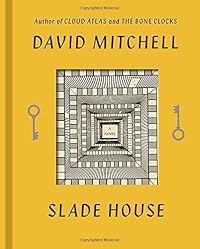
The New York Times bestseller by the author of The Bone Clocks and Cloud Atlas | Named One of the Best Books of the Year by San Francisco Chronicle, NPR, Los Angeles Times, The Guardian, The Telegraph, National Post, BookPage, and Kirkus ReviewsKeep your eyes peeled for a small black iron door.
Down the road from a working-class British pub, along the brick wall of a narrow alley, if the conditions are exactly right, you’ll find the entrance to Slade House. A stranger will greet you show more by name and invite you inside. At first, you won’t want to leave. Later, you’ll find that you can’t. Every nine years, the house’s residents—an odd brother and sister—extend a unique invitation to someone who’s different or lonely: a precocious teenager, a recently divorced policeman, a shy college student. But what really goes on inside Slade House? For those who find out, it’s already too late. . . .
Spanning five decades, from the last days of the 1970s to the present, leaping genres, and barreling toward an astonishing conclusion, this intricately woven novel will pull you into a reality-warping new vision of the haunted house story—as only David Mitchell could imagine it.
Praise for Slade House
“A fiendish delight . . . Mitchell is something of a magician.”—The Washington Post
“Entertainingly eerie . . . We turn to [Mitchell] for brain-tickling puzzle palaces, for character studies and for language.”—Chicago Tribune
“A ripping yarn . . . Like Shirley Jackson’s Hill House or the Overlook Hotel from Stephen King’s The Shining, [Slade House] is a thin sliver of hell designed to entrap the unwary. . . . As the Mitchellverse grows ever more expansive and connected, this short but powerful novel hints at still more marvels to come.”—San Francisco Chronicle
“Like Stephen King in a fever . . . manically ingenious.”—The Guardian (U.K.)
“A haunted house story that savors of Dickens, Stephen King, J. K. Rowling and H. P. Lovecraft, but possesses more psychic voltage than any of them.”—Pittsburgh Post-Gazette
“Tightly crafted and suspenseful yet warmly human . . . the ultimate spooky nursery tale for adults.”—The Huffington Post. show less
Tags
Recommendations





Member Recommendations

CGlanovsky Sinister and supernatural worlds exist hidden inside an otherwise normal modern UK
40
by tralliott

Member Reviews
***NO SPOILERS***
The book summary undersells this one. David Mitchell dreamed up the ultimate haunted house—eerie, genuinely frightening, chilling to the bone. This is horror but not gore. The house’s ability to entrance, trap, and steal away—with the finality of a steel door slamming shut—is what’s scary here. There’s no escape, and the helplessness is horrifying. The especially brave or curious might explore Hill House, but no one in their right mind wants to step over the threshold of Slade House.
Each chapter focuses on a different visitor to the house. At first they seem to have nothing in common, but the reader later learns that these unlucky souls have an important similarity. Certain features recur in each chapter to show more provide a sense of chilling anticipation balanced by just the right dose of unpredictability: a grandfather clock on the landing, a pale door at the top of the stairs, the portraits on the wall. Chapters connect to each other while still being thrillingly unique; readers know what will happen by the end of each but don’t know what the journey will look like.
Most impressive has to be the vivid scene-setting. Slade House is very much felt. On the outside it’s majestic and solid, with a malevolence that can’t be masked no matter how cheerfully it’s dressed up. On the inside it’s labyrinthine. Too many staircases and doors fill the space. Up is down. Down is up. It’s no coincidence that the name M.C. Escher pops up at one point. What surrounds Slade House differs based on the visitor. Some see a wondrous garden to rival the Garden of Eden, with flowers of every type, fruit trees, strawberries, butterflies, a pond, and a ginkgo tree that sheds fan-like leaves. A small black-iron door off an ugly alleyway opens into this spellbinding place, and not just anyone can open, or even find, that door.
The story features two ice-cold villains that Mitchell crafted carefully so they’re sufficiently powerful and merciless. Particularly riveting is a section devoted to an elaborate history of how they became who they are, starting from their birth to the present day. It’s like eavesdropping on the juiciest gossip. The villains’ motivation is basic, but Mitchell’s Slade House and the fantastical world surrounding it is creatively complex. It’s so much fun that by the end the reader will long for more. The good news is that the story ends in such a way that it seems apparent this intriguing world will live on in a third book.
Slade House is a sequel or companion to [book:The Bone Clocks|20819685], but readers can read it as a stand-alone. It’s ideal, of course, to read The Bone Clocks first, as Mitchell references it a little, and the ending in particular will have greater meaning; however, all is clear and to-the-point, so Slade House is readily understandable.
Tip: Readers will find it enlightening to re-read the first chapter upon finishing the book. show less
The book summary undersells this one. David Mitchell dreamed up the ultimate haunted house—eerie, genuinely frightening, chilling to the bone. This is horror but not gore. The house’s ability to entrance, trap, and steal away—with the finality of a steel door slamming shut—is what’s scary here. There’s no escape, and the helplessness is horrifying. The especially brave or curious might explore Hill House, but no one in their right mind wants to step over the threshold of Slade House.
Each chapter focuses on a different visitor to the house. At first they seem to have nothing in common, but the reader later learns that these unlucky souls have an important similarity. Certain features recur in each chapter to show more provide a sense of chilling anticipation balanced by just the right dose of unpredictability: a grandfather clock on the landing, a pale door at the top of the stairs, the portraits on the wall. Chapters connect to each other while still being thrillingly unique; readers know what will happen by the end of each but don’t know what the journey will look like.
Most impressive has to be the vivid scene-setting. Slade House is very much felt. On the outside it’s majestic and solid, with a malevolence that can’t be masked no matter how cheerfully it’s dressed up. On the inside it’s labyrinthine. Too many staircases and doors fill the space. Up is down. Down is up. It’s no coincidence that the name M.C. Escher pops up at one point. What surrounds Slade House differs based on the visitor. Some see a wondrous garden to rival the Garden of Eden, with flowers of every type, fruit trees, strawberries, butterflies, a pond, and a ginkgo tree that sheds fan-like leaves. A small black-iron door off an ugly alleyway opens into this spellbinding place, and not just anyone can open, or even find, that door.
The story features two ice-cold villains that Mitchell crafted carefully so they’re sufficiently powerful and merciless. Particularly riveting is a section devoted to an elaborate history of how they became who they are, starting from their birth to the present day. It’s like eavesdropping on the juiciest gossip. The villains’ motivation is basic, but Mitchell’s Slade House and the fantastical world surrounding it is creatively complex. It’s so much fun that by the end the reader will long for more. The good news is that the story ends in such a way that it seems apparent this intriguing world will live on in a third book.
Slade House is a sequel or companion to [book:The Bone Clocks|20819685], but readers can read it as a stand-alone. It’s ideal, of course, to read The Bone Clocks first, as Mitchell references it a little, and the ending in particular will have greater meaning; however, all is clear and to-the-point, so Slade House is readily understandable.
Tip: Readers will find it enlightening to re-read the first chapter upon finishing the book. show less
 This review was written for LibraryThing Early Reviewers.
Every nine years on the last Saturday in October, a mysterious iron door appears in the wall of Slade Alley. If you open it--and you should hope you don't--you'll find yourself in an impossible garden looking at the back of Slade House at a place where it absolutely cannot be. And if you venture further in, you'll soon realize that Slade House is not at all what it seems.
This is a short book, structured like a set of Chinese nesting boxes. Each story, set nine years apart, repeats and builds on the previous one. Mitchell has made an agreeably creepy contribution to the haunted house genre with Slade House, which began as a story told in a series of tweets. There are quite a lot of nice touches that startle and make us feel uneasy, the show more portraits on the walls being one of my favorite. Even more unsettling is how Mitchell plays with reality, keeping both his characters and us readers feeling off kilter, unable to trust what we are reading. I raced through the first three sections, wanting to know what came next. And here is where I feel Mitchell may have let us down somewhat. The fourth section, although it keeps up the pattern, explains perhaps too much what is going on in Slade House, at least for this reader, who prefers her ghost stories to remain uncomfortably ambiguous. And if you have already read The Bone Clocks, you will know as soon as the final section starts how things are going to go down. (I think Slade House would be more enjoyable if you read it before The Bone Clocks.) Uber-fans of the Horologists may not mind that, but I was wishing Mitchell had taken us somewhere less expected, instead of revisiting old territory. Despite these disappointments, Mitchell's writing is as good as ever, and fans of haunted house stories probably should not miss this one. show less
This is a short book, structured like a set of Chinese nesting boxes. Each story, set nine years apart, repeats and builds on the previous one. Mitchell has made an agreeably creepy contribution to the haunted house genre with Slade House, which began as a story told in a series of tweets. There are quite a lot of nice touches that startle and make us feel uneasy, the show more portraits on the walls being one of my favorite. Even more unsettling is how Mitchell plays with reality, keeping both his characters and us readers feeling off kilter, unable to trust what we are reading. I raced through the first three sections, wanting to know what came next. And here is where I feel Mitchell may have let us down somewhat. The fourth section, although it keeps up the pattern, explains perhaps too much what is going on in Slade House, at least for this reader, who prefers her ghost stories to remain uncomfortably ambiguous. And if you have already read The Bone Clocks, you will know as soon as the final section starts how things are going to go down. (I think Slade House would be more enjoyable if you read it before The Bone Clocks.) Uber-fans of the Horologists may not mind that, but I was wishing Mitchell had taken us somewhere less expected, instead of revisiting old territory. Despite these disappointments, Mitchell's writing is as good as ever, and fans of haunted house stories probably should not miss this one. show less
This review was written for LibraryThing Early Reviewers.I received an advance copy of this book through NetGalley.
I can't believe I received an advance copy of this book through NetGalley. I felt a little astonished, like, surely the publisher knew that everyone who was into David Mitchell (I count myself amongst them) would rush out and buy at least one copy of Slade House. They couldn't really be offering to give me this book for free, could they?
I'd read the collected Twitter story ("The Right Sort"), which starts the whole book off, I'd been following (sporadically) the new Twitter account of @I_Bombadil, of *course* I was up for reading Slade House.
I really enjoyed the story (devoured it, even). Like a "Bone Clocks"-lite, we skip through the years, nine at a time, starting in 1979, only show more we're focused on the one house from the title and twin brother and sister who inhabit it through the years. The style remains the same throughout the years as people approach the house and enter through the alleyway, but takes on the aspect of a palimpsest, as we recognize things that have gone on before at this house, things that bleed through the same each time.
Which is true until we get to the final chapter, when the perspective shifts, and we see the story from the other side. For those people who have read much David Mitchell, when they see Dr. Marinus arrive, they'll know how this is about to play out and there might be more tension for people who haven't met any of these characters yet, but it's still an entertaining story.
I worry, a bit, for my soul, as the publisher giving away this book is a little like the lure the twins use to gather souls unto themselves, so I wonder if I haven't stumbled into my own Slade House by taking the bait and that this whole experience of reading the book hasn't been some orison-like hallucination, and I try and think back and remember if I ever ate something during the course of my reading, and, if so, whether the twins are already on their way to eat my soul. show less
I can't believe I received an advance copy of this book through NetGalley. I felt a little astonished, like, surely the publisher knew that everyone who was into David Mitchell (I count myself amongst them) would rush out and buy at least one copy of Slade House. They couldn't really be offering to give me this book for free, could they?
I'd read the collected Twitter story ("The Right Sort"), which starts the whole book off, I'd been following (sporadically) the new Twitter account of @I_Bombadil, of *course* I was up for reading Slade House.
I really enjoyed the story (devoured it, even). Like a "Bone Clocks"-lite, we skip through the years, nine at a time, starting in 1979, only show more we're focused on the one house from the title and twin brother and sister who inhabit it through the years. The style remains the same throughout the years as people approach the house and enter through the alleyway, but takes on the aspect of a palimpsest, as we recognize things that have gone on before at this house, things that bleed through the same each time.
Which is true until we get to the final chapter, when the perspective shifts, and we see the story from the other side. For those people who have read much David Mitchell, when they see Dr. Marinus arrive, they'll know how this is about to play out and there might be more tension for people who haven't met any of these characters yet, but it's still an entertaining story.
I worry, a bit, for my soul, as the publisher giving away this book is a little like the lure the twins use to gather souls unto themselves, so I wonder if I haven't stumbled into my own Slade House by taking the bait and that this whole experience of reading the book hasn't been some orison-like hallucination, and I try and think back and remember if I ever ate something during the course of my reading, and, if so, whether the twins are already on their way to eat my soul. show less
Lord, that was creepily atmospheric. And I was super super into it and then...it fell down. There's a chunk of exposition in the last third that explains fucking everything which was cool, until it wasn't (and if you read this, I think you'll know what I mean). Then there's the thing that becomes the MacGuffin, that felt too convenient, in the way that villainous speeches feel too convenient. But it was definitely creepalicious and shivery, like the way [b: We Have Always Lived in the Castle|89724|We Have Always Lived in the Castle|Shirley Jackson|https://d.gr-assets.com/books/1415357189s/89724.jpg|847007] is creepy and shivery but with more mystical woo.
Overall, I liked it, but the ending was kind of confusing. Maybe I just need to show more knuckle down and read [b: The Bone Clocks|20819685|The Bone Clocks|David Mitchell|https://d.gr-assets.com/books/1398205538s/20819685.jpg|26959610] because they are sorta connected. And also, I just really want to sit at the cool kids table. show less
Overall, I liked it, but the ending was kind of confusing. Maybe I just need to show more knuckle down and read [b: The Bone Clocks|20819685|The Bone Clocks|David Mitchell|https://d.gr-assets.com/books/1398205538s/20819685.jpg|26959610] because they are sorta connected. And also, I just really want to sit at the cool kids table. show less
“Tonight feels like a board-game designed by M C Escher on a bender and Stephen King in a fever.”
Rather like this book.
David Mitchell is usually shelved and sold alongside other writers of "Literary Fiction" (a label I dislike). He's twice been shortlisted for the Booker Prize, and his novels often bulge with beautifully crafted images.
This is in a different mould; it's Mitchell having fun, and needs to be read as a much lighter confection in terms of style, though a rather darker one in terms of plot.
Slade House started as an experimental short story called “The Right Sort”, picking up on the psychsoterical section of The Bone Clocks, and published in tweets (https://twitter.com/SceptreBooks/timelines/488586138048004096). It show more took on a life of its own, and Mitchell expanded it into four more sections, creating Slade House.
Like many of his novels, this is a collection of connected short stories, with predacity as the underlying theme, here indicated by the Fox and Hounds (a chase game, a pub, a weapon, but most importantly, an analogy). In this case, there are five sections, nine years apart, starting in 1979, and ending TODAY - the day I finished reading it, and the day I am writing this review (31 October 2015)!
Each section is narrated by a person who visits the eponymous house, and each has a distinctive voice (a strong feature of all Mitchell’s works). The plots are less distinctive, but that’s no accident. Instead, there's hypnotic repetition to lure the reader into this mysterious world, and build expectations of what will happen to each visitor. The title page of each section has an illustration of a talismanic object.
1979, The Right Sort (small, black, iron door in a brick wall)
The narrator is Nathan Bishop, thirteen years old, on the autistic spectrum (as is one of Mitchell’s sons), and a synaesthete (“it’s a maroon-coloured name”). He and his mother, Rita, have been invited by Lady Norah Grayer to a recital at Slade House, on the last Saturday of October.
Nathan’s narrative style reminded me strongly of Christopher in The Curious Incident of the Dog in the Night Time: he mentions special numbers, describes his difficulty interpreting people, and his struggles to “act normal”. When he became preoccupied with a dead cat, I assumed a deliberate nod, though Schroedinger would also be apt. And then in the fourth chapter, “Grief is an amputation, but hope is incurable haemophilia… like Schroedinger’s Cat inside a box you can never open.”
There is an air of magic as soon as the Bishops enter the garden of Slade House through a small, black, iron door in the wall. Rita goes into the house and Nathan stays outside with a boy called Jonah who may or may not be Lady Grayer’s son. They play Fox and Hound, but Nathan gets dizzy and disoriented. He assumes it’s his mother’s Valium playing tricks on him, but things get more confused.
Standard creepy-house story fare: creaky stairs, a strange clock, an ethereal face at a window, oddly familiar portraits, disorientating visions, strangers who seem to know you, twins, a warning, a hypnotic candle…
1988, Shining Armour (a clock without hands)
This opens in the nearby Fox and Hounds pub and is narrated by racist, wife-beating Detective Inspector Gordon Edmonds.
The investigation into the Bishops’ disappearance has been reopened because a widow cleaner called Fred Pink has woken from a nine-year coma and remembers seeing them going in. More than once, it’s stressed that the police want him to feel he’s being taken seriously (why?), even though they don’t think he has much credibility.
Nevertheless, it’s reason for DI Edmonds to visit Chloe Chetwynd at Slade House. It’s all sweetness and light… until it becomes disorienting (but rather familiar).
1997, Oink Oink (Tiffany compact and mirror)
A university ParaSoc (Paranormal Society) meet at the Fox and Hounds, before investigating the nearby Slade Alley vanishings. Cue justification for handy exposition and recap by Axel Hardwick, the group leader and nephew of Fred Pink.
This is the central chapter, numerically and plot-wise, but the characters are a checklist of student stereotypes that I found shallow and annoying. Even when writing for fun, Mitchell can do better than this.
The narrator is Sally Timms, born in 1979, a bulimic and insecure young woman, who was nicknamed “oink oink” by bullies at boarding school. She feels guilty about the fact her family’s money comes from oil, and is fond but jealous of her older sister, Freya, in New York. When Sally wanted to visit, Freya fobbed her off with a Tiffany compact.
They find Slade House is accommodation for overseas students sponsored by the Erasmus Institute, and a Halloween party is in full swing, hosted by Kate Childs. It’s all good fun… until it becomes disorienting (but familiar), though Sally assumes it’s because someone switched the labels as to which brownies were doped.
A pattern has been firmly developed, butSally sees the ghost of DI Edmonds who gives her a weapon he “found in the cracks”: a sliver hairpin with a fox head. She finds Todd Cosgrove, who she fancies, and they try to escape. He knows a lot about the occult, and the peculiar features of Slade House, making magic symbols in the air, and talking of the orison, a lacuna, and the operandi.
2006, You Dark Horse (silver hairpin with fox head)
Journalist Freya Timms (narrating) meets elderly Fred Pink at the Fox and Hounds, both feeling guilt for their family member who went missing nine years earlier. They share what they’ve found out. Fred knows a great deal about Norah and Jonah Grayer, telepathic twins in Edwardian/WW1 days, and about The Shaded Way, and other psychosoterica (cue for more, somewhat lazy exposition, causingBond villains to come to mind ). Freya is sceptical but professional.
This is the fourth chapter; I’d relaxed into the pattern and style of the story,but Fred leaves the pub, without Freya having gone to Slade House. Then time and reality start distorting, and we’re back in the attic room, with Nora and Jonah kneeling by the unflickering candle, and the narrator seeing herself between them; there’s some explanation, a bit of bickering between the twins, and then tentacles come to suck out her soul. So far, so familiar… except the forces are weakening. Freya sees Sally’s ghost use the fox-head hatpin to stab Jonah, allowing Freya to escape with her soul, though not her body. .
2015, Astronauts (ancient Ninevite candlestick with runic markings)
Norah Grayer is narrating, which is a bit of a surprise. She’s targeting Dr Iris Marinus, a Canadian psychologist who bought Fred Pink’s notebooks, and who is Engifted. Here, Mitchell lets rip with the psychsoterical mumbo-jumbo (see below) and plot fireworks too. I almost cheered at one point. But Mitchell never closes the doors behind him; there’s scope for much more in future books.
The Ethics of Immortality
“Did the pig whose smoked flesh you ate at breakfast ‘deserve’ her fate?”
“What’s a metalife without a mission? It’s mere feeding.”
The underlying situation in this world is, as in The Bone Clocks, two groups of immortals: The Anchorites who achieve it by killing, soul-stealing and hijacking bodies, and the Horologists, who are unwittingly reborn and ever on the trail of the evil Anchorites: “You murder for immorality… we are sentenced to it”.
“Might is Right is nature’s way… from such an array of vultures… from feudal lords to slave traders to oligarchs to neocons to predators like you. All of you strangle your consciences, and ethically you strike yourselves dumb.”
Occult Jargon
Mitchell has fun here. Most of the jargon is familiar to anyone who has read The Bone Clocks, but if not, it’s explained as much as it needs to be in the book.
“The orison’s imploding” … “Marinus, fast as thought, glyphed a concave mirrorfield”… “puts his left forefinger on our guest’s front chakra eye”… “a dying operandi… get the guest to the lacuna” … “psychovoltaic pauperdom”… and so on.
Short Glossary
• Lacuna: “a small space that’s immune from time” so the operandi can work.
• Orison: “a reality bubble” that is “a live, 3D stage set, projected from inside this lacuna in time”, immune from photos and impenetrable by smartphones.
• Aperture: “a portal into an orison”.
• Operandi: the set up for getting psychovoltic energy from engifted souls.
• Astronaut: an orison tourist.
• Deep Stream: the good guys (Horologists).
• Shaded Way: the bad guys (Anchorites).
Links to Other Mitchell Book
My reviews of all his books are on my mitchell-uber-book shelf: https://www.goodreads.com/review/list/1199525-cecily?shelf=mitchell-uber-book
Everything Mitchell publishes has links to some of his other books; they’re part of an uber-novel, and as it’s more of a web than a line, it doesn’t much matter where you start. Slade House is explicitly related to The Bone Clocks, especially the penultimate chapter of TBC, where the battle between two tribes of immortals peaks. Other connections to Mitchell’s oeuvre include:
• Nathan is the same age as Jason Taylor in Black Swan Green and also a bit of misfit – though far more than Jason.
• The clock with words instead of hands has a “pale-as-bone clock face”.
• Chetwynd-Pitt is an unpleasant Cambridge friend of Hugo Lamb in The Bone Clocks. Norah Grayer uses the name Chetwynd in 1988.
• The ghost of Rita Bishop mentions visiting Vyvyan Ayres (a composer in Cloud Atlas) in Zedelghem to DI Edmonds.
• Fern Penhaligon (ParaSoc member) is the sister of Jonny Pehaligon who, supposedly, commits suicide by driving his car off a cliff in The Bone Clocks.
• The blind mother of ParaSoc member, Todd Cosgrove, transcribes books into braille, including Crispin Hershey’s “Desiccated Embryos”, from The Bone Clocks.
• I expect ParaSoc members Lance Hardwick and Angelica Gibbons will crop up elsewhere, otherwise it was hardly worth naming them here.
• Freya Timms writes for Spyglass magazine, as did Luisa Rey in Cloud Atlas and Ed Brubeck (Holly’s husband) in The Bone Clocks.
• The Grayer twins studied The Shaded Way under a descendant of Abbot Enomoto (amongst others) from Thousand Autumns of Jacob de Zeut.
• Norah Grayer will surely reappear:at the end, she somehow migrates into an unborn boy (who has an older brother called Adib and an unnamed older sister), as whom, she plans to kill Marinus one day .
• “Might is Right” is quoted here and in Cloud Atlas.
This table from 2014 (before Slade House) is a touch spoilery, but it shows some of the main character connections:
The article containing this table: https://www.vulture.com/2014/08/david-mitchell-interview-bone-clocks-cloud-atlas....
Rating 3.5*
I think this is probably a pretty good book of its kind (4*), but it's not really my kind of book, and I found much of the exposition too crass for my taste, even for light fiction. My 3* rating reflects my enjoyment, rather than anything more objective.
Quotes
• “Time is… Time was… Time is not.” On the clock without hands.
• “My body is dead but my soul is saved.”
• “Strangers are ‘They’, a lover is first a ‘You’ and then a ‘We’, but [twin] is one half of ‘I’.”
• “I hate her; but how far short it falls, this petty, neutered verb. Hatred is a thing one hosts; the lust I feel to harm, maim, wreck and kill this woman is less an emotion I hold than what I am now become.”
• “All the supernatural yarns need a realistic explanation and a supernatural one.”
(Mitchell only delivers the former, which is fine.)
UPDATE from November 2015
Mitchell has just won the World Fantasy award for The Bone Clocks. Handy timing for promoting this. Thanks to Apatt for sending me this link about the award and Mitchell's views about crossing genres:
http://www.theguardian.com/books/booksblog/2015/nov/10/david-mitchell-and-litera....
OLD Notes from January 2015
A new David Mitchell due out barely a year after The Bone Clocks, and set in the same universe. However, when TBC was published, he said the third of the Marinus trilogy was outlined, but wouldn't be published for a few years, so this may not be any closer to TBC than any of his others. Or not. Who knows?
It turns out that his 2,000 word Twitter story evolved, “scenes grew, bred and sprouted new scenes until ‘The Right Sort’ passed the 6,000 word mark and announced itself as part one of a five-part novel”. It's due out in time for Halloween:
https://www.hodder.co.uk/PressRelease/slade+house+press+release.page
http://mobile.nytimes.com/blogs/artsbeat/2015/01/14/new-david-mitchell-novel-com....
http://www.tor.com/blogs/2015/01/bff-david-mitchell-reprises-the-right-sort
Here is the Twitter version, though I think I'd rather read the full novel first and then look back to see its source: https://twitter.com/SceptreBooks/timelines/488586138048004096 show less
Rather like this book.
David Mitchell is usually shelved and sold alongside other writers of "Literary Fiction" (a label I dislike). He's twice been shortlisted for the Booker Prize, and his novels often bulge with beautifully crafted images.
This is in a different mould; it's Mitchell having fun, and needs to be read as a much lighter confection in terms of style, though a rather darker one in terms of plot.
Slade House started as an experimental short story called “The Right Sort”, picking up on the psychsoterical section of The Bone Clocks, and published in tweets (https://twitter.com/SceptreBooks/timelines/488586138048004096). It show more took on a life of its own, and Mitchell expanded it into four more sections, creating Slade House.
Like many of his novels, this is a collection of connected short stories, with predacity as the underlying theme, here indicated by the Fox and Hounds (a chase game, a pub, a weapon, but most importantly, an analogy). In this case, there are five sections, nine years apart, starting in 1979, and ending TODAY - the day I finished reading it, and the day I am writing this review (31 October 2015)!
Each section is narrated by a person who visits the eponymous house, and each has a distinctive voice (a strong feature of all Mitchell’s works). The plots are less distinctive, but that’s no accident. Instead, there's hypnotic repetition to lure the reader into this mysterious world, and build expectations of what will happen to each visitor. The title page of each section has an illustration of a talismanic object.
1979, The Right Sort (small, black, iron door in a brick wall)
The narrator is Nathan Bishop, thirteen years old, on the autistic spectrum (as is one of Mitchell’s sons), and a synaesthete (“it’s a maroon-coloured name”). He and his mother, Rita, have been invited by Lady Norah Grayer to a recital at Slade House, on the last Saturday of October.
Nathan’s narrative style reminded me strongly of Christopher in The Curious Incident of the Dog in the Night Time: he mentions special numbers, describes his difficulty interpreting people, and his struggles to “act normal”. When he became preoccupied with a dead cat, I assumed a deliberate nod, though Schroedinger would also be apt. And then in the fourth chapter, “Grief is an amputation, but hope is incurable haemophilia… like Schroedinger’s Cat inside a box you can never open.”
There is an air of magic as soon as the Bishops enter the garden of Slade House through a small, black, iron door in the wall. Rita goes into the house and Nathan stays outside with a boy called Jonah who may or may not be Lady Grayer’s son. They play Fox and Hound, but Nathan gets dizzy and disoriented. He assumes it’s his mother’s Valium playing tricks on him, but things get more confused.
Standard creepy-house story fare: creaky stairs, a strange clock, an ethereal face at a window, oddly familiar portraits, disorientating visions, strangers who seem to know you, twins, a warning, a hypnotic candle…
1988, Shining Armour (a clock without hands)
This opens in the nearby Fox and Hounds pub and is narrated by racist, wife-beating Detective Inspector Gordon Edmonds.
The investigation into the Bishops’ disappearance has been reopened because a widow cleaner called Fred Pink has woken from a nine-year coma and remembers seeing them going in. More than once, it’s stressed that the police want him to feel he’s being taken seriously (why?), even though they don’t think he has much credibility.
Nevertheless, it’s reason for DI Edmonds to visit Chloe Chetwynd at Slade House. It’s all sweetness and light… until it becomes disorienting (but rather familiar).
1997, Oink Oink (Tiffany compact and mirror)
A university ParaSoc (Paranormal Society) meet at the Fox and Hounds, before investigating the nearby Slade Alley vanishings. Cue justification for handy exposition and recap by Axel Hardwick, the group leader and nephew of Fred Pink.
This is the central chapter, numerically and plot-wise, but the characters are a checklist of student stereotypes that I found shallow and annoying. Even when writing for fun, Mitchell can do better than this.
The narrator is Sally Timms, born in 1979, a bulimic and insecure young woman, who was nicknamed “oink oink” by bullies at boarding school. She feels guilty about the fact her family’s money comes from oil, and is fond but jealous of her older sister, Freya, in New York. When Sally wanted to visit, Freya fobbed her off with a Tiffany compact.
They find Slade House is accommodation for overseas students sponsored by the Erasmus Institute, and a Halloween party is in full swing, hosted by Kate Childs. It’s all good fun… until it becomes disorienting (but familiar), though Sally assumes it’s because someone switched the labels as to which brownies were doped.
A pattern has been firmly developed, but
2006, You Dark Horse (silver hairpin with fox head)
Journalist Freya Timms (narrating) meets elderly Fred Pink at the Fox and Hounds, both feeling guilt for their family member who went missing nine years earlier. They share what they’ve found out. Fred knows a great deal about Norah and Jonah Grayer, telepathic twins in Edwardian/WW1 days, and about The Shaded Way, and other psychosoterica (cue for more, somewhat lazy exposition, causing
This is the fourth chapter; I’d relaxed into the pattern and style of the story,
2015, Astronauts (ancient Ninevite candlestick with runic markings)
Norah Grayer is narrating, which is a bit of a surprise. She’s targeting Dr Iris Marinus, a Canadian psychologist who bought Fred Pink’s notebooks, and who is Engifted. Here, Mitchell lets rip with the psychsoterical mumbo-jumbo (see below) and plot fireworks too. I almost cheered at one point. But Mitchell never closes the doors behind him; there’s scope for much more in future books.
The Ethics of Immortality
“Did the pig whose smoked flesh you ate at breakfast ‘deserve’ her fate?”
“What’s a metalife without a mission? It’s mere feeding.”
The underlying situation in this world is, as in The Bone Clocks, two groups of immortals: The Anchorites who achieve it by killing, soul-stealing and hijacking bodies, and the Horologists, who are unwittingly reborn and ever on the trail of the evil Anchorites: “You murder for immorality… we are sentenced to it”.
“Might is Right is nature’s way… from such an array of vultures… from feudal lords to slave traders to oligarchs to neocons to predators like you. All of you strangle your consciences, and ethically you strike yourselves dumb.”
Occult Jargon
Mitchell has fun here. Most of the jargon is familiar to anyone who has read The Bone Clocks, but if not, it’s explained as much as it needs to be in the book.
“The orison’s imploding” … “Marinus, fast as thought, glyphed a concave mirrorfield”… “puts his left forefinger on our guest’s front chakra eye”… “a dying operandi… get the guest to the lacuna” … “psychovoltaic pauperdom”… and so on.
Short Glossary
• Lacuna: “a small space that’s immune from time” so the operandi can work.
• Orison: “a reality bubble” that is “a live, 3D stage set, projected from inside this lacuna in time”, immune from photos and impenetrable by smartphones.
• Aperture: “a portal into an orison”.
• Operandi: the set up for getting psychovoltic energy from engifted souls.
• Astronaut: an orison tourist.
• Deep Stream: the good guys (Horologists).
• Shaded Way: the bad guys (Anchorites).
Links to Other Mitchell Book
My reviews of all his books are on my mitchell-uber-book shelf: https://www.goodreads.com/review/list/1199525-cecily?shelf=mitchell-uber-book
Everything Mitchell publishes has links to some of his other books; they’re part of an uber-novel, and as it’s more of a web than a line, it doesn’t much matter where you start. Slade House is explicitly related to The Bone Clocks, especially the penultimate chapter of TBC, where the battle between two tribes of immortals peaks. Other connections to Mitchell’s oeuvre include:
• Nathan is the same age as Jason Taylor in Black Swan Green and also a bit of misfit – though far more than Jason.
• The clock with words instead of hands has a “pale-as-bone clock face”.
• Chetwynd-Pitt is an unpleasant Cambridge friend of Hugo Lamb in The Bone Clocks. Norah Grayer uses the name Chetwynd in 1988.
• The ghost of Rita Bishop mentions visiting Vyvyan Ayres (a composer in Cloud Atlas) in Zedelghem to DI Edmonds.
• Fern Penhaligon (ParaSoc member) is the sister of Jonny Pehaligon who, supposedly, commits suicide by driving his car off a cliff in The Bone Clocks.
• The blind mother of ParaSoc member, Todd Cosgrove, transcribes books into braille, including Crispin Hershey’s “Desiccated Embryos”, from The Bone Clocks.
• I expect ParaSoc members Lance Hardwick and Angelica Gibbons will crop up elsewhere, otherwise it was hardly worth naming them here.
• Freya Timms writes for Spyglass magazine, as did Luisa Rey in Cloud Atlas and Ed Brubeck (Holly’s husband) in The Bone Clocks.
• The Grayer twins studied The Shaded Way under a descendant of Abbot Enomoto (amongst others) from Thousand Autumns of Jacob de Zeut.
• Norah Grayer will surely reappear:
• “Might is Right” is quoted here and in Cloud Atlas.
This table from 2014 (before Slade House) is a touch spoilery, but it shows some of the main character connections:
The article containing this table: https://www.vulture.com/2014/08/david-mitchell-interview-bone-clocks-cloud-atlas....
Rating 3.5*
I think this is probably a pretty good book of its kind (4*), but it's not really my kind of book, and I found much of the exposition too crass for my taste, even for light fiction. My 3* rating reflects my enjoyment, rather than anything more objective.
Quotes
• “Time is… Time was… Time is not.” On the clock without hands.
• “My body is dead but my soul is saved.”
• “Strangers are ‘They’, a lover is first a ‘You’ and then a ‘We’, but [twin] is one half of ‘I’.”
• “I hate her; but how far short it falls, this petty, neutered verb. Hatred is a thing one hosts; the lust I feel to harm, maim, wreck and kill this woman is less an emotion I hold than what I am now become.”
• “All the supernatural yarns need a realistic explanation and a supernatural one.”
(Mitchell only delivers the former, which is fine.)
UPDATE from November 2015
Mitchell has just won the World Fantasy award for The Bone Clocks. Handy timing for promoting this. Thanks to Apatt for sending me this link about the award and Mitchell's views about crossing genres:
http://www.theguardian.com/books/booksblog/2015/nov/10/david-mitchell-and-litera....
OLD Notes from January 2015
A new David Mitchell due out barely a year after The Bone Clocks, and set in the same universe. However, when TBC was published, he said the third of the Marinus trilogy was outlined, but wouldn't be published for a few years, so this may not be any closer to TBC than any of his others. Or not. Who knows?
It turns out that his 2,000 word Twitter story evolved, “scenes grew, bred and sprouted new scenes until ‘The Right Sort’ passed the 6,000 word mark and announced itself as part one of a five-part novel”. It's due out in time for Halloween:
https://www.hodder.co.uk/PressRelease/slade+house+press+release.page
http://mobile.nytimes.com/blogs/artsbeat/2015/01/14/new-david-mitchell-novel-com....
http://www.tor.com/blogs/2015/01/bff-david-mitchell-reprises-the-right-sort
Here is the Twitter version, though I think I'd rather read the full novel first and then look back to see its source: https://twitter.com/SceptreBooks/timelines/488586138048004096 show less
Covering a parallel story to The Bone Clocks, with one or two repeating characters, Slade House uses Mitchell's characteristic device to knit together a series of effective short stories, usually distinguished by time, but allowing the overall plot to be told, layer by layer.
It starts in 1979 when an autistic boy and his mother visit a mysterious stately home, through a tiny door in a forgotten alleyway. The place initially seems friendly, enticing, but nightmarish hallucations soon take over, and supernatural twins that need to eat the souls of a certain type of person to survive prey on these unsuspecting victims.
Every 9 years, this portal opens, and a new chapter is told, with a new potential victim entering this honey trap, until show more 2015, when the twins, weakened by other half-failures, may or may not have met their match.
As usual with David Mitchell, the voicing in each mini-story is wonderfully created - vivid and exciting and varied. The plot may sound a little silly from the description above, but Mitchell, as usual, pulls it off with aplomb, such that you do believe this alternative world with its very strange rules.
I thoroughly enjoyed reading this, although preferred the Bone Clocks more. That felt like a far more substantive work, whereas this, at times, felt a little slight. show less
It starts in 1979 when an autistic boy and his mother visit a mysterious stately home, through a tiny door in a forgotten alleyway. The place initially seems friendly, enticing, but nightmarish hallucations soon take over, and supernatural twins that need to eat the souls of a certain type of person to survive prey on these unsuspecting victims.
Every 9 years, this portal opens, and a new chapter is told, with a new potential victim entering this honey trap, until show more 2015, when the twins, weakened by other half-failures, may or may not have met their match.
As usual with David Mitchell, the voicing in each mini-story is wonderfully created - vivid and exciting and varied. The plot may sound a little silly from the description above, but Mitchell, as usual, pulls it off with aplomb, such that you do believe this alternative world with its very strange rules.
I thoroughly enjoyed reading this, although preferred the Bone Clocks more. That felt like a far more substantive work, whereas this, at times, felt a little slight. show less
I wandered the halls of the Washington Dulles airport, desperate for something to read, and praying to find something besides Patterson and wishy washy self help books. In the nondescript bookshop near Gate C14 I chanced upon this gem, a single copy tucked just above People Magazine. My theory is that the God of Bookshops heard my pleas and wafted it in, because it is nothing like typical airport fare. A smart and entertaining ghost story, it kept me turning pages from D C to San Diego.
Members
- Recently Added By
Published Reviews
ThingScore 63
“Tonight feels like a board game co-designed by MC Escher on a bender and Stephen King in a fever,” observes a spooked member of a university’s paranormal society in David Mitchell’s manically ingenious new novel, Slade House. It’s hard not to read the assessment as the author’s compressed verdict on his own Halloween-timed offering, but the book is much more besides.
Each fresh show more product of Mitchell’s soaring imagination functions as an echo chamber for both his previous ideas and his oeuvre to come, components in the grand project he calls his “uber-novel”. But while entire doctoral theses, complete with Venn diagrams, are being written about Mitchellian intertextuality, readers anticipating the heft of his earlier multi-narratives Ghostwritten, Cloud Atlas and most recently The Bone Clocks can step off the ghost train right here.
If this faux-scary, read-in-one-sitting crowd-pleaser has a single mission, it is to enjoy itself. Think The Bone Clocks’s naughty little sister in a fright wig, brandishing a sparkler, yelling “Boo!” – and highlighting an element of Mitchell’s talent that has been present but underexploited from the beginning of the writer’s award-studded career: a rich seam of comedy.
Only one year has elapsed since The Bone Clocks was published. The fact that Slade House germinated from a Twitter short story and blossomed into a work of just over 200 pages with such speed is evidence that time flies when you’re having a good time in a Wonderland of your own creation. Down Mitchell’s rabbit hole, the warren’s Supernatural Wing has expanded.
The good-versus-evil spirit war enacted in The Bone Clocks was its most overwrought and frustrating element, but there have always been ghosts in the Mitchell machine. Now, in a fresh riff on an old theme, the writer parodies his phantoms. Faustian pacts, shape-shifters, “psychovoltage”, soul-theft, reality bubbles, a liquid called banjax (a name almost as cheesy as Avatar’s Unobtanium), and characters who say, “I’d lay off the particle physics, doc, if I were you”: they’re all at the fun house party, flexing their similes and tooting their paper whistles.
While time separates the novel’s five stories, set at nine-year intervals from 1979 to the present day, place unites them. It is to Slade House, accessed via a tiny iron door in an alley, that twin soul-vampires Norah and Jonah Grayer lure their living prey. Will the deftly sketched characters we come so swiftly to care about, sometimes despite ourselves, ever emerge from the Tardis-like space they innocently enter?
“Our scoutmaster told me to get lost, so I did, and it took the Snowdonia mountain rescue service two days to find my shelter,” declares Nathan Bishop, 13 years old, and clearly on the autistic spectrum. He and his mother have been invited to a musical soiree at Slade House. Is the Valium he popped to blame for his hallucinations there, or is something more chilling at work?
Fast-forward to 1988, where sleazy, racist CID man Gordon Edmonds is researching a lead on the Bishops’ unexplained disappearance and romancing a fragrant widow. Nine years later, students from a Paranormal Society field trip enter the equation and, to add more grit to the Vaseline, as the now-vanished Edmonds would phrase it, they become fatally imperilled too. In 2006, the sister of one of them circles the same drain.
As the novellas merge and climax in the present day with the re-emergence of a key character from Mitchell’s back catalogue, familiar shadows – from Harry Potter, Tom’s Midnight Garden, The Matrix, Les Enfants Terribles, The Truman Show, “The Fall of the House of Usher”, The Turn of the Screw and The Rocky Horror Picture Show – dance on the wall. To re cast one of Nathan Bishop’s observations: if I had 50p for every cultural nod, wink and meta-reference I’d have to get out my calculator.
“When something is two-dimensional and hackneyed, this is how to fix it: identify an improbable opposite and mix it, implausibly, into the brew,” Mitchell once told the Paris Review. Vending-machine horror tropes, believable characters, wild farce, existential jeopardy, meta-fictional jokes: into the cauldron they go. Mitchell is at home in this kitchen. Along with the movie industry, he knows that playing goosebumps for laughs is a winning formula. Horror says aloud what religious doctrine often prefers to sidestep: if you believe in cosmic good, you cannot ignore the notion of cosmic evil. Supplement fear with hilarity, and the unbearable becomes bearable. In the gathering darkness, David Mitchell’s illuminated pumpkin lamp is smiling a huge, crazed smile. show less
Each fresh show more product of Mitchell’s soaring imagination functions as an echo chamber for both his previous ideas and his oeuvre to come, components in the grand project he calls his “uber-novel”. But while entire doctoral theses, complete with Venn diagrams, are being written about Mitchellian intertextuality, readers anticipating the heft of his earlier multi-narratives Ghostwritten, Cloud Atlas and most recently The Bone Clocks can step off the ghost train right here.
If this faux-scary, read-in-one-sitting crowd-pleaser has a single mission, it is to enjoy itself. Think The Bone Clocks’s naughty little sister in a fright wig, brandishing a sparkler, yelling “Boo!” – and highlighting an element of Mitchell’s talent that has been present but underexploited from the beginning of the writer’s award-studded career: a rich seam of comedy.
Only one year has elapsed since The Bone Clocks was published. The fact that Slade House germinated from a Twitter short story and blossomed into a work of just over 200 pages with such speed is evidence that time flies when you’re having a good time in a Wonderland of your own creation. Down Mitchell’s rabbit hole, the warren’s Supernatural Wing has expanded.
The good-versus-evil spirit war enacted in The Bone Clocks was its most overwrought and frustrating element, but there have always been ghosts in the Mitchell machine. Now, in a fresh riff on an old theme, the writer parodies his phantoms. Faustian pacts, shape-shifters, “psychovoltage”, soul-theft, reality bubbles, a liquid called banjax (a name almost as cheesy as Avatar’s Unobtanium), and characters who say, “I’d lay off the particle physics, doc, if I were you”: they’re all at the fun house party, flexing their similes and tooting their paper whistles.
While time separates the novel’s five stories, set at nine-year intervals from 1979 to the present day, place unites them. It is to Slade House, accessed via a tiny iron door in an alley, that twin soul-vampires Norah and Jonah Grayer lure their living prey. Will the deftly sketched characters we come so swiftly to care about, sometimes despite ourselves, ever emerge from the Tardis-like space they innocently enter?
“Our scoutmaster told me to get lost, so I did, and it took the Snowdonia mountain rescue service two days to find my shelter,” declares Nathan Bishop, 13 years old, and clearly on the autistic spectrum. He and his mother have been invited to a musical soiree at Slade House. Is the Valium he popped to blame for his hallucinations there, or is something more chilling at work?
Fast-forward to 1988, where sleazy, racist CID man Gordon Edmonds is researching a lead on the Bishops’ unexplained disappearance and romancing a fragrant widow. Nine years later, students from a Paranormal Society field trip enter the equation and, to add more grit to the Vaseline, as the now-vanished Edmonds would phrase it, they become fatally imperilled too. In 2006, the sister of one of them circles the same drain.
As the novellas merge and climax in the present day with the re-emergence of a key character from Mitchell’s back catalogue, familiar shadows – from Harry Potter, Tom’s Midnight Garden, The Matrix, Les Enfants Terribles, The Truman Show, “The Fall of the House of Usher”, The Turn of the Screw and The Rocky Horror Picture Show – dance on the wall. To re cast one of Nathan Bishop’s observations: if I had 50p for every cultural nod, wink and meta-reference I’d have to get out my calculator.
“When something is two-dimensional and hackneyed, this is how to fix it: identify an improbable opposite and mix it, implausibly, into the brew,” Mitchell once told the Paris Review. Vending-machine horror tropes, believable characters, wild farce, existential jeopardy, meta-fictional jokes: into the cauldron they go. Mitchell is at home in this kitchen. Along with the movie industry, he knows that playing goosebumps for laughs is a winning formula. Horror says aloud what religious doctrine often prefers to sidestep: if you believe in cosmic good, you cannot ignore the notion of cosmic evil. Supplement fear with hilarity, and the unbearable becomes bearable. In the gathering darkness, David Mitchell’s illuminated pumpkin lamp is smiling a huge, crazed smile. show less
added by browner56
David Mitchell’s novels are flecked with meaningful coincidences, to borrow Carl Jung’s description of synchronicity. Characters recur from one of his books to the next. So do images and ideas.
Mr. Mitchell’s best-known and most ambitious novel is “Cloud Atlas” (2004), a suite of interfolded novellas that skip purposefully between eras and temperaments. It seemed, in that novel, that show more there was nothing this writer could not do. Intellect, feeling, narrative brawn — his kit bag opened and both the Johnstown flood and a rescue skiff poured out.
His most recent novel, “The Bone Clocks” (2014), was nearly as ambitious but felt like a misfire. His gifts were put in service of a plot — there were psychic powers, creepy villains, an epic showdown between good and evil — that felt soft and formulaic.
This was a pastiche of second-rate fantasy fiction that actually read, quite often, like second-rate fantasy fiction. Mr. Mitchell’s intertextual gamesmanship — the recurring characters and so on — began to seem, as a friend said to me, “less like Yoknapatawpha and more like Marvel.”
Mr. Mitchell’s slim new novel, “Slade House,” is a sequel of sorts to “The Bone Clocks,” although it’s closer to being a sly footnote. It first came to life as a short story, “The Right Sort,” which the author published in 140-character snippets on Twitter. It’s grown into something more.
On a macro level, “Slade House” plunges us again into a battle between two blocs of immortals. One group consists of soul vampires; humans must die for them to live. The other is vastly more pleasant.
On a micro level, this can make for malevolent fun. A pair of immortal twins, Jonah and Norah, occupy — or appear to occupy — a grand old pile in downtown London, accessible only through a small metal door in an alleyway. It opens very rarely, and when it does, it admits a victim.
Once they’ve found an acceptable soul to suck, the twins share it as if it were a milkshake into which two straws have been sunk. We’re given tasting notes. “A sprinkle of last-minute despair,” Jonah comments, “gives a soul an agreeably earthy aftertaste.”
After killing and inhaling the soul of a loutish cop, “The twins gasp and let out soft groans like junkies shooting up when the drug hits the bloodstream.” By the time the officer saw something, it was too late to say anything.
“Slade House” is told in five chapters, spaced nine years apart. The first takes place in 1979, the last in 2015. In each chapter, a victim enters the compound. Muggles will not do. The twins need “engifted” humans with potent “psychovoltage.”
Mr. Mitchell tips this book into some dark corners. One character is made to viscerally understand how suffering is much worse if someone you love disappears rather than simply dies.
“Grief is an amputation,” this woman says, “but hope is incurable hemophilia: You bleed and bleed and bleed. Like Schrödinger’s cat inside a box you can never ever open.”
Mr. Mitchell remains a fluent and, when he wishes to be, witty writer. It is hard to disapprove of a novel in which one of the most likable characters is a young woman named Sally Timms, clearly in homage to a lead singer in the venerable British punk band the Mekons.
As this book moves deeper into the fripperies of its ghost story, Mr. Mitchell is savvy enough to have his characters, every so often, blow raspberries at the expense of all the solemnity. “This is all sounding a bit ‘Da Vinci Code’ for me,” one says. And: “What I see is the wackometer needle climbing.”
Alas, the wackometer needle does climb. Characters deliver big chunks of artless exposition so readers can keep up with metaphysical nuances. The dialogue often has a Lovecraft-meets-Hardy Boys flavor: “Something bad’s happening in this house, Sal. We need to get out.”
“Slade House” is Mr. Mitchell’s shortest and most accessible novel to date, and you don’t have to have read “The Bone Clocks” to comprehend it. Readers who come to this book first, however, will get only a slivery glimpse of this writer’s talent. Our seats are the intellectual version of “obstructed view,” as cheap theater tickets sometimes say.
The biggest drawback of “Slade House” might that it simply isn’t very scary. These characters aren’t alive enough for us to fear for them when they’re in peril. With the possible exception of Sally Timms, we’re not invested in them.
As it happens, I read this novel alone and mostly at night in a fairly remote cabin in upstate New York. There’s no cellphone reception here.
I’m as susceptible to scary stories as the next person. After seeing “The Blair Witch Project,” I wouldn’t go on my back porch alone at night, even to smoke, for two months. But “Slade House” slid right off me, even as the wind howled outside.
In “Cloud Atlas,” Mr. Mitchell wrote: “Power, time, gravity, love. The forces that really kick ass are all invisible.” Fear belongs on that list, too. show less
Mr. Mitchell’s best-known and most ambitious novel is “Cloud Atlas” (2004), a suite of interfolded novellas that skip purposefully between eras and temperaments. It seemed, in that novel, that show more there was nothing this writer could not do. Intellect, feeling, narrative brawn — his kit bag opened and both the Johnstown flood and a rescue skiff poured out.
His most recent novel, “The Bone Clocks” (2014), was nearly as ambitious but felt like a misfire. His gifts were put in service of a plot — there were psychic powers, creepy villains, an epic showdown between good and evil — that felt soft and formulaic.
This was a pastiche of second-rate fantasy fiction that actually read, quite often, like second-rate fantasy fiction. Mr. Mitchell’s intertextual gamesmanship — the recurring characters and so on — began to seem, as a friend said to me, “less like Yoknapatawpha and more like Marvel.”
Mr. Mitchell’s slim new novel, “Slade House,” is a sequel of sorts to “The Bone Clocks,” although it’s closer to being a sly footnote. It first came to life as a short story, “The Right Sort,” which the author published in 140-character snippets on Twitter. It’s grown into something more.
On a macro level, “Slade House” plunges us again into a battle between two blocs of immortals. One group consists of soul vampires; humans must die for them to live. The other is vastly more pleasant.
On a micro level, this can make for malevolent fun. A pair of immortal twins, Jonah and Norah, occupy — or appear to occupy — a grand old pile in downtown London, accessible only through a small metal door in an alleyway. It opens very rarely, and when it does, it admits a victim.
Once they’ve found an acceptable soul to suck, the twins share it as if it were a milkshake into which two straws have been sunk. We’re given tasting notes. “A sprinkle of last-minute despair,” Jonah comments, “gives a soul an agreeably earthy aftertaste.”
After killing and inhaling the soul of a loutish cop, “The twins gasp and let out soft groans like junkies shooting up when the drug hits the bloodstream.” By the time the officer saw something, it was too late to say anything.
“Slade House” is told in five chapters, spaced nine years apart. The first takes place in 1979, the last in 2015. In each chapter, a victim enters the compound. Muggles will not do. The twins need “engifted” humans with potent “psychovoltage.”
Mr. Mitchell tips this book into some dark corners. One character is made to viscerally understand how suffering is much worse if someone you love disappears rather than simply dies.
“Grief is an amputation,” this woman says, “but hope is incurable hemophilia: You bleed and bleed and bleed. Like Schrödinger’s cat inside a box you can never ever open.”
Mr. Mitchell remains a fluent and, when he wishes to be, witty writer. It is hard to disapprove of a novel in which one of the most likable characters is a young woman named Sally Timms, clearly in homage to a lead singer in the venerable British punk band the Mekons.
As this book moves deeper into the fripperies of its ghost story, Mr. Mitchell is savvy enough to have his characters, every so often, blow raspberries at the expense of all the solemnity. “This is all sounding a bit ‘Da Vinci Code’ for me,” one says. And: “What I see is the wackometer needle climbing.”
Alas, the wackometer needle does climb. Characters deliver big chunks of artless exposition so readers can keep up with metaphysical nuances. The dialogue often has a Lovecraft-meets-Hardy Boys flavor: “Something bad’s happening in this house, Sal. We need to get out.”
“Slade House” is Mr. Mitchell’s shortest and most accessible novel to date, and you don’t have to have read “The Bone Clocks” to comprehend it. Readers who come to this book first, however, will get only a slivery glimpse of this writer’s talent. Our seats are the intellectual version of “obstructed view,” as cheap theater tickets sometimes say.
The biggest drawback of “Slade House” might that it simply isn’t very scary. These characters aren’t alive enough for us to fear for them when they’re in peril. With the possible exception of Sally Timms, we’re not invested in them.
As it happens, I read this novel alone and mostly at night in a fairly remote cabin in upstate New York. There’s no cellphone reception here.
I’m as susceptible to scary stories as the next person. After seeing “The Blair Witch Project,” I wouldn’t go on my back porch alone at night, even to smoke, for two months. But “Slade House” slid right off me, even as the wind howled outside.
In “Cloud Atlas,” Mr. Mitchell wrote: “Power, time, gravity, love. The forces that really kick ass are all invisible.” Fear belongs on that list, too. show less
added by browner56
Lists

Best Contemporary Literary Fiction (Around the Last 30 Years)
388 works; 124 members

Best 21st Century Books (So Far)
670 works; 86 members

Scary Stories for the Season
160 works; 94 members

Best of British Literature
226 works; 41 members

Best Books Set in London
157 works; 42 members
Bloody Good Vampire Books
394 works; 27 members

Best Horror Books
281 works; 85 members

Weird and Weirder Fiction
266 works; 34 members

Top Five Books of 2020
982 works; 350 members

Houses and Buildings as Characters in Fiction
182 works; 29 members

Top Five Books of 2019
387 works; 107 members

Books Read in 2016
4,666 works; 199 members

Top Five Books of 2015
811 works; 240 members
Books Read in 2015
3,298 works; 129 members

Books Read in 2017
4,248 works; 129 members
Kirkus Starred Fiction Reviews of Books Published in 2015
310 works; 6 members

Books Read in 2023
5,547 works; 144 members

Stories of Immortality and Reincarnation
17 works; 5 members
International Dublin Literary Award Longlist 2017
147 works; 3 members

Dublin Literary Award Longlist 2017
147 works; 2 members

Speculative Fiction to Read
706 works; 32 members

Kirkus Reviews Best Fiction of 2015
98 works; 6 members

Genre Benders: Science Fiction + Horror
15 works; 4 members
Haunted Places and Ghost Stories Reading List
99 works; 4 members

Ghost Stories That Thrill Us
256 works; 114 members
Books We Couldn't Put Down
443 works; 197 members

At the Library
217 works; 1 member

living room bookshelf
150 works; 1 member

Stories Featuring Passages, Gateways and Doors
39 works; 11 members

Which house?
423 works; 16 members
Haunted Britain and Ireland
51 works; 7 members

To Read
617 works; 7 members

To Read - Horror
137 works; 14 members

Books Read in 2018
4,360 works; 110 members

Library Books/Loans
37 works; 1 member

2010s
241 works; 3 members

KayStJ's to-read list
1,616 works; 11 members

I Could Live There
185 works; 12 members
Talk Discussions
Past Discussions
Slade House: First Impressions in One LibraryThing, One Book (November 2015)
Author Information

18+ Works 50,314 Members
Some Editions
Awards and Honors
Distinctions
Series

Common Knowledge
- Canonical title
- Slade House
- Original title
- Slade House
- Original publication date
- 2015-10-27
- People/Characters
- Norah Grayer; Jonah Grayer; Nathan Bishop; Fred Pink; Detective Gordon Edmonds; Sally Timms (show all 14); Freya Timms; Dr. Iris Marinus-Fenby; Marinus; Leon Cantillon; Bombadil; Lady Albertina Chetwynd-Pitt; Fern Penhaligon; Iris Fenby (birth name)
- Important places
- Slade Alley
- Important events
- Halloween
- First words
- Whatever Mum's saying's drowned out by the grimy roar of the bus pulling away, revealing a pub called The Fox and Hounds. The sign shows three beagles cornering a fox. They're about to pounce and rip it apart. A street sign u... (show all)nderneath says WESTWOOD ROAD. Lords and ladies are supposed to be rich, so I was expecting swimming pools and Lamborghinis, but Westwood Road looks pretty normal to me. Normal brick houses, detached or semidetached, with little front gardens and normal cars. The damp sky's the color of old hankies. Seven magpies fly by. Seven's good. Mum's face is inches away from mine, though I'm not sure if that's an angry face or a worried one. "Nathan? Are you even listening?" Mum's wearing makeup today. That shade of lipstick's alled Morning Lila but it smells more like Pritt Stik and lilacs. Mum's face hasn't gone away, so I say, "What?" -The Right Sort, 1979
- Quotations
- Grief is an amputation, but hope is incurable haemophilia: you bleed and bleed and bleed. (p. 142)
The wackometer needle is stuck on 11. (p. 171)
Think about it: about the squalid, shitty reasons that people murder each other in large numbers now. Oil; the drug trade; control over occupied territories and the word 'occupied'. Water. God's true name, His true will, who ... (show all)owns access to Him. The astonishing belief that Iraq can be turned into Sweden by deposing its dictator and smashing the place up a bit. (p. 172) - Last words
- (Click to show. Warning: May contain spoilers.)I transverse down with the ponderous snow, the living snow, the eternal snow; undetected, I pass through the mother's coat, her underclothes, her skin, her uterus wall; and I'm home again, my new, warm home, my anchorage; immune to the Dusk and safe in the brain of a fetal boy, this miniature, drowsing, curled-up, dreaming, thumb-sucking astronaut.
- Blurbers
- Doerr, Anthony; Koontz, Dean; Johnson, Adam; Hill, Joe; Handler, Daniel
- Original language
- English UK
- Canonical DDC/MDS
- 823.92
- Canonical LCC
- PR6063.I785
Classifications
Statistics
- Members
- 3,740
- Popularity
- 4,245
- Reviews
- 272
- Rating
- (3.78)
- Languages
- 10 — Czech, Dutch, English, French, German, Italian, Korean, Polish, Russian, Spanish
- Media
- Paper, Audiobook, Ebook
- ISBNs
- 45
- UPCs
- 1
- ASINs
- 12
