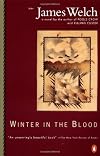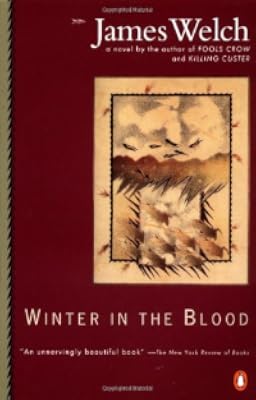
Winter in the Blood
by James Welch
On This Page
Description
A contemporary classic from a major writer of the Native American renaissance -- "Brilliant, brutal and, in my opinion, Welch's best work." --Tommy Orange, The Washington Post During his life, James Welch came to be regarded as a master of American prose, and his first novel, Winter in the Blood, is one of his most enduring works. The narrator of this beautiful, often disquieting novel is a young Native American man living on the Fort Belknap Reservation in Montana. Sensitive and show more self-destructive, he searches for something that will bind him to the lands of his ancestors but is haunted by personal tragedy, the dissolution of his once proud heritage, and Montana's vast emptiness. Winter in the Blood is an evocative and unforgettable work of literature that will continue to move and inspire anyone who encounters it. For more than seventy years, Penguin has been the leading publisher of classic literature in the English-speaking world. With more than 1,700 titles, Penguin Classics represents a global bookshelf of the best works throughout history and across genres and disciplines. Readers trust the series to provide authoritative texts enhanced by introductions and notes by distinguished scholars and contemporary authors, as well as up-to-date translations by award-winning translators. show lessTags
Recommendations







Member Reviews
The narrator of this beautiful, often disquieting novel is a young Native American man living on the Fort Belknap Reservation in Montana. Sensitive and self-destructive, he searches for something that will bind him to the lands of his ancestors but is haunted by personal tragedy, the dissolution of his once proud heritage, and Montana's vast emptiness. Winter in the Blood is an evocative and unforgettable work of literature that will continue to move and inspire anyone who encounters it.
This is a short but a well-written story. There isn't much of a plot driving the novel forward...it's the journey of a 20-year-old American Indian man ostensibly searching for the woman who left him. I didn't understand his obsession to search for her show more since he didn't really care that much for her to start with. I felt that he was actually looking for some connection to his own world. It appeared that he was stuck in his past as well as the past of his people, and all that he could see lying ahead of him was a very uncertain future.
He lived on the reservation with his mother and his grandmother in an isolated house. His father had tragically died years before and there is a fleeting reference to a brother who had also died as the result of a tragic situation of some type. The main character is constantly pulled out of the present by flashbacks of these events as he travels around to various towns looking for his lost woman and meeting a variety of really "oddball" characters.
It's an interesting story, especially if you share any Native American ancestry, which I do not, but I still found the story to be interesting. The main problem I had with it was that there's just not a solid conclusion. We learned the stories of what happened in the past to his various family members, but the reader feels a bit "let down" at the end. Still interesting enough to be worthy of a 4-star rating. show less
This is a short but a well-written story. There isn't much of a plot driving the novel forward...it's the journey of a 20-year-old American Indian man ostensibly searching for the woman who left him. I didn't understand his obsession to search for her show more since he didn't really care that much for her to start with. I felt that he was actually looking for some connection to his own world. It appeared that he was stuck in his past as well as the past of his people, and all that he could see lying ahead of him was a very uncertain future.
He lived on the reservation with his mother and his grandmother in an isolated house. His father had tragically died years before and there is a fleeting reference to a brother who had also died as the result of a tragic situation of some type. The main character is constantly pulled out of the present by flashbacks of these events as he travels around to various towns looking for his lost woman and meeting a variety of really "oddball" characters.
It's an interesting story, especially if you share any Native American ancestry, which I do not, but I still found the story to be interesting. The main problem I had with it was that there's just not a solid conclusion. We learned the stories of what happened in the past to his various family members, but the reader feels a bit "let down" at the end. Still interesting enough to be worthy of a 4-star rating. show less
Sometimes the best books are old ones you missed their first time around. James Welch's debut novel, WINTER IN THE BLOOD (1974) is, for me, definitely one of them. Still in print after fifty years, it's taken its rightful place as a classic portrait of Native American life in the mid-20th century. Set on and around a Montana reservation, its narrator is an unnamed, disaffected young (32) man who never quite got over a tragic accident that killed his older brother, Mose, twenty years ago. And, just eight years after that, his father, First Raise, returning home drunk, froze to death in a snowbank. Since then he has lived aimlessly on the family's small cattle ranch with his widowed mother, Teresa, and his silent grandmother, who sits in show more a rocker and rocks. Things change some, but maybe not much, when Teresa remarries, to Lame Bull, who is pleased to become master of the ranch. Our narrator is okay with this, and works well with Lame Bull, but continues to drink and womanize in bars in towns surrounding the reservation. He meets some quirky and unsavory types, has blackouts and is beaten up a few times while looking for a woman who lived with him for a time. His grandmother dies and he visits Yellow Calf, a very old blind man, who lives alone near the ranch, and learns some family secrets about his Blackfoot/Gros Ventres heritage.
While not a whole lot happens here, the narrator's thoughts and daily activities - haying with Lame Bull and a shifty hired hand, drinking, carousing, one-night stands and more - are presented in great detail, making for a most absorbing read. I read it in just a few sittings and enjoyed the hell out of it. I see it got a rave review from Reynolds Price in the NYTimes Book Review, and Jim Harris called it "A wonderful novel." I'm fifty years late to the party, but I concur. My very highest recommendation.
-Tim Bazzett, author of the memoir, BOOKLOVER show less
While not a whole lot happens here, the narrator's thoughts and daily activities - haying with Lame Bull and a shifty hired hand, drinking, carousing, one-night stands and more - are presented in great detail, making for a most absorbing read. I read it in just a few sittings and enjoyed the hell out of it. I see it got a rave review from Reynolds Price in the NYTimes Book Review, and Jim Harris called it "A wonderful novel." I'm fifty years late to the party, but I concur. My very highest recommendation.
-Tim Bazzett, author of the memoir, BOOKLOVER show less
I read this book when it was first published in the 1970s and held onto it, recognizing that it was a good novel. Rereading it some forty years later, I am stunned with its beauty and precision. Welch was a poet and it shows in his careful use of language. Every vignette of the narrator's life is shown as it unfolds with such attention to detail that you can see it all laid out before you. With his drinking and his sexual encounters, he is trying simultaneously to numb himself still further and to connect with an always elusive sense of meaning and value. This futility, of course, is rooted in the history of the Indian people, which Welch makes personal through the stories of the narrator's grandparents who were both young adults when show more the White men came and rounded up the Indians into reservations. Anyone who wants to write should study this novel for how Welch builds the tension and reveals why the narrator lives the life he does. Then they should go back and read it again for the beauty of the language. show less
A teacher recommended this book and I dutifully picked it up and inhabited another world, a Montana reservation where members of the Gros Ventre and Blackfeet tribes live outside of towns such as Harlem, Dodson, Havre, where they grow grain and run cattle. James Welch writes with humor and truth. His dialogue skills are rich and authentic: "Why don't you settle down?" I said to my hands. "Pay up," said the bartender. When he left, I said, "If you settled down you'd be a lot better off; you'd be happier, believe me, Agnes." "You bore me," she said. "You should learn a trade, shorthand," I said. "There's a crying demand for secretaries." She looked at me as if she didn't recognize me. "Shorthand?" she squealed.
His images of nature and show more characters put you right out on that flat grazing land of the West. "Evening now and the sky had changed to pink reflected off the high western clouds. A pheasant gabbled from a field to the south. A lone cock, he would be stepping from the wild rose along an irrigation ditch to the sweet alfalfa field, perhaps to graze with other cocks and hens, perhaps alone. It is difficult to tell what cocks will do when they grow old. They are like men, full to twists." Welch started as a poet and is quoted in Louise Erdrich's introduction: "we are storytellers from a long way back. And we will be heard for generations to come." The book was published fifty years ago and I am as excited about reading it as if it were just out, a new discovery. And his storyteller credentials are evident in the braided tale describing a cattle drive perfectly paced with a bar spree. The narrator describes his mother, "she had always had a clear bitter look, not without humor, that made the others of us seem excessive, too eager to talk too much, drink too much, breathe too fast...I saw...how much she had come to resemble the old lady." Highly recommended. show less
His images of nature and show more characters put you right out on that flat grazing land of the West. "Evening now and the sky had changed to pink reflected off the high western clouds. A pheasant gabbled from a field to the south. A lone cock, he would be stepping from the wild rose along an irrigation ditch to the sweet alfalfa field, perhaps to graze with other cocks and hens, perhaps alone. It is difficult to tell what cocks will do when they grow old. They are like men, full to twists." Welch started as a poet and is quoted in Louise Erdrich's introduction: "we are storytellers from a long way back. And we will be heard for generations to come." The book was published fifty years ago and I am as excited about reading it as if it were just out, a new discovery. And his storyteller credentials are evident in the braided tale describing a cattle drive perfectly paced with a bar spree. The narrator describes his mother, "she had always had a clear bitter look, not without humor, that made the others of us seem excessive, too eager to talk too much, drink too much, breathe too fast...I saw...how much she had come to resemble the old lady." Highly recommended. show less
Considered a founding text in the Native American Renaissance, James Welch’s 1974 debut novel (he was already a poet) received a 2021 Penguin Classics reissue with new remarks from Joy Harjo and Louise Erdrich giving it context. The unnamed narrator is a 32 year old member of the Blackfeet tribe in Montana. While his mother owns a successful ranch on the reservation, it’s fair to say he is somewhat lost and weighed down with grief, personal but also, surely, historical. Welch explores this grief with a taut poetic prose that is at turns realist and slightly surreal, grim and humorous, in a series of structured scenes over a short period of time that lead to new understanding.
In one such scene, the narrator visits a native elder, now show more blind, who lives alone in a crude cabin on the grassland. The elder claims he does not feel alone as he has the animals to talk to. Mockingly asked if the deer talk to him about the weather, he dismisses the jibe, but replies that the deer are not happy. The conversation continues:
One thing I think I’ve learned as I’ve gotten older is that this earth is always cockeyed. It’s always a bad time. People are always seeing the end. That’s not wrong; the world as we know it does and always will end, though it’s also only a part of our story here and should not exclude awareness of the rest of that story. I think from reading this book that Welch would agree. Erdrich writes in her introduction, “I think it annoyed Welch that this book was called bleak. That world of bones and wind may be stark but it is filled with life, and life is stories.” Life, stories, spirit: these things endure and always will. show less
In one such scene, the narrator visits a native elder, now show more blind, who lives alone in a crude cabin on the grassland. The elder claims he does not feel alone as he has the animals to talk to. Mockingly asked if the deer talk to him about the weather, he dismisses the jibe, but replies that the deer are not happy. The conversation continues:
“Not happy? But surely to a deer one year is as good as the next. How do you mean?”
“They are not happy with the way things are. They know what a bad time it is. They can tell by the moon when the world is cockeyed.”
“But that’s impossible.”
“They understand the signs. This earth is cockeyed.”
One thing I think I’ve learned as I’ve gotten older is that this earth is always cockeyed. It’s always a bad time. People are always seeing the end. That’s not wrong; the world as we know it does and always will end, though it’s also only a part of our story here and should not exclude awareness of the rest of that story. I think from reading this book that Welch would agree. Erdrich writes in her introduction, “I think it annoyed Welch that this book was called bleak. That world of bones and wind may be stark but it is filled with life, and life is stories.” Life, stories, spirit: these things endure and always will. show less
Together with other authors such as N. Scott Momaday, Leslie Marmon Silko and Gerald Robert Vizenor, James Welch was one of the first American Indian authors to spur a Renaissance of Native American literature in the late 1960s and early 1970s.
Published in 1974, Winter in the blood juxtaposes the depressing contemporary life of the Native American main narrator, living in a reservation in Montana, with memories harking back to the narrator's youth, when the people in the community stood close to nature. In his life, the narrator moves from bars to motels, from drinking to meaningless sexual encounters, a life of drunkenness, void of essence. The flashbacks evoke powerful images of nature, but cannot reconcile the main character with his show more identity as an American Indian, because they are mere references to the death of his father and younger brother. Through their deaths he feels cut of from his true identity.
The depth of the narrator's identity crisis is best characterized by the following citation from the novel:
The distance I felt came not from the country or people; it came from within me. I was as distant from myself as a hawk from the moon. (p. 2) show less
Published in 1974, Winter in the blood juxtaposes the depressing contemporary life of the Native American main narrator, living in a reservation in Montana, with memories harking back to the narrator's youth, when the people in the community stood close to nature. In his life, the narrator moves from bars to motels, from drinking to meaningless sexual encounters, a life of drunkenness, void of essence. The flashbacks evoke powerful images of nature, but cannot reconcile the main character with his show more identity as an American Indian, because they are mere references to the death of his father and younger brother. Through their deaths he feels cut of from his true identity.
The depth of the narrator's identity crisis is best characterized by the following citation from the novel:
The distance I felt came not from the country or people; it came from within me. I was as distant from myself as a hawk from the moon. (p. 2) show less
I finally read this book because so many of the authors of my favorite books from the Native American Renaissance had cited it as an influential text. It was rough, but beautiful. Not a happy read, but definitely one worth reading.
Members
- Recently Added By
Lists

Native American / Indigenous Literature
172 works; 100 members

Lithub: The 50 Best Contemporary Novels Under 200 Pages
50 works; 4 members

Top 100 books by Indigenous Masters
134 works; 7 members

Indigenous America Reader
145 works; 12 members

Native American Heritage
52 works; 2 members

The Atlantic's The Great American Novel
136 works; 12 members

Totally Biased List of Tookie’s Favorite Books: Short Perfect Novels
13 works; 1 member
Author Information

Some Editions
Awards and Honors
Awards
Notable Lists
The Great American Novels (1974)
Series
Belongs to Publisher Series
Work Relationships
Has as a student's study guide
Common Knowledge
- Canonical title
- Winter in the Blood
- Original title
- Winter in the blood
- Alternate titles
- Inverno nel sangue
- Original publication date
- 1974
- Important places
- Montana, USA
- Related movies
- Winter in the Blood (2013 | IMDb)
- Epigraph
- Bones should never tell a story
to a bad beginner. I ride
romantic to those words,
those foolish claims that he
was better than dirt, or rain
that bleached his cabin
white as bone. Scattered in the wind... (show all)
Earthboy calls me from my dream:
Dirt is where the dreams must end. - Dedication
- For my mother and father
- First words
- In the tall weeds of the borrow pit, I took a leak and watched the sorrel mare, her colt beside her, walk through burnt grass to the shady side of the log-and-mud cabin.
- Last words
- (Click to show. Warning: May contain spoilers.)I through the pouch into the grave.
- Blurbers
- Sale, Roger; Price, Reynolds; McGuane, Tom; Harrison, Jim; Orange, Tommy
- Original language*
- Anglais (Etats-Unis) (Etats-Unis)
*Some information comes from Common Knowledge in other languages. Click "Edit" for more information.
Classifications
Statistics
- Members
- 803
- Popularity
- 34,594
- Reviews
- 13
- Rating
- (3.68)
- Languages
- 5 — Dutch, English, French, German, Italian
- Media
- Paper, Audiobook, Ebook
- ISBNs
- 18
- ASINs
- 7