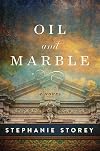
Oil and Marble: A Novel of Leonardo and Michelangelo
by Stephanie Storey
On This Page
Description
Classic Literature. Fiction. Thriller. Historical Fiction. HTML:In her brilliant debut, Storey brings early 16th-century Florence alive, entering with extraordinary empathy into the minds and souls of two Renaissance masters, creating a stunning art history thriller. From 1501 to 1505, Leonardo da Vinci and Michelangelo Buonarroti both lived and worked in Florence. Leonardo was a charming, handsome fifty year-old at the peak of his career. Michelangelo was a temperamental sculptor in his show more mid-twenties, desperate to make a name for himself.Michelangelo is a virtual unknown when he returns to Florence and wins the commission to carve what will become one of the most famous sculptures of all time: David. Even though his impoverished family shuns him for being an artist, he is desperate to support them. Living at the foot of his misshapen block of marble, Michelangelo struggles until the stone finally begins to speak. Working against an impossible deadline, he begins his feverish carving.
Meanwhile, Leonardo's life is falling apart: he loses the hoped-for David commission; he can't seem to finish any project; he is obsessed with his ungainly flying machine; he almost dies in war; his engineering designs disastrously fail; and he is haunted by a woman he has seen in the market—a merchant's wife, whom he is finally commissioned to paint. Her name is Lisa, and she becomes his muse.
Leonardo despises Michelangelo for his youth and lack of sophistication. Michelangelo both loathes and worships Leonardo's genius.
Oil and Marble is the story of their nearly forgotten rivalry.
Skyhorse Publishing, as well as our Arcade, Yucca, and Good Books imprints, are proud to publish a broad range of books for readers interested in fiction—novels, novellas, political and medical thrillers, comedy, satire, historical fiction, romance, erotic and love stories, mystery, classic literature, folklore and mythology, literary classics including Shakespeare, Dumas, Wilde, Cather, and much more. While not every title we publish becomes a New York Times bestseller or a national bestseller, we are committed to books on subjects that are sometimes overlooked and to authors whose work might not otherwise find a home. show less
Tags
Recommendations


Member Reviews
Ugh. I should have known when the phrase "egg-based tempera" showed up that I was dealing with an author who either thought her readers were idiots—or didn't know how to write.
Unfortunately, it turned out to be both.
Stephanie Storey knows her history, there's no doubt about it. Interesting tidbits grace scenes (making it almost worthwhile to finish in order to learn something a bit esoteric to enamor at your next dinner party), but her attempt to novelize the sensational in the vibrant, nail-biting world of 16th century Italy falls flat. The characters were stilted, the prose neophyte, and stakes shallow. When working with historical figures where people pretty much know the arc of their lives, an author has an especially difficult show more time convincing readers of "stakes", and when you don't have the prose or characters to match, it's boring.
Another issue I had with the novel was the modernity of the characters. Speech is almost unaffected, a sort of quasi-formal dialogue that I guess is supposed to impress the readers into the 16th century, but was obviously lazy. The word "pyrotechnics" somehow got into the final draft, (which took me 3 seconds to look up was a 19th-century invention) and just illustrated to me how little Storey cared to make this more authentic than it had to be. There just didn't seem to be an attempt at making it more historically accurate than the dressed-up scenes Storey felt either was comfortable with or just enough to fool lazy readers. It reminded me of the BBC Musketeers adaptation and the like, with scenes moving to the next without much consequence, a story first and foremost without much "art" to the process of novel writing. I'd be hard-pressed to find even one theme.
It's two stars because the novel had potential. It seemed incredibly accurate and wasn't head-hitting-the-wall bad, but it was just so generic it left me insulted. It felt lazy and amateurish, and I can only hope Storey writes some sort of art history non-fiction. I'd read that over a novel any day. show less
Unfortunately, it turned out to be both.
Stephanie Storey knows her history, there's no doubt about it. Interesting tidbits grace scenes (making it almost worthwhile to finish in order to learn something a bit esoteric to enamor at your next dinner party), but her attempt to novelize the sensational in the vibrant, nail-biting world of 16th century Italy falls flat. The characters were stilted, the prose neophyte, and stakes shallow. When working with historical figures where people pretty much know the arc of their lives, an author has an especially difficult show more time convincing readers of "stakes", and when you don't have the prose or characters to match, it's boring.
Another issue I had with the novel was the modernity of the characters. Speech is almost unaffected, a sort of quasi-formal dialogue that I guess is supposed to impress the readers into the 16th century, but was obviously lazy. The word "pyrotechnics" somehow got into the final draft, (which took me 3 seconds to look up was a 19th-century invention) and just illustrated to me how little Storey cared to make this more authentic than it had to be. There just didn't seem to be an attempt at making it more historically accurate than the dressed-up scenes Storey felt either was comfortable with or just enough to fool lazy readers. It reminded me of the BBC Musketeers adaptation and the like, with scenes moving to the next without much consequence, a story first and foremost without much "art" to the process of novel writing. I'd be hard-pressed to find even one theme.
It's two stars because the novel had potential. It seemed incredibly accurate and wasn't head-hitting-the-wall bad, but it was just so generic it left me insulted. It felt lazy and amateurish, and I can only hope Storey writes some sort of art history non-fiction. I'd read that over a novel any day. show less
This is a novel about the great artists Leonardo and Michelangelo. The author tells her story using historical sources when they are available, and using her own imagination when they are not. The relationship between the artists, which isn't known, is the base of the story.
The period covered is 1501-1505 when both artists were living in Florence. During those years Leonardo created one of the world's greatest paintings, Mona Lisa, and Michelangelo created David, one of the world's greatest sculptures.
The author includes a coda that gives us basic facts about the artists after 1505 and includes notes that tell why she made the decisions she did when facts weren't available. In her notes she writes: Oil and Marble is based on twenty show more years of research and grounded in real history, but it is unapologetically a work of fiction.
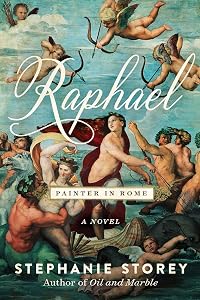
I liked this, there isn't a lot of depth, but it's a good story, one that provokes thought and possibly inspires more reading on the artists. She gave us a little teaser at the end by introducing Raphael, the subject of her second novel, I already have it on my shelf. show less
The period covered is 1501-1505 when both artists were living in Florence. During those years Leonardo created one of the world's greatest paintings, Mona Lisa, and Michelangelo created David, one of the world's greatest sculptures.
The author includes a coda that gives us basic facts about the artists after 1505 and includes notes that tell why she made the decisions she did when facts weren't available. In her notes she writes: Oil and Marble is based on twenty show more years of research and grounded in real history, but it is unapologetically a work of fiction.
I liked this, there isn't a lot of depth, but it's a good story, one that provokes thought and possibly inspires more reading on the artists. She gave us a little teaser at the end by introducing Raphael, the subject of her second novel, I already have it on my shelf. show less
I met Stephanie Storey at a lecture she gave in Winston-Salem, NC. The focus of her talk was research for historical fiction, but she also spoke about other aspects of her writing. When she was done I was impressed enough to buy Oil and Marble. And now that I've read the novel, I'm even more impressed.
This is a story about Michaelangelo and Leonardo da Vinci, set when they were both living and working in Florence. It is, in Storey's own words, “unapologetically a work of fiction.” But in my opinion, historical fiction is more accurate than straight history. Both require accuracy concerning known facts, but a good work of fiction goes a step further by capturing human emotion. And Oil and Marble isn't just good. It's wonderful.
This show more was the time when Leonardo painted the Mona Lisa and Michaelangelo chiseled his David. Leonardo was a master, older than Michaelangelo, so his reputation was established, while Michaelangelo had complete the Pieta and was trying to build on the reputation that work had brought him. Despite the fact that they were at different points in their careers, they were rivals and both experienced the crazy mix of admiration and jealousy that comes when one artist studies the work of another.
As I expected the novel was about the love of art, but there were many themes running through it. Leonardo was concerned with various aspects of his career. He was an engineer as well as an artist, so he worked on other projects. Most of those related to military threats, particularly from the neighboring city of Pisa. And he also had an interesting relationship with Lisa del Giocondo, the model for the Mona Lisa. Meanwhile, Michaelangelo was concerned about his family. He had brothers who depended on his ability to earn money and a father who wasn't happy with his choice to be a sculptor. He was constantly torn between his artistic drive and his love for his family.
In Oil and Marble the stories of Leonardo run side by side, constantly veering over to interfere with one another, but also keeping their independence. I expect that is what the real lives of these two artists were like in the sixteenth century. The book has romance, ambition, and consistent action. It's a great way to study history or to just get lost in a good story.
Steve Lindahl – author of Motherless Soul and White Horse Regressions show less
This is a story about Michaelangelo and Leonardo da Vinci, set when they were both living and working in Florence. It is, in Storey's own words, “unapologetically a work of fiction.” But in my opinion, historical fiction is more accurate than straight history. Both require accuracy concerning known facts, but a good work of fiction goes a step further by capturing human emotion. And Oil and Marble isn't just good. It's wonderful.
This show more was the time when Leonardo painted the Mona Lisa and Michaelangelo chiseled his David. Leonardo was a master, older than Michaelangelo, so his reputation was established, while Michaelangelo had complete the Pieta and was trying to build on the reputation that work had brought him. Despite the fact that they were at different points in their careers, they were rivals and both experienced the crazy mix of admiration and jealousy that comes when one artist studies the work of another.
As I expected the novel was about the love of art, but there were many themes running through it. Leonardo was concerned with various aspects of his career. He was an engineer as well as an artist, so he worked on other projects. Most of those related to military threats, particularly from the neighboring city of Pisa. And he also had an interesting relationship with Lisa del Giocondo, the model for the Mona Lisa. Meanwhile, Michaelangelo was concerned about his family. He had brothers who depended on his ability to earn money and a father who wasn't happy with his choice to be a sculptor. He was constantly torn between his artistic drive and his love for his family.
In Oil and Marble the stories of Leonardo run side by side, constantly veering over to interfere with one another, but also keeping their independence. I expect that is what the real lives of these two artists were like in the sixteenth century. The book has romance, ambition, and consistent action. It's a great way to study history or to just get lost in a good story.
Steve Lindahl – author of Motherless Soul and White Horse Regressions show less
GREAT premise, Mediocre execution
I picked this book out because I have an interest in Renaissance history, art, and Leonardo and Michelangelo specifically. I was intrigued by the synopsis where the author imagines how the two artists might have interacted in Florence, since there was a period of a few years when they both lived there. But I was disappointed.
The imagined story of how Leonardo and Michelangelo might have spurred each to greatness through ego and competition, ending for one with the creation of the Mona Lisa and for the other with the creation of the sculpture David, did NOT turn out to be all that interesting a novel. I never particularly cared about either man. Even the appearances of Cesare Borgia, Machiavelli, and show more Botticelli (other contemporaries) did not add much to the narrative. Despite valiant effort, the author never did capture the essence of either artist. I kept reading to see if I became more interested and it does pick up a bit nearer the end. But overall, not worth the effort. show less
I picked this book out because I have an interest in Renaissance history, art, and Leonardo and Michelangelo specifically. I was intrigued by the synopsis where the author imagines how the two artists might have interacted in Florence, since there was a period of a few years when they both lived there. But I was disappointed.
The imagined story of how Leonardo and Michelangelo might have spurred each to greatness through ego and competition, ending for one with the creation of the Mona Lisa and for the other with the creation of the sculpture David, did NOT turn out to be all that interesting a novel. I never particularly cared about either man. Even the appearances of Cesare Borgia, Machiavelli, and show more Botticelli (other contemporaries) did not add much to the narrative. Despite valiant effort, the author never did capture the essence of either artist. I kept reading to see if I became more interested and it does pick up a bit nearer the end. But overall, not worth the effort. show less
The novel is the author's take on two very important characters in history, Leonardo da Vinci and Michelangelo Buonarroti. Both men traveled in the same time/area: Florence, Italy in 1500. Both men were in competition with each other for commissions for artistic projects. Storey masterfully creates a very interesting (and plausible) story of the interactions. Specifically (without spoiling the book for you), how the competition/ego/pride drove each man to create the Mona Lisa and the sculpture of David. She manages to do this so well that you actually feel like you are there in a room with the characters. You sense their pain as they strive to be their best. Along the way she introduces other characters who were in the same orbit of show more time/place (such as Niccolò Machiavelli). It all weaves together wonderfully, resulting in an excellent read! show less
Storey’s ability to bring ancient figures to life is phenomenal! Early on, I was afraid the book would be boring, then Storey had Michelangelo sneaking around the basilica to carve his name in the Pieta and I was hooked. Truly there is a trip to 16th century Florence with an unforgettable art lesson in this “novel.”
GREAT premise, Mediocre execution
I picked this book out because I have an interest in Renaissance history, art, and Leonardo and Michelangelo specifically. I was intrigued by the synopsis where the author imagines how the two artists might have interacted in Florence, since there was a period of a few years when they both lived there. But I was disappointed.
The imagined story of how Leonardo and Michelangelo might have spurred each to greatness through ego and competition, ending for one with the creation of the Mona Lisa and for the other with the creation of the sculpture David, did NOT turn out to be all that interesting a novel. I never particularly cared about either man. Even the appearances of Cesare Borgia, Machiavelli, and show more Botticelli (other contemporaries) did not add much to the narrative. Despite valiant effort, the author never did capture the essence of either artist. I kept reading to see if I became more interested and it does pick up a bit nearer the end. But overall, not worth the effort. show less
I picked this book out because I have an interest in Renaissance history, art, and Leonardo and Michelangelo specifically. I was intrigued by the synopsis where the author imagines how the two artists might have interacted in Florence, since there was a period of a few years when they both lived there. But I was disappointed.
The imagined story of how Leonardo and Michelangelo might have spurred each to greatness through ego and competition, ending for one with the creation of the Mona Lisa and for the other with the creation of the sculpture David, did NOT turn out to be all that interesting a novel. I never particularly cared about either man. Even the appearances of Cesare Borgia, Machiavelli, and show more Botticelli (other contemporaries) did not add much to the narrative. Despite valiant effort, the author never did capture the essence of either artist. I kept reading to see if I became more interested and it does pick up a bit nearer the end. But overall, not worth the effort. show less
Members
- Recently Added By
Lists

al.vick-wishlist-historical fiction
128 works; 1 member

Travel Reads
26 works; 1 member
Author Information

2 Works 419 Members
Awards and Honors
Distinctions
Common Knowledge
- Original publication date
- 2016
- People/Characters
- Michelangelo Buonarroti; Leonardo da Vinci
Classifications
Statistics
- Members
- 316
- Popularity
- 101,033
- Reviews
- 18
- Rating
- (3.82)
- Languages
- Czech, English, Portuguese, Turkish
- Media
- Paper, Audiobook, Ebook
- ISBNs
- 9
- ASINs
- 5