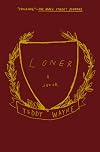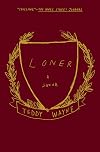
Loner: A Novel
by Teddy Wayne
On This Page
Description
David Federman has never felt appreciated. An academically gifted yet painfully forgettable member of his New Jersey high school class, the withdrawn, mild-mannered freshman arrives at Harvard fully expecting to be embraced by a new tribe of high-achieving peers. But, initially, his social prospects seem unlikely to change, sentencing him to a lifetime of anonymity. Then he meets Veronica Morgan Wells. Struck by her beauty, wit, and sophisticated Manhattan upbringing, David falls feverishly show more in love. Determined to win her attention and an invite into her glamorous world, he begins compromising his moral standards for this one, great shot at happiness. But both Veronica and David, it turns out, are not exactly as they seem. show lessTags
Recommendations




























Member Recommendations

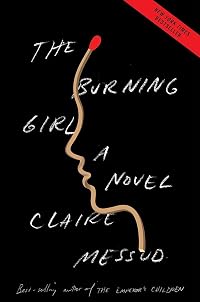
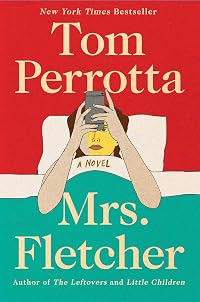
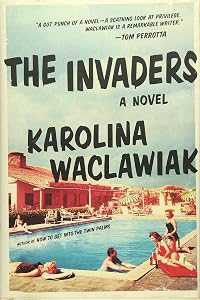
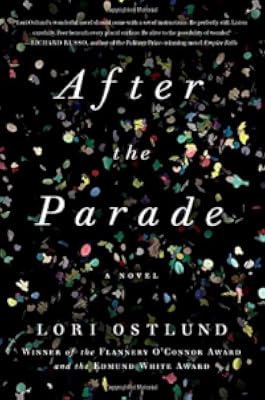
BookshelfMonstrosity Young men become dangerously obsessed with college classmates in these dark, increasingly suspenseful, and disconcerting novels, which are narrated (with a distinct lack of self-awareness) by the intelligent but socially awkward men themselves.
Member Reviews
David Federman went unnoticed in high school. Even his high grades were overlooked by all but his teachers. His friend group was, he felt, composed of the detritus of high school society and he longed to be noticed by the popular kids.
We were studious but not collectively brilliant enough to be nerds, nor sufficiently specialized to be geeks. We might have formed, in aggregate, one thin mustache and a downy archipelago of facial hair. We joked about sex with the vulgar fixation of virgins. We rarely associated outside of school and sheepishly nodded when passing in the halls, aware that each of us somehow reduced the standing of the other--that as a whole we were lesser than the sum of our parts.
Still, he gets into Harvard and arrives show more ready to start an entirely different life where he is finally appreciated and admired, only to find himself in the same social group as before. But on that first day he sees Veronica, a beautiful, wealthy girl from the privileged background of private New York schools and effortless social fluency. He is immediately smitten.
What follows is an upending of all the usual tropes of the literary college novel. We've all read plenty of books in which the awkward but good-natured guy faces a few hurdles, but eventually finds out who he really is and along the way wins the heart of the girl. This is not one of those books. We've all read the WMFuN,* in which the guy makes mistakes, but finds redemption, after an appropriate penance, with the more down-to-earth girl (and often gets to sleep with the object of his affection). This is certainly not one of those novels. Instead, Teddy Wayne takes us into the mind of someone we think we've all met before, whose intentions are familiar to us and shows us that we are very much mistaken.
Loner is fantastic. Wayne manages to create a brilliant and uncomfortable character study in the form of the college novel that is so immersive and insightful and off-putting. He's an excellent writer who is an even better observer of people's behavior and I look forward to reading more by him.
* White Male Fuck-up Novel. show less
We were studious but not collectively brilliant enough to be nerds, nor sufficiently specialized to be geeks. We might have formed, in aggregate, one thin mustache and a downy archipelago of facial hair. We joked about sex with the vulgar fixation of virgins. We rarely associated outside of school and sheepishly nodded when passing in the halls, aware that each of us somehow reduced the standing of the other--that as a whole we were lesser than the sum of our parts.
Still, he gets into Harvard and arrives show more ready to start an entirely different life where he is finally appreciated and admired, only to find himself in the same social group as before. But on that first day he sees Veronica, a beautiful, wealthy girl from the privileged background of private New York schools and effortless social fluency. He is immediately smitten.
What follows is an upending of all the usual tropes of the literary college novel. We've all read plenty of books in which the awkward but good-natured guy faces a few hurdles, but eventually finds out who he really is and along the way wins the heart of the girl. This is not one of those books. We've all read the WMFuN,* in which the guy makes mistakes, but finds redemption, after an appropriate penance, with the more down-to-earth girl (and often gets to sleep with the object of his affection). This is certainly not one of those novels. Instead, Teddy Wayne takes us into the mind of someone we think we've all met before, whose intentions are familiar to us and shows us that we are very much mistaken.
Loner is fantastic. Wayne manages to create a brilliant and uncomfortable character study in the form of the college novel that is so immersive and insightful and off-putting. He's an excellent writer who is an even better observer of people's behavior and I look forward to reading more by him.
* White Male Fuck-up Novel. show less
I just read Loner for the third time because I'm teaching it as the opening novel in my graduate postmodern fiction class this semester at Ha***** University. Oh my. Postmodern indeed.
Loner tells the story, from a first-person perspective, of David Federman, a New Jersey boy and the son of two lawyers, who gets into Harvard. Despite his lack of intellectual passion, he has the brains to take on any academic challenge. David is also a nerd and social outcast of the first order who hopes to shake that tag, a goal he despairs of until he sets eyes on the beautiful Veronica Morgan Wells.
David's obsession with Veronica is framed in two peculiar ways. First, he addresses Veronica in second-person throughout the story, often fantasizing about show more what "you" were doing or thinking. Second, he compares his pursuit of Veronica to Captain Ahab's obsession with the white whale in Moby-Dick (David and Veronica both attend a class on American literature titled "From Ahab to Prufrock").
For me, it is this repeated web of allusions to American literature that really makes the novel. David Federman may be thought of as a loner, but it turns out that being an obsessive loner is hardly an innovative thing to be. Teddy Wayne draws on not only Captain Ahab, but also Fitzgerald's Jay Gatsby, Eliot's Prufrock, Faulkner's Quentin Compson, Charlotte Perkins Gilman's narrator from "The Yellow Wallpaper," and Dickinson's poetry, among many others, to make a case about an American aspiration to adulation that is corrupted by madness and self-destruction.
Another important piece of symbolism in the novel is David's habit of expressing words and sentences backwards. Wayne hints at the meaning of this habit by having the Harvard professor refer, in a lecture on Moby-Dick, to a quote from Blake's "The Marriage of Heaven and Hell," in which the devil makes a remark about the fatality of human will - a desire that can be resisted, in this instance, was a weak desire in the first place, and so allowed itself to be overcome. Blake is drawing here on the Christian tradition that portrays the devil as being an expert on the Bible, but in a way that twists its meaning to his own ends, often the reverse of what was originally intended. David's reversal of words and sentences is the outward manifestation of both his - and American society's - tendency to take things that are positive (education, for example) and twist it until it becomes a monstrosity.
In addition, Blake's words also link into the novel's meditation on the connection between will and moral responsibility. Normally individuals are held responsible for their action, but Wayne complicates this by looking at the centrality of will in American literature and history - characters like Ahab believe they are pursuing their own will, but in fact they are really puppets of their own vanity, ego, and self-destructive impulses. Wayne extends this notion to American colonial politics through references to Manifest Destiny, as well as to philosophical ideas, such as the novel's epigraph from Schopenhauer: "Man can indeed do what he wants, but he cannot will what he wants."
It is the mark of a great work of literature that rereading reveals new ideas and nuances, and this has certainly been my experience with Loner Wayne's style is that perfect mixture of readability and sophistication, and the plot unfolds with just the right balance of drama and realism. Loner is a superb meditation on the neoliberal demons that drive our modern society, and a powerful argument that self-awareness is not the solution to exorcising them. show less
Loner tells the story, from a first-person perspective, of David Federman, a New Jersey boy and the son of two lawyers, who gets into Harvard. Despite his lack of intellectual passion, he has the brains to take on any academic challenge. David is also a nerd and social outcast of the first order who hopes to shake that tag, a goal he despairs of until he sets eyes on the beautiful Veronica Morgan Wells.
David's obsession with Veronica is framed in two peculiar ways. First, he addresses Veronica in second-person throughout the story, often fantasizing about show more what "you" were doing or thinking. Second, he compares his pursuit of Veronica to Captain Ahab's obsession with the white whale in Moby-Dick (David and Veronica both attend a class on American literature titled "From Ahab to Prufrock").
For me, it is this repeated web of allusions to American literature that really makes the novel. David Federman may be thought of as a loner, but it turns out that being an obsessive loner is hardly an innovative thing to be. Teddy Wayne draws on not only Captain Ahab, but also Fitzgerald's Jay Gatsby, Eliot's Prufrock, Faulkner's Quentin Compson, Charlotte Perkins Gilman's narrator from "The Yellow Wallpaper," and Dickinson's poetry, among many others, to make a case about an American aspiration to adulation that is corrupted by madness and self-destruction.
Another important piece of symbolism in the novel is David's habit of expressing words and sentences backwards. Wayne hints at the meaning of this habit by having the Harvard professor refer, in a lecture on Moby-Dick, to a quote from Blake's "The Marriage of Heaven and Hell," in which the devil makes a remark about the fatality of human will - a desire that can be resisted, in this instance, was a weak desire in the first place, and so allowed itself to be overcome. Blake is drawing here on the Christian tradition that portrays the devil as being an expert on the Bible, but in a way that twists its meaning to his own ends, often the reverse of what was originally intended. David's reversal of words and sentences is the outward manifestation of both his - and American society's - tendency to take things that are positive (education, for example) and twist it until it becomes a monstrosity.
In addition, Blake's words also link into the novel's meditation on the connection between will and moral responsibility. Normally individuals are held responsible for their action, but Wayne complicates this by looking at the centrality of will in American literature and history - characters like Ahab believe they are pursuing their own will, but in fact they are really puppets of their own vanity, ego, and self-destructive impulses. Wayne extends this notion to American colonial politics through references to Manifest Destiny, as well as to philosophical ideas, such as the novel's epigraph from Schopenhauer: "Man can indeed do what he wants, but he cannot will what he wants."
It is the mark of a great work of literature that rereading reveals new ideas and nuances, and this has certainly been my experience with Loner Wayne's style is that perfect mixture of readability and sophistication, and the plot unfolds with just the right balance of drama and realism. Loner is a superb meditation on the neoliberal demons that drive our modern society, and a powerful argument that self-awareness is not the solution to exorcising them. show less
This book was unsettling and yet masterful. The entire tale is triggering as a woman who has endured the self entitled "I'm a nice guy, I'm your friend, I'm not an asshole like that guy" culture where you've been followed home by someone, stalked in the grocery store aisles, and know instinctively that you have been watched. I didn't walk into this thinking that it would be any other way. I read the reviews, the NPR articles and heard about the story first. I was prepared, and yet, I was not prepared for the masterful prose of [author:Teddy Wayne|2973252] that should be required reading for examples of character study.
I had such a hard time with this book because of the subject matter. It's really hard to push yourself out of a show more situation, especially if you are unprepared for what is to come. We read books where the adoration of the male/female protagonist is called out as love rather than obsession. THERE IS A DIFFERENCE PEOPLE!!! There is a difference between love, attraction and obsession. What David Federman feels for Veronica is an obsession, it is not determination or love, it is obsessions to the point where he believes he sees a connection with her when she has made it clear that she is not interested in a romantic relationship. The depths and levels that he falls to, the flat emotional connections and the loner personality that is presented to us where he is the outsider and doesn't seem to connect or feel anything like most other people do is used to show us that this depth of feeling is wrong; this depth of feeling is out of character for David, and the whole tale is not just the horrific stalking and attack of a woman, it is also the study of the depths of mental illness.
The ick factor, the skin crawling icky gross feeling that you have when you read about his trip in to New York... standing on the street and watching her home. That depravity where he doesn't see anything wrong with what he was doing, but he knows that others would. He knows that society would deem him wrong and his behaviour wrong but he does it anyway because to him it is not is not the daring proof of love many people misconstrue it to be.
This happens every day. This happens to millions of women EVERY DAY and unlike many other reviewers I have seen here, I do not see [author:Teddy Wayne|2973252] doing anything but marking the disgusting truth of the world around him. I think my question for him would be, who was it in your world who was so brutally attacked? Who do you know who was hurt, who was wronged and their attacker received suck slack consequences?
If that isn't the case, it is a man trying to show the world the disgust at these injustices. He's trying to open your eyes, open the eyes of society, that there is no real justice for these kinds of betrayals. I think that is whyDavid's sexual assault of Veronica rocks the reader to the core. The violation that you feel, that you almost feel betrayed that the author allowed his creation to do this, to get this far... And then that this is what happens every day. This is what happens in the world and the hypocrisy of "justice" that is metered out is heart breaking and against what you feel should happen. That the study Veronica was conducting (while morally gray) was used to turn it around on her, turn the attack around and make it seem justified... This is society's treatment of victims of sexual assault every day.
This was a masterful character study. It was an in depth perspective that makes you question your own thoughts and beliefs. It reminds you of what you should do... What we should all do. show less
I had such a hard time with this book because of the subject matter. It's really hard to push yourself out of a show more situation, especially if you are unprepared for what is to come. We read books where the adoration of the male/female protagonist is called out as love rather than obsession. THERE IS A DIFFERENCE PEOPLE!!! There is a difference between love, attraction and obsession. What David Federman feels for Veronica is an obsession, it is not determination or love, it is obsessions to the point where he believes he sees a connection with her when she has made it clear that she is not interested in a romantic relationship. The depths and levels that he falls to, the flat emotional connections and the loner personality that is presented to us where he is the outsider and doesn't seem to connect or feel anything like most other people do is used to show us that this depth of feeling is wrong; this depth of feeling is out of character for David, and the whole tale is not just the horrific stalking and attack of a woman, it is also the study of the depths of mental illness.
The ick factor, the skin crawling icky gross feeling that you have when you read about his trip in to New York... standing on the street and watching her home. That depravity where he doesn't see anything wrong with what he was doing, but he knows that others would. He knows that society would deem him wrong and his behaviour wrong but he does it anyway because to him it is not is not the daring proof of love many people misconstrue it to be.
This happens every day. This happens to millions of women EVERY DAY and unlike many other reviewers I have seen here, I do not see [author:Teddy Wayne|2973252] doing anything but marking the disgusting truth of the world around him. I think my question for him would be, who was it in your world who was so brutally attacked? Who do you know who was hurt, who was wronged and their attacker received suck slack consequences?
If that isn't the case, it is a man trying to show the world the disgust at these injustices. He's trying to open your eyes, open the eyes of society, that there is no real justice for these kinds of betrayals. I think that is why
This was a masterful character study. It was an in depth perspective that makes you question your own thoughts and beliefs. It reminds you of what you should do... What we should all do. show less
This book is terrifying and made my skin crawl at times the whole time I was reading. And yet I couldn't put it down.
The content of the story is disturbing. The reader is forced to listen to the internal dialogues of David, a self-proclaimed loner who thinks attending Harvard will bring a change to his social status. However, it becomes obvious quite early on that David isn't really looking to make meaningful relationships and his obsession with fellow classmate, Veronica, only helps to spin him further away from any true connections with his peers.
There were moments in the beginning where perhaps it is possible for the reader to feel empathy, or at the very least - pity, for our narrator. He clearly has difficulty fitting in and there show more are some seriously cringeworthy moments where it's a little easier to see why David is the way he is and why human interaction doesn't come easy to him. But then David's obsession with Veronica slowly starts to build in intensity and all feelings of concern for our narrator fly out the window.
I don't know what the author's intent was when writing this novel, but as a female reader, my thoughts kept returning to what the narration shared about male privilege. As David's behavior and thought processes became more and more extreme, I found myself thinking about news headlines such as this one: http://nypost.com/2014/05/25/virgin-gunman-vowed-sorority-sluts-must-die-before-.... Not to mention, all one needs to do is type something like "man kills woman for rejecting him" into a google search and hundreds of articles pop up. It's an issue that is frighteningly prevalent in our society and Wayne's novel puts the reader right into the head of someone who feels like an Elliot Rodger or one of the slew of men who have felt "owed" by a woman just because they showed them attention: https://mic.com/articles/135394/14-women-were-brutally-attacked-for-rejecting-me...
Wayne shows this slow build up in David's character in the thoughts he has regarding Veronica's lack of interest:
"By Tuesday my [Facebook friend] request remained unanswered. If your delay was calculated, it was no longer cute. I wrote an entire essay for you; all you had to do was click a button or press on a screen."
"So you had time for her but not the guy who wrote your paper."
Again and again, David sees Veronica's unwillingness to engage in a romantic relationship with him to be an affront against him and I would argue that even if he never read Veronica's final essay for her Gender and the Consumerist Impulse class, something would have triggered his final actions. Including the information about the legal action (or lack thereof) and how easy it was for David to get away with his actions only highlighted what a mess of a system we have when it comes to issues like sexual harassment and rape and that's ultimately what made the novel so scary - that the Davids of the world could come to view their behavior as justified and to then be backed up by the judicial system.
Perhaps I missed the point of the book entirely, but I enjoyed it nonetheless for the questions it raised on an issue I feel so strongly about. show less
The content of the story is disturbing. The reader is forced to listen to the internal dialogues of David, a self-proclaimed loner who thinks attending Harvard will bring a change to his social status. However, it becomes obvious quite early on that David isn't really looking to make meaningful relationships and his obsession with fellow classmate, Veronica, only helps to spin him further away from any true connections with his peers.
There were moments in the beginning where perhaps it is possible for the reader to feel empathy, or at the very least - pity, for our narrator. He clearly has difficulty fitting in and there show more are some seriously cringeworthy moments where it's a little easier to see why David is the way he is and why human interaction doesn't come easy to him. But then David's obsession with Veronica slowly starts to build in intensity and all feelings of concern for our narrator fly out the window.
I don't know what the author's intent was when writing this novel, but as a female reader, my thoughts kept returning to what the narration shared about male privilege. As David's behavior and thought processes became more and more extreme, I found myself thinking about news headlines such as this one: http://nypost.com/2014/05/25/virgin-gunman-vowed-sorority-sluts-must-die-before-.... Not to mention, all one needs to do is type something like "man kills woman for rejecting him" into a google search and hundreds of articles pop up. It's an issue that is frighteningly prevalent in our society and Wayne's novel puts the reader right into the head of someone who feels like an Elliot Rodger or one of the slew of men who have felt "owed" by a woman just because they showed them attention: https://mic.com/articles/135394/14-women-were-brutally-attacked-for-rejecting-me...
Wayne shows this slow build up in David's character in the thoughts he has regarding Veronica's lack of interest:
"By Tuesday my [Facebook friend] request remained unanswered. If your delay was calculated, it was no longer cute. I wrote an entire essay for you; all you had to do was click a button or press on a screen."
"So you had time for her but not the guy who wrote your paper."
Again and again, David sees Veronica's unwillingness to engage in a romantic relationship with him to be an affront against him and I would argue that even if he never read Veronica's final essay for her Gender and the Consumerist Impulse class, something would have triggered his final actions. Including the information about the legal action (or lack thereof) and how easy it was for David to get away with his actions only highlighted what a mess of a system we have when it comes to issues like sexual harassment and rape and that's ultimately what made the novel so scary - that the Davids of the world could come to view their behavior as justified and to then be backed up by the judicial system.
Perhaps I missed the point of the book entirely, but I enjoyed it nonetheless for the questions it raised on an issue I feel so strongly about. show less
4.25
Teddy Wayne’s “Loner” is a fast-paced read that take an often cringe-inducing look into an awkward teenager's life trying hard to reinvent himself on the campus of Harvard University. An outcast at his high school, Federman feels like Harvard will be different. His intelligence went under the radar there, and where he feels that this particular student body will be more on his level. In the beginning, when you watch Federman still fumble, you find yourself rooting for and simultaneously identifying with him as he tries desperately to “find his people”. Then things take a dark turn. That is about all I can say without spoiling this book since it is so short and takes some turns many readers will not see coming. With that show more warning firmly in place let’s get on with my review…
***Ahead there be spoilers***
The Characters:
Many of these characters are clichés. You have the privileged WASP who feels they don’t have to take much of anything seriously in Federman's crush Veronica.
You have the uber diverse bad of students that call themselves the Matthews Marauders, somewhat led by the awkward geeky Steven.
The most well rounded and well-written character, Sara is the true loner of the novel (I will get there). She is a warrior for social justice much in the same way many Caucasian students on campus is during this time period. Loud voices with a rallying cry to come to the aid of the less privileged, but with far too little experience in a harder, grittier, more sheltered and more culturally diverse world than where they come from. She means well but is trying to understand diversity on paper. Sara often keeps to herself, is loyal to a fault, and is dedicated to her work and to David.
The main character David, dubbed the loner by one of his instructors, is not really a loner. A loser, sure, awkward, most definitely, but David tries (and often fails in a spectacular fashion) to fit in and find his niche. At no time do you find David relishing in the peace that comes with being only in your own company, the way a true loner would? At first, the reader finds themselves sympathizing with David, and even maybe seeing a bit of themselves in him. Then things take a bit of a swing as David’s insecurity rooted in his failure to say and do the right things, and his anger at the failure of others to recognize and accept him begins to root themselves in a delusion that the object of his affection (Veronica) goes from an attainable goal to a person he wishes to possess. This mixed with David’s entitlement creates the perfect storm of toxic masculinity. David becomes the Incel Messiah, and you find yourself sometimes gasping and often cringing as you quickly read through this short novel, bracing yourself for a terrible conclusion that comes in a way you both can, yet do not quite predict.
The Writing:
Wayne’s writing is pretentious, humorous and highly quotable. Often I am not a fan of pretentious writing, but I maintain that it makes sense here. Wayne’s book is actually supposed to be written by his protagonist, who is quite pretentious. Many of the characters are not three dimensional, but I would argue that Federman’s sociopathic nature doesn’t allow for him to see many other people as anything but cardboard cut-outs or cliché’s. The object of his desire only served that purpose on paper, so you often find David ignoring signs off who Veronica really is in his delusion. The object of his practiced affections, Sara, was the only one that seemed to jump off the page, albeit not intentionally. Her only purpose for the protagonist is both practice and a way to get closer to the object of his true affections, Veronica. The way Wayne was able to pull off rounding out Sara’s character despite doing this in Federman’s voice was, I think, a mark of great writing.
The book is a quick read and comes to even a more fast-paced and twisted conclusion when David does just what you are hoping he won't do, but all the while knowing he might. What brings if about is also a turn that you sort of see coming, yet not in the manner in which you envisioned it. That may not make sense to anyone else other than someone that has already read this book.
The Story:
The story itself is fast-paced and well written, and highly quotable. At times it is even incredibly humorous in its observations. The reader finds themselves both rooting for the protagonist, cringing at the protagonist's actions (I can’t stress enough how cringe-inducing this book can be), hating the protagonist, and both wishing he could hide from his consequences, yet waiting eagerly for the hammer to fall. The characters are pretty stagnant and do not really change, but that is expected for a piece of writing this short, from one protagonist's point of view, and from a protagonist that shows no self-awareness.
I think many readers will find the story original. This book straddles genres, being both a good piece of literary fiction as well as a great piece of New Adult Contemporary fiction. I actually find this novel a breath of fresh air in a world of books aimed at the 18-20 something demographic (New Adult) that idolize and romanticize toxic masculinity (See some of the more popular books by authors like Colleen Hoover, Anna Todd, Penelope Douglas, and Jamie McGuire) instead of shining a light on it.
My main criticism of this book is that, because it is so short, there was no time to dig deeper into the character, or to put enough work into the twist ending which made the conclusion feel a bit rushed.
My only other criticism (as previously mentioned) is the title. David is not, by any stretch a loner. I feel that the term loner has gotten a bad connotation over the years due to mass shootings and the growth of the incel movement. As a true loner, I can say that it is not my desire to find a part of a society I can’t identify with (as David does with Veronica and her group). I choose to enjoy my own company and my books more than the company of other people because there is calm and peace in solitariness. In contrast, David is looking for someone to notice him, to appreciate him for how great he perceives himself to be, and he does what he can to get recognized, he just has trouble doing so gracefully.
Recommendations:
If you want to read/watch something with a somewhat similar twist executed with grace and precision, and with a less off a toxic protagonist, read the play “The Shape of Things” by Neil LeButte, or watch the fabulous movie by the same name starring Paul Rudd (he does a phenomenal job). If you want to read a more in-depth and ugly look at toxic masculinity, read Brett Easton Ellis’ “American Psycho.”
In conclusion, I absolutely loved each laughable and often cringe-inducing moment of this book, highly recommend it, and can say this is easily a new favorite and in the running for my favorite read of the year, thus far.
show less
Teddy Wayne’s “Loner” is a fast-paced read that take an often cringe-inducing look into an awkward teenager's life trying hard to reinvent himself on the campus of Harvard University. An outcast at his high school, Federman feels like Harvard will be different. His intelligence went under the radar there, and where he feels that this particular student body will be more on his level. In the beginning, when you watch Federman still fumble, you find yourself rooting for and simultaneously identifying with him as he tries desperately to “find his people”. Then things take a dark turn. That is about all I can say without spoiling this book since it is so short and takes some turns many readers will not see coming. With that show more warning firmly in place let’s get on with my review…
***Ahead there be spoilers***
The Characters:
Many of these characters are clichés. You have the privileged WASP who feels they don’t have to take much of anything seriously in Federman's crush Veronica.
You have the uber diverse bad of students that call themselves the Matthews Marauders, somewhat led by the awkward geeky Steven.
The most well rounded and well-written character, Sara is the true loner of the novel (I will get there). She is a warrior for social justice much in the same way many Caucasian students on campus is during this time period. Loud voices with a rallying cry to come to the aid of the less privileged, but with far too little experience in a harder, grittier, more sheltered and more culturally diverse world than where they come from. She means well but is trying to understand diversity on paper. Sara often keeps to herself, is loyal to a fault, and is dedicated to her work and to David.
The main character David, dubbed the loner by one of his instructors, is not really a loner. A loser, sure, awkward, most definitely, but David tries (and often fails in a spectacular fashion) to fit in and find his niche. At no time do you find David relishing in the peace that comes with being only in your own company, the way a true loner would? At first, the reader finds themselves sympathizing with David, and even maybe seeing a bit of themselves in him. Then things take a bit of a swing as David’s insecurity rooted in his failure to say and do the right things, and his anger at the failure of others to recognize and accept him begins to root themselves in a delusion that the object of his affection (Veronica) goes from an attainable goal to a person he wishes to possess. This mixed with David’s entitlement creates the perfect storm of toxic masculinity. David becomes the Incel Messiah, and you find yourself sometimes gasping and often cringing as you quickly read through this short novel, bracing yourself for a terrible conclusion that comes in a way you both can, yet do not quite predict.
The Writing:
Wayne’s writing is pretentious, humorous and highly quotable. Often I am not a fan of pretentious writing, but I maintain that it makes sense here. Wayne’s book is actually supposed to be written by his protagonist, who is quite pretentious. Many of the characters are not three dimensional, but I would argue that Federman’s sociopathic nature doesn’t allow for him to see many other people as anything but cardboard cut-outs or cliché’s. The object of his desire only served that purpose on paper, so you often find David ignoring signs off who Veronica really is in his delusion. The object of his practiced affections, Sara, was the only one that seemed to jump off the page, albeit not intentionally. Her only purpose for the protagonist is both practice and a way to get closer to the object of his true affections, Veronica. The way Wayne was able to pull off rounding out Sara’s character despite doing this in Federman’s voice was, I think, a mark of great writing.
The book is a quick read and comes to even a more fast-paced and twisted conclusion when David does just what you are hoping he won't do, but all the while knowing he might. What brings if about is also a turn that you sort of see coming, yet not in the manner in which you envisioned it. That may not make sense to anyone else other than someone that has already read this book.
The Story:
The story itself is fast-paced and well written, and highly quotable. At times it is even incredibly humorous in its observations. The reader finds themselves both rooting for the protagonist, cringing at the protagonist's actions (I can’t stress enough how cringe-inducing this book can be), hating the protagonist, and both wishing he could hide from his consequences, yet waiting eagerly for the hammer to fall. The characters are pretty stagnant and do not really change, but that is expected for a piece of writing this short, from one protagonist's point of view, and from a protagonist that shows no self-awareness.
I think many readers will find the story original. This book straddles genres, being both a good piece of literary fiction as well as a great piece of New Adult Contemporary fiction. I actually find this novel a breath of fresh air in a world of books aimed at the 18-20 something demographic (New Adult) that idolize and romanticize toxic masculinity (See some of the more popular books by authors like Colleen Hoover, Anna Todd, Penelope Douglas, and Jamie McGuire) instead of shining a light on it.
My main criticism of this book is that, because it is so short, there was no time to dig deeper into the character, or to put enough work into the twist ending which made the conclusion feel a bit rushed.
My only other criticism (as previously mentioned) is the title. David is not, by any stretch a loner. I feel that the term loner has gotten a bad connotation over the years due to mass shootings and the growth of the incel movement. As a true loner, I can say that it is not my desire to find a part of a society I can’t identify with (as David does with Veronica and her group). I choose to enjoy my own company and my books more than the company of other people because there is calm and peace in solitariness. In contrast, David is looking for someone to notice him, to appreciate him for how great he perceives himself to be, and he does what he can to get recognized, he just has trouble doing so gracefully.
Recommendations:
If you want to read/watch something with a somewhat similar twist executed with grace and precision, and with a less off a toxic protagonist, read the play “The Shape of Things” by Neil LeButte, or watch the fabulous movie by the same name starring Paul Rudd (he does a phenomenal job). If you want to read a more in-depth and ugly look at toxic masculinity, read Brett Easton Ellis’ “American Psycho.”
In conclusion, I absolutely loved each laughable and often cringe-inducing moment of this book, highly recommend it, and can say this is easily a new favorite and in the running for my favorite read of the year, thus far.
show less
Loner by Teddy Wayne
In Loner, Teddy Wayne sends the campus novel through the most misanthropic of literary sieves—the skulking, sulky voice of shy psychopath, David Federman, a narrator Lolita’s white, widowed male, Humbert Humbert, would certainly recognize as a kindred spirit. Intellectually gifted in the extreme, David has sailed through high school and landed as a freshman at Harvard where his narcissistic personality disorder soon finds its objet d’obsession in Manhattanite Veronica Morgan Wells.
Smooth, sophisticated, and strikingly beautiful Veronica is superficially nothing like David. They do, however, share one significant trait, a backwards, egocentric way of seeing the world. Perhaps most starkly characterized in show more David’s innate ability to reverse-engineer the English language (yourself becomes flesruoy; erotic record, citore drocer) and Veronica’s decision to use David’s psychoses as term-paper material, this shared, predatory worldview provides the novel’s thematic and dramatic centers.
Written as an extended missive to Veronica’s “you,” Loner’s tale of America’s sinister, present truths (out-of-control entitlement and a social-media-fed need for instant gratification) ostensibly focuses on the relationship between David and Veronica. In truth, this book is about only one person, and that’s David Federman.
The question of character likability is one readers, writers, and critics have wrestled with quite a bit recently. And, for those who demand characters be paragons of ethical, moral, or psychiatric virtue—the best friends we never had—this book isn’t for you. For me, aside from the fact that there is a gender disparity in many of these concerns—an exaggerated expectation that female writers will produce likable (particularly female) characters—they’re not something I particularly care about. The qualities I prize in a literary novel like Loner are voice, pacing, social criticism, and humor, regardless how dark. Quality prose doesn’t hurt either. Wayne delivers on all these counts, invoking, at his lyrical heights and depraved depths, the maestro of literary monsters himself, Vladimir Vladimirovich Nabokov.
http://www.thenervousbreakdown.com/kbaumeister/2016/12/the-nervous-breakdowns-re... show less
In Loner, Teddy Wayne sends the campus novel through the most misanthropic of literary sieves—the skulking, sulky voice of shy psychopath, David Federman, a narrator Lolita’s white, widowed male, Humbert Humbert, would certainly recognize as a kindred spirit. Intellectually gifted in the extreme, David has sailed through high school and landed as a freshman at Harvard where his narcissistic personality disorder soon finds its objet d’obsession in Manhattanite Veronica Morgan Wells.
Smooth, sophisticated, and strikingly beautiful Veronica is superficially nothing like David. They do, however, share one significant trait, a backwards, egocentric way of seeing the world. Perhaps most starkly characterized in show more David’s innate ability to reverse-engineer the English language (yourself becomes flesruoy; erotic record, citore drocer) and Veronica’s decision to use David’s psychoses as term-paper material, this shared, predatory worldview provides the novel’s thematic and dramatic centers.
Written as an extended missive to Veronica’s “you,” Loner’s tale of America’s sinister, present truths (out-of-control entitlement and a social-media-fed need for instant gratification) ostensibly focuses on the relationship between David and Veronica. In truth, this book is about only one person, and that’s David Federman.
The question of character likability is one readers, writers, and critics have wrestled with quite a bit recently. And, for those who demand characters be paragons of ethical, moral, or psychiatric virtue—the best friends we never had—this book isn’t for you. For me, aside from the fact that there is a gender disparity in many of these concerns—an exaggerated expectation that female writers will produce likable (particularly female) characters—they’re not something I particularly care about. The qualities I prize in a literary novel like Loner are voice, pacing, social criticism, and humor, regardless how dark. Quality prose doesn’t hurt either. Wayne delivers on all these counts, invoking, at his lyrical heights and depraved depths, the maestro of literary monsters himself, Vladimir Vladimirovich Nabokov.
http://www.thenervousbreakdown.com/kbaumeister/2016/12/the-nervous-breakdowns-re... show less
Loner is told through the narrater David Federman during his first semester at Harvard and his immediate infatuation with other freshman, Veronica and his stop at nothing attitude to be with her.
Teddy Wayne did a good job at making David more and more spine chilling as the story goes. At first you feel sorry for him and want him to succeed, but then you begin questioning his actions and reasoning. The way the author uses "YOU" in replacement to Veronica gives the reader the all more creeped out vibe.
I don't want to give out too much more because I feel like I will. The book was good, definitely not something I would read often since it did such a good job at making me so uncomfortable, but it is a subject manner I feel like isn't show more touched on often. Wayne's writing makes you question why you still feel sorry to a character who is doing things he absolutely shouldn't be doing. show less
Teddy Wayne did a good job at making David more and more spine chilling as the story goes. At first you feel sorry for him and want him to succeed, but then you begin questioning his actions and reasoning. The way the author uses "YOU" in replacement to Veronica gives the reader the all more creeped out vibe.
I don't want to give out too much more because I feel like I will. The book was good, definitely not something I would read often since it did such a good job at making me so uncomfortable, but it is a subject manner I feel like isn't show more touched on often. Wayne's writing makes you question why you still feel sorry to a character who is doing things he absolutely shouldn't be doing. show less
Members
- Recently Added By
Lists

Dark Academia Novels
59 works; 11 members

Books Read in 2017
4,249 works; 129 members
Kirkus Starred Fiction Reviews of Books Published in 2016
63 works; 3 members

wish list
61 works; 3 members
Author Information

10+ Works 1,043 Members
Some Editions
Awards and Honors
Awards
Distinctions
Notable Lists
Common Knowledge
- Original publication date
- 2016-09-13
- Epigraph
- Man can indeed do what he wants, but he cannot will what he wants. - Arthur Schopenhauer, Essay on the Freedom of Will
"After I go out this door, I may only exist in the minds of all my acquaintances," he said. "I may be an orange peel." -J.D. Salinger, "Teddy" - Dedication
- To Katie, and with her
- First words
- "David," my mother said. "We're here."
- Canonical DDC/MDS
- 813.6
- Canonical LCC
- PS3623.A98
Classifications
Statistics
- Members
- 267
- Popularity
- 121,176
- Reviews
- 27
- Rating
- (3.64)
- Languages
- English
- Media
- Paper, Audiobook, Ebook
- ISBNs
- 7
- ASINs
- 2