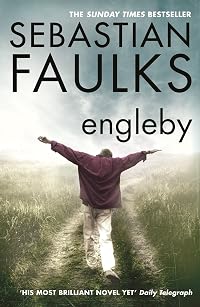
Engleby
by Sebastian Faulks
On This Page
Description
Mike Engleby says things that others dare not even think. When the novel opens in the 1970s, he is a university student, having survived a 'traditional' school. A man devoid of scruple or self-pity, Engleby provides a disarmingly frank account of English education. Yet beneath the disturbing surface of his observations lies an unfolding mystery of gripping power. One of his contemporaries unaccountably disappears, and as we follow Engleby's career, which brings us up to the present day, the show more reader has to ask: is Engleby capable of telling the whole truth? Engleby can be read as a lament for a generation and the country it failed. It is also a poignant account of the frailty of human consciousness. Sebastian Faulks's new novel is a bolt from the blue, unlike anything he has written before: contemporary, demotic, heart-wrenching - and funny, in the deepest shade of black. show lessTags
Recommendations












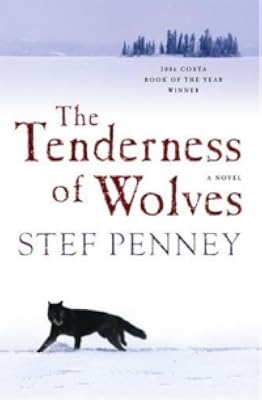
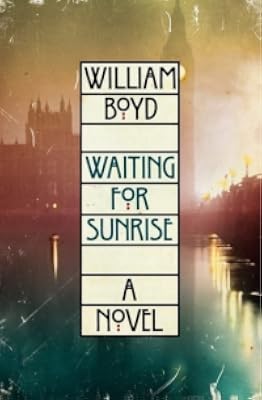
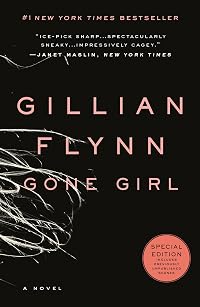


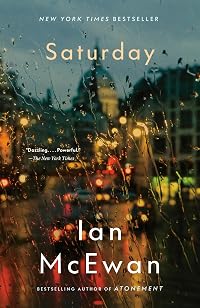

Member Recommendations

Member Reviews
ENGLEBY, by Sebastian Faulks.
Found this book at a library sale about five years ago and it's been sitting on my shelf since then. Bought it because I'd very much enjoyed his bestseller historical novel BIRDSONG some years back. But this book, ENGLEBY, is nothing at all like BIRDSONG. It is wholly unique, different, compelling, shocking, disturbing, creepy - ALL those things. I could not put this book DOWN! Finished it in just a couple of days, neglecting other things I should have been doing. In Mike Engleby, Faulks has created a character that is darkly funny, yet chilling and horrifying all at the same time. The story follows Engleby from his time in university (Cambridge) in the early 70s on into the early years of the new century, show more with frequent flashbacks to his abusive and troubled childhood rooted in poverty. It paints a dark and frightening portrait of a very intelligent loner, disaffected and deeply disturbed. The era of the seventies is accurately reflected and plays a part too. A riveting character study and a murder mystery combined, ENGLEBY is a story that will remain with me for a long, long time. Sorry, but I'm not giving any more away. READ THIS BOOK! Very highly recommended. show less
Found this book at a library sale about five years ago and it's been sitting on my shelf since then. Bought it because I'd very much enjoyed his bestseller historical novel BIRDSONG some years back. But this book, ENGLEBY, is nothing at all like BIRDSONG. It is wholly unique, different, compelling, shocking, disturbing, creepy - ALL those things. I could not put this book DOWN! Finished it in just a couple of days, neglecting other things I should have been doing. In Mike Engleby, Faulks has created a character that is darkly funny, yet chilling and horrifying all at the same time. The story follows Engleby from his time in university (Cambridge) in the early 70s on into the early years of the new century, show more with frequent flashbacks to his abusive and troubled childhood rooted in poverty. It paints a dark and frightening portrait of a very intelligent loner, disaffected and deeply disturbed. The era of the seventies is accurately reflected and plays a part too. A riveting character study and a murder mystery combined, ENGLEBY is a story that will remain with me for a long, long time. Sorry, but I'm not giving any more away. READ THIS BOOK! Very highly recommended. show less
Review of: Engleby, by Sebastian Faulks
by Stan Prager (11-30-19)
Some years ago, I had the pleasure of reading the Booker-prize winning masterpiece Birdsong, by Sebastian Faulks, which motivated me to pick up a couple of his other novels for later consumption, including Engleby. One day, I randomly plucked it off the shelf and turned to the first page. Honestly, it was not easy to put down. Also, to be even more honest, there were times that I really wanted to.
As a reviewer, it sounds somewhat awkward or even unseemly to resort to a term like “creepy” to describe a novel, but that would most accurately describe the subtle if sustained punch in the gut I experienced while reading this one, propelled by a growing revulsion for the show more central character. As the narrative unfolds, that character—the eponymous Mike Engleby—is a working-class Brit on scholarship to “an ancient” university in the early 1970s. He comes across as a bit of an oddball, but for those of us who lived through this era that was hardly unusual nor especially undesirable, given that to be an iconoclast in those days was often seen as a virtue. But the reader cannot help but experience an emerging disquiet as Engleby develops an infatuation that veers to obsession that then turns more ominously to the outright stalking of his bright and beautiful classmate Jennifer Arkland. Along the way, there are flashbacks to the bitter poverty of Engleby’s youth, the regular beatings by his father, the quotidian brutality of his life at public school where he is condemned to the unfortunate nickname “Toilet” and subjected to an ongoing torment that stretches the limits of endurance to cruelty—the cumulative effect of which, it becomes clear, shapes him into a bully, a thief, a drug dealer, an opportunist. Flash forward again and Jennifer has disappeared, never found, presumed murdered.
Did Engleby murder her? Could he be a serial killer? Is he mere weirdo or sociopath? That’s for you to find out: I don’t believe in folding spoilers into reviews. But the narrative is laced with plenty of clues, scattered within an interior monologue that invites an uncertain sympathy for a protagonist whom at best provokes the uneasy, at worst the repellent. Yet, it is the genius of the author to tempt the reader to veer from repugnance to empathy, against all odds, even if this shift may prove temporary. And the reader, like it or not, is ensnared in an uncomfortable fascination with this very same well-crafted interior monologue, a kind of labyrinth pregnant with Engleby’s barely suppressed anxiety, which he overcompensates for with visions of grandeur and a disdainful arrogance for all others in his orbit—except perhaps, that is, for Jennifer Arkland. And then that anxiety grows contagious as the reader begins to question the reliability of the narrator! Are the things revealed by Engleby’s inner thoughts real or imagined? Is Faulks himself, acting as both wizard and jester, simply mocking us from behind the curtain?
The last time I found myself as deeply unsettled by a work of fiction, it was Perfume, by Patrick Süskind, the unlikely tale of an eighteenth-century serial killer, but that novel was tempered with a pronounced sense of the ironic if not especially comedic. Not so with this one: there’s nothing even a little bit funny about Engleby. For his part, Faulks proves himself a true artist of the written word, his pen taking full command of his character and his audience alike. I recommend it, even if it may keep you up at night.
Review of: Engleby, by Sebastian Faulks https://regarp.com/2019/11/30/review-of-engleby-by-sebastian-faulks/
For more fiction and nonfiction reviews, visit www.regarp.com and the podcast site, www.regarpbookblogpod.com show less
by Stan Prager (11-30-19)
Some years ago, I had the pleasure of reading the Booker-prize winning masterpiece Birdsong, by Sebastian Faulks, which motivated me to pick up a couple of his other novels for later consumption, including Engleby. One day, I randomly plucked it off the shelf and turned to the first page. Honestly, it was not easy to put down. Also, to be even more honest, there were times that I really wanted to.
As a reviewer, it sounds somewhat awkward or even unseemly to resort to a term like “creepy” to describe a novel, but that would most accurately describe the subtle if sustained punch in the gut I experienced while reading this one, propelled by a growing revulsion for the show more central character. As the narrative unfolds, that character—the eponymous Mike Engleby—is a working-class Brit on scholarship to “an ancient” university in the early 1970s. He comes across as a bit of an oddball, but for those of us who lived through this era that was hardly unusual nor especially undesirable, given that to be an iconoclast in those days was often seen as a virtue. But the reader cannot help but experience an emerging disquiet as Engleby develops an infatuation that veers to obsession that then turns more ominously to the outright stalking of his bright and beautiful classmate Jennifer Arkland. Along the way, there are flashbacks to the bitter poverty of Engleby’s youth, the regular beatings by his father, the quotidian brutality of his life at public school where he is condemned to the unfortunate nickname “Toilet” and subjected to an ongoing torment that stretches the limits of endurance to cruelty—the cumulative effect of which, it becomes clear, shapes him into a bully, a thief, a drug dealer, an opportunist. Flash forward again and Jennifer has disappeared, never found, presumed murdered.
Did Engleby murder her? Could he be a serial killer? Is he mere weirdo or sociopath? That’s for you to find out: I don’t believe in folding spoilers into reviews. But the narrative is laced with plenty of clues, scattered within an interior monologue that invites an uncertain sympathy for a protagonist whom at best provokes the uneasy, at worst the repellent. Yet, it is the genius of the author to tempt the reader to veer from repugnance to empathy, against all odds, even if this shift may prove temporary. And the reader, like it or not, is ensnared in an uncomfortable fascination with this very same well-crafted interior monologue, a kind of labyrinth pregnant with Engleby’s barely suppressed anxiety, which he overcompensates for with visions of grandeur and a disdainful arrogance for all others in his orbit—except perhaps, that is, for Jennifer Arkland. And then that anxiety grows contagious as the reader begins to question the reliability of the narrator! Are the things revealed by Engleby’s inner thoughts real or imagined? Is Faulks himself, acting as both wizard and jester, simply mocking us from behind the curtain?
The last time I found myself as deeply unsettled by a work of fiction, it was Perfume, by Patrick Süskind, the unlikely tale of an eighteenth-century serial killer, but that novel was tempered with a pronounced sense of the ironic if not especially comedic. Not so with this one: there’s nothing even a little bit funny about Engleby. For his part, Faulks proves himself a true artist of the written word, his pen taking full command of his character and his audience alike. I recommend it, even if it may keep you up at night.
Review of: Engleby, by Sebastian Faulks https://regarp.com/2019/11/30/review-of-engleby-by-sebastian-faulks/
For more fiction and nonfiction reviews, visit www.regarp.com and the podcast site, www.regarpbookblogpod.com show less
This is a dark novel that I needed to finish and yet wanted to keep on reading. Mike Engleby is the ultimate unreliable narrator by the end it was impossible to know truth from imagination. There is lots of detail about life at Cambridge in the 1970s, music and social history. Mike Engleby has an obsession with a female student and tells the reader about his brutal treatment by bullies at boarding school. The novel unfolds in disturbing ways, with occasional flashes of humour as Mike Engleby often struggles in social situations. We skip some time and he has a job as a journalist and 1980s politics and changes in London society interweave the story. A fascinating read that is masterfully written so that it managed to make me both loathe show more and feel sympathy for the main character at the same time. show less
Here Faulks uses the conceit of a first person unreliable narrator, creating a sense of unease and menace. Yet there is never a twist as such, given that the reader always has plenty of reasons to be suspicious of Mr. Engleby. More distinctive, perhaps, is the evocation of a state of mind that is unsettling yet not so instantly repellant that the reader cannot empathise at all. Indeed, I wondered whether the point was to play with the extent that society can tolerate neurodivergence. Or perhaps it was intended to be a new twist on the (very, very tired) murder mystery genre. Or maybe a comment on the lengths the human mind can go to rationalise actions - although I’ve read more effective such comments. [b:The Kindly Ones|3755250|The show more Kindly Ones|Jonathan Littell|https://images.gr-assets.com/books/1347999215s/3755250.jpg|2916549] comes to mind.
As you might gather, I’m ambivalent about ‘Engleby’. It kept my interest and the tone was effectively sustained. On the other hand, the narrator did remind me more than slightly of [b:The Wasp Factory|567678|The Wasp Factory|Iain Banks|https://images.gr-assets.com/books/1434940562s/567678.jpg|3205295], a novel I absolutely hated. Although ‘Engleby’ wasn’t so pointlessly revolting, there were definite echoes. In both cases, I disliked the narrator, although here they were at least interesting, and found the ending rather unsatisfactory. I realise that Engleby is not intended to be likeable, however at times I struggled to care about him at all. Combining a viscerally dislikeable first person narrator with compelling enough writing that the reader continues to be fascinated by them is difficult to pull off. I don’t think that’s entirely achieved here.
Central, arguably only, character aside, the settings were effectively evoked. Unsurprisingly, I was most appreciative of the part set at Cambridge University during the 1970s. I do wish, though, that I could read a novel about the experience of being a Cambridge student that does not involve women being murdered. (Further examples that spring to mind are [b:The Locust Room|2102222|The Locust Room|John Burnside|https://images.gr-assets.com/books/1320473590s/2102222.jpg|2107586] and [b:The Beauty of Murder|16071679|The Beauty of Murder|A.K. Benedict|https://images.gr-assets.com/books/1396624691s/16071679.jpg|21865678]. I don’t think [b:The Night Climbers: A Novel|331244|The Night Climbers A Novel|Ivo Stourton|https://images.gr-assets.com/books/1441018679s/331244.jpg|321812] includes a murder such, but someone definitely dies violently.) Recommendations on that front would be welcome.
In short, there is something elusive about ‘Engleby’. I never felt like I really grasped its substance. Interesting, but not quite compelling. show less
As you might gather, I’m ambivalent about ‘Engleby’. It kept my interest and the tone was effectively sustained. On the other hand, the narrator did remind me more than slightly of [b:The Wasp Factory|567678|The Wasp Factory|Iain Banks|https://images.gr-assets.com/books/1434940562s/567678.jpg|3205295], a novel I absolutely hated. Although ‘Engleby’ wasn’t so pointlessly revolting, there were definite echoes. In both cases, I disliked the narrator, although here they were at least interesting, and found the ending rather unsatisfactory. I realise that Engleby is not intended to be likeable, however at times I struggled to care about him at all. Combining a viscerally dislikeable first person narrator with compelling enough writing that the reader continues to be fascinated by them is difficult to pull off. I don’t think that’s entirely achieved here.
Central, arguably only, character aside, the settings were effectively evoked. Unsurprisingly, I was most appreciative of the part set at Cambridge University during the 1970s. I do wish, though, that I could read a novel about the experience of being a Cambridge student that does not involve women being murdered. (Further examples that spring to mind are [b:The Locust Room|2102222|The Locust Room|John Burnside|https://images.gr-assets.com/books/1320473590s/2102222.jpg|2107586] and [b:The Beauty of Murder|16071679|The Beauty of Murder|A.K. Benedict|https://images.gr-assets.com/books/1396624691s/16071679.jpg|21865678]. I don’t think [b:The Night Climbers: A Novel|331244|The Night Climbers A Novel|Ivo Stourton|https://images.gr-assets.com/books/1441018679s/331244.jpg|321812] includes a murder such, but someone definitely dies violently.) Recommendations on that front would be welcome.
In short, there is something elusive about ‘Engleby’. I never felt like I really grasped its substance. Interesting, but not quite compelling. show less
This is the story of Mike Engleby, who, when we first encounter him, is a student at "an ancient university" (obviously Cambridge, although it's never named), where his main activities seem to be drinking, popping pills, keeping to himself, thinking detached thoughts about the lives around him, and behaving in a rather stalker-ish fashion toward a girl he's interested in... and about whose later disappearance he may or may not know more than he's telling anyone.
I have such mixed feelings about this one. For most of the first hundred pages or so, I felt highly disappointed. It was well-written, but everything about it, including the description on the front cover, had led me to expect a fascinatingly twisty main character, and I just show more wasn't finding him interesting at all. Some of his observations were somewhat insightful, some of his backstory depressing, and some of his behavior vaguely creepy, but none of it was particularly affecting or engaging. Mostly, he struck me as pretentious and prematurely world-weary in that way that's so common among students, and which can be so annoying to those of us who have been there and grown out of it. As I read on, though, both the character and the novel itself grew on me. I won't say too much about its central premise, in the interest of keeping things spoiler-free, but my feelings about that are very mixed, too. I think ultimately it works better than it seems like it ought to, but I do have several issues with it all. And then in the end, the book suddenly starts gazing into its own navel in a rather irritating way. Still, it left me with the feeling that I'd at least just read something interesting, which is a lot more than I expected fifty pages in. show less
I have such mixed feelings about this one. For most of the first hundred pages or so, I felt highly disappointed. It was well-written, but everything about it, including the description on the front cover, had led me to expect a fascinatingly twisty main character, and I just show more wasn't finding him interesting at all. Some of his observations were somewhat insightful, some of his backstory depressing, and some of his behavior vaguely creepy, but none of it was particularly affecting or engaging. Mostly, he struck me as pretentious and prematurely world-weary in that way that's so common among students, and which can be so annoying to those of us who have been there and grown out of it. As I read on, though, both the character and the novel itself grew on me. I won't say too much about its central premise, in the interest of keeping things spoiler-free, but my feelings about that are very mixed, too. I think ultimately it works better than it seems like it ought to, but I do have several issues with it all. And then in the end, the book suddenly starts gazing into its own navel in a rather irritating way. Still, it left me with the feeling that I'd at least just read something interesting, which is a lot more than I expected fifty pages in. show less
One of the best ' get into the head of a madman/disturbed person/ eccentric' books I have ever read, maybe because some (I said some!) of his eccentricities are parallel to mine ( on a scale of one to ten mine are 5's his are 10's). A darkly funny, engaging book about an extreme social isolate , who finds understanding other people a challenge (sometimes I'm not even sure other people are real) whose obsessions end in tragedy and who also manages to hide the tragedy from everyone including himself.
Excellent book.
Excellent book.
Goodness, this has me guessing. We first meet Mike Engleby when he's at Cambridge University. He's clearly got some issues, as he's drinking and taking mysterious little blue pills and a whole cocktail of druge (leagal and illegal). He also has what seem to be a bit of an pbsession with a fellow student, Jennifer Arkland. He's not a histry student, yet attends history lectures in order to see her. We hear from him over time, and learn about his upbringing (poor working class) his family, his school as well as following his story in a forward direction. When Jen disappears, I was sue he'd had a hand in it. As, co-incidentally, did the policeman.
now comes the spoiler-y bit. I can't really discuss my feeling about the end without giving show more away whodunit. Some 15 years later Jen's body s discovered and the police re-investigate. Mike is arrested and through his gradual emergence of supressed memory we discover how he murdered her. But I'm then left somewhat confused as to if he did or not. Because while he can remember doing so, he also seems to have other false memories, so is this a real memory that has surfaced, or a false one that fits the facts? I'm really not sure and I think that might be this book's greatest achievement.
Regardless of what actually happened, this is a masterly piece of writing about the issues of mental illness. It is something that is significantly under exposed, we only ever hear about it when a crime case hots the papers, we don;t hear about the people who struggle for some of their lives with something hanging over them. The description of the panic attacks he suffers are powerful and while they may not convey the exact feeling, they certainly shake the reader from their complacency. show less
Regardless of what actually happened, this is a masterly piece of writing about the issues of mental illness. It is something that is significantly under exposed, we only ever hear about it when a crime case hots the papers, we don;t hear about the people who struggle for some of their lives with something hanging over them. The description of the panic attacks he suffers are powerful and while they may not convey the exact feeling, they certainly shake the reader from their complacency. show less
Members
- Recently Added By
Lists

Top Five Books of 2013
1,562 works; 715 members

Books Read in 2020
4,379 works; 123 members
Author Information

37+ Works 21,480 Members
Sebastian Faulks is the author of Where My Heart Used to Beat, which made the New Zealand Best Seller List 2015. (Bowker Author Biography)
Awards and Honors
Common Knowledge
- Original publication date
- 2007
- Epigraph
- "It is a small part of life we really live. Indeed, all the rest is not life but merely time." from On the Shortness of Life by Seneca, 49 AD
- Dedication
- For Gillon Aitken
- First words
- "My name is Mike Engleby, and I am in my second year at an ancient university."
- Last words
- (Click to show. Warning: May contain spoilers.)For some reason dreamed of sparkling Greek sea, Aegean blue, with wooden boats, their sails filled with love.
Classifications
Statistics
- Members
- 1,633
- Popularity
- 13,833
- Reviews
- 61
- Rating
- (3.67)
- Languages
- 7 — Dutch, English, Finnish, French, Norwegian (Bokmål), Portuguese, Swedish
- Media
- Paper, Audiobook, Ebook
- ISBNs
- 32
- ASINs
- 21