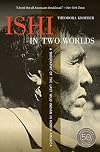
Ishi in Two Worlds
by Theodora Kroeber
On This Page
Description
The life story of Ishi, the last Yahi Indian, lone survivor of an exterminated tribe, is unique in the annals of North American anthropology. Ishi stumbled into the twentieth century on the morning of August 29, 1911, when, desperate with hunger and terrified of the white murderers of his family, he was found in the corral of a slaughterhouse near Oroville, California. Finally identified as a Yahi by an anthropologist, Ishi was brought to San Francisco by Professor T. T. Waterman and lived show more there the rest of his life under the care and protection of Alfred Kroeber and the staff of the University of California's Museum of Anthropology. show lessTags
Recommendations














Member Reviews
The tragic yet revelatory story of Ishi, the last of the Yahi, the last documented Indigenous person to live in the wild in the United States.
The author was married to one of the men who worked intensively with Ishi when he descended from the mountains, alone and starving, in 1911. The author begins with that moment: his arrival near Oroville, his expectation to be killed, being protected in the jail, the summons for the anthropologists from UCalifornia-Berkeley. The author then returns to the past, speaking of what was known regarding Indigenous life in California before contact with the Europeans, the Yana tribe and its divisions, how relatively untouched the Yana were by the Spaniards and the Mexicans, but then how the Americans show more continually attacked and slaughtered them with prejudice. Narratives from locals were used to attempt to reconstruct what precisely happened with the Yahi: their eventual reduction to only a handful, their willingness to raid for food to survive, Ishi and the last few survivors; the 1908 ransack of their last village and the death of all but Ishi.
The author then returns to describe Ishi and his life from 1911-1916: his constitution, his experience of San Francisco, his work as a janitor, much about his language, his interactions and friendships, his craftsmanship, what he communicated regarding Yahi customs, culture, and stories, the trip back to his home territory in 1914; his ultimate demise from tuberculosis.
This is definitely a work from 1960. Many of the cultural assumptions and prognostications will be perceived as cringeworthy today. And yet the author is very forthright about the genocide the Americans perpetrated on the Indigenous people of California. She is rather sympathetic toward Ishi and portrayed him without too much of a patronizing tone. It might well be that she attempted to exonerate her husband and his associates for their treatment of Ishi; it is also possible that she portrayed his attitude after 1911 decently well, as someone who had committed to living among white people in white culture who may not have minded visiting the old homestead but was quite happy to return - because he would rather live among his white friends in a strange world than by himself in a more familiar one.
The book generates a lot of conflicting emotions. It's amazing that all of this could take place as late as 1911; we can appreciate the amount of work expended to try to preserve aspects of Yahi language and culture while lamenting the behaviors that made it so dire and necessary. It's a reminder of how much has changed in California in the past century. It's a legacy we'll never be able to fully shake.
Recognize the work is from 1960 and all that entails; but the story told ought to be read. show less
The author was married to one of the men who worked intensively with Ishi when he descended from the mountains, alone and starving, in 1911. The author begins with that moment: his arrival near Oroville, his expectation to be killed, being protected in the jail, the summons for the anthropologists from UCalifornia-Berkeley. The author then returns to the past, speaking of what was known regarding Indigenous life in California before contact with the Europeans, the Yana tribe and its divisions, how relatively untouched the Yana were by the Spaniards and the Mexicans, but then how the Americans show more continually attacked and slaughtered them with prejudice. Narratives from locals were used to attempt to reconstruct what precisely happened with the Yahi: their eventual reduction to only a handful, their willingness to raid for food to survive, Ishi and the last few survivors; the 1908 ransack of their last village and the death of all but Ishi.
The author then returns to describe Ishi and his life from 1911-1916: his constitution, his experience of San Francisco, his work as a janitor, much about his language, his interactions and friendships, his craftsmanship, what he communicated regarding Yahi customs, culture, and stories, the trip back to his home territory in 1914; his ultimate demise from tuberculosis.
This is definitely a work from 1960. Many of the cultural assumptions and prognostications will be perceived as cringeworthy today. And yet the author is very forthright about the genocide the Americans perpetrated on the Indigenous people of California. She is rather sympathetic toward Ishi and portrayed him without too much of a patronizing tone. It might well be that she attempted to exonerate her husband and his associates for their treatment of Ishi; it is also possible that she portrayed his attitude after 1911 decently well, as someone who had committed to living among white people in white culture who may not have minded visiting the old homestead but was quite happy to return - because he would rather live among his white friends in a strange world than by himself in a more familiar one.
The book generates a lot of conflicting emotions. It's amazing that all of this could take place as late as 1911; we can appreciate the amount of work expended to try to preserve aspects of Yahi language and culture while lamenting the behaviors that made it so dire and necessary. It's a reminder of how much has changed in California in the past century. It's a legacy we'll never be able to fully shake.
Recognize the work is from 1960 and all that entails; but the story told ought to be read. show less
Countless native Americans were hounded to death by settlers from back east, in the name of "Manifest Destiny." This is the story of one who survived--barely. Ishi's people were all dead, mostly from genocide, when he stumbled into the white man's world in 1911, fearful and half dead from hunger and exhaustion. He knew no English, only Stone Age survival skills. He was enough of a novelty to find help and acceptance, becoming a kind of resident freak in an anthropology museum in San Francisco. The Wild Man of Oroville, people called him. Naturally he was perplexed by the strange new world he found himself in, and some people treated him like a child. But you've got to admire him. He was a survivor, and his way of life, unlike ours, was show more sustainable. Did he have more to teach us than we to teach him? A sad tale that all Americans should read, because Ishi's tragedy was repeated so many times in our history. This book is a scholarly work, dry and academic at times, so don't read it for entertainment. show less
Ishi was the sole survivor of his tribe- one of the Yani that had lived in California for centuries before the gold rush overran their land with settlers and miners. Displaced by the encroaching white man and loosing their already tenuous livelihood when game was driven away or slaughtered, his people naturally turned to hunting cattle, sheep, horses. They didn't realize these animals belonged to white men, as their only domestic animals were dogs. Retaliation was harsh- his tribe was deliberately exterminated. When Ishi was ten years old, the remaining few dozen of his people went into hiding after a devastating massacre. They were pretty much unseen, unheard of for several more decades until in 1908 a group of surveyors happened show more across a hidden camp where three or four people were living- including Ishi. He fled one way, his sister another, they never saw each other again. Three years later, in 1911, Ishi stumbled out into the modern world. He was in his early fifties. He had lived his entire life in a state of warfare, hiding from enemies, in fear of his life, watching his people dwindle, seeing his loved ones die. Can you imagine, after decades of living in a small group forever in hiding, after having wandered alone for months perhaps several years without a person to speak to, to then walk into the camp of your lifelong enemies, probably expecting to die at their hands?
And yet Ishi, to all accounts, seems to have handled his introduction into the modern world very well, After the initial shock, he realized people meant him no harm. People were so curious to see "the wild man" he was taken to a university where eager anthropologists wished to learn about his vanished tribe, to study him. Ishi had living quarters in the museum. A member of another California tribe was found who spoke a neighboring dialect, so language was not a complete barrier. Ishi learned enough rudimentary English to communicate fairly well. He adapted quickly to using modern conveniences; it was interesting to see which modern implements he admired and appreciated for the work they saved, and which he found puzzling or amusing. He did not pine for his old way of life, in fact rarely spoke of it and never divulged much about his past. But he was content to demonstrate his skills over and over again to museum visitors and others- making bows and arrows, starting a fire, knapping arrowheads and so forth.
It is a very sober and intriguing story. Parts of it I found very interesting, others quite dry. This account is written in such a straightforward fashion, very factual and often dull to read... A lot of the book is about the history of the area, the linguistic development of his tribe, what is known about their distribution and culture, early accounts from settlers in the area of conflicts and so on. It's very informative, but hard to get an idea of the human experience, the real person.
from the Dogear Diary show less
And yet Ishi, to all accounts, seems to have handled his introduction into the modern world very well, After the initial shock, he realized people meant him no harm. People were so curious to see "the wild man" he was taken to a university where eager anthropologists wished to learn about his vanished tribe, to study him. Ishi had living quarters in the museum. A member of another California tribe was found who spoke a neighboring dialect, so language was not a complete barrier. Ishi learned enough rudimentary English to communicate fairly well. He adapted quickly to using modern conveniences; it was interesting to see which modern implements he admired and appreciated for the work they saved, and which he found puzzling or amusing. He did not pine for his old way of life, in fact rarely spoke of it and never divulged much about his past. But he was content to demonstrate his skills over and over again to museum visitors and others- making bows and arrows, starting a fire, knapping arrowheads and so forth.
It is a very sober and intriguing story. Parts of it I found very interesting, others quite dry. This account is written in such a straightforward fashion, very factual and often dull to read... A lot of the book is about the history of the area, the linguistic development of his tribe, what is known about their distribution and culture, early accounts from settlers in the area of conflicts and so on. It's very informative, but hard to get an idea of the human experience, the real person.
from the Dogear Diary show less
Bought this little book at a national park visitor center out west visiting the land that ISHI was from. The book is a re-release and does show its age in its composition. With that being said, it is still informative and interesting. ISHI was the last of his tribe and showed up in a town in 1911. Half the book is about the native Americans and this particular tribe and the second half relates ISHI's time from when he showed up to his death from TB 3.5 years later. This would make a great movie! I think with some rewriting, it would be a popular book now. I could see this as required highschool or community college reading.
The best part about this book was the look into Ishi's Yahi and Yana culture, and its overview of California Indian tribes in general. The myth that the California Indians were a simple and childlike race subsisting on what they could dig from the ground is thoroughly debunked by this book.
A bit dry in the writing, but gripping in the tale of an American Indian man who survives the invasion of the white settler,but loses his family and tribe. He comes to the world of the white man and tries to find a place there.
Very interesting, but incredibly sad.
Members
- Recently Added By
Lists

Top Five Books of 2013
1,562 works; 721 members

Best Biographies
216 works; 24 members

Non-Fiction Worth Reading
1,025 works; 264 members
Author Information

14+ Works 1,824 Members
Some Editions
Awards and Honors
Series
Belongs to Publisher Series
Work Relationships
Is retold in
Common Knowledge
- Canonical title
- Ishi in Two Worlds
- Original title
- Ishi in two worlds
- Original publication date
- 1961
- People/Characters
- Ishi (c. 1860 – March 25, 1916)
- Important places
- California, USA; Tehama County, California, USA; Ishi Wilderness, Lassen National Forest, California, USA
- Disambiguation notice
- Full title (1961): Ishi in two worlds; a biography of the last wild Indian in North America. With a foreword by Lewis Gannett
Classifications
Statistics
- Members
- 930
- Popularity
- 28,860
- Reviews
- 9
- Rating
- (3.75)
- Languages
- English, French, Hungarian, Japanese
- Media
- Paper, Audiobook, Ebook
- ISBNs
- 24
- ASINs
- 24