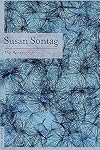
The Benefactor
by Susan Sontag 
On This Page
Description
"The Benefactor," Susan Sontag's first book and first novel, originally published in 1963, introduced a unique writer to the world. In the form of a memoir by a latter-day Candide named Hippolyte, "The Benefactor" leads us on a kind of psychic Grand Tour, in which Hippolyte's violently imaginative dream life becomes indistinguishable from his surprising experiences in the 'real world.' Sontag's novel supplies a fascinating, knowing, acerbic portrait of a certain bohemian demimonde that show more flourished in France until quite recently. More important, "The Benefactor "is a novel about ideas-especially religious ideas-unlike any other: funny, acrobatic, disturbing, profound. show lessTags
Recommendations















































Member Recommendations

GotoTengo A protagonist obsessed with his dreams.
Member Reviews
Sontag wrote this, the first of her four novels, in the early sixties when the idea of dream interpretation still held water. We know today from the work of neuroscientists that there is no consensus on what dreams mean, if anything. Indeed, some researchers have called dreams meaningless, nothing more than an overactive brain repeating recent stimuli during the nightly period of sensory deprivation. The narrator here, Hippolyte, evinces a powerful inwardness and love of solitude. His only interest is his dreams. He lives in Paris. His friend Jean-Jacques is a homosexual prostitute and thief who lives a dangerous night life. Perhaps as a means of highlighting Hippolyte's inwardness, Sontag has Jean-Jacques take him home to bed one show more night. After, he shows not a jot of curiosity about his recent homosexual experience. Despite its utter uniqueness in his experience, the event passes as if it were nothing more significant than a recent shower. It is as if Sontag wants to signify, through Hippolyte's incuriousness, his total immersion in his dream life. For both his bisexuality and his real life/dream life can be viewed as forms of dualism, a willingness to dwell simultaneously in opposing worlds. Hippolyte is for the most part drawn to women. Frau Anders is a matronly socialite, given to nightly soirees, where she collects the talented and famous. (Here Hippolyte meets Jean-Jacques.) She and Hippolyte run off to an unnamed Islamic country. There Hippolyte sells her to a native merchant, and returns home without her. He mulls her new happiness: "I must confess that, knowing nothing more of her fortunes, I envied her. She had achieved her freedom, which coincided with the fulfillment of her fantasy." In such an oneiric novel nothing is made of this. Frau Anders seems missed by no one. Hippolyte continues to dream, his true passion. For him dream life and logic have overtaken reality. In his Dream of Mirrors, he comes to see his dreams as a reflection of daily life: "The dreams, all of them, were a mirror before which my daytime life presented itself, and which gave back to me an unfamiliar but intelligible image. With perseverance and attentive inactivity--the two would come together." Thus he comes close to present-day dream theory. He is entirely self-involved, with little or no compassion for others. After he unceremoniously dumps Frau Anders, he takes up with her more libertine daughter, Lucrezia. His fling with her ends just in time for Frau Anders return. She shows him her damaged body. Hippolyte's response is to plan and carry out her murder. But, alas, she survives! Hippolyte is inept as anything but a dreamer. He falls in with a professor of obscure religions. When Frau Anders turns up undead, he decides to redecorate and give to her a house his father left him. She wants him. He doesn't want her. He returns to the provinces to marry a young woman, who rapidly sickens. As she fades, Hippolyte invites Jean-Jacques back into their lives. When he shows up (in a Gestapo uniform, incidentally) Hippolyte breaks a chair over his back, knocking him unconscious. The fringe professor of religion expounds laughably at the wife's funeral. Frau Anders, who's Jewish, shows up running from the Nazis. Hippolyte hides her for a while and is relieved when she leaves. The war ends. Frau Anders returns. Hippolyte decides to go live in the house he once gave her. She in turn become his housekeeper. And then there's this blur into alternative storylines. Suddenly, Frau Anders shows up at Hippolyte's door, so it can't be her who is sitting in the kitchen in a housekeeper's uniform . . . and so on. show less
Hyppolite es un joven francés burgués y culto pero apático que, por fin, decide llevar a la vida real aquellos deseos y fantasías que habitan en el sueño. Quiere transformar en acción positiva esa energía interior que a todos nos late dentro y que en el estado de vigilia tiende a evaporarse. Sorprendentemente, se verá inmerso en una espiral alucinante que, más allá de su propia liberación personal, le llevará al borde de la locura.
Mar 22, 2023Spanish
Una novela de viaje inicíatico de un extraño personaje medio novela existencialista, y que en partes me hizo acordar a viaje al fondo de la noche. Muy bien escrita, rara complicada, me parece que los años no le han hecho bien
May 26, 2020Spanish
Ratings
Members
- Recently Added By
Author Information

110+ Works 21,255 Members
Susan Sontag was born in New York City on January 16, 1933. She received a B.A. from the University of Chicago and did graduate work in philosophy, literature and theology at Harvard University and Saint Anne's College, Oxford University. She was the author of 17 books including four novels, a collection of short stories, several plays, and eight show more works of nonfiction. Her novels are The Benefactor, Death Kit, The Volcano Lover, and In America, which won the 2000 National Book Award for fiction. On Photography received the 1978 National Book Critics Circle Award. Her stories and essays have appeared in numerous magazines including The New Yorker, The New York Review of Books, The Times Literary Supplement, and Art in America. She also wrote and directed four feature films and stage plays in the United States and Europe. She died from leukemia on December 28, 2004 at the age of 71. (Bowker Author Biography) show less
Susan Sontag has a Legacy Library. Legacy libraries are the personal libraries of famous readers, entered by LibraryThing members from the Legacy Libraries group.
Some Editions
Series
Belongs to Publisher Series
Grote Beren (46)
Common Knowledge
- Original title
- The benefactor
- Original publication date
- 1963
- Epigraph*
- Über den Schlaf, das allabendliche Abenteuer, wäre zu bemerken, daß die Menschen täglich mit einer Unerschrockenheit zu Bett gehen, die unser Fassungsvermögen überstiege, wüßten wir nicht, daß sie ihrer Unkenntnis de... (show all)r Gefahr entspringt.
Baudelaire
Wenn etwas mißrät – macht den Traum verantwortlich!
Der Traum hat sein eigenes Gesetz; ebenso gut könnte man mit einem Regenbogen hadern, weil er einen Nebenbogen hat oder weil er keinen Nebenbogen hat… Der Traum weiß es am besten; und der Traum, ich sage es nochmals, trägt die Verantwortung.
De Quincey
Über den Schlaf, das allabendliche Abenteuer, wäre zu bemerken, daß die Menschen täglich mit einer Unerschrockenheit zu Bett gehen, die unser Fassungsvermögen überstiege, wüßten wir nicht, daß sie ihrer Unkenntnis de... (show all)r Gefahr entspringt.
Baudelaire
Wenn etwas mißrät – macht den Traum verantwortlich!
Der Traum hat sein eigenes Gesetz; ebenso gut könnte man mit einem Regenbogen hadern, weil er einen Nebenbogen hat oder weil er keinen Nebenbogen hat… Der Traum weiß es am besten; und der Traum, ich sage es nochmals, trägt die Verantwortung.
De Quincey - Dedication*
- Für María Irene Fornés
- First words*
- Könnte ich ihnen nur erklären, wie ich mich seit jenen Tagen verändert habe!
- Original language*
- Englisch
*Some information comes from Common Knowledge in other languages. Click "Edit" for more information.
Classifications
Statistics
- Members
- 272
- Popularity
- 118,084
- Reviews
- 3
- Rating
- (2.96)
- Languages
- 8 — Dutch, English, French, German, Italian, Spanish, Swedish, Turkish
- Media
- Paper, Ebook
- ISBNs
- 23
- ASINs
- 11