The Book of Harlan
by Bernice L. McFadden 
On This Page
Description
One of the Washington Post's Best Books of 2016 So Far"Simply miraculous...As her saga becomes ever more spellbinding, so does the reader's astonishment at the magic she creates. This is a story about the triumph of the human spirit over bigotry, intolerance and cruelty, and at the center of The Book of Harlan is the restorative force that is music."
—Washington Post
"McFadden packs a powerful punch with tight prose and short chapters that bear witness to key events in early show more twentieth-century history: both World Wars, the Great Depression, and the Great Migration. Partly set in the Jim Crow South, the novel succeeds in showing the prevalence of racism all across the country—whether implemented through institutionalized mechanisms or otherwise. Playing with themes of divine justice and the suffering of the righteous, McFadden presents a remarkably crisp portrait of one average man's extraordinary bravery in the face of pure evil."
—Booklist, Starred review
"Through this character portrait of Harlan, McFadden has constructed a vivid, compelling narrative that makes historical fiction an accessible, literary window into the African-American past and some of the contemporary dilemmas of the present."
—Publishers Weekly
"During WWII, two African-American musicians are captured by the Nazis in Paris and imprisoned at the Buchenwald concentration camp, in the latest from the author of Sugar and Loving Donovan."
—Publishers Weekly, Spring 2016 Announcements
“The Book of Harlan is an incredible read. Bernice McFadden . . . has created an amazing novel that speaks to lesser known aspects of the African-American experience and illuminates the human heart and spirit. Her spare prose is rich in details that convey deep emotions and draw the reader in. This fictional narrative of Harlan Elliot's life is firmly grounded amidst real people and places—prime historical fiction, and the best book I have read this year."
—Historical Novels Review, Editors' Choice
Included in Barbara Hoffert's ALA Buzz Books Roundup:
"Sought-after books included Bernice McFadden's The Book of Harlan, about two African American musicians imprisoned at the Buchenwald concentration camp, so eye-opening that people came up hours before and days after the one-time giveaway begging for copies."
—Library Journal
"From Macon, Georgia, to Harlem, and from the City of Lights to Weimar, Germany, Bernice L. McFadden's latest novel follows Harlan and his friend Lizard, two black musicians who are captured by the Nazis during WWII and sent to the Buchenwald concentration camp. The Book of Harlan blends family history and world history, fact and fiction, to revisit a haunting chapter from the past."
—Hello Beautiful, #BlackWomenRead: 17 Books by Black Women You Need In Your Life This Spring
The Book of Harlan opens with the courtship of Harlan's parents and his 1917 birth in Macon, Georgia. After his prominent minister grandfather dies, Harlan and his parents move to Harlem, where he eventually becomes a professional musician. When Harlan and his best friend, trumpeter Lizard Robbins, are invited to perform at a popular cabaret in the Parisian enclave of Montmartre—affectionately referred to as "The Harlem of Paris" by black American musicians—Harlan jumps at the opportunity, convincing Lizard to join him.
But after the City of Light falls under Nazi occupation, Harlan and Lizard are thrown into Buchenwald—the notorious concentration camp in...
. show less
Tags
Recommendations























Member Recommendations
Member Reviews
I enjoyed reading this book very much. I loved it. There is so much to love in these pages, and so much attention to history. There is a loving attention to characters and their foibles that I found very endearing. I cared a lot about these people. The story resolved itself in an ending that, although completely implausible, was entirely satisfying. It was that kind of story--a story where I loved the characters and wanted good things to happen to them. The book is much more about heart than head, but I just let it in, and let it be what it was, and let Bernice McFadden tell me her story the way she wanted to tell it. I was richly rewarded.
The pace is breathless. I felt like Alice Through the Looking Glass getting pulled along by the show more Red Queen. Huge shifts in the story can take place in a sentence, or in half a sentence. Characters come and go and their stories are full of happenings and then they leave the stage. It's not a 'minimal' style so much as it is what I would call an "intensely compressed" style. This marriage of a simple semantic style with a global, historic, epic story was new to me. I thought it was a very effective way to tell this story, though, in which the history of the 20th century, in particular of African American social history, becomes the stage that these characters play across.
This is my first novel by McFadden and I'm very glad to have many more left to read. show less
The pace is breathless. I felt like Alice Through the Looking Glass getting pulled along by the show more Red Queen. Huge shifts in the story can take place in a sentence, or in half a sentence. Characters come and go and their stories are full of happenings and then they leave the stage. It's not a 'minimal' style so much as it is what I would call an "intensely compressed" style. This marriage of a simple semantic style with a global, historic, epic story was new to me. I thought it was a very effective way to tell this story, though, in which the history of the 20th century, in particular of African American social history, becomes the stage that these characters play across.
This is my first novel by McFadden and I'm very glad to have many more left to read. show less
"Harlan Elliott arrived on Christmas Eve, right there on the parlor floor between the piano and the Christmas tree [1917]...
[He] kept his eyes closed for two whole months...Considering how his life would turn out, perhaps Harlan knew, even in infancy, just what the universe had in store for him."
I have struggled for days over this review. Not that I didn't like the book or had any trouble finishing it; the pages seem to turn themselves. I loved it. The chapters were short (and presented in the third person). The difficulty arises because there is so much to discuss!
The book's timeline spans everything from the end of slavery to the moon landing. There were so many themes! Blues/Jazz, Racial discrimination, Abandonment, Drugs, Cultural show more Identity, War/Holocaust et al.
Harlan's life is sprinkled through world events like one of those children's popup books. Each time he pops up, it's been years since we last heard about him. Harlan repeatedly faces life altering challenges, mostly brought on by himself and a few hoisted on him by society.
As he plows through other people's lives in his devil-may-care attitude, he leaves heartbreak and sorrow in his wake. There were times I would like to have reached through the page and played wack-a-mole to get him to grow up.
A number of interesting characters intersect Harlan's path. Gwen, a naive girl, misunderstanding that sex is not love. Lizard, lost in his cultural identity but tied to Harlan through their mutual love of music. Lucille, his mother's best friend whose living large life plays an important role in so many ways. His "Banty rooster" mother, Emma and his hardworking father, Sam, desperate to help Harlan overcome his demons. John Smith, a childhood friend, who Harlan loves like a brother from another mother. And my favorite, Louis Armstrong, whose heart and soul makes everyone's day beautiful.
Quote:
[The Harlam band bus arrived in Augusta, Georgia and discovered all the colored-only hotels full. As the band prepared to settle in their bus seats for the night, Harlan sleepily says...]
"We passed a hotel not a mile down the road with a vacancy sign! Boy, this ain't Harlem...This here is Jim Crow territory...That sign is for white-folks only."
Storyline
Harlan's grandfather, The Reverend T.M. Robinson of the Cotton Way Baptist Church in Macon, GA had come a long way from his slavery days in Charleston. The Reverend had hitched his star to Jesus and in no time his successful ministry provided a high quality life for his wife and children in the "highfalutin" colored section of town.
The Robinson's youngest child, Emma, a gifted pianist, enjoyed the niceties provided by her father's success but somewhere in the mystery of conception had picked up some stray gene that drove her to sample the seamier side of life. When her biological timer went off in her teen years, she began a secret relationship with Sam Elliott, a local carpenter. The lovebirds kept their tryst going right up until she blew her father's mind with the news she would need a shotgun wedding.
The teenage newlyweds weren't ready for adulthood let alone parenting. Emma's itch to leave Macon was stronger than her need to care for her new child. They had no clue where they were headed but it had to be out of Georgia and that meant leaving little Harlan to be raised in the same environment she was escaping.
Harlan, much like his mother, enjoyed a carefree life in the Robinson home. He learned early on that he liked getting his own way and to hell with everyone else's feelings. His grandparent's failure to hold him accountable for his behavior or to develop empathy and compassion would haunt all his future relationships.
He achieved his happiness by modeling his grandfather's self-important behavior. (This self-aggrandized manner would later drag friends into situations they would most likely never do otherwise.)
When he was 11, his beloved grandfather died. This death and the unexpected decision by his grieving grandmother to hand him over to his parents care marked the first of many times he would be forced to forge "a new life."
Sam, Emma and Harlan moved to the epicenter for Negro jazz and blues music, Harlem. Emma had big dreams of emulating her best friend, Lucille, a popular Negro recording singer, making her mark in the heady world of the Harlem Renaissance.
While living in Harlem, Harlan discovered his inherited music talent following in love with the guitar. When he dropped out of school at 16 to pursue a musical career, Lucille took him on band tours through the United States. With little supervision and poor adult role models, Harlan found drugs, alcohol and sex. These new vices drew him deeper and deeper in their grasp until he no longer was reliable to the band. You don't bite the hand that feeds you; Lucille fired him.
While nursing a grudge, Harlan befriends another musician named Lizard and in time the two form the Harlem World Band. In 1940, the band headlines at a cabaret in France. The group is shocked to see that Paris is colorblind with no whites-only barriers. But there is the unsettling concern among the French citizenry that the marauding Nazis might choose to invade France. Harlen sees the music still playing and the booze flowing and believes he will be long gone before trouble arrives.
When trouble arrives shockingly quick, the Nazi flag and soldiers fill the streets, Harlan refuses to take it seriously. He has a ticket booked on a steamer for New York in a couple of days. Harlan sweet talks his terrified friends into partying heartily right up until the time to leave. Heading back to the hotel after a crazy night of partying, a man steps from the shadows and asks for a light. The rest of the group recognizes the Nazi uniform and senses the danger but Harlan, as usual, has to pull the tiger's tail. In the may-lei, the women race away but Harlan and Lizard are beaten and taken captive.
Harlan and Lizard are sent to Buchenwald Concentration Camp where they encounter the "Bitch of Buchenwald", the wife of the Commandant. Ilse Koch loves to torture and she does it so well. This portion of the book is heavy and hard to read. Harlan survives five years of torture before the Allies rescue him.
The feisty Harlan has been replaced by a shell of man finding it safer to bury the horror. To talk about it would be reliving it. His parents and friends do what they can to try to reach him but he has retracted into a world none of them can comprehend.
The ending is bittersweet with a twist of revenge and shred of hope.
Highly recommended. show less
[He] kept his eyes closed for two whole months...Considering how his life would turn out, perhaps Harlan knew, even in infancy, just what the universe had in store for him."
I have struggled for days over this review. Not that I didn't like the book or had any trouble finishing it; the pages seem to turn themselves. I loved it. The chapters were short (and presented in the third person). The difficulty arises because there is so much to discuss!
The book's timeline spans everything from the end of slavery to the moon landing. There were so many themes! Blues/Jazz, Racial discrimination, Abandonment, Drugs, Cultural show more Identity, War/Holocaust et al.
Harlan's life is sprinkled through world events like one of those children's popup books. Each time he pops up, it's been years since we last heard about him. Harlan repeatedly faces life altering challenges, mostly brought on by himself and a few hoisted on him by society.
As he plows through other people's lives in his devil-may-care attitude, he leaves heartbreak and sorrow in his wake. There were times I would like to have reached through the page and played wack-a-mole to get him to grow up.
A number of interesting characters intersect Harlan's path. Gwen, a naive girl, misunderstanding that sex is not love. Lizard, lost in his cultural identity but tied to Harlan through their mutual love of music. Lucille, his mother's best friend whose living large life plays an important role in so many ways. His "Banty rooster" mother, Emma and his hardworking father, Sam, desperate to help Harlan overcome his demons. John Smith, a childhood friend, who Harlan loves like a brother from another mother. And my favorite, Louis Armstrong, whose heart and soul makes everyone's day beautiful.
Quote:
[The Harlam band bus arrived in Augusta, Georgia and discovered all the colored-only hotels full. As the band prepared to settle in their bus seats for the night, Harlan sleepily says...]
"We passed a hotel not a mile down the road with a vacancy sign! Boy, this ain't Harlem...This here is Jim Crow territory...That sign is for white-folks only."
Storyline
Harlan's grandfather, The Reverend T.M. Robinson of the Cotton Way Baptist Church in Macon, GA had come a long way from his slavery days in Charleston. The Reverend had hitched his star to Jesus and in no time his successful ministry provided a high quality life for his wife and children in the "highfalutin" colored section of town.
The Robinson's youngest child, Emma, a gifted pianist, enjoyed the niceties provided by her father's success but somewhere in the mystery of conception had picked up some stray gene that drove her to sample the seamier side of life. When her biological timer went off in her teen years, she began a secret relationship with Sam Elliott, a local carpenter. The lovebirds kept their tryst going right up until she blew her father's mind with the news she would need a shotgun wedding.
The teenage newlyweds weren't ready for adulthood let alone parenting. Emma's itch to leave Macon was stronger than her need to care for her new child. They had no clue where they were headed but it had to be out of Georgia and that meant leaving little Harlan to be raised in the same environment she was escaping.
Harlan, much like his mother, enjoyed a carefree life in the Robinson home. He learned early on that he liked getting his own way and to hell with everyone else's feelings. His grandparent's failure to hold him accountable for his behavior or to develop empathy and compassion would haunt all his future relationships.
He achieved his happiness by modeling his grandfather's self-important behavior. (This self-aggrandized manner would later drag friends into situations they would most likely never do otherwise.)
When he was 11, his beloved grandfather died. This death and the unexpected decision by his grieving grandmother to hand him over to his parents care marked the first of many times he would be forced to forge "a new life."
Sam, Emma and Harlan moved to the epicenter for Negro jazz and blues music, Harlem. Emma had big dreams of emulating her best friend, Lucille, a popular Negro recording singer, making her mark in the heady world of the Harlem Renaissance.
While living in Harlem, Harlan discovered his inherited music talent following in love with the guitar. When he dropped out of school at 16 to pursue a musical career, Lucille took him on band tours through the United States. With little supervision and poor adult role models, Harlan found drugs, alcohol and sex. These new vices drew him deeper and deeper in their grasp until he no longer was reliable to the band. You don't bite the hand that feeds you; Lucille fired him.
While nursing a grudge, Harlan befriends another musician named Lizard and in time the two form the Harlem World Band. In 1940, the band headlines at a cabaret in France. The group is shocked to see that Paris is colorblind with no whites-only barriers. But there is the unsettling concern among the French citizenry that the marauding Nazis might choose to invade France. Harlen sees the music still playing and the booze flowing and believes he will be long gone before trouble arrives.
When trouble arrives shockingly quick, the Nazi flag and soldiers fill the streets, Harlan refuses to take it seriously. He has a ticket booked on a steamer for New York in a couple of days. Harlan sweet talks his terrified friends into partying heartily right up until the time to leave. Heading back to the hotel after a crazy night of partying, a man steps from the shadows and asks for a light. The rest of the group recognizes the Nazi uniform and senses the danger but Harlan, as usual, has to pull the tiger's tail. In the may-lei, the women race away but Harlan and Lizard are beaten and taken captive.
Harlan and Lizard are sent to Buchenwald Concentration Camp where they encounter the "Bitch of Buchenwald", the wife of the Commandant. Ilse Koch loves to torture and she does it so well. This portion of the book is heavy and hard to read. Harlan survives five years of torture before the Allies rescue him.
The feisty Harlan has been replaced by a shell of man finding it safer to bury the horror. To talk about it would be reliving it. His parents and friends do what they can to try to reach him but he has retracted into a world none of them can comprehend.
The ending is bittersweet with a twist of revenge and shred of hope.
Highly recommended. show less
This is a story inspired by relatives of Ms. McFadden’s. It is beautifully written.
Harlan started out as a promising musician. He had family that loved him and supported him. After his grandfather died, his parents moved from Macon, Georgia to Harlem. This is when Harlan’s career as a musician really took off. He made friends with a fellow musician called Lizard. The two of them became as close as brothers.
Word got around about the talent these two men had, and soon they were on their way to Paris to perform at the “Harlem of Paris”. However while there Hitler’s armies moved into France. Harlan and Lizard end up in Buchenwald, a notorious concentration camp. McFadden writes of the infamous “witch of Buchenwald” and their show more encounters with her. Harlan returns a broken man who has to dig deep inside himself for the strength to get on with his life.
While the story itself is that of a hard, cruel life, the writing is at times exquisite. The beginning softly beckons you in --
“No matter what you may have heard about Macon, Georgia – the majestic magnolias, gracious antebellum homes, the bright stars it produced that went on to dazzle the world – if you were Emma Robinson, bubbling with teenage angst and lucid dreaming about silver-winged sparrows gliding over a perfumed ocean, well then, Macon felt less like the promised land and more like a noose.”
I couldn’t help liking Harlan, even as he swaggered from bar to bar, woman to woman. His life was like a rollercoaster with its extreme highs and the rush to the extreme lows. Harlan, despite his faults, was an honorable man. My heart was wrenched each time life slapped him in the face. And I so hoped he would be able each time to shake it off and try again. I wanted life to be gentle to him, but it was not to be.
Another lovely offering --
“Surrendering to the lullaby and goodnight of autumn, the flowers threw down their petals and wilted. The trees, as if ashamed, waited till night before dropping their golden leaves.”
Harlan’s story is that of many black men over the years. Sadly, too much has not really changed over the decades. Harlen’s life will resonate within me for some time. show less
Harlan started out as a promising musician. He had family that loved him and supported him. After his grandfather died, his parents moved from Macon, Georgia to Harlem. This is when Harlan’s career as a musician really took off. He made friends with a fellow musician called Lizard. The two of them became as close as brothers.
Word got around about the talent these two men had, and soon they were on their way to Paris to perform at the “Harlem of Paris”. However while there Hitler’s armies moved into France. Harlan and Lizard end up in Buchenwald, a notorious concentration camp. McFadden writes of the infamous “witch of Buchenwald” and their show more encounters with her. Harlan returns a broken man who has to dig deep inside himself for the strength to get on with his life.
While the story itself is that of a hard, cruel life, the writing is at times exquisite. The beginning softly beckons you in --
“No matter what you may have heard about Macon, Georgia – the majestic magnolias, gracious antebellum homes, the bright stars it produced that went on to dazzle the world – if you were Emma Robinson, bubbling with teenage angst and lucid dreaming about silver-winged sparrows gliding over a perfumed ocean, well then, Macon felt less like the promised land and more like a noose.”
I couldn’t help liking Harlan, even as he swaggered from bar to bar, woman to woman. His life was like a rollercoaster with its extreme highs and the rush to the extreme lows. Harlan, despite his faults, was an honorable man. My heart was wrenched each time life slapped him in the face. And I so hoped he would be able each time to shake it off and try again. I wanted life to be gentle to him, but it was not to be.
Another lovely offering --
“Surrendering to the lullaby and goodnight of autumn, the flowers threw down their petals and wilted. The trees, as if ashamed, waited till night before dropping their golden leaves.”
Harlan’s story is that of many black men over the years. Sadly, too much has not really changed over the decades. Harlen’s life will resonate within me for some time. show less
 This review was written for LibraryThing Early Reviewers.
I suspect not many people realize that, in addition to Jews, homosexuals, gypsies and the mentally handicapped, the Nazis also imprisoned those of African descent. So I was intrigued to see that author Bernice McFadden combined elements of her family history with the fictional story of a Harlem Renaissance era jazz musician held in the Buchenwald concentration camp to shed light on a dark chapter in history that’s been almost completely ignored.
The story itself is engaging and McFadden’s writing is brisk and economical. I read through it very quickly, pulled along by the fast-moving plot. There’s a lot of humor, even with the heavy subject matter, and her ear for dialogue is superb. So, while I was never bored, I came away show more feeling like McFadden missed an amazing opportunity by spreading herself too thin. This is an epic tale that begins in 1916 with the courtship of the protagonist’s parents in Macon, Georgia and ends nearly sixty years later in mid-seventies Brooklyn, New York. The author wants to present her protagonist’s life (and his choices) in the context of history. More specifically, Twentieth-Century black history. But to truly do justice to something of that scope and ambition, she would need at least 600 pages – not the meager 340 she’s given us.
In addition to the Elliott family, we also meet a family of Barbadian immigrants and a Jewish family from St. Louis, both of whose progeny play significant roles in the life of the main character, the jazz guitarist Harlan Elliott. But here again, McFadden tries to cover too much ground, swiftly introducing new characters before moving on to the next and, as a result, I felt as if I never got to know anyone fully. Despite the fact that there are joys, tragedies, triumphs, frustrations and inequities – I felt none of it on a gut level because the author seems too pre-occupied juggling the overabundance of plotlines (as well as dropping the name of nearly every African-American dignitary and celebrity from 1920 through 1975). The story and characters never get a chance to expand and breathe. [Not to mention that there’s a sub-plot involving a young woman who gets involved with Harlan before he leaves for Paris which develops in a rather unsettling fashion and then is unceremoniously dropped without any sort of closure provided – which I found very strange.]
The book would have been vastly improved if the focus had been narrower, in terms of people and time - starting when Harlan meets trumpeter Leo “Lizard” Robbins, continuing on through their careers as jazz musicians during Harlem’s heyday and finally moving to Paris where they fatefully encounter the bullies of the Third Reich. Any relevant parts of their respective back-stories could have been revealed in flashbacks. As it is, their experience in the concentration camp takes up only around twenty pages of the story (and that’s including the train journey) and there’s almost no flavor of the bumptious, inspired energy characteristic of Harlem in the 1920’s. Another opportunity missed.
This isn’t a bad book at all. It’s just not what I was expecting. I thought it would be more literary in flavor, but it definitely reads more like popular fiction. If you enjoy Jodi Picoult, Terry McMillan or Nicolas Parks, you’ll probably like this one. If you’re looking for something with the depth and breadth of Toni Morrison or Marilynne Robinson, you might be disappointed. show less
The story itself is engaging and McFadden’s writing is brisk and economical. I read through it very quickly, pulled along by the fast-moving plot. There’s a lot of humor, even with the heavy subject matter, and her ear for dialogue is superb. So, while I was never bored, I came away show more feeling like McFadden missed an amazing opportunity by spreading herself too thin. This is an epic tale that begins in 1916 with the courtship of the protagonist’s parents in Macon, Georgia and ends nearly sixty years later in mid-seventies Brooklyn, New York. The author wants to present her protagonist’s life (and his choices) in the context of history. More specifically, Twentieth-Century black history. But to truly do justice to something of that scope and ambition, she would need at least 600 pages – not the meager 340 she’s given us.
In addition to the Elliott family, we also meet a family of Barbadian immigrants and a Jewish family from St. Louis, both of whose progeny play significant roles in the life of the main character, the jazz guitarist Harlan Elliott. But here again, McFadden tries to cover too much ground, swiftly introducing new characters before moving on to the next and, as a result, I felt as if I never got to know anyone fully. Despite the fact that there are joys, tragedies, triumphs, frustrations and inequities – I felt none of it on a gut level because the author seems too pre-occupied juggling the overabundance of plotlines (as well as dropping the name of nearly every African-American dignitary and celebrity from 1920 through 1975). The story and characters never get a chance to expand and breathe. [Not to mention that there’s a sub-plot involving a young woman who gets involved with Harlan before he leaves for Paris which develops in a rather unsettling fashion and then is unceremoniously dropped without any sort of closure provided – which I found very strange.]
The book would have been vastly improved if the focus had been narrower, in terms of people and time - starting when Harlan meets trumpeter Leo “Lizard” Robbins, continuing on through their careers as jazz musicians during Harlem’s heyday and finally moving to Paris where they fatefully encounter the bullies of the Third Reich. Any relevant parts of their respective back-stories could have been revealed in flashbacks. As it is, their experience in the concentration camp takes up only around twenty pages of the story (and that’s including the train journey) and there’s almost no flavor of the bumptious, inspired energy characteristic of Harlem in the 1920’s. Another opportunity missed.
This isn’t a bad book at all. It’s just not what I was expecting. I thought it would be more literary in flavor, but it definitely reads more like popular fiction. If you enjoy Jodi Picoult, Terry McMillan or Nicolas Parks, you’ll probably like this one. If you’re looking for something with the depth and breadth of Toni Morrison or Marilynne Robinson, you might be disappointed. show less
What a great story and McFadden tells it well. There is a lot going on since the novel covers a span of years from 1916 through 1973. It starts in Macon, Georgia with the courtship of the title character's parents, moves to Harlem, then Occupied Paris, Buchenwald Concentration Camp, back to Harlem, then New Jersey, and ends in Brooklyn. And that's just the saga of Harlan, a black musician who survives major obstacles. Harlan's not a perfect man. He's not always smart. He uses alcohol, drugs, and women. But he "always believed himself to be good, just a little misguided at times." Harlan is surrounded with strong ties of family and friendship that help him survive the unthinkable. Worth reading.
This review was written for LibraryThing Early Reviewers.I went into this novel blindly. I avoided reading the synopsis of McFadden's 10th novel because I knew it would hold my attention regardless of the subject matter.
It did!
I knew the story was mingled with her familiar ancestors (in which I knew from her blog: firstborngirl.blogspot.com) fictional and some non-fictional characters.
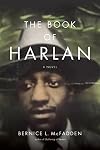
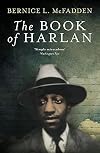
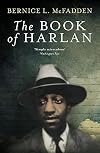
McFadden fulfilled my expectations in writing a riveting, engaging and somewhat dark story. The picture of the man on the cover is an intro into the depths of the main character "Harlan". I wanted to see Harlan triumph and come out on the other side a winner in some form or fashion. He was in prison twice, watched loved ones die, fathered twins that he didn't know existed and dealt with internal show more demons.
McFadden wrote with prose and descriptive scenes that puts you in the midst of the story and next to the characters.
I rank this high on my must read list. I can't wait to read her next novel "Praise Song for the Butterflies " publication date: 8/28/18. show less
It did!
I knew the story was mingled with her familiar ancestors (in which I knew from her blog: firstborngirl.blogspot.com) fictional and some non-fictional characters.
McFadden fulfilled my expectations in writing a riveting, engaging and somewhat dark story. The picture of the man on the cover is an intro into the depths of the main character "Harlan". I wanted to see Harlan triumph and come out on the other side a winner in some form or fashion. He was in prison twice, watched loved ones die, fathered twins that he didn't know existed and dealt with internal show more demons.
McFadden wrote with prose and descriptive scenes that puts you in the midst of the story and next to the characters.
I rank this high on my must read list. I can't wait to read her next novel "Praise Song for the Butterflies " publication date: 8/28/18. show less
Yesssss! Historical fiction done right. This novel introduced me to numerous historical events that I am now planning to research. If you've never read a Bernice McFadden novel, make this one your first. This novel chronicles the life of Harlan and his family living in Harlem pre and post World War II. She even takes us on an adventure as a black in the Holocaust. As Bernice McFadden is known for her gifted storytelling this novel proves no different as she intricately weaves fact and fiction resulting in spellbinding, captivating read. At times, I couldn't see where the novel was going but when she took me there, it was there! I don't want to say too much and give away the novel. Just read it.
Members
- Recently Added By
Lists

Books We Discovered On LibraryThing
530 works; 130 members
Author Information

16+ Works 2,051 Members
Bernice L. McFadden is a LibraryThing Author, an author who lists their personal library on LibraryThing.
Awards and Honors
Common Knowledge
- Important places
- Harlem, New York, New York, USA
- Important events
- Holocaust
- Epigraph
- I am the man, I suffered, I was there. - Walt Whitman
- Dedication
- For the Ancestors
- First words
- No matter what you may have heard about Macon, Georgia - the majestic magnolias, gracious antebellum homes, the bright stars it produced that went on to dazzle the world - if you were Emma Robinson, bubbling with teenage angs... (show all)t and lucid dreaming about silver-winged sparrows gliding over a perfumed ocean, well then, Macon felt less like the promised land and more like a noose.
Classifications
Statistics
- Members
- 234
- Popularity
- 138,664
- Reviews
- 23
- Rating
- (3.96)
- Languages
- English, Greek
- Media
- Paper, Audiobook, Ebook
- ISBNs
- 12
- ASINs
- 2