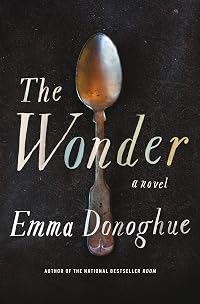
The Wonder
by Emma Donoghue
On This Page
Description
In this masterpiece by Emma Donoghue, bestselling author of Room, an English nurse is brought to a small Irish village to observe what appears to be a miracle -- a girl said to have survived without food for month -- and soon finds herself fighting to save the child's life. Tourists flock to the cabin of eleven-year-old Anna O'Donnell, who believes herself to be living off manna from heaven, and a journalist is sent to cover the sensation. Lib Wright, a veteran of Florence Nightingale's show more Crimean campaign, is hired to keep watch over the girl. Written with all the propulsive tension that made Room a huge bestseller, The Wonder works beautifully on many levels -- a tale of two strangers who transform each other's lives, a powerful psychological thriller, and a story of love pitted against evil. Acclaim for The Wonder: "Deliciously gothic.... Dark and vivid, with complicated characters, this is a novel that lodges itself deep" (USA Today, 3/4 stars) "Heartbreaking and transcendent"(New York Times) "A fable as lean and discomfiting as Anna's dwindling body.... Donoghue keeps us riveted" (Chicago Tribune) "Donoghue poses powerful questions about faith and belief" (Newsday) show lessTags
Recommendations
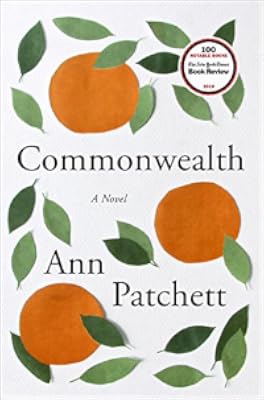
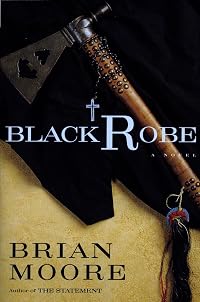
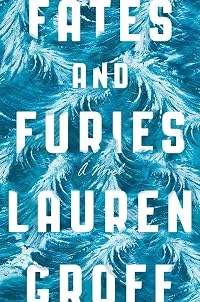

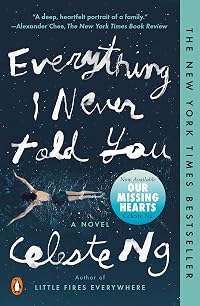

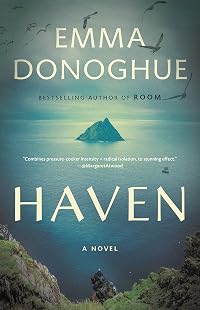
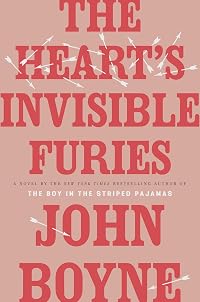
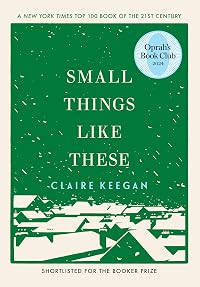
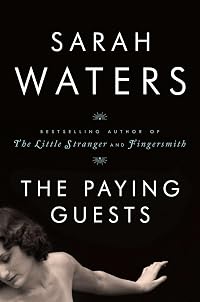
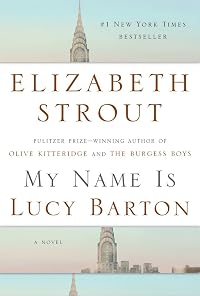
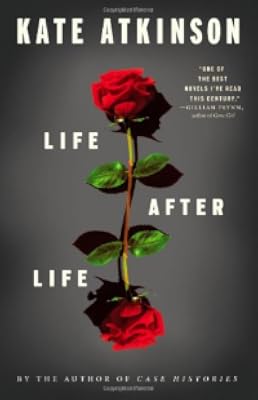
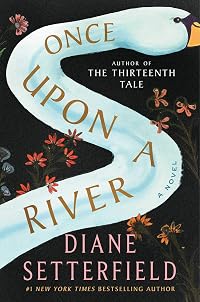
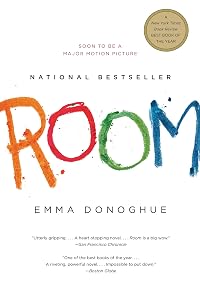

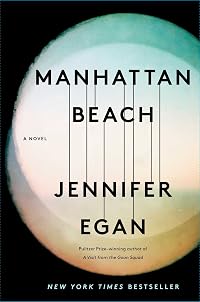
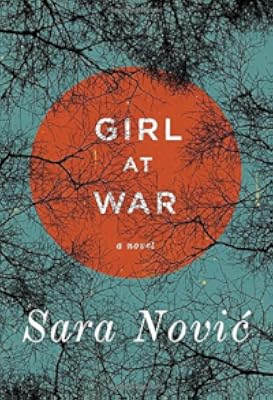
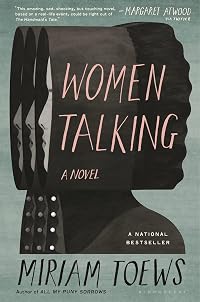
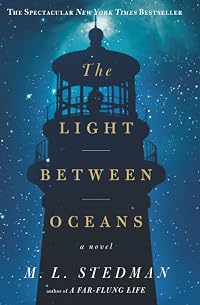
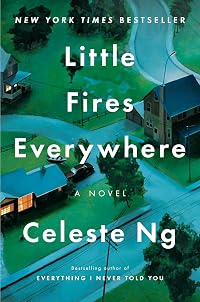
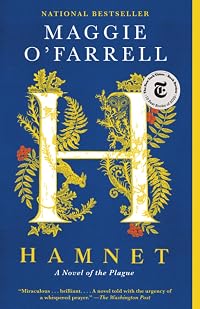
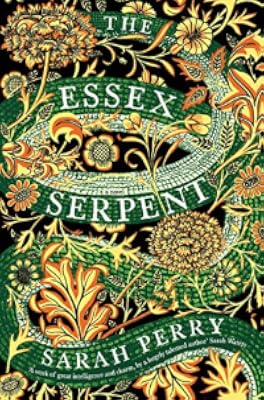
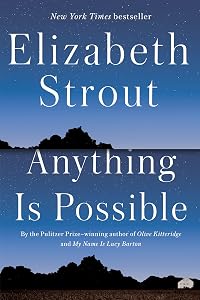
Member Recommendations

kqueue Both present thorny ethical dilemmas in a historic setting with sympathetic characters.
11
akblanchard Two stories of "fasting girls".
Member Reviews
Real Rating: 3.75* of five, rounded up because the language is so beautiful
The Publisher Says: The Irish Midlands, 1859. An English nurse, Lib Wright, is summoned to a tiny village to observe what some are claiming as a medical anomaly or a miracle - a girl said to have survived without food for months. Tourists have flocked to the cabin of eleven-year-old Anna O'Donnell, and a journalist has come down to cover the sensation. The Wonder is a tale of two strangers who transform each other's lives, a psychological thriller, and a story of love pitted against evil.
I RECEIVED A DRC FROM THE PUBLISHER VIA NETGALLEY. THANK YOU.
My Review: First, read this:
I dislike Author Donoghue's prior success, Room, a lot. I found it cynical and manipulative. I got this book thinking I'd give it a good drubbing and forget this author existed afterward.
The more fool I. This is beautifully written...so was Room...but also acutely observed and compassionately told. It was too long, it was very slow for two-thirds of its length, and it had a very strong anti-religion bias (which I share). More than anything else, I read and read and read to get more of this:
That insight alone was worth five stars! But it came swaddled, hidden, in much too much waffle for me to give even close to all five stars. show less
The Publisher Says: The Irish Midlands, 1859. An English nurse, Lib Wright, is summoned to a tiny village to observe what some are claiming as a medical anomaly or a miracle - a girl said to have survived without food for months. Tourists have flocked to the cabin of eleven-year-old Anna O'Donnell, and a journalist has come down to cover the sensation. The Wonder is a tale of two strangers who transform each other's lives, a psychological thriller, and a story of love pitted against evil.
I RECEIVED A DRC FROM THE PUBLISHER VIA NETGALLEY. THANK YOU.
My Review: First, read this:
A fast didn't go fast; it was the slowest thing there was. Fast meant a door shut fast,show more
firmly. A fastness, a fortress. To fast was to hold fast to emptiness, to say no and no and no again.
–and–
How could the child bear not just the hunger, but the boredom? The rest of humankind used meals to divide the day, Lib realized—as reward, as entertainment, the chiming of an inner clock. For Anna, during this watch, each day had to pass like one endless moment.
I dislike Author Donoghue's prior success, Room, a lot. I found it cynical and manipulative. I got this book thinking I'd give it a good drubbing and forget this author existed afterward.
The more fool I. This is beautifully written...so was Room...but also acutely observed and compassionately told. It was too long, it was very slow for two-thirds of its length, and it had a very strong anti-religion bias (which I share). More than anything else, I read and read and read to get more of this:
An obsession, a mania, Lib supposed it could be called. A sickness of the mind. Hysteria, as that awful doctor had named it? Anna reminded Lib of a princess under a spell in a fairy tale. What could restore the girl to ordinary life? Not a prince. A magical herb from the world's end? Some shock to jolt a poisoned bite of apple out of her throat? No, something simple as a breath of air: reason. What if Lib shook the girl awake this very minute and said, Come to your senses!
But that was part of the definition of madness, Lib supposed, the refusal to accept that one was mad. Standish's wards were full of such people.
Besides, could children ever be considered quite of sound mind? Seven was counted the age of reason, but Lib's sense of seven-year-olds was that they still brimmed over with imagination. Children lived to play. Of course they could be put to work, but in spare moments they took their games as seriously as lunatics did their delusions. Like small gods, children formed their miniature worlds out of clay, or even just words. To them, the truth was never simple.
That insight alone was worth five stars! But it came swaddled, hidden, in much too much waffle for me to give even close to all five stars. show less
Enticed by Stephen King's delightful, intriguing review in the NY Times Book Review (worth reading on its own!), I started out liking this very much. Tough, no-nonsense writing, evocative of time and place; a thorny, cranky voice for the "fish out of water" narrator. Massively misleading marketing touts this as a psychological thriller when it is no such thing - it is a serious look at a strange historical craze for girls who don't eat, and the insidious effects of organized religion (I make an odd connection with Monty Python's Life of Brian, only definitely *without* the humor!). But it went on a bit too long, too much of the same brooding, and finally went down in flames with a hokey Hollywood romance-and-escape-by-night-on-horseback show more ending. Started strong, better writing than most, but disappointing in the end. Have not read Donoghue's much-hyped "Room," and don't plan to now. show less
The Wonder is an exciting and utterly absorbing novel that kept me hooked and turning pages to find out what happened next. Set in nineteenth-century Ireland, the story begins when a young English nurse, Lib Wright, arrives in a remote village. Lib has been hired for an unusual task: to keep watch over an eleven-year-old girl, Anna O'Donnell, who appears to have survived for four months without food. Anna's case has mystified even the village doctor and priest, and has attracted visitors from far and wide to marvel at this miraculous child. Lib's task is simply to discover the truth, but her initial detached scepticism becomes more complicated as she spends time with Anna and it becomes clear the story is more mysterious than she show more thought.
It is best to read this novel knowing as little as possible about the story. While I will try to avoid giving away the main plot twists, there may be some spoilers in what follows...
First of all, I really appreciated the fact that Lib was a complex character, as this kept me intrigued and made her more likeable. She feels uncomfortable in the rural, superstitious environment she has suddenly been dropped into, and is very aware of her superior education and training, and the differences in religious beliefs between herself and the Irish Catholics. She isn't particularly keen to ingratiate herself and comes across as rather brusque and haughty but I liked the fact she is opinionated and sticks to her principles. As we learn more about Lib's background, it emerges that she experienced a loss which led her to sign up as a nurse in the Crimea under Florence Nightingale. I enjoyed following her irreverent observations and intelligent questioning of the events around her, while it slowly becomes clear that she is more emotional and passionate than she imagines.
I also found it interesting to learn about how anorexia was viewed in the nineteenth century, as either a sign of sainthood or as a possible medical advance; the deluded village doctor imagines that Anna is a more evolved type of human being and that if humans can survive without food, it will lead to an end to war and starvation. The connections with religion, especially in such a devout country, and with the potato famine in Ireland a few years previously make this a complicated and fascinating subject. Even when the shocking cause of Anna's anorexia is revealed, a psychological reason based in her experience and family background, it remains intertwined with her obsessive religious rituals. I found it interesting that in the end only an appeal to spiritual notions of rebirth has a chance of saving her, when logic and science have failed.
The atmosphere of the novel was unsettling at times, a combination of the isolated rural setting among damp fields and peat bogs, the villagers' beliefs in fairies and magical rituals, and some macabre details of nineteenth-century attitudes to death. The author vividly describes the effects of starvation on Anna's body, the physical reality of anorexia as seen by the nurse contrasting with the idealised view embraced by the priest and doctor who fail to see the real girl behind their theories. The novel cleverly shows how Lib, although intelligent and an experienced nurse, is patronised and dismissed by the doctors as emotional and lacking in medical expertise. The novel builds up suspense and tension, especially towards the end, as Lib is determined to discover the truth and bring it to light.
Another aspect of the novel I really liked was Lib's relationship with William Byrne, a young Irish newspaper reporter. Their dialogue was a pleasure to read and I enjoyed the skilful way that the author built up their relationship and showed how Lib behaved differently with William than with the other characters, showing more of her true self. I felt at certain points that their relationship was very modern and I wondered if it was completely true to the nineteenth century, but then maybe my view is coloured by reading certain Victorian novels and their portrayal of women as angelic and innocent. I'm not sure how possible or unusual it would have been to defy convention. In any case, I was so pleased to discover such a vivid and intriguing relationship in fiction and liked the characters of both William and Lib so much, that this didn't detract much from my enjoyment.
I also found the last part of the novel to be less plausible than the earlier sections, which perhaps I noticed because the rest of the novel felt very convincing and I was completely caught up in the storytelling. However the conclusion felt emotionally satisfying to me and maybe The Wonder, as its title suggests, is not intended to be the most realistic novel ever. I certainly found the book gripping, passionate and vivid, exploring a fascinating subject with imagination. show less
It is best to read this novel knowing as little as possible about the story. While I will try to avoid giving away the main plot twists, there may be some spoilers in what follows...
First of all, I really appreciated the fact that Lib was a complex character, as this kept me intrigued and made her more likeable. She feels uncomfortable in the rural, superstitious environment she has suddenly been dropped into, and is very aware of her superior education and training, and the differences in religious beliefs between herself and the Irish Catholics. She isn't particularly keen to ingratiate herself and comes across as rather brusque and haughty but I liked the fact she is opinionated and sticks to her principles. As we learn more about Lib's background, it emerges that she experienced a loss which led her to sign up as a nurse in the Crimea under Florence Nightingale. I enjoyed following her irreverent observations and intelligent questioning of the events around her, while it slowly becomes clear that she is more emotional and passionate than she imagines.
I also found it interesting to learn about how anorexia was viewed in the nineteenth century, as either a sign of sainthood or as a possible medical advance; the deluded village doctor imagines that Anna is a more evolved type of human being and that if humans can survive without food, it will lead to an end to war and starvation. The connections with religion, especially in such a devout country, and with the potato famine in Ireland a few years previously make this a complicated and fascinating subject. Even when the shocking cause of Anna's anorexia is revealed, a psychological reason based in her experience and family background, it remains intertwined with her obsessive religious rituals. I found it interesting that in the end only an appeal to spiritual notions of rebirth has a chance of saving her, when logic and science have failed.
The atmosphere of the novel was unsettling at times, a combination of the isolated rural setting among damp fields and peat bogs, the villagers' beliefs in fairies and magical rituals, and some macabre details of nineteenth-century attitudes to death. The author vividly describes the effects of starvation on Anna's body, the physical reality of anorexia as seen by the nurse contrasting with the idealised view embraced by the priest and doctor who fail to see the real girl behind their theories. The novel cleverly shows how Lib, although intelligent and an experienced nurse, is patronised and dismissed by the doctors as emotional and lacking in medical expertise. The novel builds up suspense and tension, especially towards the end, as Lib is determined to discover the truth and bring it to light.
Another aspect of the novel I really liked was Lib's relationship with William Byrne, a young Irish newspaper reporter. Their dialogue was a pleasure to read and I enjoyed the skilful way that the author built up their relationship and showed how Lib behaved differently with William than with the other characters, showing more of her true self. I felt at certain points that their relationship was very modern and I wondered if it was completely true to the nineteenth century, but then maybe my view is coloured by reading certain Victorian novels and their portrayal of women as angelic and innocent. I'm not sure how possible or unusual it would have been to defy convention. In any case, I was so pleased to discover such a vivid and intriguing relationship in fiction and liked the characters of both William and Lib so much, that this didn't detract much from my enjoyment.
I also found the last part of the novel to be less plausible than the earlier sections, which perhaps I noticed because the rest of the novel felt very convincing and I was completely caught up in the storytelling. However the conclusion felt emotionally satisfying to me and maybe The Wonder, as its title suggests, is not intended to be the most realistic novel ever. I certainly found the book gripping, passionate and vivid, exploring a fascinating subject with imagination. show less
This new novel by the author of “Room” is an entirely different take on what it means to be trapped and to be rescued. It is set in rural post-famine Ireland in the late 1850s. An English nurse trained under Florence Nightingale during the Crimean War is dispatched to a small town, where an eleven-year-old girl is said to be experiencing a miracle: she has not eaten a morsel of food since in the four months since her eleventh birthday and is subsiding on manna from Heaven alone. By order of a local commission of officials, including the local priest, the nurse and a middle-aged Sister of Mercy take on the task of keeping 24-hour watch over the girl to prove that the girl is truly a miracle ... or that she is a fraud.
“The Wonder” show more is an intimate book, focusing on the experience of Lib, the Nightengale nurse, a born skeptic and adherent of science. Her skepticism is caustic and derisive. She imagines that she will uncover the fraud in her first shift. In fact, a week passes without any sign of fraud -- but a clear deterioration in the girl’s health. Ultimately, Lib sees the watch itself as a peril to the girl’s survival.
The girl at the heart of this book is a lovely, pious, and intelligent character, albeit guilt-ridden and stubborn in the extreme. The villagers that surround her are fervently Catholic and allow their thirst for a miracle to overwhelm their love for the girl.
Lib, on the other hand, is not particularly likeable, and that is the particular flaw of the novel. She is unsympathetic, brusque, argumentative, superior, dismissive, anti-Irish and -Catholic, and bumbling -- if very, very smart and very very lonely. When she ultimately attempts her escape from her predicament, the reader is not actually rooting for her success, but rather hopes she ends up in jail. This does not appear to be what Donoghue intended. show less
“The Wonder” show more is an intimate book, focusing on the experience of Lib, the Nightengale nurse, a born skeptic and adherent of science. Her skepticism is caustic and derisive. She imagines that she will uncover the fraud in her first shift. In fact, a week passes without any sign of fraud -- but a clear deterioration in the girl’s health. Ultimately, Lib sees the watch itself as a peril to the girl’s survival.
The girl at the heart of this book is a lovely, pious, and intelligent character, albeit guilt-ridden and stubborn in the extreme. The villagers that surround her are fervently Catholic and allow their thirst for a miracle to overwhelm their love for the girl.
Lib, on the other hand, is not particularly likeable, and that is the particular flaw of the novel. She is unsympathetic, brusque, argumentative, superior, dismissive, anti-Irish and -Catholic, and bumbling -- if very, very smart and very very lonely. When she ultimately attempts her escape from her predicament, the reader is not actually rooting for her success, but rather hopes she ends up in jail. This does not appear to be what Donoghue intended. show less
I received an ARC of this book from the publisher in exchange for an honest review. This did not affect my opinion of the book or my review itself.
The Book:
Lib Wright is a nurse trained under Florence Nightingale, who has been sent to keep watch on a young girl who has refused to eat for months--Anna O'Donnell is convinced she is being kept alive solely through manna from heaven. Lib is highly skeptical, and expects to solve the mystery quickly and go back to her old life. But the case runs far deeper than first appears, and Lib finds herself pulled in ways she never anticipated.
What I Liked:
This is a suspenseful book. From the start, readers are pulled in, not only through the mystery of how Anna has survived so far, but through show more investment in the characters.
These are complicated, complex characters. Nothing is how it first appears, not even Lib. There are constant surprises--sometimes the characters even surprise themselves.
Anything I Didn't Like?
Really, there was nothing I didn't like about this book. It is a beautifully written, gripping read.
So...?
What could have been a slow, dragging read in a lesser author's hands (girl won't eat, nurse tries to get girl to eat) becomes a twisting, deeply felt mystery and relationship study in Donoghue's capable hands.
Donoghue does not shy away from the difficult issues of religion, obligation, ethics, familial ties, sin, and science. This is a powerful read that will surprise you, and stay with you long after the final page is turned. show less
The Book:
Lib Wright is a nurse trained under Florence Nightingale, who has been sent to keep watch on a young girl who has refused to eat for months--Anna O'Donnell is convinced she is being kept alive solely through manna from heaven. Lib is highly skeptical, and expects to solve the mystery quickly and go back to her old life. But the case runs far deeper than first appears, and Lib finds herself pulled in ways she never anticipated.
What I Liked:
This is a suspenseful book. From the start, readers are pulled in, not only through the mystery of how Anna has survived so far, but through show more investment in the characters.
These are complicated, complex characters. Nothing is how it first appears, not even Lib. There are constant surprises--sometimes the characters even surprise themselves.
Anything I Didn't Like?
Really, there was nothing I didn't like about this book. It is a beautifully written, gripping read.
So...?
What could have been a slow, dragging read in a lesser author's hands (girl won't eat, nurse tries to get girl to eat) becomes a twisting, deeply felt mystery and relationship study in Donoghue's capable hands.
Donoghue does not shy away from the difficult issues of religion, obligation, ethics, familial ties, sin, and science. This is a powerful read that will surprise you, and stay with you long after the final page is turned. show less
Lib Wright is a nurse trained by Florence Nightingale in Scutari during the Crimean War. World-weary after her experiences and tired of fighting to implement Nightingale's teachings back in England, Lib accepts an assignment to travel to central Ireland and watch a single patient: a little girl who claims to have not eaten for four months. Some believe she is a saint, others that she is a fairy changeling, others a fraud. Lib and another nurse, a Catholic nun, are charged with watching to see if the girl is indeed not eating. Days pass, however, and Lib fails to uncover the secret. Could the girl be telling the truth?
This is a story about science and faith, prejudice, superstition, and devotion: devotion to duty, to God, and to show more journalistic truth. Although I was caught up in the story while reading, I found it less satisfying than the author's later works. Everything is set up as polar opposites: English vs Irish, Protestant vs Catholic, science vs religion, the characters are either good or bad, with little blurring of motives. I find such a black and white world less interesting than a more complex rendering. Not my favorite of Donoghue's works. show less
This is a story about science and faith, prejudice, superstition, and devotion: devotion to duty, to God, and to show more journalistic truth. Although I was caught up in the story while reading, I found it less satisfying than the author's later works. Everything is set up as polar opposites: English vs Irish, Protestant vs Catholic, science vs religion, the characters are either good or bad, with little blurring of motives. I find such a black and white world less interesting than a more complex rendering. Not my favorite of Donoghue's works. show less
Members
- Recently Added By
Published Reviews
ThingScore 42
Historical fiction can give us rare insight into lives we might never have imagined, beliefs we could not otherwise have understood. The believability is what engages us, and this requires that a story retain some of the mysterious quality of real life: the inexplicable suffering, the ineffability. The Wonder wanders away from this and into the realm of happy-ever-after. In this it is not so show more wondrous after all. show less
added by rodneyvc
After making my way through several recent novels written in tiresome hey-look-at-me prose (Emma Cline’s “The Girls” comes to mind), “The Wonder” arrived as a welcome relief. Donoghue’s prose is as sturdy and serviceable as a good pair of brogans, but never nondescript...After making my way through several recent novels written in tiresome hey-look-at-me prose (Emma Cline’s show more “The Girls” comes to mind), “The Wonder” arrived as a welcome relief. Donoghue’s prose is as sturdy and serviceable as a good pair of brogans, but never nondescript..Even less palatable is the distracting romance Donoghue loads onto the second half of her tale..These are flaws, but not fatal ones. For the most part, “The Wonder” is a fine, fact-based historical novel, an old-school page turner (I use the phrase without shame). show less
added by vancouverdeb
Emma Donoghue leaves little to Wonder about in the plot of her latest novel..Clever and seductive as its premise is, the novel is ultimately marred by the explanatory overwriting that has sometimes affected Donoghue’s work in the past. Donoghue’s prolificacy extends not just to books (she’s written nearly 20) but to the page: cudgel-like repetition is too often used as a means of show more emphasis. That, combined with too many ponderous nudges and winks, means there’s little we don’t see coming from early on. Plot-wise, there’s little to wonder about in The Wonder. show less
added by vancouverdeb
Lists

Best Contemporary Literary Fiction (Around the Last 30 Years)
400 works; 124 members

Recommend the 20 best books you've read in the last five years
2,168 works; 607 members

Historical Fiction
889 works; 91 members

Top Five Books of 2022
736 works; 272 members

Female Protagonist
1,056 works; 57 members

Top Five Books of 2019
387 works; 111 members

Top Five Books of 2016
795 works; 229 members
Literature About Women and Girls
394 works; 39 members

Tour of Ireland
40 works; 11 members

CBC's Great Canadian Reading List
149 works; 5 members

Shirley Jackson Award Winners and Shortlist 2007-2020
77 works; 6 members

Contemporary Fiction
109 works; 7 members

Book Club 2017
8 works; 2 members

Books Read in 2016
4,666 works; 199 members
Books Read in 2017
4,249 works; 130 members

Books Read in 2022
5,226 works; 112 members

Traveling the world in books
24 works; 1 member

A Smorgasbord of Culinary Fiction
221 works; 94 members

To Read
617 works; 7 members

Fiction (Non-Fantasy) by Irish Authors Set in Ireland
87 works; 3 members

KayStJ's to-read list
1,616 works; 11 members
Author Information

42+ Works 34,719 Members
Emma Donoghue was born on October 24, 1969 in Dublin, Ireland. She received her BA degree from the University College Dublin and PhD in English from University of Cambridge. Her first novel was Stir. Her next novel was Hood which won the 1997 American Library Association's Gay, Lesbian and Bisexual Book Award for Literature. Her novel Slammerkin show more was a finalist in the 2001 Irish Times Irish Literature Prize for Fiction. The Sealed Letter, published in 2008, is a work of historical fiction. This work was the joint winner of the 2009 Lambda Literary Award for Lesbian Fiction. She continued writing several award winning novels including Room which was shortlisted for the Man Booker Prize in September 2010. Some of her other works include Astray, Three and a Half Deaths, and Frog Music. (Bowker Author Biography) show less
Some Editions
Awards and Honors
Awards
Distinctions
The Guardian Book of the Day (2016-09-23)
The Guardian Book of the Day (2016-08-30)
Work Relationships
Has the adaptation
Common Knowledge
- Canonical title
- The Wonder
- Original publication date
- 2016
- People/Characters
- Elizabeth "Lib" Wright; Anna Mary O'Donnell; Rosaleen O'Donnell; Malachy O'Donnell; Sister Michael; Father Thaddeus (show all 16); Dr. McBrearty; William Byrne; Kitty; Maggie Ryan; Dr. Standish; Patrick "Pat" Mary O'Donnell; John Flynn; Mr. Ryan; Sir Otway Blackett; Florence Nightingale
- Important places
- Athlone, Ireland (County Westmeath and County Roscommon)
- Related movies
- The Wonder (2022 | IMDb)
- Epigraph
- nurse
to suckle an infant
to bring up a child
to take care of the sick
watch
to observe
to guard someone, as a keeper
to be awake, as a sentinel
a division of the night
fast
to abstain from food
a period of fasting
fixed, enclosed, secure, fortified
constant, steadfast, obstinate
vigil
a devotional observance
an occasion of keeping awake for a purpose
a watch kept on the eve of a festival
shift
a change, an alteration
a period of working time
an expedient, means to an end
a movement, a beginning - Dedication
- For our daughter, Una, an old Irish blessing:
Nar mille an sioc do chuid pratai,
Go raibh duilleoga do chabaiste slan o chnuimheanna.
May there be no frost on your potatoes,
nor worms in your cabba... (show all)ge. - First words
- The journey was no worse than she expected.
- Quotations
- Everybody was a repository of secrets.
Clearly the Irish Midlands were a depression where wet pooled, the little circle in a saucer.
Another roofless cabin now, turned away from the road, its gabled walls accusing the sky.
The almost speechless nun; Lib should have guessed. Strange how they took the names of male saints, as if giving up womanhood itself.
Buildings turned different ways, giving one another the cold shoulder.
"Just as Sister says," the priest answered, "if we offer up our suffering in a generous spirit to be set to another's account."
Lib pictured a gigantic ledger filled with inky debits and credits. (show all 7)
Fate was faceless, life arbitrary, a tale told by an idiot. - Last words
- (Click to show. Warning: May contain spoilers.)And Wilkie, looking down to meet the child's eyes, then back at Eliza, asked, "Shall we begin? "
- Original language
- English
Classifications
Statistics
- Members
- 2,745
- Popularity
- 6,727
- Reviews
- 172
- Rating
- (3.72)
- Languages
- 10 — Czech, Danish, English, Finnish, German, Italian, Russian, Spanish, Swedish, Portuguese (Portugal)
- Media
- Paper, Audiobook, Ebook
- ISBNs
- 55
- ASINs
- 13