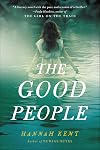
The Good People
by Hannah Kent
On This Page
Description
From the author of Burial Rites, "a literary novel with the pace and tension of a thriller that takes us on a frightening journey towards an unspeakable tragedy."-Paula Hawkins, bestselling author of The Girl on the Train and Into the Water. Based on true events in nineteenth century Ireland, Hannah Kent's startling new novel tells the story of three women, drawn together to rescue a child from a superstitious community. Nora, bereft after the death of her husband, finds herself alone and show more caring for her grandson Micheal, who can neither speak nor walk. A handmaid, Mary, arrives to help Nora just as rumors begin to spread that Micheal is a changeling child who is bringing bad luck to the valley. Determined to banish evil, Nora and Mary enlist the help of Nance, an elderly wanderer who understands the magic of the old ways. Set in a lost world bound by its own laws, THE GOOD PEOPLE is Hannah Kent's startling new novel about absolute belief and devoted love. Terrifying, thrilling and moving in equal measure, this follow-up to Burial Rites shows an author at the height of her powers. show lessTags
Recommendations

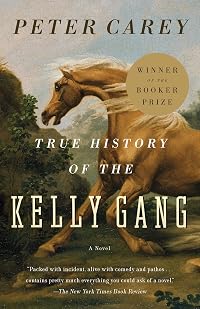
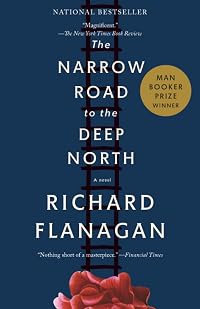

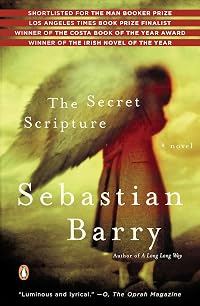
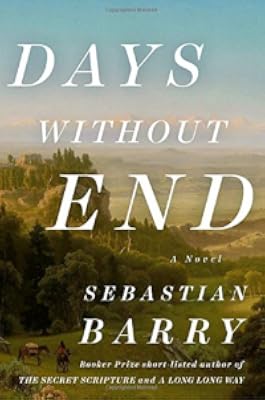















Member Recommendations
Member Reviews
With her second novel, Ms. Kent confirms that she holds no romantic notions about our ancestors and the way they used to live. In fact, one might even get the impression that she relishes in sharing all of the gory details of the time. If anything, one can commend her dedication to providing as realistic a picture of the past as possible, as she completely dispenses with the glorification of the past. I believe it also indicates a lack of bias on her part. In the case of The Good People, it reiterates her theme of absolute belief. Still, there are certain scenes which may make some readers squeamish due to her honesty.
Along the same lines, the other thing her attention to detail provides is the quelling of the notion of a romantic show more Ireland. The Ireland in her story is what can only be envisioned as the true Ireland. This is not the Ireland of pretty maids, charming folklore, and cozy dances at the pubs. Poverty is rampant, food is scarce, and all it takes is one failed season of butter and egg production for a family to have their house torn down by the landlord and find themselves homeless. Potatoes are the main food source for many living in the country (and we all know what happens there a few decades later). People live in dwellings with their goats and chickens; their roofs are nothing more than straw or sticks and have to be protected from birds. Looking at this from a modern perspective, they are barely surviving, if their way of life could be called surviving. It most definitely was not for the weak.
The time period is also the beginning of the end for old customs and beliefs, a time when the Church starts having more influence on the country and one of the sources of conflict within the novel. Ms. Kent does an excellent job illustrating how ingrained these beliefs were in the remote regions of the country. She shows how people professed their faith in the Church in one breath and in another mention a charm meant to appease the fairies. The belief in both is absolute and so difficult for modern readers to understand, but this does not mean that the people in her novel are less intelligent or quaint. If anything, they show an openness to the unknown that modern society eschews.
The Good People is more than an observation of belief though. It is also a study of humanity when life turns sour, of absolute grief, and jealousy. It is a study of mankind in a remote location still lead by superstition struggling to make ends meet. In addition to the lack of anything remotely pretty or sanitary, Ms. Kent also fails to spare her readers of mankind’s ability to turn on one another when most convenient. It is by no means an easy novel to read. This is mankind at its most raw, scraped bare by need and grief. show less
Along the same lines, the other thing her attention to detail provides is the quelling of the notion of a romantic show more Ireland. The Ireland in her story is what can only be envisioned as the true Ireland. This is not the Ireland of pretty maids, charming folklore, and cozy dances at the pubs. Poverty is rampant, food is scarce, and all it takes is one failed season of butter and egg production for a family to have their house torn down by the landlord and find themselves homeless. Potatoes are the main food source for many living in the country (and we all know what happens there a few decades later). People live in dwellings with their goats and chickens; their roofs are nothing more than straw or sticks and have to be protected from birds. Looking at this from a modern perspective, they are barely surviving, if their way of life could be called surviving. It most definitely was not for the weak.
The time period is also the beginning of the end for old customs and beliefs, a time when the Church starts having more influence on the country and one of the sources of conflict within the novel. Ms. Kent does an excellent job illustrating how ingrained these beliefs were in the remote regions of the country. She shows how people professed their faith in the Church in one breath and in another mention a charm meant to appease the fairies. The belief in both is absolute and so difficult for modern readers to understand, but this does not mean that the people in her novel are less intelligent or quaint. If anything, they show an openness to the unknown that modern society eschews.
The Good People is more than an observation of belief though. It is also a study of humanity when life turns sour, of absolute grief, and jealousy. It is a study of mankind in a remote location still lead by superstition struggling to make ends meet. In addition to the lack of anything remotely pretty or sanitary, Ms. Kent also fails to spare her readers of mankind’s ability to turn on one another when most convenient. It is by no means an easy novel to read. This is mankind at its most raw, scraped bare by need and grief. show less
Historical fiction set in rural Ireland in 1825-1826 when many people still believed in folk remedies and fairies. The story revolves around three women, an herbal healer, a grandmother, and a teenage girl hired to care for the woman’s grandson. The grandmother’s husband and daughter have recently died, and she has taken in her four-year-old grandson. The grandson at one time was walking and talking, but now can do neither and requires constant care. The herbal healer tells the grandmother that her grandson was abducted by fairies and replaced with a changeling. The book made me glad that so much has changed since then, when people lacked understanding of the causes of mental illness and physical impairments.
Hannah Kent’s prose show more is beautifully expressive and atmospheric. I had previously read her first book, [book:Burial Rites|18685732], and found it extremely well-crafted. This book, her second, continued her brilliant writing, but the plot and character development were not quite as compelling. It is slow in developing, and much of the action centers around the actions of people in a small town. It is obviously well-researched and is based on news articles of the day. Themes include grief, the lure of superstition, yearning for answers (especially those we want to hear), and external forces that impact lives. It provides food-for-thought, especially about how seemingly “good people” can act in malevolent ways. Contains child abuse and several scenes involving animals and folk rituals that some may find disturbing. Recommended to those who appreciate somber, foreboding tales or are interested in the folklore of Ireland in the 19th century. A lyrically-written novel with a strong sense of time and place and a dark (some might say depressing) tone. show less
Hannah Kent’s prose show more is beautifully expressive and atmospheric. I had previously read her first book, [book:Burial Rites|18685732], and found it extremely well-crafted. This book, her second, continued her brilliant writing, but the plot and character development were not quite as compelling. It is slow in developing, and much of the action centers around the actions of people in a small town. It is obviously well-researched and is based on news articles of the day. Themes include grief, the lure of superstition, yearning for answers (especially those we want to hear), and external forces that impact lives. It provides food-for-thought, especially about how seemingly “good people” can act in malevolent ways. Contains child abuse and several scenes involving animals and folk rituals that some may find disturbing. Recommended to those who appreciate somber, foreboding tales or are interested in the folklore of Ireland in the 19th century. A lyrically-written novel with a strong sense of time and place and a dark (some might say depressing) tone. show less
3.5 stars, rounded down.
The Good People are the fairies, and in this particular time and location in Ireland, they were apparently both believed in and feared. The book opens with the death of Martin Leahy, leaving his wife, Nora, alone with a grandson who is suffering from an undefined wasting illness, believed by many to indicate that he is not her grandson at all but a fairy changeling. Nance Roche is an herbalist and spellcaster (a “handy woman”) who is believed to have congress with the fairies. Without giving away any plotline, this sets up a chain of events that makes one wonder how anyone of this time survived.
I loved Burial Rites, in itself a difficult subject to consider, and Hannah Kent brings that same beautiful use of show more language to this novel; however, there was something just a little too disturbing about this one for me to ever say I loved it. First there are the superstitions upon which the characters act that seem overwhelming at times. I hope that every community of this era was not eaten with so many perilous superstitions as this community obviously was, although we know, of course, that such ignorant beliefs existed. Indeed we have the Salem witch trials to remind us how thoroughly ingrained the fear and suspicions could be.
The church, rather than being a balm against superstition, just seems to have different ones it espouses. The priest is a harsh and unforgiving sort who adds to the desperation instead of countering it. He, himself, believes in curses and cast spells, how then to rail against fairies? Then there is the mistreatment of the child, which goes on ad infinitum and makes me wince over and over again. I am not good with the mistreatments of children or animals, so when the bulk of the book contains them, it becomes hard to do anything but wish for the end to come. And, last, I really disliked Nora, one of the main characters, with whom I think we were actually meant to sympathize.
Perhaps, if I needed to nail down the difference between this book and Burial Rites, it would be that I felt inside the skin of several characters in Burial Rites and, gratefully, inside none in The Good People. The book is based upon a newspaper account of the time, thus is grounded in some fact; which makes it realistic and at the same time more horrid.
The book certainly raises some inevitable questions. What should be forgiven a person who acts on ignorance and superstition and does a great harm? Is there a part of these women that knows they are misguided? Does Nance just want to have something that makes her of value to the community? Does Nora just want to justify her lack of feeling for the boy?
In the end, I did not hate this book. It has much to recommend it and for many it is obviously a great read, but for myself, I was happy to put it behind me as one should always wish to put an evil behind them. Once more I have probably just succumbed to having too much expectation going in based on the superb quality of the earlier read, but I was hoping for more than I felt was present. show less
The Good People are the fairies, and in this particular time and location in Ireland, they were apparently both believed in and feared. The book opens with the death of Martin Leahy, leaving his wife, Nora, alone with a grandson who is suffering from an undefined wasting illness, believed by many to indicate that he is not her grandson at all but a fairy changeling. Nance Roche is an herbalist and spellcaster (a “handy woman”) who is believed to have congress with the fairies. Without giving away any plotline, this sets up a chain of events that makes one wonder how anyone of this time survived.
I loved Burial Rites, in itself a difficult subject to consider, and Hannah Kent brings that same beautiful use of show more language to this novel; however, there was something just a little too disturbing about this one for me to ever say I loved it. First there are the superstitions upon which the characters act that seem overwhelming at times. I hope that every community of this era was not eaten with so many perilous superstitions as this community obviously was, although we know, of course, that such ignorant beliefs existed. Indeed we have the Salem witch trials to remind us how thoroughly ingrained the fear and suspicions could be.
The church, rather than being a balm against superstition, just seems to have different ones it espouses. The priest is a harsh and unforgiving sort who adds to the desperation instead of countering it. He, himself, believes in curses and cast spells, how then to rail against fairies? Then there is the mistreatment of the child, which goes on ad infinitum and makes me wince over and over again. I am not good with the mistreatments of children or animals, so when the bulk of the book contains them, it becomes hard to do anything but wish for the end to come. And, last, I really disliked Nora, one of the main characters, with whom I think we were actually meant to sympathize.
Perhaps, if I needed to nail down the difference between this book and Burial Rites, it would be that I felt inside the skin of several characters in Burial Rites and, gratefully, inside none in The Good People. The book is based upon a newspaper account of the time, thus is grounded in some fact; which makes it realistic and at the same time more horrid.
The book certainly raises some inevitable questions. What should be forgiven a person who acts on ignorance and superstition and does a great harm? Is there a part of these women that knows they are misguided? Does Nance just want to have something that makes her of value to the community? Does Nora just want to justify her lack of feeling for the boy?
In the end, I did not hate this book. It has much to recommend it and for many it is obviously a great read, but for myself, I was happy to put it behind me as one should always wish to put an evil behind them. Once more I have probably just succumbed to having too much expectation going in based on the superb quality of the earlier read, but I was hoping for more than I felt was present. show less
Having really enjoyed Hannah Kent’s Burial Rites, I was excited to read her second novel. I was not disappointed.
The setting is an isolated village in southwest Ireland in the mid-1820s. Nóra Leahy’s husband dies suddenly leaving her the sole caregiver of their 4-year-old disabled grandson Micheál. The boy neither speaks nor walks; he is described as not having “the full of his mind” and being “forever awake and screaming” and looking like “a little bag of bones fit for a pauper’s coffin.” Nóra hires Mary Clifford, a young girl from a large, impoverished family, to help her with Micheál’s care. Desperate to get help for him, Nóra also goes to see Nance Roche, a local healer who has experience with herbal show more remedies and who also knows how to mitigate the mischief of the Good People, the fairies. Nance diagnoses Micheál as a changeling, a fairy child, so she and Nóra set out to banish the changeling and recover the human child.
The three women (Nóra, Nance and Mary) are clearly delineated. The reader is given access to the thoughts and feelings so their torment and confusion are obvious and their motivations are clearly understood. Though they are guilty of administering extremely harsh “remedies,” they are not totally evil. Grieving, lonely, and exhausted, Nóra agrees to increasingly abusive treatments in the honest belief that her grandson who could once talk and walk has been kidnapped by the fairies. Good-hearted Mary bonds with the child and becomes protective of him but she has no influence over Nóra who could dismiss her from a job which Mary needs to help her destitute family. Nance who has always lived on the margins has become more ostracized because of the local priest’s sermonizing against paganism; if she is able to recover Micheál, she believes she will be able to dispel people’s doubts and suspicions and restore people’s faith in her: “If I can restore Micheál to Nóra then they will see that there is no word of a lie in my dealings with them . . . they will all return to me.” The title of the novel may refer to the fairies but it can also be interpreted to refer to the women who are good people driven by circumstances to take extreme measures.
Some sympathy is felt for each of these women. They are trapped in lives shaped by superstition. Poverty and ignorance are major factors in their lives, and geography isolates them from the wider world. There is also an underlying misogyny; women are often blamed for misfortune. Calamity is not seen as random bad luck but an indication that proper rituals were not followed. A woman who gives birth to a stillborn child is blamed for not seeing the blacksmith “to blow the bellows” and for being present at a funeral wake; Nóra is not the only one to wonder what she did or didn’t do to deserve being made a widow. Women who challenge expectations are viewed with suspicion; they “are forced to the edges by their difference.” Nance lists the ways in which she is different: “her ability in her loneliness, in the absence of a husband, her crooked hands, her habit of smoking, of drinking like a man.” A neighbour points out that in the view of some people, Nance is guilty of a “great crime”: “’She lives by the woods on her own. That’s enough to set tongues going.’”
The novel shows a conflict between different belief systems, specifically Christianity and paganism. Folkloric beliefs are not shown in a positive light but organized religion is also shown as flawed. Father Healy, the local priest, lacks compassion. He seems to have no understanding of the daily struggles and needs of ordinary people. He is described as “slack-jawed and slumped with the spine of a scholar” and when Nóra asks him for help with her grandson, he doesn’t even agree to pray for him and tells her callously, “’I think perhaps that it is your duty to care for this child and do the best you can.’” (Even a doctor offers no aid: “’The boy is a cretin. There is nothing I can do.’”)
I found the book emotionally draining. I felt sympathy for each of the women though at times I was also very angry at them. The actions of the priest and the gossips in the village are upsetting. It was disturbing to read how certain beliefs focus on assigning shame and blame. I was also left feeling immensely grateful for not living in such abject poverty and for not being as powerless as these women. I think the novel will haunt me for a while.
Though the book is not an easy read, I highly recommend it. It will not leave a reader untouched.
Please check out my reader's blog (http://schatjesshelves.blogspot.ca/) and follow me on Twitter (@DCYakabuski). show less
The setting is an isolated village in southwest Ireland in the mid-1820s. Nóra Leahy’s husband dies suddenly leaving her the sole caregiver of their 4-year-old disabled grandson Micheál. The boy neither speaks nor walks; he is described as not having “the full of his mind” and being “forever awake and screaming” and looking like “a little bag of bones fit for a pauper’s coffin.” Nóra hires Mary Clifford, a young girl from a large, impoverished family, to help her with Micheál’s care. Desperate to get help for him, Nóra also goes to see Nance Roche, a local healer who has experience with herbal show more remedies and who also knows how to mitigate the mischief of the Good People, the fairies. Nance diagnoses Micheál as a changeling, a fairy child, so she and Nóra set out to banish the changeling and recover the human child.
The three women (Nóra, Nance and Mary) are clearly delineated. The reader is given access to the thoughts and feelings so their torment and confusion are obvious and their motivations are clearly understood. Though they are guilty of administering extremely harsh “remedies,” they are not totally evil. Grieving, lonely, and exhausted, Nóra agrees to increasingly abusive treatments in the honest belief that her grandson who could once talk and walk has been kidnapped by the fairies. Good-hearted Mary bonds with the child and becomes protective of him but she has no influence over Nóra who could dismiss her from a job which Mary needs to help her destitute family. Nance who has always lived on the margins has become more ostracized because of the local priest’s sermonizing against paganism; if she is able to recover Micheál, she believes she will be able to dispel people’s doubts and suspicions and restore people’s faith in her: “If I can restore Micheál to Nóra then they will see that there is no word of a lie in my dealings with them . . . they will all return to me.” The title of the novel may refer to the fairies but it can also be interpreted to refer to the women who are good people driven by circumstances to take extreme measures.
Some sympathy is felt for each of these women. They are trapped in lives shaped by superstition. Poverty and ignorance are major factors in their lives, and geography isolates them from the wider world. There is also an underlying misogyny; women are often blamed for misfortune. Calamity is not seen as random bad luck but an indication that proper rituals were not followed. A woman who gives birth to a stillborn child is blamed for not seeing the blacksmith “to blow the bellows” and for being present at a funeral wake; Nóra is not the only one to wonder what she did or didn’t do to deserve being made a widow. Women who challenge expectations are viewed with suspicion; they “are forced to the edges by their difference.” Nance lists the ways in which she is different: “her ability in her loneliness, in the absence of a husband, her crooked hands, her habit of smoking, of drinking like a man.” A neighbour points out that in the view of some people, Nance is guilty of a “great crime”: “’She lives by the woods on her own. That’s enough to set tongues going.’”
The novel shows a conflict between different belief systems, specifically Christianity and paganism. Folkloric beliefs are not shown in a positive light but organized religion is also shown as flawed. Father Healy, the local priest, lacks compassion. He seems to have no understanding of the daily struggles and needs of ordinary people. He is described as “slack-jawed and slumped with the spine of a scholar” and when Nóra asks him for help with her grandson, he doesn’t even agree to pray for him and tells her callously, “’I think perhaps that it is your duty to care for this child and do the best you can.’” (Even a doctor offers no aid: “’The boy is a cretin. There is nothing I can do.’”)
I found the book emotionally draining. I felt sympathy for each of the women though at times I was also very angry at them. The actions of the priest and the gossips in the village are upsetting. It was disturbing to read how certain beliefs focus on assigning shame and blame. I was also left feeling immensely grateful for not living in such abject poverty and for not being as powerless as these women. I think the novel will haunt me for a while.
Though the book is not an easy read, I highly recommend it. It will not leave a reader untouched.
Please check out my reader's blog (http://schatjesshelves.blogspot.ca/) and follow me on Twitter (@DCYakabuski). show less
After reading Hannah Kent’s Burial Rites, I immediately added The Good People to my list, because the first has become one of my favorite books. And Kent has indeed created yet another fantastic novel with this latest book!
Much like her first book, The Good People is based on a true crime from early history with which Kent has used what documents are still available and has otherwise done extensive research on the time period and places to fill in the rest of these historical fiction novels. In both books, the accused parties are female and there is a lot included in each on how that and other prejudices and beliefs of the time periods and locations may have effected the outcome of the trials. I have found the topics of both novels show more to be extremely interesting and have done some of my own research into the history behind them because of this interest.
But focusing just on this book, The Good People is set in 1825 Ireland and is based on the case of the death of Michael Leahy. The main characters would really probably be considered Nora, Mary, and Nance. The book starts, however, with the death of Nora’s husband. Mr. Leahy dies suddenly and has the whole town talking about how something unnatural must have been involved due to this and other omens they observe happening around this time. Other bad things begin to happen throughout the town after this, and slowly more and more people begin to think it may have something to do with the grandchild that Nora and her late husband have been raising.
Not too long before her husband passed, Nora’s daughter also died and left behind a little boy. This boy was brought to the care of the grandparents. It was clear from the start that there was something different about Michael, as he seemed half starved and couldn’t walk or talk. He would also scream all through the night and didn’t seem to be able to tell when people would talk to him. The couple hoped that he would get better with time and care, and yet even after her husband’s death, the child’s condition only seemed to worsen.
Nora hires a maid to live in with her and help take care of Michael, but eventually she comes to her wits end between her grief, her difficulties in caring for her grandson, and the shame of anyone finding out about him and starting more rumors. She decides the only person left who may be able to help is the woman in the village who is said to have “the knowledge of the good people,” or in other words, has seen and been with the fairies and knows some of their ways and ways to cure things that they have caused. Many in the village believe Micheal to be a Changeling, after all— a child whose spirit has been “swept” away by fairies and replaced by the spirit of a fairy.
Kent creates tone in such a beautiful way and the world she creates with all these old beliefs and customs of the time and place is so rich. She delves deep into the small, quiet, every day moments of a woman that slowly looses her grip on what to do and turns to the last option she sees available to her. The way the historical customs and environment are woven into every part of the story makes both books I have read from her very atmospheric and immersive. At this point, I’ll read anything she comes out with next and am very excited at the prospect!
The Good People: ★ ★ ★ ★ ★ show less
Much like her first book, The Good People is based on a true crime from early history with which Kent has used what documents are still available and has otherwise done extensive research on the time period and places to fill in the rest of these historical fiction novels. In both books, the accused parties are female and there is a lot included in each on how that and other prejudices and beliefs of the time periods and locations may have effected the outcome of the trials. I have found the topics of both novels show more to be extremely interesting and have done some of my own research into the history behind them because of this interest.
But focusing just on this book, The Good People is set in 1825 Ireland and is based on the case of the death of Michael Leahy. The main characters would really probably be considered Nora, Mary, and Nance. The book starts, however, with the death of Nora’s husband. Mr. Leahy dies suddenly and has the whole town talking about how something unnatural must have been involved due to this and other omens they observe happening around this time. Other bad things begin to happen throughout the town after this, and slowly more and more people begin to think it may have something to do with the grandchild that Nora and her late husband have been raising.
Not too long before her husband passed, Nora’s daughter also died and left behind a little boy. This boy was brought to the care of the grandparents. It was clear from the start that there was something different about Michael, as he seemed half starved and couldn’t walk or talk. He would also scream all through the night and didn’t seem to be able to tell when people would talk to him. The couple hoped that he would get better with time and care, and yet even after her husband’s death, the child’s condition only seemed to worsen.
Nora hires a maid to live in with her and help take care of Michael, but eventually she comes to her wits end between her grief, her difficulties in caring for her grandson, and the shame of anyone finding out about him and starting more rumors. She decides the only person left who may be able to help is the woman in the village who is said to have “the knowledge of the good people,” or in other words, has seen and been with the fairies and knows some of their ways and ways to cure things that they have caused. Many in the village believe Micheal to be a Changeling, after all— a child whose spirit has been “swept” away by fairies and replaced by the spirit of a fairy.
Kent creates tone in such a beautiful way and the world she creates with all these old beliefs and customs of the time and place is so rich. She delves deep into the small, quiet, every day moments of a woman that slowly looses her grip on what to do and turns to the last option she sees available to her. The way the historical customs and environment are woven into every part of the story makes both books I have read from her very atmospheric and immersive. At this point, I’ll read anything she comes out with next and am very excited at the prospect!
The Good People: ★ ★ ★ ★ ★ show less
"She was the gatekeeper at the edge of the world. The final human hymn before all fell to wind and shadow and the strange crooning of stars. She was a pagan chorus. An older song."
One of the most exciting and nervous moments in the life of a dedicated reader is the minute we open the next book by a writer who produced a masterpiece whose roots are planted deep in our soul, a novel that has never really left our mind since the last page was turned. In this case, I'm talking about Hannah Kent and her debut novel "Burial Rites". I think the vast majority of those who read it adored it and those who didn't still found many things to appreciate. Her sophomore effort is no less exciting, beautiful, haunting and agonizing. The only exception show more is the lack of a character who could rival Agnes' powerful voice and convictions. The three women in "The Good People" don't even come close, but it doesn't matter because the mysticism that flows through Kent's exquisite own makes this novel a 5-star read.
-They say there's portent in the direction of a new year's wind.
-What does a wind from the west bring?
-Please God, a better year than last.
The previous year has brought all kinds of misfortune for Nora. She lost her daughter to a sudden, wasting disease, her husband collapsed after a heart attack and she is left with her grandson, Micheál, who has lost the power of his legs, his speech and his mind. She hires a young woman, Mary, to aid her with her load and pays frequent visits to Nanche, an old woman who claims to possess the intimate knowledge of herbs and fairies. The three women are our ears and ears in the story, each one different in her fears, but with the feeling of despair and helplessness for things beyond their understanding.
"Such a dark season of death and strangeness."
Kent sets her story perfectly. Strange accidents are taking place, the hens and the chickens are not producing their goods as before, the cold is unusually severe, the fog is too thick, the sun has darkened. For a community that is steeped in superstition and gossiping, these events mean only one thing. The Evil Eye is upon them and they are certain that more wrongs will follow.
"They have always been here. They are as old as the sea."
The Good People of the title are the Fairy Folk, the main stars in the tradition that has shaped a great part of the outstanding Irish Folk we have all come to love. Nanche believed that all misfortunes have been caused by the creatures of the world beyond and takes it upon herself to right the wrong. Whether she can do it or not is another matter. Her ally is Nora who, driven by her losses, is eager to put the blame on someone who is different, unwanted, unable to defend himself against the madness of a dark time.
"Don't be questioning the old ways."
At the heart of the story lies the legend of the Changeling. According to tradition, the fairies used to steal human babies from their cradles and leave a child of their own in their place. The fairy child was different in shape and spirit and considered evil by the community. Nora is convinced that the boy is responsible for everything, aided by Nanche. But Mary, whose bright mind is free from superstitions, has come to bond with the boy, much to Nora's dismay.
The writing in this novel is nothing short of outstanding. It is simple, mystical, poetic and loaded with tradition. Kent inserts a plethora of traditional Irish customs and superstitions in the narration, many of which play a significant part in the development of the story. Apart from an exquisite plot, this book is a wonderful folk study of the Emerald Island. It is intriguing to witness the way the superstitions shaped and controlled the lives of the residents in the past. And they still do, albeit to a much small extent. The language is beautiful, the interactions are written with respect to the setting of the story, but there are no idioms that would present problems to those who aren't familiar with the Irish dialects. The ambiguity of the convictions of the people is very effective and it was refreshing to see that there isn't much focus on a rivalry between Religion and Tradition. Apart from the local priest who tries to make the people see some sense, the villagers have fully embraced a combination of Christianity and the Old Ways. The problem is that the balance is very uneven....
The characters of the three women are very well-written, interesting but can't be compared to Agnes of "Burial Rites". Still, Kent takes us on a journey in three very different souls. Nanche and Nora are almost fanatics and Nora is a rather contradictory character, since she is against gossips but very much in fear of the Evil Eye. I can't say that I sympathized with her. I understand the depth of her pain, but she was so thick-headed and unfair. To use a well-known equivalent, she reminded me of the cruelty and narrow-mindedness of Catelyn Stark. Too bad no wedding was in sight...Nanche is very ambiguous. I still can't decide whether she truly believed in what she did or it was her excuse to make herself useful. Mary is a character that shines. She seems to live in the periphery of the action, but I feel that her importance is significant. She is like us in a sense, watching and bonding with the poor, blameless child, feeling unable to stop what is coming. I fully sided with her decisions and convictions.
Hannah Kent is a born writer. Her pen is magic, her ideas and characters jump out of the page, people of their time and place but people like us. This book is a hymn to the rich Irish tradition, a mystical, haunting, dark, violent journey to places and ideas of a more innocent, more ignorant era. It is a novel to be cherished and appreciated by readers who desire meaningful stories and knowledge in the hands of a trusted artist. It is a human study of the darkest hours of our existence, when we're faced with despair and death and don't know in whom to trust our hopes. It is a book by Hannah Kent. This should be reason enough for you to read it.... show less
One of the most exciting and nervous moments in the life of a dedicated reader is the minute we open the next book by a writer who produced a masterpiece whose roots are planted deep in our soul, a novel that has never really left our mind since the last page was turned. In this case, I'm talking about Hannah Kent and her debut novel "Burial Rites". I think the vast majority of those who read it adored it and those who didn't still found many things to appreciate. Her sophomore effort is no less exciting, beautiful, haunting and agonizing. The only exception show more is the lack of a character who could rival Agnes' powerful voice and convictions. The three women in "The Good People" don't even come close, but it doesn't matter because the mysticism that flows through Kent's exquisite own makes this novel a 5-star read.
-They say there's portent in the direction of a new year's wind.
-What does a wind from the west bring?
-Please God, a better year than last.
The previous year has brought all kinds of misfortune for Nora. She lost her daughter to a sudden, wasting disease, her husband collapsed after a heart attack and she is left with her grandson, Micheál, who has lost the power of his legs, his speech and his mind. She hires a young woman, Mary, to aid her with her load and pays frequent visits to Nanche, an old woman who claims to possess the intimate knowledge of herbs and fairies. The three women are our ears and ears in the story, each one different in her fears, but with the feeling of despair and helplessness for things beyond their understanding.
"Such a dark season of death and strangeness."
Kent sets her story perfectly. Strange accidents are taking place, the hens and the chickens are not producing their goods as before, the cold is unusually severe, the fog is too thick, the sun has darkened. For a community that is steeped in superstition and gossiping, these events mean only one thing. The Evil Eye is upon them and they are certain that more wrongs will follow.
"They have always been here. They are as old as the sea."
The Good People of the title are the Fairy Folk, the main stars in the tradition that has shaped a great part of the outstanding Irish Folk we have all come to love. Nanche believed that all misfortunes have been caused by the creatures of the world beyond and takes it upon herself to right the wrong. Whether she can do it or not is another matter. Her ally is Nora who, driven by her losses, is eager to put the blame on someone who is different, unwanted, unable to defend himself against the madness of a dark time.
"Don't be questioning the old ways."
At the heart of the story lies the legend of the Changeling. According to tradition, the fairies used to steal human babies from their cradles and leave a child of their own in their place. The fairy child was different in shape and spirit and considered evil by the community. Nora is convinced that the boy is responsible for everything, aided by Nanche. But Mary, whose bright mind is free from superstitions, has come to bond with the boy, much to Nora's dismay.
The writing in this novel is nothing short of outstanding. It is simple, mystical, poetic and loaded with tradition. Kent inserts a plethora of traditional Irish customs and superstitions in the narration, many of which play a significant part in the development of the story. Apart from an exquisite plot, this book is a wonderful folk study of the Emerald Island. It is intriguing to witness the way the superstitions shaped and controlled the lives of the residents in the past. And they still do, albeit to a much small extent. The language is beautiful, the interactions are written with respect to the setting of the story, but there are no idioms that would present problems to those who aren't familiar with the Irish dialects. The ambiguity of the convictions of the people is very effective and it was refreshing to see that there isn't much focus on a rivalry between Religion and Tradition. Apart from the local priest who tries to make the people see some sense, the villagers have fully embraced a combination of Christianity and the Old Ways. The problem is that the balance is very uneven....
The characters of the three women are very well-written, interesting but can't be compared to Agnes of "Burial Rites". Still, Kent takes us on a journey in three very different souls. Nanche and Nora are almost fanatics and Nora is a rather contradictory character, since she is against gossips but very much in fear of the Evil Eye. I can't say that I sympathized with her. I understand the depth of her pain, but she was so thick-headed and unfair. To use a well-known equivalent, she reminded me of the cruelty and narrow-mindedness of Catelyn Stark. Too bad no wedding was in sight...Nanche is very ambiguous. I still can't decide whether she truly believed in what she did or it was her excuse to make herself useful. Mary is a character that shines. She seems to live in the periphery of the action, but I feel that her importance is significant. She is like us in a sense, watching and bonding with the poor, blameless child, feeling unable to stop what is coming. I fully sided with her decisions and convictions.
Hannah Kent is a born writer. Her pen is magic, her ideas and characters jump out of the page, people of their time and place but people like us. This book is a hymn to the rich Irish tradition, a mystical, haunting, dark, violent journey to places and ideas of a more innocent, more ignorant era. It is a novel to be cherished and appreciated by readers who desire meaningful stories and knowledge in the hands of a trusted artist. It is a human study of the darkest hours of our existence, when we're faced with despair and death and don't know in whom to trust our hopes. It is a book by Hannah Kent. This should be reason enough for you to read it.... show less
Ireland of old, was described in such detail that I felt that the author had actually witnessed it- which is of course impossible, and also I can’t possibly judge the accuracy, but it certainly made the mental imagery vivid. The characters had similarities with those in Burial Rites, in that they were portrayed with ‘warts and all’ detail, you could see their emotional responses shaping their moral decision making, and love or loathe them for it. In both books the matriarchs have a world weary bitterness, and the young girls high moral standards. In both books the characters are endlessly working, poor and hungry, and the main characters (especially the matriarch) in very slightly superior positions to other characters. The show more language and dialogue is beautiful. The time seems to be the cusp of traditional life steeped in a different type of spirituality, being taken over by ‘modern’ Christian practices, and the struggle of the people shifting from one mindset to another. A long read, but worthwhile. show less
Members
- Recently Added By
Published Reviews
ThingScore 88
While holding few surprises, The Good People is a gripping, adept and intelligent reconstruction of the past. As in Burial Rites, although perhaps without quite the same force, Kent brings her sympathetic, detailed eye to the cramped lives of ordinary women before the dawn of any concept of individual women's rights.
added by zapzap
The empathy Kent has for her characters is intense, and she affords them nuance and complexity: there is merit and fault in each of them. The confusion, incomprehension and torment the three central women suffer in the novel’s final act are keenly rendered.
added by zapzap
Lists

Top Five Books of 2017
757 works; 231 members

Tour of Ireland
40 works; 11 members

Netgalley Reads
460 works; 3 members

Books Read in 2017
4,249 works; 130 members

Small Reading List
4 works; 3 members

Walter Scott Prize Winners and Shortlist
66 works; 6 members

Books Read in 2018
4,360 works; 110 members

To Read (Abandoned)
2 works; 2 members

World Books
51 works; 4 members

Reading Glasses Podcast
410 works; 3 members

Australian Women Writers
9 works; 1 member

Fiction: Thriller
78 works; 1 member
Author Information

6+ Works 5,567 Members
Hannah Kent was born in 1985 in Adelaide, Australia. She is the co-founder and publishing director of Australian literary journal Kill Your Darlings. She won the inaugural Writing Australia Unpublished Manuscript Award (2011). Burial Rites is her first novel. It won numerous awards including the ABIA Literary Fiction Book of the Year, the Indie show more Awards Debut Fiction Book of the Year and the Victorian Premier's People's Choice Award. Her second novel, The Good People, is being adapted into a film. She will be writing the screenplay. (Bowker Author Biography) show less
Some Editions
Awards and Honors
Series
Belongs to Publisher Series
Contemporánea [Alba] (32)
Common Knowledge
- Canonical title
- The Good People
- Original title
- The Good People
- Original publication date
- 2016-09-27
- People/Characters
- Nóra Leahy; Nance Roche; Mary Clifford; Peg O'Shea; Micheál Kelliher; Daniel Lynch (show all 12); Brigid Lynch; Seán Lynch; Father Healy; Kate Lynch; Peter O'Connor; Áine O'Connor
- Important places
- Killarney, County Kerry, Ireland; County Kerry, Ireland
- Epigraph
- When all is said and done, how do we not know but that our own unreason ay be better than another's truth?
for it has been warmed on our hearts and in our souls,
and is ready for the wild bees of truth to hive in it, an... (show all)d
make their sweet honey. Come into the world again,
wild bees, wild bees!
W.B.Yeats, The Celtic Twilight - Dedication
- For my sister, Briony.
- First words
- Nóra’s first thought when they brought her the body was that it could not be her husband’s.
- Quotations*
- The maid's face was unreadable. 'She was your daughter,' she said plainly.
'She was.' 'You loved her.' 'The first time I saw Johanna...' Nora's voice was strangled. She wanteld to say that with Johanna's birth she had felt... (show all) a love so fierce it terrified. That the wordt had cleft and her daughter was the kernel at its core. 'Yes,' she said. 'I loved her.' 'As I loved my sisters.' Nora shook her head. 'TIS IS MORE THAN LOVE. YOU WILL KNOW IT SOME DAY. TO BE A MOTHER IS TO HAVE YOUR HEART CUT OUT AND PLACED IN IN YOUR CHILD.4 p 181 - Last words
- (Click to show. Warning: May contain spoilers.)Only the birds above her and, in the slow unpeeling darkness, a divinity of sky.
- Blurbers
- Tom Keneally
*Some information comes from Common Knowledge in other languages. Click "Edit" for more information.
Classifications
Statistics
- Members
- 941
- Popularity
- 28,263
- Reviews
- 59
- Rating
- (3.98)
- Languages
- 9 — English, French, German, Greek, Italian, Lithuanian, Portuguese, Spanish, Swedish
- Media
- Paper, Audiobook, Ebook
- ISBNs
- 43
- ASINs
- 7