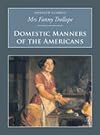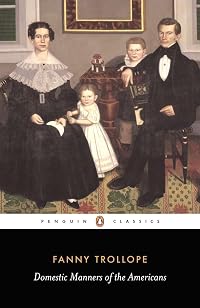
Domestic Manners of the Americans
by Frances Trollope
On This Page
Description
In the early 1800s, an English writer named Frances Trollope spent some time touring the then-very-young country of America with her son Henry, dividing most of her time between Cincinnati and a utopian camp settlement that housed former slaves in Tennessee. Although Frances enjoyed her visit, she was absolutely appalled with what she regarded as Americans' abhorrent lack of decorum. Domestic Manners of the Americans includes both stirring descriptions of the country's landscapes and show more withering excoriations of its residents' "primitive" manners.. show less
Tags
Recommendations





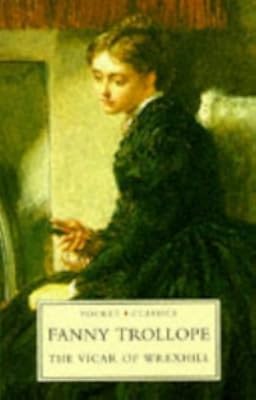


















Member Recommendations
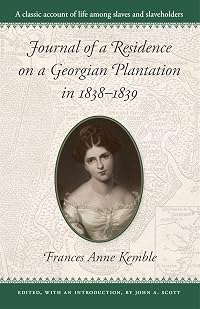
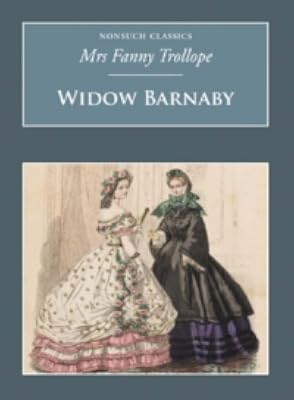
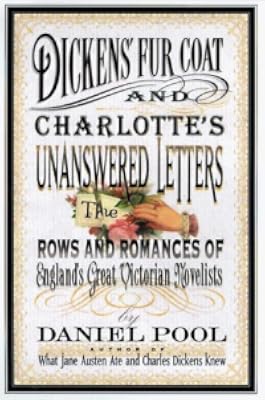
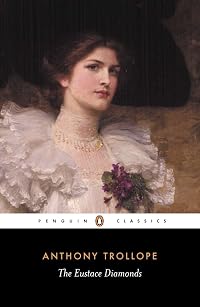
thorold Edmund White's historical novel explores the background to Mrs Trollope's American journey
20
Member Reviews
I never saw any people who appeared to live so much without amusement as the Cincinnatians. Billiards are forbidden by law, so are cards. To sell a pack of cards in Ohio subjects the seller to a penalty of fifty dollars. They have no public balls, excepting, I think, six, during the Christmas holidays. They have no concerts. They have no dinner parties.
They have a theatre, which is, in fact, the only public amusement of this triste little town; but they seem to care little about it, and either from economy or distaste, it is very poorly attended. Ladies are rarely seen there, and by far the larger proportion of females deem it an offence against religion to witness the representation of a play. It is in the churches and chapels of the show more town that the ladies are to be seen in full costume; and I am tempted to believe that a stranger from the continent of Europe would be inclined, on first reconnoitering the city, to suppose that the places of worship were the theatres and cafes of the place.
Near the end of the book, the author devotes some time to discussing American reactions to a book by Captain Basil Hall, commenting on their inability to tolerate the slightest criticism of their country, and how it seemed as if everyone in the country had bought the book and was enraged at the calumnies of that despicable author. As I read this, I was picturing Fanny Trollope with dollar signs in her eyes and the sound of cash registers ringing (much like Scrooge McDuck in the cartoons). I am sure that she thought about her opinions on the uncouth citizens of American, with their constant spitting, strange ideas of how to run hotels and lack of enthusiasm for anything except politics and making money, and realised that she was perfectly capable of writing in bitchy, condescending and scornful tones, so why shouldn't she write a book that would infuriate the American public and make herself just as much money as Captain Hall had.
The Chatham is so utterly condemned by bon ton, that it requires some courage to decide upon going there; nor do I think my curiosity would have penetrated so far, had I not seen Miss Mitford's Rienzi advertised there. It was the first opportunity I had had of seeing it played, and spite of very indifferent acting, I was delighted. The interest must have been great, for till the curtain fell, I saw not one quarter of the queer things around me: then I observed in the front row of a dress-box a lady performing the most maternal office possible; several gentlemen without their coats, and a general air of contempt for thedecencies of life, certainly more than usually revolting.
This is actually a very readable book, as Fanny's bitchiness and condescension when discussing the people and their way of life contrasts with her descriptions of the beauties of the mountains, rivers, waterfalls and autumn foliage. And her scorn can cut to the heart of things when she compares the Americans' constant lauding of their freedom with their acceptance of slavery and the breaking of every legal agreement made with the Native Americans.
Had I, during my residence in the United States, observed any single feature in their national character that could justify their eternal boast of liberality and the love of freedom, I might have respected them, however much my taste might have been offended by what was peculiar in their manners and customs. But it is impossible for any mind of common honesty not to be revolted by the contradictions in their principles and practice. They inveigh against the governments of Europe, because, as they say, they favour the powerful and oppress the weak. You may hear this declaimed upon in Congress, roared out in taverns, discussed in every drawing-room, satirized upon the stage, nay, even anathematized from the pulpit: listen to it, and then look at them at home; you will see them with one hand hoisting the cap of liberty, and with the other flogging their slaves. You will see them one hour lecturing their mob on the indefeasible rights of man, and the next driving from their homes the children of the soil, whom they have bound themselves to protect by the most solemn treaties. show less
They have a theatre, which is, in fact, the only public amusement of this triste little town; but they seem to care little about it, and either from economy or distaste, it is very poorly attended. Ladies are rarely seen there, and by far the larger proportion of females deem it an offence against religion to witness the representation of a play. It is in the churches and chapels of the show more town that the ladies are to be seen in full costume; and I am tempted to believe that a stranger from the continent of Europe would be inclined, on first reconnoitering the city, to suppose that the places of worship were the theatres and cafes of the place.
Near the end of the book, the author devotes some time to discussing American reactions to a book by Captain Basil Hall, commenting on their inability to tolerate the slightest criticism of their country, and how it seemed as if everyone in the country had bought the book and was enraged at the calumnies of that despicable author. As I read this, I was picturing Fanny Trollope with dollar signs in her eyes and the sound of cash registers ringing (much like Scrooge McDuck in the cartoons). I am sure that she thought about her opinions on the uncouth citizens of American, with their constant spitting, strange ideas of how to run hotels and lack of enthusiasm for anything except politics and making money, and realised that she was perfectly capable of writing in bitchy, condescending and scornful tones, so why shouldn't she write a book that would infuriate the American public and make herself just as much money as Captain Hall had.
The Chatham is so utterly condemned by bon ton, that it requires some courage to decide upon going there; nor do I think my curiosity would have penetrated so far, had I not seen Miss Mitford's Rienzi advertised there. It was the first opportunity I had had of seeing it played, and spite of very indifferent acting, I was delighted. The interest must have been great, for till the curtain fell, I saw not one quarter of the queer things around me: then I observed in the front row of a dress-box a lady performing the most maternal office possible; several gentlemen without their coats, and a general air of contempt for thedecencies of life, certainly more than usually revolting.
This is actually a very readable book, as Fanny's bitchiness and condescension when discussing the people and their way of life contrasts with her descriptions of the beauties of the mountains, rivers, waterfalls and autumn foliage. And her scorn can cut to the heart of things when she compares the Americans' constant lauding of their freedom with their acceptance of slavery and the breaking of every legal agreement made with the Native Americans.
Had I, during my residence in the United States, observed any single feature in their national character that could justify their eternal boast of liberality and the love of freedom, I might have respected them, however much my taste might have been offended by what was peculiar in their manners and customs. But it is impossible for any mind of common honesty not to be revolted by the contradictions in their principles and practice. They inveigh against the governments of Europe, because, as they say, they favour the powerful and oppress the weak. You may hear this declaimed upon in Congress, roared out in taverns, discussed in every drawing-room, satirized upon the stage, nay, even anathematized from the pulpit: listen to it, and then look at them at home; you will see them with one hand hoisting the cap of liberty, and with the other flogging their slaves. You will see them one hour lecturing their mob on the indefeasible rights of man, and the next driving from their homes the children of the soil, whom they have bound themselves to protect by the most solemn treaties. show less
This book is a fantastic rant from a European (British) lady who visits the new(ish) lands of America and who doesn't much like the people she meets. It is the early-mid 1800s and Americans are proud of their independence, they are proud of their equality and freedom, and they want to keep it that way. Mrs Trollope however, sees uncouth and uncultured ways wherever she goes. Although she many times absolutely loves the picturesque and dramatic natural scenery, she cannot abide by the way that the Americans are.
She describes in great depth how far people will go to avoid thanking someone, or how most people seem too above menial work to be her maid or cleaner, and how everybody continually evokes this notion of equality when doing so. show more She picks to shreds the inconsistency with this notion and the existence of slaves, and the treatment of Native Americans. And she dislikes thoroughly the dress, facial expressions, and vernacular of the American women....they are not at all like they should be, in her mind. I loved reading this, the language was so beautiful, sometimes you were sure she must be paying a compliment with using such pretty language, but the message was passive/aggressive and very clear- Americans really ought to be more European.
It was funny to read, but also did lay out a lot of the foundations of how a new society consolidates. It is fascinating to consider the trajectory of American culture from this time onwards. She points out the obscene way that people are obsessed with making money (if only she could see the world now!), and the hypocrisy of religions that preach freedom and fairness so fervently while condoning slavery and lining their own pockets first. Although her ranty style is clearly opinionated, I liked her bold statements and have enough brain matter to consider for myself what her biases were or might have been. The book said as much about her and her lifestyle as it did about the Americans'. A rollicking good, if somewhat flowery, read. show less
She describes in great depth how far people will go to avoid thanking someone, or how most people seem too above menial work to be her maid or cleaner, and how everybody continually evokes this notion of equality when doing so. show more She picks to shreds the inconsistency with this notion and the existence of slaves, and the treatment of Native Americans. And she dislikes thoroughly the dress, facial expressions, and vernacular of the American women....they are not at all like they should be, in her mind. I loved reading this, the language was so beautiful, sometimes you were sure she must be paying a compliment with using such pretty language, but the message was passive/aggressive and very clear- Americans really ought to be more European.
It was funny to read, but also did lay out a lot of the foundations of how a new society consolidates. It is fascinating to consider the trajectory of American culture from this time onwards. She points out the obscene way that people are obsessed with making money (if only she could see the world now!), and the hypocrisy of religions that preach freedom and fairness so fervently while condoning slavery and lining their own pockets first. Although her ranty style is clearly opinionated, I liked her bold statements and have enough brain matter to consider for myself what her biases were or might have been. The book said as much about her and her lifestyle as it did about the Americans'. A rollicking good, if somewhat flowery, read. show less
I loved this book. It really gave me an insight into the roots of our culture. And make no mistake: this woman is spot-on. And she's still spot-on.
The problem and the thing that makes it a one of a kind gem is that it's told by an Englishwoman. The conceit that makes Trollope ridiculous is the idea that after leaving England, we would automatically want to be just like them. We'd travel in ships for months, fight the natives, make roads, FIGHT THEM OFF etc, and set up another England. And we would have it all neatly wrapped up in 200 years so "our grandmother the British" could feel right at home.
It's just silly. Europe took thousands of years to get where it was in the mid nineteenth century.
What makes this book an important part of show more history is the light it shines on both sides simultaneously. We are, well, ourselves. And she represents everything that was wrong with the Brits at the time-mainly the conceit of thinking theirs was the only way. At the time the Brits were vigorously making sure that "the sun never sets on the British Empire".
Did she not know that they sold us the slaves? The irony! Read this and know how blind one can be to one's own country. show less
The problem and the thing that makes it a one of a kind gem is that it's told by an Englishwoman. The conceit that makes Trollope ridiculous is the idea that after leaving England, we would automatically want to be just like them. We'd travel in ships for months, fight the natives, make roads, FIGHT THEM OFF etc, and set up another England. And we would have it all neatly wrapped up in 200 years so "our grandmother the British" could feel right at home.
It's just silly. Europe took thousands of years to get where it was in the mid nineteenth century.
What makes this book an important part of show more history is the light it shines on both sides simultaneously. We are, well, ourselves. And she represents everything that was wrong with the Brits at the time-mainly the conceit of thinking theirs was the only way. At the time the Brits were vigorously making sure that "the sun never sets on the British Empire".
Did she not know that they sold us the slaves? The irony! Read this and know how blind one can be to one's own country. show less
Mrs Trollope (the mother of Anthony) was one of the earliest and most enterprising members of the stream of European intellectuals who visited the USA in its early years and wrote about their experiences. She didn't originally set out to be a tourist, though: she travelled to darkest Tennessee with her children in 1828, intending to join Fanny Wright's Nashoba Commune. When she saw the commune, she packed her bags and left at once, appalled at the conditions there, and then found herself stranded in Cincinnati for a couple of years before she could raise the money to travel back to England. These circumstances are only vaguely hinted at in the book, but obviously go a long way to explain her generally negative impression of Americans show more and the United States.
Trollope's views aren't entirely negative, of course: she is full of admiration for much of the natural scenery she sees, and considers at least Washington, Philadelphia and New York to be very attractive cities, in their different ways. But she sees the "egalitarianism" of a society that keeps slaves and oppresses native Americans as repugnant and hypocritical, she is very scathing about the excesses of American religion, and (aptly, given the reception her book got in the US) teases Americans about the way their devotion to free speech crumbles if an outsider should venture to criticise their country. Perhaps that's not a uniquely American failing, though.
Mrs Trollope consciously tries to stick to social observation and does not get involved in detailed discussions of US politics. Her account of life in the mid-west in the 1830s makes it sound like Afghanistan under the Taliban, mutatis mutandis: American men are consistently described as ill-mannered, constantly spitting, putting their feet on the seats, gambling, and smelling of onions and whisky. They are also apparently devoted to the pursuit of the almighty dollar to the exclusion of all more aesthetic pursuits. Women are domestic drudges, tied to their kitchens and laundries because of the prejudice against working as domestic servants (by white people). If women ever go out, it is to attend endlessly long church services and revival meetings. Men and women are segregated rigorously in public places, and strict dress regulations are enforced on women (ankles may not be displayed). Pleasant diversions (theatre, art, music, education, etc.) are either banned by law, boycotted on prudish religious grounds, or avoided as a waste of time that could be employed in making money. In short, for a modern European reader seeking to have prejudices confirmed, it's a goldmine! show less
Trollope's views aren't entirely negative, of course: she is full of admiration for much of the natural scenery she sees, and considers at least Washington, Philadelphia and New York to be very attractive cities, in their different ways. But she sees the "egalitarianism" of a society that keeps slaves and oppresses native Americans as repugnant and hypocritical, she is very scathing about the excesses of American religion, and (aptly, given the reception her book got in the US) teases Americans about the way their devotion to free speech crumbles if an outsider should venture to criticise their country. Perhaps that's not a uniquely American failing, though.
Mrs Trollope consciously tries to stick to social observation and does not get involved in detailed discussions of US politics. Her account of life in the mid-west in the 1830s makes it sound like Afghanistan under the Taliban, mutatis mutandis: American men are consistently described as ill-mannered, constantly spitting, putting their feet on the seats, gambling, and smelling of onions and whisky. They are also apparently devoted to the pursuit of the almighty dollar to the exclusion of all more aesthetic pursuits. Women are domestic drudges, tied to their kitchens and laundries because of the prejudice against working as domestic servants (by white people). If women ever go out, it is to attend endlessly long church services and revival meetings. Men and women are segregated rigorously in public places, and strict dress regulations are enforced on women (ankles may not be displayed). Pleasant diversions (theatre, art, music, education, etc.) are either banned by law, boycotted on prudish religious grounds, or avoided as a waste of time that could be employed in making money. In short, for a modern European reader seeking to have prejudices confirmed, it's a goldmine! show less
Almost 200 years ago a British woman finds Americans to be rude, arrogant, above criticism, eager to make a buck at all costs (self, environment), sexist, racist, calling out Jefferson, Franklin and Washington, a land without good butter and cream, and every faction of religion is center to community life and politics. Wait, what year is this? She does like the Ohio, Potomac, and Hudson rivers.
Read during Summer 2007
Although there was some enjoyment in seeing how much more in a froth Mrs. Trollope could put herself, eventually it just became tiresome. Despite the fulsome introduction that we shoudl all know Mrs. Trollope's works better, I mostly found her an unbearable snob. I found a quote by her son, Anothny Trollope to the effect of 'Mrs. Trollope is a keen observer but she understands little.' I think that sums it up. If it isn't as she would do it in England, it is wrong. She does have praise for some areas of natural beauty and a few occassional people but otherwise finds very little of merit. The book is mainly sweeping critisms, interspersed with asides of her own cultural and moral superiorty. I'm not suprised it was show more badly received in the USA; it has that smug air of someone who is insufferably rude under the guise of "for your own good." Looking forward to a nice novel next on my to read list. show less
Although there was some enjoyment in seeing how much more in a froth Mrs. Trollope could put herself, eventually it just became tiresome. Despite the fulsome introduction that we shoudl all know Mrs. Trollope's works better, I mostly found her an unbearable snob. I found a quote by her son, Anothny Trollope to the effect of 'Mrs. Trollope is a keen observer but she understands little.' I think that sums it up. If it isn't as she would do it in England, it is wrong. She does have praise for some areas of natural beauty and a few occassional people but otherwise finds very little of merit. The book is mainly sweeping critisms, interspersed with asides of her own cultural and moral superiorty. I'm not suprised it was show more badly received in the USA; it has that smug air of someone who is insufferably rude under the guise of "for your own good." Looking forward to a nice novel next on my to read list. show less
I take book suggestions from all sorts of sources. In the case of Domestic Manners of the Americans by Fanny Trollope, the recommendation came tucked into The Cat Who Robbed a Bank by Lilian Jackson Braun. Trollope's book was featured in a game of twenty questions that piqued my interest.
Frances Trollope, mother of Anthony Trollope, and author of twenty-five novels, as well as travelogues, got the writing bug during her stay in the United States with three of her six children. The idea behind the trip was two fold — take a break from marital issues and rebuild some of the waning family fortune.
The Trollops landed in New Orleans and from there traveled north via a commune in Tennessee to Cincinnati and later other urban centers in the show more area. Throughout her journey she remarked on the people she met, the mode of transportation, the weather, the food and pretty much anything else that either intrigued her or pissed her off.
As this was the early days of United States and things were still pretty damn rural even in the big cities (note her descriptions of pigs as garbage disposal units), she of well established Britain, took her visits as something of an adventure into untamed, barbaric lands.
Her travelog inspired Edmund White to pen Fanny: A Fiction. If I am to keep following the thread of recommendations from Braun to Trollop to White, I suppose I should read his book too. It is now on my wishlist to read as time permits. show less
Frances Trollope, mother of Anthony Trollope, and author of twenty-five novels, as well as travelogues, got the writing bug during her stay in the United States with three of her six children. The idea behind the trip was two fold — take a break from marital issues and rebuild some of the waning family fortune.
The Trollops landed in New Orleans and from there traveled north via a commune in Tennessee to Cincinnati and later other urban centers in the show more area. Throughout her journey she remarked on the people she met, the mode of transportation, the weather, the food and pretty much anything else that either intrigued her or pissed her off.
As this was the early days of United States and things were still pretty damn rural even in the big cities (note her descriptions of pigs as garbage disposal units), she of well established Britain, took her visits as something of an adventure into untamed, barbaric lands.
Her travelog inspired Edmund White to pen Fanny: A Fiction. If I am to keep following the thread of recommendations from Braun to Trollop to White, I suppose I should read his book too. It is now on my wishlist to read as time permits. show less
Members
- Recently Added By
Lists


Books Read in 2016
4,666 works; 199 members

Books in the Bibliography of Freethinkers by Susan Jacoby
155 works; 1 member
Author Information

55+ Works 863 Members
Frances Trollope, the mother of the prolific mid-Victorian novelist Anthony Trollope, was an accomplished novelist and travel writer in her own right. In all, she was the author of 35 novels, many of them quite popular. Born the second daughter of a vicar, she was raised in the town of Bristol. In 1809 she married Thomas Trollope, a promising show more young barrister. Although Thomas had a profitable legal practice, a number of pecuniary crises strained the Trollopes financially. In 1827, partly in an attempt to escape her husband's sullenness over their money matters and partly to help rebuild the family's fortune, she took three of her six children to the United States, where she remained until 1830. There (in Cincinnati) she set up a retail store that was to provide this region of provincial America with European culture. When the scheme failed, Trollope turned to writing as a means of self-preservation. The result was Domestic Manners of the Americans, which was immensely popular, and The Refugee in America, her first novel, both published in 1832. Soon after she established a professional relationship with the publisher Richard Bentley, who went far to publicize her work. The finances of the family did not improve, however, and in 1835, finally bankrupt, the Trollopes moved to Belgium, where Thomas died. Frances's agreement with Bentley, who paid her $7600 per novel, and her remarkable output of two novels per year restored the family fortunes. During her life Trollope's fiction was considered rough and inelegant, and she was not a favorite of the critics. In recent years her work has begun to attract considerable attention for its insightful political and social analysis and its strong stand on issues of the day. (Bowker Author Biography) show less
Some Editions
Awards and Honors
Notable Lists
Series
Belongs to Publisher Series
Work Relationships
Contains
Is abridged in
Common Knowledge
- Original publication date
- 1832
- Important places
- USA; Baltimore, Maryland, USA; Cincinnati, Ohio, USA; Maryland, USA; Nashoba Commune, Tennessee, USA; New York, USA (show all 14); New York, New York, USA; Niagara Falls; Ohio, USA; Pennsylvania, USA; Philadelphia, Pennsylvania, USA; Philadelphia County, Pennsylvania, USA; Tennessee, USA; Washington, D.C., USA
- Epigraph
- On me dit que pourvu que je ne parle ni de l'autorité, ni du culte, ni de la politique, ni de la morale, ni des gens en place, ni de l'opéra, ni des autres spectacles, ni de personne qui tienne à quelque chose, je puis ... (show all)tout imprimer librement.
MARIAGE DE FIGARO - First words
- In offering to the public these volumes on America, their author would rather be considered as endeavouring to excite fresh attention on a very important subject, than as pretending to furnish complete information upon it.
Preface to the first edition.
One of Mrs Trollope's biographers described her as 'indomitable'.
Introduction (Herbert van Thal).
On the 4th of November, 1827, I sailed from London, accompanied by my son and two daughters; and after a favourable, though somewhat tedious voyage, arrived on Christmas-day at the mouth of the Mississippi.
Chapter... (show all) I. Entrance to the Mississippi - Balize. - Last words
- (Click to show. Warning: May contain spoilers.)If this ever happens, if refinement once creeps in among them, if they once learn to cling to the graces, the honours, the chivalry of life, then we shall say farewell to American equality, and welcome to European fellowship one of the finest countries on the earth.
- Original language
- English
Classifications
Statistics
- Members
- 581
- Popularity
- 50,661
- Reviews
- 13
- Rating
- (3.74)
- Languages
- English, Spanish
- Media
- Paper, Ebook
- ISBNs
- 53
- UPCs
- 1
- ASINs
- 33