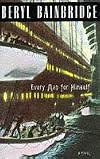
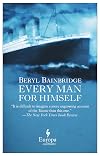
Every Man for Himself
by Beryl Bainbridge
On This Page
Description
"On Wednesday, April 10, 1912, the RMS Titanic left Southampton on her maiden voyage to New York. Four days later, half an hour before midnight, she struck an iceberg. By 2 a.m. the last lifeboat had rowed frantically away. Minutes later the great ship sank. Fifteen hundred people had lost their lives." "Every Man for Himself recaptures those four crucial days at the end of the Belle Epoque. J. Pierpont Morgan's nephew, en route to New York, has booked passage on the world's most luxurious show more ocean liner. His companions include a host of Guggenheims, Vanderbilts, and upper crust fellow travelers. It is a voyage of black-tie dining and moonlight serenades, of illicit romances and reserved travelers with shadowy pasts. The young Morgan soon finds his destiny linked to those of his shipmates, memorable personalities all, as the great ship sails toward her fate. But the Titanic's destiny may not be unknown to everyone on board: just hours before tragedy strikes, one of the passengers is heard to remark, "Have you not yet learned that it's every man for himself?" Bainbridge vividly recreates each scene of the voyage, from the suspicious fire in the Number 10 coal boiler, to the champagne and crystal of the first-class public rooms, to that terrible midnight chaos in the frigid North Atlantic. This remarkable, haunting tale confirms Bainbridge as a consummate observer of human behavior and the human condition."--BOOK JACKET.Title Summary field provided by Blackwell North America, Inc. All Rights Reserved show lessTags
Recommendations











































Member Reviews
Just like the other Bainbridge books I've read, this is a short tale dense with sharp observations and moments of odd, often dark humor. In this case, the narrator is a disaffected member of the upper class, and his viewpoint allows us to observe the behavior of the wealthy passengers of the Titanic as the inevitable tragedy looms.
More than for plot, I enjoy Bainbridge's books for their regular servings of commentary on the human condition. I often find myself stopping to ponder some assertion of the narrator or one of the characters. These are not ponderous philosophical statements so much as they are surprisingly true summaries of our flaws and foibles.
Plus, in this case, a huge, huge ship goes down. So there's that.
More than for plot, I enjoy Bainbridge's books for their regular servings of commentary on the human condition. I often find myself stopping to ponder some assertion of the narrator or one of the characters. These are not ponderous philosophical statements so much as they are surprisingly true summaries of our flaws and foibles.
Plus, in this case, a huge, huge ship goes down. So there's that.
Almost at once, what we had felt faded, and nothing remained of the experience save for three wisps of smoke spiralling from the blown-out candles ... (p.122)[return][return]Beryl Bainbridge had an amazing facility for sneaking up on a subject. Several of her impressive list of novels deal with subjects that, you might think, had been done to death (Adolf Hitler, Dr. Samuel Johnson, Scott of the Antarctic, to name a few), and yet she managed to make them feel fresh, and new. [return][return]The story of the Titanic, in the 100 years since the disaster, has been told in just about any way a reader could possibly imagine. Overblown melodrama (I'm naming no names), forensic analysis, allegory of hubris (of the patriarchy, technology, show more capitalism, take your pick), or dispatches from the front lines of the class war ... to quote the immortal words of satire magazine "The Onion," WORLDS LARGEST METAPHOR HITS ICE-BERG What on earth is a writer supposed to do with that?[return][return]Bainbridge's short novel goes back to the experience: what would it have been like to be a passenger on the Titanic? The passengers are usually rendered as bit-players in the tale of their own demise (or survival) -- it's the ship, and its final, excruciating two hours, that is the star of the show. Bainbridge reverses this: we are asked to care about a motley group of passengers (mostly first-class, with some from the lower decks, crew and representatives of Harland & Wolff), and briefly play along with their assumption that the worst things that are going to happen on their five-day crossing are embarrassingly unrequited crushes, social faux-pas played out in full view of the "crème de la crème" of Transatlantic society, and creeping shame-faced into New York Harbor under cover of darkness, having broken no speed records. Oh, if only.[return][return]Bainbridge achieves this by masterful use of first-person narration, handing the telling of the story over to Morgan, a young man who has grown up in the society of the glittering, privileged first class, but whose dubious birth gives him plenty of reason to doubt whether he belongs, or even wants to count himself as one of them. Bainbridge plays it absolutely straight with Morgan's perspective: there are no clumsy references to what is to come, lurking just over the horizon as the great ship steams ahead, no laments of "if only I had known ..." What foreshadowing there is -- those wisps of smoke spiralling from the three candles; a tray of plates crashing to the bottom of a broken dumb-waiter; a little boy playing with a top, fading into ghostly transparency against the backdrop of the setting sun -- is delicate and heartbreakingly beautiful. Morgan seems to be writing his account in real-time, convinced of the invulnerability of himself and his world, and seeing it as all a bit of a lark, even as the end game begins, and we slip into legend, and the accounts that we are all too familiar with.[return][return]"... I distinctly heard voices uttering sentences that didn't finish. An hour and a half. Possibly. ... Hadn't we better cancel that ... As we have lived so will we ... If you'll get the hell out of the ... (p. 163) show less
I was really disappointed by this book, alas. Bainbridge uses the maiden voyage of the Titanic as a stage set to explore the manners and mores of the rich and idle. Reading it is like going to party where you don’t know anyone and all conversations revolve around unfamiliar events and people. That could have been fascinating, but merely ends up being tiring. The character development in Every Man For Himself is slim and the eavesdropping on hobnobbing gives neither the thrill of stepping into another time nor the intrigue of a peek into other lives. Even the drama of the sinking manages to be flat. I realize Bainbridge is making the point that the lives of the wealthy can be self-indulgent and purposeless, but it makes for an awfully show more dull book indeed. The writing is excellent and hence the two stars I've given this book -- it's masterful, but not enough to salvage the story. Bainbridge’s The Birthday Boys is a much better read – steer towards that and avoid the iceberg. show less
Morgan is the nephew (at least by marriage) of J.P. Morgan the American financier. In the April of 1912 he's in London, nominally to supervise the shipping of his uncle's art collection to the States, and of course he chooses to return on the new flagship of his uncle's shipping line, the R.M.S Titanic. As a result of his family connections Morgan is a member of the global elite of his day, along with politicians, industry magnates, bankers and aristocrats from both sides of the Atlantic. As becomes clear when he boards the ship, it's a close-knit group of people: Morgan complains "I could pick out fifty or more I've known half my life and Lord knows how many others I've shared a dinner table with in half the capitals of Europe". But show more Morgan, while he has lived that life for almost as long as he can remember, had a very different start: on his first trip to the U.S. aged 5 he was a passenger in steerage, far from the opulence of the first class salons of the most luxurious ship in the world. And Scurra, one of the few first class passengers who Morgan does not know, is surprisingly able to throw some light on his early existence...
Of course, everyone knows what happens to the Titanic, so no spoilers in saying that the ship sinks! But the picture of the decadent and privileged society painted before the ship hits the iceberg is well done. And the depiction of the reactions of the passengers and crew to the disaster is even more successful.
As with other Beryl Bainbridge books I have read, this is superficially a simple read, but leaves the reader with a lot to think about by the end. show less
Of course, everyone knows what happens to the Titanic, so no spoilers in saying that the ship sinks! But the picture of the decadent and privileged society painted before the ship hits the iceberg is well done. And the depiction of the reactions of the passengers and crew to the disaster is even more successful.
As with other Beryl Bainbridge books I have read, this is superficially a simple read, but leaves the reader with a lot to think about by the end. show less
The story of the maiden voyage of the Titanic is a familiar one, but Bainbridge still managed an impressively fresh reimagination of the personal experiences of a rich young Anglo-American who has been adopted by the family of J.P. Morgan. His journey is somewhat picaresque - he spends most of the voyage scheming, drinking, gambling and chasing women, and any heroic qualities he has only emerge near the end as he helps co-ordinate the evacuation and contrives an unlikely Hollywood style escape that conveniently allows him to live to tell the tale .
The story is largely a microcosm of the British class system, and the disaster prefigures its wider collapse into the Great War, as loss of face outweighs technical concerns and the comfort and show more social experience of the first class passengers is paramount. The tone is less overtly comic than Bainbridge's early novels, but there are still plenty of funny moments.
Incidentally, I was not impressed by the print quality in this Abacus paperback edition - many of the pages suffered from a rather distracting column of slightly squashed characters down the middle, which suggests that there may have been a paper or printer fault somewhere. This never made the book unreadable but was decidedly annoying. show less
The story is largely a microcosm of the British class system, and the disaster prefigures its wider collapse into the Great War, as loss of face outweighs technical concerns and the comfort and show more social experience of the first class passengers is paramount. The tone is less overtly comic than Bainbridge's early novels, but there are still plenty of funny moments.
Incidentally, I was not impressed by the print quality in this Abacus paperback edition - many of the pages suffered from a rather distracting column of slightly squashed characters down the middle, which suggests that there may have been a paper or printer fault somewhere. This never made the book unreadable but was decidedly annoying. show less
Those looking for the drama in the sinking of the Titanic should look elsewhere, but those who love good writing and are interested in a modest coming-of-age story paired with a portrait of the self-centered, selfish, idle rich will enjoy this subtle and ironic novel. The ending -- which of course we all know -- is both understated and impossible to put down. Bainbridge tells the story through the eyes of Morgan, a young man who was raised since childhood as a nephew of J.P. Morgan but whose birth and earliest life were not quite as glittering, as his father vanished before his birth and his mother died.
At the very beginning of the book, despite the unsettling experience of having a stranger collapse with a heart attack into his arms, show more Morgan seems to be a typical rich young man with nothing to do but get drunk with his pals and go to dinner parties with their parents. Gradually, after he boards the Titanic for its maiden voyage, the reader sees that he has a more troubling past and even something of a mind of his own and a conscience to boot. He has had to work, despite the wealth that is his to spend, and has played a small role in the design of the ship (steerage bathroom fixtures) (J.P. Morgan was a part owner of the White Star line, which owned the Titanic), and he has even explored some socialist ideas in the past. On the ship, he hangs around with his pals, meets and learns from some interesting characters that he would not ordinarily meet (e.g., an ambitious Jewish dress designer, a mysterious and cynical man of the world, a singer apparently scorned by her lover), pines over an apparently cold woman who later turns out to have another side (Morgan is cautioned by the man of the world that he knows nothing about women), and takes an interest in continuing to work and be productive.
Very little happens in this novel until the iceberg intervenes, but Bainbridge brilliantly illustrates the self-indulgent lack of awareness of the upper classes as they idle away their time, their careless attitudes towards the people who serve them, and their complete disinterest in, if not distaste for, the passengers in steerage. The lackadaisical, if not criminal, attitude that resulted in the lack of enough lifeboats, the lack of attention to iceberg warnings and to a fire in the coal stores, and the emphasis on maintaining enough speed to achieve a maiden voyage record, is clear as well. Bainbridge's writing sparkles. Well before the ship starts sinking, it is a world of every man for himself.
Without fanfare, but completely compellingly, Bainbridge depicts the hours between the hitting of the iceberg and the disappearance of the Titanic below the waters of the North Atlantic. It is the high point of the book. show less
At the very beginning of the book, despite the unsettling experience of having a stranger collapse with a heart attack into his arms, show more Morgan seems to be a typical rich young man with nothing to do but get drunk with his pals and go to dinner parties with their parents. Gradually, after he boards the Titanic for its maiden voyage, the reader sees that he has a more troubling past and even something of a mind of his own and a conscience to boot. He has had to work, despite the wealth that is his to spend, and has played a small role in the design of the ship (steerage bathroom fixtures) (J.P. Morgan was a part owner of the White Star line, which owned the Titanic), and he has even explored some socialist ideas in the past. On the ship, he hangs around with his pals, meets and learns from some interesting characters that he would not ordinarily meet (e.g., an ambitious Jewish dress designer, a mysterious and cynical man of the world, a singer apparently scorned by her lover), pines over an apparently cold woman who later turns out to have another side (Morgan is cautioned by the man of the world that he knows nothing about women), and takes an interest in continuing to work and be productive.
Very little happens in this novel until the iceberg intervenes, but Bainbridge brilliantly illustrates the self-indulgent lack of awareness of the upper classes as they idle away their time, their careless attitudes towards the people who serve them, and their complete disinterest in, if not distaste for, the passengers in steerage. The lackadaisical, if not criminal, attitude that resulted in the lack of enough lifeboats, the lack of attention to iceberg warnings and to a fire in the coal stores, and the emphasis on maintaining enough speed to achieve a maiden voyage record, is clear as well. Bainbridge's writing sparkles. Well before the ship starts sinking, it is a world of every man for himself.
Without fanfare, but completely compellingly, Bainbridge depicts the hours between the hitting of the iceberg and the disappearance of the Titanic below the waters of the North Atlantic. It is the high point of the book. show less
Every Man for Himself does not have a narrative in the conventional sense. But it nevertheless manages to function by giving the reader the voyeristic opportunity to eavesdrop on the comings and goings of the well-heeled passengers of a doomed ocean liner. It is the quirks of the cast of characters and their relationships that is the main attraction here; the Titanic theme is but window dressing.
That said, the setting is used to good effect. One thing I found quite clever is the way that the novel continuously hints at enigmatic happenings with the promise that all will become clear in due course, only for the inevitable disaster to strike before any of the mystery is resolved. In the end, we are left with a handful of unresolved plot show more threads and the sense that our relationship with the characters was cut short too soon. In some way, this is a small reminder that we don't get to postpone tragedy until a time that is convenient.
This is not a terribly visual novel because the author spends very little time describing the environment. But this liberates the text to focus on events rather than static scenes, which lends the whole piece a certain momentum. show less
That said, the setting is used to good effect. One thing I found quite clever is the way that the novel continuously hints at enigmatic happenings with the promise that all will become clear in due course, only for the inevitable disaster to strike before any of the mystery is resolved. In the end, we are left with a handful of unresolved plot show more threads and the sense that our relationship with the characters was cut short too soon. In some way, this is a small reminder that we don't get to postpone tragedy until a time that is convenient.
This is not a terribly visual novel because the author spends very little time describing the environment. But this liberates the text to focus on events rather than static scenes, which lends the whole piece a certain momentum. show less
Members
- Recently Added By
Lists

Top Five Books of 2017
757 works; 230 members

Booker Prize
491 works; 62 members
Booker Prize Shortlist: Titles Read
103 works; 10 members

Man Booker Prize Longlist 1996
6 works; 2 members

Huxley's reading log 2016
84 works; 3 members

Books Read in 2025
4,128 works; 98 members
Author Information

41+ Works 6,789 Members
Beryl Bainbridge was born on November 21, 1934, in Liverpool, England. She became an actress at a young age and worked in English repertory theatres and on the radio. Her work contains dark, somber subject matter, deftly mixed with humor. Her writing acts as an outlet for her childhood frustrations, and frequently deals with family relations. In show more her novels, she recalls memories of disappointment and of a bad-tempered, brooding father. During her lifetime, she wrote 18 novels including A Weekend with Claude, Another Part of the Wood, The Bottle Factory Outing, The Birthday Boys, According to Queeney, and Young Adolf. She adapted many of her novels, such as An Awfully Big Adventure, Sweet William, and The Dressmaker, for film. She has received numerous awards and honors including the Whitbread Award in 1977 for Injury Time and in 1996 for Every Man for Himself; the James Tait Black Memorial Prize for fiction in 1998 for Master Georgie; a Guardian Fiction Award, and the David Cohen Prize for Literature in 2003. She was made a dame by Queen Elizabeth II in 2000. She died from cancer on July 2, 2010 at the age of 77. (Bowker Author Biography) show less
Awards and Honors
Common Knowledge
- Canonical title
- Every Man for Himself
- People/Characters
- Thomas Andrews, shipbuilder; John Jacob Astor IV; Madeleine Astor; Molly Brown (Mrs. J. J. Brown); Archie Butt (Major Archibald W. Butt); Wallis Ellery (show all 12); Archibald Gracie IV (Colonel); Benjamin Guggenheim; J. Bruce Ismay; Captain Edward J. Smith; Ida Straus; Isidor Straus
- Important places
- Atlantic Ocean; North Atlantic Ocean; Titanic
- Important events
- Sinking of the Titanic (1912-04-14 | 1912-04-15)
- Dedication
- For August, Esme, and Inigo
- First words
- Prologue: He said, 'Save yourself if you can,' and I said firmly enough, though I was trembling and clutching at straws, 'I intend to.'
Chapter One: At half-past four on the afternoon of 8th April 1912--the weather was mild and hyacinths bloomed in window boxes--a stranger chose to die in my arms. - Last words
- (Click to show. Warning: May contain spoilers.)Beyond, where the sun was beginning to show its burning rim, smoke blew from a funnel.
- Canonical DDC/MDS
- 823.914
- Canonical LCC
- PR6052.A3195
Classifications
Statistics
- Members
- 854
- Popularity
- 32,157
- Reviews
- 20
- Rating
- (3.41)
- Languages
- 5 — English, German, Hungarian, Italian, Portuguese (Portugal)
- Media
- Paper, Audiobook, Ebook
- ISBNs
- 25
- UPCs
- 2
- ASINs
- 6