A Family Romance
by Anita Brookner
On This Page
Description
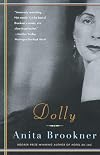
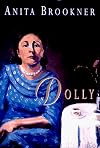
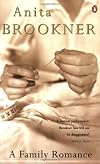
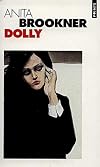
Paul and Henrietta Manning and their solitary, academic daughter Jane have nothing in common with Dolly, widow of Henrietta's brother. Corseted and painted, Dolly is a frivolous, superficial woman, who has little time for those without that inestimable quality - charm. Jane, in particular, falls into this category, especially after the death of her parents. But Jane has money - and a conscience - and these bind her to Dolly. Through disagreements, disappointments and disapprovals, Jane and show more Dolly are enmeshed in an uneasy alliance in which history and family create closer ties than friendship ever could. show lessTags
Recommendations
















Member Reviews
A first-person narrator named Jane tells the story of her aunt Dolly in this novel of family uneven fortune and emotional manipulation. It features uniformly strong characterizations throughout, and proves once again Anita Brookner a pass master in the family arena. It proves Brookner’s mastery of all types of family dramas.
Dolly, who comes of age during World War II, lives her life in a constant state of lack - she lacks love, she lacks the material means to live comfortably, and she certainly lacks any scruples about pointing out the difference between her circumstances and those of her late husband’s family. Her expectation that family or loved ones will contribute to her economic well-being is the salient and constant feature show more of her personality. I consider the characterization of Dolly to be challenging, but brilliantly executed by Brookner.
This pecuniary dependence colors everything in Dolly’s life, from the time she’s a little girl in Vienna. She marries Hugo, a fairly well-off Londoner, and extricates him from his mother’s clutches by having him take a job in Brussels. Brookner devotes quite a lot of narrative to the questionable, slightly creepy relationship between Hugo and his mother Etty, and the point, I think, is to develop Hugo’s wishy-washy character and his susceptibility to Dolly. Dolly and Hugo mow through Hugo’s money, and then Hugo dies unexpectedly. So Dolly returns to London, hoping Hugo’s family will take care of her, but she runs into a roadblock in Hugo’s mom.
Dolly’s dependence becomes a family heirloom; first she asks Hugo’s mother, then after her passing, she transfers her dependence to Henrietta, Hugo’s sister. Our narrator, Jane, is Henrietta’s daughter, and as Henrietta dies in her turn, Jane rebels against the apparent obligation to throw money at Dolly. But the rebellion doesn’t last.
Jane has a hard-to-credit epiphany about Dolly, and winds up setting Dolly up happily in a small London flat, surrounded by new and accepting friends.
Brookner concludes her novel with a discussion of feminist issues, which she brings up as Jane, a celebrated children’s author, gives lectures on Sleeping Beauty at a couple of American universities. There she is quizzed by women in academia on her position on various issues; the whole thing gives Jane pause … she can’t help but think about feminism against the backdrop of her experience with Dolly. Jane thinks of her as a “working woman,” highly adaptable, who made a career out of getting by.
In the end Jane acknowledges and agrees with her American friends’ views on feminine personhood, but can’t help hearing a voice, an offstage echo as it were, that asserts the old ineluctable questions, Will I be loved, will I be saved? She knows Dolly comes from a different epoch, another world in which support for women could not be relied upon. This last-minute consideration of modern feminist issues moves Jane to an even deeper understanding: she learns that love is unpredictable, that one may love someone for whom she has felt distaste, even detestation. Jane learns that love only unreliably attaches one to someone worthy.
I admire the inclusion of these discussions in modern gender politics at the end of Dolly. They bring Dolly’s struggles into deeper focus, and add a level of enjoyment and appreciation to the novel’s characters. show less
Dolly, who comes of age during World War II, lives her life in a constant state of lack - she lacks love, she lacks the material means to live comfortably, and she certainly lacks any scruples about pointing out the difference between her circumstances and those of her late husband’s family. Her expectation that family or loved ones will contribute to her economic well-being is the salient and constant feature show more of her personality. I consider the characterization of Dolly to be challenging, but brilliantly executed by Brookner.
This pecuniary dependence colors everything in Dolly’s life, from the time she’s a little girl in Vienna. She marries Hugo, a fairly well-off Londoner, and extricates him from his mother’s clutches by having him take a job in Brussels. Brookner devotes quite a lot of narrative to the questionable, slightly creepy relationship between Hugo and his mother Etty, and the point, I think, is to develop Hugo’s wishy-washy character and his susceptibility to Dolly. Dolly and Hugo mow through Hugo’s money, and then Hugo dies unexpectedly. So Dolly returns to London, hoping Hugo’s family will take care of her, but she runs into a roadblock in Hugo’s mom.
Dolly’s dependence becomes a family heirloom; first she asks Hugo’s mother, then after her passing, she transfers her dependence to Henrietta, Hugo’s sister. Our narrator, Jane, is Henrietta’s daughter, and as Henrietta dies in her turn, Jane rebels against the apparent obligation to throw money at Dolly. But the rebellion doesn’t last.
Jane has a hard-to-credit epiphany about Dolly, and winds up setting Dolly up happily in a small London flat, surrounded by new and accepting friends.
Brookner concludes her novel with a discussion of feminist issues, which she brings up as Jane, a celebrated children’s author, gives lectures on Sleeping Beauty at a couple of American universities. There she is quizzed by women in academia on her position on various issues; the whole thing gives Jane pause … she can’t help but think about feminism against the backdrop of her experience with Dolly. Jane thinks of her as a “working woman,” highly adaptable, who made a career out of getting by.
In the end Jane acknowledges and agrees with her American friends’ views on feminine personhood, but can’t help hearing a voice, an offstage echo as it were, that asserts the old ineluctable questions, Will I be loved, will I be saved? She knows Dolly comes from a different epoch, another world in which support for women could not be relied upon. This last-minute consideration of modern feminist issues moves Jane to an even deeper understanding: she learns that love is unpredictable, that one may love someone for whom she has felt distaste, even detestation. Jane learns that love only unreliably attaches one to someone worthy.
I admire the inclusion of these discussions in modern gender politics at the end of Dolly. They bring Dolly’s struggles into deeper focus, and add a level of enjoyment and appreciation to the novel’s characters. show less
A deep and satisfying novel. The story of a relationship between a young woman, Jane, and her tiresome selfish aunt, Dolly. An expertly developed family story which never falters in maintaining interest and admiration for the way it's crafted.
Both Jane and Dolly become characters to admire despite their unprepossessing presentations during the novel's development. Dolly especially being greedy for love and money support.
There is a strong intelligently presented ending where Jane discovers that her aunt was using all the means at her disposal in order to thrive, because the older woman's generation was not equipped to rely on society for the provision of a stable path through life.
What a great writer Anita Brookner was.
And as an aside, show more I once lived in the street where much of the early action takes place, Maresfield Gardens, N.W.3 - opposite Sigmund Freud's last home. It made the book even more special to me - fifty years on. show less
Both Jane and Dolly become characters to admire despite their unprepossessing presentations during the novel's development. Dolly especially being greedy for love and money support.
There is a strong intelligently presented ending where Jane discovers that her aunt was using all the means at her disposal in order to thrive, because the older woman's generation was not equipped to rely on society for the provision of a stable path through life.
What a great writer Anita Brookner was.
And as an aside, show more I once lived in the street where much of the early action takes place, Maresfield Gardens, N.W.3 - opposite Sigmund Freud's last home. It made the book even more special to me - fifty years on. show less
A brilliant book. The kind of book that reminds you of why you love to read. So well written, but in the end, what it does is open your heart. In the end I was happy for Dolly and only Anita Brookner could have made me feel that. Brilliant.
This is a little depressing I suppose - however it is so beautifully written, and ultimately very moving that I can't help but say I really enjoyed it - although I am aware that enjoyed is possibly the wrong word really. I sat up in bed late last night to finish it - and I did finish it with a quite genuine tear in my eye. The lives of these characters, their motivations and concerns had been so minutely examined by Brookner, that by the end the pathos with which we see the conclusion (although it is not really you feel) of Jane and Dolly's lives is real.
Ratings
Members
- Recently Added By
Lists

Books Read in 2025
4,090 works; 97 members
Author Information

35+ Works 12,753 Members
Anita Brookner was born in London, England on July 16, 1928. She received a BA in history from King's College London in 1949 and a doctorate in art history from the Courtauld Institute of Art in 1953. She went on to lecture in art at Reading University and the Courtauld Institute, where she specialized in eighteenth- and nineteenth-century French show more art. She became the first woman to be named as Slade Professor of Art at Cambridge University in 1967. Her first novel, A Start in Life, was published in 1981. Some of her other works include The Bay of Angels, The Next Big Thing, The Rules of Engagement, Latecomers, Leaving Home, Incidents in the Rue Laugier, Look at Me, and Strangers. Hotel du Lac won the Booker Prize for Fiction in 1984 and was adapted for television in 1986. She has also written scholarly works about Jacques Louis David, Jean Baptiste Greuze, and Jean-Antoine Watteau. She died on March 10, 2016 at the age of 87. (Bowker Author Biography) show less
Common Knowledge
- Canonical title
- A Family Romance
- Original title
- A Family Romance
- Alternate titles
- Dolly (U.S. title) (U.S. title)
- Original publication date
- 1993
- First words
- I thought of her as the aunt rather than as my aunt, for anything more intimate would have implied appropriation or attachment.
- Quotations
- I was acutely aware of the division between what I really felt and what I thought I should feel.
- Last words
- (Click to show. Warning: May contain spoilers.)But I shall follow the adventure through, I hope with honour, and even after she is gone I shall continue to see her at the window, waving to me ardently, as if I were her best beloved.
- Disambiguation notice
- 'Dolly' and 'A Family Romance' are the same book.
Classifications
Statistics
- Members
- 356
- Popularity
- 88,323
- Reviews
- 4
- Rating
- (3.62)
- Languages
- English, French
- Media
- Paper, Audiobook, Ebook
- ISBNs
- 23
- ASINs
- 4