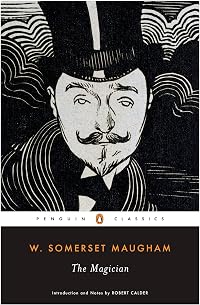
The Magician
by W. Somerset Maugham 
On This Page
Description
Maugham wrote The Magician after meeting the famous magician and occultist Aleister Crowly in Paris. He caricatures Crowly as the protagonist Oliver Haddo, a magician who is attempting to create life. Crowly later accused Maugham of plagiarism and Maugham added the foreword A Fragment of Autobiography, which is included in this edition..
Tags
Recommendations








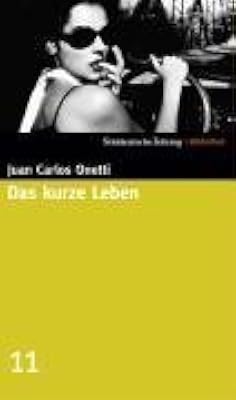
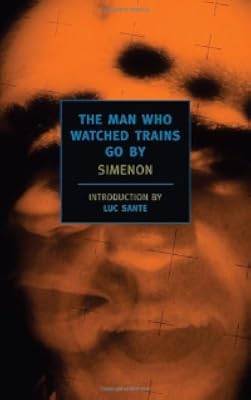


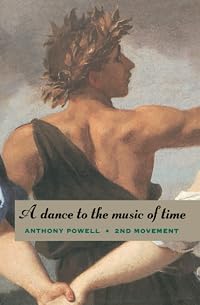

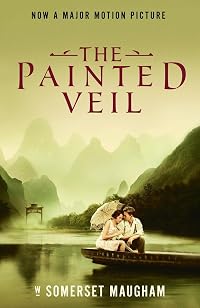










Member Recommendations

CGlanovsky Aleister Crowley-esque figure
Member Reviews
A literary light in earlier generations, W. Somerset Maugham is - for one reason or another - little discussed now, and his reputation has fallen into disrepair. Neither critics nor the author himself considered The Magician (1908) to be one of his major works, but it stands today as possibly his most admired novel. Certainly it's one of the greatest supernatural novels of its time and is still widely read due to the ongoing public fascination with Aleister Crowley. Maugham's first-hand encounters with the infamous ceremonial magician serve him well here, and both the strengths (his strange personal magnetism) and weaknesses (spurious claims of achievement, the compulsive need to shock) of Crowley's character are evident in Oliver show more Haddo, his literary counterpart. The novel is concise, well-paced and full of darkly fascinating imagery.
In his introduction to the Penguin Classics edition, Robert Calder mentions George du Maurier's Trilby (1894) as the central inspiration for The Magician, but I would argue that Maugham's novel was more directly influenced by Bram Stoker's Dracula (1897), though Dracula itself was certainly inspired by Trilby. (Henry Irving, legendary stage actor and Stoker's tyrannical boss, served as the model for both Svengali and Count Dracula.) The plot mechanics of Stoker's book - in particular, the geographical cat-and-mouse game which follows Dracula's unholy seduction of Mina - are reproduced in The Magician, though Maugham devised a ghastly bang-up climax which not only outdid du Maurier and Stoker, but also proved influential on later horror authors like H.P. Lovecraft (The Case of Charles Dexter Ward, "The Dunwich Horror") and Peter Straub (Mr. X). show less
In his introduction to the Penguin Classics edition, Robert Calder mentions George du Maurier's Trilby (1894) as the central inspiration for The Magician, but I would argue that Maugham's novel was more directly influenced by Bram Stoker's Dracula (1897), though Dracula itself was certainly inspired by Trilby. (Henry Irving, legendary stage actor and Stoker's tyrannical boss, served as the model for both Svengali and Count Dracula.) The plot mechanics of Stoker's book - in particular, the geographical cat-and-mouse game which follows Dracula's unholy seduction of Mina - are reproduced in The Magician, though Maugham devised a ghastly bang-up climax which not only outdid du Maurier and Stoker, but also proved influential on later horror authors like H.P. Lovecraft (The Case of Charles Dexter Ward, "The Dunwich Horror") and Peter Straub (Mr. X). show less
The Penguin edition is not being reviewed here. This is the Vintage Edition. The only difference in practice is that this does not have Calder’s introduction but has a short and somewhat languid autobiographical sketch from Maugham himself.
Written around 1907 before he began to make serious money as a playwright, this exhibits all the strengths and weaknesses of Maugham.
The strengths are (in general and allowing for a few moments where he shifts in to the purple-conventional) his exceptional ability to use language, create believable character and tell a story. The weakness lies in his callous detachment.
The book famously draws on his acquaintanceship with Alastair Crowley in Paris. He uses this base line of experience to build a show more remarkable picture of manipulative psychopathic evil in the character of Oliver Haddo.
From a rather conventional group of hero, heroine and two second fiddles who have to deal with Haddo’s vengeance for a slight, Maugham constructs a tale of manners that descends (after a rather obviously literary-decadent interval when Haddo magicaly ‘seduces’ the heroine) into horror.
The horror is of two types – an emotional horror at the fate of the heroine (on which I shall comment no further to avoid spoilers) and a more Gothic tale that has moments of genuine cosmic horror worthy of Hope Hodgson or even Lovecraft with a clear willingness to deal with the visceral.
Maugham strikes out quite radically in this novel – he over-turns the conventional requirement for the happy ending and he is quite prepared to make his horrors physical. The story is undoubtedly indebted at one remove to both Poe and Mary Shelley.
Unfortunately, the book is, as one might expect of the era, unreflective because the question soon arises in the modern reader just who is being evil here. Maugham always writes for money and so for an audience as much as for himself.
In the story, Oliver Haddo is undoubtedly thoroughly evil but, in real life, there is a kind of evil as well in Maugham’s appropriation of another man (Crowley) and his recasting (for literary effect) in a cold detached way, in caricatured terms, that give him little benefit of the doubt.
In the autobiographical fragment, Maugham has the goodness to emphasise that Haddo is a literary creation and that Crowley had qualities (and, indeed, the fact that Haddo is not a charlatan is a sort of back-handed compliment to his model) but this was written many years later.
Perhaps no harm was done since Crowley apparently signed himself Oliver Haddo in a review of the book. The man could certainly look after himself in his self-destructive, wilful way but it raises a question about evil.
Is it the flamboyant offense to society or a detached knife job on those who offend society that represents the most dark in the individual? High imperial society has an interest in assuming that the first is far worse but we need not.
Maugham is a complex character who must be understood as a master of detached observation with some experience of security work but also as a man hiding his true nature both as homosexual and social critic (from his days as a South London doctor) under a veneer of country house conformity.
If he observed to cure as a doctor, that detachment made persons simply material for the tales and plays that kept him in the style he required to protect himself and to hold together a sexual and private life that required a social standing that needed to be maintained to allow his pleasures.
If Haddo is modelled on Crowley, Maugham’s morality, or lack of it, is based on sub-conscious fears resulting from the vicious destruction of another writer, Oscar Wilde, during his youth.
This excellent and readable story, at one level Gothic nonsense and at another level exceptionally fine genre writing, does make one think about the nature of evil. The ‘grand guignol’ of Crowley/Haddo pales into insignificance against the detached and cold cruelty of a literary doctor.
But this is a problem for literature in general – are the people around a writer rightfully mere objects for re-interpretation to pleasure hundreds of thousands of others?
Perhaps not, if it is an appropriation of a whole personality in order to create a monster. There is something as evil as Haddo in that. show less
Written around 1907 before he began to make serious money as a playwright, this exhibits all the strengths and weaknesses of Maugham.
The strengths are (in general and allowing for a few moments where he shifts in to the purple-conventional) his exceptional ability to use language, create believable character and tell a story. The weakness lies in his callous detachment.
The book famously draws on his acquaintanceship with Alastair Crowley in Paris. He uses this base line of experience to build a show more remarkable picture of manipulative psychopathic evil in the character of Oliver Haddo.
From a rather conventional group of hero, heroine and two second fiddles who have to deal with Haddo’s vengeance for a slight, Maugham constructs a tale of manners that descends (after a rather obviously literary-decadent interval when Haddo magicaly ‘seduces’ the heroine) into horror.
The horror is of two types – an emotional horror at the fate of the heroine (on which I shall comment no further to avoid spoilers) and a more Gothic tale that has moments of genuine cosmic horror worthy of Hope Hodgson or even Lovecraft with a clear willingness to deal with the visceral.
Maugham strikes out quite radically in this novel – he over-turns the conventional requirement for the happy ending and he is quite prepared to make his horrors physical. The story is undoubtedly indebted at one remove to both Poe and Mary Shelley.
Unfortunately, the book is, as one might expect of the era, unreflective because the question soon arises in the modern reader just who is being evil here. Maugham always writes for money and so for an audience as much as for himself.
In the story, Oliver Haddo is undoubtedly thoroughly evil but, in real life, there is a kind of evil as well in Maugham’s appropriation of another man (Crowley) and his recasting (for literary effect) in a cold detached way, in caricatured terms, that give him little benefit of the doubt.
In the autobiographical fragment, Maugham has the goodness to emphasise that Haddo is a literary creation and that Crowley had qualities (and, indeed, the fact that Haddo is not a charlatan is a sort of back-handed compliment to his model) but this was written many years later.
Perhaps no harm was done since Crowley apparently signed himself Oliver Haddo in a review of the book. The man could certainly look after himself in his self-destructive, wilful way but it raises a question about evil.
Is it the flamboyant offense to society or a detached knife job on those who offend society that represents the most dark in the individual? High imperial society has an interest in assuming that the first is far worse but we need not.
Maugham is a complex character who must be understood as a master of detached observation with some experience of security work but also as a man hiding his true nature both as homosexual and social critic (from his days as a South London doctor) under a veneer of country house conformity.
If he observed to cure as a doctor, that detachment made persons simply material for the tales and plays that kept him in the style he required to protect himself and to hold together a sexual and private life that required a social standing that needed to be maintained to allow his pleasures.
If Haddo is modelled on Crowley, Maugham’s morality, or lack of it, is based on sub-conscious fears resulting from the vicious destruction of another writer, Oscar Wilde, during his youth.
This excellent and readable story, at one level Gothic nonsense and at another level exceptionally fine genre writing, does make one think about the nature of evil. The ‘grand guignol’ of Crowley/Haddo pales into insignificance against the detached and cold cruelty of a literary doctor.
But this is a problem for literature in general – are the people around a writer rightfully mere objects for re-interpretation to pleasure hundreds of thousands of others?
Perhaps not, if it is an appropriation of a whole personality in order to create a monster. There is something as evil as Haddo in that. show less
This Vintage Edition of ‘The Magician’ has an unpreposessing preface by Maugham entitled ‘A Fragment of Autobiography'. Whilst some of it is interesting - Maugham reveals his not wholly enamoured view of Paris in the first decade of the twentieth century which is an interesting corrective to more romantic accounts - a lot of it makes one doubt this choice of book. Maugham has slightly more time for it than some of his earlier works, but not much. He can’t remember writing it but ’supposes’ that all the black magic arcana he seems to think he packed into it must have come from days spent reading in the British Museum. In fact there is very little magic in the book and what there is could just have been lifted from other show more potboilers of the late 19th century. Even more damningly, Maugham’s view of the prose in the book is that it is ‘lush and turgid’.
Well, I ploughed on nevertheless. The prose *is* terrible, one unpleasant, almost but not quite indigestible chunk after another. The characters to a person are cardboard thin. The Aleister Crowley character - Oliver Haddo - seems to take most of his phycological makeup and behaviours from a slightly twisted and less intelligent version of Sir John Falstaff. The plot make the average melodrama look good.
At least it is quite short. show less
Well, I ploughed on nevertheless. The prose *is* terrible, one unpleasant, almost but not quite indigestible chunk after another. The characters to a person are cardboard thin. The Aleister Crowley character - Oliver Haddo - seems to take most of his phycological makeup and behaviours from a slightly twisted and less intelligent version of Sir John Falstaff. The plot make the average melodrama look good.
At least it is quite short. show less
Somerset Maugham is one of my favorite authors and I really don't understand why he is not more widely read. My father always told me to read him. I have in my book collection a very old collection of his short stories that I got from my mother. Their generation appreciated him and I have heard that he was immensely popular in the 30's and 40's. Why not so much any more? "The Razor's Edge" is every bit as good as "The Sun Also Rises" and more complex. "Of Human Bondage" is a masterpiece. His short stories are amazing. I have been reading my way through his works and then came to "The Magician" and had my mind blown because I really wasn't expecting a great literary writer to write a gothic thriller.
Somerset Maugham knew Aleister show more Crowley. And didn't like him at all. He apparently wasn't a very likeable guy. Being "the most evil man in the world" must have been quite a burden, what with planning human sacrifices, raising the dead, summoning demons, and basically being an arrogant and destructive person to everyone around you. I will admit that I kept hearing Ozzy sing "Miiiister Crowwley" every time he appeared in the story. That's probably just me.
As much as I make light of it, Oliver Haddo (Crowley) is one of the most evil and repulsive villains I have ever encountered. Crowley however, reported that he was quite flattered, which is amazing considering how repulsive the character is. It might have to do with the fact that while Haddo is repulsive, he is also quite powerful and capable of terrible evil. His magic is real and deadly. There's also that "there's no such thing as bad publicity" concept.
The first half to two thirds of the book was classic Maugham. Realistic characters confronted with a repulsive braggart whose level of offense rises with each meeting. You just find yourself squirming with how uncomfortable it all is, especially to prim and proper English folks. As good as this was, with classic Maugham witty reparte, the novel suddenly leaves the real world behind and turns into a straight out gothic thriller that is as good as any that I have ever read. Exciting. Gory beyond anything I was expecting. And so dark. I would put it up there with Dracula--except that Maugham is 100 times the writer than Stoker.
I think that Maugham had fun writing something that probably scared and repulsed quite a few readers of the day and had the added advantage of roasting someone he didn't care for. It went through several printings so it must have been popular also.
The edition I read has an introduction by Maugham that explains the history behind the book and his relationship with Crowley, who he describes as being just like Haddo without the magical abilities.
Great book. show less
Somerset Maugham knew Aleister show more Crowley. And didn't like him at all. He apparently wasn't a very likeable guy. Being "the most evil man in the world" must have been quite a burden, what with planning human sacrifices, raising the dead, summoning demons, and basically being an arrogant and destructive person to everyone around you. I will admit that I kept hearing Ozzy sing "Miiiister Crowwley" every time he appeared in the story. That's probably just me.
As much as I make light of it, Oliver Haddo (Crowley) is one of the most evil and repulsive villains I have ever encountered. Crowley however, reported that he was quite flattered, which is amazing considering how repulsive the character is. It might have to do with the fact that while Haddo is repulsive, he is also quite powerful and capable of terrible evil. His magic is real and deadly. There's also that "there's no such thing as bad publicity" concept.
The first half to two thirds of the book was classic Maugham. Realistic characters confronted with a repulsive braggart whose level of offense rises with each meeting. You just find yourself squirming with how uncomfortable it all is, especially to prim and proper English folks. As good as this was, with classic Maugham witty reparte, the novel suddenly leaves the real world behind and turns into a straight out gothic thriller that is as good as any that I have ever read. Exciting. Gory beyond anything I was expecting. And so dark. I would put it up there with Dracula--except that Maugham is 100 times the writer than Stoker.
I think that Maugham had fun writing something that probably scared and repulsed quite a few readers of the day and had the added advantage of roasting someone he didn't care for. It went through several printings so it must have been popular also.
The edition I read has an introduction by Maugham that explains the history behind the book and his relationship with Crowley, who he describes as being just like Haddo without the magical abilities.
Great book. show less
The Magician is apparently an exception that proves the rule to Somerset Maugham's usual oeuvre: a sensational, proto-pulp (or a neo-gothic) thriller that, after a deliberate build-up, actually delivers in its hellzapoppin payoff.
Stuffy and unimaginative English surgeon Arthur Burdon travels to Paris to visit his one-time ward, current fiancée, Margaret Dauncey, as well as renew his friendship with the retired Breton physician and autodidactic occultist Dr. Porhoët; while there he makes two new acquaintances: Margaret's roommate, Susie Boyd (who is a vacationing teacher at least a decade older than Margaret), and the repulsively corpulent, alarmingly charismatic Oliver Haddo, a wealthy squire and a casual acquaintance of Porhoët, show more who met while they were each studying the occult in the Bibliothèque de l'Arsenal. Haddo is deliberately provocative, even rude, but has a wealth of worldly anecdotes (he is a keen lion-hunter, for example) and a recondite erudition to entertain and silence any would-be critics, over and above his slightly mesmeric stare.
Due to a contretemps with Burdon -- Haddo kicks Margaret's dog while visiting her and Susie in the company of Porhoët and Burdon, in consequence of which Burdon physically attacks Haddo, who fails to defend himself -- Haddo conceives a terrible hatred for Burdon, and plots a convoluted, wholly improbable, but nonetheless awful, vengeance against him. Haddo woos and wins Margaret away from him, acting less the passionate and sentimental lover than a Svengali (who debuted in George du Maurier's 1895 novel Trilby; his fame far outshone that of the novel's titular character, notwithstanding the fact that she had a type of hat named after her) who clouds her mind and breaks her will. Burdon, though spiritually wounded nigh unto the breaking point himself, nonetheless doesn't contest the marriage, believing Margaret to be in full possession of her faculties, and honestly in love with Haddo. Eventually Susie, who has fallen in love with Burdon, convinces him otherwise, and he calls upon Porhoët's expertise to assist him in bearding Haddo in his ancestral home of Skene, in Staffordshire, in the West Midlands, England.
Interest is added to The Magician by the knowledge, which Maugham confirmed in his "Fragment of Autobiography" some fifty years after The Magician's initial publication, that Haddo is a caricature of Aleister Crowley, the self-described "Great Beast," whom Maugham knew in passing. Crowley was so incensed by this mocking and unflattering portrait of him that he undertook to review The Magician in the pages of Vanity Fair, signing himself "Oliver Haddo;" Maugham claimed to have never read the review.
While Maugham claimed, in his "Fragment," to have spent "days and days reading in the library of the British Museum" to research The Magician, he still produced such idiocies as Porhoët declaring that Haddo "'had studied the Kabbalah in the original'" (Chapter 1) -- as though there was an "original," ur-text of the Kabbalah. Nonetheless, Maugham manages to reward the reader's suspension of disbelief with a slow-burn building up of tension and suspense that is magnificently rewarded with a climax that is at least the equal of most of the sensational works that were of a time with The Magician; the conclusion of The Magician is more thrilling and eerie, for example, than that of the first two Fu Manchu novels or, come to that, than Dracula's (or Alraune's). Maugham very wisely limits Haddo's time on-stage, and, more importantly, limits his tirades about his esoteric activities, so that the reader is nearly as ignorant and impressionable as Burdon and Susie (and, for all his time spent at the Arsenal, Porhoët), and so can react with the appropriate levels of horror and revulsion when they slink through Haddo's attic workshops at Skene.
The Magician was much more enjoyable, on the whole, than the only other work I've read by Maugham thus far, the short story collection The Trembling of a Leaf: Little Stories of the South Seas Islands (1921); I'm somewhat apprehensive of reading more Maugham due to the glum feeling that I'll probably not enjoy his other work as much. show less
Stuffy and unimaginative English surgeon Arthur Burdon travels to Paris to visit his one-time ward, current fiancée, Margaret Dauncey, as well as renew his friendship with the retired Breton physician and autodidactic occultist Dr. Porhoët; while there he makes two new acquaintances: Margaret's roommate, Susie Boyd (who is a vacationing teacher at least a decade older than Margaret), and the repulsively corpulent, alarmingly charismatic Oliver Haddo, a wealthy squire and a casual acquaintance of Porhoët, show more who met while they were each studying the occult in the Bibliothèque de l'Arsenal. Haddo is deliberately provocative, even rude, but has a wealth of worldly anecdotes (he is a keen lion-hunter, for example) and a recondite erudition to entertain and silence any would-be critics, over and above his slightly mesmeric stare.
Due to a contretemps with Burdon -- Haddo kicks Margaret's dog while visiting her and Susie in the company of Porhoët and Burdon, in consequence of which Burdon physically attacks Haddo, who fails to defend himself -- Haddo conceives a terrible hatred for Burdon, and plots a convoluted, wholly improbable, but nonetheless awful, vengeance against him. Haddo woos and wins Margaret away from him, acting less the passionate and sentimental lover than a Svengali (who debuted in George du Maurier's 1895 novel Trilby; his fame far outshone that of the novel's titular character, notwithstanding the fact that she had a type of hat named after her) who clouds her mind and breaks her will. Burdon, though spiritually wounded nigh unto the breaking point himself, nonetheless doesn't contest the marriage, believing Margaret to be in full possession of her faculties, and honestly in love with Haddo. Eventually Susie, who has fallen in love with Burdon, convinces him otherwise, and he calls upon Porhoët's expertise to assist him in bearding Haddo in his ancestral home of Skene, in Staffordshire, in the West Midlands, England.
Interest is added to The Magician by the knowledge, which Maugham confirmed in his "Fragment of Autobiography" some fifty years after The Magician's initial publication, that Haddo is a caricature of Aleister Crowley, the self-described "Great Beast," whom Maugham knew in passing. Crowley was so incensed by this mocking and unflattering portrait of him that he undertook to review The Magician in the pages of Vanity Fair, signing himself "Oliver Haddo;" Maugham claimed to have never read the review.
While Maugham claimed, in his "Fragment," to have spent "days and days reading in the library of the British Museum" to research The Magician, he still produced such idiocies as Porhoët declaring that Haddo "'had studied the Kabbalah in the original'" (Chapter 1) -- as though there was an "original," ur-text of the Kabbalah. Nonetheless, Maugham manages to reward the reader's suspension of disbelief with a slow-burn building up of tension and suspense that is magnificently rewarded with a climax that is at least the equal of most of the sensational works that were of a time with The Magician; the conclusion of The Magician is more thrilling and eerie, for example, than that of the first two Fu Manchu novels or, come to that, than Dracula's (or Alraune's). Maugham very wisely limits Haddo's time on-stage, and, more importantly, limits his tirades about his esoteric activities, so that the reader is nearly as ignorant and impressionable as Burdon and Susie (and, for all his time spent at the Arsenal, Porhoët), and so can react with the appropriate levels of horror and revulsion when they slink through Haddo's attic workshops at Skene.
The Magician was much more enjoyable, on the whole, than the only other work I've read by Maugham thus far, the short story collection The Trembling of a Leaf: Little Stories of the South Seas Islands (1921); I'm somewhat apprehensive of reading more Maugham due to the glum feeling that I'll probably not enjoy his other work as much. show less
What a surprising, interesting book. After reading all of W. Somerset Maugham's most celebrated works several times over, and delving eagerly into his lesser-known (though not necessarily lesser in quality) material afterwards, this is the first one to completely surprise me.
The book is preceded, happily, by a foreword, in which Maugham admits that the character of Oliver Haddo is indeed based on Aleister Crowley. He pulls no punches in his assessment of the real Crowley, whom he knew peripherally, and the more you know about Crowley going into this book, the more scathing a portrayal it is. At any rate, the foreword is hilarious, humble, and charming in its English understatement, like all of Maugham's essays. Among other things, he show more admits that he hates to reread, or even talk about his novels once they're finished.
The book itself, as I stated up there, is surprising and utterly unique among Maugham's work in that it has the whiff of the supernatural. The reader is left to guess, for most of the length of the book, whether Haddo is truly a magician, or simply a cunning, manipulative charlatan. I won't spoil anything for you by saying which is the case, but by the time the reader is sure, it's Act III and the rest of the book is a breathless chase to the end. In this, The Magician is also rather unique among Maugham's novels, because nonstop action is not his normal style. Here, he pulls it off with aplomb, showing himself to be one of the most versatile writers in the history of English literature.
I would recommend this book to anyone who's read at least Maugham's big three - [b:Of Human Bondage|31548|Of Human Bondage|W. Somerset Maugham|http://ecx.images-amazon.com/images/I/519t8Gj28bL._SL75_.jpg|2547187], [b:The Razor's Edge|31196|The Razor's Edge|W. Somerset Maugham|http://photo.goodreads.com/books/1168270439s/31196.jpg|2095259], and [b:The Moon And Sixpence|44796|The Moon And Sixpence|W. Somerset Maugham|http://photo.goodreads.com/books/1170269741s/44796.jpg|2095270], and maybe [b:Cakes and Ale|191793|Cakes and Ale|W. Somerset Maugham|http://photo.goodreads.com/books/1172573834s/191793.jpg|3339472] or [b:Up at the Villa|59551|Up at the Villa|W. Somerset Maugham|http://photo.goodreads.com/books/1170532000s/59551.jpg|873051] to boot. To read it before those might give you a mistaken impression of W. Somerset Maugham as a writer. In my opinion, the best time to read The Magician is when I did: as a longtime fan who thought he knew the old master's style forwards and backwards, and was ripe for having his assumptions blasted. This book did that for me and I was delighted for it. show less
The book is preceded, happily, by a foreword, in which Maugham admits that the character of Oliver Haddo is indeed based on Aleister Crowley. He pulls no punches in his assessment of the real Crowley, whom he knew peripherally, and the more you know about Crowley going into this book, the more scathing a portrayal it is. At any rate, the foreword is hilarious, humble, and charming in its English understatement, like all of Maugham's essays. Among other things, he show more admits that he hates to reread, or even talk about his novels once they're finished.
The book itself, as I stated up there, is surprising and utterly unique among Maugham's work in that it has the whiff of the supernatural. The reader is left to guess, for most of the length of the book, whether Haddo is truly a magician, or simply a cunning, manipulative charlatan. I won't spoil anything for you by saying which is the case, but by the time the reader is sure, it's Act III and the rest of the book is a breathless chase to the end. In this, The Magician is also rather unique among Maugham's novels, because nonstop action is not his normal style. Here, he pulls it off with aplomb, showing himself to be one of the most versatile writers in the history of English literature.
I would recommend this book to anyone who's read at least Maugham's big three - [b:Of Human Bondage|31548|Of Human Bondage|W. Somerset Maugham|http://ecx.images-amazon.com/images/I/519t8Gj28bL._SL75_.jpg|2547187], [b:The Razor's Edge|31196|The Razor's Edge|W. Somerset Maugham|http://photo.goodreads.com/books/1168270439s/31196.jpg|2095259], and [b:The Moon And Sixpence|44796|The Moon And Sixpence|W. Somerset Maugham|http://photo.goodreads.com/books/1170269741s/44796.jpg|2095270], and maybe [b:Cakes and Ale|191793|Cakes and Ale|W. Somerset Maugham|http://photo.goodreads.com/books/1172573834s/191793.jpg|3339472] or [b:Up at the Villa|59551|Up at the Villa|W. Somerset Maugham|http://photo.goodreads.com/books/1170532000s/59551.jpg|873051] to boot. To read it before those might give you a mistaken impression of W. Somerset Maugham as a writer. In my opinion, the best time to read The Magician is when I did: as a longtime fan who thought he knew the old master's style forwards and backwards, and was ripe for having his assumptions blasted. This book did that for me and I was delighted for it. show less
Enjoyable story about a magician, Oliver Haddon, modeled after Aleister Crowley, whom Maugham apparently hated, who gets his revenge upon a doctor in a very cruel way. Somewhat reminiscent of Dracula, except that Maugham realizes that Haddon is the most interesting character in the book and he has a considerable number of scenes. Dr. Porhoët in this book proves himself far more useful than that insufferable idiot Van Helsing. The doctor is a bit of a bore, having no appreciation for art or anything out of the solid ordinary--but he does show some determination and courage as the book goes on. It is not a great book by any means, and the female characters have stereotypical aspects about them--but I guess the men do, too, come to think show more of it. In any case, it is a good read, and it has a pretty decisive and satisfying ending. show less
Members
- Recently Added By
Lists

20th Century Literature
1,161 works; 55 members

The Novels of W. Somerset Maugham
22 works; 2 members

Books I Own But Haven't Read
144 works; 2 members

Works Referenced in The League of Extraordinary Gentlemen
122 works; 6 members
The League of Extraordinary Gentlemen
87 works; 4 members
Author Information

700+ Works 46,609 Members
Writer William Somerset Maugham was born in Paris on January 25, 1874. He attended St. Thomas's Medical School in London. A prolific writer, Maugham produced novels, short stories, plays, and an autobiographical novel, "Of Human Bondage." Although he remains popular for his novels and short stories, when he was alive his plays, now dated, were show more also popular, and in 1908 four of his plays ran simultaneously. Maugham died in Nice, France, on December 16, 1965. (Bowker Author Biography) show less
W. Somerset Maugham has a Legacy Library. Legacy libraries are the personal libraries of famous readers, entered by LibraryThing members from the Legacy Libraries group.
Some Editions
Awards and Honors
Series
Belongs to Publisher Series
Work Relationships
Is contained in
Has the adaptation
Common Knowledge
- Canonical title
- The Magician; The Magician
- Original title
- The Magician
- Alternate titles
- Магьосникът [Bulgarian]; Der Magier [German]
- Original publication date
- 1908; 1956, Heinemann, The Collected Edition, New "A Fragment of Autobiography"
- People/Characters
- Oliver Haddo; Arthur Burdon; Margaret Dauncey; Susie Boyd
- Important places
- Paris, France; England, UK; Skene, Venning, England, UK (house | fictional)
- Related movies
- The Magician (1926/I | IMDb)
- First words
- Arthur Burdon and Dr Porhoët walked in silence.
- Last words
- (Click to show. Warning: May contain spoilers.)In the east, a long ray of light climbed up the sky, and the sun, yellow and round, appeared upon the face of the earth.
- Original language
- English
Classifications
Statistics
- Members
- 1,040
- Popularity
- 24,809
- Reviews
- 23
- Rating
- (3.46)
- Languages
- 11 — Dutch, English, Estonian, German, Hungarian, Italian, Norwegian (Bokmål), Portuguese, Russian, Spanish, Swedish
- Media
- Paper, Audiobook, Ebook
- ISBNs
- 112
- ASINs
- 30