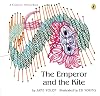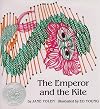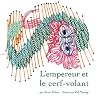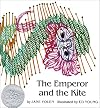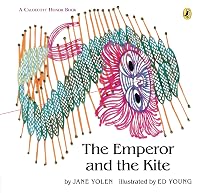
The Emperor and the Kite
by Jane Yolen
On This Page
Description
When the emperor is imprisoned in a high tower, his smallest daughter, whom he has always ignored, uses her kite to save him.Tags
Recommendations

Member Reviews
In my opinion, this was a spectacular story. The main character, Djeow Seow (Chinese for “the smallest one”), is a very likable character that I feel many people could find relatable, as I believe almost everyone has felt small at some point. The characters were believable in that they effectively demonstrated the gender biases that existed in Ancient China. The plot offers an interesting tale of a princess who is neglected by her family due to her small stature and assumed insignificance. The author develops an interesting conflict. For example, when the emperor, Djeow Seow’s father, is kidnapped, taken to a remote location, and locked away in a tower, all the elder, more revered children did nothing, whereas the littlest child show more made it her personal mission to keep the emperor alive and eventually free him. The solution to the conflict is very heartwarming, as is the delightful ending that places Djeow Seow on a level equal to the rest of her family. Some of the art is highly detailed, but the illustrator also uses a lot of negative space in a beautiful way. He uses the placement of the words and the negative space to show the reader just how high the tower is and how high the kite can reach. This demonstrates the monumental task that the tiny girl is. The illustrations truly help to tell the story, as the amount of detail in the drawing shows the importance of the characters. The less important characters have very little detail, both in terms of color and intricacy. The big idea of “The Emperor and the Kite” is that the least among us are capable of great things. show less
Set in ancient China, Little Djeow is the tiny fourth daughter of the Emperor. She is the forgotten one among many brothers and sisters much older and taller, but not as wise as she.
Little Djeow passes the days alone playing with her intricate kites she fashions. Daily, a monk walks past reciting a poem he makes about Djeow and herr kites.
Unrest in the kingdom occurs and her father is kidnapped by evil men. While this tiny daughter is forgotten by her father, she does not forget him. Paying attention to a poem recited by the monk, she understands that she can make a strong kite weaving pieces of her hair into the network. Grasping the kite, the emperor is freed.
Now, his tiny one sits on a small throne next to him.
I enjoyed the story show more of the smallest overcoming abandonment and loneliness, still able to love those who pay no attention to her. Using her talent and intellect, she rescues one who throughout time paid her no mind.
Three 1/2 stars show less
Little Djeow passes the days alone playing with her intricate kites she fashions. Daily, a monk walks past reciting a poem he makes about Djeow and herr kites.
Unrest in the kingdom occurs and her father is kidnapped by evil men. While this tiny daughter is forgotten by her father, she does not forget him. Paying attention to a poem recited by the monk, she understands that she can make a strong kite weaving pieces of her hair into the network. Grasping the kite, the emperor is freed.
Now, his tiny one sits on a small throne next to him.
I enjoyed the story show more of the smallest overcoming abandonment and loneliness, still able to love those who pay no attention to her. Using her talent and intellect, she rescues one who throughout time paid her no mind.
Three 1/2 stars show less
Although Princess Djeow Seow is the youngest, smallest and most neglected daughter of the Emperor, her father comes to recognize her worth when villains overpower him and lock him in a high tower. His other children flee the country, but tiny Djeow Seow visits him daily, using a kite to transport a basket of food to him each day to keep him alive. A passing monk inspires Djeow Seow to weave a long rope of grass, vines and her own hair, that she conveys to her father using her kite. The Emperor is then able to scale the tower wall, and with the help of his loyal subjects, he overthrows his captors. Jane Yolen once again uses her signature poetic language to tell this tale. Ed Young's watercolour illustrations, based on a traditional show more Oriental papercut technique, beautifully support the text and add authenticity to the story. It is a lovely tale of loneliness and loyalty, and the power of one small girl to do amazing feats. show less
A simple, sweet story of a girl who helps her father even though he hardly notices her. Lovely drawings, fun resolution of the conflict in the story. Put me in mind of King Richard the Lionheart whose mother and friend never stopped looking for him after he was imprisoned on his way back from the Crusades. It sounds like the emperor in Yolen's book, however, was a little more devoted to his role as king than King Richard was. (Another difference, of course, is that the emperor in this story is fictional and King Richard is not.)
This story is a really enjoyable Chinese folktale. This story shows that even the youngest and smallest person is capable of major feats. The youngest daughter of the Emperor, Djeow Seow, has to find a creative way to save the emperor. He is locked in a tall tower when he is kidnapped. All of his other children give up on him while the youngest child does everything in her power to keep him happy and alive. Eventually she figures out a way to save her father and she is praised by everyone. The illustrations are done in a way that embody Chinese art and is an amazing visual feature.
Largely ignored by her own family, Princess Djeow Seow spends her days playing with a kite made from paper and sticks. But when the Emperor is imprisoned in a high tower, only the Princess can save the day, flying her kite high up into the sky to rescue her father.
This story can be relateable for many students. This story is about a little girl who has several older brothers. Since she is the youngest and a girl, she does not get much attention from her father. She spends most of her time flying kites becuase that activity does not require more than one person. One day while her father and brothers are away at war she is the only one available to help the emperor. Whn the emperor was attacked and locked up in a tall tower she was ablw to help. With her kite she is able to save him. She ends up ruling at his side for a while and ends up being the next ruler herself.
Members
- Recently Added By
Lists

Caldecott Honor Books
296 works; 23 members

Brightly Beaming Curriculum Books
281 works; 8 members

Books Read in 2023
5,638 works; 147 members

The Story of the World: History for the Classical Child: Activity Book Two
415 works; 2 members

The Peaceful Preschool Curriculum
58 works; 1 member
Author Information

662+ Works 104,441 Members
Jane Yolen was born February 11, 1939 in New York City. She received a bachelor's degree from Smith College in 1960 and a master's degree in education from the University of Massachusetts in 1976. After college, she became an editor in New York City and wrote during her lunch break. She sold her first children's book, Pirates in Petticoats, at the show more age of 22. Since then, she has written over 300 books for children, young adults, and adults. Her other works include the Emperor and the Kite, Owl Moon, How Do Dinosaurs Say Goodnight? and The Devil's Arithmetic. She has won numerous awards including the Kerlan Award, the Regina Medal, the Keene State Children's Literature Award, the Caldecott Medal, two Nebula Awards, two Christopher Medals, the World Fantasy Award, three Mythopoeic Fantasy Awards, the Golden Kite Award, the Jewish Book Award, the World Fantasy Association's Lifetime Achievement Award, and the Association of Jewish Libraries Award. (Bowker Author Biography) show less
All Editions
Awards and Honors
Common Knowledge
- Canonical title
- The Emperor and the Kite
- Original publication date
- 1967
- People/Characters
- Princess Djeow Seow
- Important places
- China
- Dedication
- For my father, who is the king of the kite fliers, and for my little princess, Heidi Elisabet. JY
To my mother, "Rivaling the Clouds," for her gift of boundless energy and artistic resourcefulness, and to the friendly rivalry of A.C.S. where it flourished. EY - First words
- Once in ancient China there lived a princess who was the fourth daughter of the emperor.
- Last words
- (Click to show. Warning: May contain spoilers.)And too, it is said that Djeow Seow ruled after him, as gentle as the wind, and in her loyalty, as unyielding.
Classifications
Statistics
- Members
- 874
- Popularity
- 31,131
- Reviews
- 23
- Rating
- (4.02)
- Languages
- English, French
- Media
- Paper
- ISBNs
- 13
- ASINs
- 6