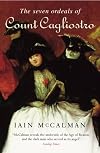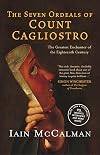
The Seven Ordeals of Count Cagliostro : The Greatest Enchanter of the Eighteenth Century
by Iain McCalman
On This Page
Description
Freemason ... Shaman ... Prophet ... Seducer ... Swindler ... Thief ... Heretic Who was the mysterious Count Cagliostro? Depending on whom you ask, he was either a great healer or a dangerous charlatan. Internationally acclaimed historian Iain McCalman documents how Cagliostro crossed paths -- and often swords -- with the likes of Catherine the Great, Marie Antoinette, and Pope Pius VI. He was a muse to William Blake and the inspiration for both Mozart's Magic Flute and Goethe's Faust. Louis show more XVI had him thrown into the Bastille for his alleged involvement in what would come to be known as "the affair of the necklace." Yet in London, Warsaw, and St. Petersburg, he established "healing clinics" for the poorest of the poor, and his dexterity in the worlds of alchemy and spiritualism won him acclaim among the nobility across Europe. Also the leader of an exotic brand of Freemasonry, Count Cagliostro was indisputably one of the most influential and notorious figures of the latter eighteenth century, overcoming poverty and an ignoble birth to become the darling -- and bane -- of upper-crust Europe. show lessTags
Recommendations
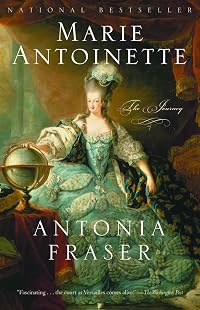
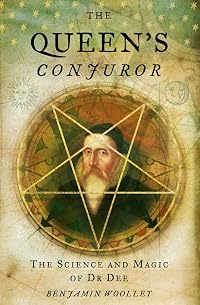
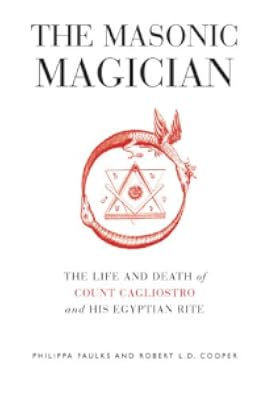
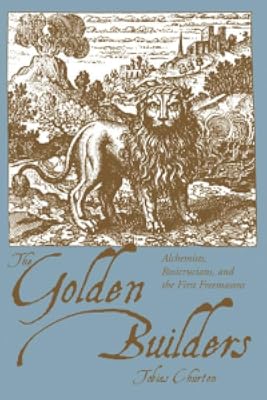

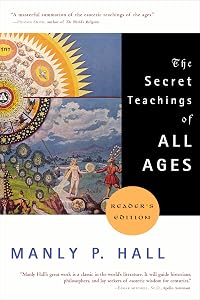

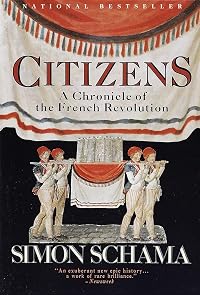
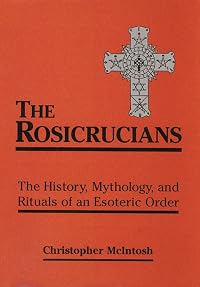

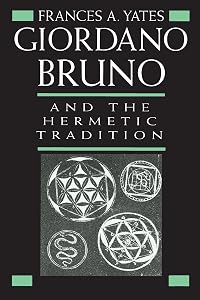






Member Recommendations

Member Reviews
A solid and entertaining account of Guiseppe Balsamo, self-styled Count Cagliostro, charlatan, magician, healer, adventurer, Freemason and populist radical.
McCalman's book has the virtue of placing him within the right context as an important minor player in the unstable pre-revolutionary politics of eighteenth century Europe where command of the mob and of intrigue within courts were two sides of the same coin of influence. A slip too far in either direction could cost a man his liberty or his life.
Cagliostro's life is one of those examples (a theme of many of our reviews and our writings elsewhere) of how history must be reconstructed from gaps in the official record as much as from the facts that are available. McCalman keeps his show more feet on the ground throughout. The result is a quite impressive and readable addition to the literature of eighteenth century political culture.
His final brutal treatment at the hands of the Vatican is inexplicable unless you take seriously his potential to mobilise the Parisian and indeed the European mob against traditional values. Freemasonry in this period was not clubbability for the middle classes as it is today but a movement of cultural resistance that we may now understand much better in an age of 'leaderless resistance' strategies against the system amongst insurgents and insurrectionists.
The French Revolution and the consequent vicious reaction which led to the conspiracy theories of Abbe Barruel about Freemasons grew out of an atmosphere of liberal and radical protest to dynasticism and 'ignorance' that really did lead to radical change. Freemasonry and its associated liberalisms were as dangerous then as Islamism and its associated irrationalisms are today, at least in the perceptions of that perennial personality type in politics, the security-minded hardliner charged with defending the ruling order from Washington to Tehran, from St. Petersburg to Rome.
Just as today if an Islamist or 'extremist' steps over a line, any means seems to be permissible to bring them to heel (a message equally apposite in the FBI's treatment of Dillinger as a 'criminal' challenge to the prevailing order in the current Mann-Depp-Bale film 'Public Enemies') so Cagliostro stepped over that line in the 1780s. Any means were then regarded as permissible to take him off the chess board when the crisis came.
It was no accident that he was seized in 1789 in Italy as the Papacy watched the French Revolution unfold or that two years after his death in jail in 1795 the incoming French-commanded liberatory Polish Legion, according to legend, ordered his bones dug up and drank to his memory with wine from his whitened skull.
McCalman does not spend too much time analysing the man and his time. What he does is provide a sensible. highly readable and cohesive narrative that allows us to make up our own minds about this curious figure who contained in equal measure his own charlatan and semi-criminal aspects to match those of the dynastic flummery amongst which he lived and the sort of universalist ideals that are now the dominant ideology (almost to excess) of the modern European Union. show less
McCalman's book has the virtue of placing him within the right context as an important minor player in the unstable pre-revolutionary politics of eighteenth century Europe where command of the mob and of intrigue within courts were two sides of the same coin of influence. A slip too far in either direction could cost a man his liberty or his life.
Cagliostro's life is one of those examples (a theme of many of our reviews and our writings elsewhere) of how history must be reconstructed from gaps in the official record as much as from the facts that are available. McCalman keeps his show more feet on the ground throughout. The result is a quite impressive and readable addition to the literature of eighteenth century political culture.
His final brutal treatment at the hands of the Vatican is inexplicable unless you take seriously his potential to mobilise the Parisian and indeed the European mob against traditional values. Freemasonry in this period was not clubbability for the middle classes as it is today but a movement of cultural resistance that we may now understand much better in an age of 'leaderless resistance' strategies against the system amongst insurgents and insurrectionists.
The French Revolution and the consequent vicious reaction which led to the conspiracy theories of Abbe Barruel about Freemasons grew out of an atmosphere of liberal and radical protest to dynasticism and 'ignorance' that really did lead to radical change. Freemasonry and its associated liberalisms were as dangerous then as Islamism and its associated irrationalisms are today, at least in the perceptions of that perennial personality type in politics, the security-minded hardliner charged with defending the ruling order from Washington to Tehran, from St. Petersburg to Rome.
Just as today if an Islamist or 'extremist' steps over a line, any means seems to be permissible to bring them to heel (a message equally apposite in the FBI's treatment of Dillinger as a 'criminal' challenge to the prevailing order in the current Mann-Depp-Bale film 'Public Enemies') so Cagliostro stepped over that line in the 1780s. Any means were then regarded as permissible to take him off the chess board when the crisis came.
It was no accident that he was seized in 1789 in Italy as the Papacy watched the French Revolution unfold or that two years after his death in jail in 1795 the incoming French-commanded liberatory Polish Legion, according to legend, ordered his bones dug up and drank to his memory with wine from his whitened skull.
McCalman does not spend too much time analysing the man and his time. What he does is provide a sensible. highly readable and cohesive narrative that allows us to make up our own minds about this curious figure who contained in equal measure his own charlatan and semi-criminal aspects to match those of the dynastic flummery amongst which he lived and the sort of universalist ideals that are now the dominant ideology (almost to excess) of the modern European Union. show less
Ratings
Members
- Recently Added By
Author Information
14+ Works 797 Members
Iain McCalman is a fellow of the Royal Historical Society, a historian, a social scientist, and an explorer. He is the author of the award-winning Darwin's Armada, The Last Alchemist, and Radical Underworld. A professor of history at the University of Sydney, he has also been a historical consultant and narrator for documentaries on the BBC and show more has been interviewed by Salon and the World Science Festival. show less
Common Knowledge
- Canonical title
- The Seven Ordeals of Count Cagliostro : The Greatest Enchanter of the Eighteenth Century
- Original title
- The Seven Ordeals of Count Cagliostro : The Greatest Enchanter of the Eighteenth Century
- Alternate titles
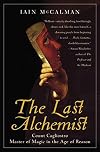
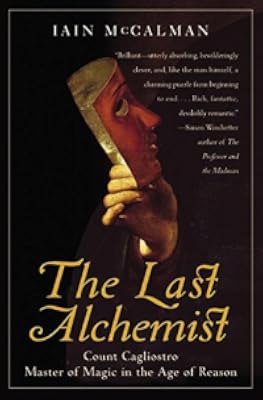
- The Last Alchemist : Count Cagliostro, Master of Magic in the Age of Reason
- People/Characters
- Cagliostro
- Related movies
- Cagliostro (1974 | IMDb)
Classifications
- Genres
- Nonfiction, Biography & Memoir, History, General Nonfiction
- DDC/MDS
- 133.092 — Philosophy & psychology Parapsychology & occultism Specific topics in parapsychology and occultism Biography And History Biography
- LCC
- BF1598 .C2 .M33 — Philosophy, Psychology and Religion Psychology Occult sciences Magic. Hermetics. Necromancy
- BISAC
Statistics
- Members
- 300
- Popularity
- 107,450
- Reviews
- 1
- Rating
- (3.25)
- Languages
- 5 — English, Estonian, German, Italian, Spanish
- Media
- Paper, Ebook
- ISBNs
- 12
- UPCs
- 1
- ASINs
- 6