On This Page
Description
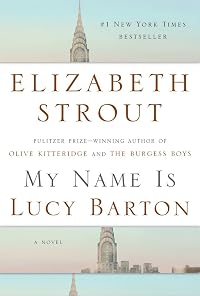
Lucy Barton is recovering slowly from what should have been a simple operation. Her mother, to whom she hasn't spoken for many years, comes to see her. Gentle gossip about people from Lucy's childhood in Amgash, Illinois, seems to reconnect them, but just below the surface lie the tension and longing that have informed every aspect of Lucy's life: her escape from her troubled family, her desire to become a writer, her marriage, her love for her two daughters.Tags
Recommendations
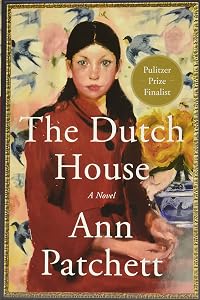
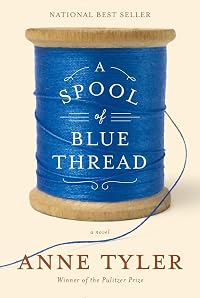
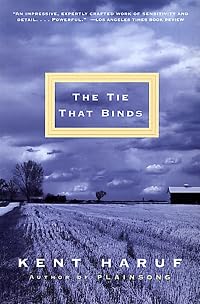
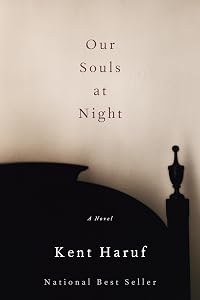
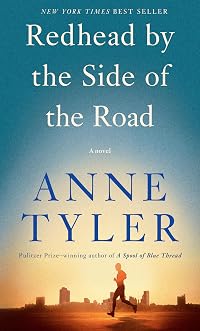
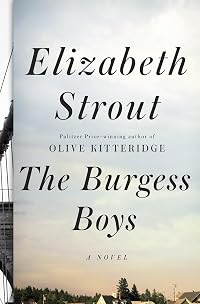
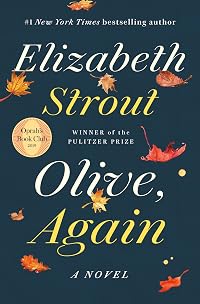
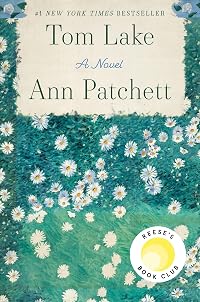
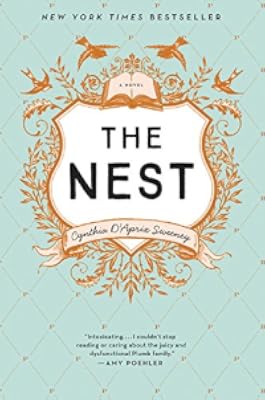
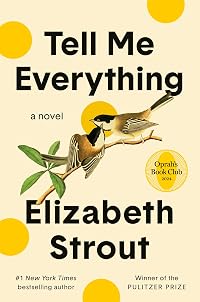
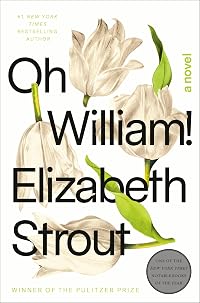
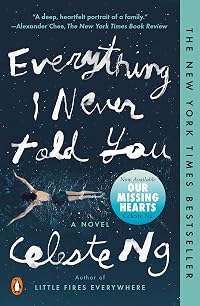
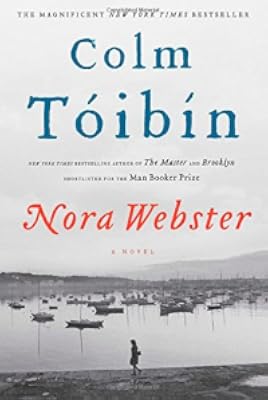
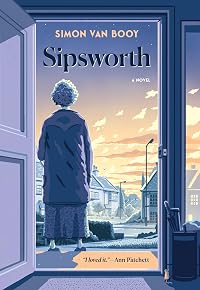
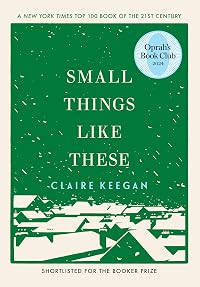
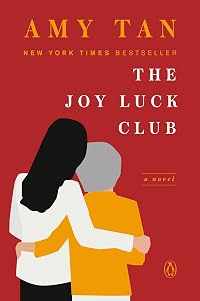
Member Recommendations
Member Reviews
I had loved Elizabeth Strout's Olive series but I couldn't connect with this one. Maybe it's because I read it while traveling and read it in quite a disjointed manner. But there is one passage that I remember well. Lucy was dreading that her mother would leave soon and she calls it "dreading-in-advance", something that she did when she had to see the dentist in her childhood. But she recognised that "you are wasting time by suffering twice" but it is very difficult to will your mind to do so. How true this is, and demonstrates again what an excellent observer of human nature that Strout is.
An astonishing literary achievement. Two things stand out about "My Name is Lucy Barton". The first is its narrative frame, which is complex and effective enough to be mentioned in the same paragraph as, say, the little yarn that Marlowe tells about his trip up the Congo. "Lucy Barton" is a story about the book's title character becoming a writer, the novel itself being both a story about a writer's literary development and its final product. This is, in most ways, a profoundly unmagical book, but -- as Lucy faces the most painful elements of her past and attempts to come to grips with their essential meanings -- we see her write herself into existence as surely as an García Marquez character ever did. The fact that this these themes show more are dealt with using brief, pitch-perfect, and often deceptively simple sentences only makes what Strout's done here more impressive: Lucy Barton seems to emerge not from this novel's language but from its very structure. Perhaps most impressively, while both the novel and its main character develop, Strout's own authorial voice is almost completely obscured. It might be said that the author molds another, fictional author who then writes a book for her, an act of high-level literary ventriloquism that is breathtaking to behold. I suppose that Strout could have taken the easy way out by making her protagonist blandly admirable, making this a book about little more than overcoming hardship, the sort of literature-as-therapy thing that crowds the New Releases shelf these days. But it's clear, though, that Lucy is still scarred by her excruciatingly difficult past, which includes episodes of extreme poverty, abuse, self-doubt, interpolated with the kind of everyday disappointments and sad realizations even those with comfortable lives experience. Strout balances these elements perfectly, showing how both seemingly insignificant social slights and major life tragedies can stay with us for years. You could say that "My Name Is Lucy Barton" is a book about healing, but it's also about one woman's desperate battle to will herself into existence, which is a much less elegant affair. Lucy doesn't flinch at the ugly stuff here, and nether, to its credit, does this novel.
Strout's second achievement here is the title character herself. When the book ends, Lucy isn't without doubts and regrets, and I'm not even sure that every reader will find her particularly likable, but it's hard to deny that she is, well, mature. She's also -- and I consider this high praise indeed -- as gorgeously imperfect and wholly unforgettable a character as, say, Peggy Cort, who we meet in Elizabeth McCracken's "The Giant's House" or the title character of Mary Gaitskill's "Veronica". I'm not the kind of reader who tends to enjoy characters in and of themselves, but while Strout's account of how Lucy's personality and her literary voice emerge is easy to admire, there's also something about Lucy herself -- her resilience, her clear-sightedness, her honesty -- that gives this book the sort of emotional heft that a mere creative exercise would lack. There is real feeling and beauty here. To put it another way, this is, in other words, a great novel. Highly recommended. show less
Strout's second achievement here is the title character herself. When the book ends, Lucy isn't without doubts and regrets, and I'm not even sure that every reader will find her particularly likable, but it's hard to deny that she is, well, mature. She's also -- and I consider this high praise indeed -- as gorgeously imperfect and wholly unforgettable a character as, say, Peggy Cort, who we meet in Elizabeth McCracken's "The Giant's House" or the title character of Mary Gaitskill's "Veronica". I'm not the kind of reader who tends to enjoy characters in and of themselves, but while Strout's account of how Lucy's personality and her literary voice emerge is easy to admire, there's also something about Lucy herself -- her resilience, her clear-sightedness, her honesty -- that gives this book the sort of emotional heft that a mere creative exercise would lack. There is real feeling and beauty here. To put it another way, this is, in other words, a great novel. Highly recommended. show less
A preface I suspect one story ruined Olive Kitteridge for me. I won a copy of the book as an LT Early Reviewer in 2008, not knowing anything about the author or even whether or not the book was just junk. It's been a while, but I recall the stories were soft and subtle, so subtle that I would miss key points. There are 13 loosely connected stories. The one I didn't like is titled A Different Road, where Olive gets caught up in a brutal violent event. Strout doesn't change tone for this story. Like the others, the prose is soft and subtle, and that bothered me. I felt it read false. I've avoided Strout since, and felt surprised by how successful she has been. (I was much gentler in my 2008 review than I am in my lingering limited memory. show more https://www.librarything.com/review/24291745 )
48. My Name Is Lucy Barton by Elizabeth Strout
published: 2016
format: 189-page Kindle ebook
acquired: October 2 read: Oct 2-6 time reading: 3:01, 1.0 mpp
rating: 4½
genre/style: Contemporary Fiction theme: Booker 2022
locations: New York City, rural Illinois
about the author: born in Maine, 1956.
I read this because Oh William! is on the Booker 2022 longlist (and shortlist), and is part of the Lucy Barton quartet. My Name is Lucy Barton is the first. I plan to read at least the first 3.
Most of this book takes place with Lucy telling us about her prolonged time in a New York a hospital bed, the Chrysler Building out the window, talking to her mother about nothing. While talking about nothing they also talk bitterly and lovingly about everything difficult in their lives, past and present. Poverty, marital strife, and PTSDM come up, along with their hopelessly strained relationship, without ever being directly addressed in their talk. It's cathartic and bitter. I loved it, and loved Lucy.
I was so worried I would not like this that I started with a free amazon sample, allowing myself to jettison it. But this is a much bolder work than the other I read by Strout, [Olive Kitteridge]. An artist of subtlety, she didn't stick to that here. She puts that in, and then tells the reader exactly what she's doing, undoes it. She even brings in a literary workshop experience to tell us exactly what she's doing. I loved all that.
For what it's worth, Lucy is a child of Anne Tyler's Pearl Tull, the narrator of Tyler's Dinner at the Homesick Restaurant. She has nearly the same voice: direct, blunt, narrow focused, dealing with the need to be kind to her needy children and family while also dealing straight on with life. Lucy is more tender, but I couldn't help hearing them both while reading. I like them both.
I can't tell you who will like or not like this novel by Strout. But I'm really looking forward to the second book in this trilogy - [Anything is Possible], which maybe is apt expression of how readers might expect to respond to this. show less
48. My Name Is Lucy Barton by Elizabeth Strout
published: 2016
format: 189-page Kindle ebook
acquired: October 2 read: Oct 2-6 time reading: 3:01, 1.0 mpp
rating: 4½
genre/style: Contemporary Fiction theme: Booker 2022
locations: New York City, rural Illinois
about the author: born in Maine, 1956.
I read this because Oh William! is on the Booker 2022 longlist (and shortlist), and is part of the Lucy Barton quartet. My Name is Lucy Barton is the first. I plan to read at least the first 3.
Most of this book takes place with Lucy telling us about her prolonged time in a New York a hospital bed, the Chrysler Building out the window, talking to her mother about nothing. While talking about nothing they also talk bitterly and lovingly about everything difficult in their lives, past and present. Poverty, marital strife, and PTSDM come up, along with their hopelessly strained relationship, without ever being directly addressed in their talk. It's cathartic and bitter. I loved it, and loved Lucy.
I was so worried I would not like this that I started with a free amazon sample, allowing myself to jettison it. But this is a much bolder work than the other I read by Strout, [Olive Kitteridge]. An artist of subtlety, she didn't stick to that here. She puts that in, and then tells the reader exactly what she's doing, undoes it. She even brings in a literary workshop experience to tell us exactly what she's doing. I loved all that.
For what it's worth, Lucy is a child of Anne Tyler's Pearl Tull, the narrator of Tyler's Dinner at the Homesick Restaurant. She has nearly the same voice: direct, blunt, narrow focused, dealing with the need to be kind to her needy children and family while also dealing straight on with life. Lucy is more tender, but I couldn't help hearing them both while reading. I like them both.
I can't tell you who will like or not like this novel by Strout. But I'm really looking forward to the second book in this trilogy - [Anything is Possible], which maybe is apt expression of how readers might expect to respond to this. show less
This is a gem of a little novel. I read it in one sitting on a winter’s afternoon, drawn into the life of Lucy Barton. Lucy looks back, ostensibly telling the story of her nine-week stay in hospital and an unexpected visit by her mother, when in fact she tells the story of her life. Mothers and daughters, no two relationships are alike and no woman can make assumptions about another’s experience as either mother or daughter. Stranded in her hospital bed, Lucy remembers her childhood and tries to make sense of it.
Economically [208 pages] and beautifully written, this is the first of Strout’s novels I have read. I have of course heard of ‘Olive Kitteridge’ but did not realize it is a Pulitzer winner, and so have the treat show more awaiting me. Strout writes about the everday, the ordinary, the normal [and not-so-normal] and sees the truth behind what is and isn’t said.
Lucy is a kind of everywoman. Through her Strout examines the mother-daughter relationship with an acute eye which will make you examine your own relationships. Lucy tells the story of her hospital visit and her mother’s appearance with the benefit of hindsight, looking back at her childhood, her daughters and female friendships. Sometimes she is baffled, other times she joins the dots and makes acute observations while her mother remembers their life in extreme poverty. There are hints to things in the past which are never confirmed, this is a book as much about what is not said as about what is. In revisiting her childhood, trying, and mostly failing, to get her mother to talk about it, Lucy learns that although your upbringing shapes who you are, that shaping continues throughout your life.
I thought about this book for days afterwards.
Read more of my book reviews at http://www.sandradanby.com/book-reviews-a-z/ show less
Economically [208 pages] and beautifully written, this is the first of Strout’s novels I have read. I have of course heard of ‘Olive Kitteridge’ but did not realize it is a Pulitzer winner, and so have the treat show more awaiting me. Strout writes about the everday, the ordinary, the normal [and not-so-normal] and sees the truth behind what is and isn’t said.
Lucy is a kind of everywoman. Through her Strout examines the mother-daughter relationship with an acute eye which will make you examine your own relationships. Lucy tells the story of her hospital visit and her mother’s appearance with the benefit of hindsight, looking back at her childhood, her daughters and female friendships. Sometimes she is baffled, other times she joins the dots and makes acute observations while her mother remembers their life in extreme poverty. There are hints to things in the past which are never confirmed, this is a book as much about what is not said as about what is. In revisiting her childhood, trying, and mostly failing, to get her mother to talk about it, Lucy learns that although your upbringing shapes who you are, that shaping continues throughout your life.
I thought about this book for days afterwards.
Read more of my book reviews at http://www.sandradanby.com/book-reviews-a-z/ show less
A spare, melancholy book about the tension between feeling the impulse to precisely observe people and events and the elusive nature of memory; about how much you can feel for those whose lives briefly intersect with yours and whom you never see again, and the terrible push-pull between family members who find one another mutually incomprehensible. My Name is Lucy Barton is about bonds and isolation, explored as the eponymous narrator recounts both a lengthy stint she endured in hospital in New York in the '80s, and her impoverished and abusive childhood in '60s rural Illinois. Elizabeth Strout is very good at showing/not-showing the elisions, the sidlings up to and away from the painful things. As I read I found myself admiring show more Strout's restraint as a writer. However, although I liked the novel and the unresolved nature of the ending clearly signposts the further books that are to come in this series, I don't find myself pulled to continue reading about Lucy and her family—in a strange way, I think My Name is Lucy Barton told me everything I need to know about them. show less
Love this novel.
Beautifully stark, real and raw, and brief descriptions of poverty, neglect, emotional need, fear, loneliness and love. Its painful to read the damage hurtful people inflict on those viewed as poor, or perceived as other. And how alone we truly each are.
Lucy's sensitivity and introspection allows her to recognize other human beings who have experienced shame, loneliness or degradation without needing to know their specific stories. She also deeply respects and loves those who have protected her like a teacher who reprimanded classmates who were mocking Lucy, as well as the doctor who provided more than just excellent treatment when she was seriously ill.
Her deprived childhood lead to her strong sensitivity opened her show more up to recognizing, seeing and feeling beauty in people, art and literature. And made her capable of becoming successful at writing, and independent. And know when it was time to leave her marriage.
This book strikes my heart, my soul and reminds me of the strength of words. A masterpiece. show less
Beautifully stark, real and raw, and brief descriptions of poverty, neglect, emotional need, fear, loneliness and love. Its painful to read the damage hurtful people inflict on those viewed as poor, or perceived as other. And how alone we truly each are.
Lucy's sensitivity and introspection allows her to recognize other human beings who have experienced shame, loneliness or degradation without needing to know their specific stories. She also deeply respects and loves those who have protected her like a teacher who reprimanded classmates who were mocking Lucy, as well as the doctor who provided more than just excellent treatment when she was seriously ill.
Her deprived childhood lead to her strong sensitivity opened her show more up to recognizing, seeing and feeling beauty in people, art and literature. And made her capable of becoming successful at writing, and independent. And know when it was time to leave her marriage.
This book strikes my heart, my soul and reminds me of the strength of words. A masterpiece. show less
What I want to say about "My Name Is Lucy Barton" is:
Read it and read it soon. It's full of truth. It will make you cry. It will make you feel less alone. It will give you courage. It will fill your imagination as you read it and echo in your memory long afterwards.
At one point in the book Lucy says, "I know a true sentence when I hear one." Well, this seems to me to be a book full of true sentences. I kept interrupting myself as I read to make a note of another true thing. Then I realised that the only way to do justice to their truth was to read the book.
It's a short book, he hardcover version is less than 200 pages long, but it felt longer, not because it drages but because I was intensely engaged by every page. Not a word is show more wasted,
"My Name Is Lucy Barton" is about "A poor girl from Amgash who loved her momma." It's not a plot driven book or even a character driven book. It's a book in which Lucy, talking to us directly and frankly shares her thoughts, emotions and memories about how she and her mother were together.
In a few hours of listening I felt that I knew who Lucy Barton was, at least as well as anyone can know such a thing.
Lucy's honesty, what she describes as "the ruthlessness of holding on to myself" filled me with admiration. I know I am not that honest with myself and I know that I shy away from writing quite as honestly as she does.
Lucy understands that it is hard to be truthful. Our memories tend to become the stories we persuage ourselves to believe. The truth they hold is not always entirely factual and may change over time. At one point she says:
"My life has changed so much that I look back on those early years and say, 'It can't have been that bad.' and perhaps it wasn't. Perhaps."
Later she recalls what she thought about a conversation and then says:
"Maybe I didn't think that. Maybe I just think that now, when I write this."
She spend some time reflecting on the question
"How do children come to know about the world. How do you learn it's not polite to ask people why they don't have children?"
She knows that she has
"Vast pieces of knowledge missing from childhood that cannot be replaced."
Lucy has always been lonely, she has always been different. She has spent large part of her life not wanting to be different any more.
Lucy embraced books because reading made her feel less alone. Then one day she read a book that made her want to write a book and the course of her life changed. She finally had something that was hers.
As she tells us her story, Lucy has already had novels published yet she says of herself;
"I know nothing of the lives of others. So much of life is speculation."
This is a book about love. It is not romantic or sentimental. It is an honest account of how complicated and painful and necessary love is. Lucy Barton knows that
"We all love imperfectly."
but she does not see that not as a weakness but an unaviodable truth.
I've never read Elizabeth Strout before but I'm now eager to read anything else that she's written. show less
Read it and read it soon. It's full of truth. It will make you cry. It will make you feel less alone. It will give you courage. It will fill your imagination as you read it and echo in your memory long afterwards.
At one point in the book Lucy says, "I know a true sentence when I hear one." Well, this seems to me to be a book full of true sentences. I kept interrupting myself as I read to make a note of another true thing. Then I realised that the only way to do justice to their truth was to read the book.
It's a short book, he hardcover version is less than 200 pages long, but it felt longer, not because it drages but because I was intensely engaged by every page. Not a word is show more wasted,
"My Name Is Lucy Barton" is about "A poor girl from Amgash who loved her momma." It's not a plot driven book or even a character driven book. It's a book in which Lucy, talking to us directly and frankly shares her thoughts, emotions and memories about how she and her mother were together.
In a few hours of listening I felt that I knew who Lucy Barton was, at least as well as anyone can know such a thing.
Lucy's honesty, what she describes as "the ruthlessness of holding on to myself" filled me with admiration. I know I am not that honest with myself and I know that I shy away from writing quite as honestly as she does.
Lucy understands that it is hard to be truthful. Our memories tend to become the stories we persuage ourselves to believe. The truth they hold is not always entirely factual and may change over time. At one point she says:
"My life has changed so much that I look back on those early years and say, 'It can't have been that bad.' and perhaps it wasn't. Perhaps."
Later she recalls what she thought about a conversation and then says:
"Maybe I didn't think that. Maybe I just think that now, when I write this."
She spend some time reflecting on the question
"How do children come to know about the world. How do you learn it's not polite to ask people why they don't have children?"
She knows that she has
"Vast pieces of knowledge missing from childhood that cannot be replaced."
Lucy has always been lonely, she has always been different. She has spent large part of her life not wanting to be different any more.
Lucy embraced books because reading made her feel less alone. Then one day she read a book that made her want to write a book and the course of her life changed. She finally had something that was hers.
As she tells us her story, Lucy has already had novels published yet she says of herself;
"I know nothing of the lives of others. So much of life is speculation."
This is a book about love. It is not romantic or sentimental. It is an honest account of how complicated and painful and necessary love is. Lucy Barton knows that
"We all love imperfectly."
but she does not see that not as a weakness but an unaviodable truth.
I've never read Elizabeth Strout before but I'm now eager to read anything else that she's written. show less
Members
- Recently Added By
Published Reviews
ThingScore 100
I was in Lucy Barton’s head from the very first page.
It’s rare when this happens – when the words of a book hypnotize you. The experience doesn’t feel like reading at all. It’s like falling into someone else’s consciousness...Strout’s skill in channelling Lucy’s voice is breathtaking, especially considering it’s the first time the bestselling author of Olive Kitteridge and show more The Burgess Boys has written a novel in the first person....This ability to love life, to notice small kindnesses, to remember the light in the sky and across the fields rather than the horrors of her childhood home, is Lucy’s salvation.
It is what we allow ourselves to see that helps us survive. show less
It’s rare when this happens – when the words of a book hypnotize you. The experience doesn’t feel like reading at all. It’s like falling into someone else’s consciousness...Strout’s skill in channelling Lucy’s voice is breathtaking, especially considering it’s the first time the bestselling author of Olive Kitteridge and show more The Burgess Boys has written a novel in the first person....This ability to love life, to notice small kindnesses, to remember the light in the sky and across the fields rather than the horrors of her childhood home, is Lucy’s salvation.
It is what we allow ourselves to see that helps us survive. show less
added by vancouverdeb
My Name Is Lucy Barton confirms Strout as a powerful storyteller immersed in the nuances of human relationships, weaving family tapestries with compassion, wisdom and insight. If she hadn’t already won the Pulitzer for Olive Kitteridge, this new novel would surely be a contender.
added by vancouverdeb
Lists

Best Contemporary Literary Fiction (Around the Last 30 Years)
388 works; 124 members

2017 Tournament of Books
18 works; 18 members
Booker Prize
491 works; 62 members

2016 Baileys Women's Prize for Fiction
18 works; 10 members

Recommend the 20 best books you've read in the last five years
2,168 works; 602 members

Top Five Books of 2016
795 works; 228 members

Top Five Books of 2017
757 works; 230 members

Favorite Short Fiction
228 works; 99 members

Man Booker Prize Longlist 2016
13 works; 2 members

Contemporary Fiction
109 works; 7 members

One Book, Many Authors
441 works; 39 members
Kirkus Starred Fiction Reviews of Books Published in 2016
63 works; 3 members

Books Read in 2023
5,547 works; 145 members

Books Read in 2016
4,666 works; 197 members

Fiction with Women's Names in the Title
378 works; 15 members

Carole's List
445 works; 13 members
Books Read in 2017
4,249 works; 129 members

A's favorite novels
100 works; 3 members

Books Read in 2022
5,166 works; 112 members

Books Read in 2019
4,052 works; 108 members

Top Five Books of 2025
954 works; 303 members
Author Information

23+ Works 33,337 Members
Elizabeth Strout (born January 6, 1956) is an American author of fiction. She was born in Portland, Maine. After graduating from Bates College, she spent a year in Oxford, England. In 1982 she graduated with honors, and received both a law degree from the Syracuse University College of Law and a Certificate of Gerontology from the Syracuse School show more of Social Work. Strout wrote Amy and Isabelle over the course of six or seven years, which when published was shortlisted for the 2000 Orange Prize and nominated for the 2000 PEN/Faulkner Award for fiction. Amy and Isabelle was made into a television movie starring Elisabeth Shue and was produced by Oprah Winfrey's studio, Harpo Films. Strout was a NEH (National Endowment for the Humanities) professor at Colgate University during the Fall Semester of 2007, where she taught creative writing. She was also on the faculty of the MFA program at Queens University of Charlotte in Charlotte, North Carolina. In 2009 Strout was honored with a Pulitzer Prize for Fiction for Olive Kitteridge, a collection of connected short stories she wrote about a woman and her immediate family who lived on the coast of Maine. Strout also wrote The Burgess Boys in 2013 which made The New York Times Best Seller List. Ms. Strout's title, My name is Lucy Barton, made the New York Times Best Seller List in 2016. Her newest title, Anything is Possible (2017), won the 2018 Story Prize. (Bowker Author Biography) show less
Some Editions
Awards and Honors
Awards
Distinctions
The Guardian Book of the Day (2016-02-02)
Series

Belongs to Publisher Series
Work Relationships
Is contained in
Has as a reference guide/companion
Has as a student's study guide
Common Knowledge
- Canonical title
- My Name Is Lucy Barton
- Original title
- My Name Is Lucy Barton
- Alternate titles*
- Aš esu Liusė Barton
- Original publication date
- 2016-01-12
- People/Characters
- Lucy Barton; William; Christina "Chrissie"; Becka; Sarah Payne; Molla (show all 12); Vicky; Jeremy; Lucy's mother; Lucy's father; Lucy's brother; Lucy's doctor
- Important places
- New York, New York, USA; Amgash, Illinois, USA; Moline, Illinois, USA
- Dedication
- For my friend Kathy Chamberlain
- First words
- There was a time, and it was many years ago now, when I had to stay in a hospital for almost nine weeks.
- Quotations
- Whatever we call it, I think it's the lowest part of who we are, this need to find someone else to put down. (52%)
Sarah Payne, the day she told us to go to the page without judgement, reminded us that we never knew, and never would know, what it would be like to understand another person fully.
"You will have only one story," she had said. "You'll write your story many ways. Don't ever worry about story. You have only one." (77%)
I feel that people may not understand that my mother could never say the words I love you. I feel that people may not understand: It was all right.
Telling a lie and wasting food were always things to be punished for.
There are elements that determine paths taken, and we can seldom find them or point to them accurately, but I have sometimes thought how I would stay late at school, where it was warm, just to be warm.
I think he was too shy at first to hug me, so I hugged him, and imagined the warmth of his hand against the back of my head.
At times these days I think of the way the sun would set on the farmland around our small house in the autumn. A view of the horizon, the whole entire circle of it, if you turned, the sun setting behind you, the sky in front ... (show all)becoming pink and soft, then slightly blue again, as though it could not stop going on in its beauty, then the land closest to the setting sun would get dark, almost black against the orange line of horizon, but if you turn around, the land is still available to the eye with such softness, the few trees, the quiet fields of cover crops already turned, and the sky lingering, lingering, then finally dark. As though the soul can be quiet for those moments.
One can be ready to give up the children one always wanted, one can be ready to withstand remarks about one's past or one's clothes, but then -- a tiny remark and the soul deflates and says: "Oh." (16%)
Lonely was the first flavor I tasted in my life, and it was always there, hidden inside the crevices of my mouth, reminding me. (24%)
Once in a while I see a child crying with the deepest of desperation and I think it is one of the truest sounds a child can make. (34%)
There is this constant judgement in this world: How are we going to make sure we do not feel inferior to another? (44%)
This is a story about a mother who loves her daughter. Imperfectly. Because we all love imperfectly. (58%)
I kept thinking how the five of us had had a really unhealthy family, but I saw then too how our roots were twisted so tenaciously around another's hearts. (89%)
... I will grab myself and hurl onward through life, blind as a bat, but on I go! This is the ruthlessness, I think. (93%)
But I think I know so well the pain we children clutch to our chest, how it lasts our whole lifetime,with longing solarge you can't even weep. We hold it tight, we do, with each seizure of the beating heart. This is mine, thi... (show all)s is mine, this is mine. (98%) - Last words
- (Click to show. Warning: May contain spoilers.)All life amazes me.
- Publisher's editor
- Kamil, Susan
- Blurbers
- Mantel, Hilary; Patchett, Ann
- Original language
- English
*Some information comes from Common Knowledge in other languages. Click "Edit" for more information.
Classifications
Statistics
- Members
- 4,541
- Popularity
- 3,223
- Reviews
- 321
- Rating
- (3.69)
- Languages
- 33 — Arabic, Catalan, Czech, Danish, Dutch, English, Estonian, Finnish, French, German, Greek, Hebrew, Hungarian, Italian, Korean, Latvian, Lithuanian, Norwegian, Farsi/Persian, Polish, Romanian, Russian, Serbian, Croatian, Slovak, Slovenian, Spanish, Swedish, Turkish, Portuguese (Portugal), Portuguese (Brazil), Chinese, simplified, English (UK)
- Media
- Paper, Audiobook, Ebook
- ISBNs
- 65
- ASINs
- 17