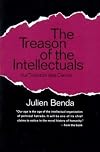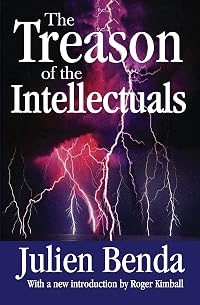
The Treason of the Intellectuals
by Julien Benda
On This Page
Description
In an era when intellectual and artistic life is increasingly being distorted by political dogmatism, Julien Benda's Treason of the Intellectuals is a classic that speaks with a new and extraordinary urgency. Benda's essay, published by ERIS in a new translation by David Broder, offers an incisive account of interwar Europe that ranges from the influence of Friedrich Nietzsche and Georges Sorel to the activities of Charles Maurras and Benito Mussolini. It also serves, however, as a show more remarkably timely warning against the seduction of modern intellectuals by tribal loyalties and antipathies.Rather than detaching themselves from communal ties as their forebears had done, Benda argues that twentieth-century European intellectuals willingly subordinated the disinterested pursuit of truth to the servicing of group interests (particularly the interests of their own nations and social classes). Partisan agendas had a corrosive effect not only on moral and political philosophy, but also on the writing of history and fiction. With its penetrating analyses of nationalism and of the tensions between group identity and intellectual freedom, Treason of the Intellectuals is as necessary a book in the twenty-first century as it was in the twentieth. show lessTags
Recommendations




















Member Reviews
One of the more interesting texts for understanding the decline of the West in the twentieth century is "La Trahison des Clercs" (The Treason of the Intellectuals) by the French philosopher Julien Benda (1867-1956). The central thesis of the book, first published in 1927, is that the intellectual class in modern times has abandoned its historic role of being a voice for justice, fairness, liberty, and freedom of inquiry. It has substituted its former adherence to timeless principles for a crass subservience to ideology. As Benda puts it (all translations in this review are mine, from the French edition):
"The men whose role is to defend eternal and disinterested values, like justice and reason, whom I call the intellectuals, have show more betrayed this role for the sake of practical interests."
This is the age of politics, says Benda. "Political passion" has become entwined with our lives like never before. This translates into fanatical advocacy on behalf of race, class, and nation. One would be hard pressed to find, in all of history, an age in which masses of people have become agitated to such an extent for these causes.
"One is amazed, when one studies for example the civil wars that stirred France in the 16th century and even the end of the 18th, at the small number of people whose soul was truly troubled [by these events:]; history is full, up to the 19th century, of long European wars that left the great majority of the population completely indifferent, apart from the material damage that was caused. [By contrast] one can say that today, there is almost no one in Europe who is not touched (or at least believes he is) by the passions of race, class, or nation...Political passions today attain a universality that they have never known..."
Moreover, these universalized political passions have pushed aside and overshadowed all other passions and interests. Benda points out that politics occupied a tiny place in the life of the average French bourgeois during the late Middle Ages and Renaissance, as reflected in its virtual absence from the literature of these periods. Compare this to the same bourgeois characters in the 19th century novels of Balzac or Stendhal, and one sees a staggering growth in the centrality of politics.
This political passion manifests itself, inter alia, in the generalization of hatred. Hatred has of course always existed. The difference, according to Benda, is that in previous generations, inter-group antagonism was diffused and transient. Lines between groups were more fluid; alliances shifted rapidly. But in modern times,
"the condensation of political passions into a small number of very simple hatreds, which grip the deepest recesses of the human heart, is a conquest of the modern age."
Needless to say, this process could not have occurred without the full participation of the intellectual class. This was achieved via the vulgar (yet hyper-cerebral) abandonment of morality, justice, and other timeless principles. For example, the intellectuals refused
"...to consider [economic] change from the point of view of reason; that is, from a perspective exterior to themselves, and to seek out laws according to rational principles. They instead sought a path that merges with the world itself...proceeding toward its transformation--its "becoming"--via the effects of irrational consciousness...this is the thesis of dialectical materialism. [Preface to the 1946 edition.]"
The Marxist hocus-pocus that Benda describes, familiar to us all, is tantamount to a replacement of rational thought with mysticism. Detached analysis and reflection, the traditional hallmark of the intellectual, was jettisoned in favor of action.
"This is why [action] has a supreme value in the practical order, in the revolutionary order, and is thus completely legitimate to the men whose entire design is to achieve the temporal triumph of a political system, thoroughly economic, a flagrant betrayal on the part of those whose role is to honor intellect, above all as something that must remain foreign to any practical considerations. [1946 ed.]"
Benda shows how this pseudo-intellectual approach to life led straight to the abyss of moral relativism. Slavery to dialectical materialism and similar ideas enabled the intellectual class in the West to embrace every variety of totalitarian ideology, be it National Socialism, Leninism, or Italian fascism.
In sum,
"I see over the course of history an uninterrupted procession of philosophers, religious thinkers, writers, artists, scientists...among whom the trend is a formal opposition to the realism of the multitudes...Thanks to them one can say that, for two thousand years, humanity did bad but honored good. This contradiction was the glory of the human species and constituted the crevice into which civilization could slide. However, at the end of the 19th century, a critical shift occurred: The intellectuals occupied themselves with the game of political passions; those who had been a brake on the realism of peoples made themselves into its stimulant." show less
"The men whose role is to defend eternal and disinterested values, like justice and reason, whom I call the intellectuals, have show more betrayed this role for the sake of practical interests."
This is the age of politics, says Benda. "Political passion" has become entwined with our lives like never before. This translates into fanatical advocacy on behalf of race, class, and nation. One would be hard pressed to find, in all of history, an age in which masses of people have become agitated to such an extent for these causes.
"One is amazed, when one studies for example the civil wars that stirred France in the 16th century and even the end of the 18th, at the small number of people whose soul was truly troubled [by these events:]; history is full, up to the 19th century, of long European wars that left the great majority of the population completely indifferent, apart from the material damage that was caused. [By contrast] one can say that today, there is almost no one in Europe who is not touched (or at least believes he is) by the passions of race, class, or nation...Political passions today attain a universality that they have never known..."
Moreover, these universalized political passions have pushed aside and overshadowed all other passions and interests. Benda points out that politics occupied a tiny place in the life of the average French bourgeois during the late Middle Ages and Renaissance, as reflected in its virtual absence from the literature of these periods. Compare this to the same bourgeois characters in the 19th century novels of Balzac or Stendhal, and one sees a staggering growth in the centrality of politics.
This political passion manifests itself, inter alia, in the generalization of hatred. Hatred has of course always existed. The difference, according to Benda, is that in previous generations, inter-group antagonism was diffused and transient. Lines between groups were more fluid; alliances shifted rapidly. But in modern times,
"the condensation of political passions into a small number of very simple hatreds, which grip the deepest recesses of the human heart, is a conquest of the modern age."
Needless to say, this process could not have occurred without the full participation of the intellectual class. This was achieved via the vulgar (yet hyper-cerebral) abandonment of morality, justice, and other timeless principles. For example, the intellectuals refused
"...to consider [economic] change from the point of view of reason; that is, from a perspective exterior to themselves, and to seek out laws according to rational principles. They instead sought a path that merges with the world itself...proceeding toward its transformation--its "becoming"--via the effects of irrational consciousness...this is the thesis of dialectical materialism. [Preface to the 1946 edition.]"
The Marxist hocus-pocus that Benda describes, familiar to us all, is tantamount to a replacement of rational thought with mysticism. Detached analysis and reflection, the traditional hallmark of the intellectual, was jettisoned in favor of action.
"This is why [action] has a supreme value in the practical order, in the revolutionary order, and is thus completely legitimate to the men whose entire design is to achieve the temporal triumph of a political system, thoroughly economic, a flagrant betrayal on the part of those whose role is to honor intellect, above all as something that must remain foreign to any practical considerations. [1946 ed.]"
Benda shows how this pseudo-intellectual approach to life led straight to the abyss of moral relativism. Slavery to dialectical materialism and similar ideas enabled the intellectual class in the West to embrace every variety of totalitarian ideology, be it National Socialism, Leninism, or Italian fascism.
In sum,
"I see over the course of history an uninterrupted procession of philosophers, religious thinkers, writers, artists, scientists...among whom the trend is a formal opposition to the realism of the multitudes...Thanks to them one can say that, for two thousand years, humanity did bad but honored good. This contradiction was the glory of the human species and constituted the crevice into which civilization could slide. However, at the end of the 19th century, a critical shift occurred: The intellectuals occupied themselves with the game of political passions; those who had been a brake on the realism of peoples made themselves into its stimulant." show less
I will admit that I skimmed this book. Much of the material mentions names from French intellectual life with whom I am not familiar. In general, the author's contention seems to be that humanism and the Enlightenment posited universal values of human rights, intellectual freedom, and standards for discourse, art, etc. He feels that the intellectual class (the clercs in the original French) have deserted this cause and are instead pushing nationalism as an ideal and attacking the idea of universal values. The book was written in 1927 with the rise of Italian and German fascism as a background. Some see post-modernism as a continuation of this turn away from the ideals of humanism, indeed an attack on these ideals in the names of those show more groups omitted from it for so long. Interesting but a bit difficult if one is unfamiliar with the thinkers who are being criticized. show less
start on p. 125
Uno de los libros preferidos de mi padre, me tomé un tiempo el leerlo, muy bueno, algo desactualizado, Trata del tema de la renuncia de los intelectuales a defender la verdad y ser fieles a la ciencia. Agrego que sorprende como pudo terminar siendo el autor compañero de ruta de la Rusia Soviética
Feb 21, 2020Spanish
Ratings
Members
- Recently Added By
Author Information

48+ Works 388 Members
Some Editions
Series
Belongs to Publisher Series
Textures Bromera (2)
Common Knowledge
- Canonical title
- The Treason of the Intellectuals
- Original title
- Trahison des Clercs
- Alternate titles
- The Great Betrayal; Trahison des clercs
- Original publication date
- 1927
- Original language*
- Frans
*Some information comes from Common Knowledge in other languages. Click "Edit" for more information.
Classifications
- Genres
- Nonfiction, Philosophy, General Nonfiction, History
- DDC/MDS
- 305.552 — Society, government, & culture Social sciences, sociology & anthropology Social group - Age, Gender, Ethnicity People by social and economic levels Middle Class Intelligentsia, Intellectuals
- LCC
- HM213 — Social sciences Sociology (General) Sociology These are obsolete numbers no longer used
- BISAC
Statistics
- Members
- 280
- Popularity
- 115,056
- Reviews
- 4
- Rating
- (4.26)
- Languages
- 5 — English, French, German, Italian, Spanish
- Media
- Paper, Ebook
- ISBNs
- 22
- ASINs
- 12