
Roger Kimball
Author of Tenured Radicals: How Politics Has Corrupted Our Higher Education
About the Author
Roger Kimball is co-editor and publisher of The New Criterion and president and publisher of Encounter Books.
Works by Roger Kimball
The Long March: How the Cultural Revolution of the 1960s Changed America (2000) 156 copies, 3 reviews
Athwart History: Half a Century of Polemics, Animadversions, and Illuminations: A William F. Buckley Jr. Omnibus (2010) — Editor — 69 copies
Counterpoints: 25 Years of The New Criterion on Culture and the Arts (2007) — Editor; Introduction; Contributor — 48 copies
The Survival of Culture: Permanent Values in a Virtual Age (2002) — Editor; Introduction; Contributor — 37 copies
Against the Grain: The New Criterion on Art and Intellect at the End of the Twentieth Century (1995) — Editor; Introduction; Contributor — 36 copies
The Betrayal of Liberalism: How the Disciples of Freedom and Equality Helped Foster the Illiberal Politics of Coercion and Control (1999) — Editor; Introduction; Contributor — 32 copies
Lengthened Shadows: America and Its Institutions in the Twenty-First Century (2004) — Editor; Introduction; Contributor — 18 copies
The New Leviathan: The State Versus the Individual in the 21st Century (2012) — Editor; Introduction — 10 copies
Who Rules?: Sovereignty, Nationalism, and the Fate of Freedom in the Twenty-First Century (2020) 8 copies
Radicais nas universidades: como a política corrompeu o ensino superior nos Estados Unidos daAmérica (2010) 2 copies
The Treason of the Intellectuals 2 copies
Experiments against Reality 1 copy
The genius of Wodehouse 1 copy
The New Criterion , Volume 29, Number 1 — Editor — 1 copy
The New Criterion, Volume 28, Number 7 — Editor — 1 copy
Associated Works
Physics and Politics: Or, Thoughts on the Application of the Principles of Natural Selection and Inheritance to Political Society (1999) — Introduction, some editions — 94 copies, 2 reviews
Understanding Anti-Americanism: Its Origins and Impact at Home and Abroad (2004) — Contributor — 34 copies
What's Wrong with Benevolence: Happiness, Private Property, and the Limits of Enlightenment (2011) — Foreword — 31 copies
Beyond the Boom: New Voices on American Life, Culture, and Politics (1990) — Contributor — 15 copies
From Two Cultures to No Culture: C. P. Snow's Two Cultures Lecture Fifty Years On (2009) — Contributor — 8 copies
Our Brave New World: Essays on the Impact of September 11 (Hoover Institution Press Publication) (2002) — Contributor — 6 copies
Tagged
Common Knowledge
- Birthdate
- 1953-08-13
- Gender
- male
- Education
- Cheverus High School, Portland, Maine
Bennington College (BA|Philosophy and Classical Greek|1975)
Yale University (MA|1977)
Yale University (MPhil|1978) - Occupations
- editor
publisher
critic
columnist
journalist
essayist (show all 7)
professor - Organizations
- The New Criterion
Encounter Books
Manhattan Institute for Policy Research
Transaction Publishers
Ralston College
St. John's College (show all 7)
Gilder-Lehrman Institute of American History - Awards and honors
- Bradley Prize (2019)
Thomas L. Phillips Career Achievement Award (2019) - Nationality
- USA
- Birthplace
- Cape Elizabeth, Maine, USA
- Places of residence
- New York, New York, USA
- Associated Place (for map)
- USA
Members
Reviews
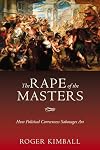
Author Robert Kimball, the art critic for the National Review, protests too much. The Rape of the Masters is a little too easy for him; some of the politically correct art historian writing he criticizes is almost self-parody. Several paintings and their deconstructions critiques get manhandled; the centerpiece is Kimball’s annihilation of Professor David Lubin’s analysis of John Singer Sargeant’s The Daughters of Edward Darley Boit.
Professor Lubin decides that the important part of show more the painting is not the picture, but the fact that the subjects have the surname “Boit“, which is only slightly different from the French word boîte, and that the father of the children has the first name “Edward”. Lubin decides that the “E” in Edward represents a man with an erection; the î in boîte is a circumcised penis, and the e in boîte is a clitoris; thus the painting actually represents Edward Darley Boit’s desire to prostitute his daughters. I’ll never be able to eat alphabet soup again.
As I said, this is really too easy for Kimball. But I think he goes a little too far. Another deconstructionist critique he goes after is Anna Chave’s of a Mark Rothko painting, Untitled 1953.
Chave (in much more roundabout language) says one of the things the painting symbolizes is an open grave; Kimball dismisses this with the contention that it’s just an attractive arrangement of colored rectangles. You know what, though? For me, it does kind of suggest an open grave – which in turn suggests the gravedigger scene from Hamlet, Shakespere in general, Gweneth Paltrow, a girl I had a crush on in high school, miniskirts, the war in Vietnam, Grignard reactions, lithium batteries, the Tesla car, the Tunguska meteorite impact, iridium, my sled Rosebud, and I could go on for a while. Art is supposed to inspire some sort of emotion in the viewer, and if Untitled 1953 inspires something that the artist did not intend, what’s the harm in that? (Although if The Daughters of Edward Darley Boit inspires a desire to prostitute your children, I hope you’re institutionalized somewhere).
Thus, The Rape of the Masters is OK as yet another preaching-to-the-choir attack on Deconstructionism, but perhaps doesn’t say as much as Kimball thinks it does about our reactions to art. show less
Professor Lubin decides that the important part of show more the painting is not the picture, but the fact that the subjects have the surname “Boit“, which is only slightly different from the French word boîte, and that the father of the children has the first name “Edward”. Lubin decides that the “E” in Edward represents a man with an erection; the î in boîte is a circumcised penis, and the e in boîte is a clitoris; thus the painting actually represents Edward Darley Boit’s desire to prostitute his daughters. I’ll never be able to eat alphabet soup again.
As I said, this is really too easy for Kimball. But I think he goes a little too far. Another deconstructionist critique he goes after is Anna Chave’s of a Mark Rothko painting, Untitled 1953.
Chave (in much more roundabout language) says one of the things the painting symbolizes is an open grave; Kimball dismisses this with the contention that it’s just an attractive arrangement of colored rectangles. You know what, though? For me, it does kind of suggest an open grave – which in turn suggests the gravedigger scene from Hamlet, Shakespere in general, Gweneth Paltrow, a girl I had a crush on in high school, miniskirts, the war in Vietnam, Grignard reactions, lithium batteries, the Tesla car, the Tunguska meteorite impact, iridium, my sled Rosebud, and I could go on for a while. Art is supposed to inspire some sort of emotion in the viewer, and if Untitled 1953 inspires something that the artist did not intend, what’s the harm in that? (Although if The Daughters of Edward Darley Boit inspires a desire to prostitute your children, I hope you’re institutionalized somewhere).
Thus, The Rape of the Masters is OK as yet another preaching-to-the-choir attack on Deconstructionism, but perhaps doesn’t say as much as Kimball thinks it does about our reactions to art. show less

Allan Bloom's "The Closing of the American Mind" is perhaps the first, best, and most enduring work to emerge from the "traditionalist" side of the "campus wars" of the 1980s. "Tenured Radicals" is part of smattering of follow up works that sing a similar tune on matters academic. Although almost twenty years old, it remains worthwhile reading for those observing or taking part in the larger cultural battles.
Shorter, more incisive, and more deliberately focused than "The Closing...", show more "Tenured Radicals" sets its sights on the failings of contemporary literary critics and the humanities departments that house them. In witty, occasionally laugh out loud prose Kimball clearly demonstrates the extent to which obscurantist continental philosophy (from Structuralism to Derrida), overt political radicalism, interest group politics, and increased specialization/professionalization colluded and collided in a way that led humanists and humanities departments to jettison nearly all of their traditional prerogatives and aspirations.
At this point the story line is hackneyed and perhaps overblown (although mostly true), so, despite the textual evidence Kimball provides to support his critique, the reason this book is still of interest is not that it argues well for true conclusions (although it often does). Rather, "Tenured Radicals" retains a space in this literature because it is funny and sarcastic in a way that makes it fun to read for those already inclined to agree with Kimball's assessment of the contemporary humanities department.
Much of the argumentation consists of Kimball laying out a paragraph from some latter day sophist and then writing "are you serious....like, for real?" or some clever variation thereon. In many ways this seems to me to be the most effective strategy for dealing with the Derrida acolytes. One wonders how else to argue with those who deny modus ponens and the transitivity of identity. Further, the rather personal attack on Stanley Fish is, in my estimation, a great bonus. Perhaps Kimball engages in a bit of straw-manning and a bit of ad hominem, but I tend to think such practices are allowable (within reason) in a polemic. "Tenured Radicals" is very much a polemic but it's composed well and retains a great sense of humor. For this reason, interested culture warriors may still get a kick out of it and, even if the narrative is predictable, may absorb a few new facts about the obscurantist opposition. show less
Shorter, more incisive, and more deliberately focused than "The Closing...", show more "Tenured Radicals" sets its sights on the failings of contemporary literary critics and the humanities departments that house them. In witty, occasionally laugh out loud prose Kimball clearly demonstrates the extent to which obscurantist continental philosophy (from Structuralism to Derrida), overt political radicalism, interest group politics, and increased specialization/professionalization colluded and collided in a way that led humanists and humanities departments to jettison nearly all of their traditional prerogatives and aspirations.
At this point the story line is hackneyed and perhaps overblown (although mostly true), so, despite the textual evidence Kimball provides to support his critique, the reason this book is still of interest is not that it argues well for true conclusions (although it often does). Rather, "Tenured Radicals" retains a space in this literature because it is funny and sarcastic in a way that makes it fun to read for those already inclined to agree with Kimball's assessment of the contemporary humanities department.
Much of the argumentation consists of Kimball laying out a paragraph from some latter day sophist and then writing "are you serious....like, for real?" or some clever variation thereon. In many ways this seems to me to be the most effective strategy for dealing with the Derrida acolytes. One wonders how else to argue with those who deny modus ponens and the transitivity of identity. Further, the rather personal attack on Stanley Fish is, in my estimation, a great bonus. Perhaps Kimball engages in a bit of straw-manning and a bit of ad hominem, but I tend to think such practices are allowable (within reason) in a polemic. "Tenured Radicals" is very much a polemic but it's composed well and retains a great sense of humor. For this reason, interested culture warriors may still get a kick out of it and, even if the narrative is predictable, may absorb a few new facts about the obscurantist opposition. show less
A devastating critique on my parent's generation. Kimball is obviously distraught at the state of modern American culture, and I have a hard time disagreeing with him. He traces this back a series of writers and thought leaders that inspired the worst of the 60s generation. Most of his time is spent on the writing and saying of the influential people of the day, but he does cover some of the mass movements (e.g. student protest at Yale defending murderer Bobby Seale) and the capitulation of show more many who should have known and acted better.
Also, you can see the Left's planned takeover of Academia with quotes like "working against the established institutions while working through them" from Herbert Marcuse. They were obviously very successful and perhaps the worst of "What the 60s Wrought" (which is the title of the final chapter).
This book is packed with information and yet, it is very readable. From what I can tell, Slouching Towards Gomorrah by Robert Bork and The Closing of the American Mind by Alan Bloom should be good companion pieces to this great book. show less
Also, you can see the Left's planned takeover of Academia with quotes like "working against the established institutions while working through them" from Herbert Marcuse. They were obviously very successful and perhaps the worst of "What the 60s Wrought" (which is the title of the final chapter).
This book is packed with information and yet, it is very readable. From what I can tell, Slouching Towards Gomorrah by Robert Bork and The Closing of the American Mind by Alan Bloom should be good companion pieces to this great book. show less
In the spirit of William F Buckley, Kimball offers a series of essays centered on various writers and their works (Hayek, Kipling, Burnham and others) to diagnose current ills and to offer a remedy.
You May Also Like


Associated Authors
Statistics
- Works
- 49
- Also by
- 18
- Members
- 1,080
- Popularity
- #23,804
- Rating
- 3.9
- Reviews
- 7
- ISBNs
- 66
- Languages
- 2
- Favorited
- 3