A Fall of Marigolds
by Susan Meissner
On This Page
Description
"September 1911. On Ellis Island in New York Harbor, nurse Clara Wood cannot face returning to Manhattan, where the man she loved fell to his death in the Triangle Shirtwaist Fire. Then, while caring for a fevered immigrant whose own loss mirrors hers, she becomes intrigued by a name embroidered onto the scarf he carries...and finds herself caught in a dilemma that compels her to confront the truth about the assumptions she's made. Will what she learns devastate her or free her? September show more 2011. On Manhattan's Upper West Side, widow Taryn Michaels has convinced herself that she is living fully, working in a charming specialty fabric store and raising her daughter alone. Then a long-lost photograph appears in a national magazine, and she is forced to relive the terrible day her husband died in the collapse of the World Trade Towers...the same day a stranger reached out and saved her. Will a chance reconnection and a century-old scarf open Taryn's eyes to the larger forces at work in her life?"-- show lessTags
Recommendations


























Member Reviews
There is writing and then there is artistry. Susan Meissner's writing is artistry. Not since reading “The Baker's Daughter” by Sarah McCoy in 2016 have I read a novel that has so touched the depths of my soul. The reading experience became so personal that it brought tears to my eyes in several places.
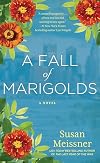
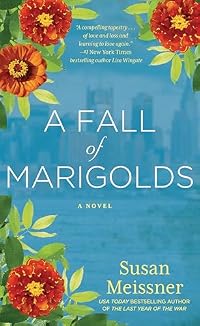
And as I said for “The Baker's Daughter” I feel even more poignantly after reading Susan Meissner's “A Fall of Marigolds” that I will remember this story long after the closure of the book cover. I was instantly drawn to the beauty of the paperback presentation as although the cover art is not part of decision to purchase a book as I frequently make the decision to read a particular novel long before I've even seen the cover show more art, it is a component of a novel that can heighten the reader's pleasures. According to the copyright page, design is by Spring Hoteling. The first page of every chapter is also special due to the continuation of the artwork presentation that becomes like a watermark on that page but very effective.
The novel brings history to life and dovetails a story of the past and the present into one very meaningful novel with the link in both time periods being a beautiful scarf. As the author answers in an interview at the end of the novel --- “History shows us what we value, what we fear, what we are willing to fight for, and what we don't want to live without. When two separate and perhaps even unrelated story lines revolve around the same theme, we can see that there are aspects about us that don't change, even though the years change.”
There are many meaningful quotes within the novel and here are documented just a few:
https://www.goodreads.com/quotes/search?utf8=✓&q=a fall of marigolds&commit=Search show less
And as I said for “The Baker's Daughter” I feel even more poignantly after reading Susan Meissner's “A Fall of Marigolds” that I will remember this story long after the closure of the book cover. I was instantly drawn to the beauty of the paperback presentation as although the cover art is not part of decision to purchase a book as I frequently make the decision to read a particular novel long before I've even seen the cover show more art, it is a component of a novel that can heighten the reader's pleasures. According to the copyright page, design is by Spring Hoteling. The first page of every chapter is also special due to the continuation of the artwork presentation that becomes like a watermark on that page but very effective.
The novel brings history to life and dovetails a story of the past and the present into one very meaningful novel with the link in both time periods being a beautiful scarf. As the author answers in an interview at the end of the novel --- “History shows us what we value, what we fear, what we are willing to fight for, and what we don't want to live without. When two separate and perhaps even unrelated story lines revolve around the same theme, we can see that there are aspects about us that don't change, even though the years change.”
There are many meaningful quotes within the novel and here are documented just a few:
https://www.goodreads.com/quotes/search?utf8=✓&q=a fall of marigolds&commit=Search show less
I love this book for so many reasons! To start, Susan Meissner is a gifted writer who creates characters that I care about as a reader. In this story, Clara and Taryn are women connected by a beautiful scarf and unspeakable tragedy. Both of their stories take place in New York City; Taryn's in 2011 and Clara's in 1911.
As a survivor of a tragic house fire, I related to both of their reactions to witnessing historic tragedy: the Triangle Shirtwaist fire, and the 9/11 Twin Tower collapse. Both women retreat into an "in-between place". This is a common reaction.
The book also has a strong sense of place. Having worked in the World Trade Center, Meissner took me back to downtown NYC when writing about Taryn's experience. Clara, a nurse at show more Ellis Island, interacts with immigrants suffering from scarlet fever. One of these is a tailor. I thought about my grandparents who came through Ellis Island during the same period, one of whom was also a tailor. This story fleshed out their experience for me.
I also liked how she used Keats' "Ode to a Grecian Urn" as a means of understanding longing and loss. The poetry book itself is a McGuffin within the story, just to name a few.
Lastly, I love scarves. Having lost my collection in my house fire, family members have lovingly shared theirs with me. My new, small collection is dear to me because I can relate each scarf to the person who shared it with me, as do the characters in this book. show less
As a survivor of a tragic house fire, I related to both of their reactions to witnessing historic tragedy: the Triangle Shirtwaist fire, and the 9/11 Twin Tower collapse. Both women retreat into an "in-between place". This is a common reaction.
The book also has a strong sense of place. Having worked in the World Trade Center, Meissner took me back to downtown NYC when writing about Taryn's experience. Clara, a nurse at show more Ellis Island, interacts with immigrants suffering from scarlet fever. One of these is a tailor. I thought about my grandparents who came through Ellis Island during the same period, one of whom was also a tailor. This story fleshed out their experience for me.
I also liked how she used Keats' "Ode to a Grecian Urn" as a means of understanding longing and loss. The poetry book itself is a McGuffin within the story, just to name a few.
Lastly, I love scarves. Having lost my collection in my house fire, family members have lovingly shared theirs with me. My new, small collection is dear to me because I can relate each scarf to the person who shared it with me, as do the characters in this book. show less
The story follows the lives of two women, one hundred years apart and both having a connection to the same scarf and in an in-between place in their lives. Clara Wood is a nurse working at the hospital on Ellis Island in 1911. She had previously worked at the Triangle Shirtwaist Factory and experienced a tragic loss. She is living a rote life until she encounters immigrant Andrew Gwynn whose tragic loss of his wife on the trip to America and subsequent events pull her out of her haze. In 2011 Taryn Michaels works in and lives above a shop, raising her daughter in what she thinks is a full life until a photographer's long-lost photograph of her at the site of the fall of the World Trade Towers in 2001 brings her face to face with her show more past forcing her to face the events of that day. Both stories were good, particularly Clara's which covered aspects of the immigrant experience, Ellis Island and the Triangle fire that I was unfamiliar with. Everything is tied up nicely at the end. show less
With varying degrees, everyone was touched by the events of the 911 terror attack. I live miles away from ground zero but can still remember the burning sensation in my throat and the eerie silence that descended upon the city as the world waited and wondered. This may be part of the reason I was so touched by this story; I loved it. Susan Meissner parallels two NYC tragedies; the 911 terror attacks and the Triangle Shirtwaist Factory fire of 1911, which at the time was considered the most deadly NYC disaster. Both stories are compelling; pulling you in, shaking up emotions, creating conflicts within and leaving you amazed with the similarities of theses two events, a hundred years apart.
Review previously posted at: show more www.princetonbookreview.com
Find us on Face book http://www.facebook.com/#%21/pages/Princeton-Book-Review/73532562757
Find us on Twitter https://twitter.com/PBR_BookReview
Find us on Pinterest https://www.pinterest.com/pbrbookreview/ show less
Review previously posted at: show more www.princetonbookreview.com
Find us on Face book http://www.facebook.com/#%21/pages/Princeton-Book-Review/73532562757
Find us on Twitter https://twitter.com/PBR_BookReview
Find us on Pinterest https://www.pinterest.com/pbrbookreview/ show less
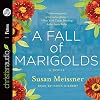
Digital audiobook performed by Tavia Gilbert
On the tenth anniversary of the World Trade Center destruction, Taryn Michaels is confronted by an article in People magazine that shows an image of two people staring up in horror as they witness the events of 9/11. The unidentified woman in the photo is Taryn. In August 1911, nurse Clara Wood works at Ellis Island, a “place in between” where she can feel safe from her memories of witnessing the Triangle Shirtwaist Factory fire. Both women lost someone they loved in the respective tragedies, both are connected by a single scarf printed with a pattern of bright marigolds.
Meissner does a good job of weaving these stories together and moving back and forth in time across a century to show more explore common elements of grief, guilt, loss and PTSD. I liked Clara’s story better than that of Taryn, probably because of it’s setting on Ellis Island, and specifically at the hospital on the island where arriving immigrants who needed to be quarantined or who were otherwise ill were treated before they could complete their immigrant journey.
Both women struggle with the ethical dilemma of what (and when, if ever) to reveal or withhold to others. Do you allow someone to continue to believe what you know to be false? Is it a kindness to leave them to their illusions, or better to give them the unvarnished truth? My F2F book club had quite the discussion about this.
I did think that Clara’s insistence on holding onto a fleeting romance was a bit over the top, but then the shock of witnessing such a horrific event could explain that. Taryn’s loss was much more understandable. Though her reluctance to tell her daughter about her father was puzzling.
Tavia Gilbert does a very good job of performing the audiobook. She has a gift for dialect and was able to differentiate each of the many characters. A dual timeline can be more challenging for a listener but Gilbert handled this beautifully and I was never confused about which story I was following. show less
On the tenth anniversary of the World Trade Center destruction, Taryn Michaels is confronted by an article in People magazine that shows an image of two people staring up in horror as they witness the events of 9/11. The unidentified woman in the photo is Taryn. In August 1911, nurse Clara Wood works at Ellis Island, a “place in between” where she can feel safe from her memories of witnessing the Triangle Shirtwaist Factory fire. Both women lost someone they loved in the respective tragedies, both are connected by a single scarf printed with a pattern of bright marigolds.
Meissner does a good job of weaving these stories together and moving back and forth in time across a century to show more explore common elements of grief, guilt, loss and PTSD. I liked Clara’s story better than that of Taryn, probably because of it’s setting on Ellis Island, and specifically at the hospital on the island where arriving immigrants who needed to be quarantined or who were otherwise ill were treated before they could complete their immigrant journey.
Both women struggle with the ethical dilemma of what (and when, if ever) to reveal or withhold to others. Do you allow someone to continue to believe what you know to be false? Is it a kindness to leave them to their illusions, or better to give them the unvarnished truth? My F2F book club had quite the discussion about this.
I did think that Clara’s insistence on holding onto a fleeting romance was a bit over the top, but then the shock of witnessing such a horrific event could explain that. Taryn’s loss was much more understandable. Though her reluctance to tell her daughter about her father was puzzling.
Tavia Gilbert does a very good job of performing the audiobook. She has a gift for dialect and was able to differentiate each of the many characters. A dual timeline can be more challenging for a listener but Gilbert handled this beautifully and I was never confused about which story I was following. show less
So many of the books I have read lately take a story from the past and merge it with the present. I have loved how it was done in other novels like ORPHAN TRAIN, THE STORYTELLER, and CALLING ME HOME and this one didn't disappoint either. When merging stories from the past with the present, there has to be a believable and compelling connection. In A FALL OF MARIGOLDS, that piece was a scartf as well as the feelings of love and loss . We are first introduced to Taryn, a widow of 9/11 and now a single mother. She has never been able to forgive herself for her husband's death in the North Tower. She has tried to move on with her life by focusing on her job in a fabric store as well as raising her daughter, but ten years later a photo of show more her on the street on 9/11 resurfaces and forces her to relive everything all over again.
In 1911, there was a terrible fire in Manhattan called the Triangle Shirtwaist Fire and Clara watched in horror as her friends perished or jumped to end their life. Clara, after living only two weeks in Manhattan flees to Ellis Island to immerse herself in the hospitals there. As a nurse, she is subjected to healing those who came to America in hope of a better life. While caring for a patient, she is intrigued with his loss, so similar to hers and to his deceased wife's scarf. The scarf will forever change her feelings about love, loss and taking risks.
Taryn and Clara's stories grabbed me at the very beginning and I had a difficult time putting this book down. I thought about them as I went about my day and they even crept into my dreams at night. The writing was expertly done in a way to put you right into the setting whether it was the year 1911 or 2001. The emotions, the sites, and the people were all so descriptive that I was feeling their sadness, grief, and pain right along with them. The most emotional part from me was Taryn's experience from 9/11. I will never know the true horror that occurred that day, but I will never forget how I felt watching it. Meissner's writing of Taryn finding out her husband wasn't going to make it and being near the towers as they collapsed will be part of my memory for a long time.
Both characters were suffering from extreme grief and at times the novel was burdened by the weight of sadness. These pieces were critical to the story and I can imagine could be difficult for some to read if they too have suffered from a loss. This would be my only caution about the novel, otherwise, I highly recommend it. The surprising connection these two women have, a hundred years apart, their grief and eventual recovery, and the hope of a brighter future will move you forward through the emotional pieces of this story. It is a story you won't soon forget.
This would make an excellent choice for book clubs. There are discussion questions included in the book. Since the story includes a major ethical dilemma, I can see an intense discussion held on that topic alone. A novel that can put you in the story and make you question your own actions if you were in that situation makes the story even more real in your mind. In both Taryn and Clara's lives there are a number of "What If" situations that the reader will certainly identify with as well.
Susan Meissner will be donating a portion of the proceeds from this book to the Save the Ellis Island Foundation for the restoration of the hospital buildings on Islands Two and Three. You can learn more about this project at http://saveellisisland.org/. show less
In 1911, there was a terrible fire in Manhattan called the Triangle Shirtwaist Fire and Clara watched in horror as her friends perished or jumped to end their life. Clara, after living only two weeks in Manhattan flees to Ellis Island to immerse herself in the hospitals there. As a nurse, she is subjected to healing those who came to America in hope of a better life. While caring for a patient, she is intrigued with his loss, so similar to hers and to his deceased wife's scarf. The scarf will forever change her feelings about love, loss and taking risks.
Taryn and Clara's stories grabbed me at the very beginning and I had a difficult time putting this book down. I thought about them as I went about my day and they even crept into my dreams at night. The writing was expertly done in a way to put you right into the setting whether it was the year 1911 or 2001. The emotions, the sites, and the people were all so descriptive that I was feeling their sadness, grief, and pain right along with them. The most emotional part from me was Taryn's experience from 9/11. I will never know the true horror that occurred that day, but I will never forget how I felt watching it. Meissner's writing of Taryn finding out her husband wasn't going to make it and being near the towers as they collapsed will be part of my memory for a long time.
Both characters were suffering from extreme grief and at times the novel was burdened by the weight of sadness. These pieces were critical to the story and I can imagine could be difficult for some to read if they too have suffered from a loss. This would be my only caution about the novel, otherwise, I highly recommend it. The surprising connection these two women have, a hundred years apart, their grief and eventual recovery, and the hope of a brighter future will move you forward through the emotional pieces of this story. It is a story you won't soon forget.
This would make an excellent choice for book clubs. There are discussion questions included in the book. Since the story includes a major ethical dilemma, I can see an intense discussion held on that topic alone. A novel that can put you in the story and make you question your own actions if you were in that situation makes the story even more real in your mind. In both Taryn and Clara's lives there are a number of "What If" situations that the reader will certainly identify with as well.
Susan Meissner will be donating a portion of the proceeds from this book to the Save the Ellis Island Foundation for the restoration of the hospital buildings on Islands Two and Three. You can learn more about this project at http://saveellisisland.org/. show less
I discovered this novel in a thrift shop and so many people in one of my Facebook groups told me they loved it that I was looking forward to reading it. For one reason or another it took a year for me to actually pick it up from my to-read bookshelf, and then I could hardly put it down till I finished it. This historical fiction is written using a dual timeline, with an eye-catching scarf (covered in marigolds) the connection between the two main characters: Clara in 1911 and Taryn in 2011. Other similarities include both women living in New York and both grieving the death of a loved one. I thought the author did an excellent job of recreating the actual disasters that each woman experienced. There were several unexpected plot twists show more in the last quarter of the book that elevated it from predictable chick-lit. This was a story of love and loss and learning that the world is made bearable by the love we give away. show less
Members
- Recently Added By
Author Information

39 Works 7,314 Members
In 1995, Susan Meissner was working as a part-time reporter for a county newspaper. In 1998, she was named editor of the Mountain Lake/Butterfield Observer Advocate, the town's weekly paper. The paper was named the Best Weekly Newspaper in Minnesota by the Minnesota Newspaper Association in 2002. She retired later that year to write her first show more book, Why the Sky is Blue, which was published in 2004. Her other books include The Girl in the Glass, The Shape of Mercy, In All Deep Places, and A Fall of Marigolds. (Bowker Author Biography) show less
Common Knowledge
- Original publication date
- 2014-02-04
- People/Characters
- Taryn Michaels; Clara Wood; Ethan Randall (Dr.); Andrew Gwynn; Dolly McLeod; Mick Demetriou
- Important places
- Ellis Island, New York, USA
- Important events
- September 11 Attacks; Triangle Shirtwaist Factory Fire
- Dedication
- For Frank
- First words
- The length of the floral-patterned challis rested on the cutting table like a bridal bouquet undone.
- Quotations
- Good luck didn't leave you desperately needing a place that was forever in between yesterday and tomorrow.
Henrietta said blood was the color of death. I told her it was the color of life. Isn't it? Isn't it the color of life?
Classifications
Statistics
- Members
- 955
- Popularity
- 27,642
- Reviews
- 57
- Rating
- (3.94)
- Languages
- Dutch, English, Italian, Korean
- Media
- Paper, Audiobook, Ebook
- ISBNs
- 15
- ASINs
- 6