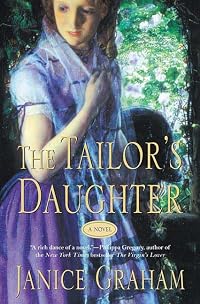
The Tailor's Daughter
by Janice Graham
On This Page
Description
From the author of the New York Times bestseller Firebird comes this richly detailed historical novel of an unconventional tailor's daughter who is swept up in a suspenseful drama of passion and intrigue. When a fever leaves her deaf at the age of sixteen, shattering her hopes of marriage, Veda Grenfell turns her exceptional talent to her father's prestigious Savile Row tailoring firm. She matures into a woman of eye-catching beauty, but it is her indomitable spirit that earns her the show more admiration of Harry Breadalbane, heir to an earldom. When passion turns to betrayal, Veda abandons her beloved Savile Row and sets off on a treacherous journey into a world of deception, murder and madness. show lessTags
Recommendations








Member Reviews
Oh, I wanted to like this book, so much. The premise of a deaf woman trying to make her way in Victorian England sounded like a good premise, and the author did her research when it came to Veda dealing with her disability after her hearing loss. Her struggle to read lips, communicate with people, and deal with the silence are well-illustrated here, as well as her skill and passion for her craft and her struggles in a male and class-dominated world.
As anyone who is fairly versed in history knows, women often got the short end of the stick, especially in marriage. They're expected to give up whatever dream they have to spit out babies. Veda is concerned about this as she loves tailoring and desires to prove herself as able as any man in show more the shop, regardless of gender or disability.
For most of the book, I was prepared to give it at least 4 stars. However, the last fifth of the book just... unraveled into something so ridiculous and frustrating that I felt incredibly let down. I honestly had enjoyed this book up to that point, and then you get a jumble of mystery and an ending that made me want to throw this book across the room.
I just couldn't get over the fact that Harry would deceive Veda to believe that her child was dead. He complained in his letter about being denied his parental rights, yet Veda was led to believe that her child was born stillborn and deformed, and would have never learned the truth (much less tried to find Harry) if not for the conscience of a farm boy.
But the biggest issue in this book was how much of an ass Harry was about Veda's work. He complained about not being able to do anything worthwhile because he was an aristocrat, more than once. However, at the end of the book, it is revealed that he has made something of himself and is in a position of importance. However, Veda no longer works in a tailor shop, or does business for others, or supports herself in ANY way. She only makes clothes for Harry and their children, and is even apparently content to let people believe that her father (also a tailor) is the one who made Harry's clothes.
I'm like... wtf??? For all Veda's trying to assert her own independence/ability through the book (she even opens up her own shop!) she just throws this all away to become some brainless housewife who despite her deafness, is the darling of dinner parties, because Hubby doesn't want her having her own goal/dreams. But him making something out of himself is awwwwright due to the fact, and only the fact, that he has a penis. Even Mr. Balducci, for all his smarmy assholeishness, encouraged Veda's work and talent.
Fuck you, Harry. show less
As anyone who is fairly versed in history knows, women often got the short end of the stick, especially in marriage. They're expected to give up whatever dream they have to spit out babies. Veda is concerned about this as she loves tailoring and desires to prove herself as able as any man in show more the shop, regardless of gender or disability.
For most of the book, I was prepared to give it at least 4 stars. However, the last fifth of the book just... unraveled into something so ridiculous and frustrating that I felt incredibly let down. I honestly had enjoyed this book up to that point, and then you get a jumble of mystery and an ending that made me want to throw this book across the room.
I just couldn't get over the fact that Harry would deceive Veda to believe that her child was dead. He complained in his letter about being denied his parental rights, yet Veda was led to believe that her child was born stillborn and deformed, and would have never learned the truth (much less tried to find Harry) if not for the conscience of a farm boy.
But the biggest issue in this book was how much of an ass Harry was about Veda's work. He complained about not being able to do anything worthwhile because he was an aristocrat, more than once. However, at the end of the book, it is revealed that he has made something of himself and is in a position of importance. However, Veda no longer works in a tailor shop, or does business for others, or supports herself in ANY way. She only makes clothes for Harry and their children, and is even apparently content to let people believe that her father (also a tailor) is the one who made Harry's clothes.
I'm like... wtf??? For all Veda's trying to assert her own independence/ability through the book (she even opens up her own shop!) she just throws this all away to become some brainless housewife who despite her deafness, is the darling of dinner parties, because Hubby doesn't want her having her own goal/dreams. But him making something out of himself is awwwwright due to the fact, and only the fact, that he has a penis. Even Mr. Balducci, for all his smarmy assholeishness, encouraged Veda's work and talent.
Fuck you, Harry. show less
What initially drew me to The Tailor's Daughter was the unusual heroine, and the even more unusual trade that her family was in. It seemed like a change from my normal Victorian reads, which was what I was looking for. I went in to reading this book with a certain idea of what it would be about in my head, and found that all of my preconceptions were wrong. The Tailor's Daughter turned out to be a much deeper read than had I thought it would be.
The story starts out with Veda telling of her life from a child. She was brought up in a family of trade. Her family's business is Grenfell & Son, a mens tailoring shop. From a very young age Veda takes to the family business, she likes fine material, and loves to cut and sew and create beautiful show more men's clothing. Her love of the trade isn't something that either of her parents encourage because they do not want Veda's reputation socially tainted by having her directly involved with her father's operations. Instead, her father tries to groom her older brother Reggie, who is more into books and literary pursuits than tailoring, to take over the business and steers Veda towards the upbringing of a genteel lady so that she will be able to make a good match. Ultimately, the stifling demands of their father lead to Reggie turning away and the family suffers a great tragedy for it.
When things look like they may be on the mend another tragedy strikes when Veda becomes deathly ill. After surviving a fever that almost killed her, Veda realizes that she no longer has her hearing. Her whole life is turned upside down in an instant, leaving her with no marriage prospects. Everything that she thought she would become--a wife, mother, lady of genteel society--is taken away with her hearing. At first the blow is shocking, and leaves her feeling sorry for herself, but slowly, with the help of her brother's once tutor, Mr. Nicholls, Veda learns how to survive in a world without hearing. She learns to read lips, and to use gestures to communicate with those close to her.
Soon she has a suitor in Mr. Nicholls, and another in the head cutter of her father's shop, Mr. Mr. Balducci, who has taken a liking to Veda and hopes to secure his place within her family's business by marrying her. But Veda's heart belongs with Lord Harry Ormelie, a Viscount that she met when she was still able to hear. Their romance is a forbidden one for many reasons, the main one being Veda's station. The attraction causes much ado in the book and flame is added to the intensely burning fire when deception strikes and Veda finds herself in a world where she can trust no one, and where family secrets lead to murder.
One thing that is a constant in the story is that Veda is deaf. There is never a moment after Veda loses her hearing that it is forgotten that she suffers that disadvantage. This is not because her deafness reiterated over and over, because it isn't, it stems from the fact that Veda, as a person, changes dramatically after her deafness comes into play. She must light candles, which are costly, in order to read lips in dim light, she carries around a slate and chalk to use as a communication aid when it is too hard to lip read, and she uses hand and body gestures to interact with her good friend, Ester.
Veda never stops trying to find ways to get along in a world of hearing people, even though doing so in the Victorian time period was hard. There were few people who were willing or able to teach a deaf person, and the few schools that existed for the hearing impaired were sad excuses, not allowing children to use their hands as a form of communication. Veda's struggle with hearing loss is very real. There is no miraculous recovery or communication tool, she never masters lip reading, and finds it a strain on her eyes and mind to follow long conversations. Her voice changes and people tell her she sounds strange, she is snubbed because of her disability, and it is also used against her. But Veda preservers in the most remarkable of ways.
For the most part, The Tailor's Daughter is a really enjoyable book, but I do have a few quibbles. First, the amount of tragedy to strike Veda became overwhelming at a certain point, and I wondered if she would ever get a break? It made me not trust that anything good would come from the story. Second, as I mentioned in a previous post, there were moments where I was jarred from the book because of musings that appeared to come from a medical book and not from Veda's thoughts. Like this one:
"A half-hour intensive session was enough to strain my eyes and tax my concentration. To read lips, the mind must learn to register lip patterns while working to select the correct meaning from a vast number of possibilities. Consonants and vowels are formed by tongue movements of which many are scarcely visible, and certain groups of consonants like p, b, m, or sh, sh, and j are indistinguishable. I despaired of ever understanding moving lips."
Maybe it's just me, but the last few lines do not seem to be something a young, Victorian era girl would think.
And finally there was the burgeoning romance between Harry and Veda that left me skeptical. Veda came off as infatuated with Harry, I accounted this to her age at the time, as she was only sixteen. It also came off false because Veda did not know Harry, only that he was something of a cad and he was nice to her once, therefore the reader did not know Harry, which made her instant desire for him unrealistic. It took Veda growing up and losing her hearing for me to see her interest in him as anything more than puppy love, and then I had trouble with Harry. The difference in their class made it hard for me to believe that Harry could be truly interested in Veda. I understood his attraction to her, but it took a while for me to warm up to him seriously wanting to be with Veda. When more about Harry was learned, and his character became less of an enigma, I was finally able to accept their romance and it then took on a poignant feel that was simply heartfelt.
In the context of their classes a love like theirs would have been hard pressed to work, and in many ways it didn't, which kept with the tragic realities of the story and of the time. And maybe it was because of the gritty realism prevalent throughout the book that the ending seemed a little too neat for me. Though, by the end of the story I truly wanted Veda to find a slice of lasting happiness, I didn't expect it to be wrapped up cutely in a neat little bow. On the other hand, after all of the suffering she went through, maybe that was exactly what was needed.
Besides Veda, there was another star in the story and that was the clothing. Tailoring is as much a catalyst in moving things forward as Veda's disability. The attention to detail is not spared when it comes to portraying the clothing that Veda made. So, the story is not just Veda's, it belongs to her family's trade as well. Ms. Graham has woven a entrancing tale with The Tailor's Daughter. The Victorian era comes to life beautifully through the eyes of Veda. All of the characters are portrayed in such stunning imagery that they too became very real. My minor problems with the book aside, I can not deny that The Tailor's Daughter was otherwise immensely enjoyable. show less
The story starts out with Veda telling of her life from a child. She was brought up in a family of trade. Her family's business is Grenfell & Son, a mens tailoring shop. From a very young age Veda takes to the family business, she likes fine material, and loves to cut and sew and create beautiful show more men's clothing. Her love of the trade isn't something that either of her parents encourage because they do not want Veda's reputation socially tainted by having her directly involved with her father's operations. Instead, her father tries to groom her older brother Reggie, who is more into books and literary pursuits than tailoring, to take over the business and steers Veda towards the upbringing of a genteel lady so that she will be able to make a good match. Ultimately, the stifling demands of their father lead to Reggie turning away and the family suffers a great tragedy for it.
When things look like they may be on the mend another tragedy strikes when Veda becomes deathly ill. After surviving a fever that almost killed her, Veda realizes that she no longer has her hearing. Her whole life is turned upside down in an instant, leaving her with no marriage prospects. Everything that she thought she would become--a wife, mother, lady of genteel society--is taken away with her hearing. At first the blow is shocking, and leaves her feeling sorry for herself, but slowly, with the help of her brother's once tutor, Mr. Nicholls, Veda learns how to survive in a world without hearing. She learns to read lips, and to use gestures to communicate with those close to her.
Soon she has a suitor in Mr. Nicholls, and another in the head cutter of her father's shop, Mr. Mr. Balducci, who has taken a liking to Veda and hopes to secure his place within her family's business by marrying her. But Veda's heart belongs with Lord Harry Ormelie, a Viscount that she met when she was still able to hear. Their romance is a forbidden one for many reasons, the main one being Veda's station. The attraction causes much ado in the book and flame is added to the intensely burning fire when deception strikes and Veda finds herself in a world where she can trust no one, and where family secrets lead to murder.
One thing that is a constant in the story is that Veda is deaf. There is never a moment after Veda loses her hearing that it is forgotten that she suffers that disadvantage. This is not because her deafness reiterated over and over, because it isn't, it stems from the fact that Veda, as a person, changes dramatically after her deafness comes into play. She must light candles, which are costly, in order to read lips in dim light, she carries around a slate and chalk to use as a communication aid when it is too hard to lip read, and she uses hand and body gestures to interact with her good friend, Ester.
Veda never stops trying to find ways to get along in a world of hearing people, even though doing so in the Victorian time period was hard. There were few people who were willing or able to teach a deaf person, and the few schools that existed for the hearing impaired were sad excuses, not allowing children to use their hands as a form of communication. Veda's struggle with hearing loss is very real. There is no miraculous recovery or communication tool, she never masters lip reading, and finds it a strain on her eyes and mind to follow long conversations. Her voice changes and people tell her she sounds strange, she is snubbed because of her disability, and it is also used against her. But Veda preservers in the most remarkable of ways.
For the most part, The Tailor's Daughter is a really enjoyable book, but I do have a few quibbles. First, the amount of tragedy to strike Veda became overwhelming at a certain point, and I wondered if she would ever get a break? It made me not trust that anything good would come from the story. Second, as I mentioned in a previous post, there were moments where I was jarred from the book because of musings that appeared to come from a medical book and not from Veda's thoughts. Like this one:
"A half-hour intensive session was enough to strain my eyes and tax my concentration. To read lips, the mind must learn to register lip patterns while working to select the correct meaning from a vast number of possibilities. Consonants and vowels are formed by tongue movements of which many are scarcely visible, and certain groups of consonants like p, b, m, or sh, sh, and j are indistinguishable. I despaired of ever understanding moving lips."
Maybe it's just me, but the last few lines do not seem to be something a young, Victorian era girl would think.
And finally there was the burgeoning romance between Harry and Veda that left me skeptical. Veda came off as infatuated with Harry, I accounted this to her age at the time, as she was only sixteen. It also came off false because Veda did not know Harry, only that he was something of a cad and he was nice to her once, therefore the reader did not know Harry, which made her instant desire for him unrealistic. It took Veda growing up and losing her hearing for me to see her interest in him as anything more than puppy love, and then I had trouble with Harry. The difference in their class made it hard for me to believe that Harry could be truly interested in Veda. I understood his attraction to her, but it took a while for me to warm up to him seriously wanting to be with Veda. When more about Harry was learned, and his character became less of an enigma, I was finally able to accept their romance and it then took on a poignant feel that was simply heartfelt.
In the context of their classes a love like theirs would have been hard pressed to work, and in many ways it didn't, which kept with the tragic realities of the story and of the time. And maybe it was because of the gritty realism prevalent throughout the book that the ending seemed a little too neat for me. Though, by the end of the story I truly wanted Veda to find a slice of lasting happiness, I didn't expect it to be wrapped up cutely in a neat little bow. On the other hand, after all of the suffering she went through, maybe that was exactly what was needed.
Besides Veda, there was another star in the story and that was the clothing. Tailoring is as much a catalyst in moving things forward as Veda's disability. The attention to detail is not spared when it comes to portraying the clothing that Veda made. So, the story is not just Veda's, it belongs to her family's trade as well. Ms. Graham has woven a entrancing tale with The Tailor's Daughter. The Victorian era comes to life beautifully through the eyes of Veda. All of the characters are portrayed in such stunning imagery that they too became very real. My minor problems with the book aside, I can not deny that The Tailor's Daughter was otherwise immensely enjoyable. show less
The characters are well developed and the love story very poignant, and I liked the premise and the deepening plot. However, toward the end the story tilted into a really over the top Gothic drama that did not seem to fit the story or the heroine at all. I started skipping just to get to the end and see how it turned out. Also, a man who really loved a woman would never abduct a baby from her by all kinds of subterfuge. The last third of the story was hard to swallow, yet I liked the book overall.
A decent read, though fraught with the usual annoyances of all historical books about independent women who are constrained by society--you can't stop thinking, "Damn. Society is DUMB."
I liked this book. True to the Victorian Era. Her relationships with others were affected by her disability, but she has a good attitude, digs in and through it throughout the way. It was romantic and interesting. A good Jane Eyre type story.
She learns of sign language later in the book and isn't life just like that; when you are faced with difficulties and don't know where to go or what to do-you just have to keep moving in the right direction to finally see a really good outcome. And that always takes time.
She learns of sign language later in the book and isn't life just like that; when you are faced with difficulties and don't know where to go or what to do-you just have to keep moving in the right direction to finally see a really good outcome. And that always takes time.
I really enjoyed this book. How much hardship can a young woman go through and still find happiness? More than I thought possible. Excellent read.
Ratings
Members
- Recently Added By
Author Information

13+ Works 722 Members
Common Knowledge
- Canonical title
- The Tailor's Daughter
Classifications
- Genres
- Fiction and Literature, General Fiction, Historical Fiction, Romance
- DDC/MDS
- 813.54 — Literature & rhetoric American literature in English American fiction in English 1900-1999 1945-1999
- LCC
- PS3557 .T35 — Language and Literature American literature American literature Individual authors 1961-
- BISAC
Statistics
- Members
- 149
- Popularity
- 216,198
- Reviews
- 6
- Rating
- (3.56)
- Languages
- English, French
- Media
- Paper, Audiobook, Ebook
- ISBNs
- 15
- ASINs
- 2