
Brenda Rickman Vantrease
Author of The Illuminator
About the Author
Image credit: Photo by Don Vantrease
Series
Works by Brenda Rickman Vantrease
El maestro iluminador 1 copy
Tagged
Common Knowledge
- Canonical name
- Vantrease, Brenda Rickman
- Birthdate
- 1945
- Gender
- female
- Education
- Belmont University (BA| English)
Middle Tennessee State University (MA)
Middle Tennessee State University (PhD) - Occupations
- author
- Nationality
- USA
- Places of residence
- Nashville, Tennessee, USA
- Associated Place (for map)
- Tennessee, USA
Members
Reviews
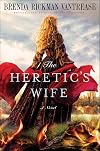
This book is a very vivid look at Tudor England and the religious strife that started to tear the country apart during that era. From the intimate of the individual to the grand of historical significance, this book portrays how the events of that era touch on people of all strata's and types. It makes us think and sympathize with the characters and just makes us experience this tragic, viseral world. I enjoyed seeing Vantrease's characters, both real and imagined, overcome obstacles, fall show more to martyrdom, and just struggle to find a balance between family and faith.
Vantrease's main character, Kate Gough, really struck with me. She's a very strong woman who has gone through much in her life; in the end, I think, she is able to find her place and some happiness even though much tragedy came before. I enjoyed seeing how she wasn't afraid to confront the demons of her time for her family and loved ones. From her brother to her husband, she faces even her biggest enemy, face-to-face, in an effort to save lives and hearts. And yet, for all the bravery and strength of a lioness this woman has, there's a very tender side to her as well. Several times it's proven that she strives for love, family, and children above most else in her life. All around, she's a very well-balanced character that I felt for, cried for, and fell in love with.
I also vastly enjoyed the take on real historical individuals the author brought to life. I felt they all were well rounded people the reader could relate to, despite station or personality. Even the big antagonist of the book, Thomas More, was sympathetic for the reader in that I could see how he became the way he was. In a more sedate or calm era, religiously speaking, this man might have been considered a saint or great helper to the people. Instead, he sees his world and beloved religion being attacked from all quarters and defends it to the best of his ability. While I definitely don't agree with his actions nor his views, I grew to care for him as a man slowly sliding into madness and religious fanaticism due to the pressures on his beloved faith.
The world of religious strife and divisions that Vantrease brings to life just makes me shudder. I think anyone reading this book can agree that a new love for our freedoms of speech, thought, and religion came to light after reading this. Mine certainly did. Being in a country where the wrong word can get you burned alive is a terrifying world indeed. Vantrease brings it to vivid, terrifying life, all the while also bringing the business of bustling merchant town Antwerp and the glitter of the royal Tudor court to life as well. I felt transported and that's the mark of any well-written historical novel.
This book definitely shines as a wonderful example of historical fiction at its best. The reader is drawn into the events and atmosphere of the times seamlessly. The characters become people known and loved, sympathized with and cried over. I adored every word. And while it took me a while to get into the book due to the holiday season, once I was in, it was a straight shot to the end. I loved every word. show less
Vantrease's main character, Kate Gough, really struck with me. She's a very strong woman who has gone through much in her life; in the end, I think, she is able to find her place and some happiness even though much tragedy came before. I enjoyed seeing how she wasn't afraid to confront the demons of her time for her family and loved ones. From her brother to her husband, she faces even her biggest enemy, face-to-face, in an effort to save lives and hearts. And yet, for all the bravery and strength of a lioness this woman has, there's a very tender side to her as well. Several times it's proven that she strives for love, family, and children above most else in her life. All around, she's a very well-balanced character that I felt for, cried for, and fell in love with.
I also vastly enjoyed the take on real historical individuals the author brought to life. I felt they all were well rounded people the reader could relate to, despite station or personality. Even the big antagonist of the book, Thomas More, was sympathetic for the reader in that I could see how he became the way he was. In a more sedate or calm era, religiously speaking, this man might have been considered a saint or great helper to the people. Instead, he sees his world and beloved religion being attacked from all quarters and defends it to the best of his ability. While I definitely don't agree with his actions nor his views, I grew to care for him as a man slowly sliding into madness and religious fanaticism due to the pressures on his beloved faith.
The world of religious strife and divisions that Vantrease brings to life just makes me shudder. I think anyone reading this book can agree that a new love for our freedoms of speech, thought, and religion came to light after reading this. Mine certainly did. Being in a country where the wrong word can get you burned alive is a terrifying world indeed. Vantrease brings it to vivid, terrifying life, all the while also bringing the business of bustling merchant town Antwerp and the glitter of the royal Tudor court to life as well. I felt transported and that's the mark of any well-written historical novel.
This book definitely shines as a wonderful example of historical fiction at its best. The reader is drawn into the events and atmosphere of the times seamlessly. The characters become people known and loved, sympathized with and cried over. I adored every word. And while it took me a while to get into the book due to the holiday season, once I was in, it was a straight shot to the end. I loved every word. show less

The author says, ”This is a work of fiction, but the characters of Bishop Henry Despenser, John Wycliffe, Julian of Norwich, and John Ball are historical figures whose histories I have braided with the lives of my fictional characters.” This reader says, “Great debut! Please continue braiding!”
Ms. Vantrease has created characters so alive in their time and place, and her settings so real, that the reader feels herself there among the people of the manor trying to deal with the show more political and religious intrigue that threatens to strip them of everything, and among the peasants who work at the manor and with the sheep, trying to keep their families alive.
One of my pet peeves is a story that reeks of the author’s scholarship glaring from its crannies. Even though this is her debut book, Ms. Vantrease has not made that mistake. Hers is a seamless story where life of that time comes alive through the art of her pen.
It is not a perfect book, but it is quite illuminating to that time in history, and I did enjoy it. show less
Ms. Vantrease has created characters so alive in their time and place, and her settings so real, that the reader feels herself there among the people of the manor trying to deal with the show more political and religious intrigue that threatens to strip them of everything, and among the peasants who work at the manor and with the sheep, trying to keep their families alive.
One of my pet peeves is a story that reeks of the author’s scholarship glaring from its crannies. Even though this is her debut book, Ms. Vantrease has not made that mistake. Hers is a seamless story where life of that time comes alive through the art of her pen.
It is not a perfect book, but it is quite illuminating to that time in history, and I did enjoy it. show less
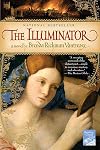
I started to read this book when it was first launched, put it down and forgot about it - don't know why! This was an amazing story that, two days after finishing it, I'm still thinking about the characters and the great story. Christian Mythos, Historical Theology is my area of concentration and this story about the Lollard Movement in late 14th century England was fascinating, especially when the general public just assumes the reformation was started in England by Henry VIII's divorce of show more Catherine of Aragon - the call for reformation began a over a century earlier.
The characters in this book were outstanding and real: the cool, patrician, Lady Kathryn who is bitter after marriage to the odious Roderick, a dutiful 14th century woman; the liberal, independent thinker, the illuminator Finn; Magda, a young girl with a special gift, and dame Julian of Norwich, who, from her anchorage, knows more about life than the people out in the secular world. This is a a spiritual and emotional journey that is breathtaking. The prose and dialogue are solid, real and engages the mind and heart. A definite recommendation for a must read. show less
The characters in this book were outstanding and real: the cool, patrician, Lady Kathryn who is bitter after marriage to the odious Roderick, a dutiful 14th century woman; the liberal, independent thinker, the illuminator Finn; Magda, a young girl with a special gift, and dame Julian of Norwich, who, from her anchorage, knows more about life than the people out in the secular world. This is a a spiritual and emotional journey that is breathtaking. The prose and dialogue are solid, real and engages the mind and heart. A definite recommendation for a must read. show less
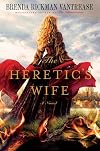
I wasn’t really sure what to expect on this one. The 16th century is not really my era of choice, the cover SCREAMS romance novel (which REALLY isn’t my thing), and if really forced to, prior to reading this, it may have taken me a couple of tries to give a coherent definition of what a “heretic” really is. So why did I pick it up? Almost entirely because I was looking for an audiobook narrated by one of my new favorites – Davina Porter. And as usual, she did a great job, and I show more found myself loving this book.
As the book begins, Kate is working with her brother John, attempting to smuggle English translations of the Bible into Tudor England. (Did you know it was illegal to sell or own an English translation of the bible IN England?!?! Prior to Henry VIII’s rejection of the Catholic Church (a struggle which, along with Anne Boleyn, Katherine of Aragon, Sir Thomas More, Martin Luther and others, appears in the narrative of this book) only scholars and the clergy were considered worthy to read the bible in Latin because an uneducated person could misunderstand what the text said thereby resulting in independent thought! Forsooth! The novel almost immediately lays out the persecutions begun by More and others, and John is one of their targets. However, astute observers will remember that the book is called “The Heretic’s Wife” (not sister) so unless this book was going to go in an entirely bizarre direction, I found myself reading through a virtual “march of the heretics” progression trying to determine which one would become her husband (I still feared the potential “romance” aspect of the book).
I soon realized that, although I was dreading the potential “romance” of her finding her heretic, the narrative and true power of the novel had little to do with her getting married. The book skillfully covers and attempts to explain an age when a lot was going on in England and not everyone knew right from wrong – but those in power sure thought they did.
Almost without noticing the book begins to split into two distinct narratives, each beautifully rendered by the author. Kate and her heretic go to Antwerp to escape the persecutions. The author’s skill in capturing the atmosphere and the excitement of a new age where Martin Luther and William Tyndale are making up the rules as they go along is mesmerizing. As the chapter then alternates to the inner sanctum of Henry VIII’s attempts to bed (I mean wed) Anne Boleyn, Boleyn’s interest in church reform, and the manic ministrations of Sir Thomas More attempting to serve as both chancellor for a king he feels is courting the devil and to burn all the heretics he can find before it’s too late.
The direction of the text is unique and surprising, unless you are a gifted scholar of arcane Tudor-ana. My enjoyment of the book was piqued even more when, upon reviewing the historical notes at the end of the book, I discovered how much of the novel had been based on fact. Including Kate’s heretic – John Frith.
There is adventure, intrigue and humor, all interspersed with some extremely detailed historical research, and yes, there is some romance.
A truly enjoyable read and highly recommended. show less
As the book begins, Kate is working with her brother John, attempting to smuggle English translations of the Bible into Tudor England. (Did you know it was illegal to sell or own an English translation of the bible IN England?!?! Prior to Henry VIII’s rejection of the Catholic Church (a struggle which, along with Anne Boleyn, Katherine of Aragon, Sir Thomas More, Martin Luther and others, appears in the narrative of this book) only scholars and the clergy were considered worthy to read the bible in Latin because an uneducated person could misunderstand what the text said thereby resulting in independent thought! Forsooth! The novel almost immediately lays out the persecutions begun by More and others, and John is one of their targets. However, astute observers will remember that the book is called “The Heretic’s Wife” (not sister) so unless this book was going to go in an entirely bizarre direction, I found myself reading through a virtual “march of the heretics” progression trying to determine which one would become her husband (I still feared the potential “romance” aspect of the book).
I soon realized that, although I was dreading the potential “romance” of her finding her heretic, the narrative and true power of the novel had little to do with her getting married. The book skillfully covers and attempts to explain an age when a lot was going on in England and not everyone knew right from wrong – but those in power sure thought they did.
Almost without noticing the book begins to split into two distinct narratives, each beautifully rendered by the author. Kate and her heretic go to Antwerp to escape the persecutions. The author’s skill in capturing the atmosphere and the excitement of a new age where Martin Luther and William Tyndale are making up the rules as they go along is mesmerizing. As the chapter then alternates to the inner sanctum of Henry VIII’s attempts to bed (I mean wed) Anne Boleyn, Boleyn’s interest in church reform, and the manic ministrations of Sir Thomas More attempting to serve as both chancellor for a king he feels is courting the devil and to burn all the heretics he can find before it’s too late.
The direction of the text is unique and surprising, unless you are a gifted scholar of arcane Tudor-ana. My enjoyment of the book was piqued even more when, upon reviewing the historical notes at the end of the book, I discovered how much of the novel had been based on fact. Including Kate’s heretic – John Frith.
There is adventure, intrigue and humor, all interspersed with some extremely detailed historical research, and yes, there is some romance.
A truly enjoyable read and highly recommended. show less
Lists
Awards

You May Also Like


Statistics
- Works
- 12
- Members
- 1,754
- Popularity
- #14,665
- Rating
- 3.6
- Reviews
- 63
- ISBNs
- 57
- Languages
- 8
- Favorited
- 5