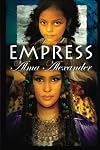
Empress
by Alma Alexander 
On This Page
Description
whispered prayer on a holy mountain:"Give me the life I was meant to live."She understood the passions and the cruelty of men; she knew the despair and the strength of women. She was born in the gutter, raised on the sands of the Hippodrome arena, grew up with the gritty, grim world of chariot racers, and animal keepers, and courtesans. Step by step she clawed her way into the halls of power, and ruled an empire of chaos and triumph and tragedy at the side of the only man who truly show more appreciated her for whatshe was.Empress. show lessTags
Recommendations









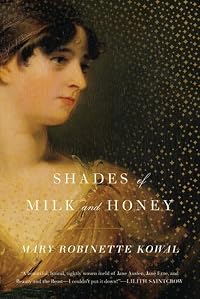

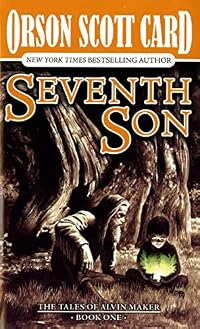


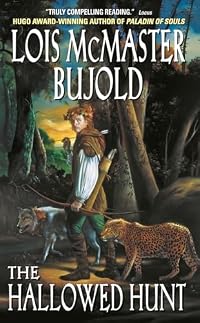
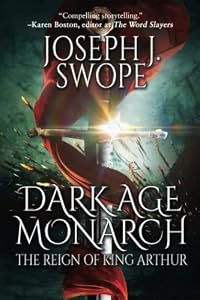









Member Recommendations
reading_fox Similar story - slave to empress in one book.
Member Reviews
Hmmm. I'm really not sure about this one. It's very well written (unsurprisingly); the descriptions, of places and people, are vivid and evocative and very rich. The motivations...I had a little problem with some of them, particularly Callidora's "sin" - I suppose I can see it, but the mix of self-confidence and lack of self-esteem is weird. But my biggest problem with the whole book was the way she changed the names of things. I was, throughout, trying to work out how much of it was historical and how much she'd made up, and the fact that the names were different (Visant for Byzantium, etc) only distracted from the story itself. One change actually really annoyed me - the Wheel for the Cross. It felt like she was trying to say she'd show more made all this up, when it was clearly based on historical fact (I even (vaguely) remember the heresy about the divine vs human nature of Jesus). The afterword made things clearer - she'd used Justinian and Theodora as a base, but altered events, sometimes considerably, to suit her story. I think that she could have done that without changing the names, and had a stronger book (with an afterword explaining her changes, pretty much the one she did have).
So. Well-written, very rich, some painful bits (for the characters) but few that seemed gratuitous. But the changed names kept me from sinking into the story, and now that I've finished it - they're still distracting me from thinking of the story smoothly. Very good but could easily have been better, is my conclusion. show less
So. Well-written, very rich, some painful bits (for the characters) but few that seemed gratuitous. But the changed names kept me from sinking into the story, and now that I've finished it - they're still distracting me from thinking of the story smoothly. Very good but could easily have been better, is my conclusion. show less
 This review was written for LibraryThing Early Reviewers.
This novel is loosely based on the Byzantine emperor Justinian and his wife, Theordora.
Simona is the daughter of a bear keeper recently appointed to the hippodrome in the capital city of Visant. (the location of all manner of public entertainment, including animal fights and chariot races). When her father takes ill and dies, the wife and two daughters left behind are left to fend for themselves in a world not kind to single women and girls. Her mother immediately takes up with her father's replacement, Simona becomes a street urchin who eventually is recruited to be a courtesan and spy. After running off with a john who was appointed governor of a remote province, she gets knocked up and is summarily cast aside. After a perilous show more journey back to Visant, she catches the eye of young Maxentius, whose tale is told in parallel.
Maxentius is the adopted son of Leontines, a smart boy who contrives to position his adoptive father as successor to the dying emperor. Soon after hooking hooking up with Simonis (who, after marriage, changes her name to Callidora to help break the connection with her whorish past), Leontines dies, and they become Emperor and Empress.
This book is more like a biography than anything. Action is mostly passive, and the result was a ponderous story that was as slow to read as the action in the book. A few events defined their reign, a plague and an uprising. There was also a diplomatic issue involving a kingdom at the far border of the empire. In between, there's a lot of "yadda yadda."
The setting was well done, the characters believable, but overall just too mundane to make a compelling tale. show less
Simona is the daughter of a bear keeper recently appointed to the hippodrome in the capital city of Visant. (the location of all manner of public entertainment, including animal fights and chariot races). When her father takes ill and dies, the wife and two daughters left behind are left to fend for themselves in a world not kind to single women and girls. Her mother immediately takes up with her father's replacement, Simona becomes a street urchin who eventually is recruited to be a courtesan and spy. After running off with a john who was appointed governor of a remote province, she gets knocked up and is summarily cast aside. After a perilous show more journey back to Visant, she catches the eye of young Maxentius, whose tale is told in parallel.
Maxentius is the adopted son of Leontines, a smart boy who contrives to position his adoptive father as successor to the dying emperor. Soon after hooking hooking up with Simonis (who, after marriage, changes her name to Callidora to help break the connection with her whorish past), Leontines dies, and they become Emperor and Empress.
This book is more like a biography than anything. Action is mostly passive, and the result was a ponderous story that was as slow to read as the action in the book. A few events defined their reign, a plague and an uprising. There was also a diplomatic issue involving a kingdom at the far border of the empire. In between, there's a lot of "yadda yadda."
The setting was well done, the characters believable, but overall just too mundane to make a compelling tale. show less
This review was written for LibraryThing Early Reviewers.I really enjoyed this book from a variety of perspectives. The characters were well fleshed out, the plot moved at a good pace, and it was exciting without sacrificing the gravity and importance of smaller moments.
I felt immediately drawn in emotionally when the story begins. The new reader is paralleled by the protagonist(s) entering a new city, and it serves as a great way of establishing the world. I thought, also, that having the two main characters bump into each other as children long before they really meet was a nice touch. The emotional depth seems a bit further removed as the characters age - you're not told with quite as much immediacy what they're feeling, possibly because at that point you're able to much more clearly show more extrapolate the implications of their situations.
I feel as though the story really only has the two main characters - the others primarily appear to be there to serve their purposes and move on. This is not to say, however, that anyone other than the protagonist(s) were superfluous or shallow. All the side characters are well handled, and given a strong unique voice. I do wish, however, that we had had a bit more about them, particularly when we travel to other lands, and others' homes. I dare say this is because I felt as though the author was capable of creating such interesting people, that I simply wanted to know more about them.
This story is so close to historical fiction that a part of me wishes the author had actually not shifted events and names around to make it an alternate history. This is an entirely personal preference, though - I simply like historical fiction with as much accuracy as possible, especially when the author is as skilled at writing powerful prose as this one is. show less
I felt immediately drawn in emotionally when the story begins. The new reader is paralleled by the protagonist(s) entering a new city, and it serves as a great way of establishing the world. I thought, also, that having the two main characters bump into each other as children long before they really meet was a nice touch. The emotional depth seems a bit further removed as the characters age - you're not told with quite as much immediacy what they're feeling, possibly because at that point you're able to much more clearly show more extrapolate the implications of their situations.
I feel as though the story really only has the two main characters - the others primarily appear to be there to serve their purposes and move on. This is not to say, however, that anyone other than the protagonist(s) were superfluous or shallow. All the side characters are well handled, and given a strong unique voice. I do wish, however, that we had had a bit more about them, particularly when we travel to other lands, and others' homes. I dare say this is because I felt as though the author was capable of creating such interesting people, that I simply wanted to know more about them.
This story is so close to historical fiction that a part of me wishes the author had actually not shifted events and names around to make it an alternate history. This is an entirely personal preference, though - I simply like historical fiction with as much accuracy as possible, especially when the author is as skilled at writing powerful prose as this one is. show less
This review was written for LibraryThing Early Reviewers.Historical fantasy (fiction) set in the Byzantine empire, a re-telling of the lives; rise and fall, of Emperor Justinian and his wife Theodora - under different names.
I almost put this book down on the first page. Indeed the first chapter, which contains some truly horrendous purple prose. It's as if this is the not quite final edit, just needing a bit more trimming to be perfect. There's also a very odd patch 3/4 of the way through where suddenly we lose the POV characters we've followed this far, for an odd chapter of events happening far away. They're not even particularly important, and could easily have been handled different. Sadly between them that's enough to drop it an entire star, but otherwise it is a very good book, show more compellingly written - especially so for a genre I'm not normally that keen on. There are a couple of formatting issues too - runon words in the ebook, but nothing too serious.
The story is relatively simple. Told in alternating viewpoints between a young girl and a young boy, neither of them particularly privileged in background, but eventually both quite lucky - It doesn't feel massively contrived how they eventually manage to meet. The falling in love at first sight thing is bit odd, though the characters work well together. I could guess from the title how it all works out, but that's far from the conclusion of the novel. The ending is well managed.
The Byzantine era is not something I know anything about, and although the author confesses to having taken liberties with some of the historical details, it does feel well researched in terms of how the cities were managed, and life in the provinces. The details of the politics seem somewhat simplified at times, and I never really understood how the government functioned on a day-to-day basis. MOst oddly was the intrusion of the Bear spiritualism into an otherwise devout girl's life. No mention was ever made of the conflict this should have created. There are other loose ends too - there's nothing so vicious as a religious creed schism, but this was allowed to slide away; likewise the gang troops. Minor quibbles really.
Apart from the already mentioned failings the rest of the writing is fully engaging, even captivating at times. Both characters are well developed and although there are few supporting characters (and most of those just fade away) there are plenty of interactions. Some substantial time jumps occur but are generally well signalled and don't create confusion.
Enjoyable, I'll happily read other work by this author. show less
I almost put this book down on the first page. Indeed the first chapter, which contains some truly horrendous purple prose. It's as if this is the not quite final edit, just needing a bit more trimming to be perfect. There's also a very odd patch 3/4 of the way through where suddenly we lose the POV characters we've followed this far, for an odd chapter of events happening far away. They're not even particularly important, and could easily have been handled different. Sadly between them that's enough to drop it an entire star, but otherwise it is a very good book, show more compellingly written - especially so for a genre I'm not normally that keen on. There are a couple of formatting issues too - runon words in the ebook, but nothing too serious.
The story is relatively simple. Told in alternating viewpoints between a young girl and a young boy, neither of them particularly privileged in background, but eventually both quite lucky - It doesn't feel massively contrived how they eventually manage to meet. The falling in love at first sight thing is bit odd, though the characters work well together. I could guess from the title how it all works out, but that's far from the conclusion of the novel. The ending is well managed.
The Byzantine era is not something I know anything about, and although the author confesses to having taken liberties with some of the historical details, it does feel well researched in terms of how the cities were managed, and life in the provinces. The details of the politics seem somewhat simplified at times, and I never really understood how the government functioned on a day-to-day basis. MOst oddly was the intrusion of the Bear spiritualism into an otherwise devout girl's life. No mention was ever made of the conflict this should have created. There are other loose ends too - there's nothing so vicious as a religious creed schism, but this was allowed to slide away; likewise the gang troops. Minor quibbles really.
Apart from the already mentioned failings the rest of the writing is fully engaging, even captivating at times. Both characters are well developed and although there are few supporting characters (and most of those just fade away) there are plenty of interactions. Some substantial time jumps occur but are generally well signalled and don't create confusion.
Enjoyable, I'll happily read other work by this author. show less
This review was written for LibraryThing Early Reviewers.As is probably appropriate for a novel set in a parallel Byzantine Empire, _Empress_ is a bit of a puzzle. It is a well-researched and accurate description of the lives of Emperor Justinian and Empress Theodora. (About a third of the way through the novel, I couldn't resist anymore, and checked Wikipedia.) The author is not slavishly tied to known facts; this is, after all, fiction, and about a time for which there is not a lot of primary documentation--she of course uses her imagination to fill in details and bring the story to life. What is puzzling is that author has changed names (e.g. "Visant" instead of "Byzantium") and some superficial details, especially about religion. She did not have to. Often authors _need_ to cloak history show more in fantasy due to sloppy research. However, it is not the case here--in fact, I think the author takes far fewer liberties with the essentials than most writers of ostensible, ostentatiously Historical (with a capital H!) fiction (lowercase, extra-small type). It is also not really an alternate history, even if the author chose to make some alterations to climactic events.
The novel is a good read about a fascinating couple, regardless of whether you want to regard them as fictionalized history or entirely fictional fantasy. The conversion of familiar terms into fantasy ones may help keep readers from getting caught up in historical baggage and preconceptions--although the terms are close enough to the original to be a little distracting.
In her Author's Note at the end of the book, the author says that her goal was to "convey the emotional truth of the story." She succeeds admirably in this.
Note: I received a free copy of this book through LibraryThing's Early Reviewer Program. show less
The novel is a good read about a fascinating couple, regardless of whether you want to regard them as fictionalized history or entirely fictional fantasy. The conversion of familiar terms into fantasy ones may help keep readers from getting caught up in historical baggage and preconceptions--although the terms are close enough to the original to be a little distracting.
In her Author's Note at the end of the book, the author says that her goal was to "convey the emotional truth of the story." She succeeds admirably in this.
Note: I received a free copy of this book through LibraryThing's Early Reviewer Program. show less
This review was written for LibraryThing Early Reviewers.Empress is based on the time of the Byzantium Empire and the lives of the Emperor Justinian and his Empress Theodora. Simonis's story starts with her first look at Visant the city of gold, where her father will be the new bear keeper of the White Jewel faction. Here she will grow up in the belly of the Hippodrome and learn the lessons of pain, sorrow and how to dance and be a spy but most importantly to use the bear spirit inside her to be strong. Her flight to escape that life, her near death in the dessert to again escape a life of near slavery and her eventual return to Visant. Where she meets the love of her life and the man who will raise her up. Marcus is a farmers son raised by his uncle Leontes to the rank of patrician and takes show more the name Maxentius. It is he who raises Simonis to the rank of patrician and gives her the name of Callidora which means gift of beauty. Together they rise to the rank of Emperor and Empress to rule equally through times of plague, famine, flames and insurrection. This is a love story full of action, adventure and an intriguing look at how life was lived in this ancient time in history. show less
This review was written for LibraryThing Early Reviewers.I have mixed feelings about the “Empress”. The beginning had my attention, however it seemed to then just drag out. I often found myself skipping pages (only then to have to go back a bit) and still understanding the story. Learning that the actual names have been changed was a little upsetting because it took the authors view of historical events and discredited the true story (in my opinion). There are many historical fiction stories where actual names have been used with an understanding some events are slightly altered to make for a good story, hence, historical fiction. I also felt there were some parts of the story thrown into the novel that had no relevance to the actual plot. I did like reading the book, even though I show more skipped quite a few pages, and the novel made me look up the actual story of The Byzantine era and the real Empress Theodora.
Alma Alexander did a good job detailing the emotions of the characters and provided descriptive scenery, it was just a bit overboard. I would recommend the book, but would have enjoyed it more without the fluff. show less
Alma Alexander did a good job detailing the emotions of the characters and provided descriptive scenery, it was just a bit overboard. I would recommend the book, but would have enjoyed it more without the fluff. show less
This review was written for LibraryThing Early Reviewers.Members
- Recently Added By
Author Information

42+ Works 1,620 Members
Alma Alexander is a LibraryThing Author, an author who lists their personal library on LibraryThing.
Common Knowledge
- Original publication date
- 2016
- People/Characters
- Simonis; Maxentius
- Important places
- Visant
- First words
- They called it the City of God, and under the heavy dark-gold light of a westering sun it was easy to see why.
- Last words
- (Click to show. Warning: May contain spoilers.)"Good night, Augusta."
Classifications
Statistics
- Members
- 39
- Popularity
- 744,676
- Reviews
- 28
- Rating
- (3.88)
- Languages
- English
- Media
- Paper, Ebook
- ISBNs
- 2
- ASINs
- 1