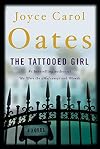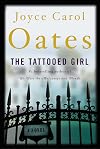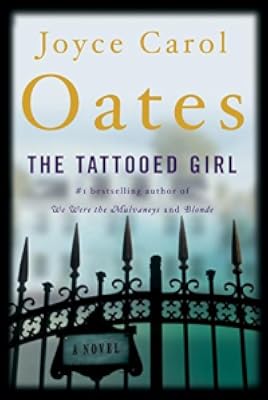
The Tattooed Girl
by Joyce Carol Oates
On This Page
Description
Joshua Seigl, a celebrated but reclusive author, is forced for reasons of failing health to surrender his much-prized bachelor's independence. Advertising for an assistant, he unwittingly embarks upon the most dangerous adventure of his privileged life. Alma Busch, a sensuous, physically attractive young woman with bizarre tattoos covering much of her body, stirs in Seigl a complex of emotions: pity? desire? responsibility? guilt? Unaware of her painful past and her troubled personality, show more Seigl hires her as his assistant. As the novel alternates between Seigl's and Alma's points of view, the naïve altruism of the one and the virulent anti-Semitism of the other clash in a tragedy of thwarted erotic desire. With her masterful balance of dark suspense and surprising tenderness, Joyce Carol Oates probes the contemporary tragedy of ethnic hatred and challenges our accepted limits of desire. The Tattooed Girl may be her most controversial novel. show lessTags
Recommendations





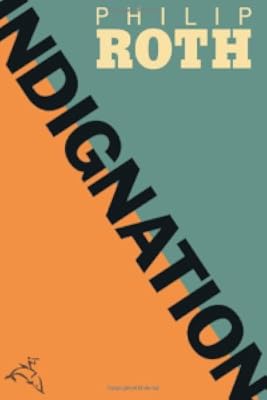

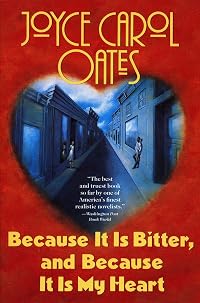




Member Recommendations

Member Reviews
There are so many negative reviews of this book that for a moment I thought I had made a wrong selection! I'm a huge JCO fan and IMHO this title did not disappoint. True, the characters are deeply flawed, broken, and ignorant - but that's what her books are all about. You want a romance story between a writer and a girl with tattoos go pick up that other book that was wildly popular a few years ago. In this story, what resonated strongly for me is that the relationship between Joshua and Alma represents our ability to "mis-know" another by projecting thoughts, stereotypes, and fantasies onto them. I don't know about you, but isn't that your greatest fear? Scary, page-turning stuff indeed.
This is a marvelous book, though may be discomforting to some. The tattoed girl is a victim, not only as a result of significant sexual and physical abuse and neglect by others during her young life, but due to her limited intelligence and education and her prejudices. She is practically illiterate and a violent anti-semite. The highly educated Jewish author and literary academic who takes her into his home as housekeeper and helpmate (needed because of his progressive illness) sees only the victim and does not recognize that he has brought a dangerous anti-semite into his home at a time when he is increasingly physically vulnerable. This is a disturbing but riveting story.
In this novel, Oates explores the forging of identities despite history, preconceived notions and class obstacles. Oates has an unparalleled ability to develop her characters through pure, raw emotion. Their voices resonate strongly through their anger, fear, compassion, ignorance, and love, creating complex relationships which are constantly evolving.
There is hope throughout the book that love and openness will triumph over prejudice and hatred. The brutal ending, however, brings the reader back into the harsh reality, where folly and darkness show that humans still have a long way to go before fostering a culture of acceptance.
There is hope throughout the book that love and openness will triumph over prejudice and hatred. The brutal ending, however, brings the reader back into the harsh reality, where folly and darkness show that humans still have a long way to go before fostering a culture of acceptance.
Joshua Siegel, 38, a bachelor, trust fund baby, and notable writer of nonfiction (and most notably, one fictional 'masterpiece' with a Holocaust theme) is suffering from some yet untreated neuromuscular symptoms and having difficulty keeping up with his day to day needs. He reluctantly decides to hire an assistant. Our book begins with Joshua interviewing a long parade of young male candidates.
Joshua is certainly not a totally likable person. He is rich, self-centered and quite snobbish at times, but he can be kind, patient and generous. Although not technically Jewish (his mother is a Gentile), and not self-defined as so, Joshua's grandparents were Holocaust survivors, and it is this legacy that he wrestles with.
Alma Busch, single, show more late 20s, pretty but disfigured by bad tattoos, including a large, unidentifiable one on her cheek, rolls into town and is picked up by the sadistic cafe waiter Dmitri, who uses and abuses her (and when he can't or doesn't want to use her, sells her to his friends). Alma has to be the most passive character I have ever read about in a novel, and even Oates physical description of screams "passive". Alma is from a mining town in Ohio or Pennsylvania, and it is there were her messy, scribbly tattoos were done to her by a gang of young men while she was apparently unconscious. Like many abused women, she imagines she loves Dmitri and that he loves her, when it is abundantly clear, to the reader at least, that she is merely an object of his psychopathic fancy. She gives him her wages, allows him to do what he wishes with her, and would do anything to impress him.
Joshua comes across Alma in a local used bookstore where she has begun to work part-time. She seems slow-witted and shy, and Joshua is fascinated with her. He hires her as his assistant, and after a slow start she settles in: sorting his paperwork, answering the phone, cooking and cleaning...etc. Alma is both drawn to Joshua and repelled by him. As the story moves forward we see Alma express a virulent antisemitism in secret little acts she performs against Joshua. She crushes a glass and includes the pieces in a casserole she has made for him, for example, but just as she is to serve it to him, she intentionally drops it on the floor so it cannot be eaten. She presents little trophies—things she has stolen from Joshua's house—to Dmitri. At the same time, Alma, begins a tentative, awkward conversation about the Holocaust with Joshua which will eventually start to change her thinking, and will have an interesting affect on Joshua also. They are both changed by the other. When Joshua suffers a remission of his unnamed disease and then a relapse, he enters into an experimental treatment program. It is Alma who stays at his hospital bedside. Ultimately, just as the clouds clear and sun peeks through, the story turns tragic (oh, on so many levels...).
-------
There's a couple of things going on in this book. There is an exploration of legacies, things we inherit: money, identity...even hatred (this theme brought to mind Gordimer's [Burger's Daughter]). There is the exploration of antisemitism. Alma's hatred is entirely inherited from the adults she had grown up with (she has never even met a Jewish person before Joshua, who ironically is not really Jewish), but it really 'blossoms' during her time with the also antisemitic Dmitri. Astounded by abuse Alma is subjected to, and her profound passivity; one doesn't have to take a huge mental leap to understand that her unspoken rage is being misdirected and expressed in this antisemitism (this doesn't excuse it, of course). Joshua's internal struggles are interesting, but Alma's evolution is both horrible and riveting to watch.
This isn't a perfect book, perhaps not one of Oates's best, but I found it absorbing, even gripping at times, certainly thought-provoking. The profound tragedy of the story (although I'm not sure the actual ending worked for me), affected me more than I expected. show less
Joshua is certainly not a totally likable person. He is rich, self-centered and quite snobbish at times, but he can be kind, patient and generous. Although not technically Jewish (his mother is a Gentile), and not self-defined as so, Joshua's grandparents were Holocaust survivors, and it is this legacy that he wrestles with.
Alma Busch, single, show more late 20s, pretty but disfigured by bad tattoos, including a large, unidentifiable one on her cheek, rolls into town and is picked up by the sadistic cafe waiter Dmitri, who uses and abuses her (and when he can't or doesn't want to use her, sells her to his friends). Alma has to be the most passive character I have ever read about in a novel, and even Oates physical description of screams "passive". Alma is from a mining town in Ohio or Pennsylvania, and it is there were her messy, scribbly tattoos were done to her by a gang of young men while she was apparently unconscious. Like many abused women, she imagines she loves Dmitri and that he loves her, when it is abundantly clear, to the reader at least, that she is merely an object of his psychopathic fancy. She gives him her wages, allows him to do what he wishes with her, and would do anything to impress him.
Joshua comes across Alma in a local used bookstore where she has begun to work part-time. She seems slow-witted and shy, and Joshua is fascinated with her. He hires her as his assistant, and after a slow start she settles in: sorting his paperwork, answering the phone, cooking and cleaning...etc. Alma is both drawn to Joshua and repelled by him. As the story moves forward we see Alma express a virulent antisemitism in secret little acts she performs against Joshua. She crushes a glass and includes the pieces in a casserole she has made for him, for example, but just as she is to serve it to him, she intentionally drops it on the floor so it cannot be eaten. She presents little trophies—things she has stolen from Joshua's house—to Dmitri. At the same time, Alma, begins a tentative, awkward conversation about the Holocaust with Joshua which will eventually start to change her thinking, and will have an interesting affect on Joshua also. They are both changed by the other. When Joshua suffers a remission of his unnamed disease and then a relapse, he enters into an experimental treatment program. It is Alma who stays at his hospital bedside. Ultimately, just as the clouds clear and sun peeks through, the story turns tragic (oh, on so many levels...).
-------
There's a couple of things going on in this book. There is an exploration of legacies, things we inherit: money, identity...even hatred (this theme brought to mind Gordimer's [Burger's Daughter]). There is the exploration of antisemitism. Alma's hatred is entirely inherited from the adults she had grown up with (she has never even met a Jewish person before Joshua, who ironically is not really Jewish), but it really 'blossoms' during her time with the also antisemitic Dmitri. Astounded by abuse Alma is subjected to, and her profound passivity; one doesn't have to take a huge mental leap to understand that her unspoken rage is being misdirected and expressed in this antisemitism (this doesn't excuse it, of course). Joshua's internal struggles are interesting, but Alma's evolution is both horrible and riveting to watch.
This isn't a perfect book, perhaps not one of Oates's best, but I found it absorbing, even gripping at times, certainly thought-provoking. The profound tragedy of the story (although I'm not sure the actual ending worked for me), affected me more than I expected. show less
Jaded writer Joshua Moses Seigl is beginning to experience problems with his body and sets himself the task of finding an assistant to help him, in order that he can hide these physical failings both from himself and others. However he resents the intrusion this will entail. He interviews a number of possible applicants but all are found wanting, until he comes upon a young stranger to the town in the Tattooed Girl, Alma, and offers this almost illiterate young woman the job of housekeeper/assistant. Their dance plays out with interjections from svengali waiter Dmittri who manipulates Alma for his own ends, and Jet, Seigl’s sister who add complications to the mix.
This is a very fine novel, and yet I cannot admit to ‘enjoying it’! show more I found it almost impossible to like or empathise to any great degree with any of the characters. Flawed, in most instances, is an understatement. But for me what makes this novel fine is that ultimately, at the end, you do feel pity for some of the characters. You can see how on some levels they ended up the people they became, and yet, still I feel unable to call that feeling empathy. There is something hard and sharp and uncomfortable in most of the characters, that despite seeing an arc that might have led them to who they became.
There are moments of depth and brilliance, and despite lack of enjoyment I know I will have to re-read this novel at a later date.
Dedicated to Philip Roth, one can almost see him in Seigl at moments, and one wonders if JCOs intention was to write in the Rothian genre – can one writer be a genre I wonder?
Perhaps it is a sign of growth that I can now admit that a novel is great under such duress, but this certainly is. The writing is sharp and fitting for the mouths of the characters, though bizarrely I found the use of strong language coming from JCO quite strange. It’s not that I don’t read books with strong language in, and mostly I don’t even notice it because it does fit the characters, so I was mildly amused at myself that I was more aware of it here. show less
This is a very fine novel, and yet I cannot admit to ‘enjoying it’! show more I found it almost impossible to like or empathise to any great degree with any of the characters. Flawed, in most instances, is an understatement. But for me what makes this novel fine is that ultimately, at the end, you do feel pity for some of the characters. You can see how on some levels they ended up the people they became, and yet, still I feel unable to call that feeling empathy. There is something hard and sharp and uncomfortable in most of the characters, that despite seeing an arc that might have led them to who they became.
There are moments of depth and brilliance, and despite lack of enjoyment I know I will have to re-read this novel at a later date.
Dedicated to Philip Roth, one can almost see him in Seigl at moments, and one wonders if JCOs intention was to write in the Rothian genre – can one writer be a genre I wonder?
Perhaps it is a sign of growth that I can now admit that a novel is great under such duress, but this certainly is. The writing is sharp and fitting for the mouths of the characters, though bizarrely I found the use of strong language coming from JCO quite strange. It’s not that I don’t read books with strong language in, and mostly I don’t even notice it because it does fit the characters, so I was mildly amused at myself that I was more aware of it here. show less
I have read a lot of books by Joyce Carol Oates, and “The Tattooed Girl” is one of her best. The book engaged me from page one. The book was a quick read, despite being over 300 pages long. But I chose to read it slowly so I could take it in and think about the story before moving on. The prose flowed well and the writing was rich. Most of the characters were deep and well developed, especially Joshua Seigl and Alma Bush, the tattooed girl. I felt Seigl’s sister Jet could have been developed more.
My only quibble with the book was the ending. It was rather sad and unexpected based on what we had been told about the characters throughout the book. Despite this minor issue, I highly recommend this book.
My only quibble with the book was the ending. It was rather sad and unexpected based on what we had been told about the characters throughout the book. Despite this minor issue, I highly recommend this book.
Years ago, I fell into Oates. It started with a short story that I really loved, “Shopping”. From there, I jumped into one novel, then another and another. It seemed like I was going to read a lot of Oates in my lifetime. But I could tell her writing was a bit hit or miss, a consequence likely from her prolificacy.
So I told myself years ago that the next Oates I would read would be the collection that contained the story that got me into Oates's writing originally. I had a copy of Heat on my shelf and, despite the best intentions, it remained unread. Year after year it sat on my “to be read immediately” pile, never to be read. More than eight years have passed since I last read Oates. I was fed up with looking at Heat in my show more to-read pile, so I decided to do something about it: I read The Tattooed Girl. I don't know why, but at least it delivered me from my Oates drought.
So here's the thing about The Tattooed Girl: it has some problems right away. First and foremost, there are some cliches about that are probably best left alone at this point. We're talking renowned bachelor Jewish author who is a recluse kind of cliché. Sure, these people exist—I'm sure Oates herself knows quite a few of them—but reading about them is almost as painful as reading any novel about an author. (If there's ever an author in my own fiction, he or she will be an object of satire and nothing more, I swear.) But even with the overwrought author and the sexy, sexualized girl who shows up at his door to be an assistant, the book holds some promise. The dynamics are interesting enough. The characters show some potential for growth. And the mystery and tension build steadily.
But then Oates does what she does best: she moves onto the next novel. I mean, when Oates has a great story and takes the time to develop it, it is a magical thing. That said, I've read enough to know that the greatest care is not put into all of her novels. Look at how often she publishes and you get an idea of why this may be—she's just not taking ample time with some stories that deserve more. The result in The Tattooed Girl is that despite building some fabulous (albeit cliched) characters, Oates could care less about them. They don't really develop, certainly not naturally. It feels as though these are merely character sketches that are quickly thrown on the page with very little affection. Good ideas abound, but the self-indulgence of a good idea does not breathe life into a story. The Tattooed Girl is chock full of ideas, but it lacks the pulse to make it a thing of beauty. show less
So I told myself years ago that the next Oates I would read would be the collection that contained the story that got me into Oates's writing originally. I had a copy of Heat on my shelf and, despite the best intentions, it remained unread. Year after year it sat on my “to be read immediately” pile, never to be read. More than eight years have passed since I last read Oates. I was fed up with looking at Heat in my show more to-read pile, so I decided to do something about it: I read The Tattooed Girl. I don't know why, but at least it delivered me from my Oates drought.
So here's the thing about The Tattooed Girl: it has some problems right away. First and foremost, there are some cliches about that are probably best left alone at this point. We're talking renowned bachelor Jewish author who is a recluse kind of cliché. Sure, these people exist—I'm sure Oates herself knows quite a few of them—but reading about them is almost as painful as reading any novel about an author. (If there's ever an author in my own fiction, he or she will be an object of satire and nothing more, I swear.) But even with the overwrought author and the sexy, sexualized girl who shows up at his door to be an assistant, the book holds some promise. The dynamics are interesting enough. The characters show some potential for growth. And the mystery and tension build steadily.
But then Oates does what she does best: she moves onto the next novel. I mean, when Oates has a great story and takes the time to develop it, it is a magical thing. That said, I've read enough to know that the greatest care is not put into all of her novels. Look at how often she publishes and you get an idea of why this may be—she's just not taking ample time with some stories that deserve more. The result in The Tattooed Girl is that despite building some fabulous (albeit cliched) characters, Oates could care less about them. They don't really develop, certainly not naturally. It feels as though these are merely character sketches that are quickly thrown on the page with very little affection. Good ideas abound, but the self-indulgence of a good idea does not breathe life into a story. The Tattooed Girl is chock full of ideas, but it lacks the pulse to make it a thing of beauty. show less
Members
- Recently Added By
Lists

Books You Couldn't Finish
202 works; 32 members
Author Information

475+ Works 63,299 Members
Joyce Carol Oates was born on June 16, 1938 in Lockport, New York. She received a bachelor's degree in English from Syracuse University and a master's degree in English from the University of Wisconsin. She is the author of numerous novels and collections of short stories. Her works include We Were the Mulvaneys, Blonde, Bellefleur, You Must show more Remember This, Because It Is Bitter, Because It Is My Heart, Solstice, Marya : A Life, and Give Me Your Heart. She has received numerous awards including the National Book Award for Them, the PEN/Malamud Award for Excellence in Short Fiction, and the F. Scott Fitzgerald Award for Lifetime Achievement in American Literature. She was a finalist for the 2015 Pulitzer Prize for Fiction with her title Lovely, Dark, Deep. She also wrote a series of suspense novels under the pseudonym Rosamond Smith. In 2015, her novel The Accursed became listed as a bestseller on the iBooks chart. She worked as a professor of English at the University of Windsor, before becoming the Roger S. Berlind Distinguished Professor of Humanities at Princeton University. She and her late husband Raymond J. Smith operated a small press and published a literary magazine, The Ontario Review. (Bowker Author Biography) Joyce Carol Oates is one of the most eminent and prolific literary figures and social critics of our times. She has won the National Book Award and several O. Henry and Pushcart prizes. Among her other awards are an NEA grant, a Guggenheim fellowship, the PEN/Malamud Lifetime Achievement Award, and the F. Scott Fitzgerald Award for Lifetime Achievement in American Literature. (Publisher Provided) show less
Some Editions
Common Knowledge
- Canonical title
- The Tattooed Girl
- Original publication date
- 2003
- People/Characters*
- Joshua Moses Seigl; Alma Busch (Tattooed Girl); Mary Beth Seigl (Jet Steadman-Siegl); Jetmah (Jet) Steadman-Siegl (Jet); Dmitri Meatte; Sondra Blumenthal (show all 13); Ethan Blumenthal; Morris Friedman; Lee Scanlon; Fen; John; Jeremy Essler; Crossman
- Important places
- Carmel Heights, New York, USA
- Dedication*
- For Philip Roth
- First words
- He had known it must happen soon.
- Last words*
- (Click to show. Warning: May contain spoilers.)Crossman began to ask another question in his bossy-lawyer way and Jet interrupted, "It's over. There's justice now."
*Some information comes from Common Knowledge in other languages. Click "Edit" for more information.
Classifications
Statistics
- Members
- 780
- Popularity
- 35,997
- Reviews
- 19
- Rating
- (3.37)
- Languages
- 5 — English, French, German, Italian, Swedish
- Media
- Paper, Audiobook, Ebook
- ISBNs
- 22
- ASINs
- 5