On This Page
Description
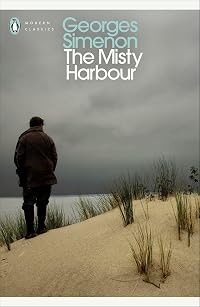
This is a new translation of Georges Simenon's gripping tale of lost identity. This is the book sixteen in the new Penguin Maigret series. A man picked up for wandering in obvious distress among the cars and buses on the Grands Boulevards. Questioned in French, he remains mute...A madman? In Maigret's office, he is searched. His suit is new, his underwear is new, his shoes are new. All identifying labels have been removed. No identification papers. No wallet. Five crisp thousand-franc bills show more have been slipped into one of his pockets. A distressed man is found wandering the streets of Paris, with no memory of who he is or how he got there. The answers lead Maigret to a small harbour town, whose quiet citizens conceal a poisonous malice. Penguin is publishing the entire series of Maigret novels in new translations. This novel has been published in a previous translation as Death of a Harbour Master. "Compelling, remorseless, brilliant." (John Gray). "One of the greatest writers of the twentieth century...Simenon was unequalled at making us look inside, though the ability was masked by his brilliance at absorbing us obsessively in his stories." (Guardian). "A supreme writer...unforgettable vividness. " (Independent). Georges Simenon was born in Liege, Belgium, in 1903. Best known in Britain as the author of the Maigret books, his prolific output of over 400 novels and short stories have made him a household name in continental Europe. He died in 1989 in Lausanne, Switzerland, where he had lived for the latter part of his life. show lessTags
Recommendations















































Member Reviews
A befuddled man — one who seemingly can’t speak or understand speech (seven or eight spoken languages plus sign language are tried) — turns up in a fashionable section of Paris at the end of October. His clothes are new (and German), but all identifying labels have been cut off. No wallet, no identity papers, but with 5,000 francs in his pocket. Odd, no?
Five days later, a young woman identifies him as Captain Yves Joris, saying she is his maid/housekeeper. After retiring from the merchant navy after 30 years, Joris became the harbormaster at Ouistreham, a small port between Trouville and Cherbourg in Lower Normandy. She claims her employer disappeared on Sept. 16. So where has Joris been for six weeks? And how did a man with a show more two-month-old bullet wound to the skull, one who neither speaks nor comprehends, get by for those six weeks? And how did Joris, who only wore a uniform, end up in clothes from Hamburg? Further, Joris’ wound was treated by expert surgery. Who tried to kill him? And who succeeded in saving his life? When the mysterious Joris dies a day after being returned to Ouistreham, Maigret faces one of his most confounding cases.
Most Maigret novels seduce their readers, and The Misty Harbour proves more intriguing than most. I’ve been on a bit of a Georges Simenon reading spree, and I believe this might be the best of the books thus far. show less
Five days later, a young woman identifies him as Captain Yves Joris, saying she is his maid/housekeeper. After retiring from the merchant navy after 30 years, Joris became the harbormaster at Ouistreham, a small port between Trouville and Cherbourg in Lower Normandy. She claims her employer disappeared on Sept. 16. So where has Joris been for six weeks? And how did a man with a show more two-month-old bullet wound to the skull, one who neither speaks nor comprehends, get by for those six weeks? And how did Joris, who only wore a uniform, end up in clothes from Hamburg? Further, Joris’ wound was treated by expert surgery. Who tried to kill him? And who succeeded in saving his life? When the mysterious Joris dies a day after being returned to Ouistreham, Maigret faces one of his most confounding cases.
Most Maigret novels seduce their readers, and The Misty Harbour proves more intriguing than most. I’ve been on a bit of a Georges Simenon reading spree, and I believe this might be the best of the books thus far. show less
A pretty great Maigret. I loved the first 20 pages - as M. wanders around a pitch foggy dock almost being knocked into a lock and other barriers all the while having lots of people around him that he didn't even know were there! great, great atmosphere. Then the bar and the locals and the seaman who will never trust or talk to a landlubber. Features actual violence (rare) and a long slow waiting game with the mayor his wife a brute of a seaman and his sweet sister. To my tastes the long waiting game maybe went on a bit too long, but that is nit picking!
Simenon finds (yet) another pretext to get his Parisian detective involved with ships and sailors - Captain Joris, harbourmaster in the Normandy village of Ouistreham (which would go on to play an important role in the Normandy landings of June 1944, but at that time was just a quiet little port and beach resort well known to Simenon) is found wandering about in Paris, unable to talk and apparently having lost his memory as a result of a gunshot wound to the head. Maigret escorts him back to Ouistreham to investigate.
The plot is a little bit improbable, as is Maigret's conduct during the investigation (but it's fun to discover that Maigret studied in Nantes and speaks a bit of Breton - something Simenon seems to forget in later books). show more But what makes this book worth reading is the detailed description of Ouistreham in the early 30s, and especially of the daily routine of the port and the people who work there. I was especially interested by the vignettes of the working of a small sailing cargo ship in the days when such ships normally didn't have auxiliary engines. Simenon is clearly observing all this from the point of view of someone who has spent plenty of time with sailors and port workers and understands what they do and why. Good stuff. show less
The plot is a little bit improbable, as is Maigret's conduct during the investigation (but it's fun to discover that Maigret studied in Nantes and speaks a bit of Breton - something Simenon seems to forget in later books). show more But what makes this book worth reading is the detailed description of Ouistreham in the early 30s, and especially of the daily routine of the port and the people who work there. I was especially interested by the vignettes of the working of a small sailing cargo ship in the days when such ships normally didn't have auxiliary engines. Simenon is clearly observing all this from the point of view of someone who has spent plenty of time with sailors and port workers and understands what they do and why. Good stuff. show less
Charlotte has been rereading through this series featuring Inspector Maigret, and tempting us all with these police procedurals. Written in French, these books have been newly translated and are being released again by Penguin. This particular one was originally written in 1932, and it is book #15 in the series. I know, I KNOW. I didn't start with the first book in the series - I wanted to get a good feel for it, so I asked Charlotte for a particular favorite, and she named this one. I can see why. Maigret is out of his element here as he has accompanied a victim back home. Here is the Amazon blurb:
"A man picked up for wandering in obvious distress among the cars and buses on the Grands Boulevards. Questioned in French, he remains mute show more . . . A madman? In Maigret's office, he is searched. His suit is new, his underwear is new, his shoes are new. All identifying labels have been removed. No identification papers. No wallet. Five crisp thousand-franc bills have been slipped into one of his pockets."
He is eventually identified by his housekeeper, and Maigret travels with the both of them back home to see if he can get to the bottom of things. What happened and why? The man has obviously been shot in the head and then cared for - he seems none the worse for wear except that he doesn't speak and seems to have no memory of who he is. Maigret no sooner gets the man settled into his home again, when he is murdered. As Maigret works to track down the killer, he must adapt himself because he is no longer in Paris but in Normandy in a small harbor town that seems to be filled with secrets - the weather isn't the only thing that is foggy here.
This was delightful from beginning to end, with non-stop action and lovely pacing. Maigret does not tell us what he is going to do, and so we are left to follow and try to discern his reasoning. A quick but gripping read - I read it in one sitting. Thanks, Charlotte, for a delightful diversion! show less
"A man picked up for wandering in obvious distress among the cars and buses on the Grands Boulevards. Questioned in French, he remains mute show more . . . A madman? In Maigret's office, he is searched. His suit is new, his underwear is new, his shoes are new. All identifying labels have been removed. No identification papers. No wallet. Five crisp thousand-franc bills have been slipped into one of his pockets."
He is eventually identified by his housekeeper, and Maigret travels with the both of them back home to see if he can get to the bottom of things. What happened and why? The man has obviously been shot in the head and then cared for - he seems none the worse for wear except that he doesn't speak and seems to have no memory of who he is. Maigret no sooner gets the man settled into his home again, when he is murdered. As Maigret works to track down the killer, he must adapt himself because he is no longer in Paris but in Normandy in a small harbor town that seems to be filled with secrets - the weather isn't the only thing that is foggy here.
This was delightful from beginning to end, with non-stop action and lovely pacing. Maigret does not tell us what he is going to do, and so we are left to follow and try to discern his reasoning. A quick but gripping read - I read it in one sitting. Thanks, Charlotte, for a delightful diversion! show less
The mystery in this story isn't so hot; the ending feels a bit rushed and forced, and the solution isn't truly satisfactory. What IS satisfactory is the evocative setting of the book, on the coast of Normandy. One gets a definite "feel" for the small fishing village in which Maigret investigates why a particular man was first wounded in the head, and then killed with poison. This was one of the relatively early (1932) Maigret novels, so one could be a bit forgiving of the roughness of the actual structure of the mystery.
Very twisty and a fun listen. One really feels the misty sea air listening to this one. Georges Simenon fully captures the place and the characters. We flew through it.
A man is found in Paris with a head wound, apparently suffering from amnesia and unable to speak. His maid eventually comes in from a small harbour town and identifies him as Capitaine Joris, her town's harbour-master, and Maigret follows Julie and her employer back to the port town of Ouistreham in Normandy to elucidate the mystery. But to add to the confusion, Capitaine Joris dies on the night of his return home from strychnine poisoning and Julie is besides herself with grief. The town is foggy throughout Maigret's stay, which makes discerning passers-by near impossible and adding to the confusion, none of the town's inhabitants want to speak to the inspector, though it becomes evident that everyone has something to hide, including show more Julie's big brutish brother, an ex-convict, who works on a ship and is evidently involved in some scheme. A compelling mystery, and as always, Simenon is a master of ambiance. show less
Members
- Recently Added By
Lists

Books Read in 2022
5,166 works; 114 members

Reading LIst
648 works; 1 member
Author Information

1,321+ Works 62,806 Members
The prolific Belgian-born writer Georges Simenon produced hundreds of fictional works under his own name and 17 pseudonyms, in addition to more than 70 books about Inspector Maigret, long "the favorite sleuth of highbrow detective-story readers" (SR). More than 50 "Simenons" have been made into films. In addition to his mystery stories, he wrote show more what he called "hard" books, the serious psychological novels numbering well over 100. The autobiographical Pedigree, set in his native town of Liege, is perhaps his finest work. The publication of Simenon's intimate memoirs also attracted considerable attention. Simenon himself once said that he would never write a "great novel." Yet Gide called him "a great novelist, perhaps the greatest and truest novelist we have in French literature today," and Thornton Wilder (see Vol. 1) found that Simenon's narrative gift extends "to the tips of his fingers." The following are some of Simenon's novels, exclusive of the Maigret detective stories, that are in print. (Bowker Author Biography) Georges Simenon was born on February 13, 1903 in Liege, Belgium. He wrote more than 200 fiction works under 16 different pseudonyms. His first book, The Case of Peter the Lent led to 80 more of the like including the main character, Inspector Maigret. He published over 400 books that were translated into 50 different languages and sold by the millions. He also wrote psychological novels, including The Man Who Watched the Train Go By. He died on September 4, 1989 in Lausanne. (Bowker Author Biography) show less
Some Editions
Series

Belongs to Publisher Series
Work Relationships
Is contained in
Common Knowledge
- Canonical title
- The Misty Harbour
- Original title
- Le port des brumes
- Alternate titles
- Maigret and the Death of a Harbor-Master; Death Of A Harbour Master
- Original publication date
- 1932 (original French) (original French); 1941 (English: Gilbert) (English: Gilbert); 2015 (English: Coverdale) (English: Coverdale)
- People/Characters
- Jules Maigret; Yves-Antoine Joris; Julie Legrand; Louis Legrand; Ernest Grandmaison; Hélène Grandmaison (show all 13); Yves Lannec; Jean Martineau; Captain Delcourt; André Lucas; Célestin; Raymond Grandmaison; Bernardin
- Important places
- Ouistreham, Calvados, Normandy, France; Caen, Calvados, Normandy, France
- Related movies*
- The Lost Sailor (1961 | IMDb); Le port des brumes (1972 | IMDb); Maigret et le port des brumes (1996 | IMDb)
- First words
- Maigret surveyed his fellow passengers with wide-open, sullen eyes and, without meaning to, assumed that self-important look people put on when they have spent mindless hours in the compartment of a train.
Quand on avait quitté Paris, vers trois heures, la foule s'agitait encore dans un frileux soleil d'arrièrre-saison. - Last words
- (Click to show. Warning: May contain spoilers.)But some poor devil always has to be the scapegoat!
(Click to show. Warning: May contain spoilers.)― A bord du Saint-Michel... Avec la lampe à cardan, la table entaillée, les gros verres et la bouteille de schiedam... Et le poêle qui ronfle... Donne-moi du feu, tiens !...» - Publisher's editor*
- Déva, Mária
- Original language
- French
- Disambiguation notice
- In the French original, Le port des brumes (1932).
Variously published in English as:
(i) "Death of a Harbour Master," (tr. Stuart Gilbert) in Maigret and M. Labbé (1941);
(ii)
(iii) The Misty Harbour (tr. Linda Coverdale) (2015).
*Some information comes from Common Knowledge in other languages. Click "Edit" for more information.
Classifications
Statistics
- Members
- 532
- Popularity
- 55,901
- Reviews
- 23
- Rating
- (3.60)
- Languages
- 12 — Catalan, Danish, Dutch, English, Finnish, French, German, Hungarian, Italian, Norwegian (Bokmål), Portuguese, Spanish
- Media
- Paper, Audiobook, Ebook
- ISBNs
- 33
- ASINs
- 17