On This Page
Description
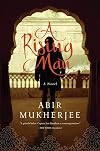
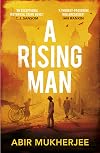
In the days of the Raj, a newly arrived Scotland Yard detective is confronted with the murder of a British official-in his mouth a note warning the British to leave India, or Calcutta, 1919. Captain Sam Wyndham, former Scotland Yard detective, is a new arrival to Calcutta. Desperately seeking a fresh start after his experiences during the Great War, Wyndham has been recruited to head up a new post in the police force. He is immediately overwhelmed by the heady vibrancy of the tropical city, show more but with barely a moment to acclimatize or to deal with the ghosts that still haunt him, Wyndham is caught up in a murder investigation that threatens to destabilize a city already teetering on the brink of political insurgency. The body of a senior official has been found in a filthy sewer, and a note left in his mouth warns the British to quit India, or else. Under tremendous pressure to solve the case before it erupts into increased violence on the streets, Wyndham and his two new colleagues-arrogant Inspector Digby and Sergeant Banerjee, one of the few Indians to be recruited into the new CID-embark on an investigation that will take them from the opulent mansions of wealthy British traders to the seedy opium dens of the city. Masterfully evincing the sights, sounds, and smells of colonial Calcutta, A Rising Man is the start of an enticing new historical crime series. show lessTags
Recommendations

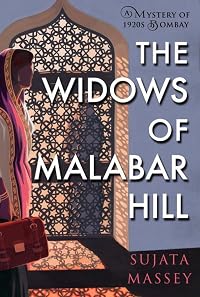
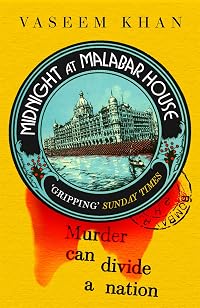

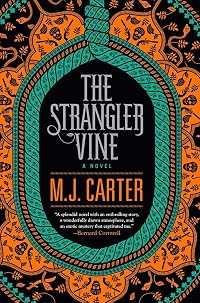
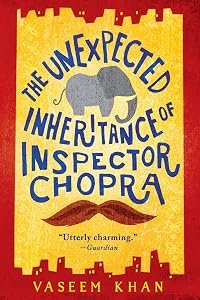











Member Recommendations
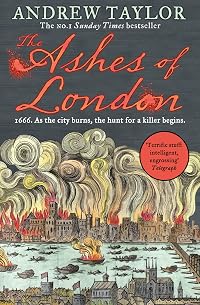
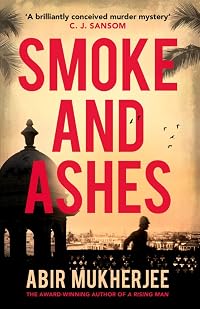
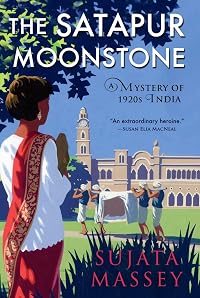
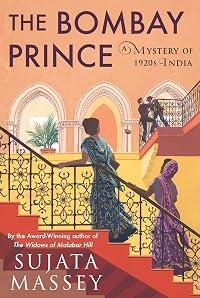
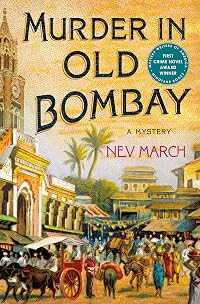
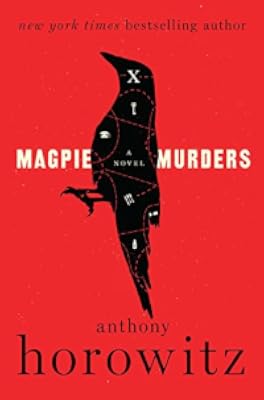
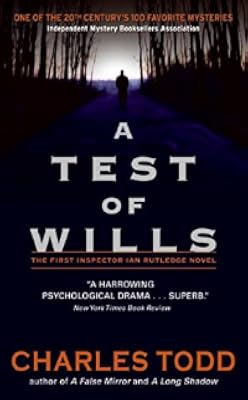
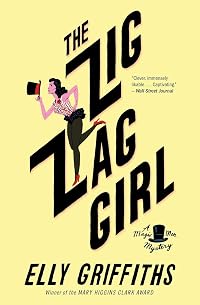
karatelpek Similar time period. Not as good as A Rising Man though
Member Reviews
I really like books that explore a historical time period in an exotic place. This first book in a series set in India during the time period where the British raj is starting to worry about their ability to continue to hold power is an excellent example.
Captain Sam Wyndham was in Scotland Yard before World War I started. Although he wasn't sure he believed in war, he signed up and spent several years in the trenches. Just before he went off to do his duty he married the lovely Sarah, a woman he met on the bus he regularly took to work. He spent the last part of the war in military intelligence but he still managed to get injured. When he was finally well enough he learned that Sarah had died of influenza. He also had become addicted show more to morphine. So, when his former commanding officer offered him a position with the police force in Calcutta, there was nothing preventing him from going. His first case involved the murder of a white gentleman just outside a brothel in an unsavoury part of time. Judging by the note stuffed in his mouth, he was the victim of terrorists. Hardly has Wyndham and his trusty sidekick, Never-Surrender Banerjee, started investigating that crime than they are called to the scene of another murder on a train north of Calcutta. Could the same band of terrorists be responsible for both crimes? Wyndham thinks so but he wants to be able to arrest the perpetrators before the military get their hands on them because there might not be anyone to question if they get there first. Wyndham is attracted to the first victim's Anglo-Indian secretary and manages to have a few dates with her but he wonders if she might be hiding evidence or spilling the beans to the press. Eventually Wyndham and Banerjee solve the cases but not in the way anyone expects.
There are lots of details about life in Calcutta which made me glad I was reading about them and not living them. I think I'll have to find more of this series. (Just what I need, another series to suck me in!) show less
Captain Sam Wyndham was in Scotland Yard before World War I started. Although he wasn't sure he believed in war, he signed up and spent several years in the trenches. Just before he went off to do his duty he married the lovely Sarah, a woman he met on the bus he regularly took to work. He spent the last part of the war in military intelligence but he still managed to get injured. When he was finally well enough he learned that Sarah had died of influenza. He also had become addicted show more to morphine. So, when his former commanding officer offered him a position with the police force in Calcutta, there was nothing preventing him from going. His first case involved the murder of a white gentleman just outside a brothel in an unsavoury part of time. Judging by the note stuffed in his mouth, he was the victim of terrorists. Hardly has Wyndham and his trusty sidekick, Never-Surrender Banerjee, started investigating that crime than they are called to the scene of another murder on a train north of Calcutta. Could the same band of terrorists be responsible for both crimes? Wyndham thinks so but he wants to be able to arrest the perpetrators before the military get their hands on them because there might not be anyone to question if they get there first. Wyndham is attracted to the first victim's Anglo-Indian secretary and manages to have a few dates with her but he wonders if she might be hiding evidence or spilling the beans to the press. Eventually Wyndham and Banerjee solve the cases but not in the way anyone expects.
There are lots of details about life in Calcutta which made me glad I was reading about them and not living them. I think I'll have to find more of this series. (Just what I need, another series to suck me in!) show less
Reading this felt like WORK. It took me forever because I'd put it down after a few pages and go off to find something, anything else to do. Clean the grout in my shower? Well, if it's that or read this, grout suddenly sounds fascinating!
The plot is the exact opposite of gripping.Sam goes all in on an obvious red herring early in the book, so I spent the first 50% mentally begging him to do his job and actually interview people or seek out information or do anything at ALL besides what he's doing, which is chasing the wrong suspect with absolute tunnel vision. After he figures out -- belatedly and painfully -- that he's doing that, he still does not actually detect anything. He just kind of wanders around the city aimlessly. He also show more spends 85% of the book fully unaware of the two people who are obviously working against him and giving information on him, even though they absolutely have to be and that should be obvious, so I spent most of the second half shrieking, "STOP GIVING INFORMATION TO OBVIOUS SPIES." The net effect of all of that is to make Sam look both incompetent and frankly foolish.
Even beyond that, Sam's a terrible main character. There's no there there. He doesn't really have a personality or interests beyond opiates and being wrong. I think the author may have been trying for the classic noir archetype of "the man with nothing to lose," but honestly Sam is too unfocused to fit that.
Also, for me, it was incredibly difficult to read Sam calling Banerjee "boy" all the time. I realize this may be a cultural issue; I don't know what connotations "boy" has to Indian or British people. But as an American, every time a white man called a man of color "boy," I flinched bodily away from the page. Banerjee is the only character I actually liked, and the only one who appeared to have any functioning neurons. I hated reading about how he was treated. I hate that the narrative calls him Surrender-not, a name an asshole chose to call him, when his first name is actually Surendranath, which is just as easy to pronounce. (Of course Sam calls him Surrender-not. When he's not calling him boy. UGH.)
And this last complaint is not the author's fault, but could someone have maybe proofread this ebook? The copy I got was riddled with OCR errors, which made reading it even more tiresome.
There was just nothing to redeem this book or hold my interest in it. I had such high hopes for it, but I will not be continuing the series. show less
The plot is the exact opposite of gripping.
Even beyond that, Sam's a terrible main character. There's no there there. He doesn't really have a personality or interests beyond opiates and being wrong. I think the author may have been trying for the classic noir archetype of "the man with nothing to lose," but honestly Sam is too unfocused to fit that.
Also, for me, it was incredibly difficult to read Sam calling Banerjee "boy" all the time. I realize this may be a cultural issue; I don't know what connotations "boy" has to Indian or British people. But as an American, every time a white man called a man of color "boy," I flinched bodily away from the page. Banerjee is the only character I actually liked, and the only one who appeared to have any functioning neurons. I hated reading about how he was treated. I hate that the narrative calls him Surrender-not, a name an asshole chose to call him, when his first name is actually Surendranath, which is just as easy to pronounce. (Of course Sam calls him Surrender-not. When he's not calling him boy. UGH.)
And this last complaint is not the author's fault, but could someone have maybe proofread this ebook? The copy I got was riddled with OCR errors, which made reading it even more tiresome.
There was just nothing to redeem this book or hold my interest in it. I had such high hopes for it, but I will not be continuing the series. show less
I happen to love historical mysteries, and this one set in 1919 Calcutta, India is an excellent addition to this category. Captain Sam Wyndham is the new police investigator, most recently returned from the Great War and then serving in Scotland Yard. He is joined by a local Sgt. Banerjee to investigate the murder of a British official in a Calcutta slum. This is the first of a series featuring these two men, an interesting pairing with complementary strengths and abilities to insert themselves into a wide range of places and people to further their search for the killer. Equally interesting is the backdrop of colonialism, with a rising Indian independence movement occurring as this story unfolds. Excellent sense of place -- the sights, show more sounds and smells came to life. Wyndham and Banerjee are a welcome pair to crime fiction, and this story is a solid beginning to their partnership. show less
The British Raj (literally, "rule" in Sanskrit and Hindustani) was the name for colonial domination of the Indian subcontinent by the British Crown from 1858 to 1947. The path for the Raj was paved by the East India Company (EIC), which was originally formed to trade in the Indian Ocean region, but ended up seizing political control of large parts of the Indian subcontinent.
By 1803, at the height of its rule in India, the EIC had a private army of about 260,000—twice the size of the British Army, ruling large areas of India with the “help” of its private armies. Following the Indian Rebellion of 1857, as well as exposure [read: bad international press] of the EIC’s ignominious mistreatment of Indians who were in its power; its show more use of slave labor; the company's promotion of the opium trade to enrich themselves at the cost of the lives of so many non-whites; and its actions leading to the starvation deaths of millions of people, the Government of India Act 1858 led to the British Crown's assuming direct control of the Indian subcontinent. The official government machinery of British India, now called the British Raj, assumed the EIC's governmental functions and absorbed its navy and its armies.
The plot of this historical fiction crime novel set in India in 1919 exposes the psychological scaffolding that supported the Raj. As one character explains to the protagonist:
“For such a small number [150,000 British] to rule over so many [300 million Indians], the rulers need to project an aura of superiority over the ruled. Not just physical or military superiority mind, but also moral superiority. More importantly, their subjects must in turn believe themselves to be inferior; that they need to be ruled for their own benefit.”
The Indian psyche had been groomed for the Raj not only by the EIC; India has a rigid caste system which is among the world's oldest form of surviving social stratification, as Isabel Wilkerson explains in her 2020 book, Caste: The Origins of Our Discontents. Wilkerson defines caste in a way that will certainly resonate with readers of this book about the Raj:
“an artificial construction, a fixed and embedded ranking of human value that sets the presumed supremacy of one group against the presumed inferiority of other groups on the basis of ancestry and often immutable traits, traits that would be neutral in the abstract but are ascribed life-and-death meaning in a hierarchy favoriting the dominant caste whose forebears designed it.”
There are many deleterious repercussions of a caste system, the one most salient to this novel being that the ruling class comes to believe in its own superiority, leading to even more dehumanization of those over whom it rules. Moreover, as a character explains, “anything that threatens that fiction is a threat to the whole edifice.”
Thus, when a murder is committed and the victim is a “sahib,” a term referring to any white European on the Indian subcontinent, and worse yet, the body is found in “black town” (the name for native Indian areas), the matter is extremely sensitive. So much so, that Detective Inspector Captain Samuel Wyndham, newly arrived in Calcutta, doesn’t quite understand why he has been given the case.
Sam has two subordinates assigned to help him: Detective Sub-inspector John Digby, an obnoxious white racist who resents not being in charge himself, and Sergeant Surendranath Banerjee, dubbed “Surrender-not” by Digby who couldn’t be bothered to learn how to pronounce Banerjee’s first name. Sam, who thinks he is better than the coarse Digby, nevertheless is clueless about the racism inherent in deliberately mispronouncing someone's name; the messages it sends; and the toll it takes on members of discriminated groups.
The circumstances of the murder suggested an assassination of a senior British official by native terrorists. The detectives had to tread carefully. Just the previous month, the Rowlatt Acts had been passed in response to increased unrest by Indians. The Acts allowed the British to lock up anyone suspected of terrorism or revolutionary activities. They could hold prisoners for up to two years without trial.
As Sam doggedly investigated in spite of having his life endangered, he came to see that the murder was very much related to controversies over race, class, and the question of independence, as well as the “artificial construction of presumed supremacy.”
Evaluation: This book, the first in a series of crime novels featuring Wyndam and Banerjee, won a number of awards, as have the sequels. I appreciated the way the author deftly wove insights about the Raj Era in India into the plot. But I detested most of the characters - certainly all of the British characters, including the protagonist Sam Wyndham. Sam could not shed his own prejudices, even while (sometimes) acknowledging them. Although Sam was in charge of both Digby and Banerjee, he treated the repugnant (but white) Digby with respect, while he treated "Surrender-not" as an inferior. About that disparity, he seemed to have no self-awareness. I find it hard to enjoy spending the time required to read a book when I don’t like most of the people in it. show less
By 1803, at the height of its rule in India, the EIC had a private army of about 260,000—twice the size of the British Army, ruling large areas of India with the “help” of its private armies. Following the Indian Rebellion of 1857, as well as exposure [read: bad international press] of the EIC’s ignominious mistreatment of Indians who were in its power; its show more use of slave labor; the company's promotion of the opium trade to enrich themselves at the cost of the lives of so many non-whites; and its actions leading to the starvation deaths of millions of people, the Government of India Act 1858 led to the British Crown's assuming direct control of the Indian subcontinent. The official government machinery of British India, now called the British Raj, assumed the EIC's governmental functions and absorbed its navy and its armies.
The plot of this historical fiction crime novel set in India in 1919 exposes the psychological scaffolding that supported the Raj. As one character explains to the protagonist:
“For such a small number [150,000 British] to rule over so many [300 million Indians], the rulers need to project an aura of superiority over the ruled. Not just physical or military superiority mind, but also moral superiority. More importantly, their subjects must in turn believe themselves to be inferior; that they need to be ruled for their own benefit.”
The Indian psyche had been groomed for the Raj not only by the EIC; India has a rigid caste system which is among the world's oldest form of surviving social stratification, as Isabel Wilkerson explains in her 2020 book, Caste: The Origins of Our Discontents. Wilkerson defines caste in a way that will certainly resonate with readers of this book about the Raj:
“an artificial construction, a fixed and embedded ranking of human value that sets the presumed supremacy of one group against the presumed inferiority of other groups on the basis of ancestry and often immutable traits, traits that would be neutral in the abstract but are ascribed life-and-death meaning in a hierarchy favoriting the dominant caste whose forebears designed it.”
There are many deleterious repercussions of a caste system, the one most salient to this novel being that the ruling class comes to believe in its own superiority, leading to even more dehumanization of those over whom it rules. Moreover, as a character explains, “anything that threatens that fiction is a threat to the whole edifice.”
Thus, when a murder is committed and the victim is a “sahib,” a term referring to any white European on the Indian subcontinent, and worse yet, the body is found in “black town” (the name for native Indian areas), the matter is extremely sensitive. So much so, that Detective Inspector Captain Samuel Wyndham, newly arrived in Calcutta, doesn’t quite understand why he has been given the case.
Sam has two subordinates assigned to help him: Detective Sub-inspector John Digby, an obnoxious white racist who resents not being in charge himself, and Sergeant Surendranath Banerjee, dubbed “Surrender-not” by Digby who couldn’t be bothered to learn how to pronounce Banerjee’s first name. Sam, who thinks he is better than the coarse Digby, nevertheless is clueless about the racism inherent in deliberately mispronouncing someone's name; the messages it sends; and the toll it takes on members of discriminated groups.
The circumstances of the murder suggested an assassination of a senior British official by native terrorists. The detectives had to tread carefully. Just the previous month, the Rowlatt Acts had been passed in response to increased unrest by Indians. The Acts allowed the British to lock up anyone suspected of terrorism or revolutionary activities. They could hold prisoners for up to two years without trial.
As Sam doggedly investigated in spite of having his life endangered, he came to see that the murder was very much related to controversies over race, class, and the question of independence, as well as the “artificial construction of presumed supremacy.”
Evaluation: This book, the first in a series of crime novels featuring Wyndam and Banerjee, won a number of awards, as have the sequels. I appreciated the way the author deftly wove insights about the Raj Era in India into the plot. But I detested most of the characters - certainly all of the British characters, including the protagonist Sam Wyndham. Sam could not shed his own prejudices, even while (sometimes) acknowledging them. Although Sam was in charge of both Digby and Banerjee, he treated the repugnant (but white) Digby with respect, while he treated "Surrender-not" as an inferior. About that disparity, he seemed to have no self-awareness. I find it hard to enjoy spending the time required to read a book when I don’t like most of the people in it. show less
I inadvertantly ordered the ISIS large print editon of this book from the library, which was odd. They've been around for yonks, but I've always found their packaging and their type offputting. Books, I once bleieved, should be full of small words all close together. Oh brothers and sisters and non-binary brethren, on the day I sat down to read this, my eyeballs jumped out of their sockets and ran around singing aleluias. So easy to read, even without full direct light. They say you should never, under any circumstances, hand it to ISIS, but they are wrong.
It helped that the book was inherently readable, a murder mystery set in post WW1 India, the height of the Raj, the decline already underway with revolt and unrest bubbling under the show more surface. A detective newly arrived in Calcutta from Scotland Yard brings a fresh perspective, if one jaded by the trenches and personal tragedy, as he tries to piece together the truth behind the murder of a white civil servant, a fixer for the rich and powerful. Aided and abetted by one native and one white officer, he finds himself chasing revolutionaries and prostitutes as well as some of the richest and most powerful men in the city.
Such a solid book. Solidity is underrated in books, but this has heft. Solid writing, solid charachters, solid mystery, solid setting, solid ironies deriving from a modern postcolonial view of the Raj without sacrificing a sense of the views and outlook of the time. An excellent debut and and the first on a very attractive-looking series. show less
It helped that the book was inherently readable, a murder mystery set in post WW1 India, the height of the Raj, the decline already underway with revolt and unrest bubbling under the show more surface. A detective newly arrived in Calcutta from Scotland Yard brings a fresh perspective, if one jaded by the trenches and personal tragedy, as he tries to piece together the truth behind the murder of a white civil servant, a fixer for the rich and powerful. Aided and abetted by one native and one white officer, he finds himself chasing revolutionaries and prostitutes as well as some of the richest and most powerful men in the city.
Such a solid book. Solidity is underrated in books, but this has heft. Solid writing, solid charachters, solid mystery, solid setting, solid ironies deriving from a modern postcolonial view of the Raj without sacrificing a sense of the views and outlook of the time. An excellent debut and and the first on a very attractive-looking series. show less
Set in 1919, Captain Sam Wyndham, a veteran of ww1 has been hired by the .... to be the DCI (in essence) in Calcutta (now Kolkata). No sooner has he arrived than he is faced with an ugly murder that refuses to be solved simply and seems to have tentacles in all directions, involving the high and mighty. Not a great start for a new man in town--risking offending right and left. As ever the strength in detective novels are the relationships between the main character, Sergeant 'Surrender-Not' Bannerjee, Sam's partner and an Indian-born Englishman, who both resents not having been given Sam's post and also exhibits all the prejudices of the time--and is yet an efficient officer. A good start. Sam, having faced death's levelling effect so show more intimately, is not inclined to such nonsense, nor is his immediate boss. In their ambivalence as to their role and presence in India you can sense the first rumblings of 'the end' and independence from the British side, a crumbling of confidence in innate white superiority. (We could use a bit more of that here in the US these days.) The setting is what raises the novel into something special, Mukherjee knows the time and the place. The novel resonated all the more from my having read the book on the opium trade so recently. I'm already into book 2.
***3/4 show less
***3/4 show less
Huzzah! An enticing historical crime novel!
The understated discourse by Captain Sam Wyndham is up there with the best of them.
In the opening page Wyndham's statement sets the tone, "When you think you’ve seen it all, it’s nice to find that a killer can still surprise you." A British official has been murdered, a threatening note stuffed in his mouth addressed to the overlords, the crown raj.
It's 1919, post the war. Captain Wyndham, formerly of Scotland Yard has taken a posting in Calcutta.
He displays a certain jaundiced attitude covering an inner Boy Scout hopefulness.
Up against corruption, home grown terrorists (fighters for home rule and independence from Britain), Wyndham's introductory case is that of this official murdered in show more an alley in the more sordid parts of the city. In a place he should not have been! And it happens outside a brothel!
The trail will take Wyndham from the heights of government, to the most powerful businessmen in the country,and to H Division's Secret Service headquarters, into to the very bowels of the bazaar and the squalor therein.
Accompanied by his new sidekicks, the quite unpleasant Inspector Digby and wonderfully understated Sergeant Surrender-not Banerjee. The conversations between these three are truly the stuff of the past. Delivered in such an understated fashion, I just laughed at so many places, when my jaw wasn't dropping.
I am so hooked!
A NetGalley ARC show less
The understated discourse by Captain Sam Wyndham is up there with the best of them.
In the opening page Wyndham's statement sets the tone, "When you think you’ve seen it all, it’s nice to find that a killer can still surprise you." A British official has been murdered, a threatening note stuffed in his mouth addressed to the overlords, the crown raj.
It's 1919, post the war. Captain Wyndham, formerly of Scotland Yard has taken a posting in Calcutta.
He displays a certain jaundiced attitude covering an inner Boy Scout hopefulness.
Up against corruption, home grown terrorists (fighters for home rule and independence from Britain), Wyndham's introductory case is that of this official murdered in show more an alley in the more sordid parts of the city. In a place he should not have been! And it happens outside a brothel!
The trail will take Wyndham from the heights of government, to the most powerful businessmen in the country,and to H Division's Secret Service headquarters, into to the very bowels of the bazaar and the squalor therein.
Accompanied by his new sidekicks, the quite unpleasant Inspector Digby and wonderfully understated Sergeant Surrender-not Banerjee. The conversations between these three are truly the stuff of the past. Delivered in such an understated fashion, I just laughed at so many places, when my jaw wasn't dropping.
I am so hooked!
A NetGalley ARC show less
Members
- Recently Added By
Lists

Crime Writers' Association Daggers
76 works; 4 members

BBC Radio 4 Bookclub
340 works; 13 members

Books Read in 2021
5,361 works; 114 members
Author Information

9+ Works 2,111 Members
Some Editions
Awards and Honors
Awards
Series

Belongs to Publisher Series
Work Relationships
Is contained in
Common Knowledge
- Canonical title
- A Rising Man
- Original title
- A Rising Man
- Original publication date
- 2016
- People/Characters
- Sam Wyndham; Surendranath Banerjee, "Sergeant Surrender-not Banerjee"; John Digby; Alexander MacAuley; Mrs. Bose; Lord Charles Taggert (show all 8); Annie Grant; Daniels
- Important places
- Calcutta, India
- Important events
- Amritsar or Jallianwala Bagh massacre (4-13-1919)
- Epigraph
- Calcutta seems full of 'rising men.'
Rudyard Kipling,
'City of Dreadful Night' - Dedication
- In loving memory of my father,
Satyendra Mohan Mukheerjee - First words
- At least he was well dressed.
- Last words
- (Click to show. Warning: May contain spoilers.)‘No, Sam,’ she said, ‘I don’t think so.’
- Publisher's editor
- Hennessey, Alison
- Original language
- English
Classifications
Statistics
- Members
- 814
- Popularity
- 33,937
- Reviews
- 49
- Rating
- (3.76)
- Languages
- 5 — English, French, German, Italian, Spanish
- Media
- Paper, Audiobook, Ebook
- ISBNs
- 31
- ASINs
- 13