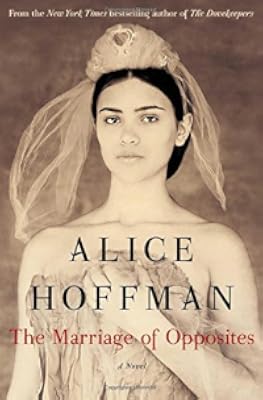
The Marriage of Opposites
by Alice Hoffman
On This Page
Description
"From the New York Times bestselling author of The Dovekeepers and The Museum of Extraordinary Things: a forbidden love story set on the tropical island of St. Thomas about the extraordinary woman who gave birth to painter Camille Pissarro the Father of Impressionism"--Tags
Recommendations
Member Reviews
The Marriage of Opposites - Hoffman
Audio performance by multiple narrators
4 stars
“Then I understood that when someone begins to tell you her story, you are entwined together. Perhaps even more so if the ending hasn’t been divulged.”
Rachel Monsanto Pomie Petit Pizzarro was mother and step-mother to eleven children, including the well known painter, Camille Pissarro. This book is a richly imagined, fictional autobiography of Rachel Petit Pizzarro. Mostly, it is Rachel’s first person account of her life, although Hoffman switches to a third person perspective in the middle of the book, and in one chapter to the voice of the rebellious, adolescent Camille.
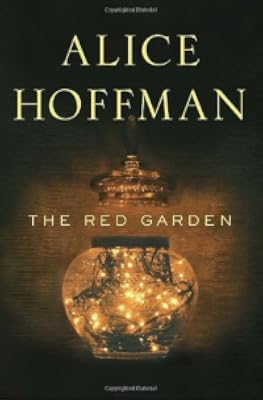
I’d previously read two of Hoffman’s books of linked short stories; show more The Red Garden and Blackbird House. With those books, I was impressed with her ability to create vibrant characters in a limited number of pages. This book impressed me with it’s clarity, despite the intricate family relationships, the generational history, and the societal complexities of religion and race. Although the book follows Rachel from girlhood to old age, I was never felt lost in the details of the back story or the plot. The storytelling is so immediate. I feel like I’ve been to 19th century St. Thomas and eavesdropped on the conversations of these characters.
Camille Pissarro is featured in this book, mostly in respect to his relationship to his mother. It is his mother’s story, and the story of her (fictional) best friend, the ‘mulatto’ Jestine. Together, they give voice to the severe racial and gender discrimination of their age. There’s a great deal of tragedy, suffering ,and sacrifice, with an ending that is a bit too neatly tied up with a pretty bow. Not that I’m complaining. I felt completely satisfied when I closed the book.
I had both text and audio editions of this book. The audio was well done with three performers, but would have been just as good with only one. The text version allowed me to reread favorite descriptions just for the pleasure of the words.
“As I turned the pages, I felt as if there were bees on my fingertips, for I had never felt so alive as when reading.” show less
Audio performance by multiple narrators
4 stars
“Then I understood that when someone begins to tell you her story, you are entwined together. Perhaps even more so if the ending hasn’t been divulged.”
Rachel Monsanto Pomie Petit Pizzarro was mother and step-mother to eleven children, including the well known painter, Camille Pissarro. This book is a richly imagined, fictional autobiography of Rachel Petit Pizzarro. Mostly, it is Rachel’s first person account of her life, although Hoffman switches to a third person perspective in the middle of the book, and in one chapter to the voice of the rebellious, adolescent Camille.
I’d previously read two of Hoffman’s books of linked short stories; show more The Red Garden and Blackbird House. With those books, I was impressed with her ability to create vibrant characters in a limited number of pages. This book impressed me with it’s clarity, despite the intricate family relationships, the generational history, and the societal complexities of religion and race. Although the book follows Rachel from girlhood to old age, I was never felt lost in the details of the back story or the plot. The storytelling is so immediate. I feel like I’ve been to 19th century St. Thomas and eavesdropped on the conversations of these characters.
Camille Pissarro is featured in this book, mostly in respect to his relationship to his mother. It is his mother’s story, and the story of her (fictional) best friend, the ‘mulatto’ Jestine. Together, they give voice to the severe racial and gender discrimination of their age. There’s a great deal of tragedy, suffering ,and sacrifice, with an ending that is a bit too neatly tied up with a pretty bow. Not that I’m complaining. I felt completely satisfied when I closed the book.
I had both text and audio editions of this book. The audio was well done with three performers, but would have been just as good with only one. The text version allowed me to reread favorite descriptions just for the pleasure of the words.
“As I turned the pages, I felt as if there were bees on my fingertips, for I had never felt so alive as when reading.” show less
WARNING MY REVIEW CONTAINS PLENTY OF SPOILERS!
[b:The Marriage of Opposites|24823287|The Marriage of Opposites|Alice Hoffman|https://d.gr-assets.com/books/1423020562s/24823287.jpg|43082583]
op·po·site ˈäpəzət/
noun plural noun: opposites
a person or thing that is totally different from or the reverse of someone or something else.
******************************************************************************
At its very best historical fiction manages not only to sketch an accurate picture of the past, it also provides the reader with a sense of its characters's worldviews, their values and traditions, and the general sensibilities that hopefully reflect the true essence and spirit of the era.
[b:The Marriage of Opposites|24823287|The Marriage of Opposites|Alice Hoffman|https://d.gr-assets.com/books/1423020562s/24823287.jpg|43082583] is based on the true life of Rachel Pomie Petit Pizzarro, who was born in the island of St Thomas in 1795. She is better known as the mother of Camille Pissarro, a renowned painter that would become one of the fathers of the French Impressionism movement.
[a:Alice Hoffman|3502|Alice Hoffman|https://d.gr-assets.com/authors/1390431605p2/3502.jpg] uses four narrative voices in the book, the first few chapters are told from Rachel’s perspectives. Later chapters are told from the perspective of Rachel’s second husband, her son, and her best friend’s daughter.
Rachel's grandparents had long ago fled France who, after living in St. Domingue (what is now Haiti in the island of Hispaniola), ended up moving to St. Thomas, an island that by virtue of an edict proclaimed by the King of Denmark in 1754, allowed Jews to become citizens and to freely practice their religion.
St Thomas and Paris during the 1800's, the geographical settings of this novel, couldn't have been more different. The very natural but rudimentary beauty of the New World is juxtaposed against the more polished, sophisticated culture of the Old.
This is the first one of many "opposite" narratives that are part of the stories told in this vivid, enchanted novel.
Most of the relationships are depicted within a frame of contrasts: people that come from different cultures, religions, races and social statuses. Free man & slaves, mothers & daughters, husband and wives.
Even since the times of colonization, The Caribbean islands have represented the blending of two major cultures, Africa & Europe. Perhaps more than in any other place in the Americas, this region is a product of its history and its geography.
Initially colonized by the Dutch, St Thomas which is now part of the US Virgin Islands, was later on conquered by the Danish.
The island's economy became dependent on sugar plantations which in turn relied on slave labor and the slave trade.
A Colonial Map of Saint Thomas
One of the many topics explored in [b:The Marriage of Opposites|24823287|The Marriage of Opposites|Alice Hoffman|https://d.gr-assets.com/books/1423020562s/24823287.jpg|43082583] is the complicated relationships between the island's European settlers and the descendants of African Slaves.
With its multicultural, multilingual population, Charlotte Amalie, the capital of St. Thomas, must have sounded like a small-scale version of Babel. French was the language spoken by most citizens, but many also spoke English, Spanish and Portuguese.
By 1796, a small Sephardic Jewish community had settled in the island. Fleeing Spain and Portugal from religious persecution, they set roots and prospered in this tiny island nation. They also founded the Beracha Veshalom Vegmiluth Hasidim, a synagogue that is considered to this day, the oldest continuous-use synagogue on American territory.
Freedom, and more specifically freedom of religion, is another complex issue that is examined on this novel.
By the early 19th century, the indigenous people of the Caribbean had long ago been eradicated at the hands of the European conquistadors. But now, in addition to the slaves of African descent that lived in the island, the Jews are another group of people that have come fleeing persecution and who themselves had been slaves earlier in their history.
The Beracha Veshalom Hasadim Synagogue in St Thomas
I thought [b:The Marriage of Opposites|24823287|The Marriage of Opposites|Alice Hoffman|https://d.gr-assets.com/books/1423020562s/24823287.jpg|43082583] was a wonderful work of historic storytelling, but the novel also incorporates captivating fairy tales, fables and allegories.
There are stories of talking parrots, a turtle-girl who is “half human, with a human face and soul", an apple tree that seems to live forever and a synagogue "made of stone, molasses and sand".
(This last one apparently not so much a myth but a real combination of ingredients used by Sephardic Jews to hold bricks together, the sand floors were used to muffle the sound of prayer).
[a:Alice Hoffman|3502|Alice Hoffman|https://d.gr-assets.com/authors/1390431605p2/3502.jpg] crosses the lines between reality and the supernatural so flawlessly that at times is difficult to determine what parts of the story are intended to read as magic and what parts are presented as purely symbolic.
There seems to be a very small amount of known facts about the life of the real Rachel Pomie, but the author uses her fantastic imagination to recreate her as a strong-willed, sharp-tongued, passionate woman who refuses to abide by the racial or gender conventions of her times. I absolutely loved Rachel's deep sense of individuality and her resolution to create her own destiny.
Like many islanders, Rachel both loves her surroundings and feels trapped by them. She buries herself in her father’s library, reading voraciously and memorizing maps of Paris, the city she dreams will one day become her permanent home.
As an only child she finds in Jestine, the daughter of the Pomie's cook, Adelle, a sisterly connection that will last throughout their lifetimes.
Rachel and Jestine spent endless hours leisurely exploring the island and dreaming of one day going to Paris together.
But their plans are quickly derailed after Rachel's father arranges for her to marriage Isaac, a 44 years widow and the father of three small children. The purpose of their union is to help with the family’s struggling business.
Rachel doesn’t love her husband, but she adores his children, and she and Isaac have four more together.
When Isaac suddenly dies, Rachel finds herself without a home or livelihood and with 7 children to provide for and another one in the way.
At a time when women didn't have any rights, not even over their own children, she's not allowed to run the family business even though she is perfectly capable of doing so.
Enter Frederick Pizzarro, Isaac's handsome much younger nephew, who has come to settle the family’s estate.
When the 22 year-old Pizzarro goes to meet his uncle's widow, he's expecting to find an old lady, instead he catches sight of Rachel Pomie, only 30, in her white shift.
He felt he "was seeing a secret, a vision granted only to a few. He could feel his desire as she glances at him … The things he wished to do to this woman, he could not have brought himself to say aloud."
Theirs would most definitely not be a marriage of convenience!
Frederick is a fair-minded, diligent young man who is as smitten by the beauty of the island as he is by Rachel's passion for life and indomitable spirit.
Shortly after the meet, Frederick and Rachel begin a passionate affair that sparks a scandal within their tight-knit Jewish community. Because Rachel is technically Frederick's aunt by marriage, their relationship is consider to be incestuous in nature.
The romance between Frederick and Rachel is one for the ages, but they will paid a high price for it: they are shunned for years by their community, denied the right to get marry and their younger sons are forced to attend a Christian school where they are the only Caucasian and Jewish children.
It's purely through sheer determination that Rachel and Frederick would get married. They'd have to wait for almost a decade before their congregation recognizes the legitimacy of their marriage and the 4 children they had together.
Pissarro- Flowering Plum Tree Eragny (1894)
The novels also follows the parallel story of Jestine who at a very young age experienced her own story of "forbidden love". She falls madly in love with Aaron, the Pomie's spoiled adopted son, but their interracial romance is also frown upon by their society so after it's discovered, Aaron is sent to live in France.
Justine soon learns that she is pregnant. This daughter will be stolen from her when Aaron's French wife learns she's unable to bear children.
The third one of Frederick and Rachel's children was Jacob Abraham Camille Pizzarro.
The second half of the novel, which I found much less interesting, is mostly told from Camille's point of view. It follows him throughout his life as he travels to Europe and South America, returns to St. Thomas only to be extremely miserable there, and ultimately goes back to France where he becomes a prominent figure within the art circles of the times.
Pissarro - Two Women Chatting by the Sea, St. Thomas-(1856)
Pissarro, who lost his first name and changed the spelling of his last name after permanently settling in France, would become friends with Cezanne and have an important influence on the likes of Gauguin, Renoir & Vincent Van Gogh.
Camille Pissarro and his wife, Julie Vellay, 1877, Pontoise, France
Rachel and Camille's relationship is difficult, and one that seemed to fit into the "opposites" narrative of the novel. As a man, Camille is able to achieve many of the goals that Rachel is denied to pursue.
Rachel tries to control his son and at least initially, does her best to discourage his intention to develop his artistic talents.
And just like it happened between Rachel and her own mother, the two of them clashed so frequently not because they are so different but because they are so similar.
As a young girl, Rachel used to collect and create stories about the island and write them down. She would hid these notebooks from her judgmental mother knowing she'd probably disapproved.
Years later, when dealing with her own children, she finds herself adopting a similar attitude, completely oblivious to the irony that now she's the unyielding mother, set on her ways to enforce rules she once considered stifling and arbitrary.
There seems to be a rule that dictates that every new generation is destined to inflict the same restrictions on their children that were once imposed on them.
Quite frequently those children suffer from these often misguided, if well-intentioned, protections. But inevitably, they will turn their backs on their parents’s mandates, build their own destinies, and become their own storytellers.
I learned a lot while reading this novel, starting with getting to know Camille Pissarro, a amazing artist I hadn't heard of before.
The novel's exploration on the topics of religious intolerance, racism and, of course, sexism sounds eerily familiar and as relevant today as ever.
[b:The Marriage of Opposites|24823287|The Marriage of Opposites|Alice Hoffman|https://d.gr-assets.com/books/1423020562s/24823287.jpg|43082583] is a beautifully love story, one that I would highly recommend. show less
[b:The Marriage of Opposites|24823287|The Marriage of Opposites|Alice Hoffman|https://d.gr-assets.com/books/1423020562s/24823287.jpg|43082583]
op·po·site ˈäpəzət/
noun plural noun: opposites
a person or thing that is totally different from or the reverse of someone or something else.
"My father had told me that no matter how comfortable we might feel, we must live like fish, unattached to any land. Wherever there was water, we would survive. Some fish could stay in the mud for months, even years, and when at last there was a high flooding tide, they would swim away, a dark flash, remembered only by their own kind. So perhaps the stories they told of our people were true: no net could holdshow more
us.”Rachel Pomie
******************************************************************************
At its very best historical fiction manages not only to sketch an accurate picture of the past, it also provides the reader with a sense of its characters's worldviews, their values and traditions, and the general sensibilities that hopefully reflect the true essence and spirit of the era.
[b:The Marriage of Opposites|24823287|The Marriage of Opposites|Alice Hoffman|https://d.gr-assets.com/books/1423020562s/24823287.jpg|43082583] is based on the true life of Rachel Pomie Petit Pizzarro, who was born in the island of St Thomas in 1795. She is better known as the mother of Camille Pissarro, a renowned painter that would become one of the fathers of the French Impressionism movement.
[a:Alice Hoffman|3502|Alice Hoffman|https://d.gr-assets.com/authors/1390431605p2/3502.jpg] uses four narrative voices in the book, the first few chapters are told from Rachel’s perspectives. Later chapters are told from the perspective of Rachel’s second husband, her son, and her best friend’s daughter.
Rachel's grandparents had long ago fled France who, after living in St. Domingue (what is now Haiti in the island of Hispaniola), ended up moving to St. Thomas, an island that by virtue of an edict proclaimed by the King of Denmark in 1754, allowed Jews to become citizens and to freely practice their religion.
St Thomas and Paris during the 1800's, the geographical settings of this novel, couldn't have been more different. The very natural but rudimentary beauty of the New World is juxtaposed against the more polished, sophisticated culture of the Old.
This is the first one of many "opposite" narratives that are part of the stories told in this vivid, enchanted novel.
Most of the relationships are depicted within a frame of contrasts: people that come from different cultures, religions, races and social statuses. Free man & slaves, mothers & daughters, husband and wives.
Even since the times of colonization, The Caribbean islands have represented the blending of two major cultures, Africa & Europe. Perhaps more than in any other place in the Americas, this region is a product of its history and its geography.
Initially colonized by the Dutch, St Thomas which is now part of the US Virgin Islands, was later on conquered by the Danish.
The island's economy became dependent on sugar plantations which in turn relied on slave labor and the slave trade.
A Colonial Map of Saint Thomas
One of the many topics explored in [b:The Marriage of Opposites|24823287|The Marriage of Opposites|Alice Hoffman|https://d.gr-assets.com/books/1423020562s/24823287.jpg|43082583] is the complicated relationships between the island's European settlers and the descendants of African Slaves.
With its multicultural, multilingual population, Charlotte Amalie, the capital of St. Thomas, must have sounded like a small-scale version of Babel. French was the language spoken by most citizens, but many also spoke English, Spanish and Portuguese.
By 1796, a small Sephardic Jewish community had settled in the island. Fleeing Spain and Portugal from religious persecution, they set roots and prospered in this tiny island nation. They also founded the Beracha Veshalom Vegmiluth Hasidim, a synagogue that is considered to this day, the oldest continuous-use synagogue on American territory.
Freedom, and more specifically freedom of religion, is another complex issue that is examined on this novel.
By the early 19th century, the indigenous people of the Caribbean had long ago been eradicated at the hands of the European conquistadors. But now, in addition to the slaves of African descent that lived in the island, the Jews are another group of people that have come fleeing persecution and who themselves had been slaves earlier in their history.
The Beracha Veshalom Hasadim Synagogue in St Thomas
I thought [b:The Marriage of Opposites|24823287|The Marriage of Opposites|Alice Hoffman|https://d.gr-assets.com/books/1423020562s/24823287.jpg|43082583] was a wonderful work of historic storytelling, but the novel also incorporates captivating fairy tales, fables and allegories.
There are stories of talking parrots, a turtle-girl who is “half human, with a human face and soul", an apple tree that seems to live forever and a synagogue "made of stone, molasses and sand".
(This last one apparently not so much a myth but a real combination of ingredients used by Sephardic Jews to hold bricks together, the sand floors were used to muffle the sound of prayer).
[a:Alice Hoffman|3502|Alice Hoffman|https://d.gr-assets.com/authors/1390431605p2/3502.jpg] crosses the lines between reality and the supernatural so flawlessly that at times is difficult to determine what parts of the story are intended to read as magic and what parts are presented as purely symbolic.
There seems to be a very small amount of known facts about the life of the real Rachel Pomie, but the author uses her fantastic imagination to recreate her as a strong-willed, sharp-tongued, passionate woman who refuses to abide by the racial or gender conventions of her times. I absolutely loved Rachel's deep sense of individuality and her resolution to create her own destiny.
Like many islanders, Rachel both loves her surroundings and feels trapped by them. She buries herself in her father’s library, reading voraciously and memorizing maps of Paris, the city she dreams will one day become her permanent home.
As an only child she finds in Jestine, the daughter of the Pomie's cook, Adelle, a sisterly connection that will last throughout their lifetimes.
Rachel and Jestine spent endless hours leisurely exploring the island and dreaming of one day going to Paris together.
But their plans are quickly derailed after Rachel's father arranges for her to marriage Isaac, a 44 years widow and the father of three small children. The purpose of their union is to help with the family’s struggling business.
Rachel doesn’t love her husband, but she adores his children, and she and Isaac have four more together.
When Isaac suddenly dies, Rachel finds herself without a home or livelihood and with 7 children to provide for and another one in the way.
At a time when women didn't have any rights, not even over their own children, she's not allowed to run the family business even though she is perfectly capable of doing so.
Enter Frederick Pizzarro, Isaac's handsome much younger nephew, who has come to settle the family’s estate.
When the 22 year-old Pizzarro goes to meet his uncle's widow, he's expecting to find an old lady, instead he catches sight of Rachel Pomie, only 30, in her white shift.
He felt he "was seeing a secret, a vision granted only to a few. He could feel his desire as she glances at him … The things he wished to do to this woman, he could not have brought himself to say aloud."
Theirs would most definitely not be a marriage of convenience!
Frederick is a fair-minded, diligent young man who is as smitten by the beauty of the island as he is by Rachel's passion for life and indomitable spirit.
Shortly after the meet, Frederick and Rachel begin a passionate affair that sparks a scandal within their tight-knit Jewish community. Because Rachel is technically Frederick's aunt by marriage, their relationship is consider to be incestuous in nature.
The romance between Frederick and Rachel is one for the ages, but they will paid a high price for it: they are shunned for years by their community, denied the right to get marry and their younger sons are forced to attend a Christian school where they are the only Caucasian and Jewish children.
It's purely through sheer determination that Rachel and Frederick would get married. They'd have to wait for almost a decade before their congregation recognizes the legitimacy of their marriage and the 4 children they had together.
Pissarro- Flowering Plum Tree Eragny (1894)
The novels also follows the parallel story of Jestine who at a very young age experienced her own story of "forbidden love". She falls madly in love with Aaron, the Pomie's spoiled adopted son, but their interracial romance is also frown upon by their society so after it's discovered, Aaron is sent to live in France.
Justine soon learns that she is pregnant. This daughter will be stolen from her when Aaron's French wife learns she's unable to bear children.
The third one of Frederick and Rachel's children was Jacob Abraham Camille Pizzarro.
The second half of the novel, which I found much less interesting, is mostly told from Camille's point of view. It follows him throughout his life as he travels to Europe and South America, returns to St. Thomas only to be extremely miserable there, and ultimately goes back to France where he becomes a prominent figure within the art circles of the times.
Pissarro - Two Women Chatting by the Sea, St. Thomas-(1856)
Pissarro, who lost his first name and changed the spelling of his last name after permanently settling in France, would become friends with Cezanne and have an important influence on the likes of Gauguin, Renoir & Vincent Van Gogh.
Camille Pissarro and his wife, Julie Vellay, 1877, Pontoise, France
Rachel and Camille's relationship is difficult, and one that seemed to fit into the "opposites" narrative of the novel. As a man, Camille is able to achieve many of the goals that Rachel is denied to pursue.
Rachel tries to control his son and at least initially, does her best to discourage his intention to develop his artistic talents.
And just like it happened between Rachel and her own mother, the two of them clashed so frequently not because they are so different but because they are so similar.
As a young girl, Rachel used to collect and create stories about the island and write them down. She would hid these notebooks from her judgmental mother knowing she'd probably disapproved.
Years later, when dealing with her own children, she finds herself adopting a similar attitude, completely oblivious to the irony that now she's the unyielding mother, set on her ways to enforce rules she once considered stifling and arbitrary.
There seems to be a rule that dictates that every new generation is destined to inflict the same restrictions on their children that were once imposed on them.
Quite frequently those children suffer from these often misguided, if well-intentioned, protections. But inevitably, they will turn their backs on their parents’s mandates, build their own destinies, and become their own storytellers.
I learned a lot while reading this novel, starting with getting to know Camille Pissarro, a amazing artist I hadn't heard of before.
The novel's exploration on the topics of religious intolerance, racism and, of course, sexism sounds eerily familiar and as relevant today as ever.
[b:The Marriage of Opposites|24823287|The Marriage of Opposites|Alice Hoffman|https://d.gr-assets.com/books/1423020562s/24823287.jpg|43082583] is a beautifully love story, one that I would highly recommend. show less
Awash with as much color and depth as as Pissaro painting, Alice Hoffman's "The Marriage of Opposites" tells the story of three generations of a family living in St. Thomas, including the famous painter Camille Pissaro.
With lyrical prose, Hoffman engages readers with multi-dimensional characters and a strong sense of place and time. While this historical fiction story includes a famous person, I loved that the real "star" of the novel is Rachel, Camille Pissaro's mother, a fascinating character in her own right -- not for historical reasons but simply by the way Hoffman created her. It seems Hoffman's message is that ordinary people are just as complex and fascinating as famous ones.
I also appreciated the different points of view in the show more book. From Rachel's point of view we see Camille as somewhat belligerent and disrespectful, while the same story from his point of view gives us an overbearing and inflexible mother.
The last Hoffman novel I read was [b:Turtle Moon|165840|Turtle Moon |Alice Hoffman|https://s.gr-assets.com/assets/nophoto/book/50x75-a91bf249278a81aabab721ef782c4a74.png|4030674] over 20 years ago. I don't know why I haven't read anything since. I've also been sitting on this book for almost a year without reading it! I truly enjoyed this one and guarantee I'll be reading more Hoffman in the future.
4.5 stars
Thank you to Simon & Schuster and NetGalley for a galley of this book in exchange for an honest review. I ended up listening to this book on audio, which was excellent. show less
With lyrical prose, Hoffman engages readers with multi-dimensional characters and a strong sense of place and time. While this historical fiction story includes a famous person, I loved that the real "star" of the novel is Rachel, Camille Pissaro's mother, a fascinating character in her own right -- not for historical reasons but simply by the way Hoffman created her. It seems Hoffman's message is that ordinary people are just as complex and fascinating as famous ones.
I also appreciated the different points of view in the show more book. From Rachel's point of view we see Camille as somewhat belligerent and disrespectful, while the same story from his point of view gives us an overbearing and inflexible mother.
The last Hoffman novel I read was [b:Turtle Moon|165840|Turtle Moon |Alice Hoffman|https://s.gr-assets.com/assets/nophoto/book/50x75-a91bf249278a81aabab721ef782c4a74.png|4030674] over 20 years ago. I don't know why I haven't read anything since. I've also been sitting on this book for almost a year without reading it! I truly enjoyed this one and guarantee I'll be reading more Hoffman in the future.
4.5 stars
Thank you to Simon & Schuster and NetGalley for a galley of this book in exchange for an honest review. I ended up listening to this book on audio, which was excellent. show less
What a wonderful book! And this kind of praise doesn't come out of my keyboard often. I picked this novel as my vacation read due to its setting on St. Thomas island, but it has far surpassed my expectations. It made the already beautiful destination alive with local folklore and history.
When it comes to the Caribbean, what most people would associate with historical fiction set in those parts would probably be pirates, plantations and slavery. This book takes a fresher approach as this is a family saga about a Jewish family who came to the island that used to be a Danish colony at the time in search of a refuge. Their destinies are intertwined with the black people on the island while existing in apparently separate worlds.
I find it show more very interesting that the family in question is the one of Camille Pissarro, the father of impressionism. I wasn't aware he was from St.Thomas and the book describes in a wonderful way how a childhood on the island might have sparked a different kind of vision needed to create a new artistic movement.
The book is centred mostly around Rachel, the mother of Camille Pissarro and the first part of the book that describes her childhood and coming of age is the strongest, truly magical. The book is very sensual and haunting at times. I did find a slight disconnect between the character of Rachel as a young woman and later on, when she was more mature, esp. as the later years were more rushed in the novel, but it didn't disturb me so much.
I cannot say enough about the writing in this book. There are great characters, an interesting story and a very vivid description of the setting. The magical realism in this book is extremely subtle, but magic permeates the whole book which makes it hard to put it down and impossible to forget.
10/10 from me. show less
When it comes to the Caribbean, what most people would associate with historical fiction set in those parts would probably be pirates, plantations and slavery. This book takes a fresher approach as this is a family saga about a Jewish family who came to the island that used to be a Danish colony at the time in search of a refuge. Their destinies are intertwined with the black people on the island while existing in apparently separate worlds.
I find it show more very interesting that the family in question is the one of Camille Pissarro, the father of impressionism. I wasn't aware he was from St.Thomas and the book describes in a wonderful way how a childhood on the island might have sparked a different kind of vision needed to create a new artistic movement.
The book is centred mostly around Rachel, the mother of Camille Pissarro and the first part of the book that describes her childhood and coming of age is the strongest, truly magical. The book is very sensual and haunting at times. I did find a slight disconnect between the character of Rachel as a young woman and later on, when she was more mature, esp. as the later years were more rushed in the novel, but it didn't disturb me so much.
I cannot say enough about the writing in this book. There are great characters, an interesting story and a very vivid description of the setting. The magical realism in this book is extremely subtle, but magic permeates the whole book which makes it hard to put it down and impossible to forget.
10/10 from me. show less
I received my free ARC on The Marriage of Opposites by Alice Hoffman through a Simon & Schuster Book Club giveaway. I have never read a book by this Author so I did not know what to expect from it. Let me tell you, I was captivated from the start. This is a beautifully written book...every word...every detailed sentence just flows so elegantly onto the next.
The story is about a brilliant rebel of a girl, Rachel Pomié. From what I gather, this is the fictional story of a real life woman, mother to a real life famous Danish-French Impressionist, Neo-Impressionist painter by the name of Camille Pissaro. There are historical truths through out the book but for the most part written through the great imagination of Alice Hoffman.
Growing show more up in a time when women had no rights in society and in the home, Rachel defied anything and anyone that told her what she was suppose to be or what she was suppose to do to ensure a steady future for herself and her family. A girl whose dream is to flee the home she knows to embark on an adventure filled life in Paris, France. Her rebellion was charming, uplifting, however, her determination to go against anyone that wanted to steer her right came with a price. As Rachel’s story unfolds we are introduced to the lush landscape and tragic lives of the intricate people of Charlotte Amalie, St. Thomas in the early 1800's and later the lives of those in Paris, France. The tropical backdrop...the vivid description of the Islands flower and foliage population...the fruits, the pungent comfort food, herbs used in times of illness, the insufferable heat that this tropical destination is known for. I envisioned myself right there in those descriptions. I could feel, taste, see everything. Alice’s writing style makes it difficult not to. However beautiful, lives are laborious and tragic in this small world society ruled by culture, religion, and racial status and through Rachel’s story we become introduced to some pretty amazing characters. From her bossy bull-headed mother Sara Pomié, to her life long best friend, Jestine, the beautiful daughter of Adelle, an African servant in the Pomié home and whom Rachel looked to for solace and wisdom over her own mother, to the spirits of the fateful people passed away that she respected in death and shaped some of her decisions around, to the life unfolding of one of her own children, a son, Camille Pizzaro and his own defiant struggles in society, and how he overcame his parents staunch ideas of taking on the family business near his home to fulfill his desire of being a prominent painter in France. Alice is great at making an interwoven mess of forbidden love, determination, family rebellion, lies and scandal, each page revealing an old dark secret, another consequence, an impact felt through each person in the story. There is a constant historical reminder throughout the narrative stressing the lack of rights that the women of this time had and yet it becomes so blatantly obvious as a reader that every single one of these women shaped and formed and created the decisions, the paths, the fates of their families. They did the best they could under the circumstances they were given as a woman of that time and whether they failed or succeeded it certainly shaped the outcome for all.
This book is not only a page turner for its scandal but it also gives you a desire to want to stop and reflect on the tragedy, a world so far away from one’s own life and yet so relating. I’m also not going to hold back the fact that I cried an “ugly cry” one or two times towards it’s ending that lasted until the last page and a few minutes after. This is a beautifully tragic book. An easy read but rich in details, characters, and story line. Hands down a summer favorite, I plan on returning to Charlotte Amalie, St. Thomas via The Marriage of Opposites... show less
The story is about a brilliant rebel of a girl, Rachel Pomié. From what I gather, this is the fictional story of a real life woman, mother to a real life famous Danish-French Impressionist, Neo-Impressionist painter by the name of Camille Pissaro. There are historical truths through out the book but for the most part written through the great imagination of Alice Hoffman.
Growing show more up in a time when women had no rights in society and in the home, Rachel defied anything and anyone that told her what she was suppose to be or what she was suppose to do to ensure a steady future for herself and her family. A girl whose dream is to flee the home she knows to embark on an adventure filled life in Paris, France. Her rebellion was charming, uplifting, however, her determination to go against anyone that wanted to steer her right came with a price. As Rachel’s story unfolds we are introduced to the lush landscape and tragic lives of the intricate people of Charlotte Amalie, St. Thomas in the early 1800's and later the lives of those in Paris, France. The tropical backdrop...the vivid description of the Islands flower and foliage population...the fruits, the pungent comfort food, herbs used in times of illness, the insufferable heat that this tropical destination is known for. I envisioned myself right there in those descriptions. I could feel, taste, see everything. Alice’s writing style makes it difficult not to. However beautiful, lives are laborious and tragic in this small world society ruled by culture, religion, and racial status and through Rachel’s story we become introduced to some pretty amazing characters. From her bossy bull-headed mother Sara Pomié, to her life long best friend, Jestine, the beautiful daughter of Adelle, an African servant in the Pomié home and whom Rachel looked to for solace and wisdom over her own mother, to the spirits of the fateful people passed away that she respected in death and shaped some of her decisions around, to the life unfolding of one of her own children, a son, Camille Pizzaro and his own defiant struggles in society, and how he overcame his parents staunch ideas of taking on the family business near his home to fulfill his desire of being a prominent painter in France. Alice is great at making an interwoven mess of forbidden love, determination, family rebellion, lies and scandal, each page revealing an old dark secret, another consequence, an impact felt through each person in the story. There is a constant historical reminder throughout the narrative stressing the lack of rights that the women of this time had and yet it becomes so blatantly obvious as a reader that every single one of these women shaped and formed and created the decisions, the paths, the fates of their families. They did the best they could under the circumstances they were given as a woman of that time and whether they failed or succeeded it certainly shaped the outcome for all.
This book is not only a page turner for its scandal but it also gives you a desire to want to stop and reflect on the tragedy, a world so far away from one’s own life and yet so relating. I’m also not going to hold back the fact that I cried an “ugly cry” one or two times towards it’s ending that lasted until the last page and a few minutes after. This is a beautifully tragic book. An easy read but rich in details, characters, and story line. Hands down a summer favorite, I plan on returning to Charlotte Amalie, St. Thomas via The Marriage of Opposites... show less
Rachel Pomie is the only daughter of a successful Jewish businessman on the island of St. Thomas in the 19th Century. She is smart and her father teaches her the way of business; however, as a woman, the only option she has in life is marriage. Rachel's relationship with her own mother is troubled as she is seen as head-strong and rebellious. When her father marries her to a much older businessman in order to save his business, Rachel becomes the immediate mother to his three children. Fearing marriage and motherhood, she makes the best of the situation and finds that she loves these children as her own; she soon becomes a mother herself and soon a widow when her husband suddenly dies. A nephew of her husband, Frederic, comes from show more France to assume control of the business. Although not blood related, Frederic is considered to be Rachel's nephew as well. They fall in love but because of the family relationship, are not allowed to marry according to Jewish custom and they are shunned by their synagogue and community.
Rachel is closely attached to Jestine, the daughter of a maid in her household. As the story unfolds, Jestine, her mother Adelle, her "cousin" Aaron, and Rosalie, the maid in her husband's household become vital to the story and we see tangled relationships that are never discussed but which affect everyone. When Jestine's daughter, Lydia, is taken away from her by Aaron and his French wife, Jestine is devastated. Rachel bares more children with Frederic. One son, Jacob Camille Pizzarro, is unique from childhood. With no interest in the business, his life is consumed by painting, particularly a style of painting that is not realistic.
The story follows the life of Camille Pizzarro and his relationship with the family and particularly his mother. It is a strained relationship yet one of love. Eventually Rachel together with Jestine leave St. Thomas and live in Paris where Jestine is reunited with her daughter Lydia. As Rachel ages, times change but old entanglements still bind. Camille falls in love with a Catholic maid in the household. Rachel stands firm in her disapproval causing much of the same rejection that she and Frederick withstood.
A good historical novel with interesting characters and settings. Rachel is not particularly a likeable character, but an interesting one. The author has written a believable, interesting, and touching novel about what it means to be family and how tradition shapes those family relationships. show less
Rachel is closely attached to Jestine, the daughter of a maid in her household. As the story unfolds, Jestine, her mother Adelle, her "cousin" Aaron, and Rosalie, the maid in her husband's household become vital to the story and we see tangled relationships that are never discussed but which affect everyone. When Jestine's daughter, Lydia, is taken away from her by Aaron and his French wife, Jestine is devastated. Rachel bares more children with Frederic. One son, Jacob Camille Pizzarro, is unique from childhood. With no interest in the business, his life is consumed by painting, particularly a style of painting that is not realistic.
The story follows the life of Camille Pizzarro and his relationship with the family and particularly his mother. It is a strained relationship yet one of love. Eventually Rachel together with Jestine leave St. Thomas and live in Paris where Jestine is reunited with her daughter Lydia. As Rachel ages, times change but old entanglements still bind. Camille falls in love with a Catholic maid in the household. Rachel stands firm in her disapproval causing much of the same rejection that she and Frederick withstood.
A good historical novel with interesting characters and settings. Rachel is not particularly a likeable character, but an interesting one. The author has written a believable, interesting, and touching novel about what it means to be family and how tradition shapes those family relationships. show less
Historical fiction about the family of Camille Pissarro, starting with his mother, Rachel Pomié Petit Pizzarro, her childhood on St. Thomas in the Virgin Islands in the 1800's, and her arranged marriage to her first husband, Isaac Petit. The first half is focused on Rachel, her relationships, her strong-willed rebellious personality, and the social ostracism she faced with her second husband, Frederic Pizzarro, due to their forbidden relationship (he was her deceased first husband’s nephew). The second half is primarily devoted to Camille, his unsuccessful efforts in assisting with the family’s business, his education in Paris, and how he developed as an artist.
This book features a combination of 19th century Caribbean history, show more mystical folklore, and a lush natural setting. It is a fictionalized story and family saga based on the known facts about Pissarro and his mother. The story explores class, race, and social mores in the 19th century. Hoffman excels at descriptions of the local superstitions and tropical environment. The narrative tension is maintained by planting hints about family secrets, which are gradually revealed. There are a few narrative voice shifts, which can be a bit jarring, but overall, I greatly enjoyed this book and recommend it. show less
Members
- Recently Added By
Lists
Historical Fiction
889 works; 90 members
Favorite Caribbean Books
60 works; 28 members
Top Five Books of 2015
811 works; 240 members
Kirkus Starred Fiction Reviews of Books Published in 2015
310 works; 6 members
Author Information

74+ Works 60,967 Members
Alice Hoffman, an American novelist and screenwriter, was born in New York City on March 16, 1952. She earned a B.A. from Adelphi University in 1973 and an M.A. in creative writing from Stanford University in 1975 before publishing her first novel, Property Of, in 1977. Known for blending realism and fantasy in her fiction, she often creates show more richly detailed characters who live on society's margins and places them in extraordinary situations as she did with At Risk, her 1988 novel about the AIDS crisis. Her other works include The Drowning Season, Seventh Heaven, The River King, Blue Diary, The Probable Future, The Ice Queen, and The Dovekeepers. Her book, The Third Angel, won the 2008 New England Booksellers' Award for fiction. Two of her novels, Practical Magic and Aquamarine, were made into films. She has also written numerous screenplays, including adaptations of her own novels and the original screenplay, Independence Day. Her title's The Museum of Exteaordinary Things, The Marriage of Opposites, Seventh Heaven, and The Rules of Magic made The New York Times Best Seller List. (Bowker Author Biography) show less
Awards and Honors
Series
Belongs to Publisher Series
Work Relationships
Has as a reference guide/companion
Common Knowledge
- Canonical title*
- Un mariage contre-nature
- Original title
- The Marriage of Opposites
- Original publication date
- 2015
- People/Characters
- Rachel Pomie Petit Pizzarro; Madame Sara Monsanto Pomie; Monsieur Moses Monsanto Pomie; Aaron Rodrigues; Jestine; Adelle (show all 33); Isaac Petit; Esther Petit; David Petit; Samuel Petit; Hannah Petit; Rosalie; Joseph Petit; Mr. Enrique; Rebecca Emma Petit; Abigail Delphine Petit; Lydia "Lyddie" Cassin Rodrigues Cohen; Elise Rodrigues; Isaac Petit (child); Abraham Gabriel Frederic Pizzarro; Madame Halevy; Joseph Felix Pizzarro; Moses Alfred Pizzarro; Abraham Jacobo Camille Pizzarro; Aaron Gustave Pizzarro; Henri Cohen; Sophie; Helena James; Rebecca Halevy-Stein; Marianna King Morris; Fritz Melbye; Julie Vellay; Jeanne-Rachel "Minette" Pizzarro
- Important places
- Charlotte Amalie, St. Thomas, Danish West Indies (now U.S. Virgin Islands); Paris, France; St. Thomas, U.S. Virgin Islands
- First words
- I always left my window open at night, despite the warnings I'd been given.
- Quotations
- There are those who say that heaven and hell are not so far apart. They are not at opposite ends of the world beyond ours, only a step away from one another.
- Last words
- (Click to show. Warning: May contain spoilers.)Our sister, who could not decide whether or not to be human, sat down with us at last.
*Some information comes from Common Knowledge in other languages. Click "Edit" for more information.
Classifications
Statistics
- Members
- 1,724
- Popularity
- 12,745
- Reviews
- 79
- Rating
- (3.96)
- Languages
- Dutch, English, French, Italian
- Media
- Paper, Audiobook, Ebook
- ISBNs
- 30
- ASINs
- 8