On This Page
Description
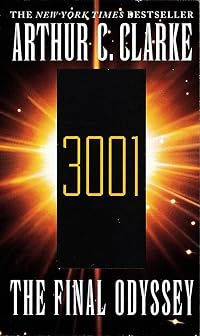
The mysteries of the monoliths are revealed in this inspired conclusion to the Hugo Award-winning Space Odyssey series. On an ill-fated mission to Jupiter in 2001, the mutinous supercomputer HAL sent crewmembers David Bowman and Frank Poole into the frozen void of space. Bowman's strange transformation into a Star Child is traced through the novels 2010 and 2061. But now, a thousand years after his death, Frank Poole is brought back to life-and thrust into a world far more technically show more advanced than the one he left behind. Poole discovers a world of human minds interfacing directly with computers, genetically engineered dinosaur servants, and massive space elevators built around the equator. He also discovers an impending threat to humanity lurking within the enigmatic monoliths. To fight it, Poole must join forces with Bowman and HAL, now fused into one corporeal consciousness-and the only being with the power to thwart the monoliths' mysterious creators. show lessTags
Recommendations


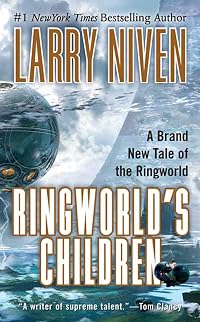
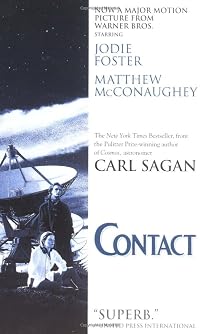
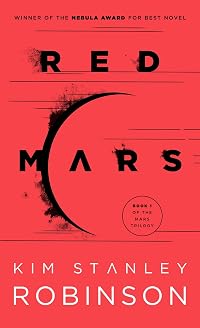

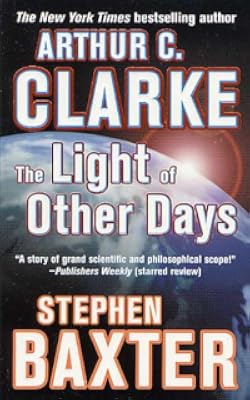








Member Recommendations
Member Reviews
Brings closure to the fate of the monoliths and humanity's future, but reads like a list of Asimov's pet peeve list of (then) current issues for a good quarter of the book. The speed of technological development also seems to have run into a wall as far as his pretty stellar record of predictions is concerned, though he did create a larger safety net in terms of timespan for this novel. It's astonishing to think how many popular scifi stories have mined/plagiarized the Odyssey series for ideas, though not always without improvements. The Expanse series mirrors many of these ideas but does better in what Asimov never gets right; characters.
This "Final Odyssey" is the last and least of the three novels that Arthur C. Clarke wrote to extend the ideas introduced in 2001. The setup is clever enough: Frank Poole, a Discovery expedition member murdered by HAL 9000 back in 2001, is recovered in his excursion pod still exiting the Solar System, and he is restored to life by fourth-millennium super-science. Much of the book--the more interesting parts, really--concerns his difficulties and successes adapting to a "braincapped" posthuman society after a thousand years out of circulation.
At one point Poole's birthdate is specifically given as 1996 (199), which would have made him only five years old when crewing the Discovery. This sort of retroactive discontinuity is common to the show more Odyssey Sequence, which Clarke called "variations on the same theme ... not necessarily happening in the same universe" (261, quoting 2061).
The interactions with Poole's previously monolith-integrated colleagues were a little disappointing. In particular, Heywood Floyd went missing altogether, while Dave Bowman and HAL were collapsed into a character called "Halman." This element of the plot is focused on a threat posed by the monolith network, and defeated by human ingenuity. Clarke later rather sadly noted that his narrative resolution here was notably similar to that already used in the film Independence Day, which "contains every known science-fiction cliche since Melies' Trip to the Moon (1903)" (253).
There is a certain irony in the book's extensive criticisms of religion and metaphysical thought generally, while the Prologue and Epilogue construe the "Firstborn" creators of the monoliths as basically divine entities who may yet judge and sentence humanity. Perhaps inspired by the then-recent (in 1997) Aum Shinrikyo attacks, Clarke makes religiously-motivated terrorism responsible for biological and informational attacks that lead to greater global cooperation among governments in the early twenty-first century (216).
The book includes two pieces of interesting end matter. The Sources and Acknowledgements provide a chapter-by-chapter review of scientific justifications for the speculative technological elements of the novel and references to relevant current events. The Valediction is an author's retrospective on the full Odyssey Sequence. In it, Clarke protests too much perhaps that "it's all [his] own fiction" (262), disclaiming any co-authorship for the four books, but thus downplaying the significant contributions of Stanley Kubrick to the development of 2001 from "The Sentinel" and to the features of the cinematic narrative later retrofitted to the not-sequels. show less
At one point Poole's birthdate is specifically given as 1996 (199), which would have made him only five years old when crewing the Discovery. This sort of retroactive discontinuity is common to the show more Odyssey Sequence, which Clarke called "variations on the same theme ... not necessarily happening in the same universe" (261, quoting 2061).
The interactions with Poole's previously monolith-integrated colleagues were a little disappointing. In particular, Heywood Floyd went missing altogether, while Dave Bowman and HAL were collapsed into a character called "Halman." This element of the plot is focused on a threat posed by the monolith network, and defeated by human ingenuity. Clarke later rather sadly noted that his narrative resolution here was notably similar to that already used in the film Independence Day, which "contains every known science-fiction cliche since Melies' Trip to the Moon (1903)" (253).
There is a certain irony in the book's extensive criticisms of religion and metaphysical thought generally, while the Prologue and Epilogue construe the "Firstborn" creators of the monoliths as basically divine entities who may yet judge and sentence humanity. Perhaps inspired by the then-recent (in 1997) Aum Shinrikyo attacks, Clarke makes religiously-motivated terrorism responsible for biological and informational attacks that lead to greater global cooperation among governments in the early twenty-first century (216).
The book includes two pieces of interesting end matter. The Sources and Acknowledgements provide a chapter-by-chapter review of scientific justifications for the speculative technological elements of the novel and references to relevant current events. The Valediction is an author's retrospective on the full Odyssey Sequence. In it, Clarke protests too much perhaps that "it's all [his] own fiction" (262), disclaiming any co-authorship for the four books, but thus downplaying the significant contributions of Stanley Kubrick to the development of 2001 from "The Sentinel" and to the features of the cinematic narrative later retrofitted to the not-sequels. show less
The black monoliths of this series of books by Clarke are one of the great inventions of science fiction. They convey the utterly alien, the utterly unknowable, and the incredibly powerful. They turned Jupiter into a star. They advanced primitive man to tool-users. And they trigger the evolution of life on Europa.
Up until this book, the monoliths, and the unseen monolith makers, have been our watchers, beginning even in Clarke's original story, The Sentinel. In this book, we may have grown up, grown up enough to challenge the monoliths. We question their mission, and we try to defeat them.
There are many themes that are worth thinking about here -- species evolution, machine intelligence, the relation between religion and the drive for show more knowledge, between immortality and meaning, . . .
The only thing that bothered me about the book is what bothered me about the earlier book in the series, 2061. So much is devoted to reporting what has happened "off camera." Frank Poole is the perfect vehicle for Clarke's reporting what has happened since 2001. At the beginning of the book, in 3001, he's been rescued from his apparent death in 2001, with a millennium to catch up on. And catch us up on. It's only halfway through the book that Poole's new mission starts.
Still, I can't complain.
Can't wait for Google or Apple to come out with a black monolith. I'd like one for my desk. show less
Up until this book, the monoliths, and the unseen monolith makers, have been our watchers, beginning even in Clarke's original story, The Sentinel. In this book, we may have grown up, grown up enough to challenge the monoliths. We question their mission, and we try to defeat them.
There are many themes that are worth thinking about here -- species evolution, machine intelligence, the relation between religion and the drive for show more knowledge, between immortality and meaning, . . .
The only thing that bothered me about the book is what bothered me about the earlier book in the series, 2061. So much is devoted to reporting what has happened "off camera." Frank Poole is the perfect vehicle for Clarke's reporting what has happened since 2001. At the beginning of the book, in 3001, he's been rescued from his apparent death in 2001, with a millennium to catch up on. And catch us up on. It's only halfway through the book that Poole's new mission starts.
Still, I can't complain.
Can't wait for Google or Apple to come out with a black monolith. I'd like one for my desk. show less
From my spousal unit's sf/f collection -- I've been trying to fill in some gaps. 3001 was written to answer questions a d while not lifeless is not full of the energy of his earlier work. Nonetheless Clarke knows how to put a story together, how to balance fact with dramatic scenes, and just a wee bit of character, really not his thing, though. The 'reveal' of what those monoliths are up to was, is just the right degree satisfying. Not entirely explained, but enough, with plenty of mystery. And suspense too, a further millennium down the road. Clarke's (barely disguised) rant on religion, more or less in line with my own views, was lucid and entertaining both (and will offend many, so be warned). I particularly liked his descriptions of show more the moons of Jupiter. I cringed a bit with giggling (all women) nurses and a few other mishaps, but they were minor. ***ish show less
If "2001" the movie is perhaps the greatest film of all time, there is an undeniable symbolic irony that "3001: The Final Odyssey" is perhaps the worst book ever written. It was impossible to believe that the mind who invented such a cornerstone of science fiction could somehow have fathomed this unmitigated disaster... until the writer's afterword explains how all of his previous books have been coauthored while this was the first one he ever wrote alone. Even if this were the crudest fan fiction, it is mind-boggling that the writer's friends, editors, etc. could allow him to print such a blasphemous defamation of this classic legacy. Where to begin? The author must've struggled to find enough to say as this lightweight tome barely show more escapes orbit from a novella, weighing in at a measly 180 pages. The first half of the book is dedicated to an awestruck protagonist swooning at the magic of the future, one that's so juvenile in its conception that dinosaurs are babysitters while virtual reality is used to fly with scantily-clad women riding dragons. The book is pathetically anachronistic, dating itself by marveling at the wonders of the pocket calculator. The writing is dreadfully uneven as it meanders around a poor pastiche of strange diaries, stage conversations or plain old piss-poor prose. The original vision of a world cohabitated with artificial intelligence is nonexistent and forgotten. Yet in the end, the plot is a poor reject from the most cliched Hollywood story about aliens, and NONE of the headier ideas demonstrated in the first installment are on display anywhere. Why, I even had to reread the entire ending to be sure that I caught the most sudden and anticlimactic conclusion ever committed to paper. In conclusion, this book is very bad. show less
3001 isn’t a terrible story, but it does fall way short of 2001 and 2010. The storytelling doesn’t have the same resonance and the plot itself was forced and felt unnecessary. The humanity feels like it has been stripped away. There is no longer any mystery to the fates of Dave Bowman and Frank Poole, nor is there any sense of danger. It seems that 3001 was an attempt to resurrect the series after the flat reception of 2061. Instead, it is simply a continuation of a once great story that has fallen into mediocrity.
Like most of Clarke's later novels, this is mostly a tour of future Earth, not a novel. There's a minimal story to hang various mini-lectures on. Like Heinlein's For Us, The Living, someone from our time is brought into the future to be lectured about how stupid humanity used to be. In this case, that someone is Franke Poole, the astronaut jettisoned into space by HAL in 2001. How his frozen body happens to be recovered is as believable as the astral projection in For Us, The Living or Edgar Rice Burroughs. Where Heinlein's primary target was capitalism, Clarke's is religion, but there are plenty of SF ideas tossed out, mostly continuing prior explorations of space elevators and such. One of the most prescient sections recounts the rise show more of ransomware -- prescient bcause when written in 1997 only a few incidents -- done by floppy disk! -- had yet occurred.
Only for completists. show less
Only for completists. show less
Members
- Recently Added By
Published Reviews
ThingScore 50
Nearly 10 years before ''Star Wars,'' ''2001: A Space Odyssey'' caught the spirit of the nascent revolutions in computation and space exploration. The story of an alien intelligence ensconced in a black monolithic slab and appearing to take a peculiar interest in stimulating human evolution at critical junctures, Arthur C. Clarke's novella and the 1968 Stanley Kubrick film based on it were show more irresistibly beguiling. So was HAL, the personable supercomputer whose mutiny on a mission to Jupiter resulted in the demise of the crew members David Bowman and Frank Poole. Now, in ''3001: The Final Odyssey,'' Mr. Clarke brings Poole back the way a television series resurrects a character killed off prematurely. show less
added by stephmo
Lists

The Novels of Arthur C. Clarke
21 works; 2 members

Моноліт
4 works; 1 member

Books Read in 2023
5,638 works; 147 members

Book Worlds We'd Like To Visit
322 works; 158 members
Author Information

846+ Works 130,464 Members
Arthur C. Clarke was born in Minehead, Somerset, England, on December 16, 1917. During World War II, he served as a radar specialist in the RAF. His first published piece of fiction was Rescue Party and appeared in Astounding Science, May 1946. He graduated from King's College in London with honors in physics and mathematics, and worked in show more scientific research before turning his attention to writing fiction. His first book, Prelude to Space, was published in 1951. He is best known for his book 2001: A Space Odyssey, which was later turned into a highly successful and controversial film under the direction of Stanley Kubrick. His other works include Childhood's End, Rendezvous with Rama, The Garden of Rama, The Snows of Olympus, 2010: A Space Odyssey II, 2062: Odyssey III, and 3001: The Final Odyssey. During his lifetime, he received at least three Hugo Awards and two Nebula Awards. He died of heart failure on March 19, 2008 at the age of 90. (Bowker Author Biography) show less
Some Editions
Awards and Honors
Distinctions
Series

Belongs to Publisher Series
Work Relationships
Common Knowledge
- Canonical title
- 3001
- Original title
- 3001: The Final Odyssey
- Original publication date
- 1997
- People/Characters
- Frank Poole; Halman; David Bowman; TMA-0; TMA-1; Alexey Leonov (mentioned) (show all 9); Dimitri Chandler; Indra Wallace; Theodore Khan
- Important places
- Europa, a moon of Jupiter; Ganymede; Africa Tower
- Dedication
- For Cherene, Tamara, and Melinda--May you be happy in a far better century than mine
- First words
- Call them the Firstborn.
- Last words
- (Click to show. Warning: May contain spoilers.)We will consider what should be saved.
- Original language
- English
Classifications
Statistics
- Members
- 5,319
- Popularity
- 2,558
- Reviews
- 65
- Rating
- (3.20)
- Languages
- 18 — Catalan, Czech, Dutch, English, French, German, Greek, Hungarian, Italian, Japanese, Korean, Polish, Portuguese, Romanian, Croatian, Spanish, Swedish, Turkish
- Media
- Paper, Audiobook, Ebook
- ISBNs
- 67
- ASINs
- 18