On This Page
Description
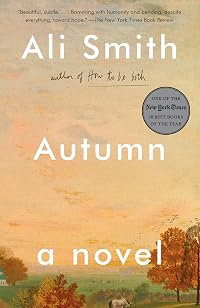
"From the Man Booker-shortlisted and Baileys Prize-winning author of How to be both: a breathtakingly inventive new novel--about aging, time, love, and stories themselves--that launches an extraordinary quartet of books called Seasonal. Readers love Ali Smith's novels for their peerless innovation and their joyful celebration of language and life. Her newest, Autumn, has all of these qualities in spades, and--good news for fans!--is the first installment in a quartet. Seasonal, comprised of show more four stand-alone books, separate yet interconnected and cyclical (as are the seasons), explores what time is, how we experience it, and the recurring markers in the shapes our lives take and in our ways with narrative. Fusing Keatsian mists and mellow fruitfulness with the vitality, the immediacy, and the color hit of Pop Art, Autumn is a witty excavation of the present by the past. The novel is a stripped-branches take on popular culture and a meditation, in a world growing ever more bordered and exclusive, on what richness and worth are, what harvest means"-- show lessTags
Recommendations










Member Reviews
This isn’t fiction, the man says. This is the Post Office.
I liked How to Be Both and this novel picked up Smith's themes around time, relationships and really looking at art. With Elisabeth, a young art historian, we remember her childhood with Mr Gluck, the neighbour who introduced her to the work of Pauline Boty. She reads to him in the hospital bed and lives in a hostile post-Brexit-vote village. The dry humour is laced with anger at the intolerance and little Englander attitude.
Recommended.
I liked How to Be Both and this novel picked up Smith's themes around time, relationships and really looking at art. With Elisabeth, a young art historian, we remember her childhood with Mr Gluck, the neighbour who introduced her to the work of Pauline Boty. She reads to him in the hospital bed and lives in a hostile post-Brexit-vote village. The dry humour is laced with anger at the intolerance and little Englander attitude.
Recommended.
Ali Smith's new novel, Autumn, is the first in a planned quartet. It's a quiet novel, about the friendship between a girl and her elderly neighbor and how that friendship sustains itself over the years. It's set just after the Brexit vote, and the novel has a subdued, elegiac feel to it that suits the season that it draws its title from. But this isn't a gloomy book, it's full of Smith's careful observation of details and her beautiful writing.
Hope is exactly that, that's all it is, a matter of how we deal with the negative acts toward human beings by other human beings in the world, remembering that they and we are all human, that nothing human is alien to us, the foul and the fair, and that most important of all we're here for a mere show more blink of the eyes, that's all. But in that Augenblick there's either a benign wink or a willing blindness, and we have to know we're equally capable of both, and to be ready to be above and beyond the foul even when we're up to our eyes in it.
Autumn moves back and forth in time, between Elisabeth now, staying at her mother's house so she can visit Daniel every day in the hospice, and as she watches neighbors fail to greet one another, and she battles with the postal clerk as she tries to renew her passport, and Elisabeth at eight, meeting and becoming best friends with the elderly man next door, who loves to discuss books and to tell her about art and music.
I'm eager to see where Smith takes the rest of the quartet. Autumn was a quiet book, but deceptively so. show less
Hope is exactly that, that's all it is, a matter of how we deal with the negative acts toward human beings by other human beings in the world, remembering that they and we are all human, that nothing human is alien to us, the foul and the fair, and that most important of all we're here for a mere show more blink of the eyes, that's all. But in that Augenblick there's either a benign wink or a willing blindness, and we have to know we're equally capable of both, and to be ready to be above and beyond the foul even when we're up to our eyes in it.
Autumn moves back and forth in time, between Elisabeth now, staying at her mother's house so she can visit Daniel every day in the hospice, and as she watches neighbors fail to greet one another, and she battles with the postal clerk as she tries to renew her passport, and Elisabeth at eight, meeting and becoming best friends with the elderly man next door, who loves to discuss books and to tell her about art and music.
I'm eager to see where Smith takes the rest of the quartet. Autumn was a quiet book, but deceptively so. show less
My fourth book from the Booker longlist, this is another that, like Reservoir 13, would have made a worthy winner. At the time of its release this book was billed as the first Brexit novel, but there is so much more to it than that.
update 19 Oct - Sadly, and yet again, Ali Smith did not win, but I was very impressed by her performance and the way she encouraged Emily Fridlund and Fiona Mozley at the Nottingham shortlist readings event, which I attended last week (the other three shortlisted writers were not there).
Reservoir 13 is out, so this is my clear favourite book in the shortlist
Smith starts by introducing two characters - Daniel Gluck, who is 101 and clinging to life in a care home, and Elisabeth Demand, who was born in 1984 show more and knew him as a child when he was her neighbour. In the first part of the book Elisabeth is confronted by various decaying public institutions and the petty jobsworths who enforce the rules - the early scene in which she fights with the post office over a passport application is very funny. These are mixed up with her memories of her conversations with Daniel as a child in which he encouraged her to think differently, and her visits to Daniel in the care home where he spends most of his time asleep.
As in many of her other books (notably Like and There but for the), Smith writes very powerfully and sympathetically about intelligent children and how they learn. In this section Daniel introduces Elisabeth to the work of Pauline Boty, the other main subject of the book, by describing some of her lost paintings. Daniel remembers meeting and being obsessed by Boty, and also has an immigrant backstory of his own.
Boty was a leading pop artist in 60s London, who died young and was subsequently written out of history by the male critics of the time and her family's refusal to exhibit her work. Her life and work is described in glowing detail, along with one of her inspirations, Christine Keeler. The tone of the book changes from the disillusion and resignation Elisabeth feels when confronted with the British cultural changes that led to the Brexit vote to a form of hope embodied by Boty and her defiant flaunting of the expectations of her suburban middle class family.
This is a richly rewarding novel of ideas, and as always Smith flits between her themes lightly. Smith is a national treasure, and this is one of her best books. This is the first of a projected four seasonally themed novels, and I look forward to the rest. show less
update 19 Oct - Sadly, and yet again, Ali Smith did not win, but I was very impressed by her performance and the way she encouraged Emily Fridlund and Fiona Mozley at the Nottingham shortlist readings event, which I attended last week (the other three shortlisted writers were not there).
Reservoir 13 is out, so this is my clear favourite book in the shortlist
Smith starts by introducing two characters - Daniel Gluck, who is 101 and clinging to life in a care home, and Elisabeth Demand, who was born in 1984 show more and knew him as a child when he was her neighbour. In the first part of the book Elisabeth is confronted by various decaying public institutions and the petty jobsworths who enforce the rules - the early scene in which she fights with the post office over a passport application is very funny. These are mixed up with her memories of her conversations with Daniel as a child in which he encouraged her to think differently, and her visits to Daniel in the care home where he spends most of his time asleep.
As in many of her other books (notably Like and There but for the), Smith writes very powerfully and sympathetically about intelligent children and how they learn. In this section Daniel introduces Elisabeth to the work of Pauline Boty, the other main subject of the book, by describing some of her lost paintings. Daniel remembers meeting and being obsessed by Boty, and also has an immigrant backstory of his own.
Boty was a leading pop artist in 60s London, who died young and was subsequently written out of history by the male critics of the time and her family's refusal to exhibit her work. Her life and work is described in glowing detail, along with one of her inspirations, Christine Keeler. The tone of the book changes from the disillusion and resignation Elisabeth feels when confronted with the British cultural changes that led to the Brexit vote to a form of hope embodied by Boty and her defiant flaunting of the expectations of her suburban middle class family.
This is a richly rewarding novel of ideas, and as always Smith flits between her themes lightly. Smith is a national treasure, and this is one of her best books. This is the first of a projected four seasonally themed novels, and I look forward to the rest. show less
Ali Smith packs a lot into this short novel. It's the story of a friendship between centenarian Daniel Gluck and 30-something Elisabeth Demand, an art history lecturer. Elisabeth has a special interest in a somewhat obscure pop artist, Pauline Boty. Smith alludes to current events in the form of the refugee crisis, and borrows language from literary giants like Dickens and Achebe (“It was the worst of times, it was the worst of times. Again. That's the thing about things. They fall apart, always have, always, will, it's in their nature.”) It's a gem of a book and well deserving of its spot on this year's Booker shortlist.
This review is based on an electronic advanced readers copy provided by the publisher through NetGalley.
This review is based on an electronic advanced readers copy provided by the publisher through NetGalley.
Set in 2016 Post-Brexit vote Britain, "Autumn" revolves around the experiences of a young art historian and the old man who helped her learn to see and think when she was a child. The story moves up and down the timeline of both their lives and flips from strange, presumably allegorical, dream sequences, through discussions of art and imagination and freedom through to hyper-real depictions of modern life.
The opening chapter is an allegorical dream sequence that screams the literary equivalent of college band concept album and was almost enough to make me stop reading, yet the next chapter got my complete attention.with a sequence about going into to use the “Quick Check” passport service in the ruined post offices our governments show more have created as they've pillaged public assets. Ali Smith makes this familiar activity fresh by a muted rage that clings to irony and comic observation as it hangs above the pit of despair that life in a totalitarian state produces.
"Autumn" is a book you have to engage with rather than glide through. It's a conversation with the reader rather than an entertainment. For the most part, it was a conversation that I took a lot of pleasure in but there were some parts, dream sequences, long lists of how Brexit split the nation, where I felt as if I wandered into the "Time Passes" section of "To The Lighthouse": I knew I was reading something bold and innovative but it didn't really engage me.
"Autumn" made me re-examine what I thought I knew about the allegedly swinging sixties in England. I was four in 1960 and I realised it's a period that I've never really examined from an adult point of view. I grew up being aware of things referred to in "Autumn" like Christine Keeler and the Profumo Affair, and (at the time) risqué movies like "Alfie" but had no real understanding of them. They were too recent and too long ago.
I came to British Pop Art much later, so I thought I'd be on firmer ground but I was completely unaware of the work of Pauline Boty, who features heavily in the book and who Ali Smith examined in a piece in the Guardian. Seeing pop art through the eyes of Ali Smith's characters made me hungry for it, even though most of it normally slides past me.
This is a book of big themes and real people. It explores the relationship between memory and imagination and how they compete and cooperate to construct and sustain the story of our lives that we tell to ourselves and others. It’s about seeing past the obvious to the real. It’s about a bloody-minded refusal to give in to all the people and institutions that try to make us live smaller lives. It's about borders and crossing them or being kept out. It’s about triumphing by finding a way to express joy.
This was my first Ali Smith book. It wasn’t always an easy experience but it was a memorable one. “Autumn” is the first of a four-novel seasonal sequence covering how the contemporaneous relates to the diachronic. I will be back for the rest. show less
The opening chapter is an allegorical dream sequence that screams the literary equivalent of college band concept album and was almost enough to make me stop reading, yet the next chapter got my complete attention.with a sequence about going into to use the “Quick Check” passport service in the ruined post offices our governments show more have created as they've pillaged public assets. Ali Smith makes this familiar activity fresh by a muted rage that clings to irony and comic observation as it hangs above the pit of despair that life in a totalitarian state produces.
"Autumn" is a book you have to engage with rather than glide through. It's a conversation with the reader rather than an entertainment. For the most part, it was a conversation that I took a lot of pleasure in but there were some parts, dream sequences, long lists of how Brexit split the nation, where I felt as if I wandered into the "Time Passes" section of "To The Lighthouse": I knew I was reading something bold and innovative but it didn't really engage me.
"Autumn" made me re-examine what I thought I knew about the allegedly swinging sixties in England. I was four in 1960 and I realised it's a period that I've never really examined from an adult point of view. I grew up being aware of things referred to in "Autumn" like Christine Keeler and the Profumo Affair, and (at the time) risqué movies like "Alfie" but had no real understanding of them. They were too recent and too long ago.
I came to British Pop Art much later, so I thought I'd be on firmer ground but I was completely unaware of the work of Pauline Boty, who features heavily in the book and who Ali Smith examined in a piece in the Guardian. Seeing pop art through the eyes of Ali Smith's characters made me hungry for it, even though most of it normally slides past me.
This is a book of big themes and real people. It explores the relationship between memory and imagination and how they compete and cooperate to construct and sustain the story of our lives that we tell to ourselves and others. It’s about seeing past the obvious to the real. It’s about a bloody-minded refusal to give in to all the people and institutions that try to make us live smaller lives. It's about borders and crossing them or being kept out. It’s about triumphing by finding a way to express joy.
This was my first Ali Smith book. It wasn’t always an easy experience but it was a memorable one. “Autumn” is the first of a four-novel seasonal sequence covering how the contemporaneous relates to the diachronic. I will be back for the rest. show less
‘’It was the worst of times, it was the worst of times. Again. That’s the thing about things. They fall apart, always have, always will, it’s in their nature.’’
‘’How many words can you hold in a hand.
In a handful of sand.’’
Two old souls. Elizabeth, 34 years old. Optimistic, bookish, pragmatic, direct. Daniel, 101 years old. Dreamer, artistic, hopeful, stubborn. They come together once again in a time when autumn has fallen over the fate of a land that has seemed to lost its direction. Brexit is a reality, a bleak and terrifying reality for the entire continent. Daniel is about to depart, Elizabeth is at a crossroads. The United Kingdom is in limbo. And we now know that it isn’t going to get any better…
Ali Smith show more creates a monument. A literary testimony of the time when Europe lost a part of its heart. Without doctrines and preaching megaphones, without empty words, Autumn becomes a symbol for the void. Is it a new beginning or a death?
‘’A minute ago it was June. Now the weather is September.
The nights are sooner, chiller, the light a little less each time.
Dark at half past seven. Dark at quarter past seven. Dark at seven.
The greens of the trees have been duller since August, since July really.
But the flowers are still coming. The hedgerows are still humming. The shed is already full of apples and the tree’s still covered in them.
The birds are on the powerlines.
The swifts left long ago. They’re hundreds of miles from here by now, somewhere over the ocean.’’
Ali Smith writes about the duality of autumn. Its beautiful, haunting, sad nature. About Life and Death mirrored in the changes around us, and the way Art is able to immortalize seemingly detrimental details. We find ourselves walking with two brilliant characters in a country in disarray and doubt. The chill, the perfume of the chestnuts, the focus on the colours of Cezanne. Echoing Thomas Hardy’s masterpieces and the haunting part of Miranda in Shakespeare’s The Tempest, with references to Huxley’s Brave New World and Dickens’ A Tale of Two Cities (with its unmistakable comparisons, though we could change Paris with Berlin to be more acute and accurate…), the central theme is all about one thing our times are severely lacking: Dialogue!
The end of dialogue is the end of peace. When we don’t ‘’talk’’, discord and isolation follow. When countries don’t ‘’talk’’, there is tangible danger. BUT! Can ONE talk with someone who refuses to LISTEN, parroting lies, constructed threats or parading their own frightening ignorance? Dialogue requires bilateral participation. It is easy to lecture on its values, but it needs TWO to succeed. By God, we hardly see this anymore. And thus, wounds fester and madmen thrive in their lies. Well, too bad for those who believe them. They’re always the first to regret it.
I was moved by Smith’s writing. There is a beautiful, sensual chapter in which trees become a metaphor for womanhood and birth. She creates a parody of the ordeal of the ‘’perfect’’ passport photo in a telling example of every absurd regulation that not only makes travelling difficult but also discourages the citizens from trusting their countries’ own laws. As if ages-old prejudices weren’t enough…I mean, come on! We’re all for safety - OBVIOUSLY! - but the Sabbath for man not man for the Sabbath!
Allow me to leave you with two extracts that deserve 10+ stars. This is how the melancholic tranquillity, the serenity and quiet sadness of autumn can be contained in two short chapters.
‘’They walked past the shops, then over to the fields where the inter-school summer sports were held, where the fair wnt and the circus. Elizabeth had last come to the field just after the circus had left, especially to look at the flat dry place where the circus had had its tent. She liked doing melancholy things like that. But now you couldn’t tell that any of these summer things had ever happened. There was just empty field. The sports tracks had faded and gone. The flattened grass, the places that had turned to mud where the crowds had wandered round between the rides and the open-sided trailers full of the driving and shooting games, the ghost circus ring: nothing but grass.
Somehow this wasn’t the same as melancholy. It was something else, about how melancholy and nostalgia weren’t relevant in the slightest. Things just happened. Then they were over. Time just passed. Partly it felt unpleasant, to think like that, rude even. Partly it felt good. It was kind of a relief.
Past the field there was another field. Then there was the river.’’
‘’October’s a blink of the eye. The apples weighing down the tree a minute ago are gone and the tree’s leaves are yellow and thinning. A frost has snapped millions of trees all across the country into brightness. The ones that aren’t evergreen are a combination of beautiful and tawdry, red orange gold the leaves, then brown, and down.
The days are unexpectedly mild. It doesn’t feel that far from summer, not really, if it weren’t for the underbite of the day, the lacy creep of the dark and the damp at its edges, the plants calm in the folding themselves away, the beads of the condensation on the webstrings hung between things.
On the warm days it feels wrong, so many leaves falling.
But the nights are cool to cold.’’
My reviews can also be found on https://theopinionatedreaderblog.wordpress.com/ show less
‘’How many words can you hold in a hand.
In a handful of sand.’’
Two old souls. Elizabeth, 34 years old. Optimistic, bookish, pragmatic, direct. Daniel, 101 years old. Dreamer, artistic, hopeful, stubborn. They come together once again in a time when autumn has fallen over the fate of a land that has seemed to lost its direction. Brexit is a reality, a bleak and terrifying reality for the entire continent. Daniel is about to depart, Elizabeth is at a crossroads. The United Kingdom is in limbo. And we now know that it isn’t going to get any better…
Ali Smith show more creates a monument. A literary testimony of the time when Europe lost a part of its heart. Without doctrines and preaching megaphones, without empty words, Autumn becomes a symbol for the void. Is it a new beginning or a death?
‘’A minute ago it was June. Now the weather is September.
The nights are sooner, chiller, the light a little less each time.
Dark at half past seven. Dark at quarter past seven. Dark at seven.
The greens of the trees have been duller since August, since July really.
But the flowers are still coming. The hedgerows are still humming. The shed is already full of apples and the tree’s still covered in them.
The birds are on the powerlines.
The swifts left long ago. They’re hundreds of miles from here by now, somewhere over the ocean.’’
Ali Smith writes about the duality of autumn. Its beautiful, haunting, sad nature. About Life and Death mirrored in the changes around us, and the way Art is able to immortalize seemingly detrimental details. We find ourselves walking with two brilliant characters in a country in disarray and doubt. The chill, the perfume of the chestnuts, the focus on the colours of Cezanne. Echoing Thomas Hardy’s masterpieces and the haunting part of Miranda in Shakespeare’s The Tempest, with references to Huxley’s Brave New World and Dickens’ A Tale of Two Cities (with its unmistakable comparisons, though we could change Paris with Berlin to be more acute and accurate…), the central theme is all about one thing our times are severely lacking: Dialogue!
The end of dialogue is the end of peace. When we don’t ‘’talk’’, discord and isolation follow. When countries don’t ‘’talk’’, there is tangible danger. BUT! Can ONE talk with someone who refuses to LISTEN, parroting lies, constructed threats or parading their own frightening ignorance? Dialogue requires bilateral participation. It is easy to lecture on its values, but it needs TWO to succeed. By God, we hardly see this anymore. And thus, wounds fester and madmen thrive in their lies. Well, too bad for those who believe them. They’re always the first to regret it.
I was moved by Smith’s writing. There is a beautiful, sensual chapter in which trees become a metaphor for womanhood and birth. She creates a parody of the ordeal of the ‘’perfect’’ passport photo in a telling example of every absurd regulation that not only makes travelling difficult but also discourages the citizens from trusting their countries’ own laws. As if ages-old prejudices weren’t enough…I mean, come on! We’re all for safety - OBVIOUSLY! - but the Sabbath for man not man for the Sabbath!
Allow me to leave you with two extracts that deserve 10+ stars. This is how the melancholic tranquillity, the serenity and quiet sadness of autumn can be contained in two short chapters.
‘’They walked past the shops, then over to the fields where the inter-school summer sports were held, where the fair wnt and the circus. Elizabeth had last come to the field just after the circus had left, especially to look at the flat dry place where the circus had had its tent. She liked doing melancholy things like that. But now you couldn’t tell that any of these summer things had ever happened. There was just empty field. The sports tracks had faded and gone. The flattened grass, the places that had turned to mud where the crowds had wandered round between the rides and the open-sided trailers full of the driving and shooting games, the ghost circus ring: nothing but grass.
Somehow this wasn’t the same as melancholy. It was something else, about how melancholy and nostalgia weren’t relevant in the slightest. Things just happened. Then they were over. Time just passed. Partly it felt unpleasant, to think like that, rude even. Partly it felt good. It was kind of a relief.
Past the field there was another field. Then there was the river.’’
‘’October’s a blink of the eye. The apples weighing down the tree a minute ago are gone and the tree’s leaves are yellow and thinning. A frost has snapped millions of trees all across the country into brightness. The ones that aren’t evergreen are a combination of beautiful and tawdry, red orange gold the leaves, then brown, and down.
The days are unexpectedly mild. It doesn’t feel that far from summer, not really, if it weren’t for the underbite of the day, the lacy creep of the dark and the damp at its edges, the plants calm in the folding themselves away, the beads of the condensation on the webstrings hung between things.
On the warm days it feels wrong, so many leaves falling.
But the nights are cool to cold.’’
My reviews can also be found on https://theopinionatedreaderblog.wordpress.com/ show less
A wonderful, modest little novel about the friendship between a young art historian and her mother's centenarian neighbour, which turns out to cover a lot more ground than you would think possible. Glorious writing and a light, allusive style that constantly refuses to tell us the things we ought to be able to work out for ourselves. There's obviously a seasonal thing going on, lots of leaf metaphors, which of course work very well if you happen to read it at this time of year. But there's also a lot about the importance of asserting our humanity through quixotic acts of resistance, especially in a (current British) society where human relations seem to be more and more based on mutual fear and suspicion. Smith explores this idea both show more through her fictional characters and through the life of the sixties British pop artist and proto-feminist, Pauline Boty (1938-1966). The message seems to be that an act of resistance always has value, even if we know it's doomed to fail, because it embodies our refusal to accept as inevitable the evil and mediocrity that the world imposes on us. show less
Members
- Recently Added By
Lists

Recommend the 20 best books you've read in the last five years
2,168 works; 609 members

Top Five Books of 2017
757 works; 231 members

The Guardian's 100 best books of the 21st century
100 works; 21 members

Booker Prize
491 works; 62 members

Top Five Books on LibraryThing
24 works; 7 members
Top Five Books of 2018
802 works; 265 members

Man Booker Prize Longlist 2017
13 works; 4 members

Top Five Books of 2016
795 works; 228 members

Kirkus Starred Fiction Reviews of Books Published in 2017
412 works; 7 members

Best of Scottish Literature
35 works; 6 members

One Book, Many Authors
441 works; 40 members

Books Read in 2023
5,638 works; 147 members

Books Read in 2017
4,249 works; 129 members

Mothers and Daughters
114 works; 11 members

Books Read in 2020
4,379 works; 124 members
Blackwell's Five Foot Bookshelf
72 works; 4 members

Books Read in 2019
4,052 works; 108 members

Books Read in 2018
4,360 works; 110 members

To Read
617 works; 7 members

Books Read in 2021
5,361 works; 113 members

To read
61 works; 1 member

Top Five Books of 2023
767 works; 317 members

Novels without quotation marks
25 works; 1 member
Talk Discussions
Past Discussions
2017 Booker Prize longlist: Autumn by Ali Smith in Booker Prize (October 2017)
Author Information

54+ Works 17,461 Members
Some Editions
Awards and Honors
Awards
Distinctions
Notable Lists
Series

Belongs to Publisher Series
Work Relationships
Is contained in
Common Knowledge
- Canonical title
- Autumn
- Original title
- Autumn: A Novel (Seasonal Quartet) (Seasonal Quartet)
- Original publication date
- 2016
- People/Characters
- Elisabeth Demand; Daniel Gluck; Pauline Boty; Wendy Demand; Zoe Spencer-Barnes
- Important places
- England
- Important events
- Brexit
- Epigraph
- Spring come to you at the farthest,
In the very end of harvest!
William Shakespeare
At current rates of soil erosion, Britain has just
100 harvests left.
Guardian, 20 July 2016
Green as the grass we lay in corn, in sunlight
Ossie Clark
If I am destined to be happy with you here –
how short is the longest Life.
John Keats
Gently disintegrate me
WS Graham - Dedication
- For Gilli Bush-Bailey
see you next week
and for Sarah Margaret
Hardy perennial Wood - First words
- It was the worst of times, it was the worst of times. Again.
- Quotations
- All across the country, people felt it was the wrong thing. All across the country, people felt it was the right thing. All across the country, people felt they'd really lost. All across the country, people felt they'd really... (show all) won. All across the country, people felt they'd done the right thing and other people had done the wrong thing.
The lifelong friends, he said. We sometimes wait a lifetime for them. - Last words
- (Click to show. Warning: May contain spoilers.)Look at the colour of it.
- Original language
- English
Classifications
Statistics
- Members
- 2,550
- Popularity
- 7,541
- Reviews
- 118
- Rating
- (3.85)
- Languages
- 18 — Catalan, Chinese, Danish, Dutch, English, Finnish, French, German, Greek, Italian, Korean, Polish, Portuguese, Russian, Croatian, Spanish, Swedish, Turkish
- Media
- Paper, Audiobook, Ebook
- ISBNs
- 54
- ASINs
- 11