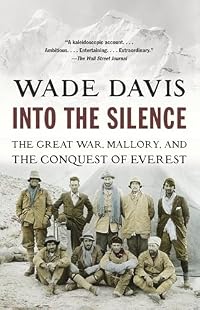
Into the Silence: The Great War, Mallory, and the Conquest of Everest
by Wade Davis
On This Page
Description
Describes British climbers' attempts to scale Mount Everest in the early 1920s, discussing such topics as the role of imperial ambition in the expedition and the way in which the ascent reflected England's post-World War I redemption efforts.Tags
Recommendations









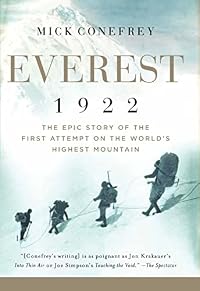

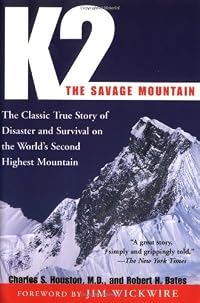
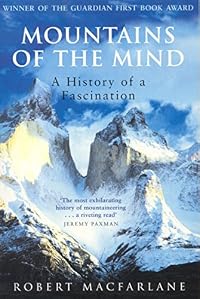


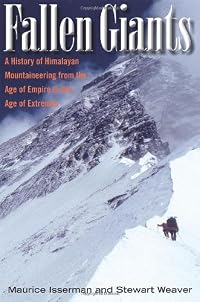
Member Recommendations

Member Reviews
Davis covers quite thoroughly the Everest expeditions of 1921, 1922, and 1924. Certainly this is from the European perspective. We get some names of the various Asian participants, the porters and the cooks etc., and some glimpses into their characters. I doubt there would be any kind of written record for them, and hardly any oral history either. But for the European participants Davis traces back their upbringing and especially their experiences in WW1. That is a major theme of the book, the way that WW1 shaped these Everest expeditions, not just for the immediate participants but for the folks back home, the various sponsoring organizations, the media, and the public at large.
While we don't learn much about the immediate Asian show more participants, we do learn a bit about some of the broader Tibetan context, from the abbot of Rongbuk monastery at the base of Everest, to the 13th Dalai Lama and the broader context of the Great Game where England, Russia, and China were competing to extend their Asian spheres of influence.
A fascinating thread was the shifting attitude to technology. There was a kind of parallel between military and alpine shifts. At the beginning of WW1, the old British generals thought that sabers were more proper weapons than machine guns. Similarly, the old climbing guard held that to use oxygen at high altitude was improper.
Another interesting shift was how climbing became more of a media event sponsored by advertisers etc. Davis includes copious excerpts from letters home from the various climbers, including several by Mallory which make it clear how conscious he was of his audience, of how he would appear in the media. Certainly he was a courageous and determined climber, but it seems he also felt a sense of obligation to fulfill a public role.
Davis presents a remarkably detailed narrative of these three expeditions, but also provides enough layers of context to allow us to give rich meaning to the core details.
Still today people risk their lives on all sorts of wild adventures: extreme sports, explorations in harsh environments, etc. Still today people can be consumed by their own myth, the myth they have become through the mutual co-construction of celebrity and public. Here Davis gives us such a story on the kind of grand scale that practically doesn't exist any more, as technology has so shrunk our world. show less
While we don't learn much about the immediate Asian show more participants, we do learn a bit about some of the broader Tibetan context, from the abbot of Rongbuk monastery at the base of Everest, to the 13th Dalai Lama and the broader context of the Great Game where England, Russia, and China were competing to extend their Asian spheres of influence.
A fascinating thread was the shifting attitude to technology. There was a kind of parallel between military and alpine shifts. At the beginning of WW1, the old British generals thought that sabers were more proper weapons than machine guns. Similarly, the old climbing guard held that to use oxygen at high altitude was improper.
Another interesting shift was how climbing became more of a media event sponsored by advertisers etc. Davis includes copious excerpts from letters home from the various climbers, including several by Mallory which make it clear how conscious he was of his audience, of how he would appear in the media. Certainly he was a courageous and determined climber, but it seems he also felt a sense of obligation to fulfill a public role.
Davis presents a remarkably detailed narrative of these three expeditions, but also provides enough layers of context to allow us to give rich meaning to the core details.
Still today people risk their lives on all sorts of wild adventures: extreme sports, explorations in harsh environments, etc. Still today people can be consumed by their own myth, the myth they have become through the mutual co-construction of celebrity and public. Here Davis gives us such a story on the kind of grand scale that practically doesn't exist any more, as technology has so shrunk our world. show less
A magnificent, exhaustive and well-researched chronicle of the three British Everest expeditions of the 1920s. Davis sets the era and tone of post-war sensibilities by devoting a sizeable portion - about the first third of the book - to the Great War and how the climbers came through it. Mallory and the other personages don't even enter the picture until after that, and actual climbing is still a long way off. The person I most admired was Australian George Finch who, against great opposition for his science as well as his colonial origins, introduced the use of oxygen in the second and third climbs. Tibet is not regarded kindly by the climbers, but then snobbery, racism, and the class system was rife, even among the members of the show more buttoned-down Royal Geographical Society and Alpine Club.
The 1924 attempt ended disastrously when George Mallory and Andrew Irvine disappeared on the final climb to, or from, the summit. Mallory's badly injured body was found in 1999 still roped to Irvine until the fall broke the rope. After all their effort, I like to think they made it to the summit but that will never be known.
This is an excellent book if the reader is prepared for an major undertaking and wants all the nitty gritty details of each climb, climber, the politics of the times and of the associations involved. (For example, now I know the difference between Mummery and Whymper tents.) If you just want to read about the life of Mallory and his experience on Everest, then Jeffrey Archer's Paths of Glory, a fictional work that is nevertheless accurate, would be a better choice. show less
The 1924 attempt ended disastrously when George Mallory and Andrew Irvine disappeared on the final climb to, or from, the summit. Mallory's badly injured body was found in 1999 still roped to Irvine until the fall broke the rope. After all their effort, I like to think they made it to the summit but that will never be known.
This is an excellent book if the reader is prepared for an major undertaking and wants all the nitty gritty details of each climb, climber, the politics of the times and of the associations involved. (For example, now I know the difference between Mummery and Whymper tents.) If you just want to read about the life of Mallory and his experience on Everest, then Jeffrey Archer's Paths of Glory, a fictional work that is nevertheless accurate, would be a better choice. show less
If this book were fiction, I’d call it a sprawling epic. Since it is non-fiction, I’ll call it a comprehensive account of the three earliest expeditions to Mount Everest, 1921, 1922, and 1924, all involving George Mallory, and culminating in his and Sandy Irvine’s death. Not only does it cover these expeditions, but it also provides a minibiography of almost everyone involved on the British side. The people from the Tibetan region are covered too, but to a lesser extent, as there is much less documentation available. The author’s theme is that the Great War and beliefs about Empire were critical factors that influenced early mountaineering, particularly with respect to the approach, terminology, and methods of “assault.” show more Thus, the concept of “conquering” the mountain caught the public’s imagination and represented a victory for Great Britain.
There is a great deal of history covered in this book, and those who enjoy the interrelationships among historic events will appreciate it. It is intentionally long (700 pages) and detailed and is not for anyone who wants to “cut to the chase.” The author does a great job at helping the reader understand the motivations of the people involved and why they were selected to participate. There are many charismatic individuals, and by the end, I felt I knew them. Davis captures their accomplishments but does not ignore their faults. We also learn about their families and their experiences in World War I.
Davis excels at weaving together a colorful and compelling narrative with personal letters, reports, quotes, and telegrams to tell an intensely interesting story. I especially enjoyed the account of the 1924 expedition. The author analyzes several mistakes that contributed to the tragedy. I have read other books about this expedition, and this one is the best by far in analyzing what happened and assembling the pieces of information into the most likely sequence of events that led to the two climbers’ deaths.
It also contains information about the cultural differences between the Asian and European approaches. The Tibetans had no desire to climb Everest, even though they lived next to it and had capable climbers. The author provides insight into Tibetan spirituality and points out the difficulties experienced by the British in understanding the porters they worked with (and relied heavily upon) during the expedition. Basically, the Tibetans wondered why the British would want to climb Everest, and the British wondered why the Tibetans wouldn’t want to climb it. Several notable persons from the region make an appearance, including the Dalai Lama and Mahatma Gandhi.
I found it an immersive reading experience. I particularly liked the way the author linked the various segments of history into an evaluation of cause and effect. It will appeal to those who enjoy learning about the history of mountaineering, as well as readers who appreciate a window to a prior era, complete with insight and analysis. show less
There is a great deal of history covered in this book, and those who enjoy the interrelationships among historic events will appreciate it. It is intentionally long (700 pages) and detailed and is not for anyone who wants to “cut to the chase.” The author does a great job at helping the reader understand the motivations of the people involved and why they were selected to participate. There are many charismatic individuals, and by the end, I felt I knew them. Davis captures their accomplishments but does not ignore their faults. We also learn about their families and their experiences in World War I.
Davis excels at weaving together a colorful and compelling narrative with personal letters, reports, quotes, and telegrams to tell an intensely interesting story. I especially enjoyed the account of the 1924 expedition. The author analyzes several mistakes that contributed to the tragedy. I have read other books about this expedition, and this one is the best by far in analyzing what happened and assembling the pieces of information into the most likely sequence of events that led to the two climbers’ deaths.
It also contains information about the cultural differences between the Asian and European approaches. The Tibetans had no desire to climb Everest, even though they lived next to it and had capable climbers. The author provides insight into Tibetan spirituality and points out the difficulties experienced by the British in understanding the porters they worked with (and relied heavily upon) during the expedition. Basically, the Tibetans wondered why the British would want to climb Everest, and the British wondered why the Tibetans wouldn’t want to climb it. Several notable persons from the region make an appearance, including the Dalai Lama and Mahatma Gandhi.
I found it an immersive reading experience. I particularly liked the way the author linked the various segments of history into an evaluation of cause and effect. It will appeal to those who enjoy learning about the history of mountaineering, as well as readers who appreciate a window to a prior era, complete with insight and analysis. show less
From beginning to end, Wade Davis unfolds a staggering tale with superb skill and sensitivity. To show us who these first men attempting to climb Everest were, he begins by describing the shared experience of the majority: trench warfare in France in WW1. By giving us a pocket biography of each expedition member, we come to understand that these were all men of exceptional toughness, intelligence, and courage. The majority had seen, not scores, but thousands of men dying or dead, had done extraordinary things, hardly believable in a "normal life" context, making them, in the way of those things, not perhaps very suited to living ordinary everyday lives. (Because really, the "why do this at all?" question looms as hugely as Everest show more herself.) Davis's descriptions of combat are the most literal and gruesome of any I have encountered. Davis also makes the point that most of the expedition members were members of a pivotal generation, not the commanding officers, but lesser officers and medical men, younger men who had, miraculously, survived. The generals who had commanded them, for the most part, were men of the 19th century, gentlemen one and all, Victorians, with no concept of how modern warfare was being transformed by technology. These younger men while having been born into that llife, (most, though not all, were "gentlemen") had suffered the consequences of the abysmally out of touch leadership that sent thousands upon thousands of their own generation to pointless and painful deaths. As a result, these men, this generation, had feet in both worlds, the past and the future. They were at once fearless and tougher than we can fathom, but also deeply ambivalent, giving rise to an inconsistency, both in their emotional and practical approaches to technology and to men of other classes and cultures. Truly you can hardly believe what these men considered adequate clothing and equipment: the frail tents, the cotton rope, the rudimentary gear, not to mention the often ridiculous food, and worst of all their scorn, at least initially, of using oxygen or adopting the down coat invented by the non-gentleman of the second climb. Davis carefully sets this background in relief to make the context clear for the kinds of errors in judgement that were made comprehensible as he describes the three attempts made on Everest in 1921, 1922 which culminate in the last disastrous attempt of 1924 when George Mallory, the rock star of the group, and the youngest member of that expedition, Andrew Irvine (the first climber too young to have participated in the war) disappeared on the mountain and brought an era to a close. It's a tremendously gripping and moving read. ***** show less
Magnificent, incredible, completely irresistible, crafty piece of work that must have cost Davis at least 10 years of his life, and makes us, the readers, eternally indebted to him as well as overawed. I started reading this last year and was so impressed I gave my copy away to my father to read when I was only halfway myself. This is history as it should be – lived, deep, exhaustively researched. I mean the man looks odd (on the author picture), and he has written 15 books already and then he comes with this… He is not even British! Yet, no one, absolutely no one, has captured the spirit of the British Empire and the aftermath of the Great War so utterly comprehensively and in such a compelling way. For those looking for a book show more trying to explain what World War I meant – what it did to the participants – read this book.
Why climb that insuperable mountain? That’s the question foremost in the minds of the Sherpa’s and ordinary Tibetans. Why sit in a crevasse in the ice in complete individual isolation for five years as a Buddhist hermit, wonder the British mountaineers. The answer to both questions is probably similar. To redeem something of life, to give meaning to the senseless, to be able to see the bigger picture, to be humble, to pay the price of life, which is death. The last is exactly what Mallory, the most enigmatic and energetic of the mountaineers did in the end. Three failed attempts in succession (1921, 1922, 1924) ended in disaster for Mallory and young Irvine. It took another 30 years before a New Zealander of all people, jointly with a Nepali, conquered the Everest (1952). If you want to know what the British Empire meant in terms of its front-line staff (the English, Canadian, Scottish, Welsh and Irish sahibs and gentlemen) read this book. The life histories of the 26 white participants to the 3 expeditions provide a profound insight in education, sports, war experience, colonial merit, and what have you.
The only slight oversight on the part of Wade Davis might be the lack of depth of the Sherpa’s experience and their legacies at national and family level. I’m sure there is more to be written about that than was done by Davis. But otherwise, a deep, deep bow and hats off for the archival, academic and field work of Wade Davis. My God, you are a complete master! show less
Why climb that insuperable mountain? That’s the question foremost in the minds of the Sherpa’s and ordinary Tibetans. Why sit in a crevasse in the ice in complete individual isolation for five years as a Buddhist hermit, wonder the British mountaineers. The answer to both questions is probably similar. To redeem something of life, to give meaning to the senseless, to be able to see the bigger picture, to be humble, to pay the price of life, which is death. The last is exactly what Mallory, the most enigmatic and energetic of the mountaineers did in the end. Three failed attempts in succession (1921, 1922, 1924) ended in disaster for Mallory and young Irvine. It took another 30 years before a New Zealander of all people, jointly with a Nepali, conquered the Everest (1952). If you want to know what the British Empire meant in terms of its front-line staff (the English, Canadian, Scottish, Welsh and Irish sahibs and gentlemen) read this book. The life histories of the 26 white participants to the 3 expeditions provide a profound insight in education, sports, war experience, colonial merit, and what have you.
The only slight oversight on the part of Wade Davis might be the lack of depth of the Sherpa’s experience and their legacies at national and family level. I’m sure there is more to be written about that than was done by Davis. But otherwise, a deep, deep bow and hats off for the archival, academic and field work of Wade Davis. My God, you are a complete master! show less
The subtitle of this book isn't kidding when it talks about the Great War -- the first full chapter talks entirely of the Great War, with little to no Mallory in sight, and certainly no conquest of Everest. It is fine writing: immediate and breathtaking, with details that rattle even seasoned readers of all things WW1. The account of the Newfoundland Regiment's Battle of the Somme presented here will explain exactly why July 1 is a day of mourning in Newfoundland and Labrador (while everyone else in Canada is celebrating the nation's birthday). Passchendaele too is vividly rendered.
But what about Mallory? I can hear you asking. What about Everest? It's coming. But first we have to explain the history of India, Tibet and Nepal, and show more Britain's relations with these countries, leading up to the first attempts by the Royal Society to organize an expedition. And that's about where I stopped.
For people who like lots of historical context, this book is a godsend. And indeed, I learned many interesting things from just the first few chapters. But it's rather exhausting to get through if you're really only interested in Mallory. show less
But what about Mallory? I can hear you asking. What about Everest? It's coming. But first we have to explain the history of India, Tibet and Nepal, and show more Britain's relations with these countries, leading up to the first attempts by the Royal Society to organize an expedition. And that's about where I stopped.
For people who like lots of historical context, this book is a godsend. And indeed, I learned many interesting things from just the first few chapters. But it's rather exhausting to get through if you're really only interested in Mallory. show less
What an astonishing, marvelous book. Epic but also intimate, its subject matter wide-ranging but also tightly focused, and so profoundly moving that from the very first pages I found myself listening to the narration with my heart in my throat, alternately revolted, astonished, full of pity and amazement. I have already recommended it to everyone I know - I have begged a few friends to read this book - and now I recommend it to you, too.
And now this review is going to get a little personal, so take my recommendation and go or, forewarned, read on. A little over a year ago, I visited the Everest museum in Darjeeling. For some reason I didn't take a picture of the museum, but I did take a picture of the Himalayan Mountaineering Institute show more next door, and they look about the same:
The museum is sort of dinky and faded but fascinating. The displays consisted mostly of climbing equipment through the ages, representative from every major expedition, and I was completely boggled when I saw sample gear from the first expeditions to tackle Everest in the twenties. The glass cases showed tweed jackets that I would have considered barely adequate on a cold day in New York City. I have done a little tiny bit of casual backpacking - I had, in fact, taken a three-day hike through the western Himalayas only a couple of weeks earlier - so I was primed to look at that useless tweed jacket and see it for what it was: proof of the wearer's almost superhuman strength; a testament of what the human body is capable of when pushed to the limits. And then I saw this face, a dead climber's face, in a black and white photo next to the case:
George Mallory. He was so beautiful.
So this display just haunted me. I googled Mallory to find out more about the expedition and see more pictures and when, a few months back, Liz reviewed INTO THE SILENCE it was Mallory's name in the title that hooked me. I wanted to know everything about him.
Well, as they say, be careful what you wish for.
Years ago, after reading [b:Out of Africa and Shadows on the Grass|26474|Out of Africa and Shadows on the Grass|Karen Blixen|http://d.gr-assets.com/books/1348243802s/26474.jpg|1382759] and [b:West with the Night|1624|West with the Night|Beryl Markham|http://d.gr-assets.com/books/1335344130s/1624.jpg|192528] I became a little obsessed with Denys Finch-Hatton. He figures prominently in both books as a Mallory type, a gorgeous man who oozed charisma and lived a charmed life up to the moment when he died young and tragically. When [b:Too Close to the Sun: The Audacious Life and Times of Denys Finch Hatton|640450|Too Close to the Sun The Audacious Life and Times of Denys Finch Hatton|Sara Wheeler|http://d.gr-assets.com/books/1320449261s/640450.jpg|1183927] came out, I jumped on it. I had to find out more about Finch-Hatton. I had to find out what went on inside the head of a man who seemed to float through life on a cloud of adoration. But Wheeler's biography is weak soup; Denys Finch-Hatton didn't leave much of a record of his own life. The biography had little to offer that Dineson and Markham hadn't already put into their own books. It had no real view from the inside.
Unlike Finch-Hatton, Mallory left a paper trail. Letters, diaries, lecture tours, essays, photographs. Wade Davis gathered them all together to paint his portrait of Mallory, and it's brilliant, but I think he's killed my crush not just on Mallory but on all the golden boys. Because it turns out that Mallory was awful.
Mallory was born respectable, white, male, and British at the height of the Empire. He oozed charisma; people wanted to be around him. And everyone who knew him remarked on how very, very good looking he was. He had taste and a fine artistic sensibility but really excelled as a physical specimen. As a climber. He walked faster than anyone else, remained strong longer, leapt over crevasses, climbed terrifying chimneys of ice, and did it all gracefully. When the other climbers collapsed, he was still strong enough to help them stumble back to camp, to rub oil into frostbitten limbs, and maybe to read a little poetry afterwards, or dash off a quick letter.
But, good lord, he lacked humility and self awareness. Mallory was pitiless in the way only someone who takes his overabundance of natural gifts for granted can be. He scorned the other climbers for their weaknesses. He happily avoided the worst of the war. He saw nothing to admire in India or Tibet and spoke contemptuously about the people he met on his way to and from Everest. One of the other climbers described him, damningly and aptly, as a "very good, stout-hearted, baby".
And I should take a step back now and say that Mallory doesn't really dominate the pages of INTO THE SILENCE until the latter half of the book, and doesn't take over until the final quarter. Wade Davis describes three separate Everest expeditions that took place in 1921, 1922, and 1924 and he spends much of the first half of the book setting the stage. He writes about World War I in a way that might not shock people who are very familiar with the war but came as an absoute revelation to me. Davis' language is vivid enough that I felt disoriented and almost ill after listening to the WWI chapters; I simply hadn't realized what a terrible travesty had taken place, what a stupid, appalling waste, and how culpable the British command was.
And this is another area where INTO THE SILENCE absolutely excels. At first there's no obvious reason to connect the Everest expeditions to WWI, but anyone who's ever watched an Everest documentary, who's seen a camera pan over a corpse that never gets moved or buried or zoom in on a frostbitten foot, who's listened to a narrator describe how many fingers, toes, ears and noses were lost this season has asked the question: Why? Why do this insane thing?
World War I is Wade Davis' answer. There's the climb as a national project, a symbolic victory for Empire, and Davis also describes the political landscape - the last years of the Raj, a half-hearted conquest of Tibet, the rise of Ghandi. But mostly he tells us about the individuals who made up the expedition parties, the men who traveled halfway around the world to hurl themselves at the mountain. Who were they? Former soldiers. Many of them wounded, alienated, numb to death and unable to recover from the things they'd done and the things they'd seen. The lasting trauma of war is beautifully, and heart-breakingly evoked in the book; combined with the fumbling reach of colonialism, one has the impression that none of these climbers set foot on Everest without stepping through a pool of blood.
I learned to hate Mallory, yes, but fell a little in love with Howard Somervell (a surgeon in WWI who became a pacifist, made it pretty high up Everest, and abandoned his career in England to found a hospital in India) and Edward Wheeler (a surveyer on the first expedition who roamed the mountain alone, and spoke sympathetically of the Tibetans). Wade Davis captures all the outsize personalities, but he never glosses over the faults of the men, or the mistakes that were made along the way.
George Finch was the most polarizing figure, and Davis managed to simultaneously make me hate him - he was a jerk, and treated women horribly - and hate everyone else for him. Finch was a brilliant ice-climber and a scientist, the first real champion of supplemental oxygen as a necessary component of high-altitude mountaineering. But because he had rougher, Australian origins, and didn't rank as high on the class scale as the other climbers, he was treated abysmally - disrespected, mocked, his every achievement greeted with resentment.
Let me finish up with one last observation: Wade Davis is himself an explorer & he writes about the rigors of cold and altitude with the respect it deserves. By the time he's in the thick of describing the expeditions, of whole days spent trying to gain one or two thousand feet, of climbers who have to turn around and head back less than a mile away from the summit of the mountain, he knows how to drive home how crushingly difficult their tasks were. He weaves together the first-hand accounts from letters and reports with his own amazingly evocative language, and the result is immersive. And then, at the end, when Mallory and Irvine's first-hand accounts drop out of the narrative and Davis is left to tell us what others saw, what they conjectured, the loss of those voices is chilling.
Bah. I want to go on! I want to tell you more and more! Listening to this (really, really well narrated) audiobook was an experience in and of itself. I felt so many things. It stirred up so many memories. INTO THE SILENCE is a long book, a bit of an undertaking, but it deserves to be read. My highest recommendation. show less
And now this review is going to get a little personal, so take my recommendation and go or, forewarned, read on. A little over a year ago, I visited the Everest museum in Darjeeling. For some reason I didn't take a picture of the museum, but I did take a picture of the Himalayan Mountaineering Institute show more next door, and they look about the same:
The museum is sort of dinky and faded but fascinating. The displays consisted mostly of climbing equipment through the ages, representative from every major expedition, and I was completely boggled when I saw sample gear from the first expeditions to tackle Everest in the twenties. The glass cases showed tweed jackets that I would have considered barely adequate on a cold day in New York City. I have done a little tiny bit of casual backpacking - I had, in fact, taken a three-day hike through the western Himalayas only a couple of weeks earlier - so I was primed to look at that useless tweed jacket and see it for what it was: proof of the wearer's almost superhuman strength; a testament of what the human body is capable of when pushed to the limits. And then I saw this face, a dead climber's face, in a black and white photo next to the case:
George Mallory. He was so beautiful.
So this display just haunted me. I googled Mallory to find out more about the expedition and see more pictures and when, a few months back, Liz reviewed INTO THE SILENCE it was Mallory's name in the title that hooked me. I wanted to know everything about him.
Well, as they say, be careful what you wish for.
Years ago, after reading [b:Out of Africa and Shadows on the Grass|26474|Out of Africa and Shadows on the Grass|Karen Blixen|http://d.gr-assets.com/books/1348243802s/26474.jpg|1382759] and [b:West with the Night|1624|West with the Night|Beryl Markham|http://d.gr-assets.com/books/1335344130s/1624.jpg|192528] I became a little obsessed with Denys Finch-Hatton. He figures prominently in both books as a Mallory type, a gorgeous man who oozed charisma and lived a charmed life up to the moment when he died young and tragically. When [b:Too Close to the Sun: The Audacious Life and Times of Denys Finch Hatton|640450|Too Close to the Sun The Audacious Life and Times of Denys Finch Hatton|Sara Wheeler|http://d.gr-assets.com/books/1320449261s/640450.jpg|1183927] came out, I jumped on it. I had to find out more about Finch-Hatton. I had to find out what went on inside the head of a man who seemed to float through life on a cloud of adoration. But Wheeler's biography is weak soup; Denys Finch-Hatton didn't leave much of a record of his own life. The biography had little to offer that Dineson and Markham hadn't already put into their own books. It had no real view from the inside.
Unlike Finch-Hatton, Mallory left a paper trail. Letters, diaries, lecture tours, essays, photographs. Wade Davis gathered them all together to paint his portrait of Mallory, and it's brilliant, but I think he's killed my crush not just on Mallory but on all the golden boys. Because it turns out that Mallory was awful.
Mallory was born respectable, white, male, and British at the height of the Empire. He oozed charisma; people wanted to be around him. And everyone who knew him remarked on how very, very good looking he was. He had taste and a fine artistic sensibility but really excelled as a physical specimen. As a climber. He walked faster than anyone else, remained strong longer, leapt over crevasses, climbed terrifying chimneys of ice, and did it all gracefully. When the other climbers collapsed, he was still strong enough to help them stumble back to camp, to rub oil into frostbitten limbs, and maybe to read a little poetry afterwards, or dash off a quick letter.
But, good lord, he lacked humility and self awareness. Mallory was pitiless in the way only someone who takes his overabundance of natural gifts for granted can be. He scorned the other climbers for their weaknesses. He happily avoided the worst of the war. He saw nothing to admire in India or Tibet and spoke contemptuously about the people he met on his way to and from Everest. One of the other climbers described him, damningly and aptly, as a "very good, stout-hearted, baby".
And I should take a step back now and say that Mallory doesn't really dominate the pages of INTO THE SILENCE until the latter half of the book, and doesn't take over until the final quarter. Wade Davis describes three separate Everest expeditions that took place in 1921, 1922, and 1924 and he spends much of the first half of the book setting the stage. He writes about World War I in a way that might not shock people who are very familiar with the war but came as an absoute revelation to me. Davis' language is vivid enough that I felt disoriented and almost ill after listening to the WWI chapters; I simply hadn't realized what a terrible travesty had taken place, what a stupid, appalling waste, and how culpable the British command was.
And this is another area where INTO THE SILENCE absolutely excels. At first there's no obvious reason to connect the Everest expeditions to WWI, but anyone who's ever watched an Everest documentary, who's seen a camera pan over a corpse that never gets moved or buried or zoom in on a frostbitten foot, who's listened to a narrator describe how many fingers, toes, ears and noses were lost this season has asked the question: Why? Why do this insane thing?
World War I is Wade Davis' answer. There's the climb as a national project, a symbolic victory for Empire, and Davis also describes the political landscape - the last years of the Raj, a half-hearted conquest of Tibet, the rise of Ghandi. But mostly he tells us about the individuals who made up the expedition parties, the men who traveled halfway around the world to hurl themselves at the mountain. Who were they? Former soldiers. Many of them wounded, alienated, numb to death and unable to recover from the things they'd done and the things they'd seen. The lasting trauma of war is beautifully, and heart-breakingly evoked in the book; combined with the fumbling reach of colonialism, one has the impression that none of these climbers set foot on Everest without stepping through a pool of blood.
I learned to hate Mallory, yes, but fell a little in love with Howard Somervell (a surgeon in WWI who became a pacifist, made it pretty high up Everest, and abandoned his career in England to found a hospital in India) and Edward Wheeler (a surveyer on the first expedition who roamed the mountain alone, and spoke sympathetically of the Tibetans). Wade Davis captures all the outsize personalities, but he never glosses over the faults of the men, or the mistakes that were made along the way.
George Finch was the most polarizing figure, and Davis managed to simultaneously make me hate him - he was a jerk, and treated women horribly - and hate everyone else for him. Finch was a brilliant ice-climber and a scientist, the first real champion of supplemental oxygen as a necessary component of high-altitude mountaineering. But because he had rougher, Australian origins, and didn't rank as high on the class scale as the other climbers, he was treated abysmally - disrespected, mocked, his every achievement greeted with resentment.
Let me finish up with one last observation: Wade Davis is himself an explorer & he writes about the rigors of cold and altitude with the respect it deserves. By the time he's in the thick of describing the expeditions, of whole days spent trying to gain one or two thousand feet, of climbers who have to turn around and head back less than a mile away from the summit of the mountain, he knows how to drive home how crushingly difficult their tasks were. He weaves together the first-hand accounts from letters and reports with his own amazingly evocative language, and the result is immersive. And then, at the end, when Mallory and Irvine's first-hand accounts drop out of the narrative and Davis is left to tell us what others saw, what they conjectured, the loss of those voices is chilling.
Bah. I want to go on! I want to tell you more and more! Listening to this (really, really well narrated) audiobook was an experience in and of itself. I felt so many things. It stirred up so many memories. INTO THE SILENCE is a long book, a bit of an undertaking, but it deserves to be read. My highest recommendation. show less
Members
- Recently Added By
Lists

CBC's 100 True Stories
100 works; 6 members

Five star books
1,755 works; 107 members
Author Information

30+ Works 4,659 Members
Wade Davis is Explorer-in-Residence at the National Geographic Society. An ethnographer, photographer, filmmaker, and writer, he is the author of Light at the Edge of the World, One River, the international bestseller The Serpent and the Rainbow, and other books. His articles have appeared in Outside, Cond Nast Traveler, National Geographic, show more Scientific American, and many other publications. show less
Awards and Honors
Awards
Distinctions
Common Knowledge
- Canonical title*
- Mallory : de eerste wereldoorlog en de verovering van de Mount Everest
- Original title
- Into the Silence
- Original publication date
- 2011
- People/Characters
- George Mallory; Andrew Irvine (mountaineer); Howard Somervell; Edward F. Norton; Noel Odell
- Important places
- Mount Everest / Sagarmatha
- Important events
- Mount Everest Expedition, 1921
- Dedication
- To my grandfather Captain Daniel Wade Davis, who served as a medical officer in France with the Royal Army Medical Corps, 80th Field Ambulance, 32nd Division Train, 1915-1916, and in England with the Canadian Army Medical Cor... (show all)ps, 1916-1918.
- First words
- (Preface) On the morning of June 6, 1924, at a camp perched at 23,000 feet on an ice ledge high above the East Rongbuk Glacier and just below the lip of Everest's North Col, expedition leader Lieutenant Colonel Edward Norton ... (show all)said farewell to two men about to make a final desperate attempt for the summit.
On the very day that George Mallory and Sandy Irvine disappeared on Everest, another party of British climbers slowly made their way to the summit of a quite different montain and in very different circumstances. - Last words
- (Click to show. Warning: May contain spoilers.)Could any man desire a better end?
(Click to show. Warning: May contain spoilers.)(Epilogue) They had seen so much of death that life mattered less than the moments of being alive. - Blurbers
- Dyer, Geoff; Behe, Rege; Caesar, Ed; Will, George F; Alexander, Caroline
- Original language
- English
*Some information comes from Common Knowledge in other languages. Click "Edit" for more information.
Classifications
- Genres
- Sports and Leisure, General Nonfiction, History, Nonfiction, Biography & Memoir, Travel
- DDC/MDS
- 796.522092 — Arts & recreation Recreation, sports, and performing arts Athletic and outdoor sports and games Outdoor leisure Walking and exploring by kind of terrain Mountains, hills and rocks standard subdivisions History, geographic treatment, biography
- LCC
- GV199.92 .M356 .D38 — Geography, Anthropology and Recreation Recreation. Leisure Recreation. Leisure
- BISAC
Statistics
- Members
- 825
- Popularity
- 33,180
- Reviews
- 39
- Rating
- (4.09)
- Languages
- Dutch, English, French
- Media
- Paper, Audiobook, Ebook
- ISBNs
- 24
- ASINs
- 9