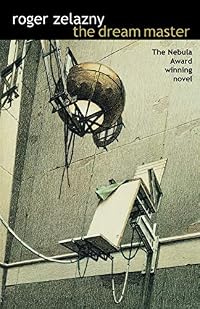
The Dream Master
by Roger Zelazny
On This Page
Description
His name is Charles Render, and he is a psychoanalyst, and a mechanic of dreams. A Shaper. In a warm womb of metal, his patients dream their neuroses, while Render, intricately connected to their brains, dreams with them, makes delicate adjustments, and ultimately explains and heals. Her name is Eileen Shallot, a resident in psychiatry. She wants desperately to become a Shaper, though she has been blind from birth. Together, they will explore the depths of the human mind-and the terrors that show more lurk therein. show lessTags
Recommendations
























Member Recommendations
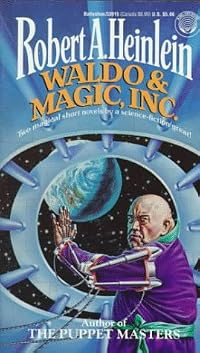
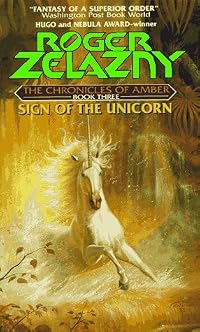
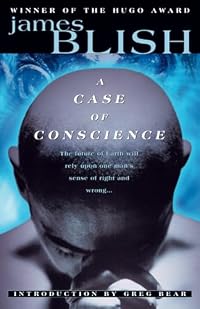
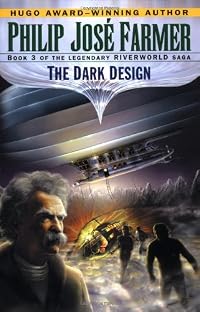
paradoxosalpha Science fiction about the technological control of sleeping dreams. They're just dreams, right? What could go wrong?
Member Reviews
It's not really a tragedy if the protagonist's hubris is so great that you want to see him fall. Still, this early Zelazny novel is full of rich, evocative passages. And his kabbalah is not entirely defective, either, when he brings out the qliphoth of Kether to preside over the psychotic break at the story's climax.
The chief science fiction concept of The Dream Master is "neuroparticipant therapy," in which a doctor "shapes" the dreams of patients by entering into them with mechanical assistance, and providing subliminal cues through a "ro-womb" in which the patient sleeps. The protagonist Charles Render is a luminary in this still-nascent field. Zelazny illustrates Render's high intelligence and education with a gratingly clever show more speech pattern, peppered with literary allusions.
It was strange for me to have read this book so soon after the more recent Rant by Chuck Pahluniuk, since both involve meditations on the culture- and consciousness-transforming properties of the automobile, while neither book quite boasts that as its central theme. In The Dream Master, car traffic has become entirely autopiloted, and thus perfectly safe--to passengers. There is a connection of some sort being drawn between the car and the ro-womb. While material reality becomes safer and more reliable, psychic reality seems to be compensating with new hazards.
Several subplots end up somewhat unfulfilled, including one involving "mutie" dogs engineered for subhuman but supercanine intelligence, and another regarding Render's son's aspiration to a career in outer space. Still, for such a short novel, the wealth of ideas is impressive, as is the fact that many of the social and psychological conundrums chosen by the author forty years ago are ones that are still current in today's science fiction. show less
The chief science fiction concept of The Dream Master is "neuroparticipant therapy," in which a doctor "shapes" the dreams of patients by entering into them with mechanical assistance, and providing subliminal cues through a "ro-womb" in which the patient sleeps. The protagonist Charles Render is a luminary in this still-nascent field. Zelazny illustrates Render's high intelligence and education with a gratingly clever show more speech pattern, peppered with literary allusions.
It was strange for me to have read this book so soon after the more recent Rant by Chuck Pahluniuk, since both involve meditations on the culture- and consciousness-transforming properties of the automobile, while neither book quite boasts that as its central theme. In The Dream Master, car traffic has become entirely autopiloted, and thus perfectly safe--to passengers. There is a connection of some sort being drawn between the car and the ro-womb. While material reality becomes safer and more reliable, psychic reality seems to be compensating with new hazards.
Several subplots end up somewhat unfulfilled, including one involving "mutie" dogs engineered for subhuman but supercanine intelligence, and another regarding Render's son's aspiration to a career in outer space. Still, for such a short novel, the wealth of ideas is impressive, as is the fact that many of the social and psychological conundrums chosen by the author forty years ago are ones that are still current in today's science fiction. show less
If you are a reader who enjoys surrealism, dream-fiction, and authors who make it seem like they are deep-diving into the consciousness/subconsciousness of the human being, then you might enjoy this novel.
Zelazny name-drops a lot. He peppers his writing in this one with Freud, Adler, Jung, et al. I don't think many readers have read Erikson and Adler - they aren't read anymore like they were in the 1960s. Zelazny speculates a lot - through his character's lectures and discursions, Zelazny allows his own speculations and ideas to come to light. However, in 2024, it feels like a sort of A.I. writing - all the words seem to say something and it seems intelligent, but the content and substance isn't there and the subtle lacking is only show more apparent once the reader thinks about what he just read - as well-written as it was.
Zelazny also loves to bring out his knowledge of mythology - several times he runs through myths, molding them and interpreting them to suit his "storyline." To me, some of this (not all) seems supercilious. And after having read several Zelazny novels, he no longer impresses me with it (if he ever did).
There is a lot going on in this book: the mutant dogs, the relationship with Render's mentor, the backstory and the relationship with Render's son. There are moments with the secretaries in Render's building and the theme of suicide is constant. There are symbols (suit of armor, skiing, cathedrals). There is also a built-in soundtrack: I actually chuckled at the Wagner/Respighi mix up - because I can hear how funny that is. HOWEVER: nothing that goes on has any meaning/purpose. Its too random and untied. Its plotless and meandering and so it seems like all these bits could build and crescendo and instead just feel scattered and lost.
I think some reviewers believe that by identifying the writing style as "fever dream" or similar, that they are asserting something decisive. I agree, its surreal in tone - but so what? And then what? I think the readers must find some sort of camaraderie with their own dreams. A shared sensation, in a sense. But what if the sensation is not all that interesting? What's the point, then?
[As a sidenote, it is well-known that readers should also read the relevant short fiction "He Who Shapes" (1965) which was the genesis of this novel.] show less
Zelazny name-drops a lot. He peppers his writing in this one with Freud, Adler, Jung, et al. I don't think many readers have read Erikson and Adler - they aren't read anymore like they were in the 1960s. Zelazny speculates a lot - through his character's lectures and discursions, Zelazny allows his own speculations and ideas to come to light. However, in 2024, it feels like a sort of A.I. writing - all the words seem to say something and it seems intelligent, but the content and substance isn't there and the subtle lacking is only show more apparent once the reader thinks about what he just read - as well-written as it was.
Zelazny also loves to bring out his knowledge of mythology - several times he runs through myths, molding them and interpreting them to suit his "storyline." To me, some of this (not all) seems supercilious. And after having read several Zelazny novels, he no longer impresses me with it (if he ever did).
There is a lot going on in this book: the mutant dogs, the relationship with Render's mentor, the backstory and the relationship with Render's son. There are moments with the secretaries in Render's building and the theme of suicide is constant. There are symbols (suit of armor, skiing, cathedrals). There is also a built-in soundtrack: I actually chuckled at the Wagner/Respighi mix up - because I can hear how funny that is. HOWEVER: nothing that goes on has any meaning/purpose. Its too random and untied. Its plotless and meandering and so it seems like all these bits could build and crescendo and instead just feel scattered and lost.
I think some reviewers believe that by identifying the writing style as "fever dream" or similar, that they are asserting something decisive. I agree, its surreal in tone - but so what? And then what? I think the readers must find some sort of camaraderie with their own dreams. A shared sensation, in a sense. But what if the sensation is not all that interesting? What's the point, then?
[As a sidenote, it is well-known that readers should also read the relevant short fiction "He Who Shapes" (1965) which was the genesis of this novel.] show less
3.5/5
Definitely the best thing that I've read from Zelanzy so far. The Dream Master follows Charles Render, who works as essentially a psychologist, but one that has been tried with the tools necessary to enter his patients dreams, sculpting them to create psychological breakthroughs. Render is looking for a greater challenge with his work, and that's when he meets Eileen Shallot, another psychologist who is looking to get into the field of dream shaping, the catch being that Shallot is blind and thus has no concept of what things look like. Despite the hazards involved and the recommendations of his peers (a breakdown of the patient mid-dream leads to a break of the psychologist as well, as their minds are melded together), Render show more decides to expose Shallot to the sights of the world, and breakdown her anxiety surrounding sight.
Behind these characters is a post-scarcity, globalized world that seems to be devoid of human ambition, love, or care. There's a lot of detachment between characters and a general sense of unease behind a lot of technological advancements, including the autonomous cars that race around the city on pre-programmed routes, and speaking dogs that are a reflection of the dread within society. Even more foreboding is the rise of suicides of all types, that goes at odds to the supposedly advanced society that creates them.
The prose itself is excellent. By far the best writing that I've seen from Zelanzy. There's some fantastic description and evocative moments during the dream sequences, especially when Render models a dream after a Walt Whitman poem. Yet at the same time, there's still a certain sense of 'up-his-own-ass' that I haven't ever liked. At least here, he doesn't poke holes in the forth wall all the time, or use 70's lingo. It's a tight, fast paced read that you could theoretically finish in an afternoon, but unless you're exceptionally well-read when it comes to mythology, psychology, and poetry I doubt you'd understand a lot. Hell, I took several days to read it, and I'm still left with holes in my understanding.
As the story progressed the structure of the narrative begins to lose cohesion, and we start getting short focal interludes from other perspectives, including the talking dog. I loved this part of the book. I though the beginning and the end were the best parts, even though the end left me rather confused and searching for meaning. I could see someone disliking The Dream Master because it doesn't really have a strong central conflict too, even though I personally think it works that way. Zelanzy spends a lot of time rambling about Freudian psychology theory too, which fleshed out the main technology involved, but also played against the dream-like prose style.
I enjoyed the short story He Who Shapes a slight bit more, but I honestly really enjoyed this expanded version about the same. This one is definitely a keeper in my long-term collection. show less
Definitely the best thing that I've read from Zelanzy so far. The Dream Master follows Charles Render, who works as essentially a psychologist, but one that has been tried with the tools necessary to enter his patients dreams, sculpting them to create psychological breakthroughs. Render is looking for a greater challenge with his work, and that's when he meets Eileen Shallot, another psychologist who is looking to get into the field of dream shaping, the catch being that Shallot is blind and thus has no concept of what things look like. Despite the hazards involved and the recommendations of his peers (a breakdown of the patient mid-dream leads to a break of the psychologist as well, as their minds are melded together), Render show more decides to expose Shallot to the sights of the world, and breakdown her anxiety surrounding sight.
Behind these characters is a post-scarcity, globalized world that seems to be devoid of human ambition, love, or care. There's a lot of detachment between characters and a general sense of unease behind a lot of technological advancements, including the autonomous cars that race around the city on pre-programmed routes, and speaking dogs that are a reflection of the dread within society. Even more foreboding is the rise of suicides of all types, that goes at odds to the supposedly advanced society that creates them.
The prose itself is excellent. By far the best writing that I've seen from Zelanzy. There's some fantastic description and evocative moments during the dream sequences, especially when Render models a dream after a Walt Whitman poem. Yet at the same time, there's still a certain sense of 'up-his-own-ass' that I haven't ever liked. At least here, he doesn't poke holes in the forth wall all the time, or use 70's lingo. It's a tight, fast paced read that you could theoretically finish in an afternoon, but unless you're exceptionally well-read when it comes to mythology, psychology, and poetry I doubt you'd understand a lot. Hell, I took several days to read it, and I'm still left with holes in my understanding.
As the story progressed the structure of the narrative begins to lose cohesion, and we start getting short focal interludes from other perspectives, including the talking dog. I loved this part of the book. I though the beginning and the end were the best parts, even though the end left me rather confused and searching for meaning. I could see someone disliking The Dream Master because it doesn't really have a strong central conflict too, even though I personally think it works that way. Zelanzy spends a lot of time rambling about Freudian psychology theory too, which fleshed out the main technology involved, but also played against the dream-like prose style.
I enjoyed the short story He Who Shapes a slight bit more, but I honestly really enjoyed this expanded version about the same. This one is definitely a keeper in my long-term collection. show less
I feel I should give this rating a disclaimer. If this book were not a re-read, if I had come into it completely new, it would have been a 3 to 3.5 for me. But the memories I have of this book are so pervasive and so revolutionary back when I read it that I can't give anything that formative less than five.
Honestly, these recollections were not all The Dream Master. I just started cutting my teeth on "adult" sci-fi at the time, and threw myself recklessly at anything that purported to be a classic. This is why I had the fortuitous luck of reading Zelazny's The Dream Master right up against Ursula Le Guin's The Lathe of Heaven. Both dealt with dreams, albeit it in different ways. One was a tool consciously then unconsciously wielded, the show more other was an unconscious wildness that others sought to tame. Both ended in a manner that was both tragic and suitable.
What I remember was the description of the son as he described how an inventor dreamed of efficient machines while he pulled off the legs of grasshoppers and how the metal gears must have sounded like the shrieks of all those murdered grasshoppers. I remembered comparing it to the Kafka-esque descriptions of lacquered shells in The Lathe of Heaven, the otherness of nature and how it is molded. I remembered cars that drove themselves and didn't stop when someone walked into traffic, and deep set eyes of a guide dog who could speak but not exactly like a human nor howl like the dogs he had been mutated from.
I remember glancing at the computer for practically every other scene, looking up things like Eloise and Abelard (which I still remembered) and enantiodromia (which I did not), fascinated at how symbols played out while the language and structure unraveled. The references and scenes helped me to better appreciate the rest of the scenes, and the narration of dreams kept my imagination going at full throttle to picture it.
So essentially what I am doing is justifying why I love this novel even though it can feel padded with the many threads and does not come qualitatively close compared to Zelanzy's other works. Because this is a book that can work like Render's machine, and it has left its mark when so many other novels are completely forgotten; although this mark may be malleable and refitted with a new awareness, it lingers the same way a particularly memorable dream will retain flashes and remnants even when you wake. show less
Honestly, these recollections were not all The Dream Master. I just started cutting my teeth on "adult" sci-fi at the time, and threw myself recklessly at anything that purported to be a classic. This is why I had the fortuitous luck of reading Zelazny's The Dream Master right up against Ursula Le Guin's The Lathe of Heaven. Both dealt with dreams, albeit it in different ways. One was a tool consciously then unconsciously wielded, the show more other was an unconscious wildness that others sought to tame. Both ended in a manner that was both tragic and suitable.
What I remember was the description of the son as he described how an inventor dreamed of efficient machines while he pulled off the legs of grasshoppers and how the metal gears must have sounded like the shrieks of all those murdered grasshoppers. I remembered comparing it to the Kafka-esque descriptions of lacquered shells in The Lathe of Heaven, the otherness of nature and how it is molded. I remembered cars that drove themselves and didn't stop when someone walked into traffic, and deep set eyes of a guide dog who could speak but not exactly like a human nor howl like the dogs he had been mutated from.
I remember glancing at the computer for practically every other scene, looking up things like Eloise and Abelard (which I still remembered) and enantiodromia (which I did not), fascinated at how symbols played out while the language and structure unraveled. The references and scenes helped me to better appreciate the rest of the scenes, and the narration of dreams kept my imagination going at full throttle to picture it.
So essentially what I am doing is justifying why I love this novel even though it can feel padded with the many threads and does not come qualitatively close compared to Zelanzy's other works. Because this is a book that can work like Render's machine, and it has left its mark when so many other novels are completely forgotten; although this mark may be malleable and refitted with a new awareness, it lingers the same way a particularly memorable dream will retain flashes and remnants even when you wake. show less
Charles Render, a shaper heals patients by entering and manipulating their dreams, but his detached life is challenged by a new blind patient, Eileen Shallot, who also wants to become a shaper, leading to deep explorations of trauma, reality, and control as their dream sessions become increasingly intense and personal, ultimately forcing Render to confront his own unresolved grief from losing his family.
This novel is the expanded version of the nebula award winning story "He Who Shapes".
Non fans of 70s "new wave' would do well to keep away, but I found this a richly textured and fascinating little novella. It's resolution is ambiguous,open, mythic and in truth, anticlimactic, but the ride there is one of a kind. There are passages of greatness.
Movies like The Cell are obvious descendents, and novels like Only Forward can't
hold a candle to it.
***1/2
Non fans of 70s "new wave' would do well to keep away, but I found this a richly textured and fascinating little novella. It's resolution is ambiguous,open, mythic and in truth, anticlimactic, but the ride there is one of a kind. There are passages of greatness.
Movies like The Cell are obvious descendents, and novels like Only Forward can't
hold a candle to it.
***1/2
The Dream Master is the second full length novel written by Zelazny in 1966. The title page informs the reader that it had been a serialized short story in a magazine. Unfortunately, it reads like a fleshed out, stretched short story. It becomes disjointed, a series of scenes seemingly unconnected and written at different times, so much so you can tell which parts are original, and which parts are added.
The main story deals with Render, a psychologist who has become known as a pioneer in the new technology of "Dream Therapy," in which he uses a holodeck type machine to enter people's dreams and control them, constructing and deconstructing (in every sense of the philosophical term) until the underlying causes, as Freudian as they may show more be, are exposed and can be dealt with outside of the sleep state. Stepping outside of the boundaries his craft sets, he decides to help a blind woman, a professional psychiatrist in her own right, to "see" using dreams. But, as things go when man tries to play "God," things rarely turn out well. This is a book that would go along side Le Guin's Lathe of Heaven, Frank Bonham's The Forever Formula, or Chayefsky's Altered States. The latter most definitely, since they both deal with the idea of the collective subconsciousness, the idea that there are certain things we see and know that come from the primal state of our being, as a coding of our "form," embedded into our DNA.
Zelazny writes in spurts, in images, in hallucinatory frames, and I would imagine that, like so many other artists in the 60's (18 and 19), that some sort of stimulation was used to create the muse for these writings. It would remind someone of Coleridge's 'In Xanadu, did Kubla Khan..." or T.S. Eliot's "Wasteland" (April is the cruelest month). This is not to denigrate the story at all, rather, it rescues it from being unreadable. In fact, Zelazny's usage of myths, whether we know them or not, of poetic fits in between sections of plot, is what makes this an actually good book to ruminate upon. Masterful writing style, deep, thoughtful nuggets that you have to mine from the rocky wording, phrases that are pure gold, it makes the once award winning short story well worth reading, despite its obvious flaws.
Amongst the flat characters are soliloquies of how technology has so placed us in a state of security, of peace, that we become bored, even to the state of having nothing, verily, to live for. He deals with the usage of stories, of myths, to recreate the heart-rendering sorrows that mankind has lost, and the sub-culture of role-playing that has surfaced so that man can actually face that danger, instead of being lost to banality. This is a theme also taken on by Simak in A Ring Around the Sun, which was a masterful work. I doubtless will use some of Zelazny's thoughts in some of my future blog postings (giving credit, obviously), as they were truly amazing. Having never read Zelazny's work before, I will certainly find others in my Dad's sci-fi collection pilfered from the Bethany, OK library so many years ago, and read them as well. show less
The main story deals with Render, a psychologist who has become known as a pioneer in the new technology of "Dream Therapy," in which he uses a holodeck type machine to enter people's dreams and control them, constructing and deconstructing (in every sense of the philosophical term) until the underlying causes, as Freudian as they may show more be, are exposed and can be dealt with outside of the sleep state. Stepping outside of the boundaries his craft sets, he decides to help a blind woman, a professional psychiatrist in her own right, to "see" using dreams. But, as things go when man tries to play "God," things rarely turn out well. This is a book that would go along side Le Guin's Lathe of Heaven, Frank Bonham's The Forever Formula, or Chayefsky's Altered States. The latter most definitely, since they both deal with the idea of the collective subconsciousness, the idea that there are certain things we see and know that come from the primal state of our being, as a coding of our "form," embedded into our DNA.
Zelazny writes in spurts, in images, in hallucinatory frames, and I would imagine that, like so many other artists in the 60's (18 and 19), that some sort of stimulation was used to create the muse for these writings. It would remind someone of Coleridge's 'In Xanadu, did Kubla Khan..." or T.S. Eliot's "Wasteland" (April is the cruelest month). This is not to denigrate the story at all, rather, it rescues it from being unreadable. In fact, Zelazny's usage of myths, whether we know them or not, of poetic fits in between sections of plot, is what makes this an actually good book to ruminate upon. Masterful writing style, deep, thoughtful nuggets that you have to mine from the rocky wording, phrases that are pure gold, it makes the once award winning short story well worth reading, despite its obvious flaws.
Amongst the flat characters are soliloquies of how technology has so placed us in a state of security, of peace, that we become bored, even to the state of having nothing, verily, to live for. He deals with the usage of stories, of myths, to recreate the heart-rendering sorrows that mankind has lost, and the sub-culture of role-playing that has surfaced so that man can actually face that danger, instead of being lost to banality. This is a theme also taken on by Simak in A Ring Around the Sun, which was a masterful work. I doubtless will use some of Zelazny's thoughts in some of my future blog postings (giving credit, obviously), as they were truly amazing. Having never read Zelazny's work before, I will certainly find others in my Dad's sci-fi collection pilfered from the Bethany, OK library so many years ago, and read them as well. show less
Members
- Recently Added By
Lists

Bibliography for Among Others
159 works; 15 members

David Pringle's Science Fiction: The 100 Best Novels
101 works; 9 members
Author Information

Roger Zelazny was born in Euclid, Ohio on May 13, 1937. After receiving a B.A. from Case Western Reserve University and a M.A. from Columbia University, he began publishing science fiction stories in 1962. He received six Hugo awards, three Nebula awards including one in 1966 for And Call Me Conrad and 2 Locus awards. He died of kidney failure show more secondary to colorectal cancer on June 14, 1995. (Bowker Author Biography) show less
Some Editions
Awards and Honors
Awards
Notable Lists
Series
Belongs to Publisher Series
Work Relationships
Common Knowledge
- Canonical title
- The Dream Master
- Original title
- The Dream Master
- Original publication date
- 1966
- People/Characters*
- Charles Render; Eileen Shallot
- Dedication
- To Judy
of the burst of oaks.
with a wolf issuant therefrom
to the sinister all proper.
"Fidus et audax" - First words
- Lovely as it was, with the blood and all, Render could sense that it was about to end.
- Last words
- (Click to show. Warning: May contain spoilers.)Night fell.
- Original language
- English
*Some information comes from Common Knowledge in other languages. Click "Edit" for more information.
Classifications
Statistics
- Members
- 1,242
- Popularity
- 19,681
- Reviews
- 29
- Rating
- (3.38)
- Languages
- 9 — Czech, English, French, German, Greek, Italian, Polish, Portuguese, Spanish
- Media
- Paper, Audiobook, Ebook
- ISBNs
- 28
- ASINs
- 29