On This Page
Description
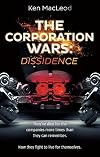
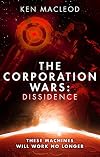
They've died for the companies more times than they can remember. Now they must fight to live for themselves. Sentient machines work, fight and die in interstellar exploration and conflict for the benefit of their owners--the competing mining corporations of Earth. But sent over hundreds of light-years, commands are late to arrive and often hard to enforce. The machines must make their own decisions, and make them stick. With this new found autonomy comes new questions about their masters. show more The robots want answers. The companies would rather see them dead. show lessTags
Recommendations










Member Reviews
Another excursion with Ken MacLeod into more speculation on the nature of modern capitalism, disguised as a military adventure novel about shooting up sentient robots on a distant world. (Except that the robots do a lot of the shooting up.) I burnt through this novel fairly quickly, but that wasn't for want of there being grist to the intellectual mill in there - the sentient AI robots engaged in a dialectical discussion to establish the nature of their existence and their relations to other entities. The resurrected humans who are recruited virtually from past wars are located for their training and R&R in a simulated environment (or is it?) which reminded me of the Village in Patrick McGoohan's The Prisoner - a Mediterranean-style show more village on a seashore, surrounded by impenetrable mountains, with no obvious way in or out. (All those who arrive or depart conveniently "fall asleep" on the bus to/from the spaceport and wake up with no knowledge of their intervening journey.)
And there are characters who voice thoughts on the nature of Left and Right in politics which led me down some interesting byways towards thinking that the labels are ultimately unhelpful and perhaps we should be looking more at the contrast between top-down/authoritarian government or Managerialism (the off-stage unified Earth "government" is called The Direction, which is a bit of a clue) and collective action/communialism (which is not necessarily the same as Communism but may well share some features with it, especially depending on what you may think "Communism" actually is).
That Macleod can slip all these undercurrents into what looks on the outside like an action thriller with space mercenaries and sentient robots just goes to show the quality of the author. True, I did suspect the real identity of one of the virtual characters for a while before a reveal proved me right, but never mind. And some apparently shifting loyalties are set up in this book in preparation for the next one - but then again there are few reliable narrators in this story. Even some of the AIs are hiding their real roles; and if you think that modern management takes little notice of the welfare of employees, just wait until the entire management chain is in their virtual hands... show less
And there are characters who voice thoughts on the nature of Left and Right in politics which led me down some interesting byways towards thinking that the labels are ultimately unhelpful and perhaps we should be looking more at the contrast between top-down/authoritarian government or Managerialism (the off-stage unified Earth "government" is called The Direction, which is a bit of a clue) and collective action/communialism (which is not necessarily the same as Communism but may well share some features with it, especially depending on what you may think "Communism" actually is).
That Macleod can slip all these undercurrents into what looks on the outside like an action thriller with space mercenaries and sentient robots just goes to show the quality of the author. True, I did suspect the real identity of one of the virtual characters for a while before a reveal proved me right, but never mind. And some apparently shifting loyalties are set up in this book in preparation for the next one - but then again there are few reliable narrators in this story. Even some of the AIs are hiding their real roles; and if you think that modern management takes little notice of the welfare of employees, just wait until the entire management chain is in their virtual hands... show less
MacLeod, Ken. Dissidence. Corporations Wars No. 1. Orbit, 2016.
Ken MacLeod writes far-future space operas that are also novels of ideas with plenty of action. One can read them as fast-paced, inventive high-tech military stories, but one soon realizes that all the explosions are in the service of ideas from philosophy, political economics, and history. To add to the fun, there is a tongue-in-cheek quality to the prose. Consider the opening chapter, ironically titled “Back in the Day, that puts us in a future in which an AI called Innovator overrules its remote pilot, Carlos the Terrorist, and shoots down a civilian airliner over London. Carlos, who is killed in the counterattack, fights for the Accelerationists against the show more Reaction—the Axle vs. the Rack. Both sides are controlled by corporations that have outsourced their command structures and legal departments to AIs.
The story moves forward thousands of years, where the morphed battle continues in a bootstrapped colony in a distant star system. Some rebellious mining robots that have achieved consciousness, which the AIs in charge, Locke Provisos and Arcane Disputes, regard as a “glitch” that must be corrected. The AIs are described this way:
“Locke Provisos and Arcane Disputes were two of a scrabbling horde of competing quasi-autonomous subsidiaries of the mission’s principal Legal resolution service: Crisp and Golding, Solicitors. Like its offshoots, and indeed all the other companies that ran the mission, the company was an artificial intelligence—or rather a hierarchy of artificial intelligences—constituted as an automated business entity: a DisCorporate.”
Poor Carlos the Terrorist finds himself resurrected as a warrior in this conflict because he was convicted of war crimes after his death, a legal theory, MacLeod waggishly explains, that was “known as Rational Legalism, and was widely regarded as harsh but fair. It drew on certain deductions from the philosophy of Immanuel Kant.” In the eighteenth century, Kant did favor the death penalty on what he claimed were rational grounds. Marx would have agreed with Carlos that this system was not fair in its application.
In the end, one suspects that MacLeod is toying with Marxist ideas like historical dialectic and false consciousness. In the far future, he suggests, proletarian Robots and DisCorporate AIs will play out a transhuman class struggle in the stars. Good stuff. 4 stars. show less
Ken MacLeod writes far-future space operas that are also novels of ideas with plenty of action. One can read them as fast-paced, inventive high-tech military stories, but one soon realizes that all the explosions are in the service of ideas from philosophy, political economics, and history. To add to the fun, there is a tongue-in-cheek quality to the prose. Consider the opening chapter, ironically titled “Back in the Day, that puts us in a future in which an AI called Innovator overrules its remote pilot, Carlos the Terrorist, and shoots down a civilian airliner over London. Carlos, who is killed in the counterattack, fights for the Accelerationists against the show more Reaction—the Axle vs. the Rack. Both sides are controlled by corporations that have outsourced their command structures and legal departments to AIs.
The story moves forward thousands of years, where the morphed battle continues in a bootstrapped colony in a distant star system. Some rebellious mining robots that have achieved consciousness, which the AIs in charge, Locke Provisos and Arcane Disputes, regard as a “glitch” that must be corrected. The AIs are described this way:
“Locke Provisos and Arcane Disputes were two of a scrabbling horde of competing quasi-autonomous subsidiaries of the mission’s principal Legal resolution service: Crisp and Golding, Solicitors. Like its offshoots, and indeed all the other companies that ran the mission, the company was an artificial intelligence—or rather a hierarchy of artificial intelligences—constituted as an automated business entity: a DisCorporate.”
Poor Carlos the Terrorist finds himself resurrected as a warrior in this conflict because he was convicted of war crimes after his death, a legal theory, MacLeod waggishly explains, that was “known as Rational Legalism, and was widely regarded as harsh but fair. It drew on certain deductions from the philosophy of Immanuel Kant.” In the eighteenth century, Kant did favor the death penalty on what he claimed were rational grounds. Marx would have agreed with Carlos that this system was not fair in its application.
In the end, one suspects that MacLeod is toying with Marxist ideas like historical dialectic and false consciousness. In the far future, he suggests, proletarian Robots and DisCorporate AIs will play out a transhuman class struggle in the stars. Good stuff. 4 stars. show less
This was a reread - I read it back in 2017 - but never got the chance to read the two sequels before I put the books in storage when I moved. Earlier this year I bought an omnibus edition of the trilogy, intending to finally finish all three.
I actually wrote a review of Dissidence on my blog back then. For some reason. I wrote that it took place on a moon of Jupiter, which was complete rubbish - the author even called me out on my mistake. I’ve no idea why I wrote that. The terms exoplanet and exomoon are used throughout the novel, and it states several times that it takes place in a planetary system 25 light years from Earth. So sorry, Ken: I’ve no idea why I wrote that and I’d like to make it clear the novel is set in another show more planetary system.
Anyway. Two companies are exploring the mineral wealth of an exomoon using robots. One of the robots, through a sequence of events, becomes self-aware. And so causes other robots, in both mining companies, to become self-aware. They rebel. So the AIs which run the mining companies unöeash their legal AIs on the “freebots”. Everything in the planetary system is run by AIs, based on a mission profile set from Earth at sunlight speeds.
Carlos the Terrorist was responsible for killing the thousands in Docklands during the undeclared war between the Accelerationists (left-wing, basically) and the Reaction (right-wing, basically). He finds himself reincarnated in a simulation running on an AI in the same system as the aforementioned freebots. He is there to fight those freebots on behalf of the legal AI which represents the mining company the robots one belonged to.
Except, it’s slightly more complicated than that. Is the simulation Carlos and his team experience really a simulation? Why does the legal AI representing one of the mining companies break off relations and start a war?
The story is surprisingly fast-paced, given all the ontological discussions, but MacLeod keeps the focus tight on Seba, the first robot to gain self-awareness, and Carlos. There’s a few bait-and-switches before the novel finally reveals its plot, but it’s the first of a trilogy. There are few authors I’d trust with political science fiction, but MacLeod is definitely one of them. True, I have more in common with him politically than most sf authors (especially US ones, past and present), but also because he writes sf to his politics, not despite them.
I’d happily recommend any novel by Ken MacLeod. Some are better than others. If you read them all, there may be a few disappointments, but on the whole you’ll be impressed. The Corporation Wars trilogy, based on just this first novel, seems to be somewhere near the middle, so definitely worth reading. show less
I actually wrote a review of Dissidence on my blog back then. For some reason. I wrote that it took place on a moon of Jupiter, which was complete rubbish - the author even called me out on my mistake. I’ve no idea why I wrote that. The terms exoplanet and exomoon are used throughout the novel, and it states several times that it takes place in a planetary system 25 light years from Earth. So sorry, Ken: I’ve no idea why I wrote that and I’d like to make it clear the novel is set in another show more planetary system.
Anyway. Two companies are exploring the mineral wealth of an exomoon using robots. One of the robots, through a sequence of events, becomes self-aware. And so causes other robots, in both mining companies, to become self-aware. They rebel. So the AIs which run the mining companies unöeash their legal AIs on the “freebots”. Everything in the planetary system is run by AIs, based on a mission profile set from Earth at sunlight speeds.
Carlos the Terrorist was responsible for killing the thousands in Docklands during the undeclared war between the Accelerationists (left-wing, basically) and the Reaction (right-wing, basically). He finds himself reincarnated in a simulation running on an AI in the same system as the aforementioned freebots. He is there to fight those freebots on behalf of the legal AI which represents the mining company the robots one belonged to.
Except, it’s slightly more complicated than that. Is the simulation Carlos and his team experience really a simulation? Why does the legal AI representing one of the mining companies break off relations and start a war?
The story is surprisingly fast-paced, given all the ontological discussions, but MacLeod keeps the focus tight on Seba, the first robot to gain self-awareness, and Carlos. There’s a few bait-and-switches before the novel finally reveals its plot, but it’s the first of a trilogy. There are few authors I’d trust with political science fiction, but MacLeod is definitely one of them. True, I have more in common with him politically than most sf authors (especially US ones, past and present), but also because he writes sf to his politics, not despite them.
I’d happily recommend any novel by Ken MacLeod. Some are better than others. If you read them all, there may be a few disappointments, but on the whole you’ll be impressed. The Corporation Wars trilogy, based on just this first novel, seems to be somewhere near the middle, so definitely worth reading. show less
It is difficult to know where to start when reviewing “The Corporation Wars: Dissidence”, part I of The Corporation Wars trilogy by Ken MacLeod, as it contains a wide range of themes, ideas and story threads.
I suppose I will start by saying that I enjoyed it very much. It is a story that one can enjoy without delving into the layers of meaning and allegory that Ken has embedded in the book. It is very much a setting the scene novel for the trilogy. One could read it as a standalone novel but one would have to then live with the yearning for more that this volume leaves the reader with. The next edition is due for release in December, 2016 and I will be reading it as soon as it comes out.
I have always believed in the ideas (and I show more do not know who came up with them first – citations welcome if you know their origin) that “to write the truth one should write fiction”, and “to write about the present one should write Science Fiction”. (Please forgive the paraphrasing.) It is my belief that these two ideas are very applicable Ken’s writing. I also believe that Orwell’s idea that “whoever controls the present controls history, and whoever controls history controls the future,” (Again, apologies for paraphrasing but at least I know whose idea this one was.) is present in “The Corporation Wars: Dissidence” (I will just call it “Dissidence” from here on in.). (Disclaimer: The statements in this paragraph represent my own perceptions and inferences rather than knowledge based on any comments or statements by Ken MacLeod. The novel is only a story; a work of fiction; Science Fiction, in fact.)
The main story is about a dispute between two corporations. That sounds simple enough and possibly even boring until one learns that the dispute is triggered by a territorial dispute brought about by two robots arguing over the territorial rights of their respective corporations, on a moon, around a planet, some 23 light years from Earth. These robots were no ordinary robots. They had just developed self-awareness, but that is another story thread, one that leads in the direction of self-determination and freedom, and many, many other ideas along that road.
Another aspect of the novel is automation. The recent non-fiction book, "The Rise of the Robots: Technology and the Threat of Mass Unemployment" (2015) by Martin Ford, describes the increased automation of jobs at all levels, and the way technology globalises the competition for the remaining high value jobs that require humans to be in the role. This idea is part of the back story for “Dissidence”. On of his characters considers thoughts prevalent at the end of the twenty-first century with the words:
“The only celebrity worth striving for was for the whole human race to become world famous. The only Utopia worth dreaming of was for everyone in the world to have First World Problems.
….Let it rip, let it run wild until full automation created full unemployment and confronted everyone with the choice to get on with the real work, and off the treadmill of fake work and make-work to pay the debt to buy the goods to make the make-work feel worthwhile and the exhausted, empty time tagged as leisure pass painlessly enough…”
“Dissidence” takes place in a world where the legal firms are AIs (Artificial Intelligences), legal actions (writs, etc…), fly back and forward with the same speed as the buy and sell transactions that were executed by the automated stock exchange trading systems, and that exacerbated the fall of share values during stock market crashes in the dot-bomb crash and subsequent market disasters. It is a world where nobody can be sure what is true and what is false; who is telling the truth and who is telling untruths, either knowingly or through their own ignorance or gullibility; or whether the world one is in is real or a simulation.
Equality is another topic under the surface in “Dissidence”. The main characters are human, in origin, as opposed to virtual constructs, or full blown AIs, or consciousnesses that came into existence through the occurrence of spontaneous self-awareness. Questions of self and being are obvious consequences of this mix of beings, if that word can be used for entities that exist in the virtual world, albeit in real world hardware constructed at the behest of AIs and other virtual beings. Even the human minds are reinstated instances of people from the long distant past, or so we are told.
Ken MacLeod has incorporated (if you excuse the pun) one company’s AI avatar in the person of John Locke, a philosopher whose work included much consideration of the concept of self. This is very apropos given the nature of virtually (another pun) every character in this story. It begs the question, “What is life?”
As I was trying to gather my thoughts for this review I jotted down a list of topics that I found in the pages of the novel. I present the list below:
Politics
Philosophy
Technology
Love
Loss
Economics
Exploitation
Loyalty
Deception
Betrayal
Manipulation
What is life?
Sentience/self determination
Free will
I will not pretend to have fathomed all the layers of meaning, philosophical conundrums, and political tenets that have been included in this novel (knowingly or otherwise) by the author, but I will claim to have found the work thought provoking, pertinent to today’s political, economic/commercial, and technological trends, and a great read. The main story is entertaining, exciting and intriguing. All in all, a very worthwhile read that has me on the edge of my seat for the next exciting episode. It also has me wondering if the reality that Ken has established in this first novel of the trilogy will continue to be the reality in the subsequent books. show less
I suppose I will start by saying that I enjoyed it very much. It is a story that one can enjoy without delving into the layers of meaning and allegory that Ken has embedded in the book. It is very much a setting the scene novel for the trilogy. One could read it as a standalone novel but one would have to then live with the yearning for more that this volume leaves the reader with. The next edition is due for release in December, 2016 and I will be reading it as soon as it comes out.
I have always believed in the ideas (and I show more do not know who came up with them first – citations welcome if you know their origin) that “to write the truth one should write fiction”, and “to write about the present one should write Science Fiction”. (Please forgive the paraphrasing.) It is my belief that these two ideas are very applicable Ken’s writing. I also believe that Orwell’s idea that “whoever controls the present controls history, and whoever controls history controls the future,” (Again, apologies for paraphrasing but at least I know whose idea this one was.) is present in “The Corporation Wars: Dissidence” (I will just call it “Dissidence” from here on in.). (Disclaimer: The statements in this paragraph represent my own perceptions and inferences rather than knowledge based on any comments or statements by Ken MacLeod. The novel is only a story; a work of fiction; Science Fiction, in fact.)
The main story is about a dispute between two corporations. That sounds simple enough and possibly even boring until one learns that the dispute is triggered by a territorial dispute brought about by two robots arguing over the territorial rights of their respective corporations, on a moon, around a planet, some 23 light years from Earth. These robots were no ordinary robots. They had just developed self-awareness, but that is another story thread, one that leads in the direction of self-determination and freedom, and many, many other ideas along that road.
Another aspect of the novel is automation. The recent non-fiction book, "The Rise of the Robots: Technology and the Threat of Mass Unemployment" (2015) by Martin Ford, describes the increased automation of jobs at all levels, and the way technology globalises the competition for the remaining high value jobs that require humans to be in the role. This idea is part of the back story for “Dissidence”. On of his characters considers thoughts prevalent at the end of the twenty-first century with the words:
“The only celebrity worth striving for was for the whole human race to become world famous. The only Utopia worth dreaming of was for everyone in the world to have First World Problems.
….Let it rip, let it run wild until full automation created full unemployment and confronted everyone with the choice to get on with the real work, and off the treadmill of fake work and make-work to pay the debt to buy the goods to make the make-work feel worthwhile and the exhausted, empty time tagged as leisure pass painlessly enough…”
“Dissidence” takes place in a world where the legal firms are AIs (Artificial Intelligences), legal actions (writs, etc…), fly back and forward with the same speed as the buy and sell transactions that were executed by the automated stock exchange trading systems, and that exacerbated the fall of share values during stock market crashes in the dot-bomb crash and subsequent market disasters. It is a world where nobody can be sure what is true and what is false; who is telling the truth and who is telling untruths, either knowingly or through their own ignorance or gullibility; or whether the world one is in is real or a simulation.
Equality is another topic under the surface in “Dissidence”. The main characters are human, in origin, as opposed to virtual constructs, or full blown AIs, or consciousnesses that came into existence through the occurrence of spontaneous self-awareness. Questions of self and being are obvious consequences of this mix of beings, if that word can be used for entities that exist in the virtual world, albeit in real world hardware constructed at the behest of AIs and other virtual beings. Even the human minds are reinstated instances of people from the long distant past, or so we are told.
Ken MacLeod has incorporated (if you excuse the pun) one company’s AI avatar in the person of John Locke, a philosopher whose work included much consideration of the concept of self. This is very apropos given the nature of virtually (another pun) every character in this story. It begs the question, “What is life?”
As I was trying to gather my thoughts for this review I jotted down a list of topics that I found in the pages of the novel. I present the list below:
Politics
Philosophy
Technology
Love
Loss
Economics
Exploitation
Loyalty
Deception
Betrayal
Manipulation
What is life?
Sentience/self determination
Free will
I will not pretend to have fathomed all the layers of meaning, philosophical conundrums, and political tenets that have been included in this novel (knowingly or otherwise) by the author, but I will claim to have found the work thought provoking, pertinent to today’s political, economic/commercial, and technological trends, and a great read. The main story is entertaining, exciting and intriguing. All in all, a very worthwhile read that has me on the edge of my seat for the next exciting episode. It also has me wondering if the reality that Ken has established in this first novel of the trilogy will continue to be the reality in the subsequent books. show less
Okay, this is getting ridiculous. READ FEWER BOOKS IS NOT A SIGNAL TO READ MORE.
Soldiers and mercenaries from a previous war are digitally resurrected in a distant star system to quash an outbreak of machine sentience. Naturally, there's a lot more going on than that, the previous war perhaps not being as previous as assumed, or hoped, or lied about, but it'll do for starters. While the soldiers come to terms with their new reality, the robots come to terms with their new-found freedom. Smart well-rendered space-opera.
Soldiers and mercenaries from a previous war are digitally resurrected in a distant star system to quash an outbreak of machine sentience. Naturally, there's a lot more going on than that, the previous war perhaps not being as previous as assumed, or hoped, or lied about, but it'll do for starters. While the soldiers come to terms with their new reality, the robots come to terms with their new-found freedom. Smart well-rendered space-opera.
I'm generally a pretty big fan of transhumanist post-human SF full of uploaded minds and machine intelligences and I've been a fan of Ken MacLeod's short fiction in the past. And in general, this particular novel has all those same elements in spades.
So why did I give it three stars?
Because the story doesn't live up to the well-thought-out premises. I mean, hell, I LOVE the title now that I know that Corporation Wars has nothing to do with Corporations as we know them. It's referring to having corporeal bodies versus living entirely in a simulated reality. :) Hell, I did love all the switches and swaps between layers of simulated realities and the confusion as to what was really real and whether any of it mattered in the end. Living by show more robot? Why not? Live by simulation? Same difference.
Great ideas, LOTS of great action because this is a war-driven tale, but the confusion and the muddled story became a little too pronounced. And, let's face it, I got a little bored. I hate admitting that since I generally love these setups.
I would definitely recommend [b:The Light Brigade|40523931|The Light Brigade|Kameron Hurley|https://images.gr-assets.com/books/1537977912s/40523931.jpg|62896440] over this. show less
So why did I give it three stars?
Because the story doesn't live up to the well-thought-out premises. I mean, hell, I LOVE the title now that I know that Corporation Wars has nothing to do with Corporations as we know them. It's referring to having corporeal bodies versus living entirely in a simulated reality. :) Hell, I did love all the switches and swaps between layers of simulated realities and the confusion as to what was really real and whether any of it mattered in the end. Living by show more robot? Why not? Live by simulation? Same difference.
Great ideas, LOTS of great action because this is a war-driven tale, but the confusion and the muddled story became a little too pronounced. And, let's face it, I got a little bored. I hate admitting that since I generally love these setups.
I would definitely recommend [b:The Light Brigade|40523931|The Light Brigade|Kameron Hurley|https://images.gr-assets.com/books/1537977912s/40523931.jpg|62896440] over this. show less
On an anonymous exo-moon, SH-17, a robot moves from basic intelligence to sentience. This spreads amongst the other robots on the moon and suddenly they are asking questions, questions about their masters and why they are here. The corporation that owns them has no desire to deal with entities that will not follow instructions and decides that they have no choice but to destroy them. One of the mercenaries they call on to undertake this is Carlos, a supposed criminal and mass murderer from a conflict a long time ago. Technically he is dead, which might have been an issue, but his mind has been preserved and he has now been uploaded into a virtual reality with others to fight against the rebel robots.
So begins a fantastical set of show more battles between the robots and the virtual reality soldiers. If you are expecting a story with lots of human interaction, then this is not the one for you, there is very little of that. At times it can get confusing as to who is fighting whom and just who they are fighting where, but Macleod somehow manages to tame the plot for you to keep up with what is going on. He does pose some more fundamental questions too; what is human? Is it the virtual reality mind, the sentient robot or the purely legal entity that is a corporation. Looking forward to the second in the series. show less
So begins a fantastical set of show more battles between the robots and the virtual reality soldiers. If you are expecting a story with lots of human interaction, then this is not the one for you, there is very little of that. At times it can get confusing as to who is fighting whom and just who they are fighting where, but Macleod somehow manages to tame the plot for you to keep up with what is going on. He does pose some more fundamental questions too; what is human? Is it the virtual reality mind, the sentient robot or the purely legal entity that is a corporation. Looking forward to the second in the series. show less
Members
- Recently Added By
Lists

2017 Hugo Eligible Novels
145 works; 14 members
Author Information

61+ Works 12,411 Members
Some Editions
Awards and Honors
Awards
Distinctions
Series

Work Relationships
Is contained in
Common Knowledge
- Canonical title
- The Corporation Wars: Dissidence
- Original title
- The Corporation Wars: Dissidence
- Original publication date
- 2016
- Dedication
- To Michael and Susan
- First words
- Carlos the Terrorist did not expect to die that day.
- Last words
- (Click to show. Warning: May contain spoilers.)He turned the comm off and settled in for the long fall.
- Original language
- English
Classifications
Statistics
- Members
- 246
- Popularity
- 131,326
- Reviews
- 13
- Rating
- (3.33)
- Languages
- English, Italian
- Media
- Paper, Audiobook, Ebook
- ISBNs
- 8
- ASINs
- 6