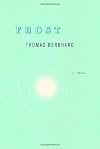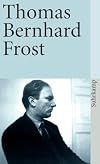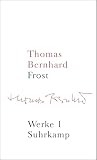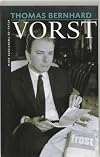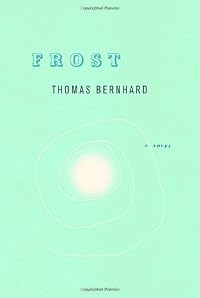
Frost
by Thomas Bernhard
On This Page
Description
Visceral, raw, singular, and distinctive,Frostis the story of a friendship between a young man at the beginning of his medical career and a painter who is entering his final days. A writer of world stature, Thomas Bernhard combined a searing wit and an unwavering gaze into the human condition.Frostfollows an unnamed young Austrian who accepts an unusual assignment. Rather than continue with his medical studies, he travels to a bleak mining town in the back of beyond, in order to clinically show more observe the aged painter, Strauch, who happens to be the brother of this young man’s surgical mentor. The catch is this: Strauch must not know the young man’s true occupation or the reason for his arrival. Posing as a promising law student with a love of Henry James, the young man befriends the mad artist and is caught up among an equally extraordinary cast of local characters, from his resentful landlady to the town’s mining engineers. This debut novel by Thomas Bernhard, which came out in German in 1963 and is now being published in English for the first time, marks the beginning of what was one of the twentieth century’s most powerful, provocative literary careers. show lessTags
Recommendations


















Member Reviews
This was Bernhard's first novel, following on from two collections of lyric verse and some musical collaborations with the composer Gerhard Lampersberg, and was really his breakthrough work as a prose writer, bringing him to the attention of the critics and winning him a couple of major prizes and quite a few important enemies (always a mark of success in Bernhard-land).
The narrator is a medical student, who has been given the rather unlikely assignment by his supervisor, the surgeon Strauch, of conducting an extensive undercover observation of Strauch's brother, a painter. The brother has burnt all his paintings, abandoned his life in Vienna, and gone into a Wittgenstein-like retreat in the obscure and impoverished mountain village of show more Weng, where he is staying in a run-down pub. The narrator tracks the painter down and soon finds himself recruited to go on long walks through the snow with him (Weng is clearly a place where it's always winter and never Christmas) and listen to his increasingly bleak and Bernhardish thoughts about his mental and physical state, the villagers, the landscape, Austria ("...the bordello of Europe..."), the arts, and death by disease, accident, murder and suicide.
It's a little bit looser and less intensively musical than mature Bernhard prose, and it uses unexpectedly conventional layout devices like paragraph breaks(!) and chapters, but you can see where it's headed. There's plenty of the usual scathing and very black humour, doctor-bashing, general misogyny, impatience with dullwittedness, and contempt for Austrian folksiness mingled with pleasure in the oddities of Austrian language. One of the main characters is the Wasenmeister, the person responsible for disposing of animal cadavers in the village (roughly equivalent to "knacker" in English). Not a word you will find in many modern dictionaries! Needless to say, he turns out to be in cahoots with the disreputable landlady of the pub.
Not a book that is likely to encourage many tourists to visit rural Austria, and probably best avoided if you are liable to depression, but otherwise well worth our time, like everything else I've read by Bernhard. And a fascinating glimpse at how he got to his mature style. show less
The narrator is a medical student, who has been given the rather unlikely assignment by his supervisor, the surgeon Strauch, of conducting an extensive undercover observation of Strauch's brother, a painter. The brother has burnt all his paintings, abandoned his life in Vienna, and gone into a Wittgenstein-like retreat in the obscure and impoverished mountain village of show more Weng, where he is staying in a run-down pub. The narrator tracks the painter down and soon finds himself recruited to go on long walks through the snow with him (Weng is clearly a place where it's always winter and never Christmas) and listen to his increasingly bleak and Bernhardish thoughts about his mental and physical state, the villagers, the landscape, Austria ("...the bordello of Europe..."), the arts, and death by disease, accident, murder and suicide.
It's a little bit looser and less intensively musical than mature Bernhard prose, and it uses unexpectedly conventional layout devices like paragraph breaks(!) and chapters, but you can see where it's headed. There's plenty of the usual scathing and very black humour, doctor-bashing, general misogyny, impatience with dullwittedness, and contempt for Austrian folksiness mingled with pleasure in the oddities of Austrian language. One of the main characters is the Wasenmeister, the person responsible for disposing of animal cadavers in the village (roughly equivalent to "knacker" in English). Not a word you will find in many modern dictionaries! Needless to say, he turns out to be in cahoots with the disreputable landlady of the pub.
Not a book that is likely to encourage many tourists to visit rural Austria, and probably best avoided if you are liable to depression, but otherwise well worth our time, like everything else I've read by Bernhard. And a fascinating glimpse at how he got to his mature style. show less
It feels like glacial music, the prose with its slow-creeping angularity. The onset of frost. Rhythm punctuated by cacophonous barking of the dogs and then silence—the empty aching silence of the larch wood—the dark valley, the frigidity of the rock face looming above a forest floor that never sees more than a grey shadow of sunlight.
When the days get that cold, I sit in my bed, and stare at the frost flowers on my window, that in a succession of miracles evoke landscapes from painting, from nature, from inner despair, only to crush them again, and to draw from them such truths as, to my conviction, are dispersed in their hundreds of thousands and their millions in our lives, and portray more than an intimation of a world that lies show more alongside our familiar world, a universe we have failed to recognize.
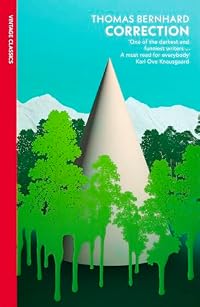
The painter Strauch and the young medical intern sutured to him, at first out of obligation, growing later as a virus into unavoidable necessity. The mingling of their voices, much like those of Roithamer and his unnamed friend in Bernhard's later novel Correction, the one man coming under the spell of the other man's words. The way Strauch talks, so cryptic in its allure, so alluring in its vitriol...
Strauch's language is the language of the heart muscle, a scandalous "cerebral pulse." It is rhythmic self-abasement under the "subliminal creak" of his own rafters. His notions and subterfuges, fundamentally in accord with the barking of those dogs that he drew my attention to, with which he "scattered me to the air." Can it still be described as language? Yes, it is the false bottom of language, the heaven and hell of language, the mutiny of rivers, "the steaming word-nostrils of brains that are in a state of endless and shameless despair."
Strauch's love-hate of the landscape, imbued with death, as he himself is consumed with death, his entire life seen by the intern as "a passion of suicide." His obsessions with the petty goings-on around him, the everyday life of the inn, the landlady and her philandering ways, the engineer and his hungering ego, the ubiquity of the knacker. The incessant walks—to the station, through the larch wood, into the ravine, to the church, the cemetery, the poorhouse—movement as necessity to keep from freezing, quoting his Pascal: "Our nature is motion, complete stasis is death."
We all live the lives of death masks. Everyone who is really alive has taken his off at one time or another, but as I say, people don't live, it's just, as I say, the life of death masks. […] A seeming life, no longer capable of real life. Cities that are long since dead, mountains too, long dead, livestock, poultry, even water and the creatures that used to live in the water. Reflections of our death masks. A death mask ball.
He grows irritated with his companion, the intern, who, in a rare moment of disagreement, objects to his "death mask ball" idea. "You young people don't believe," he said. "The whole world is nothing but a death-mask ball." Strauch wonders if for his entire life he had really been someone else altogether, and had thus been denied "admission to myself." Out of desperation then, he must write or tell about what preoccupies him, at all times. Death, truth, society's insipid nature, the destruction of greatness by jealousy and apathy, the complex role of the artist ("the great emetic agents of the time"), the monstrous horror of life itself. The familiar Bernhardian preoccupations are all in evidence, sprouting up in their infancy, tiny seedlings that will grow into thick gnarled vines over the next twenty fierce years of writing. Here there is less of his later repetition, and with section breaks perhaps allowing for easier digestion than the monolithic text blocks that mark his successive novels, but his prose and themes are still recognizable. The book can be read as one massive smothering metaphor for Bernhard's own feelings about his homeland. If you wanted to simplify it, that is. Strauch would likely draw your attention back to the dogs...
"Listen, the dogs! Listen to that barking." And he got up and walked out and went up to his room. When I followed him out into the entrance hall and stopped, I could hear through the half-iced-up open front door the long-drawn-out howling of dogs, and sometimes their barking. The endlessly drawn out howling, and the sound of barking biting into it. In front of me I heard the barking and howling, and behind me the laughing and vomiting and smacking of playing cards. Ahead of me the dogs, behind me the customers at the bar. I won't be able to sleep tonight. show less
"'You see,' said the painter, 'the brain is capable of nourishing itself on the inventions , the great inventions of little and lesser and infinitesimal dread ...it can make itself roar ...make itself a world, an original world, an ice age, a vast stone age of organization ...One proceeds from a very small and insignificant instance, from a little individual who falls into one's hands ...From the principle of some desecration, the justness of such desecration, into the desecration itself ...one leaves the victim lying there, one has snow fall on him, one has him decompose, dissolve, an an animal might dissolve that one once might have thought oneself to be ...Do you understand? Life is the purest, clearest, darkest, most crystalline show more form of hopelessness ...There is only one way to go, through the snow and ice into despair; past the adultery of reason.'" - pg 265
So the painter, Strauch, as you can tell, is really fun to be around and in this first novel by Bernhard you're around him a lot. He never goes away. His pain and suffering, his insanity, his desperate yearning for joy that can never exist, his sudden outbursts of miserable poetry, his disorganized mind - they never dissipate, come to a conclusion, enlighten or erupt. This is a novel of insistent suffering and the reader is left to find meaning wherever they can, amid the natural desolation of a snow covered village, Strauch wouldn't blame you if you decided there was nothing to find in the first place. The artfulness of this novel is captured in the nonsensical, poetic urge to go "past the adultery of reason." Unpacking that phrase is a waste of time, just as assessing a madman artist against the standards of medical norms is a waste of time, just as searching for meaning in the assessment of that student of medicine is a waste of time. It all amounts to no aims or conclusions. It exists in meaningless misery and deceptions layered with deceptions.
So, yeah, great book. Something to read the kids before bed. Bernhard's project came on strong and never let up. It is a difficult book, a painful book, and a necessary seedling for themes that resonate and develop throughout his career. Though this is Bernhard's first novel, I don't think it is the best place to start. In fact, I think this is a terrible place to start. I read Gargoyles first and it brought me here. I will likely read more of his work only because of the dialogue created between this and his other novels. show less
So the painter, Strauch, as you can tell, is really fun to be around and in this first novel by Bernhard you're around him a lot. He never goes away. His pain and suffering, his insanity, his desperate yearning for joy that can never exist, his sudden outbursts of miserable poetry, his disorganized mind - they never dissipate, come to a conclusion, enlighten or erupt. This is a novel of insistent suffering and the reader is left to find meaning wherever they can, amid the natural desolation of a snow covered village, Strauch wouldn't blame you if you decided there was nothing to find in the first place. The artfulness of this novel is captured in the nonsensical, poetic urge to go "past the adultery of reason." Unpacking that phrase is a waste of time, just as assessing a madman artist against the standards of medical norms is a waste of time, just as searching for meaning in the assessment of that student of medicine is a waste of time. It all amounts to no aims or conclusions. It exists in meaningless misery and deceptions layered with deceptions.
So, yeah, great book. Something to read the kids before bed. Bernhard's project came on strong and never let up. It is a difficult book, a painful book, and a necessary seedling for themes that resonate and develop throughout his career. Though this is Bernhard's first novel, I don't think it is the best place to start. In fact, I think this is a terrible place to start. I read Gargoyles first and it brought me here. I will likely read more of his work only because of the dialogue created between this and his other novels. show less
I'm not sure what I expected, but it wasn't this: I've read most of Bernhard's later work, and always put this one off. I think I'm glad--this was an amazing book, but I was expecting something easier than Bernhard's usual, not more difficult. The rant form is here in nuce, but broken up, like a later Bernhard book smashed into tesserae and scattered before the reader. Allow me to explain the clear with the obscure: it's much more Wittgenstein or Nietzsche, and less Adorno. And I prefer Adorno in every possible way.
"'You see,' said the painter, 'the brain is capable of nourishing itself on the inventions , the great inventions of little and lesser and infinitesimal dread ...it can make itself roar ...make itself a world, an original world, an ice age, a vast stone age of organization ...One proceeds from a very small and insignificant instance, from a little individual who falls into one's hands ...From the principle of some desecration, the justness of such desecration, into the desecration itself ...one leaves the victim lying there, one has snow fall on him, one has him decompose, dissolve, an an animal might dissolve that one once might have thought oneself to be ...Do you understand? Life is the purest, clearest, darkest, most crystalline show more form of hopelessness ...There is only one way to go, through the snow and ice into despair; past the adultery of reason.'" - pg 265
So the painter, Strauch, as you can tell, is really fun to be around and in this first novel by Bernhard you're around him a lot. He never goes away. His pain and suffering, his insanity, his desperate yearning for joy that can never exist, his sudden outbursts of miserable poetry, his disorganized mind - they never dissipate, come to a conclusion, enlighten or erupt. This is a novel of insistent suffering and the reader is left to find meaning wherever they can, amid the natural desolation of a snow covered village, Strauch wouldn't blame you if you decided there was nothing to find in the first place. The artfulness of this novel is captured in the nonsensical, poetic urge to go "past the adultery of reason." Unpacking that phrase is a waste of time, just as assessing a madman artist against the standards of medical norms is a waste of time, just as searching for meaning in the assessment of that student of medicine is a waste of time. It all amounts to no aims or conclusions. It exists in meaningless misery and deceptions layered with deceptions.
So, yeah, great book. Something to read the kids before bed. Bernhard's project came on strong and never let up. It is a difficult book, a painful book, and a necessary seedling for themes that resonate and develop throughout his career. Though this is Bernhard's first novel, I don't think it is the best place to start. In fact, I think this is a terrible place to start. I read Gargoyles first and it brought me here. I will likely read more of his work only because of the dialogue created between this and his other novels. show less
So the painter, Strauch, as you can tell, is really fun to be around and in this first novel by Bernhard you're around him a lot. He never goes away. His pain and suffering, his insanity, his desperate yearning for joy that can never exist, his sudden outbursts of miserable poetry, his disorganized mind - they never dissipate, come to a conclusion, enlighten or erupt. This is a novel of insistent suffering and the reader is left to find meaning wherever they can, amid the natural desolation of a snow covered village, Strauch wouldn't blame you if you decided there was nothing to find in the first place. The artfulness of this novel is captured in the nonsensical, poetic urge to go "past the adultery of reason." Unpacking that phrase is a waste of time, just as assessing a madman artist against the standards of medical norms is a waste of time, just as searching for meaning in the assessment of that student of medicine is a waste of time. It all amounts to no aims or conclusions. It exists in meaningless misery and deceptions layered with deceptions.
So, yeah, great book. Something to read the kids before bed. Bernhard's project came on strong and never let up. It is a difficult book, a painful book, and a necessary seedling for themes that resonate and develop throughout his career. Though this is Bernhard's first novel, I don't think it is the best place to start. In fact, I think this is a terrible place to start. I read Gargoyles first and it brought me here. I will likely read more of his work only because of the dialogue created between this and his other novels. show less
He thought, "Thomas Bernhard is mentioned as the most important post-war writer in German, is credited with ownership of a particular style, and is frequently referred to." He thought, "I shall read Bernhard's novels, starting with his first." He thought, "Bloody hell."
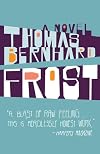
The cover blurb proclaims Frost to be "A blast of raw feeling." It's a blast of something, all right. 350 pages mostly consisting of a steady rant of complaints and invective, described by its admirers here - its admirers, mind - with words like "impenetrable" and "increasingly incomprehensible", which leaves me wondering, "do you people want something totally different than I do out of literature?"
There's not a plot so much as a vague gesture in that direction. A show more medical internist is sent by his superior to observe the doctor's brother for a month. The text does not have exchanges of dialogue but rather a few lines of this brother's directly spoken rants alternating with the internist's summary of the next few lines of the man's rants, and, repeat. A better recipe for boredom if this is not done well is hard to imagine.
Sometimes you can sort of chuckle at the rants. Of his fellow villagers: "The children had lice, the grown-ups had gonorrhea, or the syphilis that finally overwhelmed their nervous systems... Almost all of them have cankered lung lobes, pneumothorax and pneumoperitoneum are endemic. They have tuberculosis of the lungs, the head, the arms and legs." On rural folk: "That whole simple, pitiless world of thought, where simplicity and low-mindedness get hitched and ruin everything! Nothing comes from country people! Villages, morons in short sleeves! The country is no source anymore, only a trove of brutality and idiocy, of squalor and megalomania, of perjury and battery, of systematic extinction!" On the nature of humankind: "Where there is putrescence, I find I cannot breathe deeply enough. I always want to breathe in the odor of humanity, you understand."
For me, the human imagination is an aspect of "God created man in his own image," the imagination and creative impulse acts that bring us closer to God. But it's seen rather differently here: "The imagination is an expression of disorder, it has to be. In an ordered world, there would be no such thing as imagination, order wouldn't tolerate such a thing, imagination is completely alien to it. All the way here, I was asking myself what imagination is. I'm sure imagination is an illness. An illness that you don't catch, merely because you've always had it. An illness that is responsible for everything, and particularly everything ridiculous and malignant."
But then amazingly, about exactly halfway through the book, I found a few lines that counter the entire novel's essence. It's about a hospital attached to a chapel, nuns working as nurses. The internist reflects: "The sisters perform astonishing feats. Never get to bed before eleven, and are back from church already by five, having been heard singing there at half past four. Everywhere, the great white tulips of their bonnets, which manage to flower where everything is dark with despair, where everything else is bleak and bare and inimical."
Well, how un-Bernhardian seeming! A lone bright ray, surrounded by darkness.
So you see why I can't give it just 1 star, despite the fact that I skimmed near the end, and I hate skimming, it's the antithesis of my entire being, and I can't imagine recommending this book. Now, I wonder how I'll like his second novel... show less
The cover blurb proclaims Frost to be "A blast of raw feeling." It's a blast of something, all right. 350 pages mostly consisting of a steady rant of complaints and invective, described by its admirers here - its admirers, mind - with words like "impenetrable" and "increasingly incomprehensible", which leaves me wondering, "do you people want something totally different than I do out of literature?"
There's not a plot so much as a vague gesture in that direction. A show more medical internist is sent by his superior to observe the doctor's brother for a month. The text does not have exchanges of dialogue but rather a few lines of this brother's directly spoken rants alternating with the internist's summary of the next few lines of the man's rants, and, repeat. A better recipe for boredom if this is not done well is hard to imagine.
Sometimes you can sort of chuckle at the rants. Of his fellow villagers: "The children had lice, the grown-ups had gonorrhea, or the syphilis that finally overwhelmed their nervous systems... Almost all of them have cankered lung lobes, pneumothorax and pneumoperitoneum are endemic. They have tuberculosis of the lungs, the head, the arms and legs." On rural folk: "That whole simple, pitiless world of thought, where simplicity and low-mindedness get hitched and ruin everything! Nothing comes from country people! Villages, morons in short sleeves! The country is no source anymore, only a trove of brutality and idiocy, of squalor and megalomania, of perjury and battery, of systematic extinction!" On the nature of humankind: "Where there is putrescence, I find I cannot breathe deeply enough. I always want to breathe in the odor of humanity, you understand."
For me, the human imagination is an aspect of "God created man in his own image," the imagination and creative impulse acts that bring us closer to God. But it's seen rather differently here: "The imagination is an expression of disorder, it has to be. In an ordered world, there would be no such thing as imagination, order wouldn't tolerate such a thing, imagination is completely alien to it. All the way here, I was asking myself what imagination is. I'm sure imagination is an illness. An illness that you don't catch, merely because you've always had it. An illness that is responsible for everything, and particularly everything ridiculous and malignant."
But then amazingly, about exactly halfway through the book, I found a few lines that counter the entire novel's essence. It's about a hospital attached to a chapel, nuns working as nurses. The internist reflects: "The sisters perform astonishing feats. Never get to bed before eleven, and are back from church already by five, having been heard singing there at half past four. Everywhere, the great white tulips of their bonnets, which manage to flower where everything is dark with despair, where everything else is bleak and bare and inimical."
Well, how un-Bernhardian seeming! A lone bright ray, surrounded by darkness.
So you see why I can't give it just 1 star, despite the fact that I skimmed near the end, and I hate skimming, it's the antithesis of my entire being, and I can't imagine recommending this book. Now, I wonder how I'll like his second novel... show less
'Frost' yet another excrescence of Bernhard's imagination. This time it's a student who follows a painter, or rather a man who used to be a painter, in order to see if he is sane. Of course he isn't: that is so immediately obvious that the question becomes--as of the first five pages of the book--what kind of imagination the painter possesses. The book offers no relief, no pleasure of slowly dawning insight (even if that insight is might reveal psychosis, impending suicide, unrelieved pessimism, or bottomless misanthropy). Reading 'Frost' is like lying in pig slurry, and raising yourself every few minutes to wipe yourself, and then lying back down, then rising again. It makes Beckett seem prissy and sterile, and it makes nearly every show more other author look cowardly, because by comparison most authors rush off to nice conclusions.
Here's what makes Bernhard wonderful, from a 1984 interview:
"FLEISCHMANN: In this book you write that Austrian intellectual life has gone to wrack and ruin. Vienna is an institute for the annihilation of genius, its newspapers are the worst in the world, the Burgtheater is abominable, its administration is even more abominable. Are these turns of phrase you employ for the sake of, as it were, honing your artistic technique, or [are they] your actual opinion[s]?
BERNHARD: All these opinions arise spontaneously, and so they certainly don’t have anything to do with any sort of artistic technique that can ever be discovered."
That word, "discovered," is in italics in the translation. Of course the interviewer misses it entirely. Of course Bernhard continues being misheard. It makes me want to jump with joy. show less
Here's what makes Bernhard wonderful, from a 1984 interview:
"FLEISCHMANN: In this book you write that Austrian intellectual life has gone to wrack and ruin. Vienna is an institute for the annihilation of genius, its newspapers are the worst in the world, the Burgtheater is abominable, its administration is even more abominable. Are these turns of phrase you employ for the sake of, as it were, honing your artistic technique, or [are they] your actual opinion[s]?
BERNHARD: All these opinions arise spontaneously, and so they certainly don’t have anything to do with any sort of artistic technique that can ever be discovered."
That word, "discovered," is in italics in the translation. Of course the interviewer misses it entirely. Of course Bernhard continues being misheard. It makes me want to jump with joy. show less
Members
- Recently Added By
Published Reviews
ThingScore 50
I reviewed this recently on gradpadscansion.wordpress.com . In short, I enjoyed the quality of the writing, and the translation read wonderfully, but after a while, it began reading like a Goth/Emo diary, with much to do about darkness, cold, and, um, darkness. Not a book I'd recommend.
added by tsinandali
Lists

German Literature
514 works; 55 members

First Novels
373 works; 17 members

Books Read in 2019
4,052 works; 110 members
Author Information

282+ Works 16,369 Members
Thomas Bernhard was born to Austrian parents in Holland and reared by his mother in the vicinity of Salzburg. His temperament and erratic health created difficulties for him as he grew up in a society governed by National Socialists. Bernhard found the alpine landscapes of his native Austria far more harsh than lyrical. The isolation of the show more characters in his novels is only slightly mitigated by friendship, generally only between men, and never by love. Yet many readers feel this lack of sentimentality gives Bernhard's work an epic power. (Bowker Author Biography) show less
Some Editions
Awards and Honors
Awards
Distinctions
Notable Lists
Series
Belongs to Publisher Series
Thomas Bernhard, Werke in 22 Bänden (Band 1)
suhrkamp taschenbuch (47)
De twintigste eeuw (19)
Grote ABC (412)
Work Relationships
Is contained in
Common Knowledge
- Canonical title
- Frost
- Original title
- Frost
- Original publication date
- 1963
- People/Characters*
- Straub
- Epigraph*
- "Was reden die Leute über mich?" fragte er. "Sagen sie: der Idiot? Was reden die Leute?"
- First words
- A medical internship consists of more than spectating at complicated bowel operations, cutting open stomach linings, bracketing off lungs, and sawing off feet; and it doesn't just consist of thumbing close the eyes of the dea... (show all)d, and hauling babies out into the world either.
- Last words
- (Click to show. Warning: May contain spoilers.)That evening, I ended my internship, and traveled back to the capital, to resume my studies.
- Original language*
- Deutsch
*Some information comes from Common Knowledge in other languages. Click "Edit" for more information.
Classifications
- Genres
- Fiction and Literature, General Fiction
- DDC/MDS
- 833.914 — Literature & rhetoric German & related literatures German fiction 1900- 1900-1990 1945-1990
- LCC
- PT2662 .E7 .F713 — Language and Literature German, Dutch and Scandinavian literatures German literature Individual authors or works 1961-2000
- BISAC
Statistics
- Members
- 577
- Popularity
- 50,817
- Reviews
- 18
- Rating
- (3.75)
- Languages
- 11 — Dutch, English, Finnish, French, German, Hungarian, Italian, Romanian, Russian, Spanish, Swedish
- Media
- Paper, Ebook
- ISBNs
- 27
- ASINs
- 8