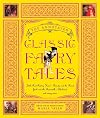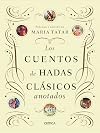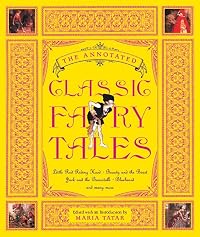
The Annotated Classic Fairy Tales
by Maria Tatar (Editor)
On This Page
Description
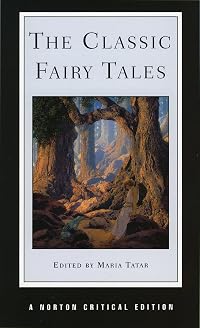
In this illuminating work, a leading expert in the field of folklore guides readers through 26 fairy tales, exploring their historical origins, their cultural complexities, and their psychological effects on children.Tags
Recommendations








Member Reviews
I’ve wanted to read The Annotated Classic Fairy Tales by Maria Tatar for some time. I’d thumbed through the entire Norton series of annotated tales (Grimm’s, Anderson’s, etc…) in Barnes & Noble, but I’d not taken the time to really see if it was a good anthology. It’s not a good anthology; it’s a great one.
Ms. Tatar’s introduction, annotations, and illustration inclusions are marvelous. It may well be argued that The Annotated Classic Fairy Tales is the definitive source covering the most common traditional European tales. Tatar has included a good mix of Grimm, Perrault and Anderson as well as a few lesser-known fairy tale authors. She provides a brief overview on the oral history of story telling and a show more well-considered introduction. Each of the twenty-six fairy tales has strong annotations and a large variety of artwork. Her annotations discuss themes, motivations and various changes to the tales as well as the tale's origins and cultural context. The appendices include brief biographies for both the authors and illustrators.
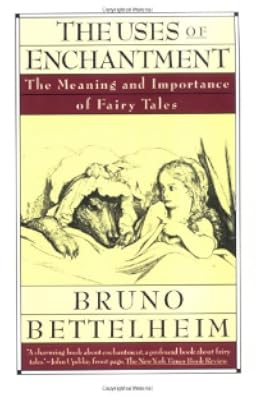
The introduction is especially thought provoking, illustrating the impact fairy tales have in shaping our lives and culture. The importance of fairy tales to the child’s development can perhaps be no easier understood than by the work of Bruno Bettelheim in his book, The Uses of Enchantment. Tatar, of course, quotes from Bettelheim saying that fairy tales serve to teach children that, “a struggle against severe difficulties in life is unavoidable …one masters all obstacles and at the end emerges victorious.” It’s a good quote to illustrate her point that fairy tales are of enumerable psychological value to the developing person.
Tatar speaks of how returning to fairy tales returns, “a rush of childhood memories and experiences.” For me, this is not the case. I’ve no childhood memories of pixies and magic to pull forward, but I now read fairy tales voraciously in hope that some glimmer will shine. The first fairy tale I recall admiring is Rapunzel. In considering why I remember Rapunzel more fondly, I came across Ms. Tatar’s assessment of Rapunzel as being a, “prisoner in a tower that lacks both a stairs and an exit.” These sort of wide-view observations provide countless opportunities for reflection.
The Annotated Classic Fairy Tales by Maria Tater is highly recommended for lovers of all classic stories, fairy tale enthusiasts and those interested in possible insights into the mind of the developing child.
Review first published on Reading Rumpus show less
Ms. Tatar’s introduction, annotations, and illustration inclusions are marvelous. It may well be argued that The Annotated Classic Fairy Tales is the definitive source covering the most common traditional European tales. Tatar has included a good mix of Grimm, Perrault and Anderson as well as a few lesser-known fairy tale authors. She provides a brief overview on the oral history of story telling and a show more well-considered introduction. Each of the twenty-six fairy tales has strong annotations and a large variety of artwork. Her annotations discuss themes, motivations and various changes to the tales as well as the tale's origins and cultural context. The appendices include brief biographies for both the authors and illustrators.
The introduction is especially thought provoking, illustrating the impact fairy tales have in shaping our lives and culture. The importance of fairy tales to the child’s development can perhaps be no easier understood than by the work of Bruno Bettelheim in his book, The Uses of Enchantment. Tatar, of course, quotes from Bettelheim saying that fairy tales serve to teach children that, “a struggle against severe difficulties in life is unavoidable …one masters all obstacles and at the end emerges victorious.” It’s a good quote to illustrate her point that fairy tales are of enumerable psychological value to the developing person.
Tatar speaks of how returning to fairy tales returns, “a rush of childhood memories and experiences.” For me, this is not the case. I’ve no childhood memories of pixies and magic to pull forward, but I now read fairy tales voraciously in hope that some glimmer will shine. The first fairy tale I recall admiring is Rapunzel. In considering why I remember Rapunzel more fondly, I came across Ms. Tatar’s assessment of Rapunzel as being a, “prisoner in a tower that lacks both a stairs and an exit.” These sort of wide-view observations provide countless opportunities for reflection.
The Annotated Classic Fairy Tales by Maria Tater is highly recommended for lovers of all classic stories, fairy tale enthusiasts and those interested in possible insights into the mind of the developing child.
Review first published on Reading Rumpus show less
You never quite know what you’re going to get with a massive fairytale compendium, and annotated collections are even trickier - are they going to include the best version of the story, are the annotations going to take over, are we given anything new to sink our teeth into? I bought this book to add to my section of classic fairytale illustrators, since it includes Rackham, Nielsen, and Dulac, but I was pleasantly surprised with the book overall! Not only did the author provide a selection of illustrations to accompany each story (discussing the influence of each artist briefly on the story and their individual styles), but they chose an excellent range of stories by a variety of folk and fairytale authors/collectors. They discussed show more each story with a concise introductory section and included brief, but worthwhile, annotations that (while they may not be the most literary in quality nor completely comprehensive) gave the reader food for thought and prompted them towards a variety of quality academic sources. Overall an enjoyable read, with just enough history and criticism to give the book a real depth. show less
This book has both the strengths and the weaknesses of the "Annotated" series. Strengths, in that it takes good material and makes it better. Weaknesses, in that it sometimes really misses the (probable) point.
To take an example, the book makes no strong distinction between FOLK tales and COMPOSED tales such as the work of Hans Christian Andersen. This is a significant point, because folk tales look backward (they had to appeal to those who transmitted the tales), whereas the modern tales had to look forward (Andersen had to get someone to publish the things). A modern tale will have a modern moral, often making it easier to understand. An old tale may focus more on the methods and motifs of folklore.
Then, too, a folk tale is a cultural show more study in miniature. This should be brought out, and too often it isn't. The studies of folk motifs are considered some of the most important elements in the field, and they aren't studied here.
Bottom line: If you really want to get your folklore right, this book isn't for you.
On the other hand, if you want a nice mix of familiar fairy tales, with some that are less familiar, and if you want a few hints at tricky points, this is a very good book. And the source notes are helpful if not as full as I would like. The book also shows the way a number of illustrators have handled the tales. I found this distracting -- folktales are oral, not painted! But the variety of illustrations is genuinely interesting. show less
To take an example, the book makes no strong distinction between FOLK tales and COMPOSED tales such as the work of Hans Christian Andersen. This is a significant point, because folk tales look backward (they had to appeal to those who transmitted the tales), whereas the modern tales had to look forward (Andersen had to get someone to publish the things). A modern tale will have a modern moral, often making it easier to understand. An old tale may focus more on the methods and motifs of folklore.
Then, too, a folk tale is a cultural show more study in miniature. This should be brought out, and too often it isn't. The studies of folk motifs are considered some of the most important elements in the field, and they aren't studied here.
Bottom line: If you really want to get your folklore right, this book isn't for you.
On the other hand, if you want a nice mix of familiar fairy tales, with some that are less familiar, and if you want a few hints at tricky points, this is a very good book. And the source notes are helpful if not as full as I would like. The book also shows the way a number of illustrators have handled the tales. I found this distracting -- folktales are oral, not painted! But the variety of illustrations is genuinely interesting. show less
A good collection with excellent annotations. But I don't understand why they included so many classic illustrations -- and had to make them so tiny in order to cram them all in -- rather than offering just a few in a size that they could actually be seen.
Sure, we all know most of the fairy tales included in this volume, but having the historical perspective on them is fascinating. They are an incredibly important part of our culture, so seeing where they came from and their different iterations is important to understanding ourselves.
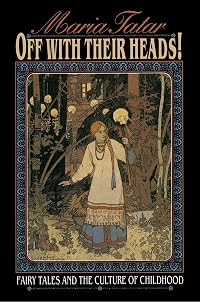
I think one's appreciation of this is related to how much else by Tatar and other analysts one has read, and how recently. I certainly can't appreciate it right after reading her "Off with their Heads." I really don't like how small and dark many of the pictures are. I did learn though that Goldilocks is a fairly new character, that the Three Bears story started with a nosy old woman intruder and three bears who were just brothers or friends.
This is a wonderful book with which to truly understand many of these classic fairy-tales. Being both annotated and illustrated provides one with a more honest sense of what was meant and seen in the time that the story was written.
Members
- Recently Added By
Lists

NPRs Ultimate Backseat Bookshelf: 100 Must-Reads for kids 9-14
222 works; 30 members

Favorite Fairy Tales
269 works; 103 members

Mythology
9 works; 2 members
Author Information

Maria Tatar is the John L. Loeb Professor of Germanic Languages and Literatures at Harvard University. Her many books include Off with Their Heads! Fairy Tales and the Culture of Childhood and Lustmord: Sexual Murder in Weimar Germany (both Princeton).
Some Editions
Awards and Honors
Awards
Series
Belongs to Publisher Series
Work Relationships
Contains
Common Knowledge
- Original title
- The Annotated Classic Fairy Tales
- Alternate titles
- Classic Fairy Tales
- Original publication date
- 2002
- People/Characters
- Little Red Riding Hood; Cinderella; Hansel and Gretel; Rapunzel; Frog King; Bluebeard (show all 12); Vasilisa the Beautiful; Molly Whuppie; Kate Crackernuts; Puss in Boots; Tom Thumb; The Little Mermaid
- Dedication
- For Lauren and Daniel
- First words
- For many of us childhood books are sacred objects.
--Introduction - Original language
- English
Classifications
Statistics
- Members
- 758
- Popularity
- 37,038
- Reviews
- 14
- Rating
- (4.46)
- Languages
- English, Portuguese (Portugal), Spanish
- Media
- Paper, Ebook
- ISBNs
- 5
- ASINs
- 2