On This Page
Description
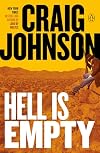
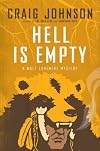
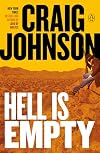
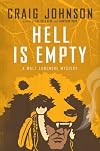
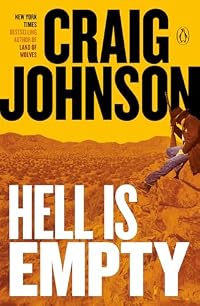
Transporting a confessed murderer only to learn that the man's crime falls under his jurisdiction and that the killer has escaped, Sheriff Walt Longmire taps insights from Indian mysticism and Dante's "Inferno" in a manhunt through the icy Cloud Peak Wilderness Area.Tags
Recommendations







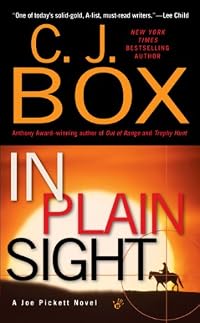
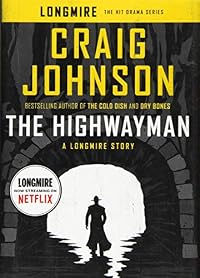
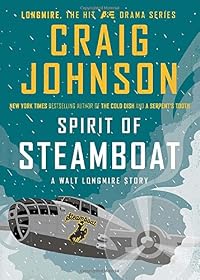
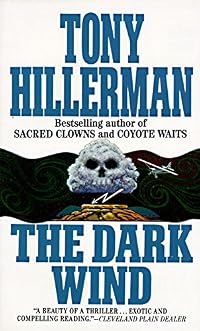









Member Recommendations

cbl_tn Hell Is Empty makes frequent allusions to Dante's Inferno.
Member Reviews
First Line: "Didn't your mother ever tell you not to talk with your mouth full?"
If the title of this book sounds familiar, it's a partial quote from Shakespeare's The Tempest: "Hell is empty And all the devils are here." I was in complete agreement with Shakespeare when the book opens with Walt and Deputy Saizarbitoria in a restaurant making sure their prisoners eat their lunches. All three prisoners are murderers, and two of them are way off the crazy chart.
Just as my nerves calmed down due to two of Absaroka County's finest doing everything by the book (and then some), the prisoners are transferred to FBI custody and put into a van with more dangerous prisoners. Walt has to go along because they're still in his jurisdiction. Even show more though it's May, that means nothing in the high mountains, and there's a humdinger of a snowstorm coming. The way Walt figures it, the FBI and the prisoners will be out of his territory and he'll be back home enjoying dinner with Vic before the storm hits.
Yeah. Right.
The prisoners escape with hostages and head higher into the mountains. While Walt still has a phone that works, he gives his dispatcher orders for his troups, and then he heads out to capture the bad guys. Alone. In a howling snowstorm. Why? In Walt's own words:
" I applied the simple rule that allowed me to make stupid decisions in these types of situations: If I was down there, would I want someone coming after me?
Yep."
When you're a hostage and scared out of your wits, the foremost thing on your mind is COME SAVE ME! See why I'd vote for Walt Longmire?
You do have to wonder if Walt's lost a few marbles, though. The weather is right from the bottom circle of Dante's Hell. He can barely see. It's more than cold enough to freeze bits of him off. The terrain is rugged and not easy to traverse on a sunny summer's day. And he keeps seeing things. If all that weren't bad enough, the craziest escapee of them all keeps playing mind games with him.
Once those prisoners escape, this book grabbed me by the throat and would not let go. Walt's trademark humor is there to help lighten what would otherwise be a very grim plot. Hell Is Empty is very much his show. Everyone else is on the sidelines, fighting the storm in an attempt to break through and help. Johnson builds so much tension that it's almost impossible to put the book down.
One man against the elements. One man to stand up against the bad guys. Walt Longmire is my sheriff of choice. I just wish he'd be able to chase the bad guys in good weather. In a field of flowers. Under sunny skies and a balmy breeze. He's no spring chicken anymore, and I want him to last through many more books to come! show less
If the title of this book sounds familiar, it's a partial quote from Shakespeare's The Tempest: "Hell is empty And all the devils are here." I was in complete agreement with Shakespeare when the book opens with Walt and Deputy Saizarbitoria in a restaurant making sure their prisoners eat their lunches. All three prisoners are murderers, and two of them are way off the crazy chart.
Just as my nerves calmed down due to two of Absaroka County's finest doing everything by the book (and then some), the prisoners are transferred to FBI custody and put into a van with more dangerous prisoners. Walt has to go along because they're still in his jurisdiction. Even show more though it's May, that means nothing in the high mountains, and there's a humdinger of a snowstorm coming. The way Walt figures it, the FBI and the prisoners will be out of his territory and he'll be back home enjoying dinner with Vic before the storm hits.
Yeah. Right.
The prisoners escape with hostages and head higher into the mountains. While Walt still has a phone that works, he gives his dispatcher orders for his troups, and then he heads out to capture the bad guys. Alone. In a howling snowstorm. Why? In Walt's own words:
" I applied the simple rule that allowed me to make stupid decisions in these types of situations: If I was down there, would I want someone coming after me?
Yep."
When you're a hostage and scared out of your wits, the foremost thing on your mind is COME SAVE ME! See why I'd vote for Walt Longmire?
You do have to wonder if Walt's lost a few marbles, though. The weather is right from the bottom circle of Dante's Hell. He can barely see. It's more than cold enough to freeze bits of him off. The terrain is rugged and not easy to traverse on a sunny summer's day. And he keeps seeing things. If all that weren't bad enough, the craziest escapee of them all keeps playing mind games with him.
Once those prisoners escape, this book grabbed me by the throat and would not let go. Walt's trademark humor is there to help lighten what would otherwise be a very grim plot. Hell Is Empty is very much his show. Everyone else is on the sidelines, fighting the storm in an attempt to break through and help. Johnson builds so much tension that it's almost impossible to put the book down.
One man against the elements. One man to stand up against the bad guys. Walt Longmire is my sheriff of choice. I just wish he'd be able to chase the bad guys in good weather. In a field of flowers. Under sunny skies and a balmy breeze. He's no spring chicken anymore, and I want him to last through many more books to come! show less
Another in the Walt Longmire Beats the Elements and the Bad Guys, With a Lot of Help from the Spirit World series. This one made it really hard to believe a human could endure what Walt endures and live. But then, maybe he didn't---maybe he died and came back. A couple times. He's not even sure himself. Johnson, like Robert B. Parker, has a lot of respect for his readers' intelligence and familiarity with literature, in this case Dante's Inferno. He didn't so much make me want to read it, as make me wish I had read it. This is an adventure of mythic and allegorical proportions. Highly recommended if you like that sort of thing. And there's an eclectic, highly satisfying (to me, anyway) reading list at the end.
June 2020
June 2020
The land and the weather are like characters in Johnson's novels.
Hell Is Empty starts out with a bang, bogs down badly in the middle and never really recovers. There's a bunch of spiritual/delusional stuff (you never really figure out where the line is here) that's obtuse, repetitive and, finally, annoying--especially as Johnson appears to be using spiritual/delusional experiences to explain plot threads he can't seem to figure out how to wrap up the old-fashioned way, which is to say, through hard work.
Still, early on there are lines that beg to be read out loud to the nearest person who will listen. It's definitely worth the read, especially the first third, which is exquisitely written: Pitch perfect dialogue.
Hell Is Empty starts out with a bang, bogs down badly in the middle and never really recovers. There's a bunch of spiritual/delusional stuff (you never really figure out where the line is here) that's obtuse, repetitive and, finally, annoying--especially as Johnson appears to be using spiritual/delusional experiences to explain plot threads he can't seem to figure out how to wrap up the old-fashioned way, which is to say, through hard work.
Still, early on there are lines that beg to be read out loud to the nearest person who will listen. It's definitely worth the read, especially the first third, which is exquisitely written: Pitch perfect dialogue.
In 'Hell Is Empty' Craig Johnson has attempted something very ambitious and done it pretty well but I hope he doesn't feel the need to do it again.
Unlike its predecessors, 'Hell Is Empty' doesn't have a mystery at its heart. We know from the beginning who the bad guys are, even if we don't know exactly why they're doing what they're doing. The FBI have, for various plausible reasons that they'll kick themselves for later, transported some very bad men into the Wyoming mountains just before a major ice storm (Hey, it's May, what did you expect at that altitude?). Of course, things go wrong, people die and the rest of the book is about Walt's relentless, lone pursuit of the men up the mountain in the storm.
At the beginning, this reads show more like a relatively normal hunt-the-bad-guys plot, with Walt at the centre bringing his unique mix of dry wit, erudite commentary, dogged determination and decisive action to the chase.
Then, as Walt gets tired, the altitude climbs and the weather gets worse, we move into something that feels more like a Vision Quest. It's not clear whether Walt is being guided by a real person (a character we met in a previous book) or by a spirit guide appearing as that person or whether Walt is just hallucinating as his refusal to give up bumps into the physical effects of hypothermia.
I think Craig Johnson does a splendid job of walking this is it real or isn't it line while keeping the tension high, the action constant and still finding time for to share Walt's reflections on Dante's 'inferno' and the idea that the worst hell is in the mind and Walt's deep understanding of how a monster like the man he is chasing is created and the terrible harm that he does.
The final scene at the top of the mountain is beautifully done. It's dramatic, visually stunning and works as a conclusion to both the mystical and the material explanations of Walt's quest.
The epilogue was also very distinctive. It went beyond the 'let's wrap up the loose ends and finish on a positive note' scope of the traditional epilogue and showed that Walt can't just shrug off his experience and step back into his old life. That rang true to me and I admired it.
BUT...
Although I could see that this was both a bold book to write and that it was well written, it wasn't as much fun as usual. Walt's head is a fascinating place to visit but an exhausting place to live in. In the books so far, Walt has been supported by a cast of interesting characters who aid or obstruct him in solving mysteries and bringing the bad guys to justice. In 'Hell Is Empty' we have nearly half a book that is Walt all the time and I found it tiring.
So, I'm hoping book eight, 'As The Crow Flies' brings me back to more familiar, less ambitious territory that's easier for me to enjoy.
Still, I recognise that, as is the way with Spirit Quests, the Walt who came down the mountain is not the same Walt who went up it and I'm intrigued to see how that change will manifest in future stories. show less
Unlike its predecessors, 'Hell Is Empty' doesn't have a mystery at its heart. We know from the beginning who the bad guys are, even if we don't know exactly why they're doing what they're doing. The FBI have, for various plausible reasons that they'll kick themselves for later, transported some very bad men into the Wyoming mountains just before a major ice storm (Hey, it's May, what did you expect at that altitude?). Of course, things go wrong, people die and the rest of the book is about Walt's relentless, lone pursuit of the men up the mountain in the storm.
At the beginning, this reads show more like a relatively normal hunt-the-bad-guys plot, with Walt at the centre bringing his unique mix of dry wit, erudite commentary, dogged determination and decisive action to the chase.
Then, as Walt gets tired, the altitude climbs and the weather gets worse, we move into something that feels more like a Vision Quest. It's not clear whether Walt is being guided by a real person (a character we met in a previous book) or by a spirit guide appearing as that person or whether Walt is just hallucinating as his refusal to give up bumps into the physical effects of hypothermia.
I think Craig Johnson does a splendid job of walking this is it real or isn't it line while keeping the tension high, the action constant and still finding time for to share Walt's reflections on Dante's 'inferno' and the idea that the worst hell is in the mind and Walt's deep understanding of how a monster like the man he is chasing is created and the terrible harm that he does.
The final scene at the top of the mountain is beautifully done. It's dramatic, visually stunning and works as a conclusion to both the mystical and the material explanations of Walt's quest.
The epilogue was also very distinctive. It went beyond the 'let's wrap up the loose ends and finish on a positive note' scope of the traditional epilogue and showed that Walt can't just shrug off his experience and step back into his old life. That rang true to me and I admired it.
BUT...
Although I could see that this was both a bold book to write and that it was well written, it wasn't as much fun as usual. Walt's head is a fascinating place to visit but an exhausting place to live in. In the books so far, Walt has been supported by a cast of interesting characters who aid or obstruct him in solving mysteries and bringing the bad guys to justice. In 'Hell Is Empty' we have nearly half a book that is Walt all the time and I found it tiring.
So, I'm hoping book eight, 'As The Crow Flies' brings me back to more familiar, less ambitious territory that's easier for me to enjoy.
Still, I recognise that, as is the way with Spirit Quests, the Walt who came down the mountain is not the same Walt who went up it and I'm intrigued to see how that change will manifest in future stories. show less
When a federal prisoner exchange goes horribly wrong, Wyoming's Sheriff Walt Longmire sets out on the trail of the escaped prisoners and their hostages. The escapees seem to be headed toward Cloud Peak in the Bighorn Mountains. So is a late winter storm. Backup is on the way, but will Walt succumb to the elements before help arrives?
Survival stories typically don't appeal to me, so I was very surprised to enjoy this book so much. Despite the ever worsening conditions, Walt never lost his characteristic dry sense of humor. I also loved the parallels to Dante's Inferno. I can even see myself re-reading this after my next reading of the Inferno. Although there's nothing about the plot or the story that would be too obscure for readers who show more haven't read the earlier books in the series, I think it would be better to read the earlier books first. There are references to events from the earlier books in the series, and to The Cold Dish in particular. The book includes an appendix with each of the main characters' reading lists for a deputy who's trying to fill in the gaps in his education. I borrowed an ebook through the public library, but I'm considering buying a copy just to have access to the book lists! show less
Survival stories typically don't appeal to me, so I was very surprised to enjoy this book so much. Despite the ever worsening conditions, Walt never lost his characteristic dry sense of humor. I also loved the parallels to Dante's Inferno. I can even see myself re-reading this after my next reading of the Inferno. Although there's nothing about the plot or the story that would be too obscure for readers who show more haven't read the earlier books in the series, I think it would be better to read the earlier books first. There are references to events from the earlier books in the series, and to The Cold Dish in particular. The book includes an appendix with each of the main characters' reading lists for a deputy who's trying to fill in the gaps in his education. I borrowed an ebook through the public library, but I'm considering buying a copy just to have access to the book lists! show less
Hell is Empty is the first book of Craig Johnson's that I have read. It is also the first western that I have enjoyed. The reason? Quirky characters and the wilderness setting. Sheriff Walt Longmire is the main character of this series. In Hell is Empty he is transporting 3 criminals through Wyoming's Big Horn Mountains to another jurisdiction. Each of them are interesting characters but the quickiest and most violent is a sociopath named Raynaud Shade. They get caught in a snowstorm during the hand over with the result being that the criminals escape. However, they are also hindered by the storm. Except for Shade. Shade is a sociopathic killer on his way to life in prison for killing a 7 year old boy. He has no remorse for this crime. show more What makes him so interesting is that he thinks he and Sheriff Longmire have a lot in common, including being possessed by Indian spirits that force him to kill on command. The dialogue that comes out of his mouth is amusing because he speaks like a classic sociopath and frequently references Dante's Inferno, a book that Longmire is carrying with him. He's an intellectual killer. What's not to like about that?
The setting plays a major role in the book. Most of the obstacles to resolving the story is the weather in the Big Horn Mountains. As I write this review, I see that the weather does not sound interesting. However, Johnson makes it suspenseful. The reason for the title is found on page 81 and I am not giving any hints. Not only is hell empty, it has frozen over in this novel.
There are 2 additional reasons why I enjoyed this western, a genre that I normally do not like. One, I have driven through Wyoming and have fond memories of this trip that I took 32 years ago. The scenery is gorgeous. Two, the references to Dante's Inferno were hysterical. I read this book in high school and loved it. Then. I don't think I would be able to get through it today but I remember it well enough to smile when Shade or Longmire mention it.
Hell is Empty would make a make a great movie but don't wait for Hollywood to take a look at Hell. Find a copy and read it. This modern western is fabulous. show less
The setting plays a major role in the book. Most of the obstacles to resolving the story is the weather in the Big Horn Mountains. As I write this review, I see that the weather does not sound interesting. However, Johnson makes it suspenseful. The reason for the title is found on page 81 and I am not giving any hints. Not only is hell empty, it has frozen over in this novel.
There are 2 additional reasons why I enjoyed this western, a genre that I normally do not like. One, I have driven through Wyoming and have fond memories of this trip that I took 32 years ago. The scenery is gorgeous. Two, the references to Dante's Inferno were hysterical. I read this book in high school and loved it. Then. I don't think I would be able to get through it today but I remember it well enough to smile when Shade or Longmire mention it.
Hell is Empty would make a make a great movie but don't wait for Hollywood to take a look at Hell. Find a copy and read it. This modern western is fabulous. show less
Current self says, "Self, don't read this book. Skip it and go to the next Walt Longmire."
Past self says, "Self, it really bothers me to read a book out of order. What if I miss something? I have to complete them."
Current self: "Stop being so obsessive compulsive."
Past self: "I breathe, therefore I am."
Current self: "Just for that, I'm gonna slap you into next week."
Johnson tried, he really did. But there's no mystery here, only Walt chasing down escaped prisoners in the middle of a Wyoming snowstorm in May. One of the prisoners--the important one--is a sociopath who has played a trump card of identifying the burial site of a murdered Native American boy. The prisoners escape shortly after Walt drops them off with the Feds, but Walt show more gets an inkling something ain't right, and he's on their tail in two shakes of a dog's wet fur. So despite ice-slick roads, snowdrifts and fallen trees, Walt tracks them down to a lodge and then up into the Big Horn Mountain. Along the way he has a mystical journey, encounters lions, tigers and bears (oh my!) and Virgil White Buffalo.
Forget the plot. There isn't much; it's a straight-out Fugitive, with a mysticism bonus. I could forgive the wild coincidences and forced scenarios, but what I can't forgive is Walt's feeble reasons for the chase in the first place: "it's my job." No, it isn't. Secondary reasons are flimsy (perhaps there are hostages, although they may be helping the fugitives) and flat-out stupid, particularly in light of prior life-and-death experiences when Walt was motivated by family and love. There's not enough pretense to hang my hat on here.
And the storytelling--good heavens. It stumbles like a drunk cowboy trying to find the gents' room, bouncing off patrons and doorways, spilling beer on the way. It vacillates from a whole lot of telling to forced metaphors about journeys to scenes that sound like Jack London on a bender. We learn the prisoners Longmire is transporting to the feds are awful people through dialogue lifted from Law & Order. Later there's a dream sequence/flashback of the murdered child as he was being abducted (which show is that? Criminal Intent? I can't keep all these devices straight). We have Deputy Santiago reading literature to broaden his mind or something, and while feeding the prisoners at the diner (!) he's reading (!) Dante's Inferno, (I find reading Dante less surprising then stopping at a restaurant to give handcuffed prisoners a meal and reading a book while one does it) which will conveniently be placed in the survival pack Santiago gives Walt. Then we have long landscape-gazing sequences where Walt climbs mountains, travels across icy lakes and gazes at beetle-destroyed pines. Foreshadowing isn't so much heavy as it is crushing as it compares Walt's journey to Dante's and warns him about traitors, death and etc. (although I don't believe sin was discussed).
The ending proved fairly unsatisfying, particularly as Walt persists in failing to discuss the spirits with best friend and Native warrior Henry, and as he persists in failing to acknowledge their influence on his life. I did like Virgil, his stories, and the mountain lion, so I guess that's something. I was also glad for Hector the prisoner and his unselfconscious, sporadic phone calls providing a few laughs, sadly out of tone with the rest of the story.
My favorite paragraph in the book came after Virgil's story about the Long Otters eating the young Thunderbirds and the Crow warrior who helped them:
"I nodded my head. 'And the moral of the story is?'
He raised an eyebrow, and it was as if the dent in his forehead was looking to dig deeper. 'What is it with you white people and morals? Maybe it's just a story about what happened.'"
Now there was a story. show less
Past self says, "Self, it really bothers me to read a book out of order. What if I miss something? I have to complete them."
Current self: "Stop being so obsessive compulsive."
Past self: "I breathe, therefore I am."
Current self: "Just for that, I'm gonna slap you into next week."
Johnson tried, he really did. But there's no mystery here, only Walt chasing down escaped prisoners in the middle of a Wyoming snowstorm in May. One of the prisoners--the important one--is a sociopath who has played a trump card of identifying the burial site of a murdered Native American boy. The prisoners escape shortly after Walt drops them off with the Feds, but Walt show more gets an inkling something ain't right, and he's on their tail in two shakes of a dog's wet fur. So despite ice-slick roads, snowdrifts and fallen trees, Walt tracks them down to a lodge and then up into the Big Horn Mountain. Along the way he has a mystical journey, encounters lions, tigers and bears (oh my!) and Virgil White Buffalo.
Forget the plot. There isn't much; it's a straight-out Fugitive, with a mysticism bonus. I could forgive the wild coincidences and forced scenarios, but what I can't forgive is Walt's feeble reasons for the chase in the first place: "it's my job." No, it isn't. Secondary reasons are flimsy (perhaps there are hostages, although they may be helping the fugitives) and flat-out stupid, particularly in light of prior life-and-death experiences when Walt was motivated by family and love. There's not enough pretense to hang my hat on here.
And the storytelling--good heavens. It stumbles like a drunk cowboy trying to find the gents' room, bouncing off patrons and doorways, spilling beer on the way. It vacillates from a whole lot of telling to forced metaphors about journeys to scenes that sound like Jack London on a bender. We learn the prisoners Longmire is transporting to the feds are awful people through dialogue lifted from Law & Order. Later there's a dream sequence/flashback of the murdered child as he was being abducted (which show is that? Criminal Intent? I can't keep all these devices straight). We have Deputy Santiago reading literature to broaden his mind or something, and while feeding the prisoners at the diner (!) he's reading (!) Dante's Inferno, (I find reading Dante less surprising then stopping at a restaurant to give handcuffed prisoners a meal and reading a book while one does it) which will conveniently be placed in the survival pack Santiago gives Walt. Then we have long landscape-gazing sequences where Walt climbs mountains, travels across icy lakes and gazes at beetle-destroyed pines. Foreshadowing isn't so much heavy as it is crushing as it compares Walt's journey to Dante's and warns him about traitors, death and etc. (although I don't believe sin was discussed).
The ending proved fairly unsatisfying, particularly as Walt persists in failing to discuss the spirits with best friend and Native warrior Henry, and as he persists in failing to acknowledge their influence on his life. I did like Virgil, his stories, and the mountain lion, so I guess that's something. I was also glad for Hector the prisoner and his unselfconscious, sporadic phone calls providing a few laughs, sadly out of tone with the rest of the story.
My favorite paragraph in the book came after Virgil's story about the Long Otters eating the young Thunderbirds and the Crow warrior who helped them:
"I nodded my head. 'And the moral of the story is?'
He raised an eyebrow, and it was as if the dent in his forehead was looking to dig deeper. 'What is it with you white people and morals? Maybe it's just a story about what happened.'"
Now there was a story. show less
Members
- Recently Added By
Published Reviews
ThingScore 75
Deft as always, but dearly missed from this stark, wintry tale is grizzled Walt’s much younger lover, his feisty, tormenting, adorable girl of summer.
added by Shortride
Lists

KayStJ's to-read list
1,616 works; 11 members

Stories Inspired by Other Fiction
127 works; 24 members

Books Read in 2016
4,666 works; 199 members

Books - Longmire by Craig Johnson
28 works; 1 member
Author Information

46+ Works 19,669 Members
Craig Allen Johnson was born in Huntington, West Virginia on January 16, 1961. He has a background in law enforcement and education. He is the author of the Walt Longmire Mystery series. Another Man's Moccasins won the Western Writer's of America Spur Award for best novel of 2008. The A&E TV series Longmire, which is based on his novels, started show more in 2012. Johnson' title, An Obvious Fact, the 13th book in the Walt Longmire series, became a New York Times bestseller in 2016. (Bowker Author Biography) show less
Some Editions
Awards and Honors
Series
Walt Longmire (7)
Work Relationships
Common Knowledge
- Canonical title
- Hell is Empty
- Original title
- Hell is Empty
- Original publication date
- 2011
- People/Characters
- Walt Longmire; Victoria "Vic" Moretti; Henry Standing Bear; Virgil White Buffalo; Raynaud Shade; Santiago Saizarbitoria
- Important places
- Cloud Peak Wilderness Area, Absaroka County, Wyoming, USA (fictional)
- Epigraph
- Hell is Empty
And all the devils are here.
~ William Shakespear
The Tempest
Act 1, scene 2
Ch 'i' non averei creduto
che morte tanta n'avese disfatta
I should not have thought
that death could ever have unmade so many.
~ Dante Alighierie,
Inferno
Canto 3, lines 56-57 - Dedication
- For
Joe Drabyak (1950-2010),
who has died so many literary deaths and continues to live on in so many well-read hearts. - First words
- "Didn't your mother ever tell you not to talk with your mouth full?"
- Last words
- (Click to show. Warning: May contain spoilers.)I would have laughed and told them that sometimes it helps to be dead to confront your demons, and that I had been dead a long time.
(Click to show. Warning: May contain spoilers.)Epilogue: I held the ring up where they could all see it and then turned it sideways so that I could look through it and focus on the platinum strip of dying light at the very top of Cloud Peak. - Original language
- English US
Classifications
Statistics
- Members
- 956
- Popularity
- 27,517
- Reviews
- 60
- Rating
- (4.07)
- Languages
- English, French, Korean
- Media
- Paper, Audiobook, Ebook
- ISBNs
- 22
- ASINs
- 11