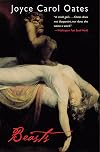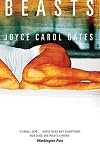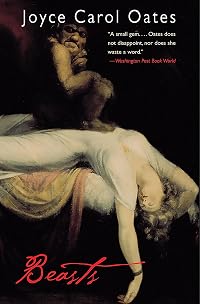
Beasts
by Joyce Carol Oates
On This Page
Description
A bright, talented junior at Catamount College in the druggy 1970s, Gillian Brauer strives to realise more than a poet's craft in her workshop with the charismatic, anti-establishment professor Andre Harrow. For Gillian has fallen in love - with Harrow, with his aesthetic sensibility and bohemian lifestyle, with his secluded cottage, with the mystique of his imposing, russet-haired French wife, Dorcas. A sculptress, Dorcas has outraged the campus and alumnae with the crude, primitive, larger show more than life-sized wooden totems that she has exhibited under the motto 'We are beasts and this is our consolation'. As if mesmerised, Gillian enters the rarefied world of the Harrows. She is special, even though she knows her classmates have preceded her here. She is helpless. She is powerful. And she will learn in full the meaning of Dorcas' provocative motto . . . show lessTags
Recommendations








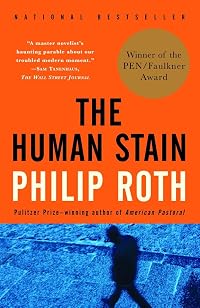
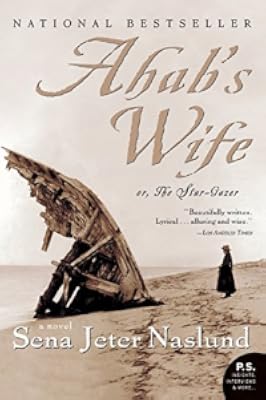
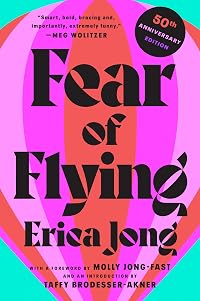
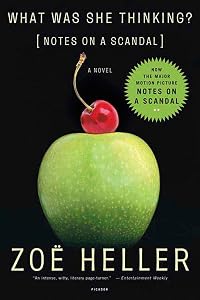


Member Recommendations
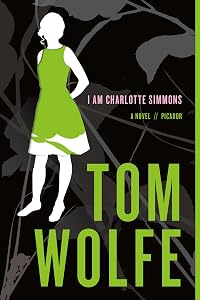
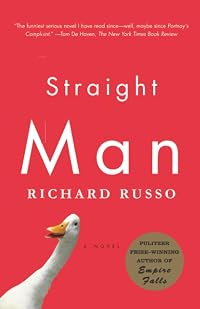
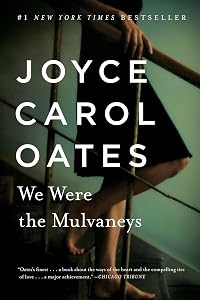
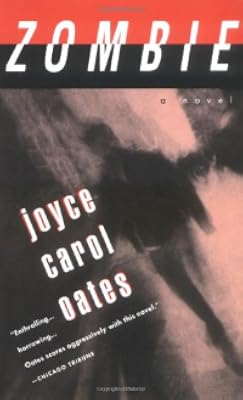
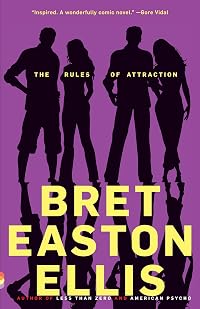
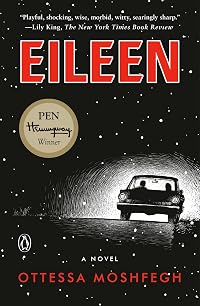
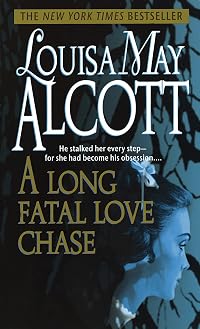
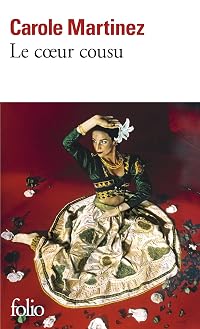
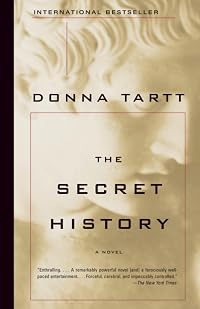
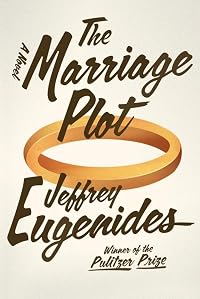
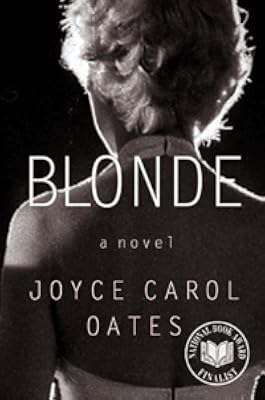
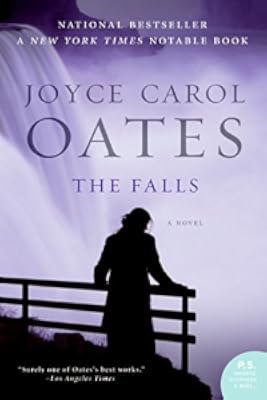
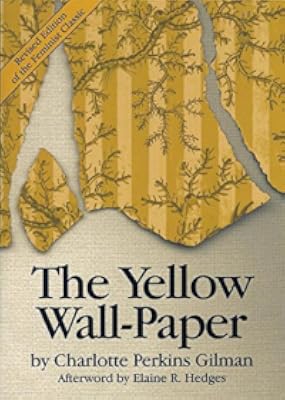
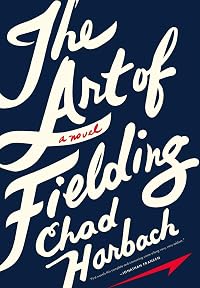
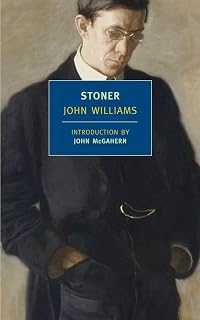
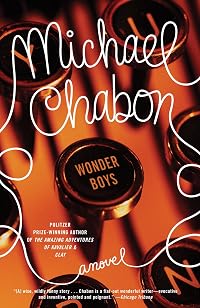
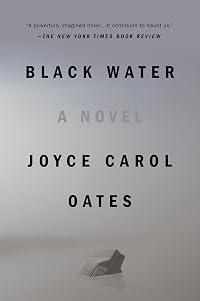
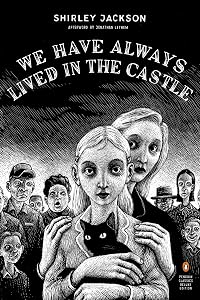
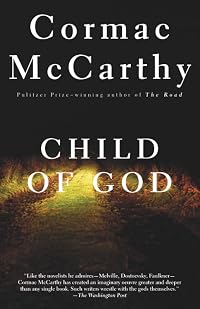
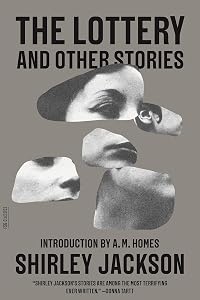
CarlosMcRey Each book tells the story of a precocious young woman attending college in a Bennington-like college where she is drawn into dark undercurrents.
20
Member Reviews
Hedonism Goes Off Page
Hedonism, defined in its more vernacular sense as personal gratification regardless of its effect on others, forms the center of Joyce Carol Oates’ novella of young, naive college women falling prey to a pair of svengalis. You might think of it as a modern incarnation of the age old tales, with painfully real consequences for those accused, of demonic possession for sexual purposes, sort of like seventeenth-century Urbain Grandier and the Ursuline nuns of Loudun, France.
An adult Gillian Brauer strolls through the Louvre when she encounters a grotesque totem portraying a maternal figure. She recognizes it as one of the only surviving works of artist/sculptor Dorcas (meant as ironic?) Harrow, wife of her old show more literature teacher Andre Harrow (harrow, as in a tool to break apart and lay open the soil for seeding; quite clever, given the story). The recognition hurtles her back to her days at a Catamount, a small New England women’s college. She relates in vivid detail how she and many of the women living in her cottage taking Andre’s course in poetry writing come under his spell and how the high purpose he and his wife appear to espouse proves in its extremity to be said hedonism and for the women descent into traumatic degradation. Surfeit to say that the end result of turning oneself over to the pair exhibits in self-destructive behavior and destructive acting out (the fires) as Andre encourages the women to expose all their insecurities, which he mines for his own and Dorcas’ own purposes. And, even as was with poor old Grandier, immolation proves something of a just evening up of the score.
This Oates excursion into the vulnerabilities of lithe young women searching for identity and acceptance is for readers curious about the darker side of humanity and those who stumble into its clutches. show less
Hedonism, defined in its more vernacular sense as personal gratification regardless of its effect on others, forms the center of Joyce Carol Oates’ novella of young, naive college women falling prey to a pair of svengalis. You might think of it as a modern incarnation of the age old tales, with painfully real consequences for those accused, of demonic possession for sexual purposes, sort of like seventeenth-century Urbain Grandier and the Ursuline nuns of Loudun, France.
An adult Gillian Brauer strolls through the Louvre when she encounters a grotesque totem portraying a maternal figure. She recognizes it as one of the only surviving works of artist/sculptor Dorcas (meant as ironic?) Harrow, wife of her old show more literature teacher Andre Harrow (harrow, as in a tool to break apart and lay open the soil for seeding; quite clever, given the story). The recognition hurtles her back to her days at a Catamount, a small New England women’s college. She relates in vivid detail how she and many of the women living in her cottage taking Andre’s course in poetry writing come under his spell and how the high purpose he and his wife appear to espouse proves in its extremity to be said hedonism and for the women descent into traumatic degradation. Surfeit to say that the end result of turning oneself over to the pair exhibits in self-destructive behavior and destructive acting out (the fires) as Andre encourages the women to expose all their insecurities, which he mines for his own and Dorcas’ own purposes. And, even as was with poor old Grandier, immolation proves something of a just evening up of the score.
This Oates excursion into the vulnerabilities of lithe young women searching for identity and acceptance is for readers curious about the darker side of humanity and those who stumble into its clutches. show less
Hedonism Goes Off Page
Hedonism, defined in its more vernacular sense as personal gratification regardless of its effect on others, forms the center of Joyce Carol Oates’ novella of young, naive college women falling prey to a pair of svengalis. You might think of it as a modern incarnation of the age old tales, with painfully real consequences for those accused, of demonic possession for sexual purposes, sort of like seventeenth-century Urbain Grandier and the Ursuline nuns of Loudun, France.
An adult Gillian Brauer strolls through the Louvre when she encounters a grotesque totem portraying a maternal figure. She recognizes it as one of the only surviving works of artist/sculptor Dorcas (meant as ironic?) Harrow, wife of her old show more literature teacher Andre Harrow (harrow, as in a tool to break apart and lay open the soil for seeding; quite clever, given the story). The recognition hurtles her back to her days at a Catamount, a small New England women’s college. She relates in vivid detail how she and many of the women living in her cottage taking Andre’s course in poetry writing come under his spell and how the high purpose he and his wife appear to espouse proves in its extremity to be said hedonism and for the women descent into traumatic degradation. Surfeit to say that the end result of turning oneself over to the pair exhibits in self-destructive behavior and destructive acting out (the fires) as Andre encourages the women to expose all their insecurities, which he mines for his own and Dorcas’ own purposes. And, even as was with poor old Grandier, immolation proves something of a just evening up of the score.
This Oates excursion into the vulnerabilities of lithe young women searching for identity and acceptance is for readers curious about the darker side of humanity and those who stumble into its clutches. show less
Hedonism, defined in its more vernacular sense as personal gratification regardless of its effect on others, forms the center of Joyce Carol Oates’ novella of young, naive college women falling prey to a pair of svengalis. You might think of it as a modern incarnation of the age old tales, with painfully real consequences for those accused, of demonic possession for sexual purposes, sort of like seventeenth-century Urbain Grandier and the Ursuline nuns of Loudun, France.
An adult Gillian Brauer strolls through the Louvre when she encounters a grotesque totem portraying a maternal figure. She recognizes it as one of the only surviving works of artist/sculptor Dorcas (meant as ironic?) Harrow, wife of her old show more literature teacher Andre Harrow (harrow, as in a tool to break apart and lay open the soil for seeding; quite clever, given the story). The recognition hurtles her back to her days at a Catamount, a small New England women’s college. She relates in vivid detail how she and many of the women living in her cottage taking Andre’s course in poetry writing come under his spell and how the high purpose he and his wife appear to espouse proves in its extremity to be said hedonism and for the women descent into traumatic degradation. Surfeit to say that the end result of turning oneself over to the pair exhibits in self-destructive behavior and destructive acting out (the fires) as Andre encourages the women to expose all their insecurities, which he mines for his own and Dorcas’ own purposes. And, even as was with poor old Grandier, immolation proves something of a just evening up of the score.
This Oates excursion into the vulnerabilities of lithe young women searching for identity and acceptance is for readers curious about the darker side of humanity and those who stumble into its clutches. show less
I love you, rotten, Delicious rottenness, ... I say, wonderful are the hellish experiences Orphic, delicate Dionysos of the Underworld.
-D.H. Lawrence, Medlars and Sorb-Apples from [Birds, Beasts and Flowers]
I find Oates's work draws you in but leaves you feeling disturbed (and often dirty). But I have always appreciated her talent and her style. Oates is really clever in the way she makes you feel uneasy even in scenes that have no graphic content and she has a knack for not revealing too much too soon. You just get this eerie feeling that things are not right.
The novella's atmosphere is full of erotically suggestive imagery from D.H. Lawrence poems and the innuendoes and allusions that emerge naturally in conversation between show more characters charge their interactions with sexual tension.
Beasts is a a wicked little 138- page novella and a quick read, maybe not one of her best but I couldn't put it down until the last page. show less
-D.H. Lawrence, Medlars and Sorb-Apples from [Birds, Beasts and Flowers]
I find Oates's work draws you in but leaves you feeling disturbed (and often dirty). But I have always appreciated her talent and her style. Oates is really clever in the way she makes you feel uneasy even in scenes that have no graphic content and she has a knack for not revealing too much too soon. You just get this eerie feeling that things are not right.
The novella's atmosphere is full of erotically suggestive imagery from D.H. Lawrence poems and the innuendoes and allusions that emerge naturally in conversation between show more characters charge their interactions with sexual tension.
Beasts is a a wicked little 138- page novella and a quick read, maybe not one of her best but I couldn't put it down until the last page. show less
"But I thought that was what poetry is, Mr. Harrow: circumspect. If it wasn't it would be just talk."
I thought I would enjoy this, and for the first few chapters I found the familiarity of it encouraging. Consider the premise: a young woman at a Bennington-like college, her literary aspirations, the lecherous married professor into whose circle she drifts, the peculiar roommates, her sense of alienation, and the suggestion of something darker lurking at the edges. Because I've had the good fortune to have read Ms. Jackson's (Don't call her Shirley) brilliant, hypnotic, disturbing [b:Hangsaman|131177|Hangsaman|Shirley Jackson|https://d.gr-assets.com/books/1302734503s/131177.jpg|1825944], reading Beasts filled me with a powerful sense of show more deja vu.
Admittedly, the part of Hangsaman where the heroine, Natalie Waite, befriends and is charmed by a youngish professor and his somewhat unhinged wife makes up only a small part of the novel. It's as if Oates had decided to rewrite the older novel by concentrating only on the relationship with the professor and turning all of the subtext into text.
It might have worked. Oates is definitely a talented enough author to pull it off. Still, I found myself approaching its violent conclusion not with tension or glee but a sense of indifference, a lazy shrug. Maybe it is just the comparison with Hangsaman. Jackson knows how to zig when you think she'll zag, knows how to pull you into her protagonist's headspace as if the text had magic properties.
For all of its modern Gothic gestures, Beasts feels disappointingly linear, it's characters surprisingly flat. When it finally brings on its lurid revelations, they felt like the punchlines to jokes I had already heard.
Interestingly, circumspect means "cautious, prudent, or discreet." I'm still asking myself whether the novel was too cautious or if it would have benefited from some discretion. show less
If Beasts were a movie, it would be rated R, R for raunchy and revealing and reviling and revengeful. The story centers on a young college student who falls in love with her writing professor and his wife. The professor reads poetry from D. H. Lawrence and exhorts his students to go for the jugular, seducing every girl in the class with his voice and his eyes. Gillian, like the others, falls for his charms. When the professor and his wife head off to Europe for Christmas break, Gillian discovers photographs that reveal the identities of others the two have used and discarded. The professor and his wife have wielded the power of their bohemian lifestyle on the innocents of the college to suit their own purposes. Gillian responds with show more fury and gets her revenge. show less
In Beasts, Oates explores the underbelly of a common before-bed/during-class fantasy: that of being seduced, admired, respected by a professor. In this case the greasy yet intoxicating Professor Andre Harrow is joined in his frequent seductions by his part French wife, Dorcus, a jealous green parrot, and a host of date-rape drugs. Oates chooses as her protagonist a modern Philomela, who cannot speak because a man has cut out her tongue, yet who gains freedom and adulthood through an apposite revenge.Oates uses a frame story and first person narrative to create distance between the reader and truth. She leaves just the right amount of mystery, the right amount of questions never answered: who sets the fires? did Mr. Harrow love his show more girls? are seduction and submission synonymous?Currently, I am trying to read books by women authors; I have found most of my favorites are men, and I’ve decided it’s from lack of exposure to ecriture feminine. One can certainly tell that a woman wrote this novella. But what is it that makes that so? Is it the subject matter? Sex. Drugs. Seduction. A young woman’s coming-of-age. Is it the writing style? Emotive. Referential. Tight. Helene Cixous would be proud. Oates writes from the body; she writes about the body; her subject matter is the body. The woman’s body is her body of work—whether sculptural or poetic or danced or slit. One could discount this text as merely a perfect midnight snack of a novella. To those, I would suggest rereading it in glaring morning sunshine on a full stomach. show less
While I found this book quite enjoyable and well-written during the short period while I was actually reading it, I was disturbed by how uncritically it embraces traditional literary tropes (the primitive evil of the 'savage' preying on the innocent). Despite the fact that it complicates these tropes in a number of ways - the lead character ends up in a lesbian relationship with a girl who self-identifies as Black, there is a woman who is involved with predation rather than merely a man - I ultimately found these complications unsatisfying and not complete.Ultimately, I wanted to ask Oates why she chose to display not just the predators' art but also the art of Canadian native peoples as idols to perversity and sadism. We never see any show more form of art - not poetry, not sculpture, not photography, nothing - as anything but a beguiling snare, a way for the predators to captivate young girls and do them harm. Then what does Oates think of her own work? Is she too creating false idols?Or is she merely not thinking through her imagery very well, trying to tell a story and telling a quite different one unintentionally? show less
Members
- Recently Added By
Lists

Best School Stories
219 works; 22 members

Academia in Fiction
158 works; 23 members

Llibres que he llegit el 2010
35 works; 1 member

2024. Nuestro año literario (Faustino Sánchez)
20 works; 1 member
Author Information

476+ Works 62,407 Members
Joyce Carol Oates was born on June 16, 1938 in Lockport, New York. She received a bachelor's degree in English from Syracuse University and a master's degree in English from the University of Wisconsin. She is the author of numerous novels and collections of short stories. Her works include We Were the Mulvaneys, Blonde, Bellefleur, You Must show more Remember This, Because It Is Bitter, Because It Is My Heart, Solstice, Marya : A Life, and Give Me Your Heart. She has received numerous awards including the National Book Award for Them, the PEN/Malamud Award for Excellence in Short Fiction, and the F. Scott Fitzgerald Award for Lifetime Achievement in American Literature. She was a finalist for the 2015 Pulitzer Prize for Fiction with her title Lovely, Dark, Deep. She also wrote a series of suspense novels under the pseudonym Rosamond Smith. In 2015, her novel The Accursed became listed as a bestseller on the iBooks chart. She worked as a professor of English at the University of Windsor, before becoming the Roger S. Berlind Distinguished Professor of Humanities at Princeton University. She and her late husband Raymond J. Smith operated a small press and published a literary magazine, The Ontario Review. (Bowker Author Biography) Joyce Carol Oates is one of the most eminent and prolific literary figures and social critics of our times. She has won the National Book Award and several O. Henry and Pushcart prizes. Among her other awards are an NEA grant, a Guggenheim fellowship, the PEN/Malamud Lifetime Achievement Award, and the F. Scott Fitzgerald Award for Lifetime Achievement in American Literature. (Publisher Provided) show less
Series
Belongs to Publisher Series
Work Relationships
Is abridged in
Common Knowledge
- Canonical title
- Beasts
- Original title
- Beasts
- Original publication date
- 2002
- People/Characters
- Gillian Brauer; Dorcas; Andre Harrow; Sybil; Xipe Totec
- Important places
- Catamount College; Paris, France
- Epigraph
- I love you, rotten,
Delicious rottenness.
...wonderful are the hellish experiences,
Orphic, delicate
Dionysos of the Underworld.
D.H. Lawrence, "Medlars and Sorb-Apples" from Birds, Beasts and Flower... (show all)s - First words
- In the Oceania wing of the Louvre I saw it: the totem.
- Last words
- (Click to show. Warning: May contain spoilers.)I laughed. "Yes, tres belle."
Classifications
Statistics
- Members
- 762
- Popularity
- 36,773
- Reviews
- 23
- Rating
- (3.57)
- Languages
- 6 — English, French, Italian, Polish, Spanish, Swedish
- Media
- Paper, Ebook
- ISBNs
- 21
- ASINs
- 4