
Before Night Falls
by Reinaldo Arenas
On This Page
Description
"The acclaimed memoir of a homosexual Cuban author chronicling his tumultuous yet luminary life, from his impoverished upbringing in Cuba to his imprisonment at the hands of a Communist regime, now a part of the Penguin Vitae series, with a foreword by Colombian author Jaime Manrique. The astonishing memoir by visionary Cuban writer Reinaldo Arenas "is a book above all about being free," said The New York Review of Books--sexually, politically, artistically. Arenas recounts a stunning show more odyssey from his poverty-stricken childhood in rural Cuba and his adolescence as a rebel fighting for Castro, through his suppression as a writer, imprisonment as a homosexual, his flight from Cuba via the Mariel boat lift, and his subsequent life and the events leading to his death in New York. In what The Miami Herald calls his "deathbed ode to eroticism," Arenas breaks through the code of secrecy and silence that protects the privileged in a state where homosexuality is a political crime. Recorded in simple, straightforward prose, Before Night Falls is the true story of the Kafkaesque life and world re-created in the author's acclaimed novels"-- show lessTags
Recommendations



























Member Reviews
Ma dopo vent'anni di repressione, come avrei potuto stare zitto davanti a quei crimini? E inoltre non mi sono mai considerato né di sinistra né di destra, né voglio essere catalogato sotto qualunque etichetta di opportunismo politico. Io racconto la mia verità, come un ebreo che abbia sofferto il razzismo o un russo che sia stato in un gulag, come qualunque essere umano che abbia avuto gli occhi per vedere le cose come sono.
Libro che mi instilla vari dubbi.
Dal punto di vista storico-politico è sicuramente un libro importante, anche se la credibilità viene minata da fanfaronate ed esagerazioni sulla sua vita privata (4000 amanti fino a 24 anni), brani e aneddoti molto numerosi che sembrano vanterie da adolescente, con descrizioni show more di amplessi fisiologicamente e acrobaticamente impossibili e che alla lunga potrebbero far venire dei dubbi sulla veridicità di alcune vicende raccontate anche se non riguardanti la vita privata dell'autore.
In una biografia, e in un uomo, tutto partecipa a stabilirne la credibilità e queste parti sono importanti per capire l'uomo in questione.
Nulla importa che siano storie omosessuali. Sarebbe lo stesso se fossero eterosessuali.
Le esagerazioni di stampo machista quindi possono influire sulla percezione della verità.
Strano anche che non venga mai nominato Ernesto Guevara, uno dei protagonisti della rivoluzione cubana. Mai citato in questo libro. Uomo simbolo, forse più di Castro per chi vive all'estero, in tutto il mondo quando si parla di rivoluzionari che hanno cambiato la storia.
Ciò non toglie, però, che le storie raccontate da Ameras siano un bel pugno nello stomaco, che descrivono una realtà piuttosto plausibile e simile a quella raccontata da altri scrittori su altre dittature. Insomma, mi viene da pensare che la parte storico-politica sia vera anche se non ho mai sentito Gianni Minà raccontare storie del genere, ma lui era amico di Fidel (un uomo buono, dice lui) e viveva una realtà falsata da quello che il regime voleva far vedere all'estero e quindi dubito fortemente della sua obiettività.
Pensando a Minà mi viene da riflettere rileggendo questo passo:
Scoprii un animale inesistente a Cuba: il comunista di lusso. Ricordo che durante un banchetto all'Università di Harvard un professore tedesco mi disse: «Posso capire che tu abbia sofferto nel tuo paese, ma io sono un grande ammiratore di Fidel Castro e apprezzo quel che ha fatto a Cuba». In quel momento il professore aveva un enorme piatto di cibo davanti e io gli dissi: «Mi sembra bello che lei ammiri Fidel Castro, ma allora non può finire il piatto che ha davanti, perché nessuna delle persone che vivono a Cuba, salvo gli alti funzionari, può mangiare roba simile». Presi il piatto e lo lanciai contro il muro.
Per lui non sono molto diversi dai fascisti:
I miei incontri con questa sinistra godereccia e fascista furono abbastanza polemici.
Il governo cubano ha negato che ci fosse una persecuzione nei confronti degli omosessuali e ovviamente tutti questi illustri giornalisti hanno creduto a queste dichiarazioni.
Mi chiedo come un giornalista come Minà non si ponga il minimo dubbio su questi fatti continuando a idolatrare un personaggio di dubbia moralità.
La parte della detenzione al morro è piuttosto bella e angosciante, come anche la sua infanzia, appassionante da leggere. Il libro alterna fasi bellissime per come è scritto ad altre francamente banali e stereotipate ma penso che abbia a che fare con quella società fortemente machista che lui stesso racconta avere influenzato moltissimo il suo carattere nonostante le sue inclinazioni sessuali.
Per questi motivi l'ho apprezzato ma non amato.
Ci sono anche commenti curiosi su scrittori celebri e sue particolari riflessioni tipo questa:
Uno dei casi più vistosi di ingiustizia intellettuale di questo secolo fu quello di Jorge Luis Borges, al quale venne sistematicamente negato il Premio Nobel per il suo credo politico. Borges è uno degli scrittori latinoamericani più importanti di questo secolo, forse il più importante; ma nonostante questo il Premio Nobel lo hanno dato a Gabriel Garcia Màrquez, scimmiottatore di Faulkner, amico personale di Castro e opportunista nato. La sua opera, salvo qualche indubbio merito, è piena di populismo, di cianfrusaglieria: non arriva all'altezza dei grandi scrittori morti nell'oblio o trascurati.
È però un libro che si deve leggere, almeno per eliminare un po' quell'alone di divinità che si è dato negli anni a Fidel, dittatore come tutti i dittatori, e per porci delle domande sulla realtà dei fatti che ancora oggi non è poi così chiara visto che le uniche cose che sappiamo di Cuba sono comunque quelle volute dal regime o quelle scritte e raccontate dai dissidenti, che però a quanto pare, e lo scrive anche Arenas in questo libro, spesso non vengono creduti.
Però quella mancanza di Guevara mi puzza... show less
Sex was alive and well in Cuba according to the memoir of Reinaldo Arenas. But so was totalitarianism, homophobia, torture, betrayal, and poverty. Despite those things there are also friends, community, and a love of poetry and literature. No matter what happened to him Arenas kept writing--hiding his manuscripts in his roof and smuggling them out of Cuba to be published abroad.
His story is a triumph but his end tragic--he died in New York in 1990 by his own hand after suffering from AIDS. His goodbye note though,
left some hope, "I want to encourage the Cuban people out the country as well as on the Island to continue fighting for freedom. I do not want to convey to you a message of defeat but of continued struggle and of hope. Cuba show more will be free. I already am."
After reading this book, I have added his work to my wishlist.
"I will tell my truth like a Jew who has suffered from racism, a Russian who has been in the Gulag, or any human being who has eyes to see things as they are: I cry out: therefore I am."
--Reinaldo Arenas show less
His story is a triumph but his end tragic--he died in New York in 1990 by his own hand after suffering from AIDS. His goodbye note though,
left some hope, "I want to encourage the Cuban people out the country as well as on the Island to continue fighting for freedom. I do not want to convey to you a message of defeat but of continued struggle and of hope. Cuba show more will be free. I already am."
After reading this book, I have added his work to my wishlist.
"I will tell my truth like a Jew who has suffered from racism, a Russian who has been in the Gulag, or any human being who has eyes to see things as they are: I cry out: therefore I am."
--Reinaldo Arenas show less
This autobiography, which Arenas dictated in between bouts of AIDS-related illness in the final months of his life, is clearly intended as a final settling of accounts with Fidel Castro and his supporters. There's a lot of itemising of the crimes, injustices and humiliations he and his friends have suffered at the hands of the regime, and plenty of naming of names of those who have collaborated with State Security. But it's not the Cuban Gulag Archipelago: its real purpose is not so much to accuse as to mock. Arenas is telling Castro, in front of anyone who will listen, that the glorious socialist revolution was a ridiculous piece of self-deception, that the state's attempts to suppress intellectual dissent have only strengthened the show more voices of critics, and that hundreds of thousands of Cuban men (including many soldiers, policemen and members of the government) have been having gloriously enjoyable sex with each other all the time without the state's attempt to lock up all the homosexuals having the slightest impact. So there!
Obviously, this also means that you have to be a little careful not to take everything Arenas says as a literal representation of the facts. He will have stayed close enough to the truth to be sure that what he said could not be dismissed out of hand, but he's a novelist, writing to obtain a particular effect, and it would be very surprising if he didn't select and exaggerate on occasion to maximise the impact of what he is saying.
The story opens with an idyllic description of childhood in rural Cuba before the days of Batista or Castro - it's a positive Garden of Eden, in which the young Reinaldo and his childhood friends indulge in every possible form of precocious sexual experimentation with each other and with the local flora and fauna, and Reinaldo tramps around the woods declaiming long epic poems he has composed.
The fun stops with adolescence: Batista comes to power and the family move to a dull provincial town. Teenage Reinaldo runs away to join the revolution against Batista, but he doesn't see any action: the guerillas are as short of weapons as they are of razors, whilst Batista doesn't trust his own troops, so the two armies successfully try to avoid each other until Batista's unexpected flight leaves the way open for Castro to seize power. (Arenas cattily suggests that most of Castro's "20 000 martyrs", if they ever existed, must have been the victims of denunciations and summary executions by their own comrades.)
Reinaldo is frustrated to have come out of the revolution without the requisite beard (he's only 16), but it does give him the chance to escape from the provinces and, after a spell as bookkeeper on a collective farm, study in Havana, where he is soon integrated into the literary world, with a job first at the National Library and the at the Writers' Union. He gives us very affectionate accounts of his two main mentors, Virgilio Piñera and José Lezama Lima, whilst sticking the knife into one or two other great writers. In particular, he disapproves of Alejo Carpentier, who twice tried to block Arenas from being given a literary prize, and Gabriel García Márquez, whom he dismisses as a political opportunist and hanger-on of Castro.
Arenas goes to great lengths to tell us about his sexual adventures in Havana in the sixties, the time when Castro was making the first big purges, and tens of thousands of - presumed - gay men were being shipped off to cut cane in the UMAP labour camps. As he describes it, the police persecution only made the sex more exciting, and there was a never-ending supply of gorgeous "real men" - students, conscripts, married men - out on the beaches and in the bushes looking for sex with locas. The sexual roles (but curiously, not the sexual acts: who penetrates whom is apparently negotiable) are completely defined by Cuba's macho culture - Arenas clearly finds the idea of two locas getting together boring, if not repulsive, and sees the creation of a closed "gay community" as a serious downside to post-Stonewall culture in the US. (In fact, those attitudes are not that different from what you hear from British and American gay men who were around in the 50s and 60s, so maybe Arenas is making too much of the specifically Cuban cultural values there.)
At the same time, life is getting less comfortable for Arenas. Many friends and colleagues are being arrested, some, like Heberto Padilla, being forced to make humiliating public confessions and retractions of their former work. Arenas is unable to publish his work in Cuba, and has great difficulties keeping his manuscripts out of the hands of the police and smuggling them to friends abroad. Eventually, in 1974, he is arrested - ostensibly for a sexual offence but really to put pressure on him to retract his "counter-revolutionary" ideas. He manages to escape from the police station where he is being held and is on the run for about a month, making a couple of attempts to flee the country (another opportunity for him to ridicule the inefficiency of Castro's State Security service...), but eventually he's recaptured and spends a couple of years in captivity, much of it in terrible conditions in the El Morro fort in Havana harbour.
Once out of prison, there's another semi-comic interlude as he manages to survive in Havana for a number of years, despite having no legal means of getting either work or accommodation. Through an absurd combination of circumstances, he finds himself selling an entire abandoned convent on the black market, a brick at a time. He finally manages to get out of Cuba on the Mariel "sealift" in 1980 - again, he attributes this to the inefficiency of State Security, as only "delinquents" are supposed to be allowed to leave, intellectuals being explicitly excluded, but the authorities have so thoroughly expunged his status as a writer that there's nothing on his official file to suggest that he is anything other than a common criminal.
Naturally, there are plenty of disappointments waiting for him in the "free world" - including a lot of people who don't want to hear anything negative about Castro, and a publisher who doesn't especially want to pay him any royalties. But, as he puts it, when the communist system kicks you in the arse, you're expected to smile and say "thank you"; when the capitalist system does it, you're at least allowed to cry.
I found this a surprisingly enjoyable read, often very funny, and by no means what you might expect from a "deathbed memoir". Twenty-five years on, a lot of the political content is only of historical interest, but there are some points that did stick with me, in particular realising how much difference it made to Arenas during his time in prison that there were people outside Cuba who knew about his situation and weren't prepared to let the Cuban government "disappear" him. Obviously we should go on writing those Amnesty International letters! show less
Obviously, this also means that you have to be a little careful not to take everything Arenas says as a literal representation of the facts. He will have stayed close enough to the truth to be sure that what he said could not be dismissed out of hand, but he's a novelist, writing to obtain a particular effect, and it would be very surprising if he didn't select and exaggerate on occasion to maximise the impact of what he is saying.
The story opens with an idyllic description of childhood in rural Cuba before the days of Batista or Castro - it's a positive Garden of Eden, in which the young Reinaldo and his childhood friends indulge in every possible form of precocious sexual experimentation with each other and with the local flora and fauna, and Reinaldo tramps around the woods declaiming long epic poems he has composed.
The fun stops with adolescence: Batista comes to power and the family move to a dull provincial town. Teenage Reinaldo runs away to join the revolution against Batista, but he doesn't see any action: the guerillas are as short of weapons as they are of razors, whilst Batista doesn't trust his own troops, so the two armies successfully try to avoid each other until Batista's unexpected flight leaves the way open for Castro to seize power. (Arenas cattily suggests that most of Castro's "20 000 martyrs", if they ever existed, must have been the victims of denunciations and summary executions by their own comrades.)
Reinaldo is frustrated to have come out of the revolution without the requisite beard (he's only 16), but it does give him the chance to escape from the provinces and, after a spell as bookkeeper on a collective farm, study in Havana, where he is soon integrated into the literary world, with a job first at the National Library and the at the Writers' Union. He gives us very affectionate accounts of his two main mentors, Virgilio Piñera and José Lezama Lima, whilst sticking the knife into one or two other great writers. In particular, he disapproves of Alejo Carpentier, who twice tried to block Arenas from being given a literary prize, and Gabriel García Márquez, whom he dismisses as a political opportunist and hanger-on of Castro.
Arenas goes to great lengths to tell us about his sexual adventures in Havana in the sixties, the time when Castro was making the first big purges, and tens of thousands of - presumed - gay men were being shipped off to cut cane in the UMAP labour camps. As he describes it, the police persecution only made the sex more exciting, and there was a never-ending supply of gorgeous "real men" - students, conscripts, married men - out on the beaches and in the bushes looking for sex with locas. The sexual roles (but curiously, not the sexual acts: who penetrates whom is apparently negotiable) are completely defined by Cuba's macho culture - Arenas clearly finds the idea of two locas getting together boring, if not repulsive, and sees the creation of a closed "gay community" as a serious downside to post-Stonewall culture in the US. (In fact, those attitudes are not that different from what you hear from British and American gay men who were around in the 50s and 60s, so maybe Arenas is making too much of the specifically Cuban cultural values there.)
At the same time, life is getting less comfortable for Arenas. Many friends and colleagues are being arrested, some, like Heberto Padilla, being forced to make humiliating public confessions and retractions of their former work. Arenas is unable to publish his work in Cuba, and has great difficulties keeping his manuscripts out of the hands of the police and smuggling them to friends abroad. Eventually, in 1974, he is arrested - ostensibly for a sexual offence but really to put pressure on him to retract his "counter-revolutionary" ideas. He manages to escape from the police station where he is being held and is on the run for about a month, making a couple of attempts to flee the country (another opportunity for him to ridicule the inefficiency of Castro's State Security service...), but eventually he's recaptured and spends a couple of years in captivity, much of it in terrible conditions in the El Morro fort in Havana harbour.
Once out of prison, there's another semi-comic interlude as he manages to survive in Havana for a number of years, despite having no legal means of getting either work or accommodation. Through an absurd combination of circumstances, he finds himself selling an entire abandoned convent on the black market, a brick at a time. He finally manages to get out of Cuba on the Mariel "sealift" in 1980 - again, he attributes this to the inefficiency of State Security, as only "delinquents" are supposed to be allowed to leave, intellectuals being explicitly excluded, but the authorities have so thoroughly expunged his status as a writer that there's nothing on his official file to suggest that he is anything other than a common criminal.
Naturally, there are plenty of disappointments waiting for him in the "free world" - including a lot of people who don't want to hear anything negative about Castro, and a publisher who doesn't especially want to pay him any royalties. But, as he puts it, when the communist system kicks you in the arse, you're expected to smile and say "thank you"; when the capitalist system does it, you're at least allowed to cry.
I found this a surprisingly enjoyable read, often very funny, and by no means what you might expect from a "deathbed memoir". Twenty-five years on, a lot of the political content is only of historical interest, but there are some points that did stick with me, in particular realising how much difference it made to Arenas during his time in prison that there were people outside Cuba who knew about his situation and weren't prepared to let the Cuban government "disappear" him. Obviously we should go on writing those Amnesty International letters! show less
More than two decades ago I read a devastating memoir, 'Against all Hope' by Armando Valladares, that depicted the brutality of Castro's Cuba from the view of a prison cell. Now I have encountered a comparable memoir in 'Before Night Falls'. Arenas' memoir, just as shocking as that by Valladares, is above all a book about being free -- as an artist, a citizen, and a human. Recounting his journey from a poverty-stricken childhood in rural Cuba (undoubtedly a more severe life than poverty in America due to the lack of infrastructure in Cuba) Arenas narrates his life over four decades until his death in New York. His farewell letter at the end of the memoir is as touching as anything I have ever read. He lead a life filled with action for show more the defense of individual freedom of humanity in his home of Cuba; but he also lived a life that was Kafkaesque with episodes of imprisonment and suppresion of his writing by Castro's Cuba. It is a story that reminds me more of the Inferno of Dante (which I recently read) than life on earth, even recognizing that we do not live in a paradise. Arenas' memoir is a great work of art, but also a tribute to the spirit of man. show less
First of all, I'm glad to have read this. However, it was a very challenging book for me to get through. Arenas, who was a gay writer in Cuba during the Batista and then Castro regimes and a survivor of an impoverished youth, writes about his experiences very candidly. His descriptions of his childhood were often disturbing. The numerous anecdotes of his sexual encounters bored me to death. In addition, these descriptions were sometimes peppered with braggadocio, and an almost machismo tone, which didn't help.
However, it's important to remember that this was someone who grew up in impoverished conditions and was continually oppressed. In his own words, "I had never been allowed to be a real human being in the fullest sense of the show more word." With that in mind, it becomes understandable that he would focus on what brought him the most joy in life, his sexual encounters, as well as relationship with literature and the sea. In fact, when you look closer at this book, you become aware of the lyrical and melancholic tones that Arenas is evoking, and those moments become quite poignant. Overall, he seems to have had an unfulfilled and tragic life.
I would recommend this book to those who want to learn more about Arenas as a writer and to those who would like to know more about gay culture in Cuba during this time, especially in the literary world. Just know going in that his was not a happy life, nor a full one, and be mindful of the context of his situation as you read. show less
However, it's important to remember that this was someone who grew up in impoverished conditions and was continually oppressed. In his own words, "I had never been allowed to be a real human being in the fullest sense of the show more word." With that in mind, it becomes understandable that he would focus on what brought him the most joy in life, his sexual encounters, as well as relationship with literature and the sea. In fact, when you look closer at this book, you become aware of the lyrical and melancholic tones that Arenas is evoking, and those moments become quite poignant. Overall, he seems to have had an unfulfilled and tragic life.
I would recommend this book to those who want to learn more about Arenas as a writer and to those who would like to know more about gay culture in Cuba during this time, especially in the literary world. Just know going in that his was not a happy life, nor a full one, and be mindful of the context of his situation as you read. show less
The story of Reinaldo Arenas' life from his childhood and youth in Cuba to his eventual death in New York. I was slightly disappointed by this read since I have seen the film version and was hoping for much more insight into what life in Castro Cuba was actually like. I did get some of that, for sure, but the larger part of the first half of the book is almost solely a list of men that Arenas and his friends had sex with in Havana and surrounding areas. And not in an erotic way, but rather as if you had played a game of golf without keeping score and then tried to remember the number of strokes for each hole afterwards. The parts that are about Cuba and what life was like there are very interesting and when Arenas uses a more poetic show more voice to describe the horrific conditions they all lived under, the story is very intriguing (and terrible) indeed. I only wish those parts had taken up a much larger part of the book. Unfortunately, I would recommend the film version and suggest a look at Arenas' novels instead. show less
Not for everyone. I am not even sure it was "for me". But I do believe it's an important book.
Published in 1993, this is the memoir of a Cuban writer who managed to make it out of Cuba after living through Batista's and then Castro's regimes. Life under Castro, for writers and for gays (Arenas was both) was no walk in the park. Work could only be obtained through approved channels, and Arenas's writing, which was smuggled out of Cuba and published abroad, made him a target. He lived through deep poverty, survived several years in prison, endured torture, and kept writing. More than once he had to rewrite manuscripts that were confiscated or stolen (something I can't really imagine doing) because he had no way of making copies.
A large show more part of his life, besides the writing, was having sex. He estimated that he had sex with over 1000 men. He made the distinction between "love" and "sex", understanding that what he had was sex, always different, always exciting to him. He recounts many of these escapades in this memoir, so that many pages are devoted to sexual encounters. No, they aren't spelled out in detail, but the sheer volume is enough to make one gasp. Me, anyway.
In some ways the memoir seems choppy. Although the chapters follow a logical progression, he often tells stories of one incident after another without any particular thread holding them together or any particular point to the incident. Just a sense of "this happened" and "then this happened." At times I wondered what was the point of mentioning some things. In other ways he leaves a lot out. For example, he tells us a brief bio of a woman and then says he married her for convenience. When he somehow leaves her behind we are not told how it happened or when. She is simply no longer there. I wonder if an editor might have helped here.
Regardless, the story is revealing, both of Arenas and of Castro's Cuba, a view we probably do not get often enough. show less
Published in 1993, this is the memoir of a Cuban writer who managed to make it out of Cuba after living through Batista's and then Castro's regimes. Life under Castro, for writers and for gays (Arenas was both) was no walk in the park. Work could only be obtained through approved channels, and Arenas's writing, which was smuggled out of Cuba and published abroad, made him a target. He lived through deep poverty, survived several years in prison, endured torture, and kept writing. More than once he had to rewrite manuscripts that were confiscated or stolen (something I can't really imagine doing) because he had no way of making copies.
A large show more part of his life, besides the writing, was having sex. He estimated that he had sex with over 1000 men. He made the distinction between "love" and "sex", understanding that what he had was sex, always different, always exciting to him. He recounts many of these escapades in this memoir, so that many pages are devoted to sexual encounters. No, they aren't spelled out in detail, but the sheer volume is enough to make one gasp. Me, anyway.
In some ways the memoir seems choppy. Although the chapters follow a logical progression, he often tells stories of one incident after another without any particular thread holding them together or any particular point to the incident. Just a sense of "this happened" and "then this happened." At times I wondered what was the point of mentioning some things. In other ways he leaves a lot out. For example, he tells us a brief bio of a woman and then says he married her for convenience. When he somehow leaves her behind we are not told how it happened or when. She is simply no longer there. I wonder if an editor might have helped here.
Regardless, the story is revealing, both of Arenas and of Castro's Cuba, a view we probably do not get often enough. show less
Members
- Recently Added By
Published Reviews
added by gsc55
Lists

Best Autobiographies and Memoirs
370 works; 67 members

Writers at Risk
106 works; 17 members

Books Read in 2016
4,666 works; 197 members

My TBR
371 works; 3 members

The Best LGBTQ Nonfiction
222 works; 73 members

Books Read in 2001
199 works; 4 members
Author Information

45+ Works 2,888 Members
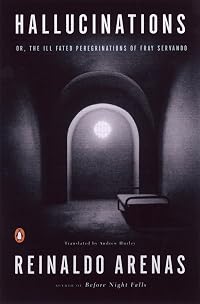
The novel The Ill-fated Peregrinations of Fray Servando recreates in a poetic style, in which time, space, and character move on multiple planes of fantasy and reality, the life of Fray Servando Teresa de Mier, a Mexican priest famous for his hatred of the Spaniards. Mier denied even that the Spaniards had brought Christianity to the New World. show more Arenas begins with a letter to the friar: "Ever since I discovered you in an execrable history of Spanish literature, described as the friar who had traveled over the whole of Europe on foot having improbable adventures; I have tried to find out more about you." In a meditation on the nature of fiction, Arenas discovers that he and Servando are the same person, and author and character become one. (Bowker Author Biography) Reinaldo Arenas, born on July 16, 1943 in Cuba, endured a harsh and dismal childhood. Poverty stricken, Arenas joined Castro's revolution in an attempt to better society. He soon fell out of favor with Castro's regime and his writings were censored. Arenas continued to work as a writer, journalist, and editor, and was imprisoned 1974 to 1976. Arenas was deported to America in 1980 when Castro was ridding Cuba of criminals, artists, and others whom he perceived as adversaries. Arenas's works include novels, short stories, poems, and newspaper articles. In addition to the influence of his poor background, his writing is marked by the homosexual lifestyle he lived and includes such noteworthy titles as Farewell to the Sea, Graveyard of the Angels, and The Brightest Star. On December 7, 1990, while suffering from complications of AIDS, Arenas committed suicide by combining massive doses of drugs and alcohol. He outlined his reasons for taking his life in a letter written to a Spanish newspaper. (Bowker Author Biography) show less
Some Editions
Awards and Honors
Distinctions
Notable Lists
Series
Belongs to Publisher Series
Work Relationships
Has the adaptation
Common Knowledge
- Canonical title
- Before Night Falls
- Original title
- Antes que Anochezca
- Original publication date
- 1992
- People/Characters
- Reinaldo Arenas; Lazaro; Elia del Calvo; Virgilio Pinera; Fidel Castro
- Important places
- Holguin, Cuba; New York, New York, USA; Havana, Cuba; Miami, Florida, USA
- Related movies
- Before Night Falls (2000 | IMDb)
- First words
- I was two.
- Last words
- (Click to show. Warning: May contain spoilers.)It is night.
- Original language
- Spanish
Classifications
- Genres
- Biography & Memoir, LGBTQ+
- DDC/MDS
- 809 — Literature & rhetoric Literature, rhetoric & criticism History, description, critical appraisal of more than two literatures
- LCC
- PQ7390 .A72 .Z46313 — Language and Literature French, Italian, Spanish and Portuguese literatures Spanish literature Provincial, local, colonial, etc. Spanish America
- BISAC
Statistics
- Members
- 1,231
- Popularity
- 20,155
- Reviews
- 19
- Rating
- (4.09)
- Languages
- 7 — English, French, German, Italian, Portuguese, Spanish, Swedish
- Media
- Paper, Audiobook, Ebook
- ISBNs
- 33
- ASINs
- 12