
On This Page
Description
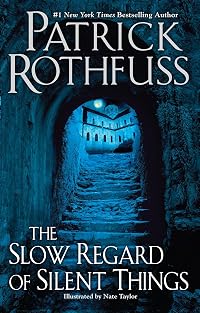
Fantasy. Fiction. Short Stories. HTML:Deep below the University, there is a dark place. Few people know of it: a broken web of ancient passageways and abandoned rooms. A young woman lives there, tucked among the sprawling tunnels of the Underthing, snug in the heart of this forgotten place.Her name is Auri, and she is full of mysteries.The Slow Regard of Silent Things is a brief, bittersweet glimpse of Auri's life, a small adventure all her own. At once joyous and haunting, this story show more offers a chance to see the world through Auri's eyes. And it gives the listener a chance to learn things that only Auri knows....
In this audiobook, Patrick Rothfuss brings us into the world of one of The Kingkiller Chronicle's most enigmatic characters. Full of secrets and mysteries, The Slow Regard of Silent Things is the story of a broken girl trying to live in a broken world. show less
Tags
Recommendations









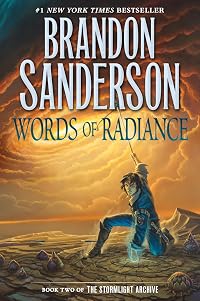

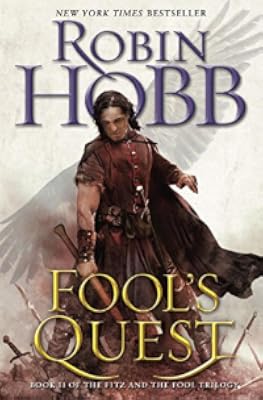



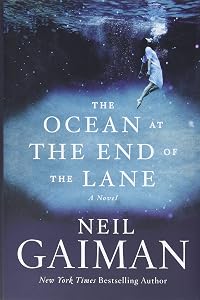





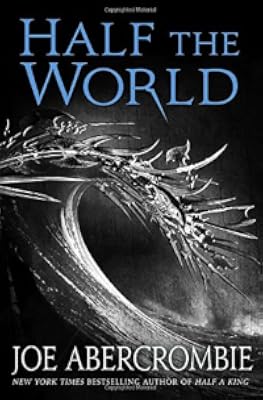




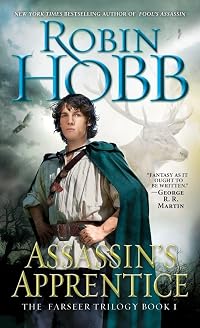











Member Recommendations

Member Reviews
A book that doesn't care if you understand it.
This is not a normal review. And The Slow Regard of Silent Things is not a normal book.
Let me explain. This is a novella set in the world of the Kingkiller Chronicle, following Auri—the mysterious, fragile, brilliant girl who lives in the Underthing beneath the University. There is no Kvothe. There is no plot. There is no dialogue (almost). There is only Auri, her world of tunnels and broken secrets, and her desperate, tender need to make things right.
I loved it. I also completely understand why some people hate it.
What it is: A seven-day journey into the mind of a broken genius. Auri wakes each day, walks through the Underthing, finds objects (a button, a gear, a piece of string), and show more arranges them in precise, ritualistic ways. She is trying to make the world whole. She is trying to be good. She is, in her own strange way, shaping reality through small acts of love.
Rothfuss wrote this book for himself, then almost didn't publish it because he knew it was weird. In the foreword, he literally tells you: "This book is weird. You might not like it. That's okay." I admire that honesty.
Why I love it:
The prose is poetry. Every sentence is crafted like a tiny clockwork. Rothfuss writes Auri's thoughts with a rhythm that feels both childlike and ancient. "She was a wicked thing, but she was a good girl." I've read that line twenty times.
Auri herself. She is not a love interest. She is not a mystery to be solved. She is a person living with trauma, with obsessive-compulsive tendencies, with a mind that works in spirals and whispers. And Rothfuss never mocks her. He never explains her. He just lets her be. It's the most tender character study I've ever read.
The atmosphere. The Underthing—dark, echoing, full of forgotten machines and hidden rooms—becomes a character. I could smell the dust and the old metal. I could hear the water dripping. It's immersive in a way that few books achieve.
The ending. Without spoiling: the last few pages broke me. In a quiet, good way.
Why you might hate it:
Nothing happens. Literally. Auri washes her face. She moves a soap bar. She braids her hair. If you need plot, action, or even a conversation, this is not for you.
It's confusing. Auri names objects ("a brave boy for a button"), talks to unseen forces, and follows rules that only she understands. You will be lost. That's the point.
It's deeply sad. Not in a dramatic, tragic way. In a lonely, hollow way. Some readers find it depressing.
Who should read this:
Readers who loved Auri from the main books and want to live inside her head.
People who enjoy experimental, atmospheric fiction (think The Little Prince meets House of Leaves but quiet).
Anyone who has ever felt broken and tried to fix small things to feel whole.
Who should skip it:
Readers who want more Kvothe, more magic, more plot.
People who need stories to have a clear beginning, middle, and end.
Anyone frustrated by Rothfuss's slow release schedule (this will not help).
Final verdict:
The Slow Regard of Silent Things is not for everyone. It's not even for most fantasy readers. But for those who click with it, it's a treasure. I read it in one sitting, then immediately reread it. It made me look at my own small rituals—making tea, arranging my desk, folding laundry—and see them as acts of quiet defiance against a chaotic world.
Five stars. But with a warning label. Read the foreword first. Trust Rothfuss when he says it's weird. And then let Auri break your heart, one silent moment at a time. show less
This is not a normal review. And The Slow Regard of Silent Things is not a normal book.
Let me explain. This is a novella set in the world of the Kingkiller Chronicle, following Auri—the mysterious, fragile, brilliant girl who lives in the Underthing beneath the University. There is no Kvothe. There is no plot. There is no dialogue (almost). There is only Auri, her world of tunnels and broken secrets, and her desperate, tender need to make things right.
I loved it. I also completely understand why some people hate it.
What it is: A seven-day journey into the mind of a broken genius. Auri wakes each day, walks through the Underthing, finds objects (a button, a gear, a piece of string), and show more arranges them in precise, ritualistic ways. She is trying to make the world whole. She is trying to be good. She is, in her own strange way, shaping reality through small acts of love.
Rothfuss wrote this book for himself, then almost didn't publish it because he knew it was weird. In the foreword, he literally tells you: "This book is weird. You might not like it. That's okay." I admire that honesty.
Why I love it:
The prose is poetry. Every sentence is crafted like a tiny clockwork. Rothfuss writes Auri's thoughts with a rhythm that feels both childlike and ancient. "She was a wicked thing, but she was a good girl." I've read that line twenty times.
Auri herself. She is not a love interest. She is not a mystery to be solved. She is a person living with trauma, with obsessive-compulsive tendencies, with a mind that works in spirals and whispers. And Rothfuss never mocks her. He never explains her. He just lets her be. It's the most tender character study I've ever read.
The atmosphere. The Underthing—dark, echoing, full of forgotten machines and hidden rooms—becomes a character. I could smell the dust and the old metal. I could hear the water dripping. It's immersive in a way that few books achieve.
The ending. Without spoiling: the last few pages broke me. In a quiet, good way.
Why you might hate it:
Nothing happens. Literally. Auri washes her face. She moves a soap bar. She braids her hair. If you need plot, action, or even a conversation, this is not for you.
It's confusing. Auri names objects ("a brave boy for a button"), talks to unseen forces, and follows rules that only she understands. You will be lost. That's the point.
It's deeply sad. Not in a dramatic, tragic way. In a lonely, hollow way. Some readers find it depressing.
Who should read this:
Readers who loved Auri from the main books and want to live inside her head.
People who enjoy experimental, atmospheric fiction (think The Little Prince meets House of Leaves but quiet).
Anyone who has ever felt broken and tried to fix small things to feel whole.
Who should skip it:
Readers who want more Kvothe, more magic, more plot.
People who need stories to have a clear beginning, middle, and end.
Anyone frustrated by Rothfuss's slow release schedule (this will not help).
Final verdict:
The Slow Regard of Silent Things is not for everyone. It's not even for most fantasy readers. But for those who click with it, it's a treasure. I read it in one sitting, then immediately reread it. It made me look at my own small rituals—making tea, arranging my desk, folding laundry—and see them as acts of quiet defiance against a chaotic world.
Five stars. But with a warning label. Read the foreword first. Trust Rothfuss when he says it's weird. And then let Auri break your heart, one silent moment at a time. show less
I like that Pat put a warning that this book might not be for everyone. I can see how it might have been necessary. But I can also say that this book was definitely for me :) As with all of Pat's books (I'm using the familiar form of his name because, by god, I feel like the man is my literary friend, fight me ;P), the language was beautiful, but I never felt like it was ostentatious or unnecessary. Every word used in the proper way, every phrase put in it's perfect place :) Auri was lovely to read about, I loved her more than I have ever loved her before and I will never read about her in the same way again.
As Pat said, this book is for all of those that are a little broken. We are many. We are not alone. This book was a reminder that show more we are not forgotten and we are beautiful and we are loved. Yet another book that changed my life :) show less
As Pat said, this book is for all of those that are a little broken. We are many. We are not alone. This book was a reminder that show more we are not forgotten and we are beautiful and we are loved. Yet another book that changed my life :) show less
Like Pat says in the endnote, this story isn't a story for everyone. It's weird, it has no dialogues and there's only one character. But Auri is just wonderful. I knew I was going to enjoy getting a peek into her life even before I started reading. Kvothe's meetings with Auri were always fascinating to me. And I'm glad Pat decided to write about her.
Honestly, it's kind of crazy how you find yourself getting attached to random things while you read this story. I actually sympathized with objects, because they just couldn't find their right place in the world. I have to say, that's a first for me. Cheers to you, Pat. Your writing just keeps surprising me.
Also, am I the only crazy one that, whenever I buy/recieve something and have to put show more it somewhere, I sort of look around to see where it fits best, kind of like how Auri does? I mean, I obviously can't hear what the things feel or want, but I sort of know when they fit somewhere or not. I guess I just understand Auri's need to make everything fit and be in the right place, probably so I don't feel out of place myself.
I'm sorry, I just really love Auri. And I love that the message of this story is that broken things can still be beautiful and find their place in the world, even if it takes a long time and a lot of wrong places before finding the right one. show less
Honestly, it's kind of crazy how you find yourself getting attached to random things while you read this story. I actually sympathized with objects, because they just couldn't find their right place in the world. I have to say, that's a first for me. Cheers to you, Pat. Your writing just keeps surprising me.
Also, am I the only crazy one that, whenever I buy/recieve something and have to put show more it somewhere, I sort of look around to see where it fits best, kind of like how Auri does? I mean, I obviously can't hear what the things feel or want, but I sort of know when they fit somewhere or not. I guess I just understand Auri's need to make everything fit and be in the right place, probably so I don't feel out of place myself.
I'm sorry, I just really love Auri. And I love that the message of this story is that broken things can still be beautiful and find their place in the world, even if it takes a long time and a lot of wrong places before finding the right one. show less
Como bien explica Patrick Rothfuss, si esperas encontrarte en esta novela corta con Kvothe y una continuación a su historia, no busques aquí. ‘La música del silencio’ (The Show Regard of Silent Things, 2014) es un libro sobre Auri, aunque habría que remarcar que el libro es Auri. Es un libro diferente. No hay diálogos y apenas hay acción. La estructura es extraña, no hay un principio, un nudo ni un desenlace propiamente dichos. Volviendo a las palabras de Rothfuss, no es un libro para todo el mundo.
En ‘La música del silencio’ conocemos un poco más a Auri, solitaria, misteriosa, entrañable y extraña. Durante siete días, seguimos a Auri, que vive en la Subrealidad, los subterráneos bajo la Universidad, lugar que ya show more conocimos en los anteriores libros de Kvothe. Hay algo roto en Auri, que busca el orden sobre todas las cosas. Para ella los objetos son más que meros objetos, tienen vida, personalidad, y siente que deben tener un nombre y un lugar. Todo debe tener su sitio perfecto en el mundo. La novela está repleta de detalles. Rothfuss se centra en Auri y su pensamiento y obsesiones; para ella todo ha de estar perfecto, ya que si no puede peligrar el mundo.
‘La música del silencio’ es una obra poética, hermosa por momentos, y bellamente escrita. Magnífica. show less
En ‘La música del silencio’ conocemos un poco más a Auri, solitaria, misteriosa, entrañable y extraña. Durante siete días, seguimos a Auri, que vive en la Subrealidad, los subterráneos bajo la Universidad, lugar que ya show more conocimos en los anteriores libros de Kvothe. Hay algo roto en Auri, que busca el orden sobre todas las cosas. Para ella los objetos son más que meros objetos, tienen vida, personalidad, y siente que deben tener un nombre y un lugar. Todo debe tener su sitio perfecto en el mundo. La novela está repleta de detalles. Rothfuss se centra en Auri y su pensamiento y obsesiones; para ella todo ha de estar perfecto, ya que si no puede peligrar el mundo.
‘La música del silencio’ es una obra poética, hermosa por momentos, y bellamente escrita. Magnífica. show less
For all the alleged badpress that this book got, I'm going to have to strongly disagree with those reviewers. The issue that many of them took seems to be not with the writing or Rothfuss' story, but was centred on their own expectations. Rothfuss clearly states in both the introduction and afterword that this is not meant to be a continuation of Kvothe's story, nor was it even in the same vein. It is Auri's story, and as any reader with half a brain realizes, Auri is not your typical character. Without getting too psychoanalytic about Auri's probable mental health issues or place on the Autism spectrum, we have to realize before even staring this book that her story is not going to be predictable, structured, or even really a story. show more Instead we are given a glimpse into the life of someone who is unique, someone who defies expectations, and someone who even though we think we understand her we cannot truly. But for all that, I think that this is a wonderful little story, and that Rothfuss is incredibly brave for publishing something that he knew many readers would disparage. Well, I'm not one of those readers - bravo!
Review 2018
"I cannot help but wonder how many of us walk through our lives, day after day, feeling slightly broken and alone, surrounded by others who feel exactly the same way."
Rothfuss speaks no truer words during his extrapolation after the final scene of The Slow Regard of Silent Things, besides mentioning that his stories are always better the second time around. Auri was always a character who intrigued me, but when I first read this book it didn't quite fit (even though I did enjoy it). Like Auri's careful interaction with the world something things are meant to be done properly, and returning to this novella now was a moment of perfection. The story itself is less of a story in the traditional sense, as much as an exploration of words, an importation of wonder and wondering, and a careful dance around the mysteries of the world that we see every day - and it is far stronger for all its strangeness. show less
Review 2018
"I cannot help but wonder how many of us walk through our lives, day after day, feeling slightly broken and alone, surrounded by others who feel exactly the same way."
Rothfuss speaks no truer words during his extrapolation after the final scene of The Slow Regard of Silent Things, besides mentioning that his stories are always better the second time around. Auri was always a character who intrigued me, but when I first read this book it didn't quite fit (even though I did enjoy it). Like Auri's careful interaction with the world something things are meant to be done properly, and returning to this novella now was a moment of perfection. The story itself is less of a story in the traditional sense, as much as an exploration of words, an importation of wonder and wondering, and a careful dance around the mysteries of the world that we see every day - and it is far stronger for all its strangeness. show less
Patrick Rothfuss introduces The Slow Regard of Silent Things with a warning that it's not a proper story. It doesn't do the things a story is supposed to do.
And it's wonderful. It's unlike most anything else I've read and I treasured every word of it.
This isn't a story so much as it's a contemplation. Reading it isn't an act of reading so much as it's a meditation.
Even more so than in the novels of his Kingkiller Chronicle, this novella displays Mr. Rothfuss' delight in language. He plays with words here in a way that's both elegant and giddy. The book is lyrical, bursting with alliteration, homophones, and rhyme, but it never comes off as contrived or self-conscious. Rather, his language is a search to find just the right words for show more each thing that needs to be said.
There are moments when The Slow Regard of Silent Things reads as a tone poem as much as a story. There are moments when the language acts almost as a chant, initiating something akin to a meditative state in the reader.
This is beautiful writing.
In the simplest terms, The Slow Regard of Silent Things is the story of six days in the life of Auri, the mysterious girl who lives in the Underthing—the tunnels underneath the University—who Kvothe befriends during his time as a student and who we meet in the pages of The Kingkiller Chronicle. We follow Auri as she goes about her daily business, preparing for a visit from the man who gave her her name.
To talk about the plot of The Slow Regard of Silent Things feels almost irrelevant. This isn't a traditional narrative, as Mr. Rothfuss takes great pains to make clear in his introduction and closing author note. The story isn't so much about what Auri does during this time but rather why she does it, how she interacts with her subterranean world. It's less about the geography of the Underthing and more about the geography of Auri's mind.
This is a character study, a linguistic excursion, spelunking through an utterly fascinating part of an utterly compelling world that Mr. Rothfuss has created.
When an author creates a world as vibrant as that of The Kingkiller Chronicle, they undertake all sorts of world-building exercises, envisioning the environment in as much detail as possible to properly inform their characters' actions and to make the world fully believable. Most of this world-building never makes its way into the finished work—it's necessary for the author to know but not for the reader to see.
From a lesser author, The Slow Regard of Silent Things would be such a world-building exercise. Sharing it with readers would serve no useful purpose beyond stroking the author's ego.
But Mr. Rothfuss isn't a lesser author. He's self-aware enough, exacting enough, to recognize a world-building exercise for what it is. This story called out to him as something more than that and he was wise enough to see that it was worth sharing.
Nate Taylor's spare illustrations are pitch-perfect. They show just enough of Auri's world, but not too much. They're composed of as much mystery as explication, shadows revealing the light. They interact with the text in a way that heightens the whole narrative—visual poetry to counterpoint the poetry of language.
This story is sweet, gentle, and comforting. For all that Mr. Rothfuss protests that it's not a proper story, it's quite proper true for what it is.
I'm very happy that I got to spend a couple of hours living in Auri's world. It's a special place.
----
UPDATE: November 17, 2014
I’ve been reading through the reviews of this title and I admit - I’m somewhat shocked at how many people have panned it.
And the bad reviews aren’t wrong. My personal favorite review of this work states, “There's absolutely no plot, it's just ~150 pages of a girl running around in the sewers doing Feng Shui and kissing inanimate objects.”
That’s a concise and more-or-less correct (albeit oversimplified) summation of what little plot there is.
I completely understand why people don’t like this book. It’s slow, meandering, plotless. It’s about language and not story, it’s about place and feeling and not events. Of course some people find it boring.
But here’s the thing: Mr. Rothfuss told everyone that this book wasn’t a normal, plot-driven book upfront, right in his introduction. He warned anyone looking for a normal, plot-driven story to walk away from this book, because it’s not what they’re looking for.
So, if you’re a reader looking for a plot-driven fantasy story like Mr. Rothfuss’ other novels - heed his warning in the introduction and understand that this novella won’t give you that.
The rewards offered in this work are very different. show less
And it's wonderful. It's unlike most anything else I've read and I treasured every word of it.
This isn't a story so much as it's a contemplation. Reading it isn't an act of reading so much as it's a meditation.
Even more so than in the novels of his Kingkiller Chronicle, this novella displays Mr. Rothfuss' delight in language. He plays with words here in a way that's both elegant and giddy. The book is lyrical, bursting with alliteration, homophones, and rhyme, but it never comes off as contrived or self-conscious. Rather, his language is a search to find just the right words for show more each thing that needs to be said.
There are moments when The Slow Regard of Silent Things reads as a tone poem as much as a story. There are moments when the language acts almost as a chant, initiating something akin to a meditative state in the reader.
This is beautiful writing.
In the simplest terms, The Slow Regard of Silent Things is the story of six days in the life of Auri, the mysterious girl who lives in the Underthing—the tunnels underneath the University—who Kvothe befriends during his time as a student and who we meet in the pages of The Kingkiller Chronicle. We follow Auri as she goes about her daily business, preparing for a visit from the man who gave her her name.
To talk about the plot of The Slow Regard of Silent Things feels almost irrelevant. This isn't a traditional narrative, as Mr. Rothfuss takes great pains to make clear in his introduction and closing author note. The story isn't so much about what Auri does during this time but rather why she does it, how she interacts with her subterranean world. It's less about the geography of the Underthing and more about the geography of Auri's mind.
This is a character study, a linguistic excursion, spelunking through an utterly fascinating part of an utterly compelling world that Mr. Rothfuss has created.
When an author creates a world as vibrant as that of The Kingkiller Chronicle, they undertake all sorts of world-building exercises, envisioning the environment in as much detail as possible to properly inform their characters' actions and to make the world fully believable. Most of this world-building never makes its way into the finished work—it's necessary for the author to know but not for the reader to see.
From a lesser author, The Slow Regard of Silent Things would be such a world-building exercise. Sharing it with readers would serve no useful purpose beyond stroking the author's ego.
But Mr. Rothfuss isn't a lesser author. He's self-aware enough, exacting enough, to recognize a world-building exercise for what it is. This story called out to him as something more than that and he was wise enough to see that it was worth sharing.
Nate Taylor's spare illustrations are pitch-perfect. They show just enough of Auri's world, but not too much. They're composed of as much mystery as explication, shadows revealing the light. They interact with the text in a way that heightens the whole narrative—visual poetry to counterpoint the poetry of language.
This story is sweet, gentle, and comforting. For all that Mr. Rothfuss protests that it's not a proper story, it's quite proper true for what it is.
I'm very happy that I got to spend a couple of hours living in Auri's world. It's a special place.
----
UPDATE: November 17, 2014
I’ve been reading through the reviews of this title and I admit - I’m somewhat shocked at how many people have panned it.
And the bad reviews aren’t wrong. My personal favorite review of this work states, “There's absolutely no plot, it's just ~150 pages of a girl running around in the sewers doing Feng Shui and kissing inanimate objects.”
That’s a concise and more-or-less correct (albeit oversimplified) summation of what little plot there is.
I completely understand why people don’t like this book. It’s slow, meandering, plotless. It’s about language and not story, it’s about place and feeling and not events. Of course some people find it boring.
But here’s the thing: Mr. Rothfuss told everyone that this book wasn’t a normal, plot-driven book upfront, right in his introduction. He warned anyone looking for a normal, plot-driven story to walk away from this book, because it’s not what they’re looking for.
So, if you’re a reader looking for a plot-driven fantasy story like Mr. Rothfuss’ other novels - heed his warning in the introduction and understand that this novella won’t give you that.
The rewards offered in this work are very different. show less
There are not words for how much I love this story. I have generally enjoyed Pat Rothfuss's Kingkiller Chronicle while occasionally feeling exasperated with Kvothe, our main character and narrator. Kvothe is a teenage boy and in his view of women occasionally stereotypically so, and when that happens, it grates on me. Rothfuss's writing, worldbuilding and plotting in the main series was good enough to keep me reading, though, and there were interesting women in his stories, even if we only get them through Kvothe's viewpoint. I didn't love the books like some do, but I liked them pretty well, and could see what others loved in them.
This little story, which Rothfuss dismisses in both the introduction and the afterword, as something that show more most people won't like, as something that doesn't do what a story should do, this little story hit me harder than either of the main books in the series. Auri is luminous and complex and broken; she knows that she's broken, but she keeps on keeping on, putting her secret world to rights day by day, and fighting her own eccentricities to do what she feels she needs to do. She is not normal. She has bad mental days. She talks to and attributes personalities to the items that she collects. We never see her interact with another person. And she is wonderful, and her story is wonderful. I'd really like Pat Rothfuss to write more stories like this - or even just more stories that aren't in Kvothe's point of view, because honestly, I don't like Kvothe very much. I love Auri. Highly recommend this story. If you're the right kind of person, this story will make you feel like coming home, a little. show less
This little story, which Rothfuss dismisses in both the introduction and the afterword, as something that show more most people won't like, as something that doesn't do what a story should do, this little story hit me harder than either of the main books in the series. Auri is luminous and complex and broken; she knows that she's broken, but she keeps on keeping on, putting her secret world to rights day by day, and fighting her own eccentricities to do what she feels she needs to do. She is not normal. She has bad mental days. She talks to and attributes personalities to the items that she collects. We never see her interact with another person. And she is wonderful, and her story is wonderful. I'd really like Pat Rothfuss to write more stories like this - or even just more stories that aren't in Kvothe's point of view, because honestly, I don't like Kvothe very much. I love Auri. Highly recommend this story. If you're the right kind of person, this story will make you feel like coming home, a little. show less
Members
- Recently Added By
Lists

Recommend the 20 best books you've read in the last five years
2,168 works; 606 members

Top Five Books of 2014
1,064 works; 398 members

Teen Sci-Fi Fantasy Male Lead
47 works; 1 member

Allie's Wishlist
217 works; 2 members

Dublin Literary Award Longlist 2016
148 works; 4 members

Books Read in 2016
4,666 works; 197 members

Allie's List of Books I Want To Read
93 works; 1 member

Books featured on I Don't Even Own a Television
167 works; 3 members

Books Read in 2014
2,343 works; 89 members

Mind Expanding Books by hackerkid
581 works; 8 members

Our Favorite Comfort Reads
334 works; 200 members

Wishlist
99 works; 1 member
Author Information

31+ Works 45,327 Members
Patrick Rothfuss was born in Madison, Wisconsin on June 6, 1973. He received a B.A. in English from the University of Wisconsin, Stevens Point and M. A. from Washington State University. He teaches at the University of Wisconsin, Stevens Point. In 2002, his short story, The Road to Levinshir, won first place in the Writers of the Future contest. show more He writes The Kingkiller Chronicles. The first book in the series, The Name of the Wind, won the 2007 Quill Award for best sci-fi/fantasy. The third book in the series, The Slow Regard of Silent Things, made the New York Times bestseller list in 2014. (Bowker Author Biography) show less

Patrick Rothfuss is a LibraryThing Author, an author who lists their personal library on LibraryThing.
All Editions
Some Editions
Awards and Honors
Series

Belongs to Publisher Series
Work Relationships
Common Knowledge
- Canonical title*
- De muziek van de stilte
- Original title
- The Slow Regard of Silent Things
- Original publication date
- 2014-10-28
- People/Characters
- Auri
- Important places
- The Underthing
- Dedication
- For Vi, without whom there might be no story. And Tunnel Bob, without whom there would be no Auri.
- First words
- When Auri woke, she knew that she had seven days.
- Last words
- (Click to show. Warning: May contain spoilers.)Deep in the underthing, stones warm beneath her feet, Auri heard a faint, sweet strain of music.
- Original language
- English
*Some information comes from Common Knowledge in other languages. Click "Edit" for more information.
Classifications
Statistics
- Members
- 5,113
- Popularity
- 2,691
- Reviews
- 185
- Rating
- (3.86)
- Languages
- 12 — Catalan, Dutch, English, Estonian, French, German, Hungarian, Italian, Polish, Portuguese, Spanish, Turkish
- Media
- Paper, Audiobook, Ebook
- ISBNs
- 37
- ASINs
- 20