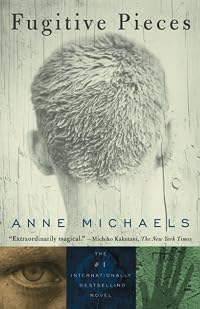
Fugitive Pieces
by Anne Michaels
On This Page
Description
A "New York Times" Notable Book of the Year Winner of the Lannan Literary Fiction Award Winner of the Guardian Fiction Award In 1940 a boy bursts from the mud of a war-torn Polish city, where he has buried himself to hide from the soldiers who murdered his family. His name is Jakob Beer. He is only seven years old. And although by all rights he should have shared the fate of the other Jews in his village, he has not only survived but been rescued by a Greek geologist, who does not recognize show more the boy as human until he begins to cry. With this electrifying image, Anne Michaels ushers us into her rapturously acclaimed novel of loss, memory, history, and redemption. As Michaels follows Jakob across two continents, she lets us witness his transformation from a half-wild casualty of the Holocaust to an artist who extracts meaning from its abyss. Filled with mysterious symmetries and rendered in heart-stopping prose, "Fugitive Pieces" is a triumphant work, a book that should not so much be read as it should be surrendered to. "From the Trade Paperback edition."" show lessTags
Recommendations
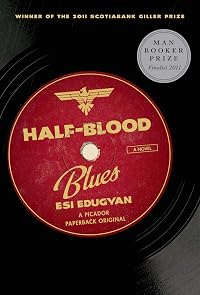
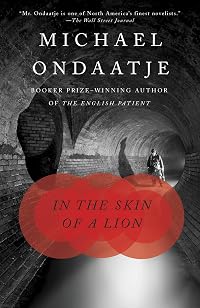
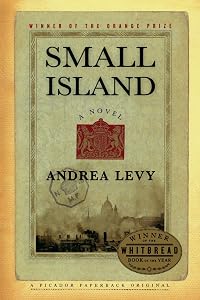

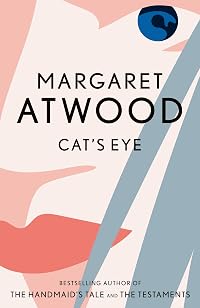



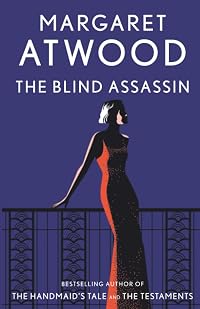
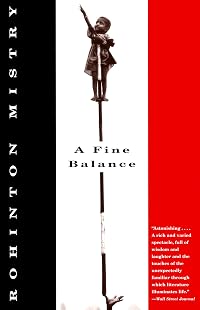
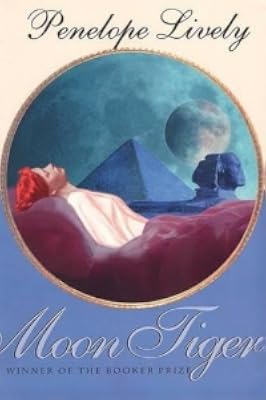
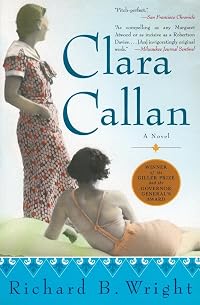



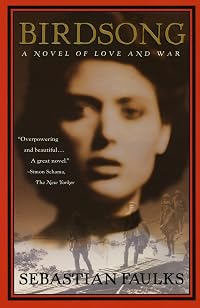
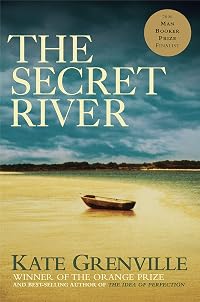
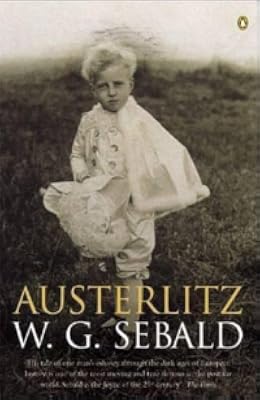
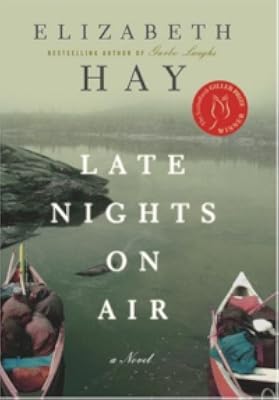


Member Recommendations
Florian_Brennstoff Die ganze Tragik und Trostlosigkeit des zweiten Weltkrieges und des Verfolgtseins, ihre sprachliche Wucht, das verbindet die beiden Bücher.
Member Reviews
Fugitive Pieces is a tour de force that must be consumed slowly and savored, like a good wine or a piece of New York cheesecake. It is the story of Jakob Beer, a Jewish child saved from the holocaust by a Greek stranger. In a style that is beautiful and stark at the same moment, Michaels ferrys us through Jakob’s life as he deals with his loss and its impact on his future.
When Jakob’s story is complete, and you feel the book has reached its logical end, Michaels pulls a rabbit out of the hat and introduces some new magic in the guise of Ben, the child of holocaust survivors who is touched in a profound way by Jakob. Ben is proof that the influence of an individual can outlast his life, that a life can mean more than we know, that show more our own grief can assuage someone else’s.
The night you and I met, Jakob, I heard you tell my wife that there's a moment when love makes us believe in death for the first time. You recognize the one whose loss, even contemplated, you'll carry forever, like a sleeping child. All grief, anyone's grief, you said, is the weight of a sleeping child.
For grief is so often memory, and memory is what extends us beyond the limits of our corporeal bodies. No one would protest the burden of carrying a sleeping child.
I marked numerous passages in my reading. I stopped and reread paragraphs because the beauty they expressed was too profound to be satisfied by only a single reading.
As for your brother's unhappiness, I'm naive enough to think that love is always good, no matter how long ago, no matter the circumstances. I'm not old enough yet to imagine the instances where this isn't true and where regret outweighs everything.
and
She knows as well as I that history only goes into remission, while it continues to grow in you until you're silted up and can't move. And you disappear into a piece of music, a chest of drawers, perhaps a hospital record or two, and you slip away, forsaken even by those who claimed to love you the most.
There are myriad holocaust stories, but the best are the ones that remind us of our humanity, what we share, and that, as Donne told us, “any man's death diminishes me, because I am involved in mankind, and therefore never send to know for whom the bells tolls; it tolls for thee."
This is an excellent holocaust tale. show less
When Jakob’s story is complete, and you feel the book has reached its logical end, Michaels pulls a rabbit out of the hat and introduces some new magic in the guise of Ben, the child of holocaust survivors who is touched in a profound way by Jakob. Ben is proof that the influence of an individual can outlast his life, that a life can mean more than we know, that show more our own grief can assuage someone else’s.
The night you and I met, Jakob, I heard you tell my wife that there's a moment when love makes us believe in death for the first time. You recognize the one whose loss, even contemplated, you'll carry forever, like a sleeping child. All grief, anyone's grief, you said, is the weight of a sleeping child.
For grief is so often memory, and memory is what extends us beyond the limits of our corporeal bodies. No one would protest the burden of carrying a sleeping child.
I marked numerous passages in my reading. I stopped and reread paragraphs because the beauty they expressed was too profound to be satisfied by only a single reading.
As for your brother's unhappiness, I'm naive enough to think that love is always good, no matter how long ago, no matter the circumstances. I'm not old enough yet to imagine the instances where this isn't true and where regret outweighs everything.
and
She knows as well as I that history only goes into remission, while it continues to grow in you until you're silted up and can't move. And you disappear into a piece of music, a chest of drawers, perhaps a hospital record or two, and you slip away, forsaken even by those who claimed to love you the most.
There are myriad holocaust stories, but the best are the ones that remind us of our humanity, what we share, and that, as Donne told us, “any man's death diminishes me, because I am involved in mankind, and therefore never send to know for whom the bells tolls; it tolls for thee."
This is an excellent holocaust tale. show less
“There’s a moment when love makes us believe in death for the first time.”
I read and noted the presumed truth of that line: the fear of losing those we love. Now I feel and live it. When a friend recently consoled me with the idea that grief is love with nowhere to go, I knew exactly what she meant.
This is a beautiful and profound novel that I ended up finishing at a painfully and unexpectedly (in)appropriate time.
It’s about making a life after sudden death (“no one is born just once”), nurturing memories, and living with ghosts (not literally). It’s about the importance of stories: of piecing them together from fragments, whether the sort of snippets refugees abandon or treasure, or natural artefacts that the brave, show more wise, big-hearted geologist, Athos, studies.
Image: Heart-shaped hole in pebbles (Source.)
One Story, Two Narrators
The first 200 exquisite pages are fictional poet Jakob Beer’s unfinished memoirs, “a biography of longing”. All his writings were, in some sense, ghost stories, or about hiding. But this charts his being the sole survivor of a Nazi raid on his home, aged seven, then to Zakynthos, Toronto, and back to Zakynthos. It’s profound, painful, poetic, and hopeful. It drips with symbolism and recurring tropes. It was 5* at least.
Then, for the final 100 pages, it suddenly switches to Ben, the son of refugees, who “was born into absence… A hiding place, rotted out by grief” to a father “who erased himself as much as possible within the legal bounds of citizenship”. Ben was a student admirer of Jakob, who meets elderly Jakob once, at a party. When Jakob dies, Ben tries to assemble the pieces of his life story, travelling to Jakob's home on Zakynthos, living some parallels of his Jakob's life. The trouble is, Ben’s voice is barely distinguishable from Jakob’s (even the chapter titles are taken from those in the main part). The only difference is that there are hardly any of the poetic aphorisms that make most of the book sublime. A hugely disappointing way to finish.
Living after Loss
“There is no absence if there remains even the memory of absence.”
Jakob lost his parents and older sister in terrifying circumstances. Piano-playing Bella is the strongest memory and hence greatest loss throughout his life.
"She whispers; not for me to join her, but so that, when I'm close enough, she can push me back into the world.”
He nurtures and cherishes his memories, the times he almost glimpses her, but gradually he learns the best remembrance is to embrace the life he’s privileged to have. Not to forget, but to focus more on the future than the past.
“To remain with the dead is to abandon them."
Quotes about Loss
• “To survive was to escape fate. But if you escape your fate, whose life do you then step into?”
• “The intimacy that death forces on us.” Going through letters and possessions.
• “A house, more than a diary, is the intimate glimpse. A house is a life interrupted.”
• “Murder steals from a man his future. It steals from his own death. But it must not steal from him his life.”
• “I tried to embroider darkness… Black on black, until the only way to see the texture would be to move the whole cloth under the light.”
Other Quotes
• “Limestone - that crushed reef of memory” and cave formations “spasms in time”.
• “Find a way to make beauty necessary; find a way to make necessity beautiful.”
• “Starlight [is] only the white breath of an old cry. Sending their white messages millions of years, only to be crumpled up by the waves.”
• “I long to steal your memories... to syphon off your dreams [nightmares].”
• Writing about childhood memories “in a language foreign to their happening… English could protect me; an alphabet without memory.” Translation as a form of transubstantiation.
• “The best teacher lodges an interest not in the mind, but in the heart.”
• “One could look deeply for meaning or one can invent it.”
• “History is amoral: events occurred. But memory is moral; what we consciously remember is what our conscience remembers… History and memory share events; that is, they share time and space. Every moment is two moments.”
• “The leaves whisper under the street lamps… Flowers dripping from window boxes.”
• “The visitation of moonlight. It occupies the darkness, erasing everything it touches.”
• “The ship’s flag grabs at twilight. Heat washes away under the rushing fountain of stars.”
“Write to save yourself… and someday you’ll write because you’ve been saved.”
Hence this review. I hope. I do. And this book is part of that process. show less
I read and noted the presumed truth of that line: the fear of losing those we love. Now I feel and live it. When a friend recently consoled me with the idea that grief is love with nowhere to go, I knew exactly what she meant.
This is a beautiful and profound novel that I ended up finishing at a painfully and unexpectedly (in)appropriate time.
It’s about making a life after sudden death (“no one is born just once”), nurturing memories, and living with ghosts (not literally). It’s about the importance of stories: of piecing them together from fragments, whether the sort of snippets refugees abandon or treasure, or natural artefacts that the brave, show more wise, big-hearted geologist, Athos, studies.
Image: Heart-shaped hole in pebbles (Source.)
One Story, Two Narrators
The first 200 exquisite pages are fictional poet Jakob Beer’s unfinished memoirs, “a biography of longing”. All his writings were, in some sense, ghost stories, or about hiding. But this charts his being the sole survivor of a Nazi raid on his home, aged seven, then to Zakynthos, Toronto, and back to Zakynthos. It’s profound, painful, poetic, and hopeful. It drips with symbolism and recurring tropes. It was 5* at least.
Then, for the final 100 pages, it suddenly switches to Ben, the son of refugees, who “was born into absence… A hiding place, rotted out by grief” to a father “who erased himself as much as possible within the legal bounds of citizenship”. Ben was a student admirer of Jakob, who meets elderly Jakob once, at a party. When Jakob dies, Ben tries to assemble the pieces of his life story, travelling to Jakob's home on Zakynthos, living some parallels of his Jakob's life. The trouble is, Ben’s voice is barely distinguishable from Jakob’s (even the chapter titles are taken from those in the main part). The only difference is that there are hardly any of the poetic aphorisms that make most of the book sublime. A hugely disappointing way to finish.
Living after Loss
“There is no absence if there remains even the memory of absence.”
Jakob lost his parents and older sister in terrifying circumstances. Piano-playing Bella is the strongest memory and hence greatest loss throughout his life.
"She whispers; not for me to join her, but so that, when I'm close enough, she can push me back into the world.”
He nurtures and cherishes his memories, the times he almost glimpses her, but gradually he learns the best remembrance is to embrace the life he’s privileged to have. Not to forget, but to focus more on the future than the past.
“To remain with the dead is to abandon them."
Quotes about Loss
• “To survive was to escape fate. But if you escape your fate, whose life do you then step into?”
• “The intimacy that death forces on us.” Going through letters and possessions.
• “A house, more than a diary, is the intimate glimpse. A house is a life interrupted.”
• “Murder steals from a man his future. It steals from his own death. But it must not steal from him his life.”
• “I tried to embroider darkness… Black on black, until the only way to see the texture would be to move the whole cloth under the light.”
Other Quotes
• “Limestone - that crushed reef of memory” and cave formations “spasms in time”.
• “Find a way to make beauty necessary; find a way to make necessity beautiful.”
• “Starlight [is] only the white breath of an old cry. Sending their white messages millions of years, only to be crumpled up by the waves.”
• “I long to steal your memories... to syphon off your dreams [nightmares].”
• Writing about childhood memories “in a language foreign to their happening… English could protect me; an alphabet without memory.” Translation as a form of transubstantiation.
• “The best teacher lodges an interest not in the mind, but in the heart.”
• “One could look deeply for meaning or one can invent it.”
• “History is amoral: events occurred. But memory is moral; what we consciously remember is what our conscience remembers… History and memory share events; that is, they share time and space. Every moment is two moments.”
• “The leaves whisper under the street lamps… Flowers dripping from window boxes.”
• “The visitation of moonlight. It occupies the darkness, erasing everything it touches.”
• “The ship’s flag grabs at twilight. Heat washes away under the rushing fountain of stars.”
“Write to save yourself… and someday you’ll write because you’ve been saved.”
Hence this review. I hope. I do. And this book is part of that process. show less
The first part of this was incredible, the final third jolted me out of the lyrical place I found myself and it just didn't, for me, work as a whole.
Jakob Beer is a Jewish, Polish boy who is found hiding in an iron age bog site by a Greek Archaeologist (and all round polymath) called Athos. Athos saves Jakob and takes him home to Zakythos. Here Jakob learns about history, geography, language and scholarly pursuits. But he also learns about love and loss and how to continue with life when all he knew has been stripped away. he struggles to deal with the loss (presumed death) of his sister, Bella, and she haunts the book.
The first 2/3rds are narrated by Jakob, and we hear about life in Greece under the Nazis, the hardships but also the show more friendship, loyalty and solidarity that hold the community together. After the war, life moves to Toronto, and Jakob has a new place to refind his feet. He meets his best friend and, in a mirror to Athos and his best friend, Maurice and his wife play a life in Jakob life and after his death.
The final third of the book is written by Ben, a person also scarred by the holocaust, but as the child of survivors. It is a different dynamic, with a different voice and it jolted me badly. Ben is tasked with finding Jakob's journals by Maurice, he's going through a bad patch in his marriage and through exploring Jakob's house and writings he finds something out about himself. It felt contrived, especially in contrast to the first 2/3rds. Maybe I didn't warm to Ben. To me he felt self centred and as if he was making a mountain out of amole hill. He was jealous of his wife's relationship with his parents, parents that it felt like he never really understood himself.
This was excellently written, the language lyrical, the thoughts expressed profound. If this had ended at 2/3rds distance, I'd have been giving this 4 stars, if not more, but the final third felt like it didn't fit. Jakob has his afterlife in his writing, I felt he didn't need Ben poking around in it. show less
Jakob Beer is a Jewish, Polish boy who is found hiding in an iron age bog site by a Greek Archaeologist (and all round polymath) called Athos. Athos saves Jakob and takes him home to Zakythos. Here Jakob learns about history, geography, language and scholarly pursuits. But he also learns about love and loss and how to continue with life when all he knew has been stripped away. he struggles to deal with the loss (presumed death) of his sister, Bella, and she haunts the book.
The first 2/3rds are narrated by Jakob, and we hear about life in Greece under the Nazis, the hardships but also the show more friendship, loyalty and solidarity that hold the community together. After the war, life moves to Toronto, and Jakob has a new place to refind his feet. He meets his best friend and, in a mirror to Athos and his best friend, Maurice and his wife play a life in Jakob life and after his death.
The final third of the book is written by Ben, a person also scarred by the holocaust, but as the child of survivors. It is a different dynamic, with a different voice and it jolted me badly. Ben is tasked with finding Jakob's journals by Maurice, he's going through a bad patch in his marriage and through exploring Jakob's house and writings he finds something out about himself. It felt contrived, especially in contrast to the first 2/3rds. Maybe I didn't warm to Ben. To me he felt self centred and as if he was making a mountain out of amole hill. He was jealous of his wife's relationship with his parents, parents that it felt like he never really understood himself.
This was excellently written, the language lyrical, the thoughts expressed profound. If this had ended at 2/3rds distance, I'd have been giving this 4 stars, if not more, but the final third felt like it didn't fit. Jakob has his afterlife in his writing, I felt he didn't need Ben poking around in it. show less
Much of of what I just read was unsatisfying. From the Greek places, foods and objects with which I was not familiar to the story that jumped from Jakob to Ben (Who was he, and why was he there?!), I was left dangling.
This book read like a dream about the Holocaust, but a dream that was just a bit beyond my understanding. In lyrical language that, at times, shut me out of the story completely, I kept thinking that I was missing something. Where was this story going, and what did it want to say? Something profound about the Holocaust? I have not yet clearly figured that out.
What interested me at first, but then sadly later vanished, were allusions to the Jews of Greece. That, in itself, was a good starting place for me, being Jewish show more myself and having visited many places in Greece. However, what this book was trying to say was simply too vague, the ideas twisted up in its indecipherably poetic prose.
What started out as beautiful was the tender relationship between Jakob, a Holocaust war orphan, and his adoptive Greek guardian, Athos. When the story abruptly broke from that vein, the bottom fell out of my enjoyment of this book. At that point, it felt as if someone had suddenly thrust a totally unrelated book into my hands, and I never thereafter felt any further engagement with this story.
I will agree that this book had some noteworthy sayings, a few thoughtful enough that I was inspired to copy them down. That, however, was not enough to make this story one I would recommend to others. show less
This book read like a dream about the Holocaust, but a dream that was just a bit beyond my understanding. In lyrical language that, at times, shut me out of the story completely, I kept thinking that I was missing something. Where was this story going, and what did it want to say? Something profound about the Holocaust? I have not yet clearly figured that out.
What interested me at first, but then sadly later vanished, were allusions to the Jews of Greece. That, in itself, was a good starting place for me, being Jewish show more myself and having visited many places in Greece. However, what this book was trying to say was simply too vague, the ideas twisted up in its indecipherably poetic prose.
What started out as beautiful was the tender relationship between Jakob, a Holocaust war orphan, and his adoptive Greek guardian, Athos. When the story abruptly broke from that vein, the bottom fell out of my enjoyment of this book. At that point, it felt as if someone had suddenly thrust a totally unrelated book into my hands, and I never thereafter felt any further engagement with this story.
I will agree that this book had some noteworthy sayings, a few thoughtful enough that I was inspired to copy them down. That, however, was not enough to make this story one I would recommend to others. show less
It's over between us, Anne Michaels. It's not you, it's me. But our relationship is ended. I struggled through 9 pages of this and concluded that it is not written for an 'ordinary' person such as me. I understood almost none of those 9 pages. Paragraphs seemed to have no connection to each other. And each paragraph was obscure from the very first:
"Time is a blind guide"
WTF! And further down that first page:
"I squirmed from the marshy ground like Tollund Man, Grauballe Man, like the boy they uprooted in the middle of Franz Josef Street while they were repairing the road, six hundred cockleshell beads around his neck, a helmet of mud. Dripping with the prune-coloured juices of the peat-sweating bog. Afterbirth of the earth."
Who the show more hell is "Tollund Man"? or "Grauballe Man"? I'm reasonably educated but I've never heard of these men. Should I stop reading and google them? What's the point of introducing them if the reader won't understand the reference? Just to show how clever you are? This is a book for the elitists, I reckon. People who like reading esoteric poetry and James Joyce. I am not one of those. This is my second Orange Prize winner I've 'read' in a row, and I've abandoned both. The Orange Prize is now a guide to my black list.
Nancy Pearl would not approve of me stopping reading this early, but I haven't got enough life left to waste it on this sort of stuff. show less
"Time is a blind guide"
WTF! And further down that first page:
"I squirmed from the marshy ground like Tollund Man, Grauballe Man, like the boy they uprooted in the middle of Franz Josef Street while they were repairing the road, six hundred cockleshell beads around his neck, a helmet of mud. Dripping with the prune-coloured juices of the peat-sweating bog. Afterbirth of the earth."
Who the show more hell is "Tollund Man"? or "Grauballe Man"? I'm reasonably educated but I've never heard of these men. Should I stop reading and google them? What's the point of introducing them if the reader won't understand the reference? Just to show how clever you are? This is a book for the elitists, I reckon. People who like reading esoteric poetry and James Joyce. I am not one of those. This is my second Orange Prize winner I've 'read' in a row, and I've abandoned both. The Orange Prize is now a guide to my black list.
Nancy Pearl would not approve of me stopping reading this early, but I haven't got enough life left to waste it on this sort of stuff. show less
Anne Michaels is a poet first and foremost. She has published several volumes of poetry and anyone reading her debut novel, Fugitive Pieces, will realize that within the first few pages. Lovely, sublime, poetic prose covers each and every page and draws you in to her heartbreaking story.
In 1940, seven year old Jakob Beer emerges from the rubble of a war-torn city in Poland covered in dirt. He’s buried himself each day, and traveled the dark, deep forest each night since the rest of his Jewish family was murdered when German soldiers burst into their home:
“The burst door. Wood ripped from hinges, cracking like ice under the shouts. Noises never heard before, torn from my father’s mouth. Then silence. My mother had been sewing a show more button on my shirt. She kept her buttons in a chipped saucer. I heard the rim of the saucer in circles on the floor. I heard the spray of buttons, little white teeth.” (Page 7)
Fortunately for Jakob, when he emerges from the dirt, a geologist named Athos Ruossos sees him, at first not recognizing him as human. Athos takes Jakob under his wing and takes him home to his native Greece where Athos works in a university, The two spend their lives traveling between Greece and Toronto. We follow their lives, as they come to terms with loneliness, loss and sorrow, each in his own way.
Two thirds of the way through the book, we hear the voice of Ben, an admirer of the adult Jakob Beer’s poetry. He tells the story of growing up with and dealing with his parents’ difficulty in confronting their years in the Nazi concentration camps:
“When my parents were liberated, four years before I was born, they found that the ordinary world outside the camp had been eradicated. There was no more simple meal, no thing was less than extraordinary: a fork, a mattress, a clean shirt, a book. Not to mention such things that can make one weep: an orange, meat and vegetables, hot water. There was no ordinariness to return to, no refuge from the blinding potency of things, an apple screaming its sweet juice. Every thing belonged to, had been retrieved from, impossibility---both the inorganic and the organic---shoes and socks, their own flesh. It was all as one. And this gratitude included the inexpressible.” (Page 205)
This is a book to be savored for the beauty of its language and the sadness of its story. It’s a gentle story that you can’t rush through, or you will not be cognizant of the breadth of its wisdom and magnificence. I found myself rereading passages over and over to wring from them the entirety of their effect as well as the splendor of the language. Highly recommended. show less
In 1940, seven year old Jakob Beer emerges from the rubble of a war-torn city in Poland covered in dirt. He’s buried himself each day, and traveled the dark, deep forest each night since the rest of his Jewish family was murdered when German soldiers burst into their home:
“The burst door. Wood ripped from hinges, cracking like ice under the shouts. Noises never heard before, torn from my father’s mouth. Then silence. My mother had been sewing a show more button on my shirt. She kept her buttons in a chipped saucer. I heard the rim of the saucer in circles on the floor. I heard the spray of buttons, little white teeth.” (Page 7)
Fortunately for Jakob, when he emerges from the dirt, a geologist named Athos Ruossos sees him, at first not recognizing him as human. Athos takes Jakob under his wing and takes him home to his native Greece where Athos works in a university, The two spend their lives traveling between Greece and Toronto. We follow their lives, as they come to terms with loneliness, loss and sorrow, each in his own way.
Two thirds of the way through the book, we hear the voice of Ben, an admirer of the adult Jakob Beer’s poetry. He tells the story of growing up with and dealing with his parents’ difficulty in confronting their years in the Nazi concentration camps:
“When my parents were liberated, four years before I was born, they found that the ordinary world outside the camp had been eradicated. There was no more simple meal, no thing was less than extraordinary: a fork, a mattress, a clean shirt, a book. Not to mention such things that can make one weep: an orange, meat and vegetables, hot water. There was no ordinariness to return to, no refuge from the blinding potency of things, an apple screaming its sweet juice. Every thing belonged to, had been retrieved from, impossibility---both the inorganic and the organic---shoes and socks, their own flesh. It was all as one. And this gratitude included the inexpressible.” (Page 205)
This is a book to be savored for the beauty of its language and the sadness of its story. It’s a gentle story that you can’t rush through, or you will not be cognizant of the breadth of its wisdom and magnificence. I found myself rereading passages over and over to wring from them the entirety of their effect as well as the splendor of the language. Highly recommended. show less
You pick up a book about the Holocaust or World War II and you expect it to be powerful, you expect it to be moving or touching or force you to envision all kinds of things that should never be forgotten for the sake of those who were lost. What you don't expect is the perfection of a recipe that blends what you already know with some things you weren't familiar with, then stirs that together with the emotion of getting away while others did not. This book doesn't throw the events at you, but it does not ignore them either. It is the story of one boy who survives the tragedy of losing his family and lives on an island in relative contentment while others hide away or are lost forever. But his isn't the only survivor's guilt readers show more encounter.
The writing is simply excellent; each character's emotion shared with perfect clarity, each phrase or paragraph making you reflect and live, both at the same time. The book comes in two parts and the transition between the two is sharp and stunning, without much explanation for a short time, which reflects the nature of the need to change from one first person narrator to the other. That splitting of story and narrator also points out to us how one life can touch another, how we each bring change to those we meet. These little details draw the reader deeply in to the story.
Anne Michaels is a poet and the words within these pages show that with brilliance. If you read one book about surviving World War II, let it be this one. The emotional and verbal beauty put in to the retelling of the events of the holocaust is a more than fitting tribute to those who were not "buried in ground that will remember" them. show less
The writing is simply excellent; each character's emotion shared with perfect clarity, each phrase or paragraph making you reflect and live, both at the same time. The book comes in two parts and the transition between the two is sharp and stunning, without much explanation for a short time, which reflects the nature of the need to change from one first person narrator to the other. That splitting of story and narrator also points out to us how one life can touch another, how we each bring change to those we meet. These little details draw the reader deeply in to the story.
Anne Michaels is a poet and the words within these pages show that with brilliance. If you read one book about surviving World War II, let it be this one. The emotional and verbal beauty put in to the retelling of the events of the holocaust is a more than fitting tribute to those who were not "buried in ground that will remember" them. show less
Members
- Recently Added By
Published Reviews
ThingScore 75
Mit ihrem Debütroman "Fluchtstücke" ist ihr, abgesehen von kleinen Schwächen, der Balanceakt zwischen Nachfühlen und Einfühlen in das Schicksal der Opfer, geglückt.
added by Indy133
Lists

1001 Books You Must Read Before You Die
1,448 works; 1,136 members

The Best of Canadian Literature
235 works; 33 members
CBC Books - Canada's 100 (+ bonus 10): Which have you read?
110 works; 23 members

Favourite Books
1,820 works; 316 members
BBC's 100 Novels That Shaped Our World
100 works; 22 members

Best winner of the Orange Broadband Prize for Fiction
13 works; 6 members

Books Set in Canada
80 works; 16 members

Jewish Books
367 works; 24 members
Women's Prize for Fiction
29 works; 5 members

Top Five Books of 2017
757 works; 230 members

Five star books
1,767 works; 110 members
BBC Radio 4 Bookclub
341 works; 13 members

1,001 BYMRBYD Concensus
723 works; 27 members

Fiction Books Worthy of Reading Again
37 works; 1 member

Books We Couldn't Put Down
443 works; 197 members

Favourite Women's Prize for Fiction, Orange & Bailey's Prize contenders
132 works; 52 members
Talk Discussions
Past Discussions
Group Read, December 2017: Fugitive Pieces in 1001 Books to read before you die (December 2017)
Fugitive Pieces, Anne Michaels in World Reading Circle (January 2014)
Author Information

15 Works 5,216 Members
Anne Michaels was born in 1958 in Toronto, Canada. Her poetry and fiction has earned her several awards. "The Weight of Oranges," a collection of poetry, won the Commonwealth Prize for the Americas. Another collection of poetry, "Miner's Pond," won the Canadian Authors Association Award and was she shortlisted for the Governor General's Award and show more the Trillium Award. "Fugitive Pieces," her first work of fiction won her the Canadian Booksellers Association Author of the Year Award, the Trillium Prize, the Chapters/Books in Canada First Novel Award, The Beatrice and Martin Fischer Award and the Orange Prize. She was also shortlisted for the Giller Prize. She is also a recipient of the National Magazine Award, for poetry, gold medal. (Bowker Author Biography) show less
Some Editions
Awards and Honors
Awards
Distinctions
Notable Lists
Series
Belongs to Publisher Series
rororo (22242)
Work Relationships
Has as a student's study guide
Common Knowledge
- Canonical title
- Fugitive Pieces
- Original title
- Fugitive Pieces
- Original publication date
- 1996
- People/Characters
- Jakob Beer; Athos Roussos; Ben; Bella Beer; Alexandra; Michaela (show all 7); Naomi
- Important places
- Toronto, Ontario, Canada; Poland; Zakynthos, Greece; Biskupin, Poland; Weston, Ontario, Canada; Greece
- Important events
- World War II
- Related movies
- Fugitive Pieces (2007 | IMDb)
- Dedication
- For J
- First words
- During the Second World War, countless manuscripts -- diaries, memoirs, eyewitness accounts -- were lost or destroyed. Some of these narratives were deliberately hidden--buried in back gardens, tucked into walls and under fl... (show all)oors--by those who did not live to retrieve them.
- Quotations
- A parable: A respected rabbi is asked to speak to the congregation of a neighboring village. The rabbi, rather famous for his practical wisdom, is approached for advice wherever he goes. Wishing to have a few hours to himself... (show all) on the train, he disguises himself in shabby clothes and, with his withered posture, passes for a peasant. The disguise is so effective that he evokes disapproving stares and whispered insults from the well-to-do passengers around him. When the rabbi arrives at his destination, he's met by the dignitaries of the community who greet him with warmth and respect, tactfully ignoring his appearance. Those who ridiculed him on the train realize his prominence and their error and immediately beg his forgiveness. The old man is silent. For months after, these Jews - who, after all, consider themselves good an pious men - implore the rabbi to absolve them. Finally, when almost a year has passed, they come to the old man on the Day of Awe when, it is written, each man must forgive his fellow. But the rabbi refuses to speak. Exasperated, they finally raise their voices: How can a holy man commit such a sin -- to withhold forgiveness on this day of days? The rabbi smiles seriously . "All this time you have been asking the wrong man. You must ask the man on the train to forgive you."
The night you and I met, Jakob, I heard you tell my wife that there's a moment when love makes us believe in death for the first time. You recognize the one whose loss, even contemplated, you'll carry forever, like a sleeping... (show all) child. All grief, anyone's grief, you said, is the weight of a sleeping child.
She was stopping to say goodbye and was caught, in such pain, wanting to rise, wanting to stay.
My father said, 'That man is a Hebrew and he carries the pride of his people.' Later I learned that most of the men who worked at the docks in Salonika were Jews and that the yehudi mahallari, the Hebrew quarter, was built al... (show all)ong the harbour.
Translation is a kind of transubstantiation; one poem becomes another. You can choose your philosophy of translation just as you could choose how to live: the free adaptation that sacrifices detail to meaning, the strict crib... (show all) that sacrifices meaning to exactitude. The poet moves from life to language, the translator moves from language to life; both, like the immigrant, try to identify the invisible, what’s between the lines, the mysterious implications.”
I thought of Houdini, astonishing audiences by stuffing himself into boxes and trunks, then escaping, unaware that a few years later other Jews would be crawling into bins and boxes and cupboards, in order to escape.
When a man dies, his secrets bond like crystals, like frost on a window. His last breath obscures the glass.
To be proved true, violence need only occur once. But good is proved true by repetition - Last words
- (Click to show. Warning: May contain spoilers.)I see that I must give what I most need.
- Blurbers
- Kakutani, Michiko; Berger, John; Potok, Chaim; Garcia, Cristina
- Original language
- English
Classifications
- Genres
- General Fiction, Fiction and Literature, Historical Fiction
- DDC/MDS
- 813.54 — Literature & rhetoric American literature in English American fiction in English 1900-1999 1945-1999
- LCC
- PR9199.3 .M453 .F84 — Language and Literature English English Literature English literature: Provincial, local, etc.
- BISAC
Statistics
- Members
- 3,269
- Popularity
- 5,249
- Reviews
- 79
- Rating
- (3.78)
- Languages
- 14 — Czech, Danish, Dutch, English, Finnish, French, German, Greek, Hungarian, Italian, Norwegian (Bokmål), Portuguese, Russian, Spanish
- Media
- Paper, Audiobook, Ebook
- ISBNs
- 71
- ASINs
- 11