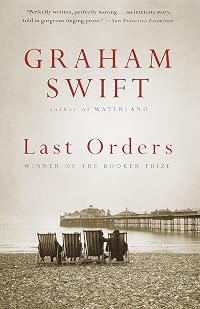
Last Orders
by Graham Swift
On This Page
Description
Set in Southeast England, friendship and love among a group of men whose lives have been intertwined since World War II. When one dies, the survivors are brought together and are forced to take stock of the paths their lives have taken, by choice and by accident, since the war. Winner of the 1996 Booker Prize..
Tags
Recommendations

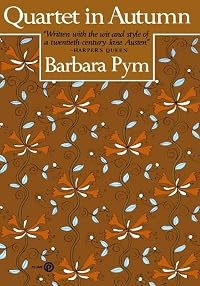
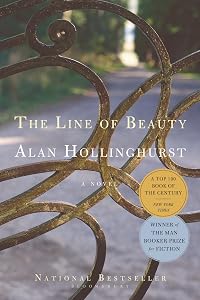
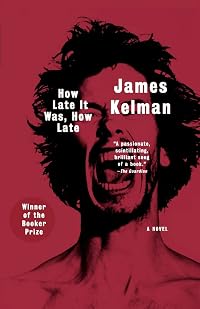
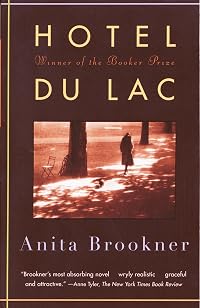


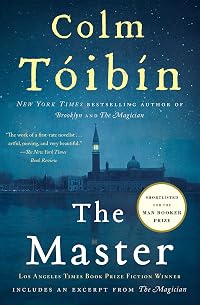

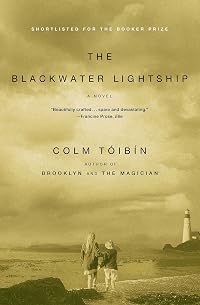

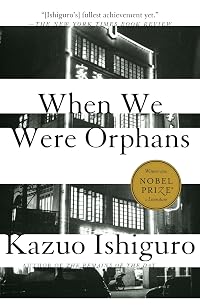
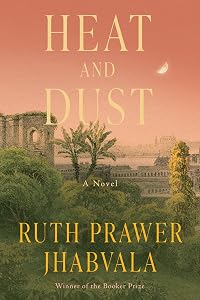
Member Recommendations


celerydog A bunch of teen boys kidnap their friend Ross's ashes and take 'him' to Ross. Fun road trip, amazing insights via highly believable characters. Outstanding.
Member Reviews
Winner of the Booker Prize in 1996, beating out, among others, Margaret Atwood’s Alias Grace, which is an outstandingly good novel, probably her best. But Last Orders is very good, and one that grows on you as you read it.
Jack Dodds has died and his adopted son and three old friends agree to take his ashes to Margate to throw them into the sea. The novel is about the journey, but it’s also about the past of the five men, their wives and daughters (although they don’t appear much in the story), and their relationships. Jack and Ray fought together in North Africa during WWII. Jack’s butcher shop was on the other side of the street to Vic’s funeral parlour. Lenny was a childhood friend, whose daughter had a relationship with show more Jack's son. Who isn’t really his son, but the sole survivor of a neighbouring family whose house was hit by a bomb during the Blitz. Vic is the closest to middle-class as he's a funeral director, he might even be lower middle class. Vince, the adopted son, is upwardly mobile (a very definite thing in the 1980s), a butcher’s son turned mechanic, but now running a car showroom specialising in top-end second-hand motors. The odd one out is Ray, who works in an office as an insurance clerk, but makes a tidy living betting on the horses.
Last Orders is set mostly in Bermondsey, south east London, during the years following World War II. Jack dies in the 1980s - the film is explicitly set in 1989. The story is told through the voices of its cast, which is East End English - not Cockney, not Estuary Speak, but the English of the London working class of the first half of last century. Swift’s control of voice is really impressive. The prose is a joy to read.
It occurred to me while reading the novel the setting had been spoiled by Guy Ritchie and all those “Mockney” movies. Last Orders is about working class culture in central London. Little of which exists anymore. For example, the novel mentions hop-picking, which was a thing up until the 1960s. Working class people from London would spend the summer in Kent, living in tents and shacks, and picking hops. It was the only holiday they had. The practice ended when farmers began using machines to pick hops.
Which suggests Last Orders is in part a paean to a lost way of life - signified, for example, by Vince’s refusal to be the son in “Dodds & Son, family butchers”. It’s in the nature of progress for ways of life to disappear. Tradition is a social brake, usually imposed for the wrong reasons. Ruing change is healthy, rolling it back is not. Last Orders makes that explicit, because disposing of Jack’s ashes also disposes of the world he knew.
Last Orders: lovely writing, with an excellent command of voice. And if it’s overly nostalgic, that’s the point. Recommended (the book more so than the film). show less
Jack Dodds has died and his adopted son and three old friends agree to take his ashes to Margate to throw them into the sea. The novel is about the journey, but it’s also about the past of the five men, their wives and daughters (although they don’t appear much in the story), and their relationships. Jack and Ray fought together in North Africa during WWII. Jack’s butcher shop was on the other side of the street to Vic’s funeral parlour. Lenny was a childhood friend, whose daughter had a relationship with show more Jack's son. Who isn’t really his son, but the sole survivor of a neighbouring family whose house was hit by a bomb during the Blitz. Vic is the closest to middle-class as he's a funeral director, he might even be lower middle class. Vince, the adopted son, is upwardly mobile (a very definite thing in the 1980s), a butcher’s son turned mechanic, but now running a car showroom specialising in top-end second-hand motors. The odd one out is Ray, who works in an office as an insurance clerk, but makes a tidy living betting on the horses.
Last Orders is set mostly in Bermondsey, south east London, during the years following World War II. Jack dies in the 1980s - the film is explicitly set in 1989. The story is told through the voices of its cast, which is East End English - not Cockney, not Estuary Speak, but the English of the London working class of the first half of last century. Swift’s control of voice is really impressive. The prose is a joy to read.
It occurred to me while reading the novel the setting had been spoiled by Guy Ritchie and all those “Mockney” movies. Last Orders is about working class culture in central London. Little of which exists anymore. For example, the novel mentions hop-picking, which was a thing up until the 1960s. Working class people from London would spend the summer in Kent, living in tents and shacks, and picking hops. It was the only holiday they had. The practice ended when farmers began using machines to pick hops.
Which suggests Last Orders is in part a paean to a lost way of life - signified, for example, by Vince’s refusal to be the son in “Dodds & Son, family butchers”. It’s in the nature of progress for ways of life to disappear. Tradition is a social brake, usually imposed for the wrong reasons. Ruing change is healthy, rolling it back is not. Last Orders makes that explicit, because disposing of Jack’s ashes also disposes of the world he knew.
Last Orders: lovely writing, with an excellent command of voice. And if it’s overly nostalgic, that’s the point. Recommended (the book more so than the film). show less
At first blush, you might think this was a book ripping off Faulkner's As I Lay Dying, and it's not an unfair comparison. What Graham Swift does, however, is examine the strictures of working-class Britain and the culture of homosocial relations among British working-class men, particularly among men who fought in World War II and are building a civilian life together. The book's title is itself a play on words, with last orders standing in for last rites and the last order at the pub simultaneously. I also think it happens to read a bit more fluidly than Faulkner, so you might want to give this a try, even if (especially if) you did not care for As I Lay Dying. This is interesting and engaging without being too dense. I am definitely show more going to give more of Swift's work a read. show less
Winner of the Booker Prize in 1996, and the source of some subsequent controversy when there were charges of, if not plagiarism, then copying of an idea given similarities with Faulkner's As I Lay Dying (which I think I read many years ago, but do not remember). Further controversy in the Canadian media when one of the Booker judges said that if the story had come to light before the voting, Margaret Atwood could have won for Alias Grace. All of which strikes me as a literary tempest in a teapot. Even if the basic structure of the story is similar to Faulkner (exploring the lives of a group of people carrying the ashes of a friend to be scattered as per his last wishes; in Last Orders, in the sea) one should be able to judge the quality show more of the writing on its own merits.
And on that basis, I think Last Orders is a very good book. It traces, through flashbacks, the lives and relationships of principally four men: Ray, Vic, Vince, and Lenny; friends of the deceased, Jack Dodds, master butcher; also, Jack's wife Amy and a couple of other female characters.
A wonderful exploration of life, loves, hopes, fears, wanting, frustrations, hatred misplaced and misguided that redounds on the hater more than the hated, and missed opportunities in life for understanding and closeness. Also, the fate-fuelled instances that take life down one channel rather than another, and not always what seems the most likely, or the one consciously expected or hoped for; the impact of little things, little slights, thoughtlessness, and selfishness that can shape and define lives and relationships in unforseen and unknown ways. Also an exploration of the fascinating differences between the inner view one has of oneself, and the myriad outer views of others; the latter infinite in their variety given that every individual interprets through his/her own prism of life experiences, prejudices, wants, etc, etc.
The story of the journey to the seaside is an allegory of this complexity of life and roads taken: it results in detours, a piss-up, a fight, and getting lost. All unplanned, just like the detours and turns in life.
As Swift says:
But the dead are the dead, I've watched them, they're equal. Either you think of them all or you forget them. It doesn't do in remembering one not to remember the others. And it doesn't do when you remember the others not to spare a thought for the ones you never knew. It's what makes all men equal for ever and always. There's only one sea.
You see all the dead, all the bent and broken or plain stretched-out dead, and you think, These people are strangers now, total strangers. But it's the living who are strangers, it's the living whose shapes you can't ever guess.
Is there a moral/basic message to the story? If so, I think it is the need to try to understand the effect of small gestures or decisions on the sensibilities of others, and to try to see events and relationships from other perspectives. A tall order. show less
And on that basis, I think Last Orders is a very good book. It traces, through flashbacks, the lives and relationships of principally four men: Ray, Vic, Vince, and Lenny; friends of the deceased, Jack Dodds, master butcher; also, Jack's wife Amy and a couple of other female characters.
A wonderful exploration of life, loves, hopes, fears, wanting, frustrations, hatred misplaced and misguided that redounds on the hater more than the hated, and missed opportunities in life for understanding and closeness. Also, the fate-fuelled instances that take life down one channel rather than another, and not always what seems the most likely, or the one consciously expected or hoped for; the impact of little things, little slights, thoughtlessness, and selfishness that can shape and define lives and relationships in unforseen and unknown ways. Also an exploration of the fascinating differences between the inner view one has of oneself, and the myriad outer views of others; the latter infinite in their variety given that every individual interprets through his/her own prism of life experiences, prejudices, wants, etc, etc.
The story of the journey to the seaside is an allegory of this complexity of life and roads taken: it results in detours, a piss-up, a fight, and getting lost. All unplanned, just like the detours and turns in life.
As Swift says:
But the dead are the dead, I've watched them, they're equal. Either you think of them all or you forget them. It doesn't do in remembering one not to remember the others. And it doesn't do when you remember the others not to spare a thought for the ones you never knew. It's what makes all men equal for ever and always. There's only one sea.
You see all the dead, all the bent and broken or plain stretched-out dead, and you think, These people are strangers now, total strangers. But it's the living who are strangers, it's the living whose shapes you can't ever guess.
Is there a moral/basic message to the story? If so, I think it is the need to try to understand the effect of small gestures or decisions on the sensibilities of others, and to try to see events and relationships from other perspectives. A tall order. show less
In a way, the plot of Last Orders is very simple: a group of friends drive to the coast to scatter the ashes of their friend Jack. Yes, that's it. Along the way they have arguments and fights and endless pints of beer, but none of that is really the point. The real action of this book takes place in the past, appropriately enough for a novel about scattering ashes. These are old men remembering not only Jack but also their own former selves.
There are lots of lies and secrets and betrayals, but most of all there's a sense of missed chances. There's a phrase that really stuck in my mind, "If we could see and choose". Meaning that all the characters had ideas of themselves as young men, ideas of who they wanted to be. Jack wanted to be a show more doctor, Ray a jockey, Lenny a boxer. But then things got in the way: the war, family, health, and a hundred other reasons why things didn't work out the way they should have done. If we could see the way everything would pan out and choose based on the outcomes, things would be very different. But we can't. We choose based on what seems best at the time, or easiest, or what other people want us to do. And sometimes we don't really get to choose at all. And so our lives are not what we would have chosen, but what we end up with.
The novel, which won the 1996 Booker Prize, is written from multiple perspectives. The voice of each character is believable, with working class language and speech patterns (the opening line, for example, goes "It aint your regular sort of day"). This book is a good reminder that language doesn't have to be correct to be beautiful. I think it's quite hard to do it well, and if you get it wrong then too much dialect of any kind can be quite annoying. The only other book I can think of where I liked the dialect and found it not only believable but beautiful was The Color Purple by Alice Walker. Graham Swift, like Walker, manages it perfectly: even though he went to the same posh public school as I did, and Cambridge after that, there's never a moment when his Bermondsey slang rings false.
It's a maudlin kind of book, again appropriately - not just because of the death at the centre but because of the pubs that feature so heavily throughout. It feels like the sort of story you'd be told by an old man sitting at the bar nursing his half-finished pint on a slow Tuesday afternoon in one of those old-fashioned pubs where there's no music or TVs to drown out the melancholy thoughts that quiet drinking can bring on. You can feel the longing in the characters, sad and resigned to what their lives have become but still remembering what they would have done, if only they could see and choose. show less
There are lots of lies and secrets and betrayals, but most of all there's a sense of missed chances. There's a phrase that really stuck in my mind, "If we could see and choose". Meaning that all the characters had ideas of themselves as young men, ideas of who they wanted to be. Jack wanted to be a show more doctor, Ray a jockey, Lenny a boxer. But then things got in the way: the war, family, health, and a hundred other reasons why things didn't work out the way they should have done. If we could see the way everything would pan out and choose based on the outcomes, things would be very different. But we can't. We choose based on what seems best at the time, or easiest, or what other people want us to do. And sometimes we don't really get to choose at all. And so our lives are not what we would have chosen, but what we end up with.
The novel, which won the 1996 Booker Prize, is written from multiple perspectives. The voice of each character is believable, with working class language and speech patterns (the opening line, for example, goes "It aint your regular sort of day"). This book is a good reminder that language doesn't have to be correct to be beautiful. I think it's quite hard to do it well, and if you get it wrong then too much dialect of any kind can be quite annoying. The only other book I can think of where I liked the dialect and found it not only believable but beautiful was The Color Purple by Alice Walker. Graham Swift, like Walker, manages it perfectly: even though he went to the same posh public school as I did, and Cambridge after that, there's never a moment when his Bermondsey slang rings false.
It's a maudlin kind of book, again appropriately - not just because of the death at the centre but because of the pubs that feature so heavily throughout. It feels like the sort of story you'd be told by an old man sitting at the bar nursing his half-finished pint on a slow Tuesday afternoon in one of those old-fashioned pubs where there's no music or TVs to drown out the melancholy thoughts that quiet drinking can bring on. You can feel the longing in the characters, sad and resigned to what their lives have become but still remembering what they would have done, if only they could see and choose. show less
The tale of four men driving to the sea to spread the ashes of their friend. Their intertwined lives are revealed in the backstories. Excellently written, humorous, bitter sweet.
Last Orders was definitely one of those serendipity books - I happened to be browsing the 'all books for $3' rack at a local used book store, and found this, in hardcover no less. I was rather fond of Waterland, the way the narrative was done, and well, the emotional landscapes found there, so I
thought I would give this one a shot.
Very well worth the gamble. I have next to nothing in common with the main
characters (and narrators). I am not male, British, nor did I come of age during WWII, but there is something really engaging in the way the story is
told. Ray (or Lucky) is the main narrator, and the way he winds his tale is like a sand mandala slowly, slowly coming together. His asides and self-commentaries, and foreshadowings and show more dancing back and forth with what he
really thinks cast a good background to the burial trip of his friend, Jack.
The other main players, Vince (the not-really-adopted son of Jack), Lenny (the loudmouthed, sort-of-forgotten one), and Vic (the undertaker-friend) lend their own voices, and even Amy, Jack's widow adds to the chorus. The tales wind back and forth from the present to the past and back again, each
person giving a little bit of time, telling a little bit of why things
happened and filling in the details. The tales interweave, the cloth of the story slowly slowly fills out into a full tapestry.
The end is so poignant without being silly or mushy. It's real, it's a turning point, and yet, it's just sort of a continuation of everything that's been going on. A merging of the stories - and finally Ray (and we) see what's
really going on, even though he thought he had the inside story.
I'm just glad I picked this one up. show less
thought I would give this one a shot.
Very well worth the gamble. I have next to nothing in common with the main
characters (and narrators). I am not male, British, nor did I come of age during WWII, but there is something really engaging in the way the story is
told. Ray (or Lucky) is the main narrator, and the way he winds his tale is like a sand mandala slowly, slowly coming together. His asides and self-commentaries, and foreshadowings and show more dancing back and forth with what he
really thinks cast a good background to the burial trip of his friend, Jack.
The other main players, Vince (the not-really-adopted son of Jack), Lenny (the loudmouthed, sort-of-forgotten one), and Vic (the undertaker-friend) lend their own voices, and even Amy, Jack's widow adds to the chorus. The tales wind back and forth from the present to the past and back again, each
person giving a little bit of time, telling a little bit of why things
happened and filling in the details. The tales interweave, the cloth of the story slowly slowly fills out into a full tapestry.
The end is so poignant without being silly or mushy. It's real, it's a turning point, and yet, it's just sort of a continuation of everything that's been going on. A merging of the stories - and finally Ray (and we) see what's
really going on, even though he thought he had the inside story.
I'm just glad I picked this one up. show less
This book follows three old codgers and a slightly younger old codger on a pilgrimage to Margate to scatter their late friend's ashes in the sea according to his wishes. I could almost hear Chas and Dave playing along in the background as I read it. It managed to fuse a colloquial narrative with an unashamedly literary style and the overall result was pretty good. Though the viewpoint shifted with each chapter, and the story jumped around in space and time, it was usually easy to work out what was happening. That became more difficult towards the end, however, where I felt as though I was lodged in that part of the character's brain that deals with abstract concepts, and would rather have been in the part that deals with specifics. A show more good read though, complex and surprisingly touching, and with characters who already speak like Michael Caine, Bob Hoskins et al, I'm sure the film cast itself. show less
Members
- Recently Added By
Published Reviews
ThingScore 75
added by melmore
Lists

Booker Prize
491 works; 62 members

Recommend the 20 best books you've read in the last five years
2,168 works; 606 members

20th Century Literature
1,161 works; 54 members
Booker Prize Shortlist: Titles Read
103 works; 10 members

International IMPAC Dublin Literary Award
179 works; 6 members

Man Booker Prize Longlist 1996
6 works; 2 members

A Novel Cure
742 works; 23 members

TML 200 Best Books 1950-1999
202 works; 10 members
Contemporary Fiction
109 works; 7 members

The Modern Library (The Two Hundred Best Novels....
202 works; 1 member
Author Information

21+ Works 10,727 Members
British novelist Graham Swift was born in London on May 4, 1949. He attended Cambridge University and York University. Swift has written five novels, including Waterland. (Bowker Author Biography) Novelist Graham Swift was born in London, England on May 4, 1949. He attended Cambridge University where he received a B.A. in 1970, and an M.A. in show more 1975. He also attended York University from 1970-73. He taught English part time at several London Colleges between the years 1974 to1983. Swift's fiction tends to touch upon the subject of World War II as well as exploring the larger subject of history. "Waterland" established Swift's reputation and was made into a major film. He also wrote "Last Orders" and his novels have won a variety of prestigious literary awards and have been widely translated. Swift was an avid fisherman and co-edited an anthology of fishing in literature. (Bowker Author Biography) show less
Some Editions
Awards and Honors
Awards
Distinctions
Series
Belongs to Publisher Series
Work Relationships
Is contained in
Common Knowledge
- Canonical title*
- Viimeinen kierros
- Original title
- Last Orders
- Original publication date
- 1996
- People/Characters
- Jack Dodds; Ray 'Lucky' Johnson; Lenny 'Gunner' Tate; Vic Tucker; Amy Dodds
- Important places
- Kent, England, UK; London, England, UK; Margate, Kent, England, UK
- Related movies
- Last Orders (2001 | IMDb)
- Epigraph
- But man is a Noble Animal, splendid in ashes, and pompous in the grave.
Sir Thomas Browne: Urn Burial
I do like to be beside the seaside.
John A. Glover-Kind - Dedication
- For Al
- First words
- It aint like your regular sort of day.
- Last words
- (Click to show. Warning: May contain spoilers.)Then I throw the last handful and the seagulls come back on a second chance and I hold up the jar, shaking it, like I should chuck it out to sea too, a message in a bottle, Jack Arthur Dodds, save our souls, the the ash that I carried in my hands, which was the Jack who once walked around, is carried away by the wind, is whirled away by the wind till the ash become the wind and the wind becomes Jack what we're made of.
- Blurbers
- Rushdie, Salman; Ishiguro, Kazuo; Barker, Pat; Ford, Richard; Herr, Michael
- Original language*
- Englisch
*Some information comes from Common Knowledge in other languages. Click "Edit" for more information.
Classifications
Statistics
- Members
- 2,986
- Popularity
- 5,970
- Reviews
- 47
- Rating
- (3.56)
- Languages
- 14 — Danish, Dutch, English, Estonian, Finnish, French, German, Italian, Norwegian (Bokmål), Polish, Portuguese, Romanian, Spanish, Swedish
- Media
- Paper, Audiobook, Ebook
- ISBNs
- 59
- UPCs
- 2
- ASINs
- 11