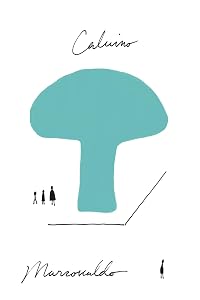
Marcovaldo: or the Seasons in the City
by Italo Calvino
On This Page
Description
In this enchanting book of linked stories, Italo Calvino charts the disastrous schemes of an Italian peasant, an unskilled worker in a drab northern industrial city in the 1950s and '60s, struggling to reconcile his old country habits with his current urban life. Marcovaldo has a practiced eye for spotting natural beauty and an unquenchable longing for the unspoiled rural world of his imagination. Much to the continuing puzzlement of his wife, his children, his boss, and his neighbors, he show more chases his dreams and gives rein to his fantasies, whether it's sleeping in the great outdoors on a park bench, following a stray cat, or trying to catch wasps. Unfortunately, the results are never quite what he anticipates. Spanning from the 1950s to the 1960s, the twenty stories in Marcovaldo are alternately comic and melancholy, farce and fantasy. show lessTags
Recommendations











Member Recommendations


Member Reviews
Finished this for a second time, though I have dipped into it here and there in the last 10 years in the same way as I dip into poetry. I love this small collection for its whimsy and beautiful sensual descriptions and a sense of dislocation in a setting where everyone usually knows exactly where they are. The brief epigraph/introduction by Calvino places the stories in a specific region and time period of industrial development of northern Italian cities (early 50s to mid 60s), but really the stories feel like timeless meditations on life in a city by someone who would prefer not to live in a city at all. They’re a universal commentary on the transition from “old” urban life to 21st century modernity, and the gradual ungrounding show more of a sense of place and home. The stories often focus on natural things that aren’t really at home in cities anymore: mushrooms, cows, trees, fish, cats, rabbits, snow, fresh air, the night sky… the poor and disadvantaged. I had forgotten how bizarre and twisted most of the stories are. They often end abruptly, like a moralizing fable, but not always with the message you were expecting.
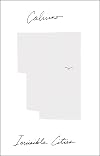
One more thing: Mariner now publishes Calvino’s oeuvre with visually striking, simple, postmodern designs on largley white covers/boards. They *look* great. However, the physical book SUCKS and is a disservice to Calvino’s legacy. I much prefer the previous generation of his works by Harcourt (for all I know Mariner is an imprint of Harcourt, but I didn’t bother to research it). The binding is better, and the paperback covers are more resistant to dirt and damage, because they are matte glossy, rather than the paper-like covers of Mariner that get stained if you look at them sideways. The pages themselves feel much cheaper in Mariner, and the glue of the spines feels like it’s just waiting to crack. Also, the ink quality is horrendous — this brand new copy of Marcovaldo had vertical streaks throughout the pages, stripes where the ink was not laid down as heavy as the rest of the page, so you have these valleys of faded text that are just ugly and distracting. Shame, Mariner! Shame, Calvino’s estate! Shame!
First read, 1/1/2008:
I feel like a use the adjective "delightful" too much when reminiscing on Calvino, but it's so apt! These stories are quite delightful and different than his stuff in T-Zero and Cosmicomics. show less
One more thing: Mariner now publishes Calvino’s oeuvre with visually striking, simple, postmodern designs on largley white covers/boards. They *look* great. However, the physical book SUCKS and is a disservice to Calvino’s legacy. I much prefer the previous generation of his works by Harcourt (for all I know Mariner is an imprint of Harcourt, but I didn’t bother to research it). The binding is better, and the paperback covers are more resistant to dirt and damage, because they are matte glossy, rather than the paper-like covers of Mariner that get stained if you look at them sideways. The pages themselves feel much cheaper in Mariner, and the glue of the spines feels like it’s just waiting to crack. Also, the ink quality is horrendous — this brand new copy of Marcovaldo had vertical streaks throughout the pages, stripes where the ink was not laid down as heavy as the rest of the page, so you have these valleys of faded text that are just ugly and distracting. Shame, Mariner! Shame, Calvino’s estate! Shame!
First read, 1/1/2008:
I feel like a use the adjective "delightful" too much when reminiscing on Calvino, but it's so apt! These stories are quite delightful and different than his stuff in T-Zero and Cosmicomics. show less
I love Calvino so much I want to crawl inside his eyes and live there. I read his books sparingly, because once I've read them all for the first time I'll never get to do it again. This is my yearly ration. Marcovaldo is a lovely foreshadow of invisible cities, stories of how an ordinary person can look at the city and see its thousand ways.
Side thought, I wonder if this wouldn't be a better introduction for people who didn't connect to Invisible Cities.
Side thought two, the snow and the cats alone are worth everything.
Side thought, I wonder if this wouldn't be a better introduction for people who didn't connect to Invisible Cities.
Side thought two, the snow and the cats alone are worth everything.
These twenty delightful and somewhat silly parable-esque tales follow small notable events of each season over five years of the life of Marcovaldo, a poor unskilled labourer everyman who yearns for beauty and nature yet is constantly disappointed, his utopic expectations subverted by the gross reality of modernity. Its simple nature belies how well-written and thoughtful the short narratives are as each tackles the many often-conflicting themes of modern life.
Charming. As a city dweller myself, I found much to identify with in Marcovaldo's often fruitless quest to surround himself with natural beauty in a major metropolitan landscape. His unabashed, almost worshipful pursuit of any glimpse of green is a reminder to appreciate the little swatches of nature that I so often take for granted. Funny and comfortable, this small selection of stories is a delightful reminder to keep one's eyes open and one's heart full of love and adventure.
“How does Father Christmas make a profit?”
That’s what my then five-year-old once asked. My husband suggested that all the “other” Father Christmases are just helpers who pay the “real” Father Christmas to pretend to be him (a franchise model).
Calvino’s final Marcovaldo story, Santa’s Children, reminded me of our family anecdote. The story starts as satire of the commercialism of Christmas, dips into poignant social-realism, returns to satire, and ends poetically. Read it from the link at the end of this review.
The first sentence segues from festive feel-good to harsh economics:
“No period of the year is more gentle and good, for the world of industry and commerce, than Christmas and the weeks preceding show more it.”
Marcovaldo is a lowly employee in the shipping department of a big corporation in a town where all the top companies are buying from a second company to give to a third, and so on, all striving to see:
“Who can present the most conspicuous and original gift in the most attractive way.”
Personal delivery by Santa is the answer most of them land on that year.
Image: Too many Santas (Source)
“Nothing is more beautiful than the sensation of material goods flowing on all sides and, with it, the goodwill each feels toward the others.”
Trickle-down economics? Not much reaches Marcovaldo or his children, but they’re not bitter.
His young sons are inured to the sight of Father Christmas (there are so many), but know the religious message of the season:
“We have to find a poor child and give him presents.”
Their understanding of “poor”, coupled with generosity, is heartwarming and echoes the parable of the widow’s mite, but Calvino eschews sentimentality with a darkly comic twist. He then takes a final turn, and ends thus:
Coda
More Calvino
• He’s perhaps best known for his post-modern If on a Winter's Night a Traveller, which I reviewed HERE.
• And for the slightly mystical Invisible Cities, which I reviewed HERE.
• This is the first Marcovaldo story I’ve read, and it has a relatively conventional narrative structure, but still with a degree of something other, as does Calvino’s short story collection Difficult Loves, which I reviewed HERE.
Short Story Club
I read this with The Short Story Club.
You can read this story HERE.
You can join the group here. show less
That’s what my then five-year-old once asked. My husband suggested that all the “other” Father Christmases are just helpers who pay the “real” Father Christmas to pretend to be him (a franchise model).
Calvino’s final Marcovaldo story, Santa’s Children, reminded me of our family anecdote. The story starts as satire of the commercialism of Christmas, dips into poignant social-realism, returns to satire, and ends poetically. Read it from the link at the end of this review.
The first sentence segues from festive feel-good to harsh economics:
“No period of the year is more gentle and good, for the world of industry and commerce, than Christmas and the weeks preceding show more it.”
Marcovaldo is a lowly employee in the shipping department of a big corporation in a town where all the top companies are buying from a second company to give to a third, and so on, all striving to see:
“Who can present the most conspicuous and original gift in the most attractive way.”
Personal delivery by Santa is the answer most of them land on that year.
Image: Too many Santas (Source)
“Nothing is more beautiful than the sensation of material goods flowing on all sides and, with it, the goodwill each feels toward the others.”
Trickle-down economics? Not much reaches Marcovaldo or his children, but they’re not bitter.
His young sons are inured to the sight of Father Christmas (there are so many), but know the religious message of the season:
“We have to find a poor child and give him presents.”
Their understanding of “poor”, coupled with generosity, is heartwarming and echoes the parable of the widow’s mite, but Calvino eschews sentimentality with a darkly comic twist. He then takes a final turn, and ends thus:
Coda
“The city seemed smaller, collected in a luminous vessel, buried in the dark heart of a forest among the age-old trunks of the chestnut trees and an endless cloak of snow. Somewhere in the darkness the howl of the wolf was heard; the hares had a hole buried in the snow, in the warm red earth under a layer of chestnut burrs.
A jack-hare came out, white, onto the snow; he twitched his ears, ran beneath the moon, but he was white and couldn’t be seen, as if he weren’t there. Only his little paws left a light print on the snow, like little clover leaves. Nor could the wolf be seen, for he was black and stayed in the black darkness of the forest. Only if he opened his mouth, his teeth were visible, white and sharp.
There was a line where the forest, all black, ended and the snow began, all white. The hare ran on this side, and the wolf on that.
The wolf saw the hare’s prints on the snow and followed them, always keeping in the black, so as not to be seen. At the point where the prints ended there should be the hare, and the wolf came out of the black, opened wide his red maw and his sharp teeth, and bit the wind.
The hare was a bit farther on, invisible; he scratched one ear with his paw and escaped, hopping away.
Is he here? There? Is he a bit farther on?
Only the expanse of snow could be seen, white as this page.”
More Calvino
• He’s perhaps best known for his post-modern If on a Winter's Night a Traveller, which I reviewed HERE.
• And for the slightly mystical Invisible Cities, which I reviewed HERE.
• This is the first Marcovaldo story I’ve read, and it has a relatively conventional narrative structure, but still with a degree of something other, as does Calvino’s short story collection Difficult Loves, which I reviewed HERE.
Short Story Club
I read this with The Short Story Club.
You can read this story HERE.
You can join the group here. show less
Like Borges, Calvino's metier was the short form - short stories and novellas. Even his "novels" - 'If on a Winter's Night a Traveller', 'The Castle of Crossed Destinies' 'Invisible Cities' - are short story collections underneath the skin. This is no exception. It falls into that category of collected tales relating incidents from the daily lives of their central character - 'Mr Palomar', 'Cosmicomics', arguably - that are at once mundane and fantastic.
Marcovaldo is from peasant stock, transplanted to the industrial city - I'm guessing Turin - there to live in poverty with his young family in half-basements and garrets and to work in a packing factory. And herein lies the tension, as the country boy chases after those echoes of his show more former life to be found in the metropolis. There are no weak tales among the twenty collected here but I had favourites, inevitably. Like many of these tales, 'A Journey with the Cows' is a mini-picaresque with a powerful moral. 'The Wrong Stop' follows a similar path, featuring a heartbreaking and beautiful opening paragraph and a fantastical ending. They're tales of the unexpected in which the unexpected turns out to be not macabre but comic and surreal.
Starting with 1952's 'The Cloven Count' and ending with 1983's 'Mr Palomar', I can't think of a more outstanding body of work in modern literature. The human insights, the humour, the sumptuous descriptions, the stylistic innovations and enormous imaginative power - Calvino's oeuvre is genuinely inspirational to both the adventurous reader and the writer. show less
Marcovaldo is from peasant stock, transplanted to the industrial city - I'm guessing Turin - there to live in poverty with his young family in half-basements and garrets and to work in a packing factory. And herein lies the tension, as the country boy chases after those echoes of his show more former life to be found in the metropolis. There are no weak tales among the twenty collected here but I had favourites, inevitably. Like many of these tales, 'A Journey with the Cows' is a mini-picaresque with a powerful moral. 'The Wrong Stop' follows a similar path, featuring a heartbreaking and beautiful opening paragraph and a fantastical ending. They're tales of the unexpected in which the unexpected turns out to be not macabre but comic and surreal.
Starting with 1952's 'The Cloven Count' and ending with 1983's 'Mr Palomar', I can't think of a more outstanding body of work in modern literature. The human insights, the humour, the sumptuous descriptions, the stylistic innovations and enormous imaginative power - Calvino's oeuvre is genuinely inspirational to both the adventurous reader and the writer. show less
Connected short stories that grew on me. The title character is basically a schlemiel, but it's not just about schlemielitude. Calvino surrealism is present. Marcovaldo is a poverty-stricken father of six in poverty-stricken northern Italy in the 1950s-1960s. First living in a basement room and then in a garret, he and his complaining wife and mischievous troublesome children make discoveries and get into pickles and end up on hospital cots or afoul of the law or the landlady. And life goes on to the next story.
Members
- Recently Added By
Lists

Italian Literature
558 works; 42 members

Books Set in Italy
167 works; 19 members

1001 Children's Books You Must Read Before You Grow Up
774 works; 101 members

My Favourite Books
86 works; 5 members

WBS - Classics Book Club
10 works; 1 member
Author Information

395+ Works 70,153 Members
Italo Calvino 1923-1984 Novelist and short story writer Italo Calvino was born in Cuba on October 15, 1923, and grew up in Italy, graduating from the University of Turin in 1947. He is remembered for his distinctive style of fables. Much of his first work was political, including Il Sentiero dei Nidi di Ragno (The Path of the Nest Spiders, 1947), show more considered one of the main novels of neorealism. In the 1950s, Calvino began to explore fantasy and myth as extensions of realism. Il Visconte Dimezzato (The Cloven Knight, 1952), concerns a knight split in two in combat who continues to live on as two separates, one good and one bad, deprived of the link which made them a moral whole. In Il Barone Rampante (Baron in the Trees, 1957), a boy takes to the trees to avoid eating snail soup and lives an entire, fulfilled life without ever coming back down. Calvino was awarded an honorary degree from Mount Holyoke College in 1984 and died in 1985, following a cerebral hemorrhage. At the time of his death, he was the most translated contemporary Italian writer and a contender for the Nobel Prize for Literature. (Bowker Author Biography) show less
Some Editions
Awards and Honors
Series
Belongs to Publisher Series
Work Relationships
Common Knowledge
- Canonical title*
- Marcovaldo, ovvero Le stagioni in città
- Original title
- Marcovaldo ovvero le stagioni in città
- Alternate titles*
- Marcovaldo
- Original publication date
- 1963
- People/Characters
- Marcovaldo; Domitilla; Michelino; Isolina; Filippetto; Pietruccio (show all 7); Teresa
- Important places
- Italy
- Related movies*
- Marcovaldo (1970 | IMDb)
- First words
- De wind brengt, wanneer hij van ver de stad binnen waait, vreemde geschenken met zich mee, die alleen worden opgemerkt door enkele gevoelige zielen, zoals mensen met hooikoorts, die niezen van het stuifmeel van bloemen uit an... (show all)dere streken.
Il vento, venendo in città da lontano, le porta doni inconsueti, di cui s'accorgono solo poche anime sensibili, come i raffreddati del fieno, che starnutano per pollini di fiori d'altre terre.
Prefazione seria e un po' noiosa d'un libro che non vuol essere tale, ragion per cui i nostri lettori possono benissimo saltarla (ma se qualche professore volesse leggerla vi troverà alcune istruzioni per l'uso).
The wind, coming to the city from far away, brings it unusual gifts, noticed by only a few sensitive souls, such as hay-fever victims, who sneeze at the pollen from flowers of other lands. - Last words
- (Click to show. Warning: May contain spoilers.)Il leprotto era poco più in là, invisibile; si strofinò un orecchio con la zampa, e scappò saltando.
È qua? è là? no, è un po' più in là?
Si vedeva solo la distesa di neve bianca come questa pagina.
(Click to show. Warning: May contain spoilers.)Only the expanse of snow could be seen, white as this page. - Publisher's editor
- Einaudi, Giulio
- Original language
- Italian
*Some information comes from Common Knowledge in other languages. Click "Edit" for more information.
Classifications
- Genres
- Fiction and Literature, General Fiction
- DDC/MDS
- 853.914 — Literature & rhetoric Italian, Romanian & related literatures Italian fiction 1900- 20th Century 1945-1999
- LCC
- PQ4809 .A45 .M313 — Language and Literature French, Italian, Spanish and Portuguese literatures Italian literature Individual authors, 1900-1960
- BISAC
Statistics
- Members
- 2,331
- Popularity
- 8,480
- Reviews
- 30
- Rating
- (3.85)
- Languages
- 19 — Catalan, Chinese, Danish, Dutch, English, Finnish, French, German, Galician, Greek, Hebrew, Hungarian, Italian, Japanese, Polish, Portuguese, Russian, Spanish, Turkish
- Media
- Paper, Audiobook, Ebook
- ISBNs
- 99
- UPCs
- 1
- ASINs
- 24