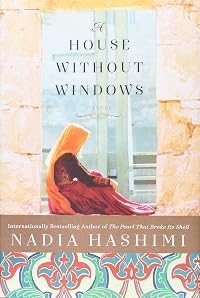
A House Without Windows
by Nadia Hashimi
On This Page
Description
A vivid, unforgettable story of an unlikely sisterhood-an emotionally powerful and haunting tale of friendship that illuminates the plight of women in a traditional culture-from the author of the bestselling The Pearl That Broke Its Shell and When the Moon Is Low. For two decades, Zeba was a loving wife, a patient mother, and a peaceful villager. But her quiet life is shattered when her husband, Kamal, is found brutally murdered with a hatchet in the courtyard of their home. Nearly catatonic show more with shock, Zeba is unable to account for her whereabouts at the time of his death. Her children swear their mother could not have committed such a heinous act. Kamal's family is sure she did, and demands justice. Barely escaping a vengeful mob, Zeba is arrested and jailed. As Zeba awaits trial, she meets a group of women whose own misfortunes have also led them to these bleak cells: thirty-year-old Nafisa, imprisoned to protect her from an honor killing; twenty-five-year-old Latifa, who ran away from home with her teenage sister but now stays in the prison because it is safe shelter; and nineteen-year-old Mezhgan, pregnant and unmarried, waiting for her lover's family to ask for her hand in marriage. Is Zeba a cold-blooded killer, these young women wonder, or has she been imprisoned, as they have been, for breaking some social rule? For these women, the prison is both a haven and a punishment. Removed from the harsh and unforgiving world outside, they form a lively and indelible sisterhood. Into this closed world comes Yusuf, Zeba's Afghan-born, American-raised lawyer, whose commitment to human rights and desire to help his motherland have brought him back. With the fate of this seemingly ordinary housewife in his hands, Yusuf discovers that, like Afghanistan itself, his client may not be at all what he imagines. A moving look at the lives of modern Afghan women, A House Without Windows is astonishing, frightening, and triumphant. show lessTags
Recommendations









Member Reviews
Books take us to places other than those we know. They pull us from our comfort zones and ask us to put ourselves in characters and situations completely outside our realm of experience. For most Americans, Afghanistan is not somewhere we've ever been. It's a place we see on the news or lump in together with the rest of the Middle East. But we don't have much knowledge of life there at all, especially in its villages. Nadia Hashimi's newest novel, The House Without Windows, takes the reader to this Afghanistan to see not only the plight of women there but to see the ways in which its justice system still disproportionately punishes women and how there are people working to right the imbalances so prevalent today.
Zeba has been charged show more with the murder of her husband, Kamal. She endured his beating and drinking for years, bearing him four living children, cooking and cleaning, and always being a dutiful wife. When she is discovered, with blood on her hands, in the courtyard of their home with her husband's body, there is little doubt that she was the one to embed the hatchet in the back of his skull. But she won't talk about what happened, even after she is arrested and sent to Chil Mahtab, the women's prison. Her biggest concern is not with defending herself nor with whether she will be found guilty but how her four children are doing at their aunt's house, whether Kamal's family is treating them as the children of a murderer, and whether the children will believe all of the terrible things that are surely being said about her. She never for a minute doubts that she will be found guilty and hang for the crime. And there's no reason for her to believe otherwise given all of the other women locked up with her, many for the crime of zina. This crime encompasses an unmarried woman having sex, an unmarried woman dallying/flirting with a coworker, rape, and more. It is essentially a charge of immorality. Such is the lot of women.
Zeba might not talk about what happened the day that Kamal was murdered, but the narrative moves between her present day situation and her past, culminating in the eventual revelation of just what did happen that terrible day. Most of the story is focused on Zeba and her current situation but there are a couple of other interesting threads also woven throughout the story, that of her mother Gulnaz, a jadugar (sorceress), and the father who disappeared when Zeba was just a child as well as that of Yusuf, a young Afghani-born lawyer returned from America and assigned to Zeba's case. The perspective of the story shifts from Zeba to Gulnaz to Yusuf and back again in order to move the plot along. Hashimi does a good job using the imprisoned women in the story to show the overall insignificance of women in the culture and the inequalities they suffer in all aspects of life, but certainly in the justice system. Zeba's situation is horrifying on many levels and the reader can be no more assured of Zeba's receiving true justice than the character herself is. It took skill to weave the story as Hashimi does, balancing the reader's desire with staying true to the reality of the culture. Those interested in women's rights, especially in the Middle East, will find this to be a dynamic and compelling story. show less
Zeba has been charged show more with the murder of her husband, Kamal. She endured his beating and drinking for years, bearing him four living children, cooking and cleaning, and always being a dutiful wife. When she is discovered, with blood on her hands, in the courtyard of their home with her husband's body, there is little doubt that she was the one to embed the hatchet in the back of his skull. But she won't talk about what happened, even after she is arrested and sent to Chil Mahtab, the women's prison. Her biggest concern is not with defending herself nor with whether she will be found guilty but how her four children are doing at their aunt's house, whether Kamal's family is treating them as the children of a murderer, and whether the children will believe all of the terrible things that are surely being said about her. She never for a minute doubts that she will be found guilty and hang for the crime. And there's no reason for her to believe otherwise given all of the other women locked up with her, many for the crime of zina. This crime encompasses an unmarried woman having sex, an unmarried woman dallying/flirting with a coworker, rape, and more. It is essentially a charge of immorality. Such is the lot of women.
Zeba might not talk about what happened the day that Kamal was murdered, but the narrative moves between her present day situation and her past, culminating in the eventual revelation of just what did happen that terrible day. Most of the story is focused on Zeba and her current situation but there are a couple of other interesting threads also woven throughout the story, that of her mother Gulnaz, a jadugar (sorceress), and the father who disappeared when Zeba was just a child as well as that of Yusuf, a young Afghani-born lawyer returned from America and assigned to Zeba's case. The perspective of the story shifts from Zeba to Gulnaz to Yusuf and back again in order to move the plot along. Hashimi does a good job using the imprisoned women in the story to show the overall insignificance of women in the culture and the inequalities they suffer in all aspects of life, but certainly in the justice system. Zeba's situation is horrifying on many levels and the reader can be no more assured of Zeba's receiving true justice than the character herself is. It took skill to weave the story as Hashimi does, balancing the reader's desire with staying true to the reality of the culture. Those interested in women's rights, especially in the Middle East, will find this to be a dynamic and compelling story. show less
A POWERFUL story about women who have been convicted of crimes find life better in prison than married in Afghanistan. There is no word for rape in the Pashto or Dari. And when a Zeba murders her husband who she finds raping a young girl in their courtyard, she of course, is the villain. What she finds in the House Without Windows is a sisterhood and more freedom than she had at home. A young American lawyer born in Afghanistan is her lawyer. Hashimi has created a story based on women’s lives in Afghanistan. This 400-page book is one you will have trouble putting down. I read it in three days, but my memory of what these women face will remain with me for many years.
Murder mystery set in Afghanistan and focused on the issues faced by women. The accused is the victim’s wife, Zeba, the only person at home at the time of the murder, but the evidence is solely circumstantial. The police investigation was not carried out with an eye to forensics. The word of a woman means very little and in court, even the judge wants her to say she did it just to move on with other cases. Zeba’s lawyer is a young Afghan educated in the US. When he asks her what happened, she keeps quiet for fear her children will suffer. Her husband’s family assumes she is guilty.
As Zeba waits in prison, she learns the backstories of her fellow female prisoners. They are accused of all sorts of “crimes” that would never be show more considered such if enacted by a man. A sub-plot involves the personal life of the lawyer, who has avoided marriage in order to focus on his work. The author is an Afghan American. She does a wonderful job of balancing the story so that it does not feel like a litany of misery. In the end there is a small ray of hope. I appreciated this book and look forward to reading more from this author. show less
As Zeba waits in prison, she learns the backstories of her fellow female prisoners. They are accused of all sorts of “crimes” that would never be show more considered such if enacted by a man. A sub-plot involves the personal life of the lawyer, who has avoided marriage in order to focus on his work. The author is an Afghan American. She does a wonderful job of balancing the story so that it does not feel like a litany of misery. In the end there is a small ray of hope. I appreciated this book and look forward to reading more from this author. show less
Billed as being ” A vivid, unforgettable story of an unlikely sisterhood—an emotionally powerful and haunting tale of friendship that illuminates the plight of women in a traditional culture” I knew I possibly in for a harrowing read. I was correct. I found the blatant sexism and the savage crimes against women – all committed in the name of men’s honor – to be horrifying to take in. As the story progressed, I came to understand why some of the women in Chil Mahtab, the woman’s prison, found the prison to be a refuge, a haven of sorts, from the world outside where they share their stories and support one another. Even though the story is an eye-opening portrayal of modern Afghanistan, there is also a murder mystery to show more unravel, which we learn has deep connections to the very fiber of Afghan society. Zeba is reluctant (determined actually) to not disclose what happened that fateful afternoon her husband Kamal died, even if it will help her defense. It is only through the investigations of her young American-educated lawyer Yusuef, the disclosures of Zeba’s mother Gulnaz, and other information that comes to light, that we learn the shocking truth about that day.
Overall, a powerful tale of human rights abuse in modern Afghanistan, where a legal and social system is still deeply influenced by older, traditional beliefs, even in the face of change. show less
Overall, a powerful tale of human rights abuse in modern Afghanistan, where a legal and social system is still deeply influenced by older, traditional beliefs, even in the face of change. show less
A young man escapes war torn Afghanistan with his family to America. He returns as a lawyer after Taliban have left to try and give back to his country. The case he takes on is of Zeba, accused of murdering her husband. Zeba sits in jail refusing to defend herself because in Afghanistan there isn't much point in a woman looking for justice. Zeba know, and this novel explains, that Afghan men are all about honor. "Honor was a boulder that men placed on the shoulders of their daughters, their sisters and their wives." Along with honor , for women there is shame. "Shame in its many shapes and colors, was what had broken Zeba, Gulnaz and the girl Kamal had raped".
I read this novel as the Taliban has again taken over Afghanistan. Again women show more are kept from school and , without a doubt, kept from justice faced to raise their families again in fear of men. When will this country ever be free? show less
I read this novel as the Taliban has again taken over Afghanistan. Again women show more are kept from school and , without a doubt, kept from justice faced to raise their families again in fear of men. When will this country ever be free? show less
In Afghanistan, Zeba is in jail, awaiting trial for the murder of her husband. With a signed confession on record, and as a woman, she has little hope for justice or even a fair trial. The case seems sealed before it has even begun, but Yusuf, a young and idealistic lawyer assigned to her case, aims to investigate more deeply into why Zeba, or some other unknown entity, would have killed Zeba's husband.
This was an eye-opening and depressing peek into the culture of modern Afghanistan, in particular the oppression and devaluing of women the affect it has on their lives and basic human rights. Zeba's story is both heartbreaking and inspiring. I would have liked to say that it is also hopeful, but sadly that is not the case.
This was an eye-opening and depressing peek into the culture of modern Afghanistan, in particular the oppression and devaluing of women the affect it has on their lives and basic human rights. Zeba's story is both heartbreaking and inspiring. I would have liked to say that it is also hopeful, but sadly that is not the case.
For a woman, this extremely well-written novel was a real eye-opener.
Even though women in much of the world feel discriminated against on a daily basis, it is nothing compared to the way women are treated in Afghanistan. Zeba was a quiet, loving wife and mother for years before her husband was found murdered in their yard and she had blood on her hands. Few questions were asked by the police before she was dragged into jail where she was left for months with no contact with her children, until her trial.
The jail is full of women who made mistakes like dishonoring their father by spending too much time with a man that the family didn't approve of. With some of the lesser crimes by the other women in her cell, Zeba, an accused murderess show more is a real criminal. Even though she has a lawyer to try to help her, Zeba doesn't want to say anything that will cause dishonor to her husband's family plus she knows that she is safer in jail because they can't get to her to kill her for the murder.
A very telling line, that was written several times in the book, is that there is no reason for a woman to give evidence at her trial because a woman's testimony is considered half as important as a man's. In reality, Zeba is courageous and strong - a fact never accepted by the men in the novel.
This is a shattering, eye-opening novel based on common occurrences of issues for women in Afghanistan. show less
Even though women in much of the world feel discriminated against on a daily basis, it is nothing compared to the way women are treated in Afghanistan. Zeba was a quiet, loving wife and mother for years before her husband was found murdered in their yard and she had blood on her hands. Few questions were asked by the police before she was dragged into jail where she was left for months with no contact with her children, until her trial.
The jail is full of women who made mistakes like dishonoring their father by spending too much time with a man that the family didn't approve of. With some of the lesser crimes by the other women in her cell, Zeba, an accused murderess show more is a real criminal. Even though she has a lawyer to try to help her, Zeba doesn't want to say anything that will cause dishonor to her husband's family plus she knows that she is safer in jail because they can't get to her to kill her for the murder.
A very telling line, that was written several times in the book, is that there is no reason for a woman to give evidence at her trial because a woman's testimony is considered half as important as a man's. In reality, Zeba is courageous and strong - a fact never accepted by the men in the novel.
This is a shattering, eye-opening novel based on common occurrences of issues for women in Afghanistan. show less
Members
- Recently Added By
Lists

Afghanistan
42 works; 2 members
Author Information

14+ Works 2,851 Members
Afghan-American Nadia Hashimi was born and raised in New York and New Jersey. She graduated from Brandeis University with degrees in Middle Eastern Studies and Biology. She enrolled in medical school in Brooklyn and completed her pediatric training at NYU/Bellevue hospitals in New York City. The Pearl That Broke Its Shell is her debut novel. Nadia show more is also the author of When the Moon is Low, A House Without Windows and One Half from the East. (Bowker Author Biography) show less
Common Knowledge
- Canonical title
- A House Without Windows
- Original title
- A House Without Windows
- Original publication date
- 2016-08-16
- People/Characters
- Zeba; Yusuf
- Important places
- Afghanistan
- Epigraph
- The message, the rain, and the divine light come through my window
Falling into my house from my origins
Hell is that house without a window
True religion, O servant of God, is creating a window
Do not raise your ... (show all)ax to every nook, come
Raise your ax to frame a window
Do you not know that sunlight
Is only the image of the sun that appears beyond her veil?
- Rumi, Masnavi III, 2403-2406 - Dedication
- For Cyra - our dazzling beam of love
- First words
- I suppose this bloody mess might partly be my fault.
- Last words
- (Click to show. Warning: May contain spoilers.)"I am more than fine," she told her daughters, and for the first time in a long time, she believed those small, precious words to be true.
- Publisher's editor
- Kahan, Rachel
Classifications
Statistics
- Members
- 429
- Popularity
- 72,000
- Reviews
- 16
- Rating
- (3.74)
- Languages
- English, French, German, Italian
- Media
- Paper, Audiobook, Ebook
- ISBNs
- 16
- ASINs
- 4