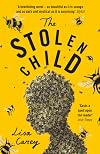
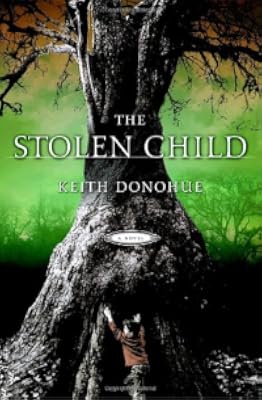
The Stolen Child
by Lisa Carey 
On This Page
Description
"From the author of the critically acclaimed The Mermaids Singing comes a haunting, luminous novel set on an enchanted island off the west coast of Ireland where magic, faith, and superstition pervade the inhabitants' lives and tangled relationships--perfect for fans of Eowyn Ivey, Sarah Waters, and Angela Carter. May 1959. From one side of St. Brigid's Island, the mountains of Connemara can be glimpsed on the distant mainland; from the other, the Atlantic stretches as far as the eye can show more see. This remote settlement, without electricity or even a harbor, has scarcely altered since its namesake saint set up a convent of stone huts centuries ago. Those who live there, including sisters Rose and Emer, are hardy and resourceful, dependent on the sea and each other for survival. Despite the island's natural beauty, it is a place that people move away from, not to--until an outspoken American, also named Brigid, arrives to claim her late uncle's cottage. Brigid has come for more than an inheritance. She's seeking a secret holy well that's rumored to grant miracles. Emer, as scarred and wary as Rose is friendly and beautiful, has good reason to believe in inexplicable powers. Despite her own strange abilities--or perhaps because of them--Emer fears that she won't be able to save her young son, Niall, from a growing threat. Yet Brigid has a gift too, even more remarkable than Emer's. As months pass and Brigid carves out a place on the island and in the sisters' lives, a complicated web of betrayal, fear, and desire culminates in one shocking night that will change the island, and its inhabitants, forever. Steeped in Irish history and lore, The Stolen Child is a mesmerizing descent into old world beliefs, and a captivating exploration of desire, myth, motherhood, and love in all its forms. "Steeped in dark Irish mythology, The Stolen Child is apiercing exploration of regret and desire, longing and love. It is a gorgeously written,inventive, and compelling novel."--Ayelet Waldman"-- "From the author of the critically and commercially successful THE MERMAIDS SINGING, a novel about a community living on an enchanted island off the coast of Ireland that explores the town's heady brew of tangled relationships, distrust of strangers, dark magic, and superstition. Think THE SNOW CHILD as written by Sarah Waters or Angela Carter"-- show lessTags
Recommendations







Member Reviews
This book has everything I desire in a book and a few things I didn't know I wanted:
First, the language and visuals are utterly gorgeous. Richly drawn setting, dark and nuanced feelings, so much visceral, bodily action. In practically every paragraph I marked the margins for a sentence that absolutely stunned me.
Second, the novel is populated with a net of strong, complex women. Yes, this book passes the Bechdel test and then some. So many different balances of power between the women to shift and surprise you over the course of the book.
Third, the history behind the secluded island community that drives the story here is so intriguing. I found myself so worked up about knowing the'd have to leave the island (it's revealed in the show more prologue), that I sometimes had to step away. It seemed so hard to imagine how they'd continue to exist without the energy of the island beneath their feet, so alive is Carey's sense of place.
Fourth, the plot is absolutely riveting. Carey does a masterful job of marking time in this book. I missed my bus stop and put off prepping for classes and asked a friend with whom I was sharing a hotel room to wait just a minute (that ended up being many more) before talking to me while I finished a section. This is where the element of being introduced to something unexpected comes in, too. I had not been one to pick up a book that touted mystical powers or fairies as major elements of the story, but this book showed me I should not be so closed-minded. In Carey's hands, those details are handled with such grace and proficiency and deepen the meaning and resonance of the story so much that I felt willing to trust in a way I hadn't before, and the payoff is truly worth that trust.
I'm so eager to dive into Carey's back catalog now, and so grateful this book came to me at the time it did. I recommend it highly. show less
First, the language and visuals are utterly gorgeous. Richly drawn setting, dark and nuanced feelings, so much visceral, bodily action. In practically every paragraph I marked the margins for a sentence that absolutely stunned me.
Second, the novel is populated with a net of strong, complex women. Yes, this book passes the Bechdel test and then some. So many different balances of power between the women to shift and surprise you over the course of the book.
Third, the history behind the secluded island community that drives the story here is so intriguing. I found myself so worked up about knowing the'd have to leave the island (it's revealed in the show more prologue), that I sometimes had to step away. It seemed so hard to imagine how they'd continue to exist without the energy of the island beneath their feet, so alive is Carey's sense of place.
Fourth, the plot is absolutely riveting. Carey does a masterful job of marking time in this book. I missed my bus stop and put off prepping for classes and asked a friend with whom I was sharing a hotel room to wait just a minute (that ended up being many more) before talking to me while I finished a section. This is where the element of being introduced to something unexpected comes in, too. I had not been one to pick up a book that touted mystical powers or fairies as major elements of the story, but this book showed me I should not be so closed-minded. In Carey's hands, those details are handled with such grace and proficiency and deepen the meaning and resonance of the story so much that I felt willing to trust in a way I hadn't before, and the payoff is truly worth that trust.
I'm so eager to dive into Carey's back catalog now, and so grateful this book came to me at the time it did. I recommend it highly. show less
I really enjoyed this book centered around two women in a remote Irish island in the late 1950s. I'm a big fan of Ireland and Celtic myth, and loved both the story of life on those islands and the interweaving of fairy lore and magic and the saint/goddess Brigid into the tale. I wasn't expecting as many faery/magic/magical realism elements as I found, and loved them all the more for the surprise.
I thought the writing was excellent and the slow unfolding of the characters' back stories intermixed with the present day of the story really added to how the tale unfolded. The characters and their wishes and goals and lives were complex and well-rounded.
As a lesbian, I liked the relationship between two women that emerged, in a way that felt show more true for the characters involved and the time and place, but was also remarkable to my modern eye for its complete lack of a sense of queer identity.
As you might imagine, life on a remote Irish island was not easy. Trigger warning for some domestic violence and sexual violence. If that's not a deal-breaker, it's highly recommended. show less
I thought the writing was excellent and the slow unfolding of the characters' back stories intermixed with the present day of the story really added to how the tale unfolded. The characters and their wishes and goals and lives were complex and well-rounded.
As a lesbian, I liked the relationship between two women that emerged, in a way that felt show more true for the characters involved and the time and place, but was also remarkable to my modern eye for its complete lack of a sense of queer identity.
As you might imagine, life on a remote Irish island was not easy. Trigger warning for some domestic violence and sexual violence. If that's not a deal-breaker, it's highly recommended. show less
Because I once lived on the western coast of Ireland, and because author Lisa Cary moved to the island of Inishbofin, off Ireland's west coast to research her first book, I've been following her career for many years. I've loved each of her four Irish themed novels, and eagerly awaited the February 7th release of her latest, The Stolen Child. It is a story much like Ireland herself: deceptive in its riddled nuances, more than the sum of its parts. The soul of the story creeps up on you. It takes patience and willingness to allow the magic to take hold, and when it does, it is not by possession. The Stolen Child spins the kind of magic that lulls at the core of your being; affects your consciousness, waits for you to piece it together show more until you understand. There is little overt in this languid novel, which, again, is much like Ireland. It is a desperate story through and through, yet in the hands of author Lisa Carey, it resonates with mythical beauty, gives you a sense of timelessness, and holds you fast by its earthy, brass tacks.
In pitch-perfect language, Carey wields dialogue specific to the west coast of Ireland’s desolate environs. It is an understated language, upside down to outsiders, but once your ear attunes, you are affronted by the superfluousness of other tongues. All primary characters in The Stolen Child are women. They live cut-off from the mainland of Ireland’s west coast, twelve miles out, upon rocky, wind-swept, St. Brigid’s Island, during the one year time frame of May, 1959 to May, 1960. It is a timeframe fraught with the looming inevitability of the islanders’ evacuation from their homeland, with its generational customs and ties, to the stark reality of life on the mainland, with its glaring and soulless “mod-cons.” Most of the characters are conflicted about leaving the island, save for the sinister Emer, who has her own selfish agenda, centered upon her only child Niall. Her sister, Rose, is the sunny, earth-mother, unflappable sort, who only sees the buried good in Emer, whereas everyone one else on the island shuns her, for her malefic, dark ways, which they intuit as dark art. Emer has one foot on the island and the other in the recesses of the fairies’ manipulative underworld. It is the American “blow-in,” Brigid, the woman with a complicated past, who has her own ties to the island from her banished mother, that cracks the carapace of Emer’s guarded and angry countenance. Together, the pair explore an illicit relationship, but when it snaps back, Emer retaliates with a force that effects the entire island and twists her worst fears into fate.
The Stolen Child is magnificently crafted, for it is a sweeping story set on a cloistered island, which has nothing to recommend it save for its quays, its view, and its eponymous holy-well. This is a novel rife with character study that is quintessentially Irish, yet applicable far afield. In themes of motherhood, hope, desperation, and hopelessness, the characters take what little they have and wrestle it into making do. It is the power of steel intention that drives this story, and the reader receives it from all conceivable angles. I recommend The Stolen Child to all who love Ireland, to all who love an exceptional, creative story, and to all who love language used at its finest. All praise to the author Lisa Carey. I eagerly await the next book. show less
In pitch-perfect language, Carey wields dialogue specific to the west coast of Ireland’s desolate environs. It is an understated language, upside down to outsiders, but once your ear attunes, you are affronted by the superfluousness of other tongues. All primary characters in The Stolen Child are women. They live cut-off from the mainland of Ireland’s west coast, twelve miles out, upon rocky, wind-swept, St. Brigid’s Island, during the one year time frame of May, 1959 to May, 1960. It is a timeframe fraught with the looming inevitability of the islanders’ evacuation from their homeland, with its generational customs and ties, to the stark reality of life on the mainland, with its glaring and soulless “mod-cons.” Most of the characters are conflicted about leaving the island, save for the sinister Emer, who has her own selfish agenda, centered upon her only child Niall. Her sister, Rose, is the sunny, earth-mother, unflappable sort, who only sees the buried good in Emer, whereas everyone one else on the island shuns her, for her malefic, dark ways, which they intuit as dark art. Emer has one foot on the island and the other in the recesses of the fairies’ manipulative underworld. It is the American “blow-in,” Brigid, the woman with a complicated past, who has her own ties to the island from her banished mother, that cracks the carapace of Emer’s guarded and angry countenance. Together, the pair explore an illicit relationship, but when it snaps back, Emer retaliates with a force that effects the entire island and twists her worst fears into fate.
The Stolen Child is magnificently crafted, for it is a sweeping story set on a cloistered island, which has nothing to recommend it save for its quays, its view, and its eponymous holy-well. This is a novel rife with character study that is quintessentially Irish, yet applicable far afield. In themes of motherhood, hope, desperation, and hopelessness, the characters take what little they have and wrestle it into making do. It is the power of steel intention that drives this story, and the reader receives it from all conceivable angles. I recommend The Stolen Child to all who love Ireland, to all who love an exceptional, creative story, and to all who love language used at its finest. All praise to the author Lisa Carey. I eagerly await the next book. show less
Set in the middle of the 20th Century on a small Irish island, where time seems to have moved more slowly than on the mainland, life is unsettled by the arrival of the Yank. Brigid has returned to her family's land from the States in search for a miracle from her saintly namesake. The islanders treat her with suspicion at the start, talking around her in Gaelic and initially keeping her distance, both because Brigid is an incomer and because of her own family's reputation. Emer is the first to come round, a bitter woman who has grown twisted in the shadow of her beautiful and beloved twin, Rose. Brigid has a gift, but using it has come at great personal cost.
I enjoyed the magical elements of the book, the faeries and changelings, as show more well as the richly drawn female characters. Carey portrays well the insular nature of the islanders, suspicious of change, but also wary of outsiders and those who are different.
The book draws you in, I thought it would be a much lighter read at the start, but Carey builds tension by highlighting the grey areas of life. The ending was a little abrupt, but I am not sure it could have ended any differently.
I would recommend this for a cold day, just curl up with a coffee and the book, or for a group read as there are lots of points to be discussed. show less
I enjoyed the magical elements of the book, the faeries and changelings, as show more well as the richly drawn female characters. Carey portrays well the insular nature of the islanders, suspicious of change, but also wary of outsiders and those who are different.
The book draws you in, I thought it would be a much lighter read at the start, but Carey builds tension by highlighting the grey areas of life. The ending was a little abrupt, but I am not sure it could have ended any differently.
I would recommend this for a cold day, just curl up with a coffee and the book, or for a group read as there are lots of points to be discussed. show less
 This review was written for LibraryThing Early Reviewers.
The Stolen Child, A Novel is a dark tale which attempts to take on many of the world's problems. The tale is a fantasy set on an island off the shore of Ireland named for St. Brigid. All the inhabitants are isolated and uneducated which makes this tale similar to the tale of a small village North of Boston where those inhabitants believed in witches. On the Island, the fairy people are to be feared as they can steal your children and wives and replace them with changelings.
The tale tells the story of two sisters, Rose and Emer who were almost killed by the mother at a young age and their interaction to a new arrival on the island, Brigid. Brigid has come to the island for an inheritance and in search for a miracle. The story is an show more extremely touching narrative of superstition and lore and the misunderstanding of people who do not fit into the "normal" mold. Is Brigid a fairy or woman searching for more in the land of her ancestors.
There is a moral to this dark tale but it is heart wrenching. show less
The tale tells the story of two sisters, Rose and Emer who were almost killed by the mother at a young age and their interaction to a new arrival on the island, Brigid. Brigid has come to the island for an inheritance and in search for a miracle. The story is an show more extremely touching narrative of superstition and lore and the misunderstanding of people who do not fit into the "normal" mold. Is Brigid a fairy or woman searching for more in the land of her ancestors.
There is a moral to this dark tale but it is heart wrenching. show less
This review was written for LibraryThing Early Reviewers.Life on the small island of St. Brigid is brutal and raw as the landscape but for a small number of families that have clung to its rocky cliffs, the island and its power is timeless and secret. Stories say that there is magic on the island and women have come to a secret well to ask Saint Brigid to give them a child. One day an American appears and moves into the dilapidated cottage that has been in her family and slowly works her way into the island community. Brigid has her own secrets and reasons for coming to the island. Not all warm up to Brigid and some, like Emer, do not trust her reasons for being on the island sensing that there is more to the story. The island and its people believe in the old ways, have been given special show more gifts from the fairies and know that someday the fairies will collect. Beautifully written - you can almost feel the spray from the sea and the cold wind or smell the peat. My thanks to the publisher for the advance copy. show less
This review was written for LibraryThing Early Reviewers.I was pleasantly surprised how good this book was!
Emer reminded me of my Mom, which really left me feeling like "This poor woman, suffering with such mental illness to believe in fairies!" ... but ... wow!
And the sort of lesbian love story in the middle was not distracting or offensive at all. It did add to the story.
Adrianne
Emer reminded me of my Mom, which really left me feeling like "This poor woman, suffering with such mental illness to believe in fairies!" ... but ... wow!
And the sort of lesbian love story in the middle was not distracting or offensive at all. It did add to the story.
Adrianne
Members
- Recently Added By
Published Reviews
ThingScore 100
*Starred Review*
"Magical realism of the best kind, utterly devoid of whimsy."
"Magical realism of the best kind, utterly devoid of whimsy."
added by axel
Lists

Top Five Books of 2016
795 works; 229 members

2018 Hugo Eligible Novels
170 works; 16 members

Kirkus Starred Fiction Reviews of Books Published in 2017
412 works; 7 members

Same Title
115 works; 3 members

2017 Science Fiction and Fantasy I'm Looking Forward To
46 works; 6 members
Author Information

5 Works 1,511 Members
Lisa Carey is a LibraryThing Author, an author who lists their personal library on LibraryThing.
Awards and Honors
Distinctions
Common Knowledge
- Canonical title
- The Stolen Child
- Original title
- The Stolen Child
- Original publication date
- 2017
- Important places
- St Brigid's Island, County Galway, Ireland (fictional); Maine, USA
- Epigraph
- Come away, O human child!
To the waters and the wild
With a faery, hand in hand,
For the world's more full of weeping than you can understand." - "The Stolen Child," by William Butler Yeats - Dedication
- For Liam and Timothy,
who don't hold back any love. - First words
- The day of the evacuation, the first of May, 1960, dawned cloudless and still, weather so fine the islanders said it was stolen.
- Blurbers
- Waldman, Ayelet
Classifications
Statistics
- Members
- 206
- Popularity
- 158,781
- Reviews
- 28
- Rating
- (3.79)
- Languages
- English
- Media
- Paper, Audiobook, Ebook
- ISBNs
- 15
- ASINs
- 3