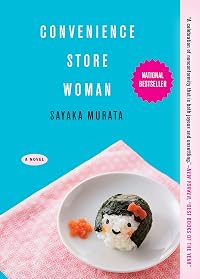
Convenience Store Woman
by Sayaka Murata
On This Page
Description
The English-language debut of one of Japan's most talented contemporary writers, selling over 650,000 copies there, Convenience Store Woman is the heartwarming and surprising story of thirty-six-year-old Tokyo resident Keiko Furukura. Keiko has never fit in, neither in her family, nor in school, but when at the age of eighteen she begins working at the Hiiromachi branch of "Smile Mart," she finds peace and purpose in her life. In the store, unlike anywhere else, she understands the rules show more of social interaction—many are laid out line by line in the store's manual—and she does her best to copy the dress, mannerisms, and speech of her colleagues, playing the part of a "normal" person excellently, more or less. Managers come and go, but Keiko stays at the store for eighteen years. It's almost hard to tell where the store ends and she begins. Keiko is very happy, but the people close to her, from her family to her coworkers, increasingly pressure her to find a husband, and to start a proper career, prompting her to take desperate action... A brilliant depiction of an unusual psyche and a world hidden from view, Convenience Store Woman is an ironic and sharp-eyed look at contemporary work culture and the pressures to conform, as well as a charming and completely fresh portrait of an unforgettable heroine. show lessTags
Recommendations
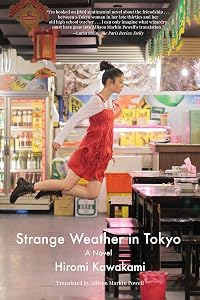

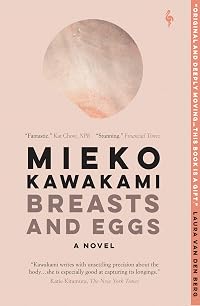
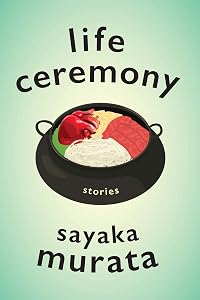


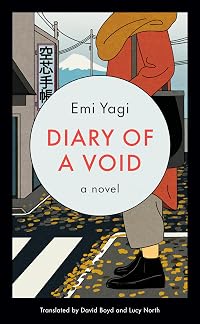
























Member Recommendations


Member Reviews
‘’It is the start of another day, the time when the world wakes up and the cogs of society begin to move. I am one of those cogs, going round and round. I have become a functioning part of the world, rotating in the time of day called morning.’’
Keiko has been working in the same convenience store in Tokyo for eighteen years. She is not interested in finding a new job, she doesn’t particularly want to hang out with her few acquaintances, and having a family of her own or even a relationship has never crossed her mind. And even though her family loves her, they are afraid she’s not going to ‘’make it’’ in the ‘’real world’’. Whatever that means, anyway. Keiko needs instructions so as not to be show more ‘’different’’. Working in the Hiromachi Station Smile Mart allows her to function under an umbrella of specific patterns of behaviour. When a (disgusting to the core) young man comes to work in the store, he unwittingly provides Keiko with the chance to understand that the problem lies with the others, not herself.
‘’From now on, we existed only in the service of the convenience store.’’
Sayaka Murata creates a superb story, set in a vivid urban setting, in the heart of Tokyo. Within the boundaries of the store, we understand that rules dictating what to wear, how to speak, how to smile need to be obeyed. So there is no room for individuality, and there are limited opportunities to advance. And that’s fine. Let’s face it, most jobs are the same. We can’t just walk right into our classrooms, our private practices, our shops, our offices and start dancing naked, screaming profanities. We all wear our ‘’work’’ uniform every day, we all obey to job rules, strict or less strict, and this is completely understandable. For me, and for Keiko, the dangerous territory is the world outside, the terrain of obligatory socializing and social rules that have no basis anymore, yet need to be fulfilled. Why? Don’t ask me, I don’t know. Ask those who enjoy mingling and getting married…
‘’When something was strange, everyone thought they had the right to come stomping in all over your life to figure out why. I found that arrogant and infuriating, not to mention a pain in the neck. Sometimes I even wanted to hit them with a shovel to shut them up, like I did that time in elementary school.’’
Keiko is my spirit animal. Enough said.
She is tremendously perceptive. Her observations on people’s behaviour and facial expressions are spot on. The insults are constant, coming from ‘’friends’’, but Keiko doesn’t respond. She doesn’t know how. Until she finally lifts her head and strikes back, exhausted by the abominable behaviour of a man who embodies all that is fake, cheap and toxic in the construction of a society where women and men believe they have the right to meddle with one’s life just because she doesn’t want to ‘’find someone’’. This is a society that will cast you out if you’re not interested in sex or money. This is a society with an orgasmic fixation on age, motherhood, social status and wealth. This is superficiality in its most extreme, tormenting, tyrannical form. And Keiko sends each one of them to Hell because she can.
Clever and funny, and quite unsettling, even shocking at times, this gem of Japanese Literature is a quirky, yet poignant story of individualism, choice, expectations and a monstrous society. Absolutely wonderful!
‘’No. It’s not a matter of whether they permit it or not. It’s what I am.’’
My reviews can also be found on https://theopinionatedreaderblog.wordpress.com/ show less
Keiko has been working in the same convenience store in Tokyo for eighteen years. She is not interested in finding a new job, she doesn’t particularly want to hang out with her few acquaintances, and having a family of her own or even a relationship has never crossed her mind. And even though her family loves her, they are afraid she’s not going to ‘’make it’’ in the ‘’real world’’. Whatever that means, anyway. Keiko needs instructions so as not to be show more ‘’different’’. Working in the Hiromachi Station Smile Mart allows her to function under an umbrella of specific patterns of behaviour. When a (disgusting to the core) young man comes to work in the store, he unwittingly provides Keiko with the chance to understand that the problem lies with the others, not herself.
‘’From now on, we existed only in the service of the convenience store.’’
Sayaka Murata creates a superb story, set in a vivid urban setting, in the heart of Tokyo. Within the boundaries of the store, we understand that rules dictating what to wear, how to speak, how to smile need to be obeyed. So there is no room for individuality, and there are limited opportunities to advance. And that’s fine. Let’s face it, most jobs are the same. We can’t just walk right into our classrooms, our private practices, our shops, our offices and start dancing naked, screaming profanities. We all wear our ‘’work’’ uniform every day, we all obey to job rules, strict or less strict, and this is completely understandable. For me, and for Keiko, the dangerous territory is the world outside, the terrain of obligatory socializing and social rules that have no basis anymore, yet need to be fulfilled. Why? Don’t ask me, I don’t know. Ask those who enjoy mingling and getting married…
‘’When something was strange, everyone thought they had the right to come stomping in all over your life to figure out why. I found that arrogant and infuriating, not to mention a pain in the neck. Sometimes I even wanted to hit them with a shovel to shut them up, like I did that time in elementary school.’’
Keiko is my spirit animal. Enough said.
She is tremendously perceptive. Her observations on people’s behaviour and facial expressions are spot on. The insults are constant, coming from ‘’friends’’, but Keiko doesn’t respond. She doesn’t know how. Until she finally lifts her head and strikes back, exhausted by the abominable behaviour of a man who embodies all that is fake, cheap and toxic in the construction of a society where women and men believe they have the right to meddle with one’s life just because she doesn’t want to ‘’find someone’’. This is a society that will cast you out if you’re not interested in sex or money. This is a society with an orgasmic fixation on age, motherhood, social status and wealth. This is superficiality in its most extreme, tormenting, tyrannical form. And Keiko sends each one of them to Hell because she can.
Clever and funny, and quite unsettling, even shocking at times, this gem of Japanese Literature is a quirky, yet poignant story of individualism, choice, expectations and a monstrous society. Absolutely wonderful!
‘’No. It’s not a matter of whether they permit it or not. It’s what I am.’’
My reviews can also be found on https://theopinionatedreaderblog.wordpress.com/ show less
4.5
The Japanese-translated, literary fiction book features a thirty six, autistic woman working at the same convenience store for eighteen years. You learn from the first page to the last how engrained the mechanics of a connivence store is in our narrator, Kieko. Throughout the book, however, the people in her life probe and pry into her life to try and figure out why she isn’t married yet or at a “respectable” job, though they put no effort into understanding her choices for living how she does. Growing up and always feeling different from everyone else, Kieko has always tried to figure out a plan on how to “fit in” while her family has tried to figure out how to “cure” her. She learns to only speak when spoken to and to show more not act on her own initiative to eliminate any possibility to act “wrong.” However, at a certain age, this behavior is no longer seen as normal so she observes her sister and other coworkers and mimics their mannerisms so as to seem “normal.” No matter how much work she puts in though, people always find a flaw in her life to deem her different, and by labeling her as different, they end up feeling the right to her privacy to nitpick what she is doing wrong in their eyes. This books points out the hypocrisy in society in that we preach individualism and need for diversity but then feel the need to isolate and probe those who do not fit into the mold society has created. Even if it makes her happy to be alone and work at the same store where she is given clear instructions on how to think and act, people are happier to see her suffer in a marriage with a stranger who doesn’t love her because it fits the outline society says her life should look like and the problems that sometimes go with that outline. The books ends with Kieko quitting her job to further conform and we get to see how much it effects her. Even though she falls into a manic-depressive episode while looking for a “real” job, people congratulate her since her problems are considered “normal” now. Thankfully the book ends with her realizing she doesn’t care what people think as long as she gets to remain as a convenience store worker. I highly recommend this book, especially if you struggle with worrying about making people happy and trying to come off as “normal.” There is no such thing. show less
The Japanese-translated, literary fiction book features a thirty six, autistic woman working at the same convenience store for eighteen years. You learn from the first page to the last how engrained the mechanics of a connivence store is in our narrator, Kieko. Throughout the book, however, the people in her life probe and pry into her life to try and figure out why she isn’t married yet or at a “respectable” job, though they put no effort into understanding her choices for living how she does. Growing up and always feeling different from everyone else, Kieko has always tried to figure out a plan on how to “fit in” while her family has tried to figure out how to “cure” her. She learns to only speak when spoken to and to show more not act on her own initiative to eliminate any possibility to act “wrong.” However, at a certain age, this behavior is no longer seen as normal so she observes her sister and other coworkers and mimics their mannerisms so as to seem “normal.” No matter how much work she puts in though, people always find a flaw in her life to deem her different, and by labeling her as different, they end up feeling the right to her privacy to nitpick what she is doing wrong in their eyes. This books points out the hypocrisy in society in that we preach individualism and need for diversity but then feel the need to isolate and probe those who do not fit into the mold society has created. Even if it makes her happy to be alone and work at the same store where she is given clear instructions on how to think and act, people are happier to see her suffer in a marriage with a stranger who doesn’t love her because it fits the outline society says her life should look like and the problems that sometimes go with that outline. The books ends with Kieko quitting her job to further conform and we get to see how much it effects her. Even though she falls into a manic-depressive episode while looking for a “real” job, people congratulate her since her problems are considered “normal” now. Thankfully the book ends with her realizing she doesn’t care what people think as long as she gets to remain as a convenience store worker. I highly recommend this book, especially if you struggle with worrying about making people happy and trying to come off as “normal.” There is no such thing. show less
Intelligent, unwavering prose. I fell in love with this book and all of its idiosyncratic characters. The amount of times Shiraha would bring up the Stone Age and the roles of men and women made my skin crawl, however. Why did she have to let him stay in her house I don’t know but the ending of the book is just so beautiful and perfect and exactly what I was hoping for. Fuck the Stone Age, ok! Bring on the enlightened life of convenience store workers and thensome! Let those who wish to escape the chains of societal pressures, escape! A joyous read.
Very amusing, very fast read. The main character Keiko finds her meaning and purpose working as a Convenience Store Woman. It gives order to her life. Her struggles in being normal are the main point of the book and her eventual rejection of those expectations extremely satisfying. The only issue, of whether she'll be able to do this forever, is unanswered. But it doesn't matter. This book is charming but with an undercurrent of darkness that keeps you hooked.
I dunno, y'all. Miss Furukura and Shiraha aren't people I'd want to hang with. I kept reading their names as "Lieutenant Uhura" and "Sriracha," which didn't help me identify them as actual people.
Oh wait....
As this is a translation from a language with which I feel absolutely no kinship, I'll confine myself to observing this is a very quick read, possessed of enough narrative drive to make reading it with dilated eyes and a headache seem like a good idea. I was diverted, I cared a strangely large amount about Keiko Furukura, and while there was not one single surprise or twist in the tale, it was keenly observed and honestly told.
I have never been so glad in my life as when Author Murata stopped banging my eyeballs with "Irasshaimase" about halfway through the book. I am one of those subverbal-vocalizers, and that phrase got my entire limbic system into an uproar because, although I know Japanese pronunciation is dipthongless, I could *not* scan that alphabet soup to save my life, and the YouTube videos pronouncing it for me made my nose hairs hurt. I think Japanese is a hideous language. Cool words, great concepts, please don't speak it to me.
Anyway. So Lieutenant Uhura meets Sriracha and things get weird. Only they don't because, well, they're exactly alike and while that's an awful thing to say, it's just the truth. She's one step away from a serious break when she visits her younger sister and interacts (sort of) with her infant nephew. He's already broken. Her saving grace is that she knows *she* is the problem:
And that, in a nutshell, is why the book kept me reading. I was fascinated against my will by the savvy that she brought to the problem of acting human when she quite simply isn't. She knows she lacks something, hasn't a clue what it is, and no one knows how to explain it to her; what she stumbles upon in the convenience store is a model she can emulate. A worker is supposed to BE the job in the convenience store and she needs someone to be. Perfection.
Poor Sriracha is an incel, as we call them these days, a loser/misfit/nobody whose essential wrongness comes from the other usual place this unsocialized issue comes from: He knows what being human means but he's too lazy to do it, then feels outrage and anger when he isn't given all the privileges of being a human male. Lieutenant Uhura can't grok this, since she's a hard worker and a genuinely indifferent to humans person. She doesn't feel excluded, as he does; she realizes she is excluded and takes steps to minimize the exclusion so others will feel happier:
See? Faultlessly logical. Not human, but deeply logical.
So fiction about the neurodiverse made my uncomfortable day of eye-doctoring, riding back and forth in a cramped position, and having to soak the bloodstains from my knee-rocks breaking through the skin due to sitting *ptooptoo* on sitting! for five hours, bearable. That by itself deserves praise. It's hard to know what to do about recommending such a quirky tale to others. In general, I'm against "must read" recommendations in all but a very few cases. I think this read will quite rightly polarize people's opinions, as did that "Completely Fine" thing that made me so bone-rattlingly mad that I Pearl-Ruled its condescending self. But this story, told by a person whose grasp on how to be human was tenuous and whose desire to figure it out was other-directed, is a different matter altogether. I might not love the way it ended, which I won't discuss, but I fully agree that it was an inevitable ending. I ended up glad I'd read it, and that's saying something. show less
Oh wait....
As this is a translation from a language with which I feel absolutely no kinship, I'll confine myself to observing this is a very quick read, possessed of enough narrative drive to make reading it with dilated eyes and a headache seem like a good idea. I was diverted, I cared a strangely large amount about Keiko Furukura, and while there was not one single surprise or twist in the tale, it was keenly observed and honestly told.
First we practiced the various phrases we needed to use in the store.Standing shoulder to shoulder in ashow more
line, our backs straight, we lifted the corners of our mouths to match the smiling face in the training poster and in turn called out the stock welcoming phrase: Irasshaimase! ... I was good at mimicking the trainer's examples and the model video he'd shown us in the back room. It was the first time anyone had ever taught me how to accomplish a normal facial expression and manner of speech.
I have never been so glad in my life as when Author Murata stopped banging my eyeballs with "Irasshaimase" about halfway through the book. I am one of those subverbal-vocalizers, and that phrase got my entire limbic system into an uproar because, although I know Japanese pronunciation is dipthongless, I could *not* scan that alphabet soup to save my life, and the YouTube videos pronouncing it for me made my nose hairs hurt. I think Japanese is a hideous language. Cool words, great concepts, please don't speak it to me.
Anyway. So Lieutenant Uhura meets Sriracha and things get weird. Only they don't because, well, they're exactly alike and while that's an awful thing to say, it's just the truth. She's one step away from a serious break when she visits her younger sister and interacts (sort of) with her infant nephew. He's already broken. Her saving grace is that she knows *she* is the problem:
"Um, you do realize you'll be fixed?"
"What?" {Shiraha} asked, as if he hadn't heard right.
"Oh, nothing. Hurry up and change so we can do the morning practice!"
A convenience store is a forcibly normalized environment, so the likes of you are fixed right away I thought as I watched him taking his time getting changed. But I didn't say it out loud.
And that, in a nutshell, is why the book kept me reading. I was fascinated against my will by the savvy that she brought to the problem of acting human when she quite simply isn't. She knows she lacks something, hasn't a clue what it is, and no one knows how to explain it to her; what she stumbles upon in the convenience store is a model she can emulate. A worker is supposed to BE the job in the convenience store and she needs someone to be. Perfection.
Poor Sriracha is an incel, as we call them these days, a loser/misfit/nobody whose essential wrongness comes from the other usual place this unsocialized issue comes from: He knows what being human means but he's too lazy to do it, then feels outrage and anger when he isn't given all the privileges of being a human male. Lieutenant Uhura can't grok this, since she's a hard worker and a genuinely indifferent to humans person. She doesn't feel excluded, as he does; she realizes she is excluded and takes steps to minimize the exclusion so others will feel happier:
You eliminate the parts of your life that others find strange—maybe that's what everyone means when they say they want to "cure" me.
These past two weeks I'd been asked fourteen times why I wasn't married. And twelve times why I was still working part-time. So for now I'd decide what to eliminate from my life according to what I was asked about most often I thought.
Deep down I wanted some kind of change. Any change, whether good or bad, would be better than the state of impasse I was in now.
See? Faultlessly logical. Not human, but deeply logical.
So fiction about the neurodiverse made my uncomfortable day of eye-doctoring, riding back and forth in a cramped position, and having to soak the bloodstains from my knee-rocks breaking through the skin due to sitting *ptooptoo* on sitting! for five hours, bearable. That by itself deserves praise. It's hard to know what to do about recommending such a quirky tale to others. In general, I'm against "must read" recommendations in all but a very few cases. I think this read will quite rightly polarize people's opinions, as did that "Completely Fine" thing that made me so bone-rattlingly mad that I Pearl-Ruled its condescending self. But this story, told by a person whose grasp on how to be human was tenuous and whose desire to figure it out was other-directed, is a different matter altogether. I might not love the way it ended, which I won't discuss, but I fully agree that it was an inevitable ending. I ended up glad I'd read it, and that's saying something. show less
Keiko Furukura is a thirty-something, who has been working at the same job as a convenience store worker for eighteen years. She is a model worker, and the job provides her with the routine and the social cues she needs in order to function in society. Society, however, sees an asexual, unmarried woman in a menial job and begins making assumptions and either rejects her or barrages her with advice.
The normal world has no room for exceptions and always quietly eliminates foreign objects. Anyone who is lacking is disposed of.
So that's why I need to be cured. Unless I'm cured, normal people will expurgate me.
Finally I understood why my family had tried so hard to fix me.
Keiko hooks up with another outcast, a jobless incel to try and game show more the system. Perhaps life will be easier if people thinks she's in a relationship; but the expectations continue to pile on.
I liked Keiko, and empathized with her desire to live her simple life without outside judgment. Shiraha was a bit of a caricature, but one that I don't mind harpooning. This book won the Akutagawa Prize in 2016. The author herself had worked part-time in a convenience store and drew inspiration from the experience. She says she wanted to show how odd the people who think they are normal are. show less
The normal world has no room for exceptions and always quietly eliminates foreign objects. Anyone who is lacking is disposed of.
So that's why I need to be cured. Unless I'm cured, normal people will expurgate me.
Finally I understood why my family had tried so hard to fix me.
Keiko hooks up with another outcast, a jobless incel to try and game show more the system. Perhaps life will be easier if people thinks she's in a relationship; but the expectations continue to pile on.
I liked Keiko, and empathized with her desire to live her simple life without outside judgment. Shiraha was a bit of a caricature, but one that I don't mind harpooning. This book won the Akutagawa Prize in 2016. The author herself had worked part-time in a convenience store and drew inspiration from the experience. She says she wanted to show how odd the people who think they are normal are. show less
I’ve read two other books that were translated from Japanese, both by Haruki Murakami: Kafka on the Shore, which I hated, and 1Q84, which I really liked. The writing in both those novels was very clean, direct, and to the point. I thought that might have been just Murakami’s style of writing, but Convenience Store Woman had the same refreshingly clear and uncluttered prose. Now I wonder if that style of writing is common or trendy in Japan, just like the sort of flowery young-adult style is here. It might also be a common thread in translated Japanese work because that’s simply the way the language translates to English—I can’t read Japanese, so I will probably never know. Regardless, I really enjoyed the writing in show more Convenience Store Woman, especially Keiko’s very matter-of-fact way of describing things and people.
That seems like a good segue into the fact that this may be the first book I’ve read in which an (not explicitly but very clearly implied to be) autistic character gets to experience joy on their own terms. As an autistic person, I really related to Keiko and to the way she relates to other people, so it was nice that the story didn’t end up being about her being “cured” or becoming “normal.” The sense of usefulness that she gets from being a convenience store worker and the fear she has that she will someday stop being useful are, at least to me, extremely relatable and topical. I think, especially in today’s late capitalist society, everyone wants to feel useful. It’s drilled into us that if we aren’t adequately providing society with something, we have no place in society. I personally don’t believe that people should be considered “useful” or “useless,” because that’s a direct pipeline to eugenicist thinking and, as a disabled person that cannot work and is therefore “useless” to capitalist society, I would rather people not think I’m a waste of space.
That being said, Keiko’s fear that she would be useless if not for being a convenience store worker and the happiness and comfort she gets from being important and needed in that context made me happy because it’s such a refreshing portrayal of someone who doesn’t follow society’s “rules” when it comes to the trajectory of their life. Keiko’s family and friends are all deeply concerned about her and say that she needs to find a real career or get married and have kids, but neither of those options appeals to Keiko and she knows she would never be happy that way. Though the path she has chosen for her life is unconventional and viewed by the other people in her life as unfulfilling and sad, it brings her joy. If someone is happy and comfortable with where they are in life, why should they be encouraged to abandon that because it’s not what society accepts as normal? show less
That seems like a good segue into the fact that this may be the first book I’ve read in which an (not explicitly but very clearly implied to be) autistic character gets to experience joy on their own terms. As an autistic person, I really related to Keiko and to the way she relates to other people, so it was nice that the story didn’t end up being about her being “cured” or becoming “normal.” The sense of usefulness that she gets from being a convenience store worker and the fear she has that she will someday stop being useful are, at least to me, extremely relatable and topical. I think, especially in today’s late capitalist society, everyone wants to feel useful. It’s drilled into us that if we aren’t adequately providing society with something, we have no place in society. I personally don’t believe that people should be considered “useful” or “useless,” because that’s a direct pipeline to eugenicist thinking and, as a disabled person that cannot work and is therefore “useless” to capitalist society, I would rather people not think I’m a waste of space.
That being said, Keiko’s fear that she would be useless if not for being a convenience store worker and the happiness and comfort she gets from being important and needed in that context made me happy because it’s such a refreshing portrayal of someone who doesn’t follow society’s “rules” when it comes to the trajectory of their life. Keiko’s family and friends are all deeply concerned about her and say that she needs to find a real career or get married and have kids, but neither of those options appeals to Keiko and she knows she would never be happy that way. Though the path she has chosen for her life is unconventional and viewed by the other people in her life as unfulfilling and sad, it brings her joy. If someone is happy and comfortable with where they are in life, why should they be encouraged to abandon that because it’s not what society accepts as normal? show less
Members
- Recently Added By
Published Reviews
ThingScore 75
...for all the disturbance and oddity in “Convenience Store Woman,” the book dares the reader to interpret it as a happy story about a woman who has managed to craft her own “good life.”
added by Lemeritus
Convenience Store Woman closely observes the inevitable failures of a society to embrace all within it, and the contrasting ways disenfranchised men and women manage to cope... Through the eyes of perceptive, dispassionate Keiko, the ways in which we’re all commodified and reduced to our functions become clear. What’s unclear is what other option we have. We all want to be individuals, and show more yet we also want to fit in somewhere. We all want to be seen for our own intangible humanity, and yet we see others for their utility. show less
added by Lemeritus
Murata’s slim and stunning Akutagawa Prize–winning novel follows 36-year-old Keiko Furukura, who has been working at the same convenience store for the last 18 years, outlasting eight managers and countless customers and coworkers.... Murata’s smart and sly novel, her English-language debut, is a critique of the expectations and restrictions placed on single women in their 30s. This is a show more moving, funny, and unsettling story about how to be a “functioning adult” in today’s world show less
added by Lemeritus
Lists

Best Contemporary Literary Fiction (Around the Last 30 Years)
388 works; 123 members

Recommend the 20 best books you've read in the last five years
2,168 works; 606 members

Best 21st Century Books (So Far)
670 works; 86 members

Female Author
1,235 works; 67 members

Japanese Literature
230 works; 40 members

Pleasant Surprises: Books That Exceeded Our Expectations
418 works; 143 members
Female Protagonist
1,056 works; 57 members

Books Set in Japan
8 works; 4 members

Top Five Books of 2018
802 works; 264 members

Lithub: The 50 Best Contemporary Novels Under 200 Pages
50 works; 4 members

Best Japanese Fiction
41 works; 10 members

Litsy Awards 2018
248 works; 9 members

Literature About Women and Girls
394 works; 39 members
Overdue Podcast
806 works; 9 members

Book Club 2022
6 works; 1 member

Greatest Books
40 works; 3 members
Amazon best fictional genre picks monthly for 2018
418 works; 9 members

Books Read in 2020
4,379 works; 124 members

Reading Group 2019
6 works; 1 member

Books Read in 2022
5,166 works; 112 members

2023 Challenge
15 works; 1 member

Little Library finds
87 works; 2 members

Top Five Books of 2024
795 works; 264 members

Books Read in 2024
4,623 works; 126 members

Our Favorite Comfort Reads
334 works; 200 members

2025
42 works; 1 member

Books Read in 2025
4,091 works; 97 members

Location as a character unto itself
5 works; 1 member

Favorite Books in Translation
320 works; 133 members
sad girl books
41 works; 2 members

2023 Reads
26 works; 1 member

Bookstore Deep Diving
10 works; 1 member

sad girl books
51 works; 3 members

Books Read in 2018
4,360 works; 110 members

BookTok Adult
115 works; 2 members

Books Read in 2021
5,361 works; 114 members

Global Reads: Books Set in East Asia
139 works; 12 members

Novels Set in Stores
14 works; 2 members

Want to Read... Asian Authors
11 works; 1 member

Books Read in 2019
4,052 works; 108 members

Books You Can Read in a Weekend
7 works; 1 member

el
1,139 works; 1 member
Author Information

15+ Works 7,491 Members
Some Editions
Awards and Honors
Awards
Distinctions
Notable Lists
Series
Belongs to Publisher Series
Common Knowledge
- Canonical title*
- Buurtsupermens
- Original title
- コンビニ人間
- Original publication date
- 2016-07-27
- People/Characters
- Keiko Furukawa; Shiraha
- Important places
- Japan; Tokyo, Japan; Hiiromachi, Japan; Smile Mart, Hiiromachi, Japan
- First words
- A convenience store is a world of sound.
- Quotations
- But so far as I could see, aside from a few minor differences they were all just an animal called a baby and looked much the same, just like stray cats all looked much the same.
I find the shape of people's eyes particularly interesting when they’re being condescending. I see a wariness or a fear of being contradicted or sometimes a belligerent spark ready to jump on any attack. And if theyâ€... (show all)™re unaware of being condescending, their glazed-over eyeballs are steeped in a fluid mix of ecstasy and a sense of superiority.
...you should really either get a job or get married, one or the other...Or better still, you should do both.
I couldn’t stop hearing the store telling me the way it wanted to be, what it needed. It was all flowing into me. It wasn’t me speaking. It was the store. I was just channeling its revelations from on high - Last words
- (Click to show. Warning: May contain spoilers.)I could distinctly feel all my cells stirring within my skin as they responded in unison to the music reverberating on the other side of the glass.
- Blurbers
- Ozeki, Ruth; Kawakami, Hiromi; Batuman, Elif; Sloan, Robin; Nguyen, Viet Thanh; Attenberg, Jami (show all 9); Wang, Weike; Chang, Jade; McInerney, Lisa
- Original language
- Japanese
- Canonical DDC/MDS
- 895.636
- Canonical LCC
- PL873.U73
*Some information comes from Common Knowledge in other languages. Click "Edit" for more information.
Classifications
- Genres
- General Fiction, Fiction and Literature
- DDC/MDS
- 895.636 — Literature & rhetoric Literatures of other languages Literatures of East and Southeast Asia Japanese Japanese fiction 2000–
- LCC
- PL873 .U73 — Language and Literature Languages and literatures of Eastern Asia, Africa, Oceania Languages of Eastern Asia, Africa, Oceania Japanese language and literature Japanese literature
- BISAC
Statistics
- Members
- 4,704
- Popularity
- 3,120
- Reviews
- 261
- Rating
- (3.75)
- Languages
- 18 — Catalan, Chinese, Czech, Danish, Dutch, English, Estonian, Finnish, French, German, Italian, Japanese, Polish, Portuguese, Russian, Spanish, Swedish, Turkish
- Media
- Paper, Audiobook, Ebook
- ISBNs
- 64
- ASINs
- 19