
The Voyage of the Dawn Treader
by C. S. Lewis
The Chronicles of Narnia-Chronological (5), The Chronicles of Narnia: Publication order (3)
On This Page
Description
Lucy and Edmund, accompanied by their peevish cousin Eustace, sail to the land of Narnia where Eustace is temporarily transformed into a green dragon because of his selfish behavior and skepticism.Tags
Recommendations





Member Recommendations
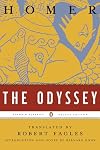
The Odyssey by Homer
darlingtrk Dawn Treader follows the Quest archetype, and Homer is the archetypal example.
76

Member Reviews
This was, if I’m remembering rightly, my favorite of the series when I was a kid. I loved the let’s-see-what’s-at-the-end-of-the-world adventure vibe, and it’s still fun after all these years. Good enough that I can still fairly successfully ignore the blatant Jesus stuff.
I've been very slowly reading the Narnia books out loud to Mr Bear. He's probably a bit too young for them still (I get lots of questions, which I do actually like, unless they're about PlayStation Lego games), so I think it's probably just pure self-indulgence on my part, as they are childhood favourites of mine.
This one has the two youngest Pevensies, Lucy and Edmund, returning to Narnia with their strangely-brought up cousin, Eustace. Eustace doesn't read adventure books, so has no idea what is to become of him! They land in the sea next to the 'Dawn Treader', a ship sailed by King Caspian (Prince Caspian, last book around), get hauled on board and set sail to the far east of Narnia, possibly towards Aslan's Land.
There are all sorts show more of delightful adventures on the way. I particularly liked revisiting the Dufflepuds, a bizarre race who are insistent that they've been "uglified" by a wizard. I liked them as a kid, I still like them as an adult.
The final chapter, however, as they approach Aslan's Land and the human children return home, laid on the religious metaphors with a trowel. Next time I read this out (to Miss Boo, maybe), I'll just summarise that last chapter, I think. show less
This one has the two youngest Pevensies, Lucy and Edmund, returning to Narnia with their strangely-brought up cousin, Eustace. Eustace doesn't read adventure books, so has no idea what is to become of him! They land in the sea next to the 'Dawn Treader', a ship sailed by King Caspian (Prince Caspian, last book around), get hauled on board and set sail to the far east of Narnia, possibly towards Aslan's Land.
There are all sorts show more of delightful adventures on the way. I particularly liked revisiting the Dufflepuds, a bizarre race who are insistent that they've been "uglified" by a wizard. I liked them as a kid, I still like them as an adult.
The final chapter, however, as they approach Aslan's Land and the human children return home, laid on the religious metaphors with a trowel. Next time I read this out (to Miss Boo, maybe), I'll just summarise that last chapter, I think. show less
This was always among my favorite of the Narnia books. Lucy and Edmund are having a frustrating holiday at their cousin’s house- Eustace is annoying to be around, argumentative and rather sour-tempered. “Something of a prig” I think they referred to him as. He’s been making fun of them for talking about Narnia- thinking it’s all make-believe, when suddenly they’re pulled into the magical world via a painting on the wall. They find themselves on board a ship with Prince Caspian, and it’s only been a few years since Edmund and Lucy last saw him. Caspian is on an adventure, seeking seven lords of Narnia who had fled the usurping uncle into exile. They sail to some distant but known islands, and then into uncharted territory, show more traveling further and further East until they literally come to the very end of the world. Each island they land on presents a different adventure, challenge, or fantastic puzzle they have to solve. Admittedly, to me some of them were boring (like the first, where some of the children are sold into slavery and Caspian gets rid of a governing party that had taken things in the wrong direction). On the different islands they encounter a dragon, water that turns anything it touches into gold (dangerously), funny not-very-intelligent dwarf creatures called the Dufflepuds who think they’ve been cursed with ugliness, men who have fallen into an enchanted decade-long sleep at a banquet table, and a horrible place where dreams come true. Lucy faces temptation in a book of magic spells, Eustance undergoes a transformation that changes his attitude towards things, Reepicheep (the talking mouse) finds the final adventure he had always longed for. They also encounter terrible storms, a sea serpent, and at several different times, Aslan himself. Lucy even glimpses sea-folk that live in the ocean (not mermaids). Morality is gently present in most of the adventures, and the characters are interesting. This time around, I didn’t quite believe Eustace’s personality would have had such an about-face so quickly, but I was just as intrigued as ever in the description when he first woke up in that cave and didn’t know what had happened to him. In the end, they find out what happened to all the missing lords, Caspian meets a beautiful lady he will someday wed, and the three children are sad to be escorted out of Narnia by the Lion once again. Back to the dull, ordinary boring world. show less
As a child, "The Voyage of the Dawn Treader" was my favourite Narnia book, but I think it was primarily for the image of the painting coming to life. While there's certainly nothing wrong with it, and there is something majestic about this tale of the grand ship (Featuring some new characters at that!), I run hot and cold on this book. I do appreciate that Lewis chose to show different sides of Narnia rather than just ponderously giving us the same thing each time, but on re-reading, I was less than enthusiastic about the journeys taken by the characters.
(And, as much as I don't want to sound like some obnoxious 21st century academic, there is obviously an anglocentric, Christian, male-dominating point-of-view narrating these books show more which makes them less gripping than more democratic modern day children's fare. Or even, really, Enid Blyton, who still had the beliefs of the era but somehow didn't let them affect her work!) show less
(And, as much as I don't want to sound like some obnoxious 21st century academic, there is obviously an anglocentric, Christian, male-dominating point-of-view narrating these books show more which makes them less gripping than more democratic modern day children's fare. Or even, really, Enid Blyton, who still had the beliefs of the era but somehow didn't let them affect her work!) show less
Book 288 - CS Lewis - Voyage of the Dawn Treader
Another journey to the land is Narnia and a return for Edmund and Lucy... once a king and queen of Narnia... always a king and queen of Narnia. They are joined by Eustace ... someone who is self centred... selfish and is all about ego... always thinking of himself. Although we have reunions with other wonderfully formed characters such as Caspian and Reepicheep.... Lewis never sits still in his storytelling and never takes the easy route. He could easily have taken a similar journey in each of the Narnian novels but instead we are opened to new lands and new challenges but the same temptations of the past... of turning away from the Emperor from over the sea and following our own self. show more
Eustace's journey is so profound... so real and even more relevant in the 21st century. There is so much self entitlement in our world that we forget about Him who was selfless.
But let's not forget Lucy and Edmund... they continue to grow and truly embrace the roles given to them... as leaders that we almost take it for granted... they are the king and queen of the past... and the present... as Aslan declared... crowns for those who believe.
I will focus on Edmund for a short while and it truly feels like the Narnian stories are Edmund's stories. His fall... his separation from those who love him... to the sacrifice needed to bring him back to the family of families... to defending Peter...Lucy and even Eustace.
Lewis shows us that the journey may be rough... may be dangerous... and may be long and challenging...but if we keep our eyes on the goal... Aslan's Country... the times we are knocked back will be worthwhile. show less
Another journey to the land is Narnia and a return for Edmund and Lucy... once a king and queen of Narnia... always a king and queen of Narnia. They are joined by Eustace ... someone who is self centred... selfish and is all about ego... always thinking of himself. Although we have reunions with other wonderfully formed characters such as Caspian and Reepicheep.... Lewis never sits still in his storytelling and never takes the easy route. He could easily have taken a similar journey in each of the Narnian novels but instead we are opened to new lands and new challenges but the same temptations of the past... of turning away from the Emperor from over the sea and following our own self. show more
Eustace's journey is so profound... so real and even more relevant in the 21st century. There is so much self entitlement in our world that we forget about Him who was selfless.
But let's not forget Lucy and Edmund... they continue to grow and truly embrace the roles given to them... as leaders that we almost take it for granted... they are the king and queen of the past... and the present... as Aslan declared... crowns for those who believe.
I will focus on Edmund for a short while and it truly feels like the Narnian stories are Edmund's stories. His fall... his separation from those who love him... to the sacrifice needed to bring him back to the family of families... to defending Peter...Lucy and even Eustace.
Lewis shows us that the journey may be rough... may be dangerous... and may be long and challenging...but if we keep our eyes on the goal... Aslan's Country... the times we are knocked back will be worthwhile. show less
4.5 stars
I’ve been thoroughly enjoying reading The Chronicles of Narnia aloud to my siblings, and it was fun to get to read this book recently. Somewhat bittersweet, too, as I know our journey with this series is nearing its completion, but at the same time, it was so much fun to get to share this story together!
Of the books in the series, I think this one just might have the most adventure of any of the books in the series. It’s hard to judge such things, but somehow, it felt like the characters barely managed to squeak out of one danger before they were confronted with another. And oh, the different settings the characters found themselves in—a place of darkness that called like a siren’s song, a place where people were show more invisible, or the spot where things that touch the wrong thing turn to gold. It was all so playful and delightful!
And the allegory…when I first started reading this series, I wasn’t sure I’d be able to figure out the allegorical side—it wasn’t immediately obvious to me. But as the series has gone on, it’s become clearer and clearer. And while Prince Caspian probably still holds my favorite allegorical scene in the series, this one has a very close second. I loved it!
Highly recommended—especially if you get to share this book and series with other people. Such a lot of fun and imagination on Lewis’ part, and in the end, I thoroughly enjoyed the read. show less
I’ve been thoroughly enjoying reading The Chronicles of Narnia aloud to my siblings, and it was fun to get to read this book recently. Somewhat bittersweet, too, as I know our journey with this series is nearing its completion, but at the same time, it was so much fun to get to share this story together!
Of the books in the series, I think this one just might have the most adventure of any of the books in the series. It’s hard to judge such things, but somehow, it felt like the characters barely managed to squeak out of one danger before they were confronted with another. And oh, the different settings the characters found themselves in—a place of darkness that called like a siren’s song, a place where people were show more invisible, or the spot where things that touch the wrong thing turn to gold. It was all so playful and delightful!
And the allegory…when I first started reading this series, I wasn’t sure I’d be able to figure out the allegorical side—it wasn’t immediately obvious to me. But as the series has gone on, it’s become clearer and clearer. And while Prince Caspian probably still holds my favorite allegorical scene in the series, this one has a very close second. I loved it!
Highly recommended—especially if you get to share this book and series with other people. Such a lot of fun and imagination on Lewis’ part, and in the end, I thoroughly enjoyed the read. show less
I loved this book, both as a child and again as an adult, because it takes me on the kind of adventure I'd love but know I can never have: a long, long sail (cool) into magic lands (über cool).
It's also sprinkled with wonderful, memorable quotes and moments. I loved the bit where Lucy is looking down into the water and sees the mermaid, who looks up just in time to see Lucy looking at her. They can't speak and they're separated almost before they can lock eyes, but it's a moment neither of them will forget. I had a non-boat, non-mermaid related moment like that when I was a child. Perhaps we all have.
I also love when Drinian gets very angry when Reepicheep puts himself in danger. "All this didn't mean that Drinian really disliked show more Reepicheep. On the contrary he liked him very much and was therefore frightened about him, and being frightened put him in a bad temper -- just as your mother is much angrier with you for running out into the road in front of a car than a stranger would be."
I didn't agree with this passage from the chapter "The Dark Island," and I remember that puzzling me very much. Lewis is usually so spot-on when it comes to emotional truth, it seemed odd that he'd fluff something major -- something important to a child, anyway, and bad dreams are very significant to young people. I always felt, and still feel, that my whole day is darkened when I have a bad dream just before waking in the morning. But here's Lewis' beautifully written, wholly opposite take on that:
And just as there are moments when simply to lie in bed and see the daylight pouring through your window and to hear the cheerful voice of an early postman or milkman down below and to realise that it was only a dream: it wasn't real, is so heavenly that it was very nearly worth having the nightmare in order to have the joy of waking, so they all felt when they came out of the dark.
It just occurred to me that this may be part of Lewis' Christian apologia. It's an analogy of life here in "the shadowlands," which may be dark and difficult; but ultimately the pain we suffer will make the release from it that much sweeter. I don't agree with any aspect of this take on human suffering, but it's a lovely passage anyway.
Speaking of things I don't agree with in this book: As an adult reader, I found it deeply amusing to play "Let's Count How Often Lewis Backs The Wrong Horse, Historically Speaking, in The Voyage of the Dawn Treader."
The story starts off with a memorable introduction to Eustace Clarence Scrubb, a boy so nasty that he almost deserves such a name. (The first line of this book really ought to win some sort of award, as should Lewis' ability to create perfect names, which rivals Dickens'.) And what's so horrible about this boy? He's been brought up by terrible, awful, no good very bad parents:
They were vegetarians, non-smokers and teetotallers and wore a special kind of underclothes.
Okay, I have no idea what the underwear is in reference to, but the rest is pretty hilarious. Imagine! People who don't eat meat or drink or smoke! The fiends! And these wretches are being allowed to rear a child!
Lewis is merciless to Eustace, who is admittedly a nasty piece of work (at least at the beginning of the book). When Eustace is flung into Narnia along with Lucy and Edmund, he is terrified and violently ill -- not exactly surprising, considering that he's tossed with no warning into the ocean and then hauled onto a very small ship. The sailors promptly offer this child of about 12 years some wine to make him feel better.
Let me just stop right here and crack up at the idea of a writer trying to pull a stunt like that today -- at least if the writer were making fun of the kid for being such a hopeless prig, he'd actually say no to alcohol. At the age of 12! What a loser! This sounds like exactly the kind of situation contemporary authors would use to demonstrate the horrors of bullying and peer pressure-induced teenage alcoholism; but Lewis clearly thinks the kid should man up, already, and take the booze.
Which doesn't exactly explain why Lucy, who is just as young and thoroughly female, enjoys the cup of hot wine offered to her. I'm not sure what does explain that. But I do find this paean to way-underage drinking entertaining, if only because I haven't noticed anyone else noticing it.
Eustace gets worse, though. He insists that boys and girls are all just people, and ought to be treated as such. It would be one thing if Caspian were giving up his quarters (the best on the ship) and bunking with his sailors because Lucy is royalty. But of course it's because she's a lady. What a loser Eustace is for thinking she's first and foremost a kid. And as a former kid myself, let me say that I'd have been thrilled to be offered a hammock to sleep in, as Edmund and Eustace were. I can have a bed at home. If I'm in Narnia, give me adventure.
But then I've never been sufficiently ladylike.
Lewis seems to think that girls and women are china dolls: they should be treated with great care lest they break, and rejected if they're anything less than exquisitely beautiful. Who wants to make room on the shelf for a homely china doll? Prince Caspian, that paragon of virtue, rejects the idea of marrying a king's daughter because she "squints, and has freckles." That's all we hear about her. That's reason enough for Caspian to hurry off on his next sea voyage.
Speaking of Lewis' habit of hanging on with both hands (and several of his toes) to the good old days when girls were ladies and kids smoked and drank: we know the Dawn Treader has arrived at a dreadful place when we learn that the Lone Islands are governed by, well, a governor. No wonder it's rife with corruption. Fortunately, nothing ever goes wrong when people are ruled by aristocrats; so Caspian announces, "I think we have had enough of governors," and hands the rule of the Lone Islands over to a Duke. And they all lived happily ever after, in a place where smoking and drinking never shortens or damages your life.
Lewis also introduces us in this novel to the Calormenes. "The Calormenes have dark faces and long beards. They wear flowing robes and orange-coloured turbans, and they are a wise, wealthy, courteous, cruel and ancient people." They also talk like people straight out of The Great Big Book Of Middle Eastern Stereotypes, a theme (?) Lewis will expand on later in The Horse and His Boy.
So. What have we learned here? Yes to smoking, drinking, meat-eating primogeniture, aristocracy vs. elected officials, girls being treated as "ladies" from the moment they're born, and female beauty as a prerequisite to marital happiness; no to foreigners, feminism, and "up-to-date and advanced people." I think that covers everything!
Truly, I did love this book. Like all the Narnia novels (well, six of them), it's strong enough to survive its own faults, especially if you approach it with a sense of humor. Just don't let your kids read it. And if you do, don't blame me if they tell everyone what a lousy parent you are for not rearing them on wine and cigars. show less
It's also sprinkled with wonderful, memorable quotes and moments. I loved the bit where Lucy is looking down into the water and sees the mermaid, who looks up just in time to see Lucy looking at her. They can't speak and they're separated almost before they can lock eyes, but it's a moment neither of them will forget. I had a non-boat, non-mermaid related moment like that when I was a child. Perhaps we all have.
I also love when Drinian gets very angry when Reepicheep puts himself in danger. "All this didn't mean that Drinian really disliked show more Reepicheep. On the contrary he liked him very much and was therefore frightened about him, and being frightened put him in a bad temper -- just as your mother is much angrier with you for running out into the road in front of a car than a stranger would be."
I didn't agree with this passage from the chapter "The Dark Island," and I remember that puzzling me very much. Lewis is usually so spot-on when it comes to emotional truth, it seemed odd that he'd fluff something major -- something important to a child, anyway, and bad dreams are very significant to young people. I always felt, and still feel, that my whole day is darkened when I have a bad dream just before waking in the morning. But here's Lewis' beautifully written, wholly opposite take on that:
And just as there are moments when simply to lie in bed and see the daylight pouring through your window and to hear the cheerful voice of an early postman or milkman down below and to realise that it was only a dream: it wasn't real, is so heavenly that it was very nearly worth having the nightmare in order to have the joy of waking, so they all felt when they came out of the dark.
It just occurred to me that this may be part of Lewis' Christian apologia. It's an analogy of life here in "the shadowlands," which may be dark and difficult; but ultimately the pain we suffer will make the release from it that much sweeter. I don't agree with any aspect of this take on human suffering, but it's a lovely passage anyway.
Speaking of things I don't agree with in this book: As an adult reader, I found it deeply amusing to play "Let's Count How Often Lewis Backs The Wrong Horse, Historically Speaking, in The Voyage of the Dawn Treader."
The story starts off with a memorable introduction to Eustace Clarence Scrubb, a boy so nasty that he almost deserves such a name. (The first line of this book really ought to win some sort of award, as should Lewis' ability to create perfect names, which rivals Dickens'.) And what's so horrible about this boy? He's been brought up by terrible, awful, no good very bad parents:
They were vegetarians, non-smokers and teetotallers and wore a special kind of underclothes.
Okay, I have no idea what the underwear is in reference to, but the rest is pretty hilarious. Imagine! People who don't eat meat or drink or smoke! The fiends! And these wretches are being allowed to rear a child!
Lewis is merciless to Eustace, who is admittedly a nasty piece of work (at least at the beginning of the book). When Eustace is flung into Narnia along with Lucy and Edmund, he is terrified and violently ill -- not exactly surprising, considering that he's tossed with no warning into the ocean and then hauled onto a very small ship. The sailors promptly offer this child of about 12 years some wine to make him feel better.
Let me just stop right here and crack up at the idea of a writer trying to pull a stunt like that today -- at least if the writer were making fun of the kid for being such a hopeless prig, he'd actually say no to alcohol. At the age of 12! What a loser! This sounds like exactly the kind of situation contemporary authors would use to demonstrate the horrors of bullying and peer pressure-induced teenage alcoholism; but Lewis clearly thinks the kid should man up, already, and take the booze.
Which doesn't exactly explain why Lucy, who is just as young and thoroughly female, enjoys the cup of hot wine offered to her. I'm not sure what does explain that. But I do find this paean to way-underage drinking entertaining, if only because I haven't noticed anyone else noticing it.
Eustace gets worse, though. He insists that boys and girls are all just people, and ought to be treated as such. It would be one thing if Caspian were giving up his quarters (the best on the ship) and bunking with his sailors because Lucy is royalty. But of course it's because she's a lady. What a loser Eustace is for thinking she's first and foremost a kid. And as a former kid myself, let me say that I'd have been thrilled to be offered a hammock to sleep in, as Edmund and Eustace were. I can have a bed at home. If I'm in Narnia, give me adventure.
But then I've never been sufficiently ladylike.
Lewis seems to think that girls and women are china dolls: they should be treated with great care lest they break, and rejected if they're anything less than exquisitely beautiful. Who wants to make room on the shelf for a homely china doll? Prince Caspian, that paragon of virtue, rejects the idea of marrying a king's daughter because she "squints, and has freckles." That's all we hear about her. That's reason enough for Caspian to hurry off on his next sea voyage.
Speaking of Lewis' habit of hanging on with both hands (and several of his toes) to the good old days when girls were ladies and kids smoked and drank: we know the Dawn Treader has arrived at a dreadful place when we learn that the Lone Islands are governed by, well, a governor. No wonder it's rife with corruption. Fortunately, nothing ever goes wrong when people are ruled by aristocrats; so Caspian announces, "I think we have had enough of governors," and hands the rule of the Lone Islands over to a Duke. And they all lived happily ever after, in a place where smoking and drinking never shortens or damages your life.
Lewis also introduces us in this novel to the Calormenes. "The Calormenes have dark faces and long beards. They wear flowing robes and orange-coloured turbans, and they are a wise, wealthy, courteous, cruel and ancient people." They also talk like people straight out of The Great Big Book Of Middle Eastern Stereotypes, a theme (?) Lewis will expand on later in The Horse and His Boy.
So. What have we learned here? Yes to smoking, drinking, meat-eating primogeniture, aristocracy vs. elected officials, girls being treated as "ladies" from the moment they're born, and female beauty as a prerequisite to marital happiness; no to foreigners, feminism, and "up-to-date and advanced people." I think that covers everything!
Truly, I did love this book. Like all the Narnia novels (well, six of them), it's strong enough to survive its own faults, especially if you approach it with a sense of humor. Just don't let your kids read it. And if you do, don't blame me if they tell everyone what a lousy parent you are for not rearing them on wine and cigars. show less
Members
- Recently Added By
Published Reviews
ThingScore 75
As in many other of Mr. Lewis' books, one finds a strong poetic sense and awareness of the loveliness and mystery of a universe which cannot be wholly grasped by common sense.
added by Shortride
Lists

Favorite Childhood Books
1,646 works; 517 members

Best Fantasy Novels
821 works; 357 members

Read the book and saw the movie
1,170 works; 192 members
1001 Children's Books You Must Read Before You Grow Up
774 works; 101 members

Books I've Read More Than Once
602 works; 49 members
Favourite High Fantasy Books
113 works; 22 members

Best Books About Journeys and Quests
117 works; 30 members
NPRs Ultimate Backseat Bookshelf: 100 Must-Reads for kids 9-14
222 works; 30 members

Favorite Animal Fiction
359 works; 154 members
Comfort Reads
221 works; 41 members

Female Protagonist
1,056 works; 56 members

1950s
340 works; 22 members
Mensa for Kids Excellence in Reading Award Program (Grades 4-6)
64 works; 9 members

water on the brain: maritime fiction
74 works; 18 members

20th Century Literature
1,161 works; 54 members

Best Young Adult
399 works; 101 members
Here There Be Dragons
143 works; 22 members

Christianity Books You've Read
179 works; 18 members

Childhood Favorites
427 works; 24 members
The 100 Best Fantasy Books of All Time
100 works; 15 members
Books tagged favorites
390 works; 30 members
Survey of Fantasy Classics
111 works; 23 members
Best First Lines
133 works; 8 members
Mind Expanding Books by hackerkid
581 works; 8 members
Speculative Fiction to Read
706 works; 31 members
Movie Adaptations
111 works; 4 members
Travel from real to fantasy world -- children's/young adult fiction
125 works; 11 members
Generation Joshua
115 works; 3 members

Books Read in 2023
5,547 works; 145 members
1970s
657 works; 23 members

Literature for Children and Teens
41 works; 2 members

LIBROS DE CIENCIA FICCIÓN Y FANTASIA
60 works; 1 member

Read in 1999
62 works; 1 member

Read Aloud Revival
108 works; 4 members

Books With the Most Memorable Titles
478 works; 158 members

um actually
76 works; 3 members

Books Read in 2010
631 works; 10 members
Books With Our Favorite First Lines
168 works; 104 members
'Books You Can't Live Without: The Top 100', The Guardian, 2007
156 works; 7 members

Recommended Reading : 600 Classics Reviewed, Editors of Salem Press, 2015
634 works; 6 members

Books talked about in Pamela Dean's Tam Lin
74 works; 1 member
Science Fiction and Fantasy
63 works; 4 members

Books Read in 2024
4,623 works; 126 members

Books We Loved As Children
603 works; 252 members

Blue Pyramid 1,276 Best Books of All Time
1,248 works; 32 members

EEK! A Mouse ::: Best Children's Books
95 works; 13 members

Books Read in 2020
4,379 works; 123 members

Books on my Kindle
162 works; 3 members
Witches and Wizards Oh My
135 works; 12 members
LOPC Children's Library Wishlist
62 works; 2 members

CCE 1000 Good Books List
1,033 works; 12 members

Books Read in 2014
2,342 works; 86 members
Honey For a Child's Heart
1,152 works; 25 members

Books About Boys
175 works; 15 members
Ambleside Books
459 works; 18 members
The Top Ten: Writers Pick Their Favorite Books
240 works; 31 members

Books Read in 2013
1,630 works; 51 members
Nifty Fifties
129 works; 14 members

Unread books
1,063 works; 83 members

Books referenced in the Astral Library
60 works; 1 member
Author Information

528+ Works 522,268 Members
C. S. (Clive Staples) Lewis, "Jack" to his intimates, was born on November 29, 1898 in Belfast, Ireland. His mother died when he was 10 years old and his lawyer father allowed Lewis and his brother Warren extensive freedom. The pair were extremely close and they took full advantage of this freedom, learning on their own and frequently enjoying show more games of make-believe. These early activities led to Lewis's lifelong attraction to fantasy and mythology, often reflected in his writing. He enjoyed writing about, and reading, literature of the past, publishing such works as the award-winning The Allegory of Love (1936), about the period of history known as the Middle Ages. Although at one time Lewis considered himself an atheist, he soon became fascinated with religion. He is probably best known for his books for young adults, such as his Chronicles of Narnia series. This fantasy series, as well as such works as The Screwtape Letters (a collection of letters written by the devil), is typical of the author's interest in mixing religion and mythology, evident in both his fictional works and nonfiction articles. Lewis served with the Somerset Light Infantry in World War I; for nearly 30 years he served as Fellow and tutor of Magdalen College at Oxford University. Later, he became Professor of Medieval and Renaissance English at Cambridge University. C.S. Lewis married late in life, in 1957, and his wife, writer Joy Davidman, died of cancer in 1960. He remained at Cambridge until his death on November 22, 1963. (Bowker Author Biography) show less
Some Editions
Awards and Honors
Series


Work Relationships
Is contained in
The Complete Works: Fantasy & Sci-Fi Novels, Religious Studies, Poetry & Autobiography: Enriched edition. The Chronicles of Narnia, The Space Trilogy, The Screwtape Letters by C. S. Lewis (indirect)
The Lion, the Witch and the Wardrobe / Prince Caspian / The Voyage of the Dawn Treader by C. S. Lewis
The Last Battle; The Horse and His Boy; The Voyage of the Dawn Treader; Prince Caspian; The Silver Chair; The Magician's Nephew by C. S. Lewis
Has the adaptation
Is abridged in
Inspired
Has as a reference guide/companion
Has as a commentary on the text
Has as a student's study guide
Common Knowledge
- Canonical title
- The Voyage of the Dawn Treader
- Original title
- The voyage of the Dawn Treader
- Alternate titles
- 黎明踏浪號; 日出号; 魔法王國納尼亞 : 日出号; The chronicles of Narnia: voyage of the Dawn Treader; The chronicles of Narnia : The Voyage of the Dawn Treader
- Original publication date
- 1952
- People/Characters
- Aslan; Caspian X; Edmund Pevensie; Lucy Pevensie; Eustace Scrubb; Reepicheep (show all 15); The Duffers; Lord Rhoop; Coriakin; Lord Bern; Lord Mavramorn; Lord Revilian; Lord Argoz; Gumpas; Ramandu
- Important places
- Narnia; Lone Islands; Narrowhaven; Deathwater Island; Burnt Island; Island of the Star (show all 9); Duffers' Island; Island Where Dreams Come True; Aslan's Country
- Related movies
- Prince Caspian and the Voyage of the Dawn Treader (1989 | IMDb); The Chronicles of Narnia: The Voyage of the Dawn Treader (2010 | IMDb)
- Dedication
- To Geoffrey Barfield
to Geoffrey Corbett - First words
- There was a boy called Eustace Clarence Scrubb, and he almost deserved it.
- Quotations
- And then all the schoolboys joined in because they also liked processions and felt that the more noise and disturbance there was the less likely they would be to have any school that morning.
What awaited them on this island was going to concern Eustace more than anyone else, but it cannot be told in his words because after September 11 he forgot about keeping his diary for a long time. - Last words
- (Click to show. Warning: May contain spoilers.)The other is that back in our own world everyone soon started saying how Eustace had improved, and how "You'd never know him for the same boy": everyone except Aunt Alberta, who said he had become very commonplace and tiresome and it must have been the influence of those Pevensie children.
- Original language
- English
- Canonical DDC/MDS
- 823.087661
- Disambiguation notice
- Unabridged. Please do NOT combine with any abridged editions.
Please do NOT combine "The Voyage of the Dawn Treader" with "The Chronicles of Narnia"
Classifications
- Genres
- Fiction and Literature, Christian Fiction, Fantasy, Kids
- DDC/MDS
- 823.087661 — Literature & rhetoric English & Old English literatures English fiction By type Genre fiction Adventure fiction Speculative fiction Fantasy fiction High fantasy
- LCC
- PZ7 .L58474 .V — Language and Literature Fiction and juvenile belles lettres Fiction and juvenile belles lettres Juvenile belles lettres
- BISAC
Statistics
- Members
- 29,913
- Popularity
- 118
- Reviews
- 297
- Rating
- (4.03)
- Languages
- 31 — Arabic, Armenian, Catalan, Chinese, Czech, Danish, Dutch, English, Estonian, Finnish, French, German, Greek, Hungarian, Indonesian, Italian, Japanese, Korean, Latvian, Norwegian (Bokmål), Norwegian, Farsi/Persian, Polish, Romanian, Russian, Slovak, Spanish, Swedish, Turkish, Welsh, Portuguese (Brazil)
- Media
- Paper, Audiobook, Ebook
- ISBNs
- 280
- UPCs
- 16
- ASINs
- 193