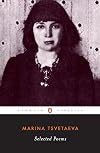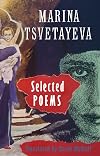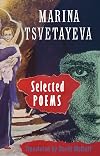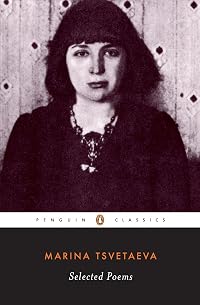
Selected Poems
by Marina Tsvetaeva
On This Page
Description
During the Stalin years Russia had four great poets to voice the feelings of her oppressed people: Pasternak, Akhmatova, Mandelstam and Marina Tsvetayeva. The first two survived the terror, but Mandelstam died in a camp and Tsvetayeva was driven to hang herself in 1941. This comprehensive selection of Tsvetayeva's poetry includes complete versions of all her major long poems and poem cycles: Poem of the End, An Attempt at a Room, Poems to Czechia and New Year Letter. It was the first English show more translation to use the new, definitive Russica text of her work. It also includes additional versions ascribed to F.F. Morton which first appeared in The New Yorker: these rhyming translations are actually the work of Joseph Brodsky (who lived at 44 Morton Street in New York). show lessTags
Recommendations







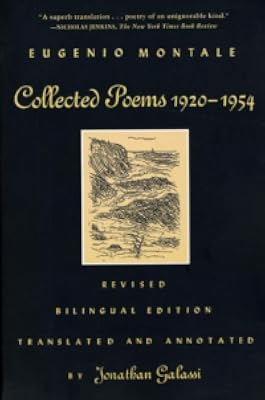
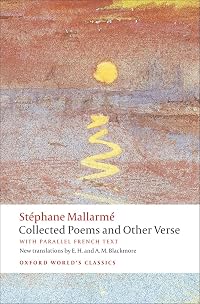
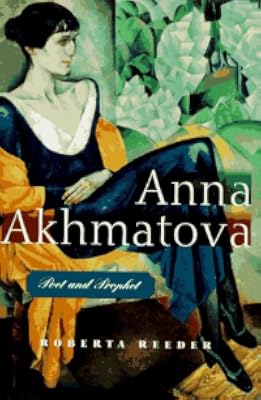
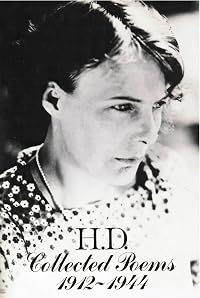
Member Recommendations

by anonymous user
Member Reviews
The poems collected here are rapturous and melancholic and very intense, and yet never feel excessive. Reading through them I couldn't help but feel that my mind was engaged with work shaped by immense talent. While reading I soon realized Tsvetaeva was going to be a writer I'd want to return to, and the desire to hold onto the words I'd just discovered, for as long as I can, conflicted with the urge to read and absorb the words as fast as I could. It isn't a new feeling, I've had this experience with other writers before, and certainly it isn't unique to myself.
Typically after I'm finished I want to read all the writer might've written, including the letters they sent and the journal entries they made–and where possible, the show more interviews they gave. And to discover facts about their life, both vital and mundane, and while I did a brief search of Marina I couldn't help but feel awed at the level of brilliant art created despite great pressures. I try not to romanticize struggles individuals, including the suffering of working artists, go through. But I couldn't help but feel sad about Marina's life troubles including a war fled, exile, poverty, turmoil in her personal relationships, state surveillance upon her return, losing those close to her, and opportunities drying up as doors were shut to her, and even familiar and once friendly backs turned from her, and all culminating in tragic death. I don't think anyone wouldn't be impressed knowing all that she went through and the incredible art produced in spite of it. show less
Typically after I'm finished I want to read all the writer might've written, including the letters they sent and the journal entries they made–and where possible, the show more interviews they gave. And to discover facts about their life, both vital and mundane, and while I did a brief search of Marina I couldn't help but feel awed at the level of brilliant art created despite great pressures. I try not to romanticize struggles individuals, including the suffering of working artists, go through. But I couldn't help but feel sad about Marina's life troubles including a war fled, exile, poverty, turmoil in her personal relationships, state surveillance upon her return, losing those close to her, and opportunities drying up as doors were shut to her, and even familiar and once friendly backs turned from her, and all culminating in tragic death. I don't think anyone wouldn't be impressed knowing all that she went through and the incredible art produced in spite of it. show less
And overflowing their rims,
into the black earth, to nourish
the rushes unstoppably
without cure, gushes
verse
This was a necessary refuge, a raft where the sea's bed is murky. There is so much doubt, singed with hunger on these pages, yet there's a human exuberance. There's agency, not tr potlatch, no Cleopatra dissolving a priceless pearl in and drinking the dregs, as Calasso noted. There are quests and memorials. There is rapt ardor even when the soul's been steeped in grief. There's a determination to right the course when fate has proved abusive.
The last concept, of sense-making within the delirium of an overturned world is evidenced in the sublime An Attempt At Room, a poem which appears to me to be the analogy of making a home in a show more collapsing building.
For a rendezvous is a locality,
A list - calculation, sketch -
Of words that are not always apposite,
Of gestures all wrong, simply out of touch.
Reading her lines, one can inhale the ancient perseverance, the ability to manage the ignoble and the banal with no chance for posterity. There's a line in a novel I broached recently, an exile is a refugee with a library. show less
into the black earth, to nourish
the rushes unstoppably
without cure, gushes
verse
This was a necessary refuge, a raft where the sea's bed is murky. There is so much doubt, singed with hunger on these pages, yet there's a human exuberance. There's agency, not tr potlatch, no Cleopatra dissolving a priceless pearl in and drinking the dregs, as Calasso noted. There are quests and memorials. There is rapt ardor even when the soul's been steeped in grief. There's a determination to right the course when fate has proved abusive.
The last concept, of sense-making within the delirium of an overturned world is evidenced in the sublime An Attempt At Room, a poem which appears to me to be the analogy of making a home in a show more collapsing building.
For a rendezvous is a locality,
A list - calculation, sketch -
Of words that are not always apposite,
Of gestures all wrong, simply out of touch.
Reading her lines, one can inhale the ancient perseverance, the ability to manage the ignoble and the banal with no chance for posterity. There's a line in a novel I broached recently, an exile is a refugee with a library. show less
Weariness and beauty permeate the poetry of Maria Tsvetaeva. She struggled with life and love over the course of her short existence, but endured, supported in part by fellow artists, most notably Mandelstam, Rilke and Pasternak. The poetry in this selection is arrayed in chronological order and ranges from the "starry nights, in the apple orchards of Paradise"(p 5) to the "muffled blow" of Epitaph (p 106).
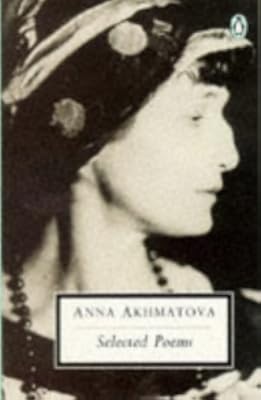
Inspiration from fellow poets Mayakovsky, Blok and Akhmatova impress upon the reader her poetic muse and mystery. I like the poetry infused with literary references, Shakespeare and others, as this is a type that I share with her - in my own humble way. She has a way of making the simplest image seem to embody meaning beyond the show more possibilities of a finite world. She suggests this and more in lines like:
"a manifestly yellow, decidedly
rusty leaf--has been left behind on the tree." (p 120)
Her poetry exhibits an aesthetic beauty that transcends my ability to describe the feelings it embodies. Along with Pasternak, Mandelstam, and Akhmatova, Marina Tsvetaeva stands as one of the four great Russian poets of the Twentieth Century and is one of the most important Women writers in the Western Canon. show less
Inspiration from fellow poets Mayakovsky, Blok and Akhmatova impress upon the reader her poetic muse and mystery. I like the poetry infused with literary references, Shakespeare and others, as this is a type that I share with her - in my own humble way. She has a way of making the simplest image seem to embody meaning beyond the show more possibilities of a finite world. She suggests this and more in lines like:
"a manifestly yellow, decidedly
rusty leaf--has been left behind on the tree." (p 120)
Her poetry exhibits an aesthetic beauty that transcends my ability to describe the feelings it embodies. Along with Pasternak, Mandelstam, and Akhmatova, Marina Tsvetaeva stands as one of the four great Russian poets of the Twentieth Century and is one of the most important Women writers in the Western Canon. show less
Olha, eu posso tolerar um poeta russo que seja anti-revolução desde o início como a Tsvetayeva foi desde que os poemas injetem uma potência extra-humana enquanto arte, mas você pega uma antologia dela e um dos destaques é algo intitulado "Em louvor dos ricos" e seu conteúdo é real e não irônico, então você não quer ter nada a ver com esses escritos e a admiração pelos outros poemas se esvai em um segundo.
I first fell in love with her "Poems for Akhmatova":
"Muse of lament, you are the most beautiful of
all muses, a crazy emanation of white night:
and you have sent a black snow storm over all Russia.
We are pierced with the arrows of your cries
so that we shy like horses at the muffled
many times uttered pledge--Ah!--Anna
Akhmatova--the name is a vast sight
and it falls into depths without name
and we wear crowns only through stamping
the same earth as you, with the same sky over us....
I stand head in my hands thinking how
unimportant are the traps we set for one another..."
This collection also contains her beautiful elegies for Moscow, her tender listing of beloved details, her heartfelt sarcasm.
"Muse of lament, you are the most beautiful of
all muses, a crazy emanation of white night:
and you have sent a black snow storm over all Russia.
We are pierced with the arrows of your cries
so that we shy like horses at the muffled
many times uttered pledge--Ah!--Anna
Akhmatova--the name is a vast sight
and it falls into depths without name
and we wear crowns only through stamping
the same earth as you, with the same sky over us....
I stand head in my hands thinking how
unimportant are the traps we set for one another..."
This collection also contains her beautiful elegies for Moscow, her tender listing of beloved details, her heartfelt sarcasm.
poetry
Ratings
Members
- Recently Added By
Lists

Russian Literature
184 works; 35 members

Harold Bloom - The Western Canon: D. The Chaotic Age
833 works; 24 members

Further Russian Reading
19 works; 3 members

Philip Ward's Lifetime Reading Plan
592 works; 22 members
Author Information

293+ Works 2,334 Members
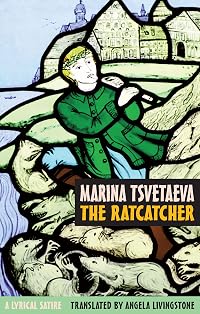
Marina Ivanovna Tsvetaeva, 1892-1941 Marina Ivanovna Tsvetaeva was born on October 8, 1892 in Moscow. Her first collection appeared in 1910, and she ranks among the major twentieth-century Russian poets. Her numerous lyrics and long poems are distinguished by great vigor and passion and an astonishing technical mastery. Her language and rhythms show more are highly innovative. In subject, her poetry varies greatly, often diary-like but also intensely concerned with the fate of her generation, of Russia, and of Europe. Tsvetaeva did not shy away from controversial topics, often opposing received dogma, be it Soviet or Russian emigre. She frequently subsumed herself in other characters, merging dramatic and lyrical elements. Particularly striking are her long poems Poem of the Mountain, Poem of the End, and Ratcatcher and her later collections Craft (1923) and After Russia (1928). After emigrating from the Soviet Union, Tsvetaeva also seriously turned to prose. (Bowker Author Biography) show less
All Editions
Series
Belongs to Publisher Series
Penguin Poets (D166)
Common Knowledge
- Canonical title
- Selected Poems
- Original publication date
- 1971 (collection) (collection)
Classifications
- Genres
- Poetry, Fiction and Literature
- DDC/MDS
- 891.7142 — Literature & rhetoric Literatures of other languages East Indo-European and Celtic literatures Russian and East Slavic languages Russian poetry USSR 1917–1991 Early 20th century 1917–1945
- LCC
- PG3476 .T75 — Language and Literature Slavic languages and literatures. Baltic languages. Albanian language Slavic. Baltic. Albanian Russian literature Individual authors and works 1917-1960
- BISAC
Statistics
- Members
- 446
- Popularity
- 68,667
- Reviews
- 6
- Rating
- (4.27)
- Languages
- English
- Media
- Paper, Ebook
- ISBNs
- 10
- ASINs
- 2