
Elaine Feinstein (1930–2019)
Author of Ted Hughes: The Life of a Poet
About the Author
She is a prize-winning poet, novelist & biographer was made a fellow of the royal Society of Literature in 1980 & has written biographies of D. H. Lawrence, Marina Tsvetayeva & Aleksandr Pushkin. (Bowker Author Biography)
Image credit: Tim Bishop
Series
Works by Elaine Feinstein
After Pushkin: versions of the poems of Alexander Sergeevich Pushkin by contemporary poets (1999) — Editor — 47 copies, 1 review
Associated Works
The Norton Anthology of English Literature, 4th Edition, Volume 2 (1979) — Contributor — 271 copies, 1 review
Answering Back: Living Poets Reply to the Poetry of the Past (2007) — Contributor — 119 copies, 1 review
In'hui, No.9 — Contributor — 1 copy
Tagged
Common Knowledge
- Legal name
- Feinstein, Elaine
- Other names
- Cooklin, Elaine (born)
- Birthdate
- 1930-10-24
- Date of death
- 2019-09-23
- Gender
- female
- Education
- University of Cambridge (Newnham College)
- Occupations
- novelist
poet
short story writer
playwright
biographer - Organizations
- Cambridge University Press
University of Singapore - Awards and honors
- Cholmondeley Award (1990)
University of Leicester (Honorary Doctorate - Literature)
Royal Society of Literature (Fellow) - Agent
- Gill Coleridge (Rogers, Coleridge & White)
- Cause of death
- cancer
- Nationality
- UK
- Birthplace
- Bootle, Lancashire, England, UK
- Places of residence
- London, England, UK
- Place of death
- London, England, UK
- Associated Place (for map)
- England, UK
Members
Reviews
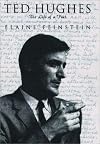
I've never read a biography that was actively gripping, before! Unfortunately it has to deal with wrenchingly tragic events.
This biography of Hughes is, I believe, the first to be published. I'm not sure there are any others, though there have been memoirs dealing with Hughes and Plath. Now, Hughes became a widely hated figure in America because of a radical Feminist view of his treatment of his first wife Sylvia Plath (who committed suicide) based on extremely limite, biased and factually show more inaccurate evidence and Hughes' refusal to try to set the record straight in any serious way until very late in his life. Plath's suicide became the defining incident in Hughes' life and Feinstein does everything in her power to shed the maximum light on it, establish the bare facts of what actually happened and examine as closely as possible the states of mind of everyone involved from all perspectives, whilst trying to take in to account everybody's biases (including her own; she new Hughes later in his life). Of course, unsurprisingly to any dispassionate observer, it turns out to be way more complicated than the "Hughes was the root of all evil" extremism of Plath cultists in America, or the "Plath was totally off her rocker" argument Hughes defenders countered with. (Hughes himself did his best to dismiss this view of matters.) The sometimes posited, "if it wasn't for Assia Wevill's predatory behaviour" angle also fails to capture the whole thing.
So here are some things to consider before taking a view: Plath attempted suicide as a teen. She was clearly struggling emotionally prior to Hughes' affair and the marriage was already in trouble because of it. She was paranoid about Hughes' fidelity before he started the affiar with Wevill. Assia Wevill did behave as a sexual predator, not just towards Hughes, either. Hughes' attitude to sex before and after his relationship with Plath was never one of idealising monogamy. Plath knew this. Plath kicked Hughes out of their home when she found out about the affair but subsequently maintain a duplicitous attitude, whereby publicly she wanted a divorce and provately she desperately wanted Hughes back. Her suicide had some remarkable features: She took extensive precautions to protect her children from harm; she left the phone number of her doctor in a prominent place; she expected to be found relatively soon after turning on the gas.
Putting all this together suggests a situation where Plath, whilst not completely bonkers by any stretch, was losing the mental and emotional stability she had regained after ECT treatment in her teens. The marriage was already under strain because of it. Assia Wevill was sexually aggressive towards Hughes but Hughes reciprocated and his past and future behaviour strongly suggest if it wasn't Wevill then, it would have been somebody at some point. Plath may have strategised a failed suicide attempt as a method of getting Hughes back but instead miscalculated and died. No single person was to blame; nobody was evil personified; nobody benefitted emotionally from the tragedy. Maybe not even Plath herself wanted the outcome she got.
So this is an excellent biography, clearly stating what is fact, what is opinion, what speculation, what is out-right false and presenting the public views of the key players. Feinstein is clearly sympathetic towards Hughes, way more forgiving of his philandering than I am, but still attempting to be fair to all and crucially set the factual record straight.
Hughes' poetry is discussed mainly in terms of whatever light it sheds on his character and life, rather than from a strongly lit. crit. perspective. You will probably learn more about it from reading the volume of Hughes' letters, which should be read by anyone interested in Hughes' life, anyway, as it serves as a compliment to this biography, filling gaps and giving its own insight into Hughes life, work and character. show less
This biography of Hughes is, I believe, the first to be published. I'm not sure there are any others, though there have been memoirs dealing with Hughes and Plath. Now, Hughes became a widely hated figure in America because of a radical Feminist view of his treatment of his first wife Sylvia Plath (who committed suicide) based on extremely limite, biased and factually show more inaccurate evidence and Hughes' refusal to try to set the record straight in any serious way until very late in his life. Plath's suicide became the defining incident in Hughes' life and Feinstein does everything in her power to shed the maximum light on it, establish the bare facts of what actually happened and examine as closely as possible the states of mind of everyone involved from all perspectives, whilst trying to take in to account everybody's biases (including her own; she new Hughes later in his life). Of course, unsurprisingly to any dispassionate observer, it turns out to be way more complicated than the "Hughes was the root of all evil" extremism of Plath cultists in America, or the "Plath was totally off her rocker" argument Hughes defenders countered with. (Hughes himself did his best to dismiss this view of matters.) The sometimes posited, "if it wasn't for Assia Wevill's predatory behaviour" angle also fails to capture the whole thing.
So here are some things to consider before taking a view: Plath attempted suicide as a teen. She was clearly struggling emotionally prior to Hughes' affair and the marriage was already in trouble because of it. She was paranoid about Hughes' fidelity before he started the affiar with Wevill. Assia Wevill did behave as a sexual predator, not just towards Hughes, either. Hughes' attitude to sex before and after his relationship with Plath was never one of idealising monogamy. Plath knew this. Plath kicked Hughes out of their home when she found out about the affair but subsequently maintain a duplicitous attitude, whereby publicly she wanted a divorce and provately she desperately wanted Hughes back. Her suicide had some remarkable features: She took extensive precautions to protect her children from harm; she left the phone number of her doctor in a prominent place; she expected to be found relatively soon after turning on the gas.
Putting all this together suggests a situation where Plath, whilst not completely bonkers by any stretch, was losing the mental and emotional stability she had regained after ECT treatment in her teens. The marriage was already under strain because of it. Assia Wevill was sexually aggressive towards Hughes but Hughes reciprocated and his past and future behaviour strongly suggest if it wasn't Wevill then, it would have been somebody at some point. Plath may have strategised a failed suicide attempt as a method of getting Hughes back but instead miscalculated and died. No single person was to blame; nobody was evil personified; nobody benefitted emotionally from the tragedy. Maybe not even Plath herself wanted the outcome she got.
So this is an excellent biography, clearly stating what is fact, what is opinion, what speculation, what is out-right false and presenting the public views of the key players. Feinstein is clearly sympathetic towards Hughes, way more forgiving of his philandering than I am, but still attempting to be fair to all and crucially set the factual record straight.
Hughes' poetry is discussed mainly in terms of whatever light it sheds on his character and life, rather than from a strongly lit. crit. perspective. You will probably learn more about it from reading the volume of Hughes' letters, which should be read by anyone interested in Hughes' life, anyway, as it serves as a compliment to this biography, filling gaps and giving its own insight into Hughes life, work and character. show less
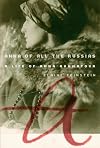
An amazingly well researched and lovingly written biography of the famous Russian poet Anna Akhmatova. Akhmatova became a nationally known poet in imperial Russia before living thru world war one, the Bolshevik revolution, Stalin's terror and ban on her publication, the siege of Leningrad and world war two, and finally a thaw in Soviet government policy that lead to her world wide recognition. Along the way she interacted with seemingly all the famous writers of time, whether in or out of show more favor. A simply marvelous story that likely could not be swallowed if it were a piece of fiction. show less
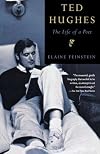
A good biography of the poet for those of us who want a reasonably non judgemental view of an extraordinary life. The book is very well written and gallops through the poets life wthout hardly missing a beat. It does not attempt to provide in depth readings of the poems (or the prose), but it does effectively link events in his life with published work. If you are interested in Ted Hughes this is a good place to start. It is written by a fellow poet who knew Ted socially and professionally, show more she obviously admired his work and is perhaps a little in awe of the man, but she does give us an inside track to his character and for that reason I think this biography succeeds very well show less
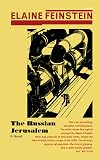
Well written but in the end dissatisfying -- essentially a collection of anecdotes about Jewish writers who had trouble in the Soviet Union, held together by a dream-voyage with Feinstein's beloved Tsvetaeva. Unfortunately, Feinstein doesn't know enough about Russia and Soviet life to make it more than superficial, and I wasn't thrilled with her own poems (interspersed between chapters).
Lists
Awards


You May Also Like


Associated Authors
Statistics
- Works
- 50
- Also by
- 9
- Members
- 954
- Popularity
- #26,999
- Rating
- 4.0
- Reviews
- 13
- ISBNs
- 113
- Languages
- 4
- Favorited
- 1