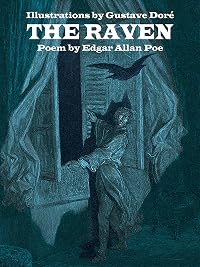
The Raven [poem]
by Edgar Allan Poe
On This Page
Description
Perhaps Poe's most famous work, The Raven was first published in 1845 in the New York Evening Mirror. Known for its tight rhymes, rhythm, and the repetitive response given by the eponymous raven-Nevermore-the poem focuses on that raven and a forlorn man who is distraught over his lost lover, Lenore.Tags
Recommendations



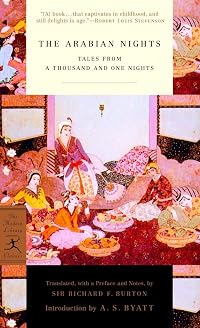
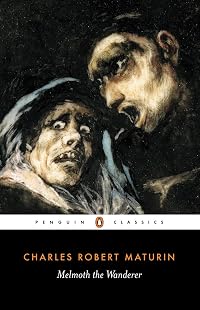


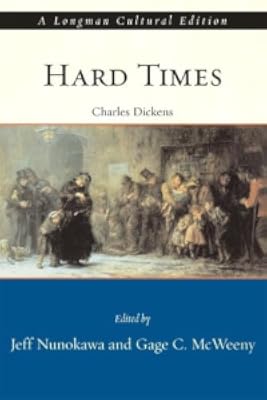






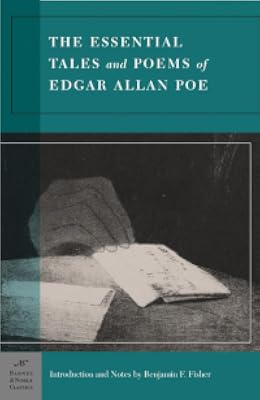
Member Recommendations

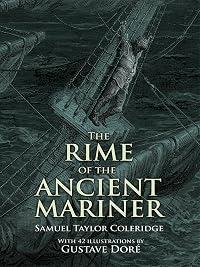
Cecrow Source of EAP's inspiration.
Member Reviews
Edgar Allan Poe got the idea for his poem The Raven after saying that the speaking raven in Dickens’ ‘Barnaby Rudge’ deserved a more prophetic role. It made Poe a national celebrity; his readings of it, in near darkness, were considered spell-binding.
📖"Deep into that darkness peering, long I stood there, wondering, fearing, doubting, dreaming dreams no mortal ever dared to dream before."
➡️
Sua técnica poética é controversa. Poucos poetas dependeram tanto da forma quanto Poe. Simplicidade, imediatismo e derramamento emocional não eram com ele. É fácil rotulá-lo de apelativo, mas Poe jamais usou a forma pela forma. Formalista? Sim. Formulista? Não. Sempre se esforçou pela forma integral, atando-a a um conteúdo de show more modo que o isomorfismo (combinação) soasse natural e até inevitável. Mesmo seus detratores admitem que a sua contribuição e influência formais são inigualáveis na língua inglesa. Poe foi o primeiro a explorar a fundo a aliteração rimada, as onomatopéias, as paronomásias e outros efeitos, usando-os como qualidades inerentes, embora não obrigatórias. Muitos o têm imitado, mas poucos se lhe igualam, o que é ainda mais notável quando notamos que Poe escreveu muito pouca poesia. Nenhum dos modernos lhe chega perto, em matéria de influências desproporcionais. show less
📖"Deep into that darkness peering, long I stood there, wondering, fearing, doubting, dreaming dreams no mortal ever dared to dream before."
➡️
Sua técnica poética é controversa. Poucos poetas dependeram tanto da forma quanto Poe. Simplicidade, imediatismo e derramamento emocional não eram com ele. É fácil rotulá-lo de apelativo, mas Poe jamais usou a forma pela forma. Formalista? Sim. Formulista? Não. Sempre se esforçou pela forma integral, atando-a a um conteúdo de show more modo que o isomorfismo (combinação) soasse natural e até inevitável. Mesmo seus detratores admitem que a sua contribuição e influência formais são inigualáveis na língua inglesa. Poe foi o primeiro a explorar a fundo a aliteração rimada, as onomatopéias, as paronomásias e outros efeitos, usando-os como qualidades inerentes, embora não obrigatórias. Muitos o têm imitado, mas poucos se lhe igualam, o que é ainda mais notável quando notamos que Poe escreveu muito pouca poesia. Nenhum dos modernos lhe chega perto, em matéria de influências desproporcionais. show less
A fine poem that is worthy of all the words expended on its analysis. The poetic techniques, the themes and the imagery are all fascinating. The poem also has a fantastic rhythm that allows the often-archaic and stylized language to flow nicely. It has dark brooding imagery, although the most powerful image is not of the raven itself but the lost love Lenore. The poem is an exercise in the narrator wondering whether he can ever be free of her memory. The raven's answer is conclusive: "Nevermore."
The Raven is a poem that can be appreciated on several levels, not the least of which is construction. One of the most perfectly constructed alliterative poems ever penned, who has not thrilled to "and the silken, sad, uncertain rustling of each purple curtain"? It trips off the tongue and at the same time it calls up a perfect image of a Gothic library with heavy curtains that should not, but do, rustle.
It is a study in loneliness, mourning, stress and madness. As the narrator tells us the tale of the raven's visit, he gradually degrades from someone who is attempting to find logical explanations for this event to someone who completely believes in the supernatural nature of the bird. He can no longer think rationally, because he asks show more repeated questions for which he hopes to get a positive answer but which can only get the one word response that the bird is able to give, "nevermore".
Whatever hope he may have had of recovering from the loss of his love or gaining some relief from his suffering, even in the next life, is vanquished by the repeated denials of the bird. His attempts to forget his loss and his love are seen as impossible. In the progress of the poem, we witness a man sink from loss to loss to hopelessness. In the end, he no longer clings to any remnant of his sanity. For him, the bird, "bird or devil", is something far more than an earthly creature, and it remains forever, just as his memory does, before his eyes, impossible to avoid. show less
It is a study in loneliness, mourning, stress and madness. As the narrator tells us the tale of the raven's visit, he gradually degrades from someone who is attempting to find logical explanations for this event to someone who completely believes in the supernatural nature of the bird. He can no longer think rationally, because he asks show more repeated questions for which he hopes to get a positive answer but which can only get the one word response that the bird is able to give, "nevermore".
Whatever hope he may have had of recovering from the loss of his love or gaining some relief from his suffering, even in the next life, is vanquished by the repeated denials of the bird. His attempts to forget his loss and his love are seen as impossible. In the progress of the poem, we witness a man sink from loss to loss to hopelessness. In the end, he no longer clings to any remnant of his sanity. For him, the bird, "bird or devil", is something far more than an earthly creature, and it remains forever, just as his memory does, before his eyes, impossible to avoid. show less
Happy Halloween, EAP! This is probably the best poem in history ever to have sold for $9. But what is it about? That's a more difficult question. The poem has undeniable power, but its power (as in much of Poe) is not entirely susceptible of rational explication.
First, there's the sheer liturgical music of the poem, as evidenced from the very opening lines:
"Once upon a midnight dreary, while I pondered, weak and weary,
Over many a quaint and curious volume of forgotten lore--
While I nodded, nearly napping, suddenly there came a tapping,
As of some one gently rapping, rapping at my chamber door.
''Tis some visiter,' I muttered, 'tapping at my chamber door--
Only this and nothing more.'"
We've technically got 8-syllable troches here show more (trochaic octometer?), with the stress on the first syllable of each line, but the real genius is how the rhymes weave in and out of the lines, with the rhymes not just happening at the end of each line but also in between (dreary / weary; napping / tapping). As a reader, you get so caught up in the sing-song rhymes that what exactly is happening seems secondary, and the fact that it's often opaque seems irrelevant to its linguistic power. Or perhaps it heightens its power in the same way as the Latin Mass, through the sheer rhythmic beauty of the sounds themselves.
Because really almost nothing is explained here--who's Lenore? What's the raven doing? Was there another visitor at the door? What does "nevermore" mean?
No, as in much of Poe, what's transcendent here is the feeling, the emotion, of dread, loss, and the slow descent into madness, until at the end, "the Raven, never flitting, still is sitting, still is sitting" about his door, "And my soul from out that shadow that lies floating on the floor / Shall be lifted--nevermore!" show less
First, there's the sheer liturgical music of the poem, as evidenced from the very opening lines:
"Once upon a midnight dreary, while I pondered, weak and weary,
Over many a quaint and curious volume of forgotten lore--
While I nodded, nearly napping, suddenly there came a tapping,
As of some one gently rapping, rapping at my chamber door.
''Tis some visiter,' I muttered, 'tapping at my chamber door--
Only this and nothing more.'"
We've technically got 8-syllable troches here show more (trochaic octometer?), with the stress on the first syllable of each line, but the real genius is how the rhymes weave in and out of the lines, with the rhymes not just happening at the end of each line but also in between (dreary / weary; napping / tapping). As a reader, you get so caught up in the sing-song rhymes that what exactly is happening seems secondary, and the fact that it's often opaque seems irrelevant to its linguistic power. Or perhaps it heightens its power in the same way as the Latin Mass, through the sheer rhythmic beauty of the sounds themselves.
Because really almost nothing is explained here--who's Lenore? What's the raven doing? Was there another visitor at the door? What does "nevermore" mean?
No, as in much of Poe, what's transcendent here is the feeling, the emotion, of dread, loss, and the slow descent into madness, until at the end, "the Raven, never flitting, still is sitting, still is sitting" about his door, "And my soul from out that shadow that lies floating on the floor / Shall be lifted--nevermore!" show less
My first Listen With Audrey experience and it was a delight--the presentation includes audio, visual and written notes at the end and themed art work. The poem itself is an intoxicating classic. The quick rhythms that capture you like a whirlpool forever circling inescapable grief beg to be read again the moment you finish.
In a Nutshell: The audio version helped me crack a classic poem! Enjoyed it way more than I expected. (This isn’t an insult to Poe, but an honest comment about my – Ahem! – outstanding poetic sensibilities.)
~~~~~~~~~~~~~~~~~~~~~~~~~~~~
I am not a staunch fan of verse. This logical head much prefers to read stories in prose then in poem form. I do love a few poems, but I am very much a traditionalist in my choices. Free verse makes my head spin. Rhymes and repetitions make a poem a “poem’ in my eyes.
‘The Raven’ was not at all on my reading radar. To be honest, I have attempted it twice in the last couple of years, but my brain is so anti-verse that the moment it sees lengthy poems, it goes a-wandering after the threshold show more limit is crossed. Any poem that extends beyond 15-20 lines gives me palpitations. However, a retelling based on this poem is present in the anthology I am currently reading, and I like to be familiar with the source material when I read retellings. Hence the brave decision of checking this out.
When I looked for a free version online (the poem is in the public domain, being originally published in January 1845), I stumbled upon Wikipedia, which, to my surprise and relief, featured an audio recording of this poem. I thus decided to try immersion reading - audio in the ears and text in front of the eyes - to coerce my brain into cooperating, and this idea worked brilliantly!
The poem is made up of 18 stanzas of six lines each. Generally, the meter is trochaic octameter—eight trochaic feet per line, each foot having one stressed syllable followed by one unstressed syllable. (The poetic smartness evident in this para should immediately make you realise that I didn’t write it. I copied it from Wiki so that I remember in future what a long poem I read! show less
~~~~~~~~~~~~~~~~~~~~~~~~~~~~
I am not a staunch fan of verse. This logical head much prefers to read stories in prose then in poem form. I do love a few poems, but I am very much a traditionalist in my choices. Free verse makes my head spin. Rhymes and repetitions make a poem a “poem’ in my eyes.
‘The Raven’ was not at all on my reading radar. To be honest, I have attempted it twice in the last couple of years, but my brain is so anti-verse that the moment it sees lengthy poems, it goes a-wandering after the threshold show more limit is crossed. Any poem that extends beyond 15-20 lines gives me palpitations. However, a retelling based on this poem is present in the anthology I am currently reading, and I like to be familiar with the source material when I read retellings. Hence the brave decision of checking this out.
When I looked for a free version online (the poem is in the public domain, being originally published in January 1845), I stumbled upon Wikipedia, which, to my surprise and relief, featured an audio recording of this poem. I thus decided to try immersion reading - audio in the ears and text in front of the eyes - to coerce my brain into cooperating, and this idea worked brilliantly!
The poem is made up of 18 stanzas of six lines each. Generally, the meter is trochaic octameter—eight trochaic feet per line, each foot having one stressed syllable followed by one unstressed syllable. (The poetic smartness evident in this para should immediately make you realise that I didn’t write it. I copied it from Wiki so that I remember in future what a long poem I read! show less
"Abandona el busto del dintel de mi puerta.
Aparta tu pico de mi corazón
y tu figura del dintel de mi puerta."
Dos cosas, la primera es que es muy chocante las ENORMES diferencias entre distintas traducciones de este cuento, pro ello creo que lo leeré en inglés pronto. La segunda ese cuervo es inquietante, y me dejo pensando ¿Que habría pensado/sentido yo, de ser este pobre hombre?
Aparta tu pico de mi corazón
y tu figura del dintel de mi puerta."
Dos cosas, la primera es que es muy chocante las ENORMES diferencias entre distintas traducciones de este cuento, pro ello creo que lo leeré en inglés pronto. La segunda ese cuervo es inquietante, y me dejo pensando ¿Que habría pensado/sentido yo, de ser este pobre hombre?
Members
- Recently Added By
Lists

Books Featured on Gilmore Girls
307 works; 21 members

Folio Society
831 works; 53 members

Bibliography for Among Others
159 works; 15 members
Favourite Books
1,819 works; 316 members

19th Century
190 works; 16 members

Carole's List
445 works; 13 members
Northern Exposure's Chris in the Morning Reading List
31 works; 1 member
Put a Bird On It
75 works; 12 members

Poetry Corner
187 works; 15 members
Overdue Podcast
806 works; 9 members

Favourite Poems
34 works; 1 member

Books I read in high school
52 works; 1 member

Rory Gilmore Book Club
193 works; 5 members

The Complete Rory Gilmore Reading List
506 works; 5 members

el
1,139 works; 1 member
Talk Discussions
Past Discussions
The Raven DLE in Easton Press Collectors (August 2024)
Author Information

3,813+ Works 107,618 Members
Edgar Allan Poe was born in Boston, Massachusetts on January 19, 1809. In 1827, he enlisted in the United States Army and his first collection of poems, Tamerlane and Other Poems, was published. In 1835, he became the editor of the Southern Literary Messenger. Over the next ten years, Poe would edit a number of literary journals including the show more Burton's Gentleman's Magazine and Graham's Magazine in Philadelphia and the Broadway Journal in New York City. It was during these years that he established himself as a poet, a short story writer, and an editor. His works include The Fall of the House of Usher, The Tell-Tale Heart, The Murders in the Rue Morgue, The Mystery of Marie Roget, A Descent into the Maelstrom, The Masque of the Red Death, and The Raven. He struggle with depression and alcoholism his entire life and died on October 7, 1849 at the age of 40. (Bowker Author Biography) show less
Some Editions
Awards and Honors
Series
Belongs to Publisher Series
Work Relationships
Is contained in
The Fall of the House of Usher and Other Writings: Poems, Tales, Essays, and Reviews (Penguin Classics) by Edgar Allan Poe
Classics Illustrated #4: The Raven & Other Poems (Classics Illustrated Graphic Novels) by Edgar Allan Poe
The Complete Tales of Mystery and Imagination; The Narrative of Arthur Gordon Pym; The Raven and Other Poems by Edgar Allan Poe
The Works of Edgar Allen Poe in One Volume: Poems, Tales, Essays, Criticisms with New Notes by Edgar Allan Poe
The Best of Poe: The Tell-Tale Heart, The Raven, The Cask of Amontillado, and 30 Others by Edgar Allan Poe
Chills and Thrills: The Ultimate Anthology of the Mystical, Magical, Eerie and Uncanny by Natasha Tabori Fried
90 Masterpieces You Must Read (Vol.1): Novels, Poetry, Plays, Short Stories, Essays, Psychology & Philosophy by Various
2 Volumes: Prose and Poetry for Appreciation, Prose and Poetry for Enjoyment (The St. Thomas More Series) by Julian L. Maline (indirect)
Has the adaptation
Inspired
Has as a student's study guide
Common Knowledge
- Canonical title
- The Raven [poem]
- Original title
- The Raven
- Original publication date
- 1845
- People/Characters
- Raven; Lenore
- Related movies
- The Raven (1963 | IMDb)
- First words
- Once upon a midnight dreary, while I pondered weak and weary, over many a quaint and curious volume of forgotten lore...
- Quotations
- And the silken sad uncertain rustling of each purple curtain thrilled me - filled me with fantastic terrors never felt before
- Last words
- (Click to show. Warning: May contain spoilers.)And my soul from out that shadow that lies floating on the floor shall be lifted - Nevermore!
- Original language
- English
- Disambiguation notice
- This is the entry for the single poem, "The Raven" (1845); it is not an entry for compilations of multiple works that include "The Raven" and have the title "The Raven". Please do not combine!
Also, please note t... (show all)hat the Common Knowledge field for "Original publication date" refers to the main work, the poem. "The Raven" was first published in 1845. If you wish to track particular illustrated editions (such as Gustav Doré), then they should be treated as separate editions. If you combine them, the CK information relates to the original work -- not particular illustrated editions.
Classifications
Statistics
- Members
- 2,352
- Popularity
- 8,374
- Reviews
- 53
- Rating
- (4.16)
- Languages
- 12 — Bulgarian, Czech, Dutch, English, French, German, Greek, Italian, Slovak, Spanish, Portuguese (Portugal), Portuguese (Brazil)
- Media
- Paper, Audiobook, Ebook
- ISBNs
- 152
- UPCs
- 1
- ASINs
- 49