
Stéphane Mallarmé (1842–1898)
Author of Poems
About the Author
Stéphane Mallarmé, 1842 - 1898 French poet Stéphane Mallarmé was born in Paris. His father and grandfather expected him to follow in the family tradition of French civil service but he didn't do well in school. Mallarmé began writing at a young age under the influence of Charles Baudelaire. show more After Mallarmé left school, he went to England and while there he got married. He was a schoolteacher from 1864 until his retirement in 1893. His first poems started appearing in magazines during the 1860's. He wrote his first important poem "L'Azur" and it was published when he was twenty-four years old. His most famous work is "L'Apres-Midi D'un Faune" (1865), and was inspired by Debussy's tone poem of the same name (1894) and illustrated by the famous painter Manet. Some of his other notable works are "Herodiade" (1896), and "Toast Funebre," which was written in memory of the author Theopile Gautier. Mallarmé spent his life putting his literary theories into practice by writing his Grand oeuvre (Great Work). On September 9, 1898, Mallarme died without completing this work. His experimental poem "Un Coup De Des" was published posthumously in 1914. (Bowker Author Biography) show less
Image credit: Courtesy of the NYPL Digital Gallery
(image use requires permission from the New York Public Library)
(image use requires permission from the New York Public Library)
Series
Works by Stéphane Mallarmé
Oeuvres Completes (Bibliotheque de la Pleiade) (French Edition) (Bibliotheque de la Pleiade) (Bibliothèque de la Pléiade) (1945) 26 copies
Sämtliche Dichtungen: Französisch und deutsch: Mit einer Auswahl poetologischer Schriften (1992) 14 copies
"Tutte le poesie e prose scelte" 3 copies
Poems and Prose Poems: with "The book, spiritual instrument" and "A throw of the dice. . ." (2016) 3 copies
Recueil de «Nursery Rhymes» 1 copy
Vers et prose; morceaux choisis. Avec un port. par James McNeill Whistler (French Edition) (2016) 1 copy
Monologue d’un faune 1 copy
Poemas esenciales 1 copy
Crise de Versos 1 copy
Dvorac nade 1 copy
Bacanje kocke 1 copy
Madrigaux - primeira ed. 1 copy
Dos poemas dramt̀icos 1 copy
Poesia 38 1 copy
詩集 1 copy
散文詩篇 1 copy
opere 1 copy
Album de Versuri 1 copy
Arthur Rimbaud 1 copy
La siesta de un fauno 1 copy
Poesies et un Poeme 1 copy
Stéphane Mallarmé Poésies 1 copy
Les Poémes D´Edgar Poe 1 copy
Obra Completa En Poesía 1 copy
Oeuvres compl♭ʺtes 1 copy
Mallarmagem 2 - ed. Noa Noa 1 copy
Stéphane Mallarmé. Oeuvres complètes...: Texte établi et annoté par Henri Mondor et G. Jean Aubry 1 copy
Oeuvres completes 1 copy
Les Mots Anglais Petite Philologie À l'Usage Des Classes Et Du Monde (Litterature) (French Edition) (2016) 1 copy
Propos sur la poesie 1 copy
Antología 1 copy
Oeuvres complètes 1 copy
Poésies. Poésies 1 copy
on fashion 1 copy
Divagations 1 copy
Poesia e prosa 1 copy
Dos poemas dramáticos 1 copy
Antología 1 copy
Opere, di Stéphane Mallarmé 1 copy
Lettera a Verlaine 1 copy
Correspondance. Tome 4/11 : 1890-1891 (Édition en deux volumes : 1. Textes et Notes - 2. Supplément aux tomes I, II et III) (1973) — Author — 1 copy
Correspondance. Tome 5/11 : 1892 et supplément aux tomes I, II, III et IV, 1862-1891 (1981) — Author — 1 copy
Pesme 1 copy
Poesía francesa 1 copy
Paunovo popodne 1 copy
Il pomeriggio di un fauno 1 copy
La Dernière mode 1 copy
Associated Works
World Poetry: An Anthology of Verse from Antiquity to Our Time (1998) — Contributor — 499 copies, 2 reviews
The Second Dedalus Book of Decadence (The Black Forrest) (v. 2) (1992) — Contributor — 60 copies, 3 reviews
Norton Critical Scores : Debussy : Prelude to "the afternoon of a faun" [score + analysis] (1970) — Contributor — 49 copies
Sunlight on the River: Poems About Paintings, Paintings About Poems (2015) — Contributor — 11 copies, 2 reviews
Gedoemde dichters : van Gérard de Nerval tot en met Antonin Artaud : een bloemlezing uit de "poètes maudits" (1957) — Contributor — 9 copies
Four French Symbolist Poets: Baudelaire, Rimbaud, Verlaine, Mallarmé: Translation and Introduction (1981) — Contributor — 6 copies
American Aphrodite: a Quarterly For The Fancy-Free (Volume 4, Number 14) (1954) — Contributor — 2 copies
ランボオの世界 — Contributor — 1 copy
ユリイカ 1979年6月臨時増刊号 総特集 世界の詩論 アリストテレスからエリュアールまで — Contributor — 1 copy
ユリイカ 1973年 05月臨時増刊号 総特集=ボードレール — Contributor — 1 copy
ユリイカ 詩と批評 1971年 04月臨時増刊号 総特集=ランボオ — Contributor — 1 copy
ユリイカ 詩と批評 1986年 09月臨時増刊号 総特集=ステファヌ・マラルメ — Contributor — 1 copy
ユリイカ 詩と批評 1982年 05月号 特集・シャンソン — Contributor — 1 copy
Tagged
Common Knowledge
- Canonical name
- Mallarmé, Stéphane
- Legal name
- Mallarmé, Étienne
- Birthdate
- 1842-03-18
- Date of death
- 1898-09-09
- Gender
- male
- Education
- Pensionnat des Frères des écoles chrétiennes à Passy
- Occupations
- poet
critic
teacher - Organizations
- Collège Rolin, Paris (Professeur, Anglais 18 85 | 18 93)
Lycée Janson de Sailly, Paris (Professeur, Anglais, 18 84 | 18 85)
Lycée Fontanes = Lycée Condorcet, Paris (Professeur ∙ Anglais ∙ 18 71 ∙ 18 84)
Lycée d'Avignon (Professeur, Anglais, 18 67 | 18 70)
Lycée de Besançon, Doubs (Professeur ∙ Anglais ∙ 19 66 | 18 67)
Lycée impérial de Tournon-sur-Rhône, Ardèche (Professeur, Anglais, 18 63 | 18 66) - Relationships
- Fargue, Léon-Paul (Elève)
Barbusse, Henri (Elève) - Cause of death
- Spasme du larynx
- Nationality
- France
- Birthplace
- Paris, France
- Places of residence
- Paris, France
Avignon, France
Besançon, France
Tournon, France - Place of death
- Valvins, Vulaines-sur-Seine, Seine-et-Marne, Île-de-France, France
- Burial location
- Cimetière de Samoreau, France
- Map Location
- France
- Associated Place (for map)
- France
Members
Reviews

These carefully-curated writings span from 1863-97.
“Apparition” (1863) establishes him as an obvious genius right out of the gate. Some of its heart-rending imagery includes “vaporous flowers,” “dying violins,” “white sobs,” “the perfume of sadness,” and “white bouquets of perfumed stars.” (That last one is its final line, and you can see how it seamlessly brings together three topics used previously in the poem.)
The next year, he picked up right where he left off show more with “The Azure” (1864), which is tumultuously exciting. This homage to the blue canopy lurking above us culminates alarmingly with
“It travels ancient through the fog, and penetrates
Like an unerring blade your native agony;
Where flee in my revolt so useless and depraved?
For I am haunted! The Sky! The Sky! The Sky! The Sky!”
The translation of “Sigh” (1864) somewhat reconfigures it, boldly taking it from 10 lines to 14 while keeping the same approximate number of words. The translator, Frederick Morgan, manages to brilliantly tease out some rhymes (“sky” & “eye,” “leaves” & “cleave”) that weren’t necessarily set up to rhyme in the original structure. I’m guessing this is why he decided to mold the clay on the way that he did. I can’t recall ever seeing this done before.
The enigmatic and dreamlike effort “Lace Passes Into Nothingness…” (1884) could be called ambient poetry. Its pacing and precision brings to my mind Emily Dickinson.
The collection concludes spectacularly with the avant-garde “Dice Thrown Never Will Annul Chance” (1895), using an array of font sizes and text splashed across the pages to truly throw the gauntlet down. This proto-Dadaist splurge, superior to Ginsberg’s “Howl” in my opinion, even has its own two-page preface, by Mallarmé himself.
This book presents each poem except for “Dice…” in French on the left pages and English on the right. (The prose is only given in English.) Evidently Mallarmé’s writing style is challenging to translate, as fifteen different translators were recruited, each giving his or her own twist to each item, so it helps to know a good bit of French, as I luckily do.
As Eliot, Baudelaire, and Neruda did to me some years ago, this slim book has rekindled my love of the written word and fired up my imagination to levels that should be illegal. It’s that great. Now to acquire everything this guy ever put to paper…
RIYL: Baudelaire, Neruda, Shakespeare’s sonnets, Jim Morrison, 1980s gothic rock / ethereal wave lyricists show less
“Apparition” (1863) establishes him as an obvious genius right out of the gate. Some of its heart-rending imagery includes “vaporous flowers,” “dying violins,” “white sobs,” “the perfume of sadness,” and “white bouquets of perfumed stars.” (That last one is its final line, and you can see how it seamlessly brings together three topics used previously in the poem.)
The next year, he picked up right where he left off show more with “The Azure” (1864), which is tumultuously exciting. This homage to the blue canopy lurking above us culminates alarmingly with
“It travels ancient through the fog, and penetrates
Like an unerring blade your native agony;
Where flee in my revolt so useless and depraved?
For I am haunted! The Sky! The Sky! The Sky! The Sky!”
The translation of “Sigh” (1864) somewhat reconfigures it, boldly taking it from 10 lines to 14 while keeping the same approximate number of words. The translator, Frederick Morgan, manages to brilliantly tease out some rhymes (“sky” & “eye,” “leaves” & “cleave”) that weren’t necessarily set up to rhyme in the original structure. I’m guessing this is why he decided to mold the clay on the way that he did. I can’t recall ever seeing this done before.
The enigmatic and dreamlike effort “Lace Passes Into Nothingness…” (1884) could be called ambient poetry. Its pacing and precision brings to my mind Emily Dickinson.
The collection concludes spectacularly with the avant-garde “Dice Thrown Never Will Annul Chance” (1895), using an array of font sizes and text splashed across the pages to truly throw the gauntlet down. This proto-Dadaist splurge, superior to Ginsberg’s “Howl” in my opinion, even has its own two-page preface, by Mallarmé himself.
This book presents each poem except for “Dice…” in French on the left pages and English on the right. (The prose is only given in English.) Evidently Mallarmé’s writing style is challenging to translate, as fifteen different translators were recruited, each giving his or her own twist to each item, so it helps to know a good bit of French, as I luckily do.
As Eliot, Baudelaire, and Neruda did to me some years ago, this slim book has rekindled my love of the written word and fired up my imagination to levels that should be illegal. It’s that great. Now to acquire everything this guy ever put to paper…
RIYL: Baudelaire, Neruda, Shakespeare’s sonnets, Jim Morrison, 1980s gothic rock / ethereal wave lyricists show less
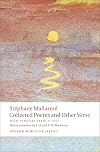
There's much in Mallarme that I'm not particularly fond of: portentous art-for-art's-sakeness, tiring decadence, and the combination of those two, naturally.
On the other hand, this excellent little volume gives you the French, with not entirely awful English translations, at a reasonable price, and the French gives even poor French readers like myself the means to find the gold in Mallarme. Being able to see the full range of his poetry, in French, meant that I could finally place him where show more he deserves to be, among the great nineteenth century poets in English, to wit, Lewis Carroll, Edward Lear, and G. M. Hopkins. And maybe Browning.
The problem with 19th century poetry, for me, is its extraordinary inability to take seriously either humor, or other people (excluding those people you were or would like to be schtupping), and the dreariness of its forms, all harnessed towards some very boring end. Enough with the elegies, people. I'd thought Mallarme was one of them, albeit a very talented one. Instead, it turns out, Mallarme is a nonsense poet with a rather inflated sense of the importance of poetry. Consider the first stanza of "Prose" (pour des Esseintes):
Hyperbole! de ma memoire
Triophalement ne sais-tu
Te lever, aujourd'hui grimoire
Dans un livre de fer vetu:
On the one hand, it combines both of my pet peeves; on the other, it's only slightly more meaningful than outgrabing mome raths, and just as much fun to read.
This gleeful nonsensicality is everywhere, but mostly in the occasional or obviously minor poems. In "Billet," Mallarme manages to rhyme rebattu and tutu.
Of course Un Coup de des is a masterpiece and forward thinking and all that. But give me the glee. show less
On the other hand, this excellent little volume gives you the French, with not entirely awful English translations, at a reasonable price, and the French gives even poor French readers like myself the means to find the gold in Mallarme. Being able to see the full range of his poetry, in French, meant that I could finally place him where show more he deserves to be, among the great nineteenth century poets in English, to wit, Lewis Carroll, Edward Lear, and G. M. Hopkins. And maybe Browning.
The problem with 19th century poetry, for me, is its extraordinary inability to take seriously either humor, or other people (excluding those people you were or would like to be schtupping), and the dreariness of its forms, all harnessed towards some very boring end. Enough with the elegies, people. I'd thought Mallarme was one of them, albeit a very talented one. Instead, it turns out, Mallarme is a nonsense poet with a rather inflated sense of the importance of poetry. Consider the first stanza of "Prose" (pour des Esseintes):
Hyperbole! de ma memoire
Triophalement ne sais-tu
Te lever, aujourd'hui grimoire
Dans un livre de fer vetu:
On the one hand, it combines both of my pet peeves; on the other, it's only slightly more meaningful than outgrabing mome raths, and just as much fun to read.
This gleeful nonsensicality is everywhere, but mostly in the occasional or obviously minor poems. In "Billet," Mallarme manages to rhyme rebattu and tutu.
Of course Un Coup de des is a masterpiece and forward thinking and all that. But give me the glee. show less
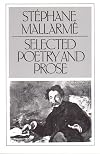
This is a fantastic selection of poems, prose pieces, and near-unclassifiables (the very strange and haunting Igitur) by this important French poet. The translations are by various authors and most read wonderfully in English -- it is nice that the poems (with the exception of A Throw of the Dice) are presented bilingually, because if you have a little French (like I do) it is easy to get a little of the music of the originals.
This is a compact, inexpensive, wide-ranging introduction -- it's show more probably worth the price just for Igitur alone, since this play/narration/object/wtf is -- despite the fact that it is probably unfinished -- pivotal in Mallarme's development. show less
This is a compact, inexpensive, wide-ranging introduction -- it's show more probably worth the price just for Igitur alone, since this play/narration/object/wtf is -- despite the fact that it is probably unfinished -- pivotal in Mallarme's development. show less
Divagations : the 1897 arrangement by the author ; together with "Music and letters" by Stéphane Mallarmé
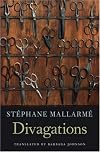
[author: stephane mallarmé]'s poetry is often absolutely untranslatable [but listen to the music in a line such as "abolit le bibelot d'inanité sonore"], and his brilliant prose ain't easy either, but ripe with new directions and often still virgin soil. this editon tackles a good number with decent respect, rewarding attention. [speaking translation and [author: stephane mallarmé], it's interesting to read his translation of monsieur poë's raven (courbeau) and also his text book of show more english grammar (E.G., translating "matching" for pareil is on the dime, perfect anglo-sax, rather than the usual latinate "similar to."
baudelaire grabbed the heart
rimbaud aced the imagery
mallarmé caught the music of thought
(and lautrec cashed a check ... ) show less
baudelaire grabbed the heart
rimbaud aced the imagery
mallarmé caught the music of thought
(and lautrec cashed a check ... ) show less
Lists
Awards


You May Also Like


Associated Authors
Statistics
- Works
- 174
- Also by
- 26
- Members
- 2,516
- Popularity
- #10,202
- Rating
- 4.1
- Reviews
- 18
- ISBNs
- 246
- Languages
- 17
- Favorited
- 26


